-8 C
New York
Home Blog Page 267

Riga Central Terminal orders 6 self-discharging containers

0

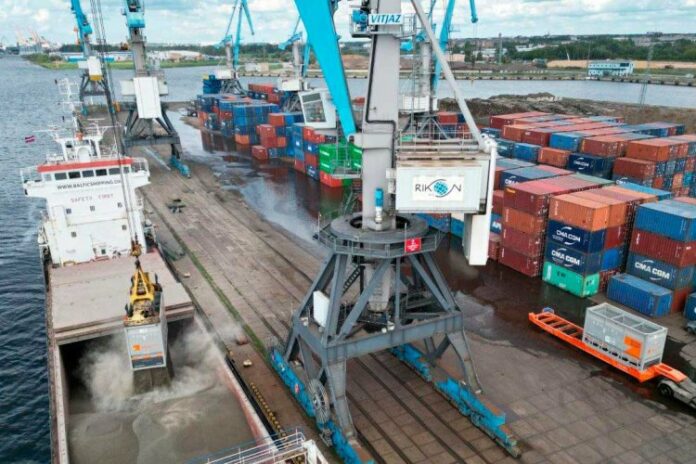
After renting Graviti’s innovative automated dry bulk containers for 2 years and being fully satisfied with the results, the Rigal Central Terminal (in the Freeport of Riga) has decided to purchase six ‘SDC 40’ units from Latvian bulk handling equipment specialist Graviti, even upgrading from ‘SDC30’ types to the bigger ones.

The terminal has an option to acquire six more in the future. The containers have already been delivered and are operational. Having noticed the practical implications and cost-efficiency of the system, several other ports in North-Western Europe, Eastern Europe and the Middle-East have expressed their interest too.

In 2022, more than 150 ships were loaded with GRAVITI containers, handling about 1.5 million tonnes of cargo. There have not been any claims, breakdowns or returns, proving the reliability and effectiveness of this containersized shiploading system, according to Graviti. To date, about 60 SDCs have been sold worldwide.
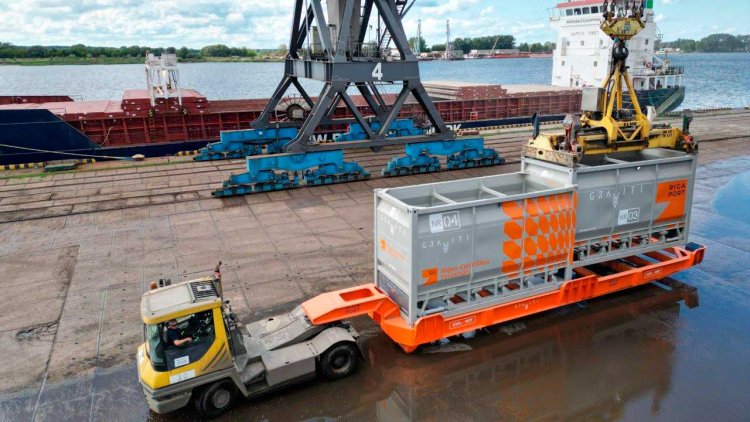
Dinis Hruscovs, Managing Director of Graviti and responsible for developing the SDC, says:

“We are very proud of this contract with the Freeport of Riga. It shows that we are now truly past the initial stages in which potential clients were interested, but were not yet ready to invest in such an innovation. It has had to prove itself thoroughly in practice and that has turned the table. The fact that our system reduces CO2 emissions in cargo loading logistics also plays a part: the self-discharging containers can handle more bulk faster than traditional grabs, so less movements are needed. Combine that with lower operational cost and a relatively low pricing due to the simplicity of the design and you can see why we are currently speaking with clients in other regions  too.”

In 2020 Graviti, developed a technology to reduce the costs of loading bulk cargo and speed up the logistics processes at terminals. That resulted in two completely new types of selfdischarging containers, the SDC30, able to handle 600 tonnes of bulk per hour and the SDC 40, with a 900 t/h loading speed, operating with just one crane. After the first types were tested and deployed by, for example, Batumi Port (Georgia) and Riga Universal Port (Latvia), this method became increasingly popular, esp. in eastern European ports. 
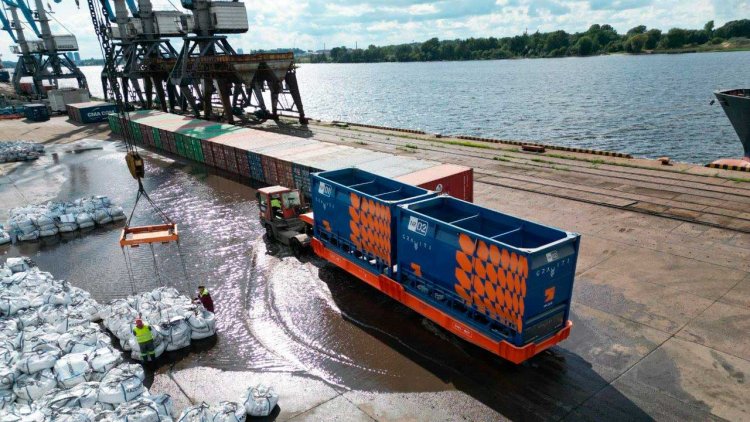
The containers operate on electrical power and every container comes with its own battery. The floor can be remotely operated to hydraulically open and close. With a fully charged battery, 500 cycles of loading/offloading are guaranteed, although in practice clients report even higher numbers. Because they are self-unloading, they can secure direct loading of dry cargo from warehouses to the ship’s hold. 

The SDCs in Riga will be able to unload its 27 m³ cargoes in 30 seconds, which is 1.5 times more productive than regular methods of loading. This method also saves up to 35% of the cost of loading, making it a cost-effective solution.
Woodside and KEPCO collaborate on carbon capture and storage

0

Woodside has signed a non-binding Memorandum of Understanding (MOU) with Kansai Electric Power Co. (KEPCO), to enable studies of a potential carbon, capture and storage (CCS) value chain between Japan and Australia.

Under the MOU, KEPCO plans to research the capture of carbon dioxide (CO2) emitted from its thermal power plants and its transport to Australia. Woodside is progressing CCS projects in Australia and will conduct the study of injection and storage of CO2 delivered from Japan as well as the potential production of Synthetic Methane (e-methane).

The MOU outlines a generic value chain study, that will consider the end to end technical and commercial factors with the aim of progressing a future CCS value chain between Japan and Australia. The studies include an evaluation of storage opportunities in some of Australia’s offshore basins.

Woodside Executive Vice President Shaun Gregory said the MOU reflected the increasing demand for large-scale decarbonisation solutions from Woodside’s industry partners in the Asia-Pacific region.

“CCS has the potential to provide a pathway for Woodside’s customers and value chain participants in the region to decarbonise their own industrial emissions,” he said. “Australia, with its unique geology and offshore storage potential, has an opportunity to play a role in this emerging market, supporting the broader Asia-Pacific region in their climate goals and net zero aspirations.”

APM Terminals Lazaro Cardenas commences USD140 million expansion

0

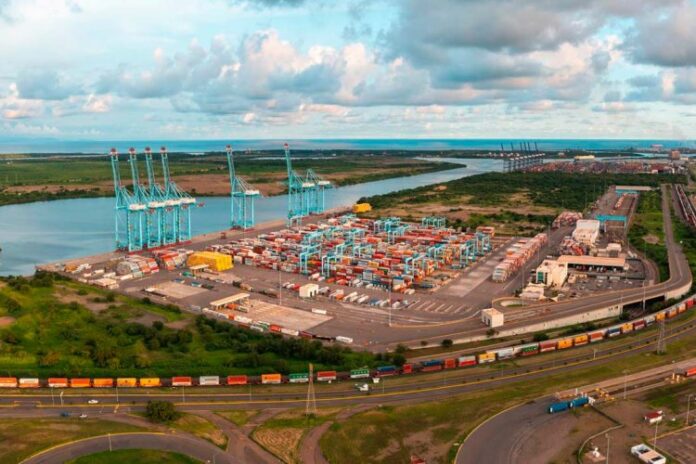
APM Terminals Lazaro Cardenas has begun the construction of its Phase II USD140 million expansion. 

Mexico’s Head of Ports and Merchant Marine, Cap. Alt. Ana Laura López Bautista, Lazaro Cardenas Port General Director, Admiral Jorge Luis Cruz Ballado, and the Governor of the State of Michoacan, Alfredo Ramírez Bedolla, participated in the ground-breaking ceremony.

During the expansion the yard will be increased by 15.7 hectares and the terminal operating system will be upgraded to use Navis N4. This is the world standard for operating systems in APM Terminals’ global network, which combines best practises from around the world and centralised 24/7 specialist support to meet forecast volume requirements for both the medium and long term.

Following completion, scheduled for the first quarter of 2026, the terminal will be able to handle an annual throughput capacity of 2.2 million TEUs. The expansion supports the United States-Mexico-Canada Agreement (USMCA) which entered into force on July 1, 2020.

“This expansion positions the terminal as a key hub in the region. The increased capacity, new equipment. and yard space will lift the standard of efficiency at the terminal, through optimised traffic flows and improve cross-border transit times – a key element of the USMCA,” said Leo Huisman, Regional Managing Director APM Terminals Americas.

The new phase includes new equipment to enhance port capacity, such as six automated rail-mounted gantry cranes, 14 new shuttle carriers, and four empty handlers.

“In addition to improved efficiency that will reduce logistics costs for both shipping lines and landside customers, the new phase will include several sustainable initiatives. It will also lead to 500 additional direct and 900 indirect jobs during the construction phase that will improve living standards and generate value for the local community. The expansion will also support opportunities for the growth of international trade and transform the economic and social development of the State of Michoacan and Mexico,” stated Marliz Bermudez, Managing Director for APM Terminals Mexico.

APM Terminals has invested more than USD900 million to date in the terminal to boost Mexico’s competitiveness, fulfilling the company’s strategy to invest in emerging economies. The project will expand current terminal footprint to 65 hectares, including a total of seven triple electric ship-to-shore (STS) cranes, 14 automated stacking cranes, and 28 automated rail-mounted gantry cranes.

Offshore construction in the North Sea begins on RWE’s Sofia Offshore Wind Farm

0

Offshore construction has officially started at RWE’s 1.4 gigawatt (GW) Sofia Offshore Wind Farm, to install essential subsea cable infrastructure from the UK’s north east coast to the wind farm site on Dogger Bank, in the central North Sea.

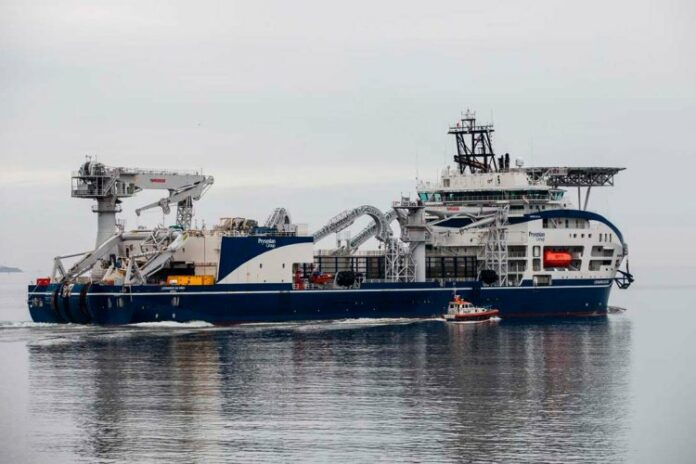
Cable contractor Prysmian’s high-tech Leonardo da Vinci vessel will lay the first section of high voltage direct current (HVDC) export cable, ready to transport green electricity from the wind farm back to the UK coast, and ultimately into the UK transmission network.

The work marks a significant milestone for the project, with Sofia representing a more than £3billion investment in the UK’s energy infrastructure by RWE. The wind farm will make a significant contribution towards the country’s net zero targets, and be capable of generating enough clean electricity equivalent to meeting the needs of over 1.2 million typical UK homes.

Sven Utermöhlen, CEO RWE Offshore Wind:

“Sofia is RWE’s largest renewable construction project to date, and its furthest from shore. The project is setting new standards in terms of addressing innovation, sustainability, and engineering challenges. The laying of the first section of export cable represents the culmination of 13 years of planning, preparation, and diligence, as well as a huge amount of support from suppliers and stakeholders alike.”

Sofia Offshore Wind Farm is located on Dogger Bank, 195 kilometres from the nearest point on the UK’s north east coast, and will have a single offshore converter platform, with the electricity generated transported to landfall 220 kilometres away in Redcar, Teesside.

The wind farm will use 100 Siemens Gamesa 14 megawatt (MW) offshore wind turbines (SG 14-222 DD), the most advanced offshore wind turbine technology available, and is scheduled to be completed by the end of 2026. Forty-four of the project’s 100 turbines will be equipped with recyclable blades. Operations and maintenance activities for the wind farm will be located at RWE’s new offshore wind operations base ‘Grimsby Hub’, which will also support Triton Knoll Offshore Wind Farm and future projects.

Prysmian’s 170-metre-long vessel will operate out of the Port of Middlesbrough and will lay two 130 kilometre sections of cable in parallel. It will start its cable laying work from just off the Teesside coast between Redcar and Marske-by-the-Sea. One end of each of the two sections of subsea cable will be pulled underwater from the vessel through cable ducts that were installed earlier this year. The cable will pass below the beach, sand dunes and road before emerging at the landfall construction compound. The cutting-edge vessel will then move away from the coast, laying the full length of cable along its set route towards the offshore wind farm.

Installation of two remaining 90km sections of marine export cable is planned for 2024. By late 2024, Leonardo da Vinci will have laid four sections of ±320kV HVDC marine export cables with XLPE insulation, totalling 440 kilometres plus the accompanying communications cables.

Onshore construction has been underway in Teesside since June 2021, to construct the project’s onshore converter station and cable corridor. The laying of the first sections of export cable marks the start of a three year offshore construction phase.

The ongoing offshore construction works will include the arrival of the project’s offshore converter platform, due to make the journey from Batam, Indonesia to the UK in 2024. Also planned for next year is the start of installation of the 100 extended monopile foundations and array cables.

Explora Journeys celebrates two new milestones

0

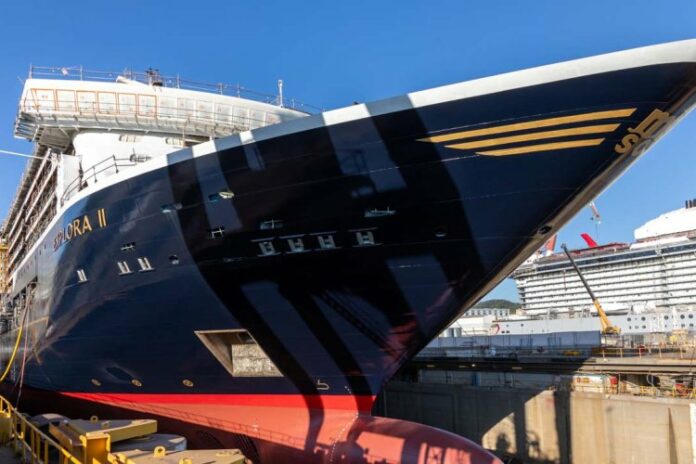
Just two months after the delivery of EXPLORA I, which took place in Monfalcone on 20 July 2023, the construction of the fleet of Explora Journeys, the luxury lifestyle brand of the MSC Group, is further progressing. Today the brand celebrated two maritime milestones during a double event at Fincantieri’s Sestri Ponente shipyard near Genoa in Italy.

During the ceremony, the brand celebrated both the float out of EXPLORA II and the steel cutting of EXPLORA III, representing the second and third ships out of a total of four ordered by Explora Journeys.

EXPLORA II will enter service in Summer 2024 and construction of the GT 63,900 vessel began in October 2021 at Fincantieri’s Castellammare di Stabia yard in Naples, Italy where the ship’s keel was laid in May 2022. 

The float out is a traditional maritime event that represents a significant moment in the construction of a new ship as it is the first time that the ship will touch water and will then enter the final phases of construction to complete interiors, fixtures and fittings.

The ceremony was attended by the main Ligurian and Genoese authorities, including the President of the Liguria Region Giovanni Toti and the Mayor of Genoa Marco Bucci. 

EXPLORA II will embark on her maiden journey in the summer of 2024, spending her first season in the Mediterranean discovering the most striking locations of the Mare Nostrum, including Italian destinations such as Portofino, Argentario, Rome, Sorrento, Palermo, Syracuse, Trapani, Lipari, Cagliari, Alghero, and the Emerald Coast.

With the traditional steel cutting ceremony, the brand marked a celebration of the construction of EXPLORA III, which will enter service in summer 2026 and will be the first of the Explora fleet to be powered by liquefied natural gas (LNG) – the world’s cleanest maritime fuel available at scale, playing a key role towards the decarbonisation of international shipping.

LNG can almost completely eliminate emissions such as sulphur oxides (99%) and nitrogen oxides (85%). LNG also plays a key role in climate change mitigation as it can reduce greenhouse gas emissions by up to 20% and will enable a pathway to the use of additional sustainable non-fossil fuels, such as bio and synthetic forms of LNG.

All of the Explora Journeys vessels will be equipped with the latest environmental and marine technologies, including selective catalytic reduction technology, shore power plug-in connectivity, underwater noise management systems to help protect marine life, and a comprehensive range of onboard energy efficient equipment to optimise engine use to further reduce emissions.

In January 2024, construction will begin on EXPLORA IV, also fuelled by LNG, which will be completed in early 2027.

ClassNK to collaborate in safety relief valve study for LH2 carrier

0

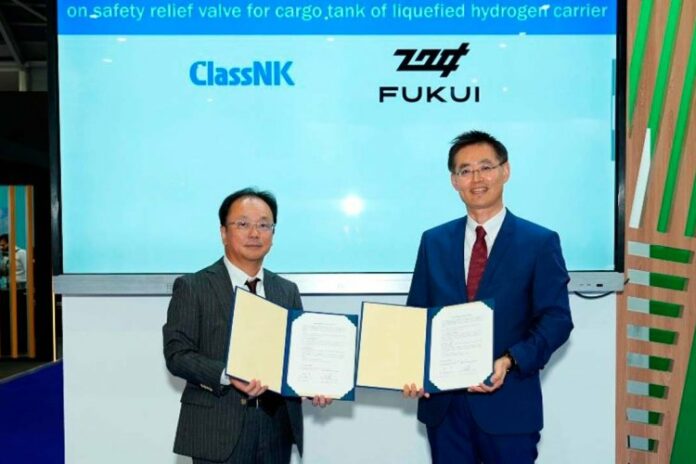
Fukui Seisakusho Co., Ltd. (FUKUI) and ClassNK have signed a Memorandum of Understanding concerning a joint study on a safety relief valve for a cargo tank of liquefied hydrogen carriers at the “Gastech2023” held in Singapore.

To combat global warming, attention is growing towards hydrogen as an energy source that does not emit CO2 at the point of use. The realization of a hydrogen-based society necessitates the establishment of a secure and efficient supply chain that distributes hydrogen produced in an environmentally friendly manner to consumption areas. As the measure to transport large volumes of hydrogen over long distances efficiently, carrying liquefied hydrogen via ships are considered promising, spurring ongoing advancements in related technologies.

In order to ensure safety in the transport of liquefied hydrogen, the development of safety relief valves that can handle hydrogen’s characteristics including extremely low temperatures, ease of leakage, and hydrogen embrittlement, which leads to a decrease in material strength and toughness, is necessary. Appropriate safety standards are also required. As part of the efforts to establish key technologies for hydrogen transport, FUKUI and ClassNK have agreed to jointly conduct a study for the installation of safety relief valves for cargo tanks of liquefied hydrogen carriers on actual ships.

Yo Fukui, President and CEO, FUKUI said,

“FUKUI aims to be a leading company in ensuring the safety of customers’ equipment for realization of a decarbonized society worldwide. For the hydrogen supply chain, it is crucial to have the commitment and the ability to execute to overcome various challenges such as extremely low temperatures and hydrogen embrittlement. I’m convinced that the MOU signed today with ClassNK will be a significant step towards achieving a sustainable society.”

Hayato Suga, Executive Vice President, ClassNK said,

“ClassNK is pleased to launch a new partnership with FUKUI, dedicated to decarbonizing society. Through our extensive experience with liquefied hydrogen carriers, we will apply our expertise to advance the development and standard relevant to the technology, thereby supporting the global adoption of liquified hydrogen carriers.”

Kumiai Navigation to retrofit LPG tanker with air lubrication

0

The company’s decision to leverage fluidic air lubrication technology is rooted in its ambition to reduce the vessel’s energy consumption, improve its overall performance and comply with environmental regulations.

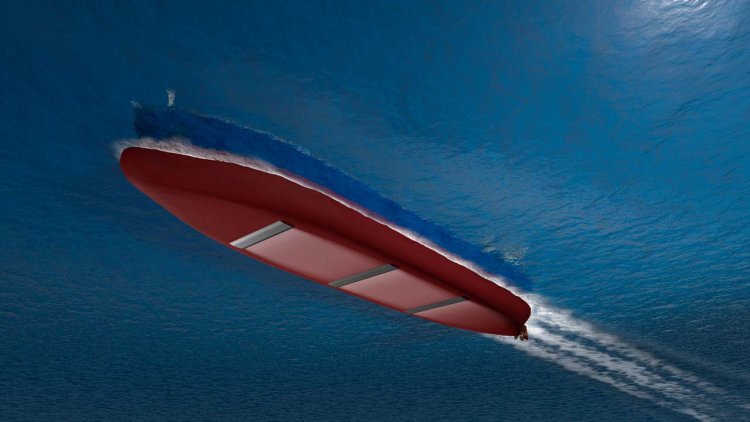
Alfa Laval has been selected for installation of its OceanGlide fluidic air lubrication system on a 54k DWT LPG tanker owned by Kumiai Navigation, a Southeast Asian LPG tanker and bulk carrier company. With this order, Alfa Laval has added LPG tankers to vessel types that can benefit from OceanGlide fluidic air lubrication system. The system can be installed on both new and existing ships with ease.

This patented system uses fluidic technology to generate an even, controllable air layer across a vessel’s entire flat bottom, reducing friction and drag. By decreasing the vessel’s resistance, OceanGlide offers a proven method for reducing fuel consumption and CO2 emissions.

Tomo Kuroyanagi, Managing Director, Kumiai Navigation, says:

“We want to invest in green shipping practices to help us lower our power consumption and comply with upcoming environmental regulations. In this effort, OceanGlide fluidic air lubrication is currently one of the best available solutions that offer remarkable gains in improving vessel performance and meeting our environmental targets.”

Rajiv Sarin, Head of Air Lubrication, Alfa Laval, says:

“We value the trust our partner has in our technology and collaboration to help them achieve their goal of sailing sustainably. As the market for OceanGlide fluidic air lubrication grows, we are happy to support our customers in their efforts to reduce CO2  emissions and improve energy efficiency of their fleet as a retrofit or a new build installation.”  

OceanGlide uses fluidic technology to create and control streamlined air layer sections on the vessel’s flat bottom, each with its own fluidic band. The independent steering of each band allows a more controlled airflow to reduce friction between the hull and water. These individually controlled sections serve to minimize drag and ensure maximum coverage, eliminating passive cavities along the vessel’s underside.

Energy expenditure is minimized because there are few compressors and the bands add almost no drag when switched off. Air distribution bands are installed easily with minimal hull penetrations, which reduces shipyard time and costs, even as a retrofit.

OceanGlide is proven to reduce specific drag by 50–75% and can provide reliable fuel savings of up to 12% under real-life conditions. The actual amount of fuel savings achieved can vary depending on vessel operations & operator priorities.

The technology also supports compliance with EEDI/ EEXI and CII requirements laid down by the International Maritime Organization (IMO) to reduce greenhouse gas emissions.

Deltamarin signs an engineering contract for Neptune Lines’ next generation PCTCs

0

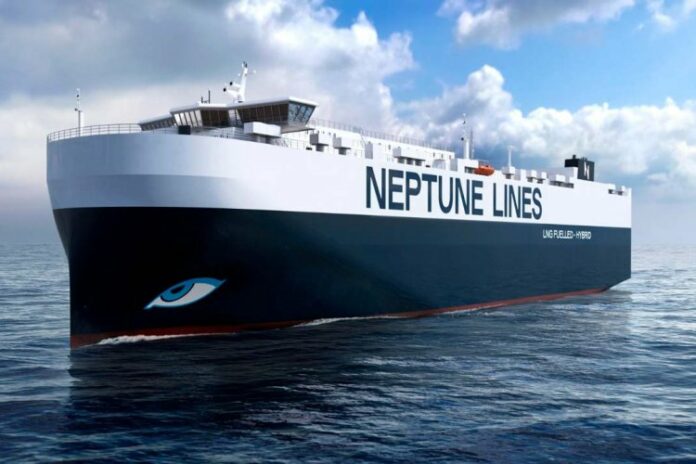
Neptune Lines and Deltamarin have previously cooperated on the development of the new-generation, future-proof PCTC concept that emphasizes environmental features while ensuring operational performance and safety. The engineering contract, signed with the builder Fujian Mawei Shipbuilding, is a direct continuation of the work and includes the complete basic and detail design of the vessels. 

The ship has been designed taking advantage of Deltamarin’s digital design methods, which are aimed at optimizing the vessel for its future operational scenarios to achieve maximum fuel and environmental efficiency during operation. A core part of digital design is energy system level simulations (energy model) for determining the ships fuel consumption and environmental footprint.

The new highly efficient vessels, under the name Genesis Project, will be powered by LNG. The design includes several features to minimize the ship’s environmental footprint, including an energy storage system, high-voltage shore power, and readiness for a solar power system.

The vessels will be built by Fujian Mawei Shipbuilding Ltd. shipyard in Fuzhou.

“This project aligns with our strategic vision of building international level vessels that meet the evolving needs of our clients. Through this collaboration, we are set to build a series of vessels that will not only redefine the industry standards but also underscore our shared commitment to sustainability, safety and technological advancement.”, says Mr Gao from Fujian Mawei.

“We thank Deltamarin for their excellent support and expertise throughout the Genesis Project, as we together designed our next class of vessel to enter the Neptune Lines fleet and continue improving our environmental performance.”, says Craig Jasienski, CEO of Neptune Lines.

“We are proud that Neptune Lines has chosen us as the Designer for their next generation PCTC vessels and are pleased with the excellent co-operation between participating parties throughout the design development. Secondly, we look forward to working with Fujian Mawei Shipbuilding, providing them with engineering services and supporting them in the execution of this cutting-edge newbuilding program for Neptune Lines.”, says Janne Uotila, CEO of Deltamarin.

The work starts immediately and will be carried out at Deltamarin’s offices in Finland.

Bureau Veritas issues AiP for the largest LNG Carrier in history

0

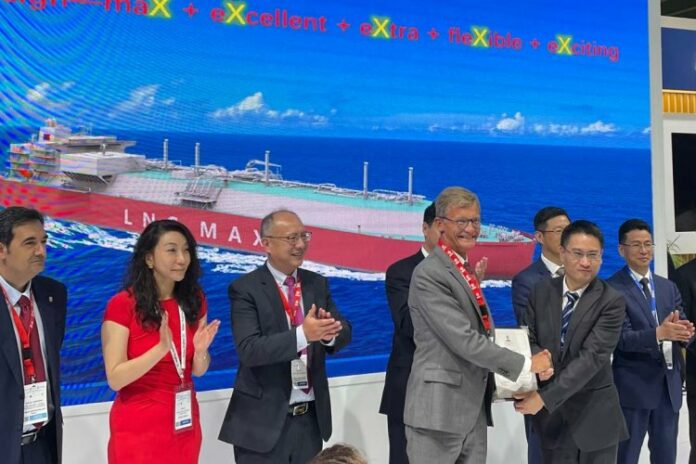
During Gastech 2023 in Singapore, Bureau Veritas (BV) formally issued its Approval in Principle (AiP) to the CSSC Hudong-Zhonghua Shipbuilding Group for a new Liquified Natural Gas Carrier (LNGC) design. 

To deliver the AiP, BV performed a preliminary design review and HAZID (hazard identification) analysis to help ensure the highest levels of safety, feasibility, and performance of this design in compliance with applicable classification Rules and Regulations.

Matthieu de Tugny, President of Bureau Veritas Marine & Offshore, said:

“I wish to express how impressed we are with CSSC Hudong-Zhonghua Shipbuilding Group and their ambition to design and build the largest LNGC yet. BV has been very pleased to participate, and we sincerely thank CSSC Hudong-Zhonghua for their trust and commitment in this project and the very close cooperation we have enjoyed. Accordingly, I am delighted to issue the Approval in Principle to this landmark project, reflecting Hudong-Zhonghua’s LNG carrier leadership role in the Chinese shipbuilding industry.”

Song Wei, Chief Engineer of Hudong-Zhonghua said:

“Hudong-Zhonghua acknowledges BV’s strong technical expertise on LNG Carrier, and thanks for BV’s contribution during the joint developments of this Global Max type 271K m3 LNGC. Hudong-Zhonghua is very honored to receive this Approval in Principle from BV, which brings a new noticeable member of our G5 ever constant series family. For a Max type 271K LNGC, the CII will be about 23% lower than a conventional 174K LNGC,which will offer enhanced operation flexibility to global customers to meet with fast increasing shipping demand.”

Boskalis awarded large cable contracts for Baltica 2 offshore wind farm

0

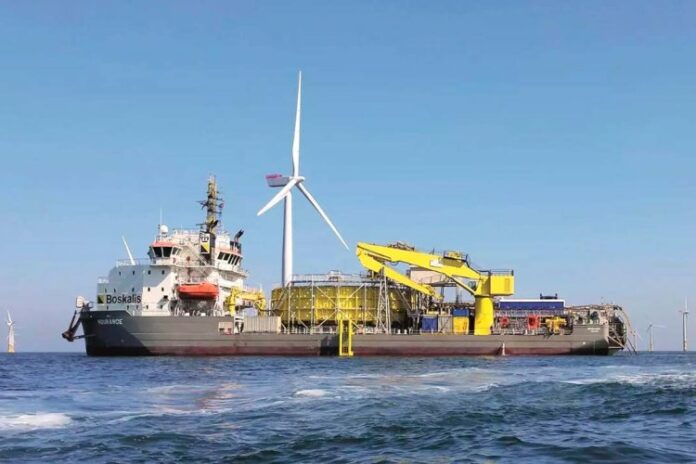
Boskalis has acquired two contracts for the transportation and installation of the export and array cables for the Baltica 2 offshore wind farm off the coast of Poland. 

The two contracts have a combined value which is considered to be large and they were awarded by a joint venture between PGE Polska Grupa Energetyczna and Ørsted, which are developing the Baltica 2 project.

The project scope comprises the transportation and installation of 107 array cables with a total length of more than 150 kilometers in addition to four 275 kV export cables with a total combined length of nearly 300 kilometers. Furthermore, Boskalis will carry out seabed preparation activities including the leveling of the seabed, pre-trenching and the removal of boulders. Upon completion of the cable installation activities, Boskalis will protect and stabilize the CPS (cable protection systems) with the placement of rock. Preparatory works will commence in 2025 and the transport and installation activities will commence in 2027.

Boskalis will deploy two cable-laying vessels, a construction support vessel, a subsea rock installation vessel and a trailing suction hopper dredger. Due to challenging soil conditions in the Baltic Sea, the cables will be installed in a pre-cut trench using the multi-mode Megalodon plough deployed from Boskalis’ construction support vessel Falcon.

The Baltica 2 offshore wind farm with a total capacity of up to 1.5 GW is located in the Polish section of the Baltic Sea approximately 40 kilometers off the coast of Poland between Leba and Ustka and will be the country’s largest renewable energy project to date.