-8 C
New York
Home Blog Page 266

Damen receiveds new orders from Feyz Group in Turkey

0

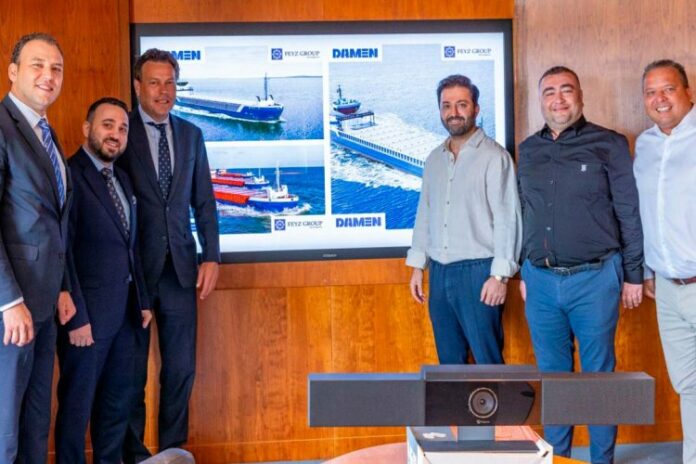
On behalf of SLPLUS Holding and based on their trust in Feyz Group’s operational capabilities, Damen Shipyards has received a new order for a Combi Freighter (CF) 5000 and an additional CF 3850, just four weeks after a contract was signed for three CF 3850s.  

Designed for general cargo like the other models in the Damen Combi Freighter family, the CF 5000 shares many of the core design attributes of the CF 3850. 86.60 metres in length, it has a hold capacity of 7,000 m³ and can carry up to 5,080 tonnes of cargo or 164 TEU containers. It also offers the possibility to have four tween decks that can be assembled to form two bulkheads in the hold for even more versatility. Lashing points are provided at all the desired locations and there are container fittings on the tank top and hatches. The tank top is also certified to carry loads up to 15 tonnes per square metre and the vessel has classification approval for dangerous goods and loading aground. 

The ABC 6DZC engine type is the same as that in the smaller CF 3850, but in the CF 5000 it runs at higher revolutions per minute. 1000 rpm delivers 1326 kilowatts and this provides all the power needed for fast, safe and economical passages. For those operators looking to further reduce their emissions, a number of options are available including wind-assisted propulsion. 

The Combi Freighter family has five models ranging from the Combi Coaster 2750 up to the Combi Freighter 8200. Built at Damen Yichang Shipyard in China, the series construction technique and the use of standardised components and systems ensures highly competitive pricing and rapid delivery. The hydrodynamic properties of the hull shapes deliver exceptional performance which results in the Combi Freighters requiring less power than comparable vessels. This in turn leads to smaller engines than their equivalents, consuming considerably less fuel and requiring less maintenance.

It was noted by Mr Engin Aynaci, the general manager of Feyz Group, that:

“Due to the positive market reaction to our recent order from Damen, we have decided not to wait and will proceed with renewing our fleet without wasting any time. With these new orders, we are enhancing the versatility of our fleet, while simultaneously maintaining interchangeability and improving reliability, thanks to Damen’s standardization philosophy.”

Damen regional sales director, Boran Bekbulat added:

“We are delighted that the Feyz Group has returned with SLPLUS Holding to us so soon after their recent order for the three CF 3850s. We greatly value their commitment to a long-term relationship with the Damen Group.”

The vessels are scheduled for delivery at the end 2024.
Rolls-Royce supplies mtu engines for new fast ferries in Abu Dhabi

0

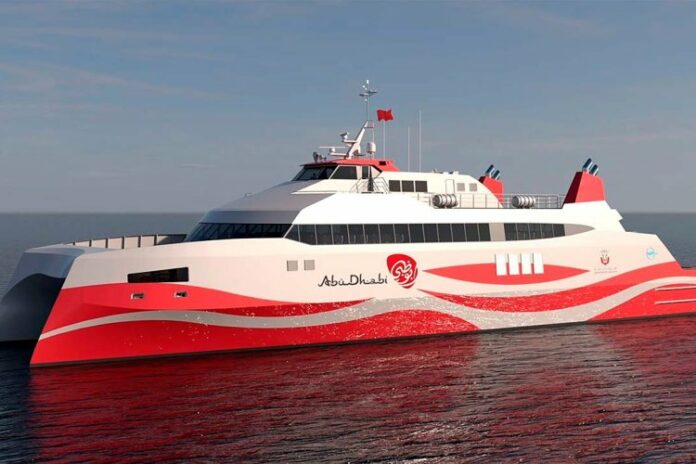
Rolls-Royce has received an order from Penguin Shipyard International Pte Ltd, a wholly owned subsidiary of Singapore-based shipbuilder and shipowner Penguin International Limited, to supply eight mtu Series 4000 engines for two new aluminium RoPax fast ferries.

The vessels are being built at Penguin’s Batam shipyard for the port and ship operator Abu Dhabi Ports Group from the United Arab Emirates. Designed by Incat Crowther UK for construction by Penguin, the 56-metre-long, roll-on roll-off vessels will in late 2024 replace existing ferries that are plying between the UAE mainland and Delma Island, located some 42 kilometres offshore. With the four 16-cylinder mtu Series 4000 engines per vessel delivering together more than 10,000 kilowatts (about 14,000 hp) of power, the aluminum ferries are expected to run at speeds of well above 30 knots, significantly reducing travel time for up to 250 passengers and 25 cars per trip.  

“We are very pleased to continue our long-standing partnership with Penguin Shipyard International, an expert in high-speed aluminium vessels, who have once again chosen us as their propulsion supplier. This order also confirms that our propulsion solutions continue to be in high demand in the fast ferry market,” said Chew Xiang Yu, Director Marine APAC at the business unit Power Systems of Rolls-Royce.

Rolls-Royce has been supplying mtu engines to Penguin for more than ten years. As recently as spring 2023, Rolls-Royce Power Systems received an order for six 16-cylinder mtu Series 4000 engines for two new fire fighting and rescue vessels being built by Penguin for the marine division of the Singapore Civil Defence Force.  

“Over the past decade, we have come to appreciate Rolls-Royce and their mtu solutions as our go-to partners in the powering of mission-critical high-speed vessels,” said Penguin International Limited’s managing director James Tham. “Rolls-Royce is a dependable partner in good times and bad. They provide excellent customer experience for each project.” For the Abu Dhabi RoPaxes, mtu engines were selected based on their robustness and fuel efficiency. The Series 4000 engines are capable of operating continuously at high power, without power loss, in elevated ambient temperatures.

Around 850 fast ferries worldwide operate with mtu propulsion systems from Rolls-Royce. No other engine brand is on board so many fast ferries. “We know what ferry operators need and are constantly working to further develop our range of solutions. Our engines have a high power density, are particularly reliable and are efficient with low fuel consumption and low life cycle costs – which is exactly why operators of fast ferries, double-ended ferries and catamarans choose mtu propulsion systems,” explained Denise Kurtulus, Vice President Global Marine at Rolls-Royce Power Systems. The mtu Series 4000 engines, along with mtu exhaust aftertreatment systems, are certified for EPA Tier 4 and IMO III emissions regulations and are now also approved for sustainable fuels such as HVO.

Penguin International Limited is a Singapore-based, publicly traded company that designs, builds, owns and operates high-speed aluminium vessels through a group of wholly owned, integrated subsidiaries. Penguin Shipyard International Pte Ltd, a subsidiary of Penguin International Limited, operates a 30,000-square metre shipyard in Singapore and a 50,000-square metre shipyard in Batam, Indonesia. Since 1995, the company has delivered more than 200 aluminium workboats, patrol boats and passenger ferries to ship owners around the world.


Ecowende joins forces with Van Oord to build most ecological wind farm yet

0

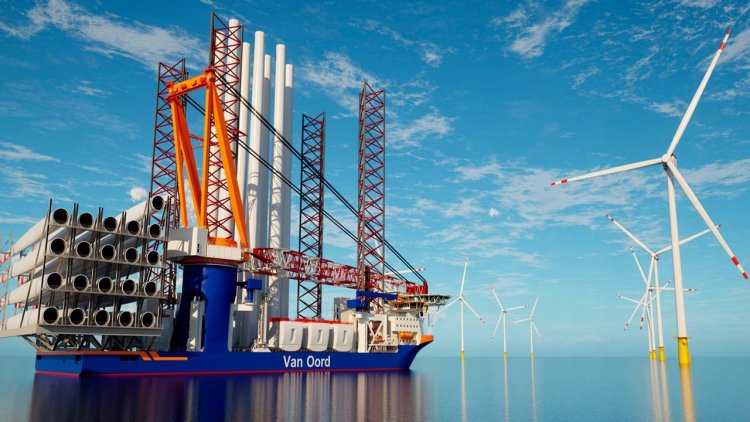
Ecowende and Van Oord will collaborate on the construction of the offshore wind farm on Hollandse Kust (west) lot VI. 

The aim is to enable the development of offshore wind farms with a net-positive impact in the near future. The collaboration between the wind farm developer, a joint venture of Shell and Eneco, and Van Oord was announced today at the ‘Van Oord & Energy Transition’ masterclass, to mark the christening ceremony for Van Oord’s new cable-laying vessel Calypso. Contract signing will take place later this year.

As Ecowende’s contractor, Van Oord will be responsible for transporting and installing the foundations. Van Oord will also design, procure and lay the connecting cables between the wind turbines. Finally, Van Oord will be handling the transportation and installation of the wind turbines at sea.

Arnoud Kuis, managing director Van Oord Offshore Energy:

‘The fact that Van Oord has been involved in the construction of all the wind farms in the Dutch North Sea means we have built up a wealth of knowledge over the years. We are happy to be working with the Ecowende consortium to bring all our experience on innovative, ecological, nature-enhancing measures to bear for Hollandse Kust West.’

Folkert Visser, CEO and Project Director Ecowende adds:

‘We are making huge strides to develop offshore wind in an environmentally responsible way. With Van Oord’s years of experience in all facets of offshore wind farm construction, we are confident that Van Oord can work with us to meet this wonderful challenge.’

Building a wind farm in harmony with nature is an important condition for eventually achieving the ambition of 70 GW of offshore wind energy by 2050, within the ecological limits of the North Sea. Besides reducing the negative impact of an offshore wind farm, it is also necessary to implement ecological measures that can contribute to the development of wind farms with a net positive impact. To that end, Ecowende will implement various innovations, large-scale mitigation and stimulation ecological measures and an extensive monitoring and research programme above and below the water. For Van Oord, this also means a different approach to previous wind farms.

‘In building the Ecowende wind farm, we are applying quieter installation techniques. The purpose being that this park and future parks can be built under stricter permit conditions. Van Oord is also laying various types of nature-friendly rubble around the foundations. Moreover, reducing the footprint (CO2 and nitrogen) during the construction phase is being given maximum attention. Van Oord is investing heavily in installation vessels using new fuels, to make the industry even more sustainable. The yet-to-be-built installation vessel Boreas, which can operate on methanol, will be delivered in 2025. Ecowende will be one of the first projects of this green giant,’ says Arnoud Kuis.

Folkert Visser:

‘When choosing Van Oord, Ecowende also looked at emissions. It takes a strong vision into the future for Van Oord to make such large investments in growing their fleet and, at the same time, making it more sustainable.’

LATTICE receives AiP for Floating Hydrogen Import Terminal

0

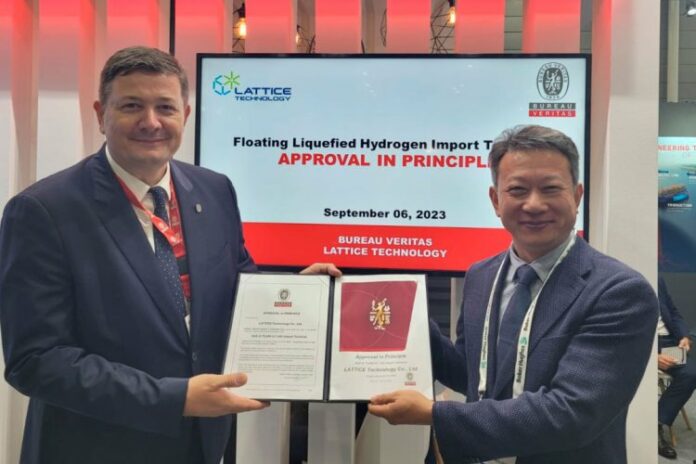
Bureau Veritas (BV), a world leader in testing, inspection, and certification, has delivered an Approval in Principle (AiP) to LATTICE Technology Co., Ltd. (LATTICE) for its innovative design and development of a 75,000 CbM floating liquified hydrogen (LH2) import terminal.

The import terminal will receive the liquefied hydrogen from an LH2 carrier and store it, allowing for gas and liquid hydrogen to be supplied on demand. All the terminal functions are contained on a barge – a non-propelled floating unit, that can be fabricated and tested in a shipyard before delivery. The LH2 containment system, the V-CCS (Vacuum Cargo Containment System) consists of a Lattice Pressure Vessel (LPV) with vacuum polyurethane insulation and a flexible gas-tight membrane barrier to minimize the size of the barge hull, eliminate boil-off and substantially reduce the insulation weight.

The floating LH2 terminal project team is led by Korean and Australian companies: LATTICE Technology, KOMAC, KOGAS Tech, KAIST, Elecseed and LH2 Energy. This international collaboration project is funded by the Korea Institute of Energy Technology Evaluation and Planning (KETEP). The project will be continued with further design development and optimization of the integrated unit until the end of 2023.

Daejun Chang, Technical Supervisor of LATTICE Technology, said:

“The barge-mounted import terminal is an innovative and fast-track solution for intercontinental shipping of liquid hydrogen in that it can be fabricated and deployed in a copy-and-paste way to shorten the delivery time with cost effectiveness, fabrication quality, and operational safety secured.”

Alexander Gregg-Smith, Senior Vice President of Bureau Veritas Marine & Offshore North Asia Zone, said:

“A Bureau Veritas Approval in Principle is significant for the development of new technology – in this case floating infrastructure to support the development of a zero-carbon fuel supply chain. We are particularly pleased to have been involved in this technology project and look forward to supporting its onward development.” 

Saipem awards new offshore contracts in Côte d’Ivoire and Italy

0

Saipem has been awarded two new contracts for offshore activities in Côte d’Ivoire and Italy for an overall amount of 850 million euro.

The first contract has been awarded to Saipem by Eni Côte d’Ivoire and its partner Petroci. It is a Subsea Umbilicals, Risers and Flowlines (SURF) contract for the development of the Baleine Phase 2 project, which takes its name from the oil and gas field, located offshore Côte d’Ivoire at a 1,200m water depth.

The scope of work encompasses the Engineering, Procurement, Construction and Installation (EPCI) of approximately 20 km of rigid lines, 10 km of flexible risers and jumpers and 15 km of umbilicals connected to a dedicated floating unit. The installation works will be carried out by Saipem’s best-in-class offshore construction vessels and will take place in 2024.

With this new award, Saipem brings a further strategic contribution to the history of the Baleine field and strengthens its presence in Côte d’Ivoire. Saipem contributed to the drilling activities of Baleine Phase 1 by deploying the Saipem 10000 and Saipem 12000 vessels, followed up by the execution of two contracts for Baleine Phase 1 in fast-track mode.

The second contract has been awarded to Saipem, through a temporary association of companies with Rosetti Marino and Micoperi, by Snam Rete Gas for the construction of the facilities for the new Floating Storage and Regasification Unit (FSRU) to be located in the Adriatic Sea offshore Ravenna, Italy.

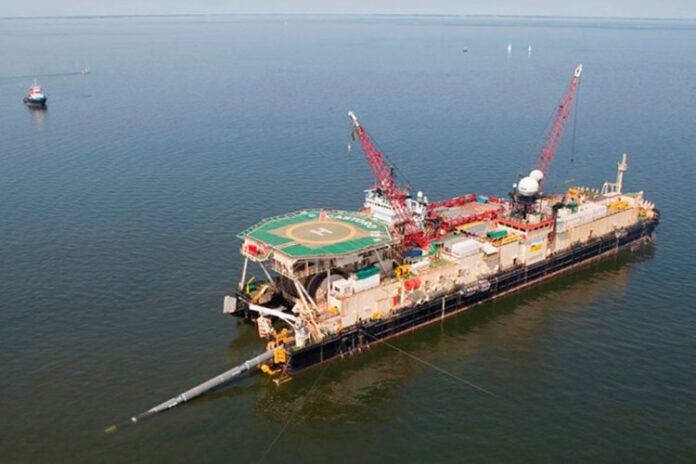
The project consists of the Engineering, Procurement, Construction and Installation (EPCI) of a new offshore facility, linked to the existing one, for the docking and mooring of the FSRU, to be connected to shore via a 26″ offshore pipeline 8.5 km in length, plus a 2.6 km onshore pipeline and a parallel fibre optic cable. The shore crossing will utilize a microtunneling system to minimize environmental impacts. Offshore operations will be executed by Saipem’s pipelay barge Castoro 10.

The new FSRU will enable an increase in Italy’s LNG import capacity, thus improving the country’s energy security thanks to the diversification of gas sources.

Partners collaborate to develop ammonia fueled ammonia bunkering tanker

0

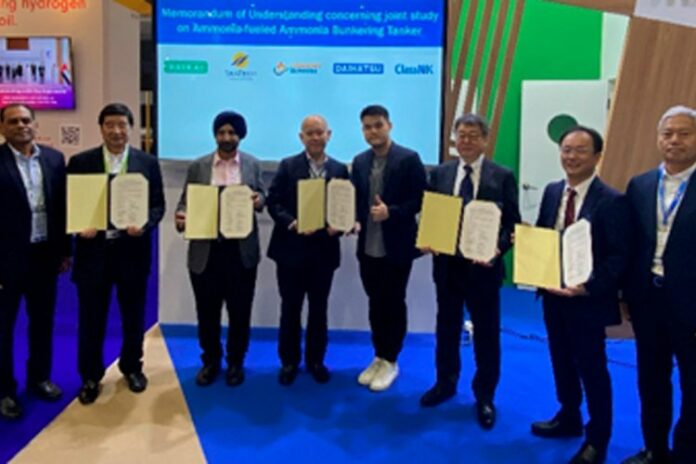
ClassNK, Consort Bunkers Pte Ltd, Daihatsu Diesel Mfg. Co.,Ltd., Daikai Engineering Pte. Ltd., and SeaTech Solutions International (S) Pte Ltd. have concluded a Memorandum of Understanding concerning a joint study on an ammonia fueled ammonia bunkering tanker. The MOU was signed by representatives of all five parties with the presence of an official from Maritime and Port Authority of Singapore at the “Gastech2023” held in Singapore.

Amid expectation for using ammonia fuel in pursuit of shipping decarbonization, bunkering ships for ammonia fueled ships will play an essential role in the supply chain. As such ships are also anticipated to use ammonia as their fuel, the development of ships that can not only transport and supply ammonia to other ships but also use it as fuel in a safe and efficient manner addressing ammonia-related risks, including its toxicity to humans and corrosiveness to materials.

Consort Bunkers operating bunkering ships in Singapore, the world’s largest bunkering port, Daihatsu Diesel developing alternative fuel engines including ammonia, Daikai Engineering providing sales of machinery and marine equipment and after-sales service in the Southeast Asian region; ClassNK, a class society involved in the safety assessment of ships; and SeaTech Solutions International designing ships equipped with alternative fuel engines, have all agreed to jointly study the concept design of the ammonia fueled ammonia tanker and the issuance of relevant Approval in Principle. Under the MOU witnessed by Maritime and Port Authority of Singapore, the five parties will pool their expertise and collaborate toward the realization of decarbonized shipping.

Yoichi Hayata, Director, Technical Management Division, Daihatsu Diesel Mfg. Co., Ltd. said:

“Recently, there has been an urgent need to reduce GHG emissions from ships, and the use of ammonia as a zero-carbon fuel has been attracting attention, however, there are issues with combustibility and safety. We have already conducted basic tests on ammonia, and have obtained knowledge on combustion characteristics, trends in exhaust gas emissions, precautions for handling, etc. Utilizing this knowledge, we will join forces with MOU member companies and contribute to the cooperation in acquiring ammonia bunkering vessel AiP and the development of GHG reduction technology.”

Mikio Kaneda, Managing Director, Daikai Engineering Pte. Ltd., said:

“The maritime industry stands at the cusp of a transformative era, and our joint effort to develop an ammonia-fueled vessel embodies our collective commitment to sustainable innovation. Together, we are not just envisioning a greener future; we are actively working to make it a reality.”

Capt M Segar, Assistant Chief Executive (Operations), Maritime and Port Authority of Singapore, said:

“MPA welcomes studies, pilots, and collaborations that contribute to the maritime sector’s decarbonisation efforts. Joint studies such as the one under this MOU, are useful in bringing together the collective expertise and experience of various leading stakeholders to deepen the industry’s knowledge and confidence in handling the new future fuels, and to accelerate the development of future fuel solutions to meet the revised IMO GHG emission ambitions for international shipping“

New acoustic technology protects marine mammals

0

Saildrone together with RPS have announced the completion of the first phase of a project to create a monitoring network to detect, classify, and localize marine mammals.

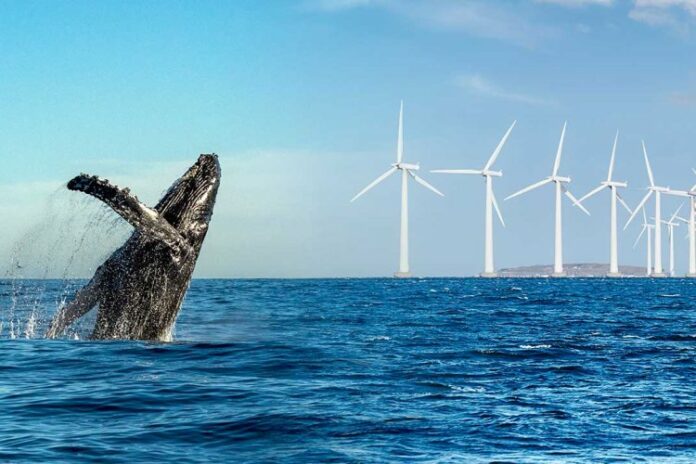
As the demand for clean energy continues to grow, offshore wind farms are becoming increasingly common. However, the construction and operation of these farms can impact marine ecosystems. Many large whale species are highly dependent on acoustics to conduct important life functions and, therefore, sensitive to underwater noise.

Traditional visual and acoustic methods for monitoring marine mammals require trained biologists to be deployed offshore on crewed vessels. Whale vocalizations are often very low frequency, making them difficult to detect and easily masked by man-made sounds.

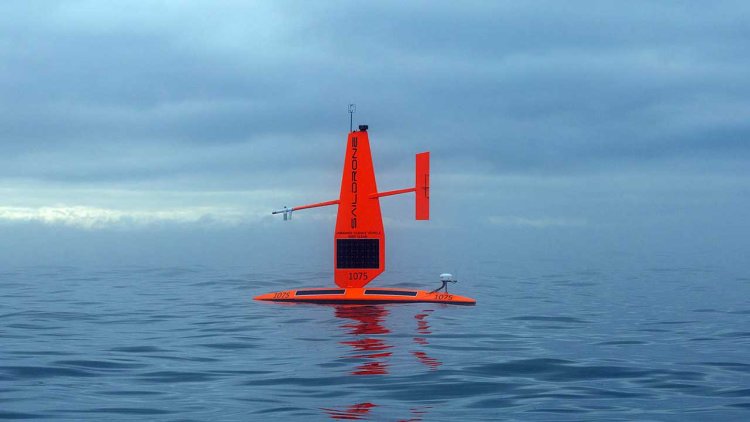
Two Saildrone USVs equipped with proprietary underwater acoustic systems were deployed off the coast of Massachusetts to listen for North Atlantic right whales and other marine mammals. The virtually silent saildrones were stationed in an area where several species of whales are known to be present. During the two-week deployment, the saildrones recorded numerous marine mammal vocalizations.

Now, RPS’s acoustic scientists have the exciting task of post-processing the data collected by Saildrone, identifying the types of calls detected and the species producing those calls. One of the tools that the analysts will use is RPS’s machine learning tool, Neptune, a predictive algorithm for accurate, reliable detection of marine mammal vocalizations.

Stephanie Milne, RPS Team Leader, US Offshore Renewables, said:

“The global development of offshore wind is key to moving away from traditional, non-renewable power generation, especially fossil fuels. But development must not negatively impact the marine mammals that share the habitat. Saildrone and RPS are working together to provide a unique, flexible, and adaptable solution to marine mammal monitoring of large areas over significant time periods, using smart tools to reduce personnel in the field but without decreasing the monitoring and mitigation provided to protect our marine animal neighbors.”

Saildrone and RPS aim to minimize the impact of industrial activities on marine mammal populations while supporting the expansion of renewable energy sources. The advanced acoustic sensors Saildrone has developed, combined with RPS’s AI, will detect and monitor the presence of whales in real time, allowing for proactive measures to be taken.

Saildrone CTO Brian Hernacki said:

“Saildrone’s passive acoustic technology allows us to gather vital information in a non-invasive and cost-effective manner, and combined with the mobility and endurance of our uncrewed platforms, provides unprecedented monitoring capability, facilitating research, conservation, and commercial enterprise.”

The project is supported by a significant award from the National Offshore Wind Research and Development Consortium (NOWRDC) to facilitate offshore wind’s coexistence with wildlife and other ocean users and support other industry initiatives. 

“NOWRDC is excited to award projects that directly respond to challenges in the offshore wind industry,” said Lyndie Hice-Dunton, executive director of NOWRDC. “As we approach the deployment of commercial-scale offshore wind in the US, these projects have the potential to provide real solutions to near-term industry challenges—ranging from stakeholder coordination to transmission resiliency. By harnessing the power of technology and innovation, we can strike a balance between sustainable economic development and the preservation of our fragile ecosystems.”

Nokia deploys private wireless network for Husky Terminal and Stevedoring

0

Nokia deployed the private 4.9G/LTE wireless network to support Husky Terminal’s upgrade to a cloud-based terminal operating system (TOS), allowing the company to manage and coordinate terminal operations from anywhere.

The network, which leverages Nokia Digital Automation Cloud (DAC), has removed the reliability and capacity issues that the company had previously experienced using traditional Wi-Fi with its previous TOS. Husky Terminal is now supported by robust, resilient, and secure low latency connectivity across its 115+ acre container yard, which has been achieved in a network footprint using 91 percent less hardware.

In fact, coverage was enabled through the deployment of six 4.9G/LTE antennas in four access point locations, compared to the 39 Wi-Fi access points required to cover the same area, thereby reducing the amount of fiber required at the site, as well as other operational costs. With over 40 yard trucks now connected, Husky Terminal can monitor them to aid worker activities.

Philip Styf, Director of IT, Husky Terminal, said:

“The deployment of Nokia private LTE was a significant milestone for us at the Port of Tacoma and has exceeded our expectations. The regular disconnections and packet loss that we experienced over Wi-Fi, that created downtime and impacted productivity, are now a thing of the past. With reliability no longer a concern, we’ve moved from firefighting mode to focusing on the strategic use cases that will further enhance operations for our customers as well as our teams working at the port.”

David de Lancelloti, VP, Enterprise Campus Edge Business at Nokia, said:

“Industrial-grade Nokia Private Wireless networks are the cornerstone of the digital transformation journey at ports. We worked in close collaboration with Husky Terminal to design and deliver a private 4.9G/LTE network that satisfied their need for robust reliable connectivity. The industrial-grade Nokia DAC digitalization platform will be critical as Husky Terminal evolves its modernization plans at the Port of Tacoma.”

ABS approves emissions reduction technology for ammonia-fueled ships

0

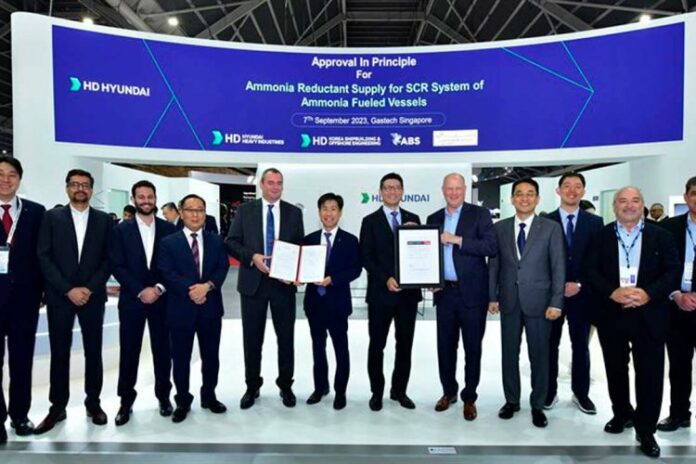
ABS issued an approval in principle (AIP) to HD Korea Shipbuilding & Offshore Engineering (KSOE) and HD Hyundai Heavy Industries (HHI) for its ammonia reductant supply system for selective catalytic reduction (SCR) in ammonia-fueled ships. Representatives from both companies and the Liberian International Ship & Corporate Registry (LISCR) met at Gastech 2023 for the AIP presentation.

The system utilizes the ammonia carried on board as the SCR reductant to remove NOx from emissions as opposed to the urea used in traditional diesel propulsion.

In addition, the AIP includes a plan to safely treat toxic ammonia gas generated during operation, including a configuration that can use ammonia Boil-Off Gas (BOG) and purge gas generated from an ammonia fuel supply system as an SCR reductant.

“ABS has always been a safety pioneer, so we are well placed to tackle the challenges on board and ashore presented by ammonia’s toxicity and flammability. ABS is committed to leading the industry in supporting ammonia’s safe adoption at sea,” said John McDonald, ABS President and COO.

“After the 80th MEPC, there is a lot of interest in zero-emission ships that use ammonia as fuel. We are pleased to have received the world’s first approval in principle (AIP) from ABS and LISCR for our technology, which aims to improve the safety of ammonia-fueled ships and reduce the operating costs for shipowners. We will continue to develop ammonia-fueled ships that are the best for our customers and look forward to working with ABS and LISCR,” said Sung-Joon Kim, Senior Executive Vice President and CTO at HD KSOE.

“Considering the recent tightening of environmental regulations, ammonia is expected to become a mainstream alternative fuel in the future. Accordingly, the development of ammonia-related technology will be actively developed, and HHI and KSOE are also working on the development of ammonia-related technology. The newly developed ammonia-reducing agent supply system is one of the results of these technological development efforts and is expected to contribute to the efficient operation of ammonia carriers,” said Seung-Ho Jeon, Senior Executive Vice President and CTO at HD HHI.

“As a leader in innovation and decarbonization, we at the Liberian Registry are very proud to join our partners in supporting this pioneering technology. This AIP is a significant step forward in the implementation of zero-carbon fueled vessels,” said Alfonso Castillero, CEO of the Liberian International Ship and Corporate Registry (LISCR).

ABB invests in strategic partnership with clean energy start-up

0

ABB Motion and WindESCo, have signed a strategic partnership, where ABB has acquired a minority stake in the company through its venture capital unit, ABB Technology Ventures (ATV).

US-based WindESCo is the leading analytics software provider for improving the performance and reliability of wind turbines. Leveraging WindESCo’ solutions, the investment will strengthen ABB’s position as a key enabler of a low carbon society and its position in the renewable power generation sector. It will allow the company to continuously improve wind turbines’ performance and reliability, offer end-to-end solutions to wind customers and open a new market channel for its digital offering. Financial details of the investment were not disclosed.

WindESCo has around 25 employees and works with 40 customers on projects in 18 countries. It has developed a market leading OEM agnostic asset performance monitoring software to detect anomalies in wind turbines, propose corrective actions and measure their results. The company has also developed a wake optimization solution that leverages data across a wind plant to optimize plant output. With their combined offering, ABB and WindESCo can now offer a complete solution approach to customers. WindESCo will be able to leverage ABB’s electrical domain expertise to further strengthen its software offering, while ABB closes a gap in its wind portfolio by adding a digital offering to the already digitally enabled wind converters.

“This strategic venture capital investment allows us to strengthen our market position supporting the energy transition and continue to shift our portfolio of customer solutions towards renewables and decarbonization. It will complement ABB’s wind portfolio with a strong digital offering by WindESCo, that enables both companies to leverage their strong presence in the growing wind market. This win-win transaction will offer a holistic solution approach to our customer bases, and it will expand the service offering by ABB Motion. We look forward to developing new synergies with the talented team at WindESCo,” commented Chris Poynter, President, System Drives division, ABB Motion.

Mo Dua, CEO, and founder of WindESCo, said:

“There is tremendous value locked in the wind turbine converter data. While most of the solutions have focused on the mechanical systems, there are no solutions having a meaningful impact on the electrical system. The equity investment by ABB and our technical collaboration will allow WindESCo to expand its offering to the wind turbine electrical system with the goal of being the leading comprehensive asset performance monitoring solution provider for the wind industry. We are glad ABB chose WindESCo as their digitization partner.”

The partnership helps expand ABB’s ecosystem of innovation partners developing solutions that support decarbonization and energy efficiency. Since 2009 ABB has made investments of around $400 million from its capital venture arm that are aligned with its electrification, robotics, automation and motion portfolio.