-4.5 C
New York
Home Blog Page 263

New ocean mapping center expands NOAA, UNH partnership

0

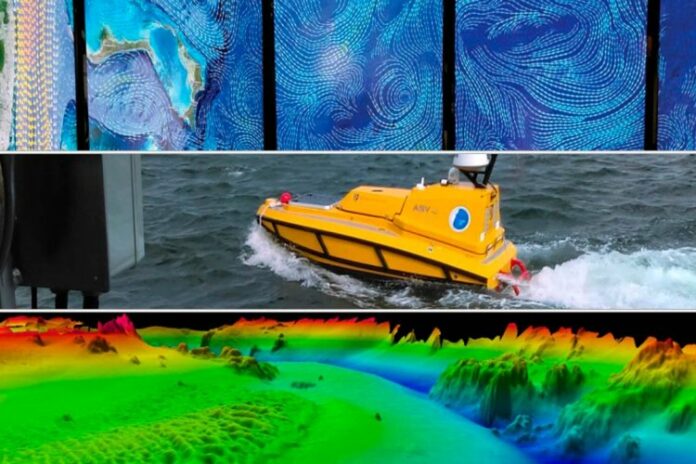
NOAA and the University of New Hampshire (UNH) are expanding a 24-year ocean and Great Lakes mapping partnership through the creation of a new Center of Excellence for Operational Ocean and Great Lakes Mapping.

“NOAA and UNH have a long history of collaborating to advance the latest technologies and tools to map our ocean, coasts and Great Lakes — a cornerstone of the blue economy,” said Rick Spinrad, Ph.D., NOAA Administrator. “Our continued partnership on the Center of Excellence will help build a workforce ready to tackle the mapping challenges of the future, and further our understanding of our changing ocean and coasts.”

“The University of New Hampshire’s world-class Center for Coastal and Ocean Mapping and Joint Hydrographic Center has led the way for more than two decades in ocean mapping, helping ensure safe marine transportation and understanding coastal hazards. This leadership is affirmed by NOAA locating a new Center of Excellence for Operational Ocean and Great Lakes Mapping on UNH’s campus. With this $8 million NOAA grant I helped secure, New Hampshire’s ongoing research and training programs will remain ahead of the curve in this leading field,” said Senator Jeanne Shaheen, chair of the Senate Appropriations subcommittee that funds NOAA. 

The Center of Excellence is funded through $10 million in NOAA’s FY 2023 budget, and will complement existing research, technical expertise and advanced educational programs at the NOAA-UNH Joint Hydrographic Center and UNH’s Center for Coastal Ocean Mappingoffsite link. The Center of Excellence will focus on the following priorities:

  • Delivering practical hydrographic training and fostering workforce development for ocean mapping operations.
  • Providing technical expertise and systems support for NOAA’s mapping operations on an increasingly diverse set of platforms, including new ships and uncrewed survey vessels.
  • Partnering with academia and industry to transition ocean mapping research to operations. 

“Accurate and up-to-date maps of our ocean, coasts and Great Lakes are critical to maritime commerce, transportation and recreation, and directly support resilient coastal communities,” said Nicole LeBoeuf, director of NOAA’s National Ocean Service. “This new Center of Excellence will build on existing collaboration with UNH as we implement cutting-edge mapping technology and train the next generation of ocean and coastal mapping professionals.”

A portion of the funding will be used by UNH to construct a new, state-of-the-art ocean mapping facility that will serve as the focal point of a campus innovation hub to bring together academia, industry and government. 
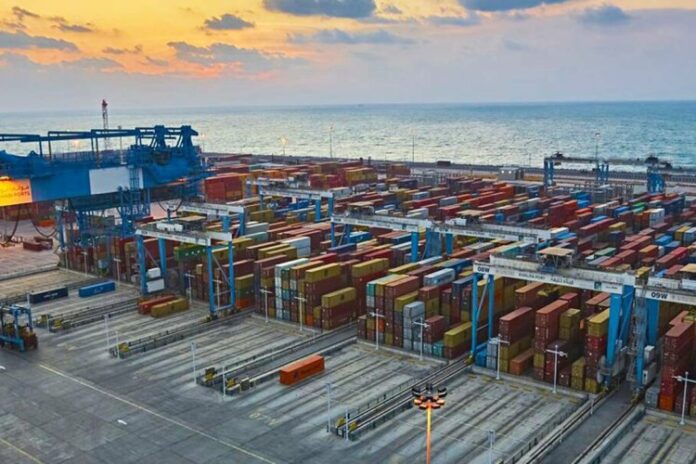
Fertiglobe and AD Ports to collaborate on logistics projects in Egypt and UAE

0

Fertiglobe has signed a non-binding Memorandum of Understanding (MoU) with AD Ports Group. 

Fertiglobe aims to reduce its greenhouse gas (GHG) footprint, enhance operational efficiency, and further automate its logistical activities by exploring opportunities to leverage AD Ports Group’s state-of-the-art cargo handling and storage infrastructure and their proximity to Fertiglobe’s facilities and shipping destinations. 

Ahmed El-Hoshy, CEO of Fertiglobe, commented:

“Our MoU will explore compelling opportunities that exist across our logistics and supply chain management requirements, bolstering our ability to store and ship urea and ammonia from Egypt and supporting our program to optimize our logistics cost structure. Today, our strategically located production facilities benefit from direct access to international ports and distribution hubs, allowing us to easily access major end-markets and regions with high demand. Even as this MoU focuses on Egypt and the UAE, there is significant potential to expand our partnership to additional geographies, as well as to the shipping and storage of green ammonia in line with our commitment to deliver more sustainable products to the world.”

In addition, by capitalizing on AD Ports Group’s robust supply chain capabilities and sustainable modes of inland transportation, Fertiglobe seeks to further optimize its logistics cost structure, a key component of its recently introduced cost optimization program, targeting $50 million in recurring annualized cost savings by the end of 2024. 

Captain Mohamed Juma Al Shamisi, Managing Director and Group CEO, AD Ports Group, commented:

“In line with the UAE’s wise leadership’s vision for economic diversification, this partnership cements AD Ports Group’s commitment to driving broader global collaboration and supply chain development for alternative fuels, which contributes to achieving the Group’s sustainability objectives. We anticipate that this will become a remarkable step towards a greener, more efficient future. As two homegrown champions, AD Ports Group and Fertiglobe are embarking on this strategic collaboration that holds immense potential. We are pleased that, by leveraging our integrated portfolio and extensive infrastructure and supply chain expertise, Fertiglobe can strengthen its urea and ammonia storage and shipping capabilities.”

Fertiglobe and AD Ports Group will also explore potential collaboration opportunities in other geographies as well as the development of supply chain solutions for green ammonia, a hydrogen carrier, with Fertiglobe’s existing operations strategically located near key shipping routes.
 

KPI OceanConnect and Uni-Tankers collaborate on successful biofuel trial

0

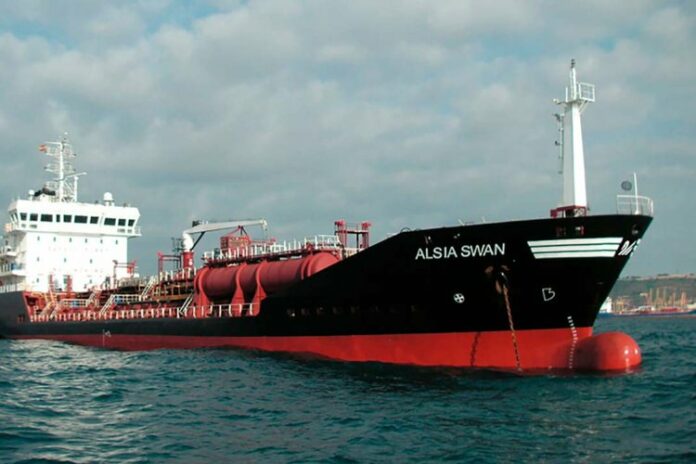
Uni-Tankers, a leading tanker shipping company, and KPI OceanConnect, a leading global marine energy solutions provider, today announced they have completed the successful supply and trial of a bespoke blend of B30 biofuel on Uni-Tankers’ M/T Alsia Swan. The trials are an important step for understanding the emissions performance of biofuel and validating its potential to help cut carbon emissions. 

The trial took place in Amsterdam on board Uni-Tankers’ 5,700 DWT chemical tanker M/T Alsia Swan. KPI OceanConnect arranged for the supply of 34,000 litres of bio grade fuel containing a 30% blend of FAME (fatty acid methyl esters). The fuel supply was part of a two-day trial, which saw emissions for the biofuel measured and compared with emissions for LSMGO under the same conditions. 

KPI OceanConnect’s local team of traders worked with their Uni-Tankers partners to identify a biofuel to meet their bespoke needs. The team oversaw the blending process to ensure the fuel met precise specifications and was on hand for the delivery to ensure the specially blended product supplied for the M/T Alsia Swan trials was good quality. 

Throughout the trial, tests were carried out at four different loads to assess the reliability and performance of the bio-fuel blend. Alongside trials of the B30 biofuel, Uni-Tankers ran identical operations for an LSMGO fuel of equal quality, allowing accurate comparisons of the B30 biofuel performance. Sampling and analysis for the trial was performed by a team from FORCE Technology.

In results from the trial, Uni-Tankers saw particulate matter (PM) emissions reduced by as much as 42% when fuel supply was switched from LSMGO fuel to B30. Carbon monoxide (CO) emissions were also reduced by 18%. By using a blend of 30% biofuel and 70% fossil MGO, M/T Alsia Swan can cut lifecycle emissions of CO2 by an equivalent amount. In a future of tightening regulation of greenhouse gas emissions, this will be an important interim step ship owners can take to maintain compliance and support decarbonisation. 

Jesper Sørensen, Global Head of New Fuels and Carbon Markets, KPI OceanConnect, commented on the project:

“By sharing our knowledge and providing expert guidance on fuel strategies, including finding the right biofuel blend ratio to meet the specific needs of vessel operators, we aim to build partnerships with our clients that support their long-term success through the energy transition in shipping. For KPI OceanConnect our close partnership with Uni-Tankers is a model for delivering excellence to our clients.”

Lisa Clement Jensen, Head of Strategy at Uni-Tankers, commented:

“The need to cut emissions is one of the most urgent matters in the shipping industry and we are very pleased to be working with KPI OceanConnect for the biofuel trials on the M/T Alsia Swan. Decarbonization is at the top our strategic agenda and we aim to contribute to a climate-resilient development of the shipping industry. These trials enable us to assess the potential and viability of biofuels as part of our ongoing decarbonization efforts.” 

Europalink is back in Malmö and flying the Swedish flag

0

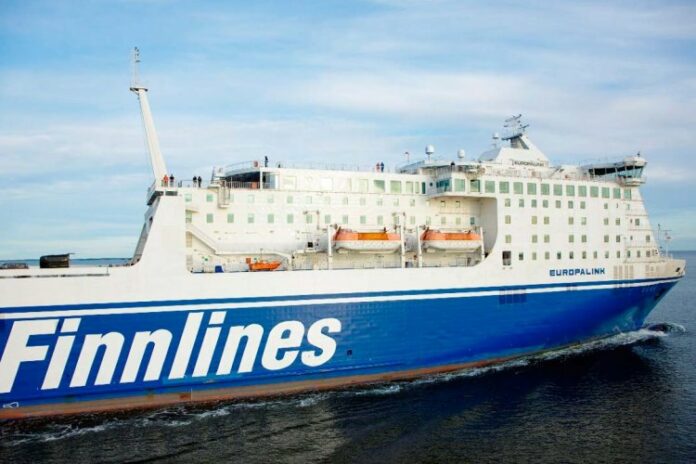
The reflagging ceremony was carried out on 18 September 2023 by Finnlines’ Line Manager Antonio Raimo, the Ship’s Master Jan Isberg and the Chair of the Regional Executive Committee in Skåne Carl Johan Sonesson.

The ro-pax ferry Europalink holds a special place in the hearts of Malmö’s residents due to its long history in the city. In recent years, Europalink has sailed on Finnlines’ route between Kapellskär outside Stockholm, Långnäs on Åland and Naantali in Finland, flying the Finnish flag. Now however, the ship has returned to the route between Malmö and Travemünde in Germany. And on 18 September, the Finnish flag was replaced with a Swedish, meaning that Europalink is once again part of the Swedish merchant fleet.

“We are thrilled to bring Europalink down to Malmö again and of course under the Swedish flag. We are currently focusing on increasing the capacity on our route between Sweden and Germany, for both freight customers and passengers. Finnlines’ core business has always been freight transport, but we are also introducing new service concepts for passengers on our various routes. The route between Naantali in Finland and Kapellskär outside Stockholm has been first in line, but we now also want to upgrade the line between Malmö and Travemünde”, says Antonio Raimo, Line Manager, Finnlines.

“Our strive is always to be a local shipping company, although we are a big corporate group. By flying the Swedish flag, we are ensuring that we can hire competent staff. We are counting on approximately 100 employment opportunities in total”, says Thomas Doepel, CEO, Finnlines Ship Management AB.

“I’d like to extend a warm welcome to Europalink, returning to Malmö and Skåne, and I have been happy to help reflagging her today. Sweden has relatively few merchant ships in its national Ship Registry, compared to the other Nordic countries. This makes it more difficult to maintain our security of supply in the event of a crisis. It is therefore very positive that Finnlines is taking responsibility to ensure that all vessels on their route between Malmö and Germany fly the Swedish flag”, says Carl Johan Sonesson, the Chair of the Regional Executive Committee in Skåne.

Europalink was built in 2007 by the Italian shipyard Fincantieri and has since then made various calls to Sweden, Germany, Finland, Poland, Italy and Greece. However, Europalink has a very special relationship with Malmö, as the Malmö–Travemünde route marked the vessel’s inaugural deployment from 2007 to 2009. Europalink has since then returned to Malmö between 2018 and 2021. Finnlines’ other vessels on the Malmö-Travemünde route are currently M/S Finntrader, M/S Finnpartner and M/S Finnfellow.


Concordia Damen converts Dutch barge into a Nigerian dredger

0

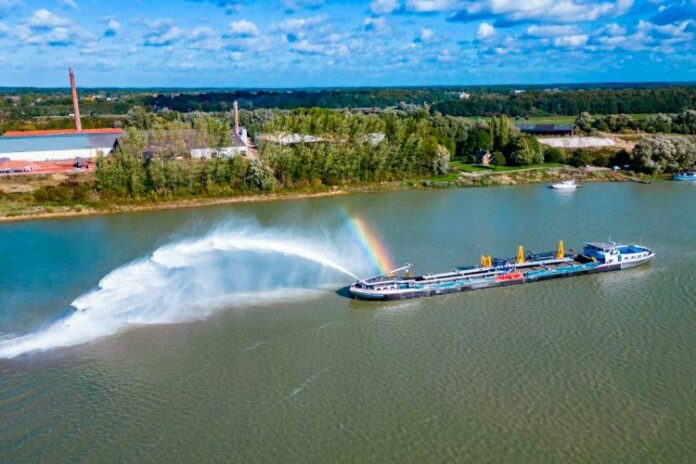
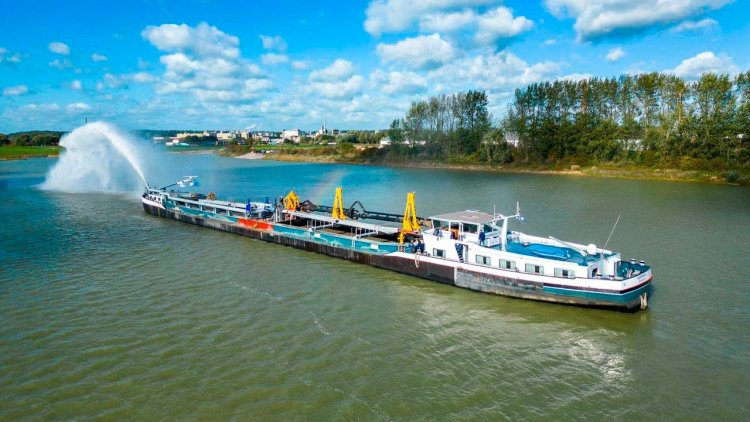
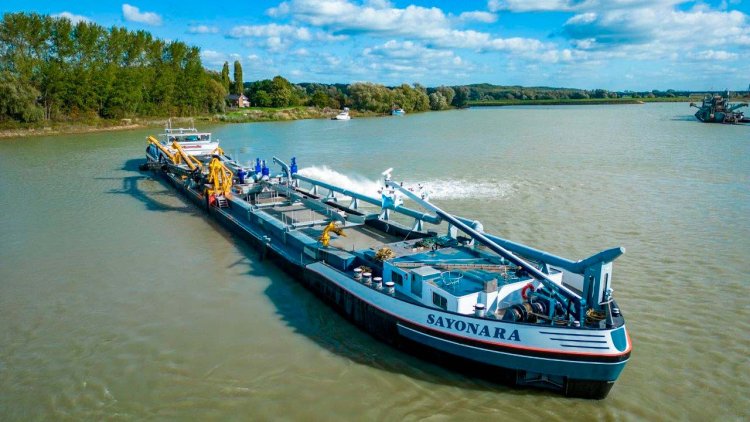
Concordia Damen recently delivered a special project: the conversion of a Dutch barge into a Nigerian dredger. The TSHD (Trailing Suction Hopper Dredger) ‘Sayonara’ has now arrived and is at work on the Lagos lagoon. 

Three years ago, the Werkendam shipyard came into contact with a Nigerian dredging company via Damen Shipyards Gorinchem. This eventually led to the start of the complex conversion project in December 2021. After extensive testing to ensure that the vessel, once in Nigeria, would not experience any teething problems, Jumbo-SAL-Alliance’s HLV Fairplayer transported the special TSHD to the customer in Lagos.

Converting an inland shipping barge instead of building a new-build dredger has several advantages, according to the yard. Both because of the fast delivery time and because this method simply saves money at the bottom line, it is a very attractive option for dredging businesses. 

On top of that, all the dredging equipment is supplied by Damen Dredging – the same installations that are usually fitted in newbuilds. These include a 500 mm trailing suction pipe, gantries, winches, the dredge pump and valves. The refitted TSHD has a capacity of about 1,400 m3.

Through close cooperation with several trusted suppliers, including, for example, system integrator Werkina Werkendam, the conversion of the Inland Trailing Suction Hopper Dredger has been a success. To create the necessary space for the dredge pump – with drive and various dredging pipes – Concordia Damen cut the ‘Sayonara’ in half and extended it with 7.5m and a special pump chamber.

Johan Castberg partnership provides update on project cost estimate

0

The plan for production start in the fourth quarter of 2024 remains unchanged.

“Costs are increasing due to a larger than expected scope of work and cost increases in the industry, we take this seriously. However, Johan Castberg is still a good project with a solid economy. With a breakeven of around USD 35 per barrel, Johan Castberg will provide substantial revenue and ripple effects to the community from the Barents Sea for 30 years,” says Geir Tungesvik, Equinor’s executive vice president for Projects, Drilling & Procurement.

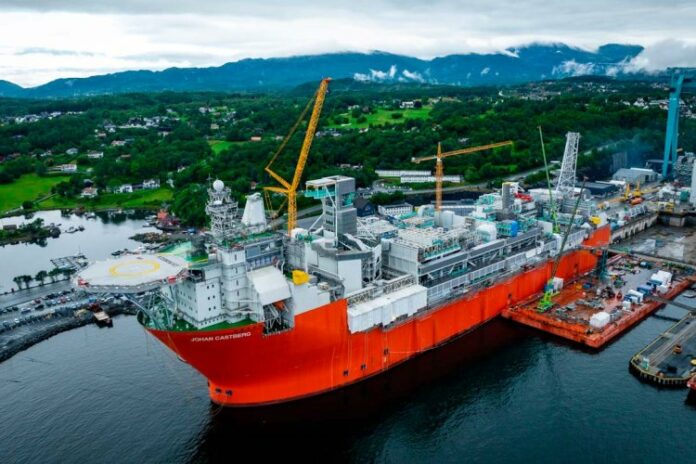
In 2022, the Johan Castberg hull, including living quarters, was transported from Singapore to Stord for installation and commissioning. The main reason for the rise in the investment estimate from last year is that the workload transferred to Stord has been more comprehensive and complex than estimated. In addition, the project has not progressed as planned. Due to the market cost development the marine operations, drilling and completion costs have also increased.

When the plan for development and operation (PDO) was submitted in 2017, the cost estimate was NOK 57 billion (2023). The updated project cost estimate is now NOK 80 billion. Project costs have risen by NOK 15.5 billion, in addition to a currency effect of just above NOK 7 billion.

Infection control measures and reduced access to labour in connection with the Covid-19 pandemic affected the project, both in Singapore, where the hull and living quarters for the production vessel were constructed, and at Norwegian yards constructing modules for the production facility.

Proven volumes in Johan Castberg are estimated at between 450 and 650 million barrels of oil. The vessel is designed for a daily production of close to 190 000 barrels.

Every day around 2000 people work on completing the FPSO at Stord. In the operations phase Johan Castberg will provide jobs, ripple effects and revenue to the community for 30 years. Johan Castberg is estimated to require 1700 person-years of work during the operations phase, of which 500 will be in Northern Norway.

Johan Castberg is a subsea field with 30 wells distributed on 10 templates and two satellites tied back to a floating production, storage and offloading vessel (FPSO). It is located around 100 km north of the Snøhvit field in the Barents Sea, 150 km from Goliat and almost 240 km from Melkøya in Hammerfest. Water depth is 360-390 metres.

Active control of wind turbine speed can lead to fewer bird strikes

0

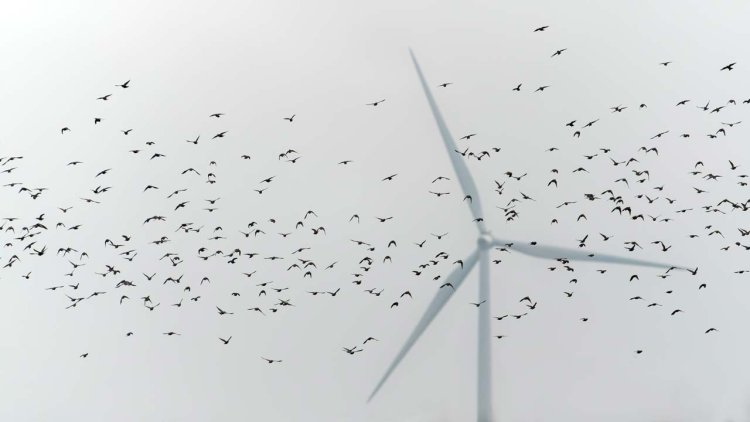
Sound signals, lights, painting the rotor blades, and rapid shutdowns have all been tried in an attempt to reduce bird mortality.

But researchers Paula B. Garcia Rosa and John Olav Tande at SINTEF are currently working on a new concept – involving turbines that adapt to bird behaviour, rather than the other way around. 

What happens when a bird approaches an ‘adaptable’ wind turbine?

“As the bird approaches, it is identified using cameras and bird radar systems mounted on the turbine”, says Garcia Rosa. “This identification has to take place at least five seconds, or at a distance of at least 100 to 200 metres, before collision with the rotor blades”, she explains. 

“Software is used to calculate the most probable trajectory of the bird. If there is a danger of collision, it sends control signals that trigger a small adjustment in the blade rotation velocity. This is achieved by adjusting the generator moment and blade twist”, explains Garcia Rosa.

To date, the researchers have only succeeded in performing numerical simulations of their method, although their results indicate that four out of five collisions can be avoided.

Of course, it is not possible to do anything about potential collisions with the rotor head, or about situations in which a bird approaches a turbine from the side or along the plane through which the blades are cutting through the air.

The technology has been given the name SKARV and has already been patented.

“It’s difficult to predict a bird’s flight trajectory, and the new system will not resolve this problem entirely”, says Garcia Rosa. “For example, if a young, inexperienced bird approaches a turbine displaying irregular flight behaviour, it will not be possible to predict exactly where it will be a few seconds later. Prediction is also more difficult if several birds approach at the same time”, she says. 

The researchers offer an alternative solution in the case of an approaching flock of birds. This involves emergency shutdown of the turbine.

It may take 15 to 20 seconds for a 10 MW turbine to cease rotation from its usual speed. Wind turbines are rarely installed in isolation, and the risk of collision increases when birds have to navigate through extensive wind farms.

“On the basis of our simulations, we believe that the SKARV project can help to reduce the number of fatal collisions by up to 80 percent”, says Garcia Rosa. “The next step is to further develop existing strategies for controlling blade rotation speeds and to integrate these with methods for identifying bird flight trajectories”, she says.

“Then we will be looking to implement a practical demonstration”, adds Garcia Rosa. “We believe that the SKARV technology could be commercially available within five years, and perhaps even earlier if we see sufficient interest from the industry”, she says.

The technology can be adapted to all wind turbines that operate with variable and controllable blade rotation speeds.  

“SKARV is a promising technology, but as yet we know too little about how effective it will be in practice”, says Roel May, who is a Senior Research Scientist at the Norwegian Institute for Nature Research (NINA). 

According to May, bird mortality resulting from collisions with wind turbines is regarded globally as a major problem. Seabirds and birds of prey are especially at risk. 

“In Norway, detailed research has been carried out only on the island of Smøla”, says May. “Here, between six and eight white-tailed eagles are killed by wind turbines each year. Willow grouse also incur major losses. The problem is greatest for species that are few in number and which produce few young each year. 

May is keen to emphasise the need for a hierarchy of measures for the prevention of bird deaths.

The most important action would be to install wind farms only in locations where it is likely they will do the least harm. As well as causing bird deaths due to collisions, wind farms also contribute to habitat loss. 

The next step is to minimise bird losses at existing wind farm locations. On Smøla, NINA has painted rotor blades black and has subsequently recorded a significant reduction in eagle mortality. The SKARV technology also aims to reduce bird losses.

After having reduced these negative impacts, compensatory measures, such as habitat restoration at other locations, should be considered.

BV and Hanwha Ocean announce joint development project

0

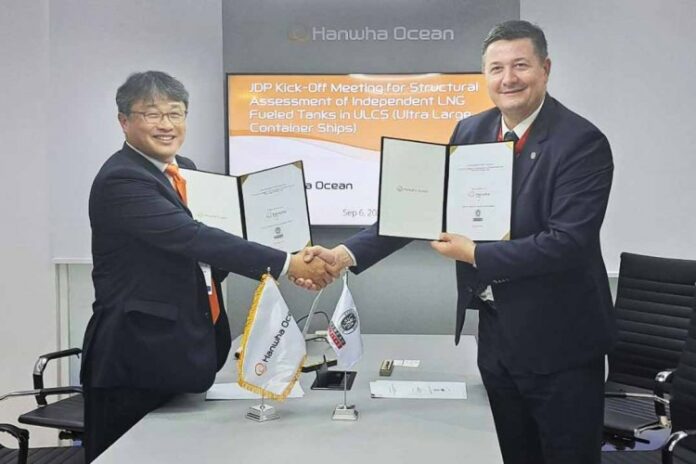
Bureau Veritas (BV) and shipbuilder Hanwha Ocean have announced a Joint Development Project (JDP) on the structural assessment of independent LNG fuel tanks for ultra large ships.

The JDP agreement was signed by Joong-Kyu Kang, Head of R&D Institute of Hanwha Ocean Co., Ltd and Drago Pinteric, Country Chief Executive Korea of Marine & Offshore at Bureau Veritas, at a ceremony on 6th September at Gastech 2023 in Singapore. The project aims to enhance the design process of independent LNG fuel tanks and accelerate the development of new solutions for the structural assessment of those systems.

Today many vessels are equipped with independent tanks, either for the purpose of LNG/LPG transportation or for the use of LNG/LPG as a fuel. The particularity of these independent tanks is that they are not rigidly connected to the hull structure but are instead held by an important number of dedicated supports, which must be designed with consideration of non-linear structural response during operations, including loss of contact and sliding.

Accurately solving these contact nonlinearities usually requires large computational time, and the method is very sensitive to convergence parameters. Recently, Bureau Veritas developed a new methodology to assess contact behaviour nonlinearities. The method was validated by comparison with simulations, and it was demonstrated that the CPU (central processing unit) time is significantly lower, while maintaining the same levels of accuracy. The proposed solution, which has been implemented in the Bureau Veritas hydro-structure interaction suite Homer, allows for the fully consistent structural analysis of vessels equipped with independent tanks.

Joong-Kyu Kang, Head of R&D Institute of Hanwha Ocean, said:

“Through this JDP with Bureau Veritas, it is expected that structural analysis technology will be further advanced to improve the performance of independent tanks and develop differentiated products for the application of future projects.”

Alexander Gregg-Smith, Senior Vice President of Bureau Veritas Marine & Offshore North Asia Zone, said:

“We are pleased to cooperate with Hanwha Ocean on the structural assessment of independent LNG fuel tanks, which will support technology development for the future application of innovative solutions while also ensuring the safety of shipping. We hope that this project will strengthen the collaboration and relationship between Hanwha Ocean and Bureau Veritas for the future development of more sustainable shipping solutions and technologies.”
 

Fugro to conduct a comprehensive survey of Saudi Arabia’s eastern coastline

0

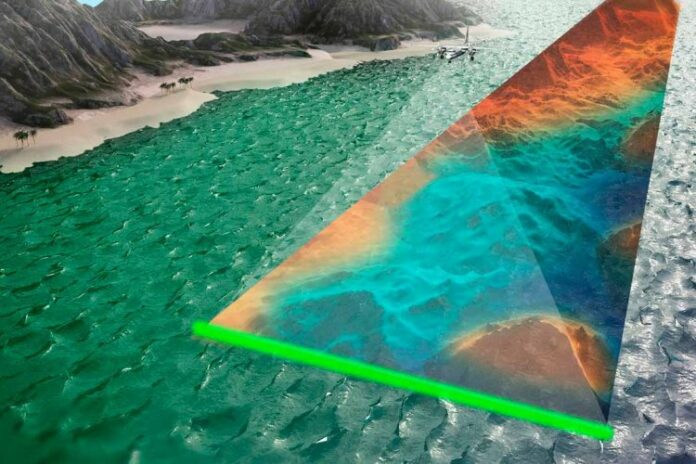
The General Authority for Survey and Geospatial Information (known as GEOSA) has awarded Fugro a contract to conduct a comprehensive survey of Saudi Arabia’s eastern coastline with the primary objective of improving the safety and efficiency of shipping navigation.

Covering an area of over 11,000 km², Fugro will deploy its High-Speed Hydrography Solution; a combination of Airborne Lidar Bathymetry (ALB), vessel-based acoustic methods and advanced processing techniques to acquire and analyse Geo-data in compliance with International Hydrographic Organisation (IHO) standards. These technologies will be deployed by a team of international hydrographic experts, including those with prior experience working on GEOSA contracts.

Fugro will partner with IIC Technologies, a specialist in nautical chart creation, to develop the final project deliverables. Fugro and IIC Technologies have a successful track record of delivering similar hydrographic projects for GEOSA (previously GASGI) since 2010.

Marco Filippone, Solution Director Hydrography at Fugro said:

“We’re honoured to play a pivotal role in enhancing the safety and efficiency of shipping navigation along Saudi Arabia’s eastern coastline. By utilizing our cutting-edge hydrographic technologies, we’re committed to delivering rapid and reliable data in compliance with international standards. This project is a testament to our long-standing relationship with GEOSA and global track record in delivering high-speed hydrographic surveys.”

Port Houston orders five more Konecranes RTGs

0

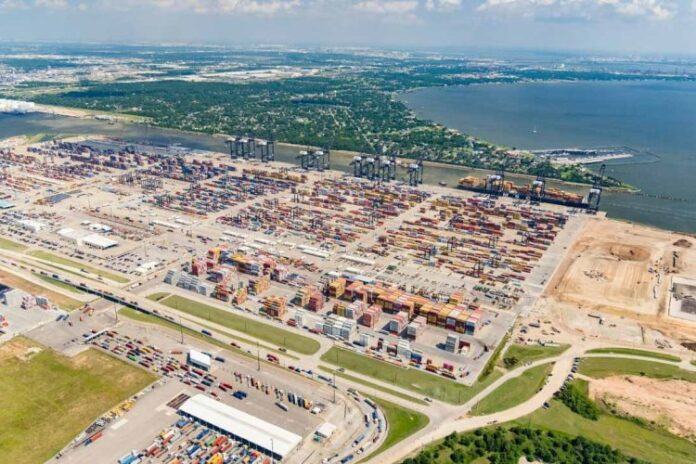
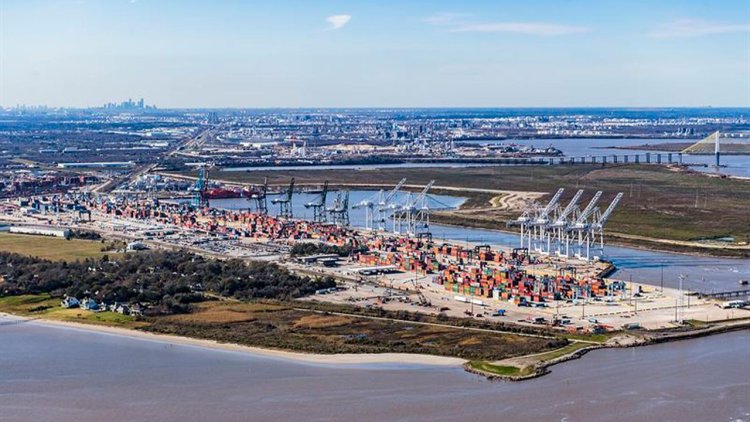
Port Houston in Texas has ordered 5 Konecranes hybrid RTGs for its Barbours Cut Container Terminal to support its long-term improvement program covering channel development and land infrastructure investment. The order was booked in Q3 2023, with the cranes to be delivered at the beginning of 2025.

Port Houston is continuing to hybridize RTG container handling in its Barbours Cut and Bayport operations to meet growing container traffic in an eco-efficient way. Houston’s current RTG fleet consists of 116 Konecranes RTGs, of which 26 are hybrid RTGs. By early 2025, the hybrid RTG fleet will grow to 57 following this order and another one announced last October.

“Konecranes RTGs are very popular in North America and it’s good to see the hybrid version populating the RTG fleet of Port Houston, which is always forward-looking, especially when it comes to eco-efficiency,” said Jussi Suhonen, VP Regional Sales, Port Solutions, Konecranes.

The hybrid Konecranes RTGs on order have advanced Li-ion battery technology and a battery management system that monitors the charge level and general health of the batteries. Konecranes can monitor the status of this system via TRUCONNECT® remote connection. The hybrid power system is completely modular and retrofittable. It includes an eco-efficient Tier 4f diesel engine that charges the batteries when necessary.

This repeat order is part of EcoliftingTM, Konecranes’ continuous work to decrease the carbon footprint of our customers. From eco-optimizing diesel drives, to hybridization and fully electric fleets, we will continue to do more with less.

A strong focus on customers and a commitment to business growth and continuous improvement make Konecranes a lifting industry leader. This is underpinned by investments in digitalization and technology, plus our work to make material flows more efficient with solutions that decarbonize the economy and advance circularity and safety.