-4.5 C
New York
Home Blog Page 262

MSC confirms orders to Fincantieri for two new hydrogen-powered ships

0

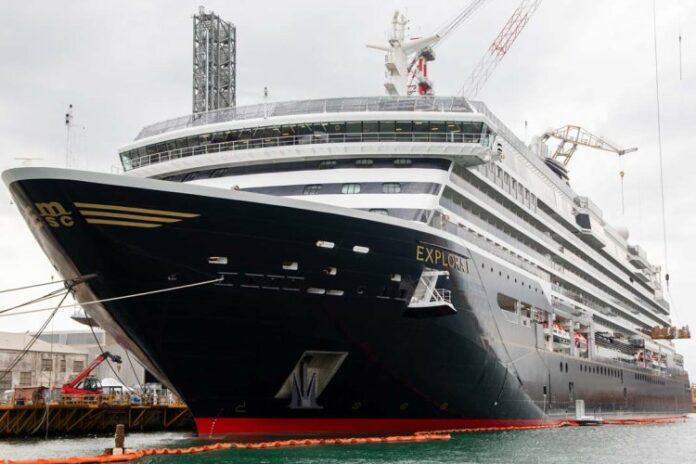
The Cruise Division of MSC Group has confirmed firm orders for two hydrogen-powered vessels for its luxury travel brand Explora Journeys with the Italian shipbuilder Fincantieri and pledged to continue its push towards a net zero-carbon emissions target by 2050 by investigating additional new and advanced environmental technologies for the luxury ships. The deal completes a total investment of €3.5 billion in six luxury ships for Explora Journeys. The contracts are subject to access to financing as per industry practice.

EXPLORA V and EXPLORA VI will have new state-of-the-art energy efficiency measures and will also be capable of using alternative fuels such as bio and synthetic gas and methanol and the Cruise Division will work in the future with Fincantieri to equip the ships with future technologies including carbon capture, and more advanced waste management systems. The two confirmed additions to Explora Journeys’ fleet will be delivered in 2027 and 2028.

Pierfrancesco Vago, Executive Chairman – Cruise Division, MSC Group, said,

“With Explora Journeys we have created a luxury brand that has been successful at redefining luxury at sea. We are seeing continued growth in the luxury segment and the investment in these two new ships shows our commitment to continue to grow within this sector as well as to invest in ships of the future. Together with Fincantieri we will study the newest technology that the world has to offer and continue with our commitment to introduce these technologies to drive efficiencies across the whole spectrum of ship performance. And of course we will continue to deliver the very best luxury travel experience, immersing our guests in the ocean state of mind with an sustainable soul.”

Pierroberto Folgiero, Chief Executive Officer, Fincantieri, said

“This new contract with MSC is a sign of the growing vitality of the cruise sector, in line with what we had predicted. In strategic terms, our future will depend on our ability to lead the evolution of the sector towards all energy and digital transition technologies with the entrepreneurship required to validate, industrialise and commercialise new solutions. The relevance of the partnership with MSC in this sense is a great strategic stimulus towards the future in line with the technological development goals set out in our new business plan. We are therefore particularly proud that the Explora project will mark the acceleration of this new phase, which with the fifth and sixth ships, will reach the highest level of advancement, making Fincantieri’s vision of the ship of the future ever more concrete.”

The two new ships will pursue the use of liquid hydrogen with fuel cells for their hotel operations while docked in ports to eliminate carbon emissions with the vessels’ engines switched off. The ships will also feature a new generation of LNG engines that will further tackle the issue of methane slip with the use of containment systems. 

LNG is one of the world’s cleanest marine fuels currently available at scale and is set to play a key role in the transition to the decarbonisation of international shipping. It substantially reduces local air pollutant emissions with sulphur oxides falling by up to 99 per cent and nitrogen oxides decreasing by up to 85 per cent.  LNG also plays a key role in climate change mitigation as it offers up to a 20 per cent reduction in greenhouse gas emissions. Further environmental benefits are expected following the availability at scale of synthetic LNG.

Explora Journeys’ first ship, EXPLORA I was delivered by Fincantieri in July 2023 and is currently operating in Northern Europe. The ship will spend the autumn in North America, and the winter in the Caribbean Sea. She will sail during the spring 2024 off the U.S. West Coast and Hawaii before returning to Europe in summer 2024 for a series of journeys in the Mediterranean Sea.

EXPLORA II will enter service in summer 2024 and operate until April 2025 in the Mediterranean Sea, the Middle East, the Indian Ocean and Africa visiting 82 ports in 26 countries. EXPLORA II first ‘touched water’ on 6 September 2023 at a ‘float out’ ceremony near Genoa in Italy.

EXPLORA III will enter service in summer 2026 and construction of the LNG-powered vessel started on 6 September 2023 with a steel-cutting ceremony. Construction of LNG-powered EXPLORA IV will begin in January 2024 and will be completed in early 2027.
Wärtsilä selects Høglund’s cargo control system for four VLECs

0

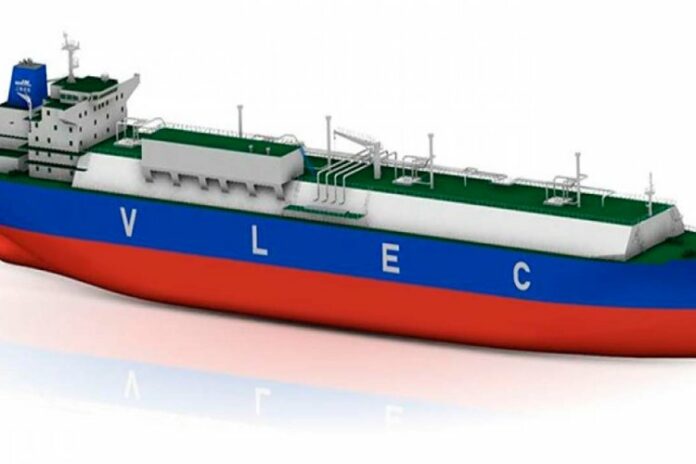
Høglund has announced a partnership with Wärtsilä Gas Solutions Norway for the delivery of complete cargo and fuel gas control systems to four state-of-the-art 99.000 CBM Very Large Ethane Carriers (VLEC). These cutting-edge vessels are set to be constructed at the Jiangnan Shipyard.

Wärtsilä, a global leader in smart technologies for the maritime industry, shall deliver cargo handling systems and has entrusted Høglund with the critical task of supplying the comprehensive control essential to the seamless operation of these VLECs. This collaboration underscores Høglund’s commitment to providing industry-leading solutions that enhance vessel safety, efficiency, and sustainability.

The deliveries are scheduled to occur between May and November 2024.

“We are thrilled to be selected as the trusted partner by Wärtsilä for this important project,” said Peter Morsbach, Høglund COO. “Our dedication to innovation and excellence in marine automation aligns perfectly with Wärtsilä’s high quality demands, and we look forward to delivering state-of-the-art cargo and fuel gas control systems that will ensure the optimal performance and safety of these four VLEC vessels.”

Seaside LNG joins SEA-LNG enhancing coalition reach and expertise

0

SEA-LNG, the multi-sector industry coalition established to demonstrate the benefits of the LNG pathway for shipping’s decarbonisation, today welcomes Seaside LNG, the LNG production and maritime transportation logistics providers based in Houston, Texas.

Seaside LNG is the only company with integrated shoreside liquefication, LNG storage, and bunkering capabilities in North America. The company maintains the largest fleet of Jones Act-compliant LNG barges in North America and has successfully performed more than 400 safe LNG transfers.  Seaside LNG will further enhance the coalition’s collective expertise with their valuable supply, infrastructure and safety experience.

Scaling up alternative fuel supply and developing the required infrastructure is key to the success of the shipping industry’s decarbonisation transition, with collaboration highlighted as central to success. This has been reiterated in recent industry discussions at Gastech in Singapore and London International Shipping Week. SEA-LNG offers Seaside LNG and all its members a practical platform for collaboration across the entire LNG value chain.

Peter Keller, Chairman of SEA-LNG, commented:

“Green fuel solutions will not arrive in a big-bang process, instead we will see the incremental decarbonisation of existing assets as fuel production, transportation, storage and bunkering infrastructure and engine technologies develop. In Seaside LNG, we have another valuable member to help us continue to evolve and progress the LNG pathway to decarbonisation. We are very pleased to welcome the Seaside team onboard.”

Tim Casey, CEO of Seaside LNG, said:

“LNG infrastructure must continue to grow rapidly to further develop and maintain a global LNG supply chain.  Improving commercial-scale solutions for marine fuel is critical to meeting the industry’s environmental goals while keeping pace with the world’s rising commercial demands. We look forward to joining SEA-LNG as we continue our mission to develop vital LNG infrastructure.”

Existing LNG infrastructure can transport, store and deliver bio-LNG, as well as renewable synthetic e-LNG. Fuels can be blended with fossil LNG or used as a drop-in fuel for LNG-fuelled vessels to reduce emissions further without any additional investment in vessel or infrastructure modifications.

While the recent industry discussions of infrastructure and the introduction of these green fuels are important, we must not overlook existing local emissions benefits. Local emissions are another major environmental concern around the world.  LNG is the only scalable marine fuel available today that significantly reduces carbon emissions and it also tackles local emissions.

Damen signs contract with Port Marlborough NZ for delivery of new ASD tugs

0

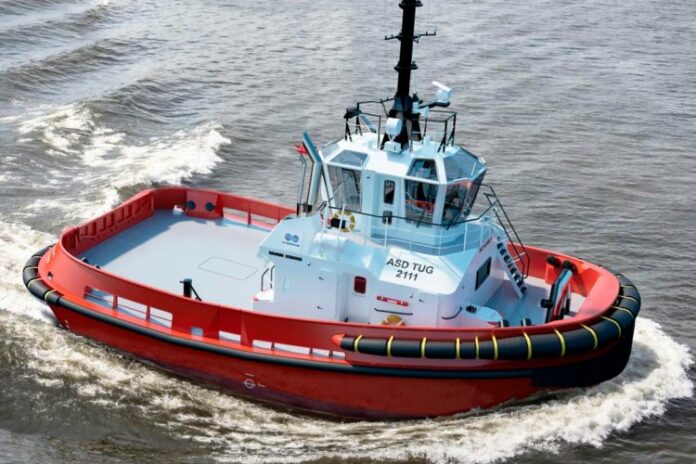
Just 21 metres in length, the ASD Tug 2111 has a bollard pull of 50 tonnes and its Twin Fin skeg and Azimuth thrusters ensure excellent manoeuvrability. 

PMNZ, situated at the top of New Zealand’s South Island, operates the region’s port and marinas, and facilitates the operation and growth of some of Marlborough’s most significant industries. These include recreational boating, forestry, wine, aquaculture and domestic and international tourism including cruise. Damen’s new ASD 2111 will provide an important boost in towage capability in Picton Harbour, from where the inter-island passenger and freight ferries operate. New ferries will soon link the nationally significant road and rail networks between the North and South Islands.

Damen’s new Compact Tugs product platform has been created to address the needs of ports that must accommodate and manoeuvre ever larger vessels within the space available. With exceptional power and agility for its size, the ASD Tug 2111 will be more than able to handle the next generation of larger ferries that need to be manoeuvred around PMNZ’s finger jetties. 

The ASD Tug 2111 features numerous safety features. Its 360° bridge maximises situational awareness of the surrounding waters as well as the deck both fore and aft. High freeboard keeps water on deck to an absolute minimum and the ample tumblehome enables the ASD Tug 2111 to get safely up close to an assisted vessel. With the towing operations both fore and aft conducted with a single winch positioned in a sheltered location, the decks are free of obstacles.  

Low maintenance is in the ASD Tug 2111’s DNA. The design features the shipbuilder’s proven fresh water closed loop keel cooling system. Reducing the amount of onboard sea water systems to an absolute minimum, lowers the amount of corrosion-related maintenance.

As part of Damen’s ambition to be the world’s most sustainable and connected shipbuilder in the world, the ASD Tug 2111 is fitted with IMO Tier II compliant engines as standard. However, PMNZ has opted to upgrade them to IMO Tier-III compliance, and this can be achieved relatively quickly by the installation of a Damen Emission Reduction System, for which the ASD Tug 2111 is built pre-prepared. Other green technologies built into the Compact Tug range include a new electric power generation system that produces electricity by drawing on the ample power available from the main engines, reducing fuel consumption and emissions as a result. 

Damen has five more ASD Tugs 2111 currently in build at Damen Shipyards Changde, available to operators looking for fast access to the latest in tug technology with all the increases in safety, sustainability, reliability and efficiency this implies.

“Partnering with Damen provides us with access to leading tug technology, said Port Marlborough CEO Rhys Welbourn. “We aim to enhance our marine towage service, going beyond compliance in environmental standards and modernising our fleet through this collaboration. The safety and efficiency of our operations in Picton Harbour are crucial in enabling the maritime sector in our region. Our marine fleet facilitates the flow of essential trade through the region including tourism, freight, ferries and cruise.

“Our investment in the ASD Tug 2111 and commitment to Tier-III emission standards reflects our wider commitment to more efficient operations and in leading the way as an environmentally restorative port, driving success for Marlborough.”

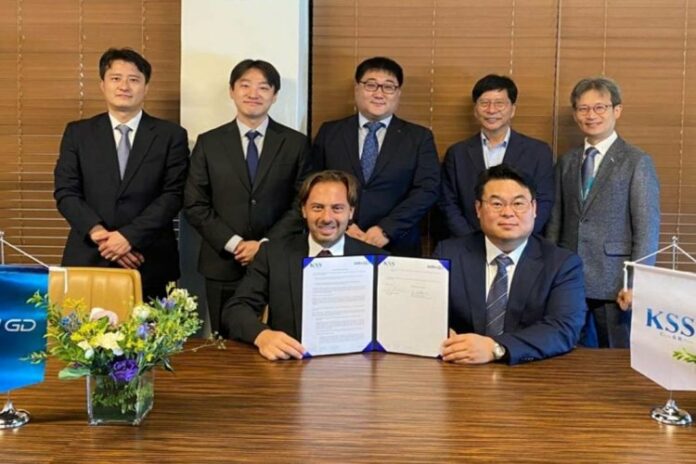
WinGD collaborates with KSS Line for ammonia-fuelled gas carriers

0

The companies will focus on 52cm- and 62cm-bore versions of the dual-fuel ammonia engines, suitable for midsize and very large gas carriers (VLGC).

The scope of the cooperation will extend beyond engine technology, also focusing on the performance and maintenance solutions necessary for using alternative fuel. The partners will also explore how deep insights into the engine performance can be provided through the deployment of WinGD’s Integrated Digital Expert (WiDE), enabling fuel efficiency fine tuning and live 24×7 support from engine experts.

The agreement also includes a commitment from WinGD to deliver crew training for new engines. The company is building significant experience in equipping crew for safe and reliable ammonia-fuelled engine operations, having agreed in June to develop and support the implementation of a training syllabus for AET Tankers and maritime academy Akademi Laut Malaysia.

Volkmar Galke, Director Sales, WinGD said:

“Ammonia as fuel is an interesting prospect for gas carrier vessels that already carry ammonia as cargo. The combination of our rigorously tested new engine design, training support and real-time optimisation via WiDE will mean that KSS Line can be confident that early experience with ammonia-fuelled vessels will be translated into safe and reliable operation in the long-term.”

Chando Park, CEO, KSS Line said:

“KSS Line aims to decarbonise its fleet rapidly and has already made significant investments in smart ships, LPG-fuelled and methanol-fuelled technology. Exploring ammonia as a fuel is the next step. The project with WinGD gives us the technical support we will need to successfully apply this new fuel type to our forthcoming newbuilds.”

WinGD is due to begin validation of its ammonia-fuelled engine concept on single and multi-cylinder test engines, in Winterthur and Shanghai, later this year. The validation tests follow combustion concept testing that began in 2021, in concert with simulation and rig tests to understand the emissions characteristics and injection requirements of ammonia fuel.

The X-DF-A engine, like its methanol-fuelled counterpart X-DF-M, will operate on a high-pressure Diesel-cycle combustion process, with liquid ammonia fuel injection supported with a low portion of pilot fuel.

MacGregor has received more than EUR 25 million order for general cargo cranes

0

MacGregor, part of Cargotec, has received a significant, more than EUR 25 million order for general cargo cranes for ten 84,500 dwt multipurpose vessels built in Asia.

The order was booked into Cargotec’s 2023 third quarter orders received. The cranes are scheduled to be delivered between the fourth quarter of 2024 and the first quarter of 2026.

The order includes a total of 40 cranes with a lifting capacity of 75 tons. All cranes are connected to the latest worldwide service support and equipped with an active safety system for the highest possible secure operation.

MacGregor was selected as the supplier of these general cargo cranes thanks to its well-known design capabilities and long term good cooperation with the customer.

“I’m very proud of the confidence that the shipyard has shown in choosing us to supply cranes for this important project. We look forward to providing our customer with our high-class equipment and services,” says Magnus Sjöberg, Senior Vice President, Merchant Solutions, MacGregor.

CMA CGM and Maersk join forces to accelerate the decarbonization of the shipping industry

0

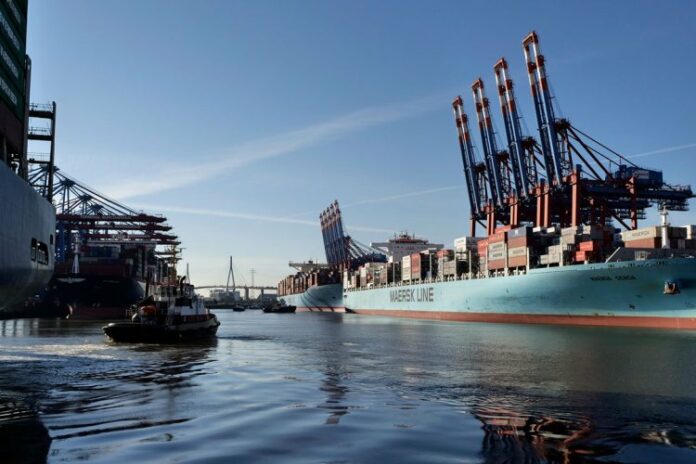
A.P. Moller – Maersk A/S (Maersk) and CMA CGM have decided to join forces on several areas relating to decarbonization, in full compliance with all laws and regulations.  

Both companies are convinced that joint action will help accelerating the green transition in shipping, learning from each other to go further and faster.  

CMA CGM and Maersk have set a net-zero target for their shipping business, have identified scalable solutions that can create impact in this decade, and have already individually taken ambitious paths on promoting decarbonization for shipping.  

Maersk has been ordering vessels that can be operated on bio/e-methanol.  

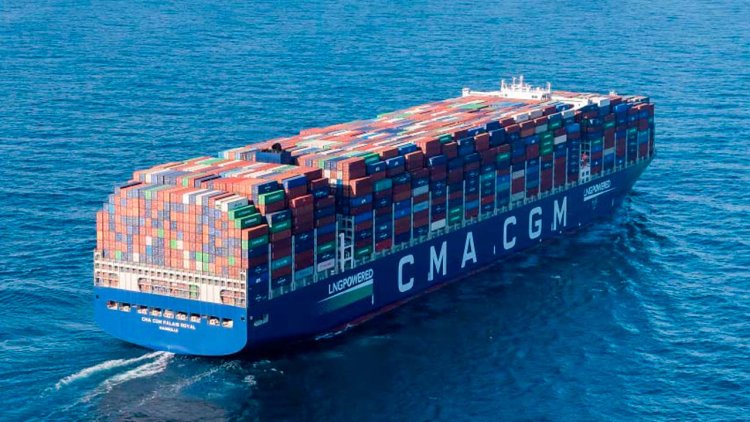
CMA CGM has been ordering LNG-propelled vessels, that can also be operated on bio/e-methane, the new green equivalent of current LNG, and has also placed orders for vessels that can be operated on bio/e-methanol. 

While these two fuel streams appear now as the most mature among existing solutions, both companies expect the future fuel mix of shipping will include other streams that should be developed in the coming years.  

Specifically, both shipping lines will work more together to develop the use of alternative greener fuels for container vessel propulsion, namely:    

  • Developing high standards for alternative sustainable, green fuels – including the analysis of full lifecycle and related greenhouse gasses – and helping to setting the framework of mass production of green methane and green methanol    
  • Developing and maintaining standards for operation of green methanol vessels with regards to safety and bunkering, as well as accelerating port readiness for bunkering and supply of bio/e-methanol at key ports around the world 
  • Continuing to explore jointly R+D on other components of the net zero solution as new alternative fuels, like ammonia, or innovation technology for our ships

CMA CGM and Maersk affirm their readiness to collaboratively engage with regulatory stakeholders in establishing a robust and sustainable international regulatory GHG framework and invite other international shipping lines who so wish to join them in this cooperation with the regulatory institutions. Such a framework is in both companies’ perspective a prerequisite to reducing carbon emissions for the shipping industry and securing a level-playing field for a global business environment.  

“This partnership is a milestone for the decarbonization of our industry. By combining the know-how and the expertise of two shipping leaders, we will accelerate the development of new solutions and technologies, enabling our industry to reach its CO2 reduction targets. We are looking forward to being joined by other companies.” says Rodolphe Saadé, Chairman and Chief Executive Officer of the CMA CGM Group.

“A.P. Moller – Maersk wants to accelerate the green transition in shipping and logistics and to do so, we need strong involvement from partners across the industry. We are pleased to have an ally in CMA CGM and it’s a testament that when we unite through determined efforts and partnerships, a tangible and optimistic path toward a sustainable future emerges,” says Vincent Clerc, Chief Executive Officer at A.P. Moller – Maersk.

Ocean Infinity to undertake a site investigation survey on US West Coast

0

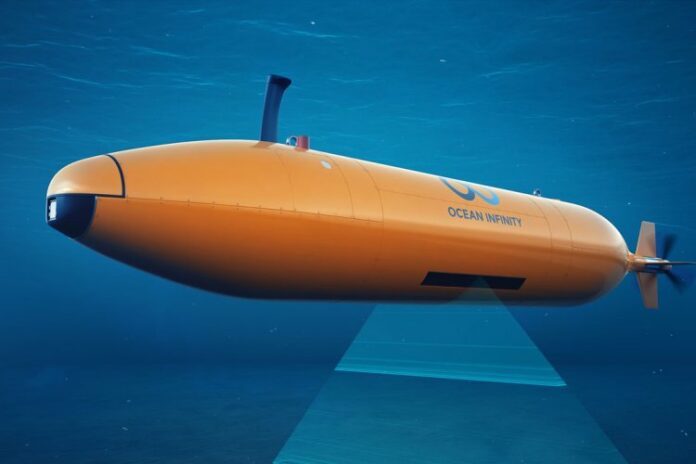
Under the terms of this contract, Ocean Infinity will undertake a comprehensive site investigation survey using multiple AUVs (Autonomous Underwater Vehicles) simultaneously for Equinor’s  groundbreaking  floating offshore wind lease area

Shawntel Johnson, Director, Business Development at Ocean Infinity said:

“The US West Coast with its challenging deep water topography presents another excellent opportunity for Ocean Infinity to deliver the value of its multi-AUV capabilities for its clients. AUVs in scale are the perfect tool for this region providing not only great data quality advantages over towed arrays, in the water depths spanning from 974 to 1317 meters (about 4,507 feet), but also huge efficiency over wide areas.” 

The project is set to commence in February 2024 and signifies an important leap forward in the nation’s renewable energy landscape. 

The survey scope encompasses a range of vital offshore surveys. These critical data acquisitions are integral components for Equinor to mature their design basis as well as inform the Site Assessment Plan (SAP) and Construction and Operations Plan (COP) for the OCS-P 0563 lease area. Ocean Infinity’s high quality data sets will facilitate informed decision-making and meticulous planning for the construction and operational phases.

Oliver Plunkett, CEO at Ocean Infinity explained how the Morro Bay project marks an important milestone for this forward-focused young company: “When Ocean Infinity was formed, the idea of using robotics at enormous scale to collect more data, faster and with less environmental impact while optimizing safety was our guiding principle. This project is that entire vision coming to life. It’s exciting and rewarding to work with clients such as Equinor who share our vision, can see the power of robotics and our unique understanding as tech innovators, and will reap the benefits as we support them in driving the energy transition. 

“Ocean Infinity’s fleet of globally located uncrewed vessels and around 20 AUVs, the world’s largest fleet of full capability deep water Autonomous Underwater Vehicles, ideally place the company to support the ongoing growth in offshore renewable energy in the US and globally.”

Bureau Veritas invests in maritime software company

0

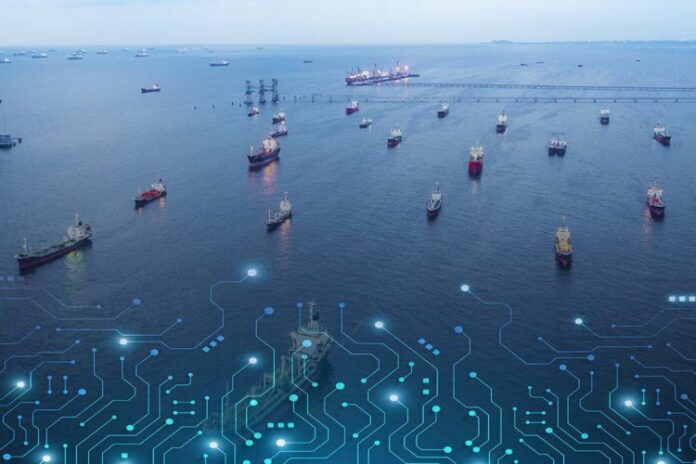
Bureau Veritas (BV) invests in the New York-based maritime software company, complementing OrbitMI’s focus on performance solutions for shipowners, ship operators and charterers with technical expertise and a global footprint.

Bureau Veritas’ Marine & Offshore division and OrbitMI will address clients’ immediate regulatory and decarbonization requirements posed by CII, EU ETS and the recently enacted FuelEU standards, as well as their longer-term digital transformation journey.   

Matthieu de Tugny, President, Marine & Offshore at Bureau Veritas, said:

“We are linking the interests of operators and charterers in ship and fleet performance with our technical expertise, insight, and classification activities. This expanding role is deeply intertwined with data monitoring and the implementation of digital solutions. Additionally, as a world leader in audit and certification across multiple industries, Bureau Veritas brings unique insight, an unparalleled global footprint, and a high level of trust from our customers.”  

Ali Riaz, CEO of OrbitMI, said:

“This collaboration is a significant affirmation, from a long-established maritime institution and global testing, inspection and certification giant, of OrbitMI’s expertise in digital innovation and our strategy to operationalize data through the Orbit platform into intelligent connected workflows across pre-fixture, fixture and post fixture.”

Improving performance requires that people can make the most-informed decisions in the context of their day-to-day responsibilities. To do so, OrbitMI pursues ‘transformation without disruption’ allowing its pure software-as-a-service platform, Orbit, to be easily integrated with shipping companies’ existing systems and business processes. Consequently, Orbit transforms data into insights that individuals and teams can use to enhance the tasks they do every day, whether on ship or on shore.   

New ocean mapping center expands NOAA, UNH partnership

0

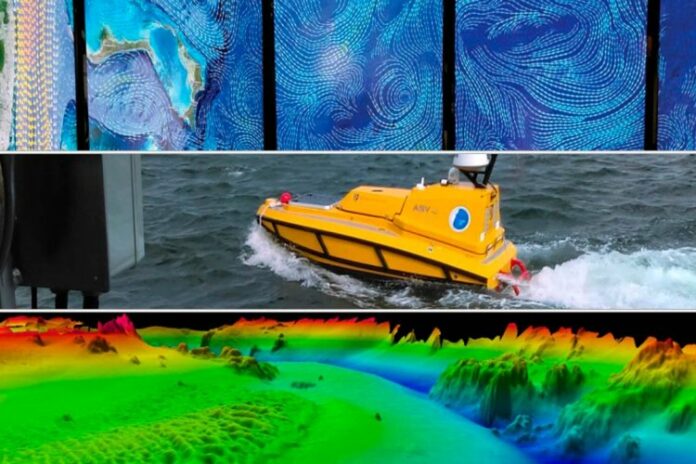
NOAA and the University of New Hampshire (UNH) are expanding a 24-year ocean and Great Lakes mapping partnership through the creation of a new Center of Excellence for Operational Ocean and Great Lakes Mapping.

“NOAA and UNH have a long history of collaborating to advance the latest technologies and tools to map our ocean, coasts and Great Lakes — a cornerstone of the blue economy,” said Rick Spinrad, Ph.D., NOAA Administrator. “Our continued partnership on the Center of Excellence will help build a workforce ready to tackle the mapping challenges of the future, and further our understanding of our changing ocean and coasts.”

“The University of New Hampshire’s world-class Center for Coastal and Ocean Mapping and Joint Hydrographic Center has led the way for more than two decades in ocean mapping, helping ensure safe marine transportation and understanding coastal hazards. This leadership is affirmed by NOAA locating a new Center of Excellence for Operational Ocean and Great Lakes Mapping on UNH’s campus. With this $8 million NOAA grant I helped secure, New Hampshire’s ongoing research and training programs will remain ahead of the curve in this leading field,” said Senator Jeanne Shaheen, chair of the Senate Appropriations subcommittee that funds NOAA. 

The Center of Excellence is funded through $10 million in NOAA’s FY 2023 budget, and will complement existing research, technical expertise and advanced educational programs at the NOAA-UNH Joint Hydrographic Center and UNH’s Center for Coastal Ocean Mappingoffsite link. The Center of Excellence will focus on the following priorities:

  • Delivering practical hydrographic training and fostering workforce development for ocean mapping operations.
  • Providing technical expertise and systems support for NOAA’s mapping operations on an increasingly diverse set of platforms, including new ships and uncrewed survey vessels.
  • Partnering with academia and industry to transition ocean mapping research to operations. 

“Accurate and up-to-date maps of our ocean, coasts and Great Lakes are critical to maritime commerce, transportation and recreation, and directly support resilient coastal communities,” said Nicole LeBoeuf, director of NOAA’s National Ocean Service. “This new Center of Excellence will build on existing collaboration with UNH as we implement cutting-edge mapping technology and train the next generation of ocean and coastal mapping professionals.”

A portion of the funding will be used by UNH to construct a new, state-of-the-art ocean mapping facility that will serve as the focal point of a campus innovation hub to bring together academia, industry and government.