-6.3 C
New York
Home Blog Page 261

Ports unveil Implementation Plan Outline for First trans-Pacific Green Shipping Corridor

0

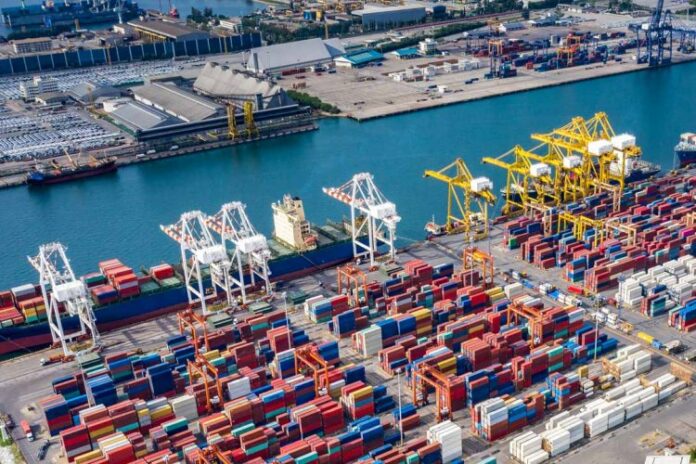
The creation of the first-ever green shipping corridor across the Pacific is taking shape. Today, a voluntary partnership of leading maritime goods movement stakeholders, including the Ports of Los Angeles, Long Beach and Shanghai, some of the largest carriers in the world, and key leading cargo owners unveiled a Green Shipping Corridor Implementation Plan Outline to accelerate emissions reductions on one of the world’s busiest container shipping routes across the Pacific Ocean. The plan is the first of its kind and was developed with support from C40 Cities as part of its effort to reduce carbon emissions from the largest cities in the world.

As part of the historic plan, the carrier partners will begin deploying reduced or zero lifecycle carbon capable ships on the corridor by 2025, and work together to demonstrate by 2030 the feasibility of deploying the world’s first zero lifecycle carbon emission container ship(s). Carrier partners include CMA CGM, COSCO Shipping Lines Co., Ltd., Maersk, and ONE. Core partners include the Shanghai International Port (Group) Co., Ltd., the China Classification Society, and the Maritime Technology Cooperation Centre of Asia.     

Participants of the Green Shipping Corridor Partnership will take steps to reduce carbon emissions and harmful pollutant emissions impacting air quality, through methods such as expanding use of shore power and supporting the development of clean marine fueling infrastructure. Cargo owner partners have set goals to contract with carriers to use zero lifecycle carbon emission shipping services, and in an effort to measure progress toward decarbonization, all partners will develop metrics to track decarbonization progress. 

Gene Seroka, Executive Director of the Port of Los Angeles, said:

“This trans-Pacific green corridor will be a model for the global cooperation needed to accelerate change throughout the maritime industry. Reducing emissions in this corridor will yield substantial reductions. For perspective, most of the emissions associated with moving cargo by ship occur in the mid-ocean part of the journey between ports.  This corridor will help reduce mid-ocean emissions while continuing the work we have done to cut emissions within our ports.”

Mario Cordero, Chief Executive Officer of the Port of Long Beach, said:

“This initiative will drive emissions reductions across the world’s largest ocean and lead to greener practices from supply chain participants along these vital trade routes. The new and innovative vessel technologies, increased availability of sustainable fuels and better practices created through this green corridor will also impact society’s transition to a cleaner future far beyond the areas served by our ports.”

Mark Watts, Executive Director of C40, said:

“C40 is proud to support this first-of-its-kind green shipping corridor aimed at demonstrating that zero-carbon shipping at scale is feasible by 2030, and that less polluting ships and ports will also mean cleaner air, less noise and more jobs for local communities.” 
Royal IHC signs contract for maintenance of three Royal Netherlands Navy vessels

0

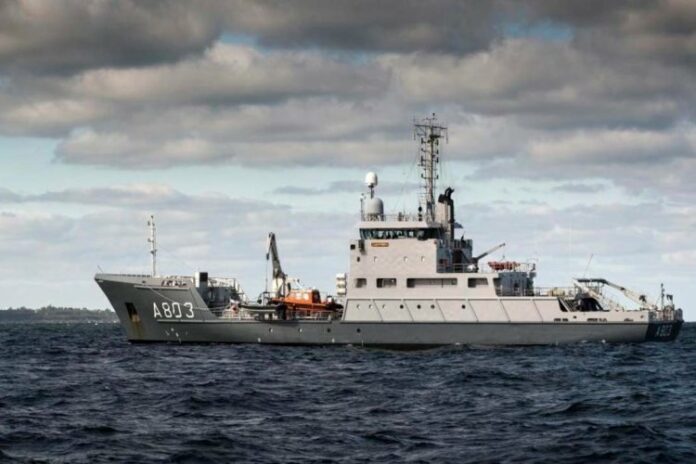
The contract covers five docking periods spread over five years, during which the hydrographic survey vessels will undergo specified maintenance twice and the torpedo work vessel Mercuur once.

For the dock-related work, Royal IHC is working with Neptune Repair in Hardinxveld-Giessendam, where Royal IHC is responsible for project management. Class inspections are also included in the maintenance. The Department of Material Maintenanceof the Royal Netherlands Navy continues to maintain the SEWACO part itself. Work will start in November with HNLMS Luymes, which will be the first ship to be drydocked for maintenance.

Sjoerd de Bruin, Commercial Director Defence of Royal IHC:

“After the successful docking of the HNLMS Groningen, we are proud to once again contribute to increasing the operational readiness of the Royal Netherlands Navy. We look forward to working with the DMI project team on the maintenance of these three ships in the coming years”.

DMI is pleased to have signed a contract after a long period of preparation and looks forward to a fruitful cooperation.

First ship with Ukrainian grain arrives at Bosphorus through temporary corridor

0

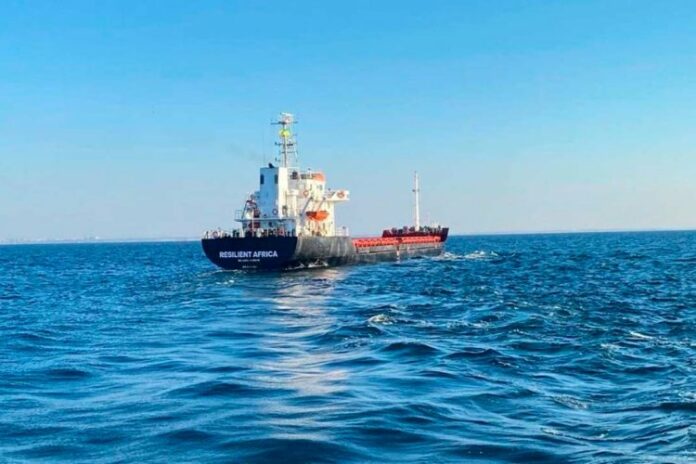
The Resilient Africa bulk carrier, which is loaded with 3,000 metric tons of Ukrainian wheat, has arrived at the Bosphorus, Reuters reported on Sept. 21.

On Sept. 19, the Palau-flagged Resilient Africa became the first ship with Ukrainian grain to leave a Black Sea port through the temporary corridor that was set up by Ukraine following Russia’s withdrawal from the Black Sea Grain Initiative in July.

The corridor was primarily meant to allow passage for ships stuck in the Ukrainian ports of Chornomorsk, Odesa, and Pivdennyi since the start of the full-scale invasion.

Five ships have been evacuated through the temporary corridor since it was established in mid-August.

However, the Resilient Africa and another cargo vessel, the Aroyat, are the first civilian ships that have agreed to enter Ukrainian ports since the collapse of grain deal.

The Aroyat is still docked in the port of Chornomorsk while being loaded with Ukrainian wheat for Egypt, according to Infrastructure Minister Oleksandr Kubrakov.

The two ships are expected to deliver 20,000 tons of grain to African and Asian countries, Kubrakov said.

Brokered by Turkey and the U.N. in July 2022, the original grain deal was designed to guarantee the safe passage of ships transporting Ukraine’s agricultural exports from the Black Sea during the invasion.

Moscow refused to extend the Black Sea Grain Initiative in July 2023, causing spikes in wheat prices and fears about food security worldwide.

On Sept. 7, Ukraine submitted an official proposal to Turkey to restore a corridor in the Black Sea for Ukrainian grain exports without Russia’s participation, Ukrainian Ambassador to Turkey Vasyl Bodnar announced.

The idea is “rational” because cargo ships already travel through Romanian, Bulgarian, and Turkish territorial waters of the Black Sea, the ambassador said.

Source: Kyiv Independent

Construction begins on Crowley-ESVAGT wind farm service vessel

0

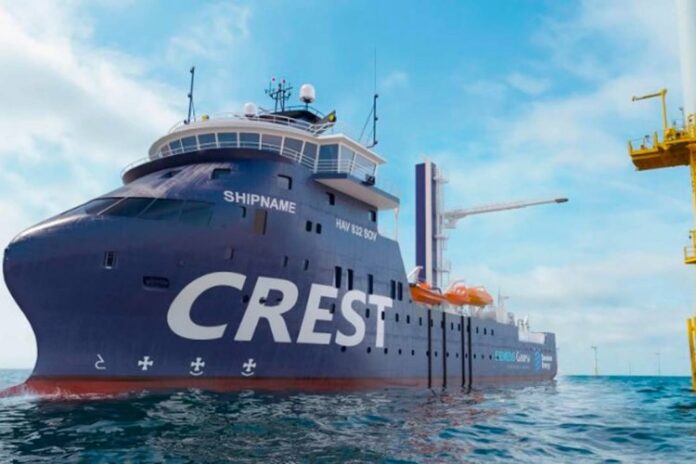
Fincantieri Bay Shipbuilding has begun construction on a 289-foot service operation vessel (SOV) for a Crowley-ESVAGT joint venture that will house and transport technicians to maintain U.S. offshore wind farms.

This vessel, for the joint venture CREST Wind, will operate under a long-term charter with Siemens Gamesa Renewable Energy. Today marked the ceremonial start of construction for the vessel, and senior leaders from the partner companies around the country came to Door County to witness the first pieces of steel being cut.

“We are excited to get started on this important vessel,” said Marco Galbiati, CEO of Fincantieri Marine Group. “The work that this vessel will support is critical to energy solutions here in the United States.”

“This vessel will support America’s goals of cleaner, renewable energy by providing an innovative, reliable and safe environment for those servicing the wind turbines off the U.S. coast,” said Bob Karl, senior vice president and general manager of Crowley Wind Services. “We congratulate the women and men who led us to this milestone for this modern, high performing vessel that will help support next-generation energy solutions.”

SOVs are purpose-built vessels used to accommodate and transport wind-farm technicians to service and maintain wind turbines at sea. Crowley is an innovative U.S. maritime, energy and logistics solution company serving the offshore wind market, while Denmark-based ESVAGT is the leading provider of SOV services in Europe.

“We are delighted to help bring a leading SOV concept to the US market together with our partners and are looking forward to supporting the high-quality construction of this innovative vessel.” said Kristian O. Jakobsen, ESVAGT’s deputy CEO and head of operations.

The SOV will feature state-of the art technologies to augment safety, workability and comfort to support the operation and maintenance of wind installations. It will have modern accommodations for 80 crew and technicians. Consistent with federal law, the vessel will be U.S.- built and flagged. The ship will utilize the HAV 832 SOV design, made by HAV Design AS, of Norway, and it is considered one of the best in the industry.

The vessel is scheduled to enter service in 2026, when it will support the Coastal Virginia Offshore Wind Project.

Crowley, BWXT debut nuclear power generation vessel concept

0

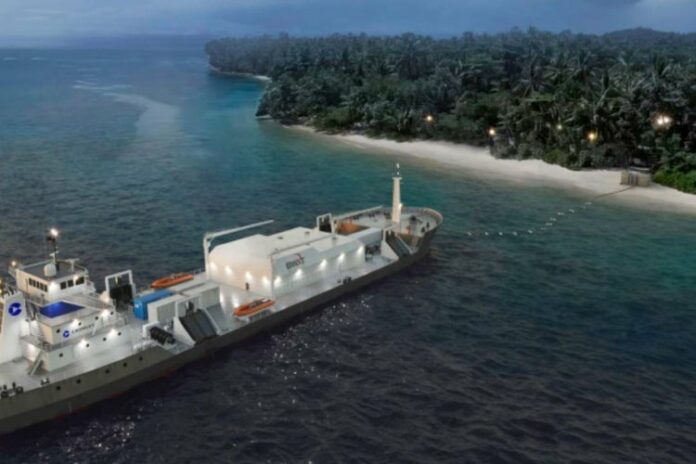
The new memorandum of understanding with BWXT’s Advanced Technologies subsidiary will allow both companies to jointly pursue and develop opportunities relative to the design, engineering and development of new shallow-draft hull ships that will supply small-scale nuclear energy to shoreside locations. 

The new ships would feature the latest technology available for factory fabricated microreactors, readily deployed into a shipyard configuration for ease of installation on the vessel. The onboard power plant would supply energy to shore facilities, such as military bases in remote island locations, backup utility grids after disasters, and provide power in other scenarios where traditional electricity sources are damaged or not possible.

The new vessel concept envisions a 378-foot ship that pulls from the logistics and marine capabilities of Crowley, a longtime operator with in-house vessel design by its Crowley Engineering Services, and the nuclear capabilities of BWXT, a leading supplier of nuclear components, fuel and services to the U.S. government at the highest levels of safety and security for more than 60 years. Both Crowley and BWXT are based in the United States and have been in business for more than a century.

“Our cooperation with BWXT will move Crowley for the first time into the nuclear energy sector, a key part of our commitment to sustainable, alternative energy sources. This concept supports the U.S. Department of Energy’s goal of maintaining U.S. leadership in nuclear energy technology as well as many the U.S. Department of Defense’s strategic goals for operational energy,” said Shiju Zacharia, senior vice president and general manager, Crowley Government Solutions.

This new vessel concept pairs traditional propulsion while carrying a modular reactor between 5 and 50 megawatts that can be activated upon arrival at the destination and be deactivated and transported after the power supply is discontinued. Buoyed power delivery cables will enable the ships to deploy energy connections to shore. Shallow draft hulls allow the vessels to maneuver to strategically deliver power for military activities or if disasters limit harbor access.

“We are excited to work alongside Crowley to leverage our ongoing reactor development and demonstration programs, advancing nuclear technology into new and novel markets to deliver zero carbon emissions energy generation to strategic locations,” said Joe Miller, president of BWXT Advanced Technologies LLC.

ABB to power Samskip’s new hydrogen-fueled container vessels

0

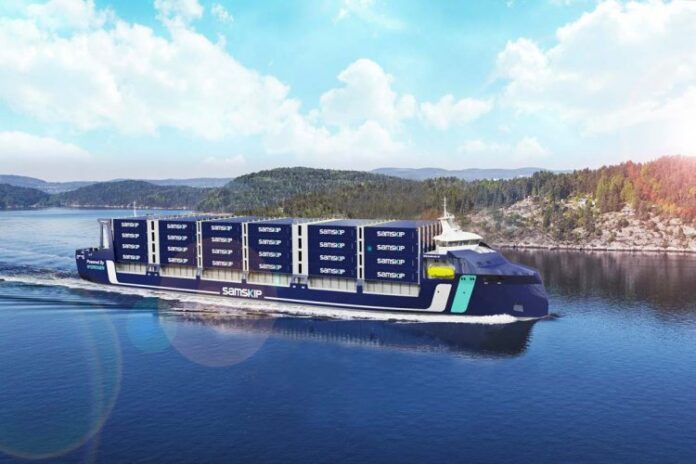
ABB will deliver a comprehensive power, propulsion and automation system for two newbuild short-sea container ships of the global logistics company Samskip Group headquartered in Rotterdam, Netherlands. 

The vessels will be among the world’s first of their kind to use hydrogen as a fuel. Financial details were not disclosed. The order was booked in the second quarter of 2023.

Built by Cochin Shipyard Ltd, the largest shipbuilding and maintenance facility in India, the 135-meter ships are due for delivery in Q3 and Q4 of 2025, respectively. Both vessels will be operating between Oslo Fjord and Rotterdam, a distance of approximately 700 nautical miles.

In addition to the integration of hydrogen fuel cells, ABB’s comprehensive package includes the new, compact version of ABB Onboard DC Grid™ power distribution system that will ensure the optimal use of energy on board. The vessels will also feature ABB’s energy storage solution control, with the industry-leading automation technology, ABB Ability™ System 800xA, ensuring seamless operation of onboard equipment. Leveraging ABB Ability™ Remote Diagnostic Systems, the vessels will benefit from optimized safety and performance through 24/7 remote support.

Fuel cells turn the chemical energy from hydrogen into electricity through an electrochemical reaction. With the use of renewables to produce the hydrogen, the entire energy chain will be clean. Hydrogen fuel cell technology is considered as one of the most promising solutions to support shipping industry’s decarbonization agenda, with the potential to significantly reduce greenhouse gas emissions and increase energy efficiency.

Samskip’s vessels will be powered by a 3.2 MW hydrogen fuel cell each, with diesel generators installed for back-up. The logistics group, which aims to achieve net-zero by 2040, anticipates that each vessel will be able to avoid around 25,000 tons of CO2 emissions a year when powered by fuel cells and by using green shore power at the port of call. While the ships are setting new standards for environmentally friendly operations, they are expected to perform at the same level as Samskip’s conventional vessels.

The project is in line with the International Maritime Organization’s revised greenhouse gas reduction strategy, which calls on reaching net-zero GHG emissions from international shipping close to 2050, with a commitment to increase the uptake of low-carbon fuels by 2030.

“ABB is delighted to collaborate with Samskip and Cochin Shipyard Limited on this project which will help to avoid emissions and reduce operational expenses,” said Juha Koskela, Division President, ABB Marine & Ports. “ABB is at the forefront of shipping’s most ambitious plans for decarbonization and setting new standards for green maritime transportation.”

“Samskip’s level of ambition on emissions requires partners like ABB, with similar objectives for innovation and the willingness to invest in the future,” said Erik Hofmeester, Head of Fleet Management, Samskip Group. “These ships are a milestone for the maritime industry, delivering hydrogen fuel cells as a clean and renewable technology.”

“Cochin Shipyard is proud to partner with ABB in strengthening our position as an early mover in sustainable technology and supporting India’s vision to become a Global Hub for building Green Ships,” said Madhu S Nair, Chairman and Managing Director, Cochin Shipyard Limited.

The project is co-funded by Norwegian state enterprise ENOVA. Operating under Norway’s Ministry of Climate and Environment, ENOVA promotes a shift towards more environmentally friendly energy consumption and production, as well as the development of energy and climate technology.

MSC confirms orders to Fincantieri for two new hydrogen-powered ships

0

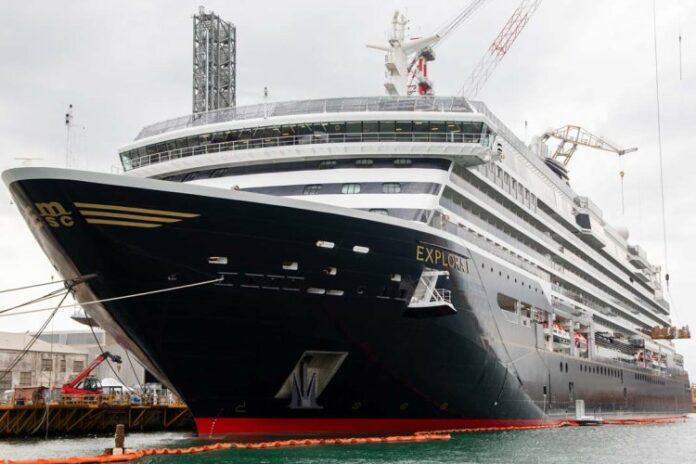
The Cruise Division of MSC Group has confirmed firm orders for two hydrogen-powered vessels for its luxury travel brand Explora Journeys with the Italian shipbuilder Fincantieri and pledged to continue its push towards a net zero-carbon emissions target by 2050 by investigating additional new and advanced environmental technologies for the luxury ships. The deal completes a total investment of €3.5 billion in six luxury ships for Explora Journeys. The contracts are subject to access to financing as per industry practice.

EXPLORA V and EXPLORA VI will have new state-of-the-art energy efficiency measures and will also be capable of using alternative fuels such as bio and synthetic gas and methanol and the Cruise Division will work in the future with Fincantieri to equip the ships with future technologies including carbon capture, and more advanced waste management systems. The two confirmed additions to Explora Journeys’ fleet will be delivered in 2027 and 2028.

Pierfrancesco Vago, Executive Chairman – Cruise Division, MSC Group, said,

“With Explora Journeys we have created a luxury brand that has been successful at redefining luxury at sea. We are seeing continued growth in the luxury segment and the investment in these two new ships shows our commitment to continue to grow within this sector as well as to invest in ships of the future. Together with Fincantieri we will study the newest technology that the world has to offer and continue with our commitment to introduce these technologies to drive efficiencies across the whole spectrum of ship performance. And of course we will continue to deliver the very best luxury travel experience, immersing our guests in the ocean state of mind with an sustainable soul.”

Pierroberto Folgiero, Chief Executive Officer, Fincantieri, said

“This new contract with MSC is a sign of the growing vitality of the cruise sector, in line with what we had predicted. In strategic terms, our future will depend on our ability to lead the evolution of the sector towards all energy and digital transition technologies with the entrepreneurship required to validate, industrialise and commercialise new solutions. The relevance of the partnership with MSC in this sense is a great strategic stimulus towards the future in line with the technological development goals set out in our new business plan. We are therefore particularly proud that the Explora project will mark the acceleration of this new phase, which with the fifth and sixth ships, will reach the highest level of advancement, making Fincantieri’s vision of the ship of the future ever more concrete.”

The two new ships will pursue the use of liquid hydrogen with fuel cells for their hotel operations while docked in ports to eliminate carbon emissions with the vessels’ engines switched off. The ships will also feature a new generation of LNG engines that will further tackle the issue of methane slip with the use of containment systems. 

LNG is one of the world’s cleanest marine fuels currently available at scale and is set to play a key role in the transition to the decarbonisation of international shipping. It substantially reduces local air pollutant emissions with sulphur oxides falling by up to 99 per cent and nitrogen oxides decreasing by up to 85 per cent.  LNG also plays a key role in climate change mitigation as it offers up to a 20 per cent reduction in greenhouse gas emissions. Further environmental benefits are expected following the availability at scale of synthetic LNG.

Explora Journeys’ first ship, EXPLORA I was delivered by Fincantieri in July 2023 and is currently operating in Northern Europe. The ship will spend the autumn in North America, and the winter in the Caribbean Sea. She will sail during the spring 2024 off the U.S. West Coast and Hawaii before returning to Europe in summer 2024 for a series of journeys in the Mediterranean Sea.

EXPLORA II will enter service in summer 2024 and operate until April 2025 in the Mediterranean Sea, the Middle East, the Indian Ocean and Africa visiting 82 ports in 26 countries. EXPLORA II first ‘touched water’ on 6 September 2023 at a ‘float out’ ceremony near Genoa in Italy.

EXPLORA III will enter service in summer 2026 and construction of the LNG-powered vessel started on 6 September 2023 with a steel-cutting ceremony. Construction of LNG-powered EXPLORA IV will begin in January 2024 and will be completed in early 2027.

Wärtsilä selects Høglund’s cargo control system for four VLECs

0

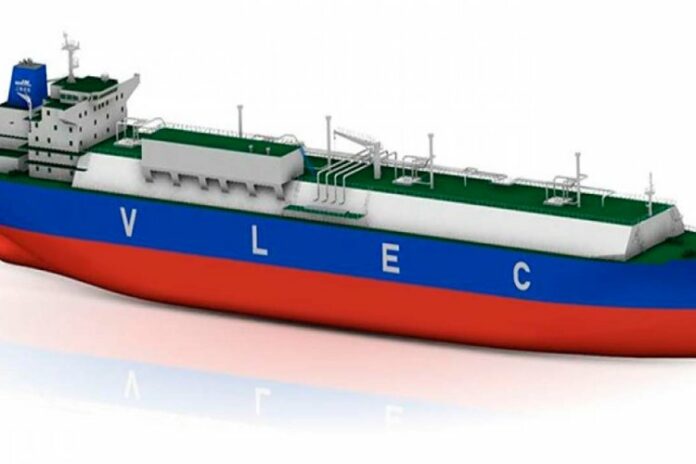
Høglund has announced a partnership with Wärtsilä Gas Solutions Norway for the delivery of complete cargo and fuel gas control systems to four state-of-the-art 99.000 CBM Very Large Ethane Carriers (VLEC). These cutting-edge vessels are set to be constructed at the Jiangnan Shipyard.

Wärtsilä, a global leader in smart technologies for the maritime industry, shall deliver cargo handling systems and has entrusted Høglund with the critical task of supplying the comprehensive control essential to the seamless operation of these VLECs. This collaboration underscores Høglund’s commitment to providing industry-leading solutions that enhance vessel safety, efficiency, and sustainability.

The deliveries are scheduled to occur between May and November 2024.

“We are thrilled to be selected as the trusted partner by Wärtsilä for this important project,” said Peter Morsbach, Høglund COO. “Our dedication to innovation and excellence in marine automation aligns perfectly with Wärtsilä’s high quality demands, and we look forward to delivering state-of-the-art cargo and fuel gas control systems that will ensure the optimal performance and safety of these four VLEC vessels.”

Seaside LNG joins SEA-LNG enhancing coalition reach and expertise

0

SEA-LNG, the multi-sector industry coalition established to demonstrate the benefits of the LNG pathway for shipping’s decarbonisation, today welcomes Seaside LNG, the LNG production and maritime transportation logistics providers based in Houston, Texas.

Seaside LNG is the only company with integrated shoreside liquefication, LNG storage, and bunkering capabilities in North America. The company maintains the largest fleet of Jones Act-compliant LNG barges in North America and has successfully performed more than 400 safe LNG transfers.  Seaside LNG will further enhance the coalition’s collective expertise with their valuable supply, infrastructure and safety experience.

Scaling up alternative fuel supply and developing the required infrastructure is key to the success of the shipping industry’s decarbonisation transition, with collaboration highlighted as central to success. This has been reiterated in recent industry discussions at Gastech in Singapore and London International Shipping Week. SEA-LNG offers Seaside LNG and all its members a practical platform for collaboration across the entire LNG value chain.

Peter Keller, Chairman of SEA-LNG, commented:

“Green fuel solutions will not arrive in a big-bang process, instead we will see the incremental decarbonisation of existing assets as fuel production, transportation, storage and bunkering infrastructure and engine technologies develop. In Seaside LNG, we have another valuable member to help us continue to evolve and progress the LNG pathway to decarbonisation. We are very pleased to welcome the Seaside team onboard.”

Tim Casey, CEO of Seaside LNG, said:

“LNG infrastructure must continue to grow rapidly to further develop and maintain a global LNG supply chain.  Improving commercial-scale solutions for marine fuel is critical to meeting the industry’s environmental goals while keeping pace with the world’s rising commercial demands. We look forward to joining SEA-LNG as we continue our mission to develop vital LNG infrastructure.”

Existing LNG infrastructure can transport, store and deliver bio-LNG, as well as renewable synthetic e-LNG. Fuels can be blended with fossil LNG or used as a drop-in fuel for LNG-fuelled vessels to reduce emissions further without any additional investment in vessel or infrastructure modifications.

While the recent industry discussions of infrastructure and the introduction of these green fuels are important, we must not overlook existing local emissions benefits. Local emissions are another major environmental concern around the world.  LNG is the only scalable marine fuel available today that significantly reduces carbon emissions and it also tackles local emissions.

Damen signs contract with Port Marlborough NZ for delivery of new ASD tugs

0

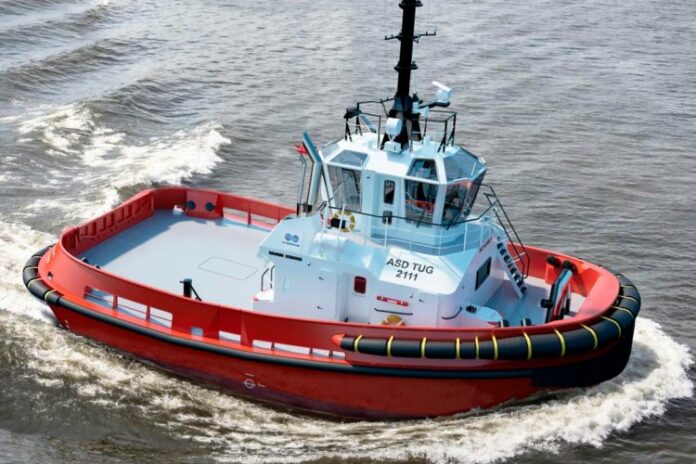
Just 21 metres in length, the ASD Tug 2111 has a bollard pull of 50 tonnes and its Twin Fin skeg and Azimuth thrusters ensure excellent manoeuvrability. 

PMNZ, situated at the top of New Zealand’s South Island, operates the region’s port and marinas, and facilitates the operation and growth of some of Marlborough’s most significant industries. These include recreational boating, forestry, wine, aquaculture and domestic and international tourism including cruise. Damen’s new ASD 2111 will provide an important boost in towage capability in Picton Harbour, from where the inter-island passenger and freight ferries operate. New ferries will soon link the nationally significant road and rail networks between the North and South Islands.

Damen’s new Compact Tugs product platform has been created to address the needs of ports that must accommodate and manoeuvre ever larger vessels within the space available. With exceptional power and agility for its size, the ASD Tug 2111 will be more than able to handle the next generation of larger ferries that need to be manoeuvred around PMNZ’s finger jetties. 

The ASD Tug 2111 features numerous safety features. Its 360° bridge maximises situational awareness of the surrounding waters as well as the deck both fore and aft. High freeboard keeps water on deck to an absolute minimum and the ample tumblehome enables the ASD Tug 2111 to get safely up close to an assisted vessel. With the towing operations both fore and aft conducted with a single winch positioned in a sheltered location, the decks are free of obstacles.  

Low maintenance is in the ASD Tug 2111’s DNA. The design features the shipbuilder’s proven fresh water closed loop keel cooling system. Reducing the amount of onboard sea water systems to an absolute minimum, lowers the amount of corrosion-related maintenance.

As part of Damen’s ambition to be the world’s most sustainable and connected shipbuilder in the world, the ASD Tug 2111 is fitted with IMO Tier II compliant engines as standard. However, PMNZ has opted to upgrade them to IMO Tier-III compliance, and this can be achieved relatively quickly by the installation of a Damen Emission Reduction System, for which the ASD Tug 2111 is built pre-prepared. Other green technologies built into the Compact Tug range include a new electric power generation system that produces electricity by drawing on the ample power available from the main engines, reducing fuel consumption and emissions as a result. 

Damen has five more ASD Tugs 2111 currently in build at Damen Shipyards Changde, available to operators looking for fast access to the latest in tug technology with all the increases in safety, sustainability, reliability and efficiency this implies.

“Partnering with Damen provides us with access to leading tug technology, said Port Marlborough CEO Rhys Welbourn. “We aim to enhance our marine towage service, going beyond compliance in environmental standards and modernising our fleet through this collaboration. The safety and efficiency of our operations in Picton Harbour are crucial in enabling the maritime sector in our region. Our marine fleet facilitates the flow of essential trade through the region including tourism, freight, ferries and cruise.

“Our investment in the ASD Tug 2111 and commitment to Tier-III emission standards reflects our wider commitment to more efficient operations and in leading the way as an environmentally restorative port, driving success for Marlborough.”