-10.1 C
New York
Home Blog Page 260

Rosebank field to progress in the UK

0

Equinor and Ithaca Energy have taken the final investment decision to progress Phase 1 of the Rosebank development on the UK Continental Shelf (UKCS), investing USD 3.8 billion.

“Developing the Rosebank field will allow us to grow our position as a broad energy partner to the UK, while optimising our oil and gas portfolio, and increasing energy supply in Europe. Rosebank provides an opportunity to develop a field within the UK Continental Shelf which will bring significant benefits to Scotland and the wider UK,” says Geir Tungesvik, executive vice president Projects, Drilling and Procurement at Equinor.

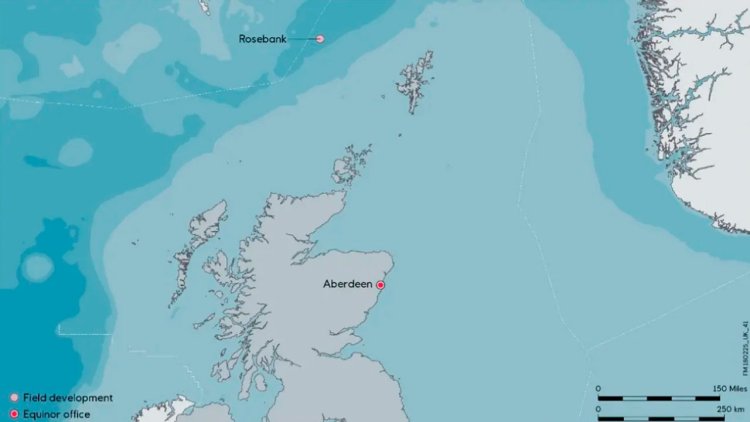
The Rosebank field is located around 130 kilometres north-west of Shetland in approximately 1,100 metres of water depth. Total recoverable resources are estimated at around 300 million barrels of oil, with Phase 1 targeting estimated 245 million barrels of oil.

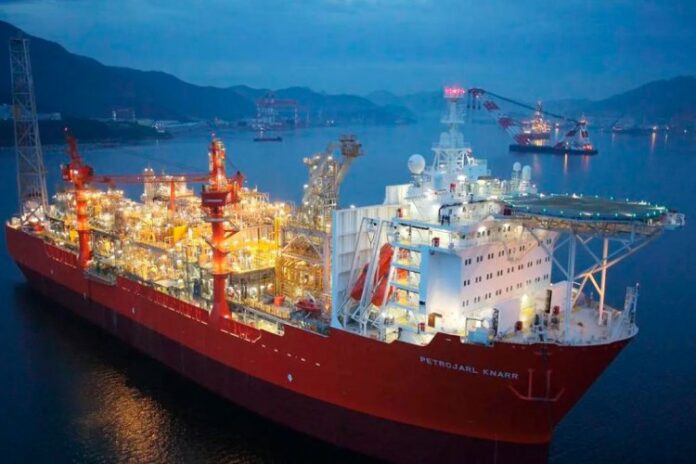
The field will be developed with subsea wells tied back to a redeployed Floating Production Storage and Offloading vessel (FPSO), with start-up planned in 2026-2027. Oil will be transported to refineries by shuttle tankers, while gas will be exported through the West of Shetland Pipeline system to mainland Scotland.

Philippe Mathieu, executive vice president for Exploration and Production International, says:

“This development further strengthens our international business, and we look forward to collaborating closely with our partner and suppliers to develop and operate Rosebank with the lowest possible carbon footprint while bringing the maximum value to society in the shape of UK investment, local jobs and energy security,” says Mathieu.

The Rosebank oil and gas field is being developed in compliance with the North Sea Transition Deal, an agreement between the UK government and the offshore industry. It acknowledges that whilst there is a continued, though over time reducing need for oil and gas, the remaining demand for oil and gas must be met with the lowest emissions possible.
The FPSO has been designed to be electrification-ready and Equinor is collaborating with government and industry to pursue a regional solution for power from shore to Rosebank and nearby fields to minimise carbon emissions from production.

According to an independent socioeconomic report by Wood Mackenzie and Voar Energy, Rosebank is estimated to create £8.1 billion of total direct investment over the lifetime of the field, of which 78% is likely to be invested in UK-based businesses. It is expected to support around 1,600 jobs during the height of the construction phase of the project, and it will continue to support approx. 450 UK-based jobs during the lifetime of the field.

“We know that the world needs to transition to new, cleaner energy systems and our broad energy investments into the UK support this. And while we do this there is going to be a continued need for oil and gas, which currently meets 76% of the UK’s energy needs. Our decision to progress the Rosebank development is the result of work and collaboration by our employees, partners, government, regulators, and other stakeholders to ensure that this development is able to help meet this ongoing need, with the lowest carbon footprint possible,” says Arne Gürtner, senior vice president Upstream at Equinor in the UK.

TechnipFMC has been awarded an integrated engineering, procurement, construction and installation (iEPCI™) contract for subsea production systems, umbilicals, risers and flowlines with an estimated value of around USD 500 million for the local content part. TechnipFMC has estimated that more than half of the contract value will be generated from local activities across the UK, with a large portion in Scotland.

Project management and engineering activities will be performed mainly from Aberdeen and tree systems will be manufactured in Dunfermline. Umbilicals will be produced in Newcastle, pipelines will be fabricated in Evanton and the main vessel mobilisation site will also be in the UK. In addition, several other fabrication sites in the UK will contribute to the project.
Japanese companies partner to establish global liquefied hydrogen supply chain

0

JSE remains the majority shareholder with 50.2% of stock, whilst the shipping companies hold 16.6% each.

Japan’s Basic Hydrogen Strategy, revised by the Japanese government in June 2023, identifies hydrogen as the alternative to fossil fuels as it targets decarbonisation. In the Strategy Japan commits to a target of 3 million tons/year of hydrogen by 2030, 12 million tons/year by 2040, and 20 million tons/year by 2050.

The target hydrogen supply cost is approximately JPY30 /Nm3 in 2030 and JPY20 /Nm3 in 2050 at the point of arrival in Japan. To achieve these price and volume targets, and create a secure global supply chain, transport by ship is crucial.

In August 2021, Japan’s New Energy and Industrial Technology Development Organisation (NEDO), allocated a grant from the Japanese government’s Green Innovation Fund to JSE, Iwatani Corporation and ENEOS Corporation for the “Liquefied Hydrogen Supply Chain Commercialization Demonstration Project”.

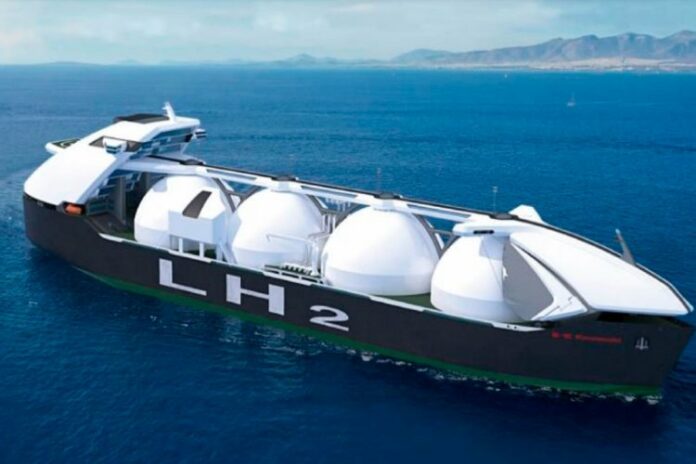
In this project, JSE will establish the world’s first large-scale hydrogen liquefaction and transportation technology, involving an initial 30,000 tons of hydrogen per year before upscaling. JSE will also demonstrate a comprehensive and reliable global liquefied hydrogen (LH2) supply chain, covering hydrogen production, liquefaction, export from Australia, marine transportation, and import.

JSE Ocean was established in January 2023 to research the marine transportation of LH2 by using a largescale LH2 carrier. JSE, and the three Japanese shipping companies with extensive knowledge and experience in the energy transport business, will establish the marine transport of LH2 at a commercial scale through JSE Ocean.

JSE was established in June 2021 with the main objectives of research, planning, management, and investment in the international supply chain of LH2. Current shareholder composition is Kawasaki Heavy Industries, Ltd. 66.6% Iwatani Corporation 33.4%.

Port of Dover super-charges digitalisation work with Vanguard Universities

0

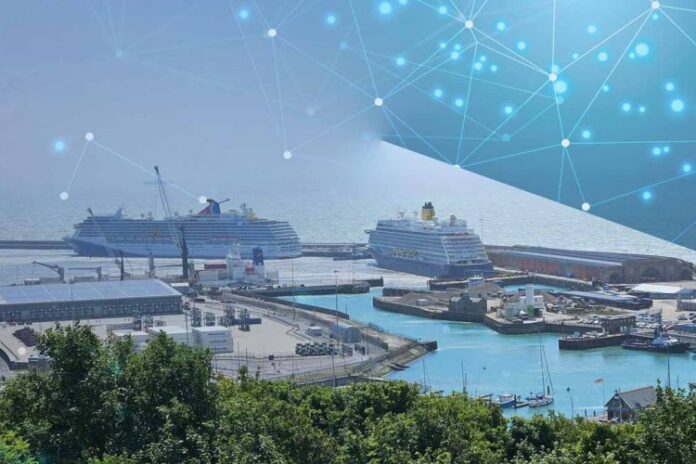
The Port of Dover has formed new partnerships with four best-in-class universities to develop next-generation technological solutions for the strategic and operational challenges facing the Port of the future. The Port has committed to cutting-edge research collaboration with the Universities of Manchester, Cranfield, Liverpool, and Kent across an array of projects from port optimisation to AI, machine learning and physics-based deep learning.

These partnerships create reciprocal opportunities for the Port to benefit from each University’s world-leading researchers to resolve strategic challenges using pioneering digital solutions and enhance the journey of £144bn worth of UK trade, 11m passengers and 2.4m trucks every year, with huge dividends to be gained for UK productivity. In turn, researchers will be able to employ a unique and world-leading operational testing ground for innovation in the Port of Dover and so stretch their knowledge of potential uses of AI further than ever before.   

Work with the University of Manchester is focused on the development of a digital twin for the Port of Dover, utilising machine learning and physics-based deep learning. Meanwhile, workstreams with the Universities of Cranfield, Liverpool and Kent will drive operational efficiencies in resource management, traffic flow optimisation, logistics and the supply chain through the Port and across the wider region.

Commenting, Christian Pryce, Chief Commercial Officer at the Port of Dover, said:

“The Port of Dover’s vision to become a smart, seamless, and sustainable port is fast coming to fruition, but the only way this vision can be realised is through collaboration with first-class thinkers and researchers. These four universities form the first wave of a wide range of partnerships that the Port of Dover plans to establish to help us achieve our ambitions across all areas of our operation and we encourage potential partners to reach out to us with ideas if they think they can support our journey.”

“This first set of collaborative agreements now provides a framework for engagement between the Port and four university partners – bringing projects together and acting as a springboard to remarkable digital solutions. A UKRI-sponsored feasibility study has already identified the potential of an AI-driven digital twin for the Port of Dover, which is set to revolutionise both landside and marine operations. While port optimisation projects represent opportunities for supply chain and logistics solutions to create thriving environments for commercial partners.”

“With the Universities of Manchester, Cranfield, Liverpool and Kent, the Port of Dover is set to grow its position as a world-leading Port even further, and we look forward to working with them to push their knowledge and understanding into whole new territories, driving economic growth for the United Kingdom through frictionless international trade and travel.”

Arijit De, Assistant Professor at the University of Manchester, said:

“The University of Manchester and the Port of Dover are collaborating to achieve a remarkable feat – an AI-enhanced digital twin. This advanced technology will offer marine navigation assistance that incorporates the latest port infrastructure design, to provide superior services to visiting ships. In addition, the collaboration also aims to improve passenger flow management by considering customer behavioural tendencies. These projects are geared towards improving operational efficiency and customer satisfaction within the port and have the potential to bring significant advantages to the marine industry.”

Ying Xie, Professor of Supply Chain Analytics at Cranfield University, said:

“The new partnership will help the Port of Dover move towards a digital transformation, leading to reduced energy consumption and carbon emissions.  AI and data analysis will improve efficiency in operations and procedures, and this will mean quicker turnaround times and cost savings for both businesses and travellers.

The Port of Dover is also an exceptional testing environment, helping us develop knowledge in further potential applications of AI in maritime operations, logistics and supply chains.”

Dongping Song, Professor in Supply Chain Management at the University of Liverpool, said:

“We are very pleased to join the partnership with the Port of Dover to help tackle the strategic challenges that the Port is facing. We will contribute our expertise in port operations, logistics and supply chain management, optimisation, and Artificial Intelligence to help drive operational efficiencies and create environmental and social value in the Port of Dover and the wider region.”

Simon Barnes, University Strategic Partnerships Development Manager at the University of Kent, said:

“The University of Kent welcome the national collaboration that this partnership offers. Supporting the economic well-being of the UK’s deprived coast communities through innovation is a key objective of our research and innovation planning. This new academic collaboration also links to our regional partnership with universities in Lille. Ghent and Leuven.”

Cruise ship for NYK Cruises under construction

0

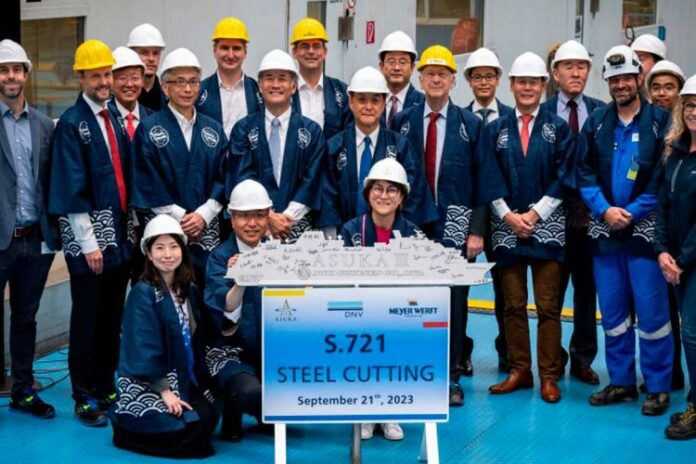
Construction of the new cruise ship for NYK Cruises, a company of the Japanese ship-ping group NYK, has now begun at MEYER WERFT with the symbolic steel cutting ceremony. 

“The order from NYK Cruises in 2021 in the middle of the pandemic was a strong signal for shipbuilding in Papenburg. Therefore, we are also very pleased today to have won NYK Cruises as a customer and to be able start in the construction of this modern cruise ship”, says Managing Director Thomas Weigend.

The teams of MEYER and NYK Cruises are working extraordinary close together to create the ASUKA III. For the MEYER team, learning about Japanese culture and optimising a cruise ship for this market is a very appealing task.

Representatives of the Japanese company were guests at the shipyard for the tradi-tional ceremony and wished the project good luck with painting Daruma in the Japanese tradition.

“In the ship’s designing, we are all grateful to the cooperation rendered by Meyer so far. We wish to continue this excellent relationship with them to the successful delivery of ASUKA III and beyond”, says Hiroyuki Endo, President NYK Cruises.

MEYER WERFT will use numerous customised solutions for the new cruise ship. These include hydrodynamics optimised according to the planned routes, contactless controls as well as on-board facilities adapted to the needs of Japanese passengers. The ship will be powered by liquefied natural gas (LNG), one of the cleanest fuels currently avail-able for shipping. In addition to the reduction of CO2 emissions, the emission of nitrogen oxides and particulate matter can be almost completely eliminated, and sulphur oxides completely avoided.

Delivery of the 52,200 GT ship ASUKA III is scheduled for 2025. With a length of 230 metres and a width of 29.8 metres, it will offer space for 744 passengers.

Northland Power secures financing for Taiwanese Hai Long OWF

0

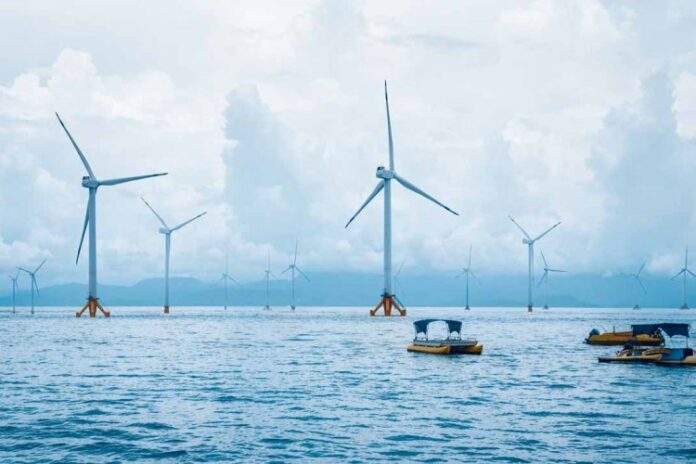
Northland Power Inc. has announced that its Hai Long offshore wind project in Taiwan has signed a credit agreement to secure 118 billion New Taiwan Dollars long-term over 20 year non-recourse financing (equivalent of $5 billion CAD). 

The non-recourse project financing will be provided by over 15 international and local lenders with support from multiple Export Credit Agencies (ECAs) from six different countries. The project is expected to reach financial close shortly, upon satisfaction of all relevant conditions precedent to the financing being achieved. 

“Today’s announcement is a major achievement for Northland, our partners, and the offshore wind industry, globally and in Taiwan,” said Mike Crawley, President and Chief Executive Officer of Northland. “We are progressing yet another world-class offshore wind project despite a challenging market environment. The project will produce high quality and stable cashflow over a 30-year period with further optimization opportunities. Offshore wind is necessary to meet global renewable energy demand in the years ahead and Northland is one of the few companies able to originate, develop, finance, construct, and operate such facilities.”

Hai Long’s total cost is projected to be approximately $9 billion, with funding from its $5 billion of non-recourse debt by the project lenders, approximately $1 billion of pre-completion revenues, and the remaining equity investment contributed by the project’s partners. 

“This financing is Northland’s first in Asia and, once closed, will be the largest non-recourse offshore wind project financing to date in the region,” said Pauline Alimchandani, Northland’s Chief Financial Officer. “We would like to thank the project team, our partners, and all the financial and capital providers for working together to achieve this significant milestone. Once operational, Hai Long is expected to provide significant, long-term contracted Adjusted EBITDA and Free Cash Flow to our business and shareholders.”

Northland’s interest in Hai Long is expected to generate a five-year average of approximately $230 to $250 million of Adjusted EBITDA (a non-IFRS measure)4 and $75 to $85 million of Free Cash Flow (a non-IFRS measure)4 per year once operational, delivering significant long-term value for Northland’s shareholders. 

Hai Long is located approximately 45 – 70 kilometers off the Changhua coast in the Taiwan Strait and consists of two phases, Hai Long 2 and Hai Long 3, with an expected combined generating capacity of 1,022 MW. Hai Long 2A was awarded up to 300 MW of grid capacity under a Feed-in-Tariff, while Hai Long 2B and 3 were awarded up to 744 MW of grid capacity in Taiwan’s first competitive price-based auction in 2018. Hai Long subsequently signed a CPPA for the 744 MW auction portion in 2022. The project has obtained all environmental approvals and its major construction permit and has commenced with early construction work and fabrication for components. Completion of construction activities and full commercial operations are expected in 2026/2027. In addition, the project secured a 15-year operations and maintenance agreement with the turbine supplier, with options to extend.

Hai Long will play an important role in helping the Government of Taiwan achieve its renewable energy target of 15 GW of offshore wind to be constructed between 2026 and 2035. Once operational, Hai Long will be one the largest offshore wind facilities in Asia, and provide enough clean energy to power more than one million Taiwanese households.

KCC to pilot Starlink internet service at sea

0

The move focuses on improving digital collaboration and data exchange between shore and ship, a key step in reaching KCC’s ambitious targets set for crew safety/welfare and carbon emission reductions.

While shipping has made significant headway in ship technology and navigation, vessels continue to experience persistent challenges in connectivity, which hinders efficient collaboration with offices onshore. Taking traditional VSAT (Very Small Aperture Terminal) connectivity to the next level, Starlink uses a vast constellation of LEO (Low Earth Orbit) satellites to ensure high-speed, low-latency and high-capacity internet access even in the most remote maritime locations.  

“Starlink holds the potential for our vessels to make a quantum leap beyond traditional satellite internet services. This will allow us to bring the vessel closer to home contributing to enhancing crew safety and welfare as well as further improving the efficiency of our operations and cutting the carbon footprint of our business,” comments CEO Engebret Dahm.

As KCC pilots to technology, potential applications and benefits to the fleet include:

  • Enhanced onshore/offshore collaboration: The introduction of Starlink enables closer collaboration during vessel operations, and will ensure more efficient safety meetings between onshore and offshore teams.
  • Innovative safety training with KLASS: The Klaveness Always Safe and Secure (KLASS) program incorporates engaging gamification techniques into its educational and training resources, fostering a proactive safety culture.
  • Elevated crew well-being and entertainment: Crew members will experience improved connectivity for better communication with friends and family, while gaining improved access to onboard entertainment options.
  • Advancing remote inspections: This will build on the success of KCC’s remote inspection initiatives first carried out in 2021.
  • Real-time sensor data and analytics: The ability to closely monitor vessel performance in real-time provides valuable insights into areas for potential improvement and optimization.
  • Accelerated digitalization adoption: The vessels are better positioned to fully embrace digitalization, enhancing process optimization, and enabling data-driven decision-making.
  • Empowering emerging technologies: With the maritime industry’s adoption of IoT and Artificial Intelligence (AI) on the rise, the need for increased bandwidth on vessels becomes ever more crucial.
  • Efficient documentation handling: Time is saved through streamlined cargo swap and hull cleaning documentation procedures, while expanded support for video and image file sizes streamlines document handling processes.

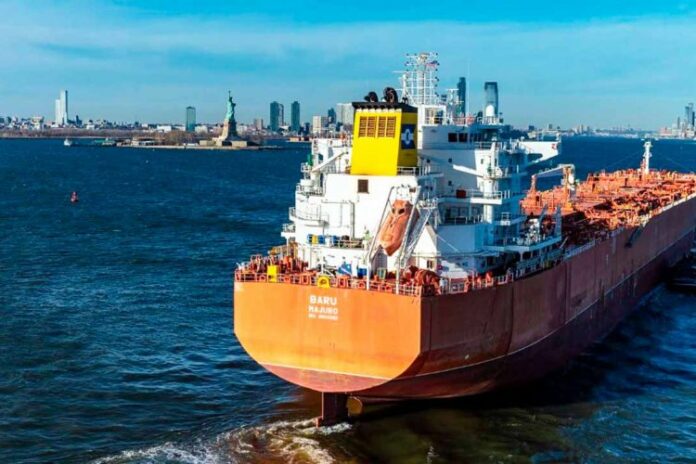
KCC has installed Starlink on the CLEANBU vessel MV Baru as of September 2023, with CABU vessel MV Ballard currently being outfitted. 

Subsea Integration Alliance signs MoU with bp

0

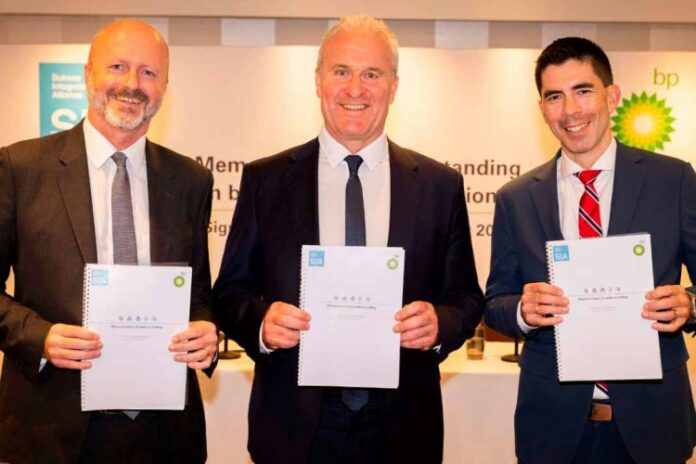
Subsea7 has announced that Subsea Integration Alliance has signed a memorandum of understanding (MoU) aimed at forming a framework agreement with bp for integrated subsea developments.

Under the framework agreement, Subsea Integration Alliance would work with bp from concept selection, through the full field life cycle, to deliver enhanced subsea project performance, based on new ways of working and an innovative commercial model.

A new team would be formed to oversee and manage activity across the programme with a focus on safety, quality and subsea project performance.

Olivier Blaringhem, CEO of Subsea Integration Alliance, said:

“This agreement will mark a step change in how our highly collaborative teams work together to achieve shared objectives for mutual value. Together with bp, we will deliver lower-carbon energy to the world through enhanced long-term subsea performance.”

Ewan Drummond, bp’s SVP Projects, said:

“The members of Subsea Integration Alliance have been a key supplier of bp for decades, and by combining our resources and knowledge, we can bring significant benefits to our customers and our stakeholders. Together we can safely deliver projects with improved project schedules, reducing our total cost of ownership and harnessing synergies through a collaborative one-team mindset. We look forward to getting to work.”

Subsea Integration Alliance is a nonincorporated strategic global alliance between Subsea7 and OneSubsea™, the subsea technologies, production, and processing systems business of SLB, bringing together field development planning, project delivery, and total life cycle solutions under an extensive technology and services portfolio.

Ports unveil Implementation Plan Outline for First trans-Pacific Green Shipping Corridor

0

The creation of the first-ever green shipping corridor across the Pacific is taking shape. Today, a voluntary partnership of leading maritime goods movement stakeholders, including the Ports of Los Angeles, Long Beach and Shanghai, some of the largest carriers in the world, and key leading cargo owners unveiled a Green Shipping Corridor Implementation Plan Outline to accelerate emissions reductions on one of the world’s busiest container shipping routes across the Pacific Ocean. The plan is the first of its kind and was developed with support from C40 Cities as part of its effort to reduce carbon emissions from the largest cities in the world.

As part of the historic plan, the carrier partners will begin deploying reduced or zero lifecycle carbon capable ships on the corridor by 2025, and work together to demonstrate by 2030 the feasibility of deploying the world’s first zero lifecycle carbon emission container ship(s). Carrier partners include CMA CGM, COSCO Shipping Lines Co., Ltd., Maersk, and ONE. Core partners include the Shanghai International Port (Group) Co., Ltd., the China Classification Society, and the Maritime Technology Cooperation Centre of Asia.     

Participants of the Green Shipping Corridor Partnership will take steps to reduce carbon emissions and harmful pollutant emissions impacting air quality, through methods such as expanding use of shore power and supporting the development of clean marine fueling infrastructure. Cargo owner partners have set goals to contract with carriers to use zero lifecycle carbon emission shipping services, and in an effort to measure progress toward decarbonization, all partners will develop metrics to track decarbonization progress. 

Gene Seroka, Executive Director of the Port of Los Angeles, said:

“This trans-Pacific green corridor will be a model for the global cooperation needed to accelerate change throughout the maritime industry. Reducing emissions in this corridor will yield substantial reductions. For perspective, most of the emissions associated with moving cargo by ship occur in the mid-ocean part of the journey between ports.  This corridor will help reduce mid-ocean emissions while continuing the work we have done to cut emissions within our ports.”

Mario Cordero, Chief Executive Officer of the Port of Long Beach, said:

“This initiative will drive emissions reductions across the world’s largest ocean and lead to greener practices from supply chain participants along these vital trade routes. The new and innovative vessel technologies, increased availability of sustainable fuels and better practices created through this green corridor will also impact society’s transition to a cleaner future far beyond the areas served by our ports.”

Mark Watts, Executive Director of C40, said:

“C40 is proud to support this first-of-its-kind green shipping corridor aimed at demonstrating that zero-carbon shipping at scale is feasible by 2030, and that less polluting ships and ports will also mean cleaner air, less noise and more jobs for local communities.” 

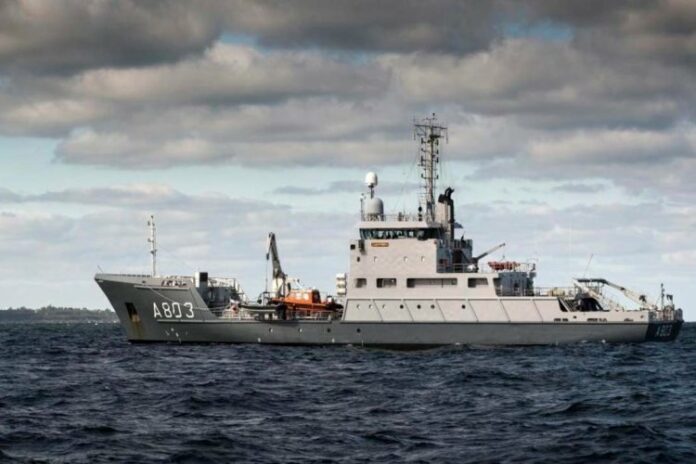
Royal IHC signs contract for maintenance of three Royal Netherlands Navy vessels

0

The contract covers five docking periods spread over five years, during which the hydrographic survey vessels will undergo specified maintenance twice and the torpedo work vessel Mercuur once.

For the dock-related work, Royal IHC is working with Neptune Repair in Hardinxveld-Giessendam, where Royal IHC is responsible for project management. Class inspections are also included in the maintenance. The Department of Material Maintenanceof the Royal Netherlands Navy continues to maintain the SEWACO part itself. Work will start in November with HNLMS Luymes, which will be the first ship to be drydocked for maintenance.

Sjoerd de Bruin, Commercial Director Defence of Royal IHC:

“After the successful docking of the HNLMS Groningen, we are proud to once again contribute to increasing the operational readiness of the Royal Netherlands Navy. We look forward to working with the DMI project team on the maintenance of these three ships in the coming years”.

DMI is pleased to have signed a contract after a long period of preparation and looks forward to a fruitful cooperation.

First ship with Ukrainian grain arrives at Bosphorus through temporary corridor

0

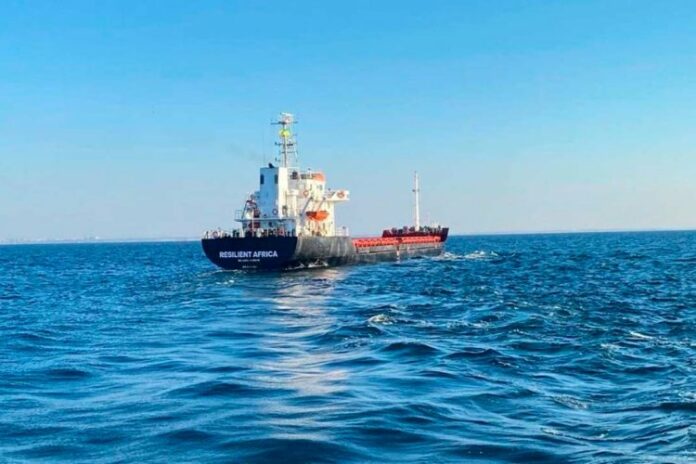
The Resilient Africa bulk carrier, which is loaded with 3,000 metric tons of Ukrainian wheat, has arrived at the Bosphorus, Reuters reported on Sept. 21.

On Sept. 19, the Palau-flagged Resilient Africa became the first ship with Ukrainian grain to leave a Black Sea port through the temporary corridor that was set up by Ukraine following Russia’s withdrawal from the Black Sea Grain Initiative in July.

The corridor was primarily meant to allow passage for ships stuck in the Ukrainian ports of Chornomorsk, Odesa, and Pivdennyi since the start of the full-scale invasion.

Five ships have been evacuated through the temporary corridor since it was established in mid-August.

However, the Resilient Africa and another cargo vessel, the Aroyat, are the first civilian ships that have agreed to enter Ukrainian ports since the collapse of grain deal.

The Aroyat is still docked in the port of Chornomorsk while being loaded with Ukrainian wheat for Egypt, according to Infrastructure Minister Oleksandr Kubrakov.

The two ships are expected to deliver 20,000 tons of grain to African and Asian countries, Kubrakov said.

Brokered by Turkey and the U.N. in July 2022, the original grain deal was designed to guarantee the safe passage of ships transporting Ukraine’s agricultural exports from the Black Sea during the invasion.

Moscow refused to extend the Black Sea Grain Initiative in July 2023, causing spikes in wheat prices and fears about food security worldwide.

On Sept. 7, Ukraine submitted an official proposal to Turkey to restore a corridor in the Black Sea for Ukrainian grain exports without Russia’s participation, Ukrainian Ambassador to Turkey Vasyl Bodnar announced.

The idea is “rational” because cargo ships already travel through Romanian, Bulgarian, and Turkish territorial waters of the Black Sea, the ambassador said.

Source: Kyiv Independent