-10.1 C
New York
Home Blog Page 259

Four more Z-Tech 30-80s to be built

0

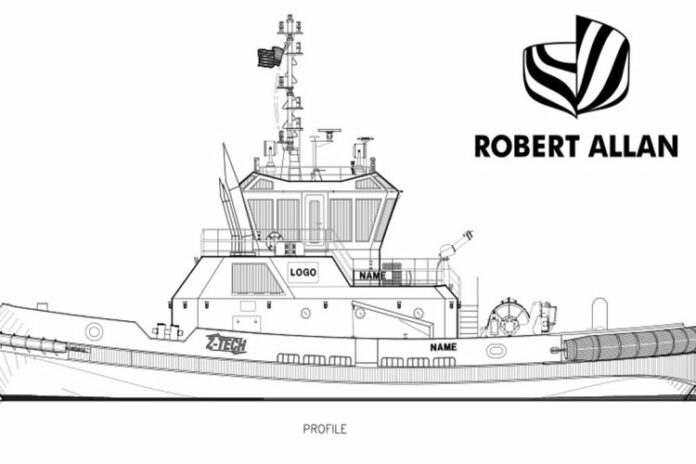
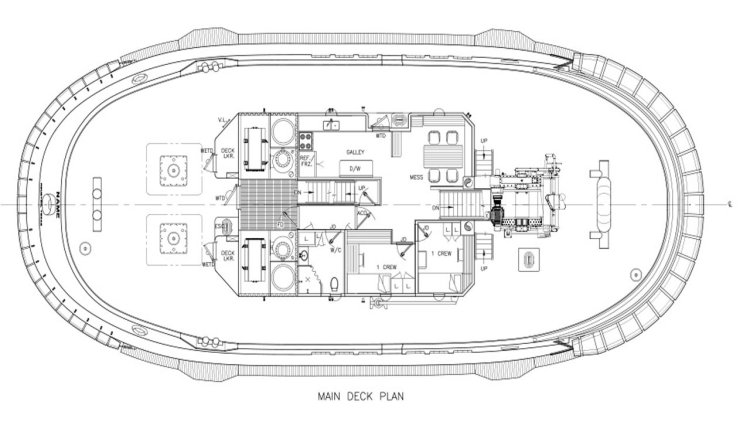
Construction contracts for 4 new tugs have been awarded by Gulf LNG Tugs of Brownsville, Texas to serve the Rio Grande LNG export facility (RGLNG). Master Boat Builders, Coden, Ala. and Sterling Shipyard, Port Neches, Texas will each build two of the Robert Allan Ltd. designed Z-Tech 30-80.

These new tugs are sisters to ten tugs that are currently operating in US Gulf Coast ports. The design has proven to provide exceptional escort performance in combination with superior seakeeping by the blending of two Robert Allan Ltd. innovations: the Z-Tech configuration and the RAstar’s sponsons.

The Z-Tech 30-80 tugs will be classed by ABS for Escort Tug, Low Emissions Vessel (US) and Fire Fighting – Class 1, in compliance with the ABS Marine Vessel Rules, 2023. The tugs are also in compliance with USCG Subchapter-M regulation requirements for towing vessels.

The Z-Tech 30-80 tugs have an overall length of 98’-6”, a breadth of 42’-8” and are expected to reach a bollard pull of approximately 87 tonnes, with a pair of Schottel SRP 510FP thrusters, 2.8 metre fixed pitch propellers, driven by two EPA Tier IV compliant Caterpillar 3516E main engines, delivering 3500 bhp at 1800 rpm. A Markey DEF-48A, Class III – 100HP winch is fitted on the forward deck for escort operations.

Gulf LNG Tugs of Brownsville, Texas is a joint venture formed between Bay-Houston Towing Co., Moran Towing Corporation, and Suderman & Young Towing Company.
NYK to trial mooring system to suppress hull shaking with JERA and TMS

0

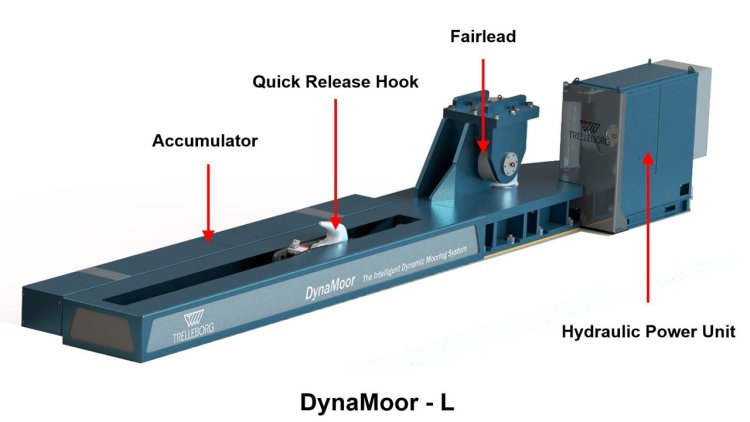
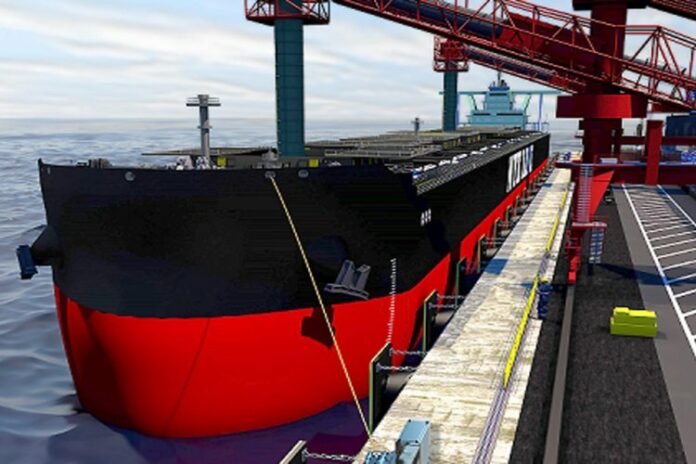
On September 27, NYK signed a basic agreement with JERA Co., Inc. and Trelleborg Marine Systems Australia Pty Ltd. (TMS), an Australian marine port materials manufacturer that is a group company of Swedish polymer manufacturer Trelleborg AB, to conduct a trial operation of DynaMoor, a mooring system that suppresses hull shaking. 

The three companies will install DynaMoor at the coal discharging berth of JERA’s Hitachinaka Thermal Power Station (Ibaraki Prefecture) and operate it in actual cargo operation from 2024 to verify the effect of reducing the movement of moored ships and improving the safety and cargo handling efficiency of port operations.

DynaMoor, developed independently by TMS, is a system that is installed on the pier instead of the bit that connects the mooring line of the ship. DynaMoor can be installed in a small area and adjust the tension of the mooring lines using electronically controlled hydraulic dampers to reduce hull shaking.

At many ports facing the open sea, hull shaking caused by sea swells and long-period waves has led to cargo-handling interruptions and ship evacuations, reducing port operation efficiency. This problem has not been solved in Japan due to difficulties in reducing hull shaking by keeping constant tension on the mooring line from the ship. Large-scale facilities are generally required to adjust tension from land.

Damen selects Heinen & Hopman for Climate, CBRN filters for Dutch-Belgian frigates

0

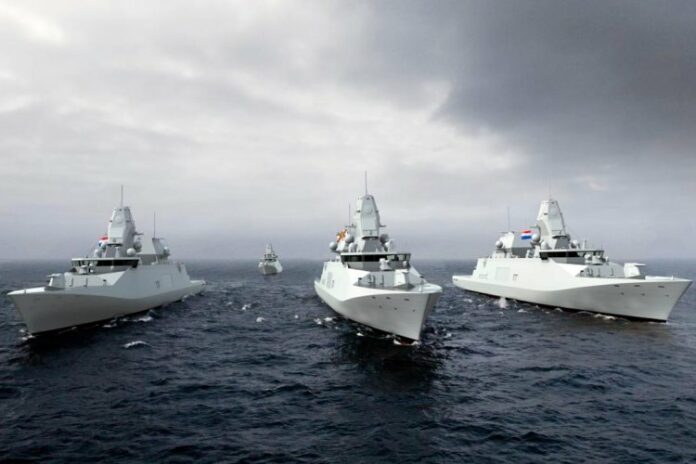
With Heinen & Hopman, Dutch shipbuilder Damen Naval has again found a Dutch supplier for the prestigious Anti-Submarine Warfare Frigates. The company, based in Spakenburg will supply the climate and filtration systems for the four new frigates being built for the Netherlands and Belgium. 

“With this contract, we are fulfilling our promise to involve as many Dutch suppliers as possible in this project,” explains Roland Briene, Managing Director of Damen Naval. “By doing so, we ensure that we share the knowledge we accumulate on this frigate project with as large a part of the Dutch shipbuilding industry as possible. Like Damen, Heinen & Hopman is a family business and because of their quality systems and their hands-on and flexible way of working, they are the perfect fit with Damen Naval.”

The scope of the contract includes a complete Heating, Ventilation, Air conditioning, Refrigeration system (HVAC-R). The company specialises in marine applications that can continue to function in the most challenging conditions. In addition, Heinen & Hopman will also supply a Chemical, Biological, Radiological, and Nuclear filtration system (CBRN) to protect the ship and especially the crew from chemical, biological or nuclear attacks. 

Damen Naval and Heinen & Hopman have already collaborated on several projects. The company also supplied the HVAC-R systems for the Joint Support Ship HNLMS Karel Doorman, the Combat Support Ship Den Helder currently under construction and the SIGMA Frigates for Indonesia, Morocco, and Mexico. 

“We are incredibly proud we have once again been chosen as Damen Naval’s partner, now for the ASW frigates. With our extensive experience on various types of naval vessels and expertise in ultra-quiet and energy-efficient HVAC-R systems, we are the right choice for these wonderful ships,” says Joep Hopman, CEO Heinen & Hopman.

The four ASW frigates are to replace the current Karel Doorman-class multipurpose frigates built between 1985 and 1991 by Damen Naval (then called Koninklijke Maatschappij de Schelde). The new frigates can be used for multiple tasks; however, the emphasis will be on anti-submarine warfare. The first ship is scheduled to be delivered by Damen Naval in 2028.

Airbus and LDA to install new fuel-saving sails for maritime operations

0

The eSAIL®, developed by the Spain-based firm bound4blue, creates as much as six to seven times more lift than a conventional rigid sail. It consists of a sail-like vertical surface and an electric-powered air suction system that helps the airflow to re-adhere to the sail, generating additional lift and thereby reducing the load on the ship’s main engines.

Three 22-metre-high eSAILs® will be fitted to the Ville de Bordeaux ahead of a six-month performance monitoring period starting early 2024. The Ville de Bordeaux regularly ferries A320 Family subassemblies from Europe to Mobile in the United States for final assembly.

Fitting the eSAILs® on the Ville de Bordeaux supports Airbus’ commitment to halve CO2 emissions from its maritime operations by 2030, compared to a 2015 baseline. According to bound4blue estimations, these eSAILs® could deliver fuel and CO2 emissions savings of up to 560 tons and 1,800 tons respectively for this ship annually.

The installation of eSAILs® on the Ville de Bordeaux is co-funded by the European Union

Nicolas Chrétien, Head of Sustainability & Environment at Airbus, said:

«We at Airbus have been studying wind-assisted technologies as a potential energy source for our maritime operations for many years. As we embark on an exciting journey with our partners Louis Dreyfus Armateurs and bound4blue, we reaffirm our ambition to explore all innovation pathways to develop more sustainable maritime solutions and further reduce the carbon footprint of our industrial operations. This technology looks promising and we are eager to start testing it in real conditions by the end of the year.»

Mathieu Muzeau, Transport & Logistic General Manager at Louis Dreyfus Armateurs, said:

«At Louis Dreyfus Armateurs, we are committed to supporting the decarbonization of the shipping industry, achieving net-zero greenhouse gas emissions by 2050.  Wind-assisted propulsion is one of the solutions we believe will help us reach this objective. To determine the best technology for our operations, we are eager to identify and test various forms of wind-assisted propulsion, including rotating vertical cylinders, flexible sails, rigid sails, and wings. We are pleased to announce that we will soon install bound4blue’s eSAILs on our ro-ro vessel, Ville de Bordeaux, which we operate for Airbus.» 

David Ferrer, CTO of bound4blue, said:

«After having implemented and proven our technology on three ships already, we’re excited to install our 22-metre eSAILs on Ville de Bordeaux. This deployment will mark the first-ever fixed suction sail installation on a Ro-Ro ship, demonstrating that suction sails can be deployed on ships with high weather deck and large windage area, not compromising the vessel’s stability.»

Final quayside assembly of tidal energy kite Dragon 12 initiated in Sweden

0

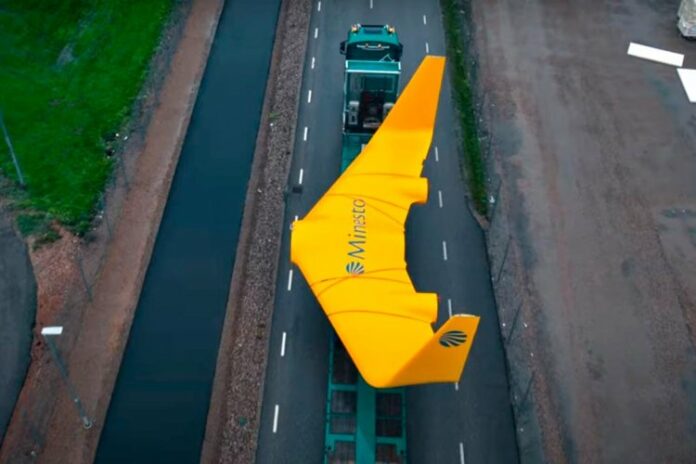
Minesto has completed the manufacturing of the Dragon 12 wing and started system integration at quayside in Uddevalla port, Sweden. 

Minesto has now transported the first completed Dragon 12 wing to the port of Uddevalla for integration of subsystems and further transport to the production site in Vestmanna, Faroe Islands. Final system integration at quayside is logistically cost effective and reduce the need for complex and expensive transport of the large wing.

The wing, spanning 12 metres, is a key component in the Dragon 12 system to which all other modules connect. All subsystems, including the 1.2 MW power take off, steering pods, and control system are being prepared for integration.

“The Dragon 12 wing has a very efficient and uncompromised hydrodynamic design. It is practically a scale-up of the Dragon 4 wing, with some adjustments to allow for tighter turns and to cater for the higher forces resulting from a larger system”, says Bernt Erik Westre, CTO of Minesto.

The manufacturer of the wing is Swedish composite specialist Elitkomposit. The cutting-edge supplier of advanced composite components is often contracted by high-tech industries such as the defence and space industry. Elitkomposit has previously delivered the wings for DG100, Dragon 2 and Dragon 4 along with other composite assemblies – thus been able to integrate previous experience into the utility scale Dragon 12 wing as well as the completion of the D12 rudders and elevators.

“The organic shape and the high loads involved makes this wing one of the most advanced yet robust components we ever delivered. We are excited to contribute to new technologies in the renewable energy sector”, says Andreas Simonsson, Senior Design Engineer at Elitkomposit.

Hanwha Ocean and BV complete joint project on 3D model based classification approval

0

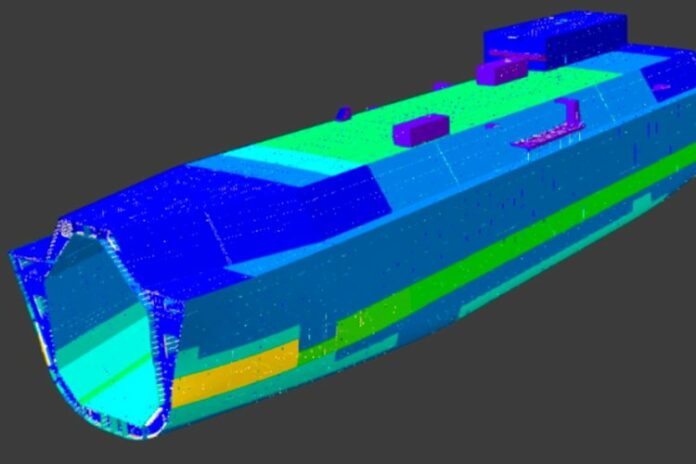
The JDP tested and validated the workflow of 3D model-based Classification approvals, where classification reviews are directly based on the 3D model provided by the designer instead of using traditional 2D drawings. Potential benefits include improved accuracy, a better visualization of design, reduced cost with increased efficiency, and enhanced collaboration.  

Hanwha Ocean provided the cargo hold region of one LNG carrier using OCX (Open Class eXchange) format. Based on this 3D model, Bureau Veritas automatically generated the calculation models used in BV’s rule-checking software: MARS (prescriptive rule check) and VeriSTAR Hull (finite element analysis). In addition, BV provided Hanwha Ocean with access to its web-based collaborative platform (VeriSTAR Project Management) to share comments and the progress of the design review in real-time.

Digital technology is developing rapidly and is applied to all industries, including shipbuilding and marine, where it plays an important role to improve the development and efficiency of design and production processes. 3D classification is an important component of BV’s digital transformation programme, having received significant investment.

BV has developed a 3D model based approval for Classification of ships. In parallel, Hanwha Ocean has a plan to develop and establish 3D structural design procedures by deploying future digital design paradigm, with the aim to improve processes based on the latest technology. 

Duke Lee, Technical Director of Hanwha Ocean Co., Ltd., said:

“Together with Bureau Veritas, we are developing 3D model based ship design procedure using NAPA Designer for improvement of our design capability as well as engineering competitiveness and to achieve one more step toward digital transformation. As our 3D model can be used for Classification rule check purpose and also can be submitted to Class for approval via 3D OCX format, 3D OCX can be very helpful for Hanwha Ocean and Classification Society simultaneously.” 

Alexander Gregg-Smith, SVP of Bureau Veritas Marine & Offshore North Asia Zone, said:

“We are pleased to cooperate with Hanwha Ocean on the classification approval process using 3D models. It is our expectation that classification approval process using this 3D model can be applied to actual projects with Hanwha Ocean, and improved efficiency and accuracy can be expected. This collaboration between Hanwha Ocean and BV is an obvious demonstration of our commitment to collaborate with key players in the industry, supporting innovation to meet sustainability ambitions and challenges ahead.”

WinGD wins first approval in principle for ammonia two-stroke engine

0

Swiss marine power company WinGD has secured the first ever approval in principle (AiP) for two­­‑stroke engines fuelled with ammonia.

Development of WinGD’s ammonia-fuelled engine series has been advanced with strong support from shipowners, shipyards and engine builders. The first engine to be developed, the 52-bore X52DF-A, will be available for delivery from Q4 2024 and is applicable to a range of vessels including gas and bulk carriers.

WinGD CEO Dominik Schneiter said:

“Time is of the essence as shipping looks to clean power solutions. This approval shows the industry that WinGD is leading the way in bringing carbon-free ammonia power to the deep-sea fleet. With the support of expert partners including Lloyd’s Register, these technologies will be available long before emission targets require them, giving operators vital space to plan and gain experience.”

Lloyd’s Register CEO Nick Brown added:

“The maritime industry needs to trust that new technologies can be deployed safely as it continues to evaluate multiple transition pathways. This AiP will give first movers confidence that, subject to subsequent care in design, build, integration and operation, this ammonia two-stroke engine can help meet that demand. LR is delighted to have worked with WinGD on this groundbreaking development.”

WinGD was able to validate to Lloyd’s Register experts that the X52DF‑A concept is technically ready to satisfy future regulatory requirements with no major obstacles. As part of the AiP process, Lloyd’s Register considered the engine safety concept, risk assessments and preliminary engine and fuel supply system design, as well as confirming the compatibility of materials with ammonia fuel.

WinGD will extend the X‑DF‑A platform to a 72-bore variant in 2025 followed by other engine sizes in 2026 according to market needs, accommodating a wide range of vessel types from small tankers and car carriers to very large tankers. The engines operate according to the Diesel principle in both diesel and ammonia modes, have the same rating field as WinGD’s existing Diesel engines and will be available with the same cylinder configurations.

Svitzer fleet expands along Brazilian coast

0

Svitzer has announced the continued expansion of its fleet in Brazil, as part of the ongoing growth of its operations in the country.

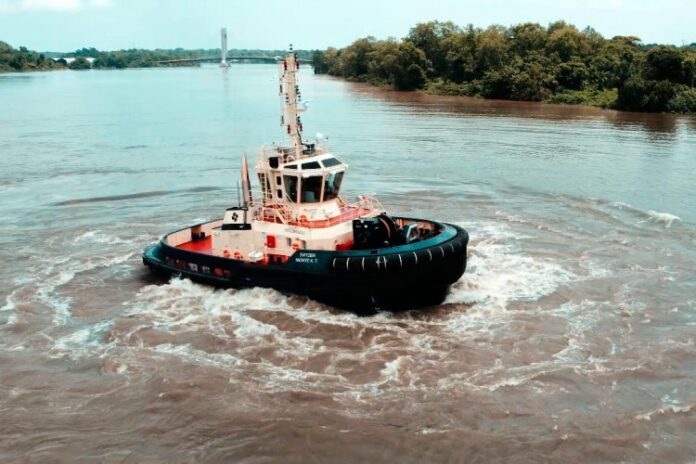
Svitzer Monte KT is the fourth tug to join the fleet in the country since April and demonstrates Svitzer’s commitment to strategically strengthening its presence across Brazil’s coast to deliver sustainable marine services.

Svitzer Monte KT is sister to three tugs already delivered to Svitzer in 2023, which have been deployed across the ports of Pécem, Paranagua, and Santos on Brazil’s coast. The tug is one of six new Azimuth Stern Drive (ASD) tugs that will be put into operation by Svitzer in Brazil before the end of 2024. As a Ramparts 2300 series tug, Svitzer Monte KT has a top speed of 13 knots and a bollard pull of 70 tonnes. Designed by Robert Allan, the tug was built by the Brazilian Shipyard Rio Maguari.

The new tug joins its sister tug Svitzer Atanásio in Santos, which was delivered earlier in 2023. Svitzer has a total of four tugs in Santos, Brazil’s largest port and Latin America’s busiest container hub.

Arjen Van Dijk, Managing Director Americas, said:

“The delivery of the Svitzer Monte KT at Santos shows Svitzer’s commitment to continued growth in Brazil. As we expand our port coverage and increase our ability to deliver sustainable services for customers, we also look forward to further growing our footprint in the country over the next few years. Brazil continues to be one of Svitzer’s main growth markets in the Americas region with two further vessels, equipped with FiFi 1 (firefighting) capabilities to be delivered to Svitzer in Brazil by the second quarter of 2024.”

Commenting on the fleet expansion, Daniel Reedtz Cohen, Managing Director, Svitzer Brazil said:

“We have a very clear strategy in the Brazilian market to strengthen our coverage and deliver safe and reliable services to our customers. With the addition of Svitzer Monte KT to our fleet, we continue to strengthen our ability to deliver high-quality support of global and local ship-operators in Brazil’s logistics ecosystem.”

By the end of 2023, Svitzer will be operating 20 tugs, including the four vessels added to the fleet in 2023, from eight ports across Brazil – Salvador, Suape, Pecem, Santos, Vitoria, Rio Grande, Sao Francisco do Sul, and Paranagua. As a leading global towage provider, Svitzer combines its wide reach and experience with in-depth regional and local knowledge to benefit its customers in Brazil and ensure they receive services of the highest standard.

Port of Rotterdam and Yokogawa kick off study to increase energy and resource efficiency

0

The Port of Rotterdam Authority and Yokogawa Electric Corporation have initiated a feasibility study into increasing cross-industry integration for the efficient use of energy and utilities in the Rotterdam industrial cluster to contribute to ambitious regional decarbonization goals. 

Individual companies in the petrochemical industry have generally highly optimized their own operations. But concerns about exposing confidential information often hamper them from looking ‘beyond the fence’ to work with other companies in an industrial cluster, even though this can yield further energy and resource savings. The Port of Rotterdam and Yokogawa aim to break through this barrier by facilitating confidential sharing of data and deeper integration within the cluster to unlock the large potential efficiency gains of optimizing production across entire industrial clusters.

Through integration of multiple utilities such as heat, electricity, and hydrogen, industrial flexibility can be increased, which leads to new efficiencies. For example, with regards to electricity, consumption “behind-the-meter” may be optimized between adjacent companies to manage peak demand, which could also help prevent or reduce electrical grid congestion in the port area. The same approach can be extended by orchestrating the use of other utilities. Companies that produce steam as a byproduct, for example, could choose to ramp up production right at the time when a neighboring company needs more steam, preventing heat from being wasted. Overall, this multi-utility approach could make a relevant contribution to energy savings and emissions reduction.

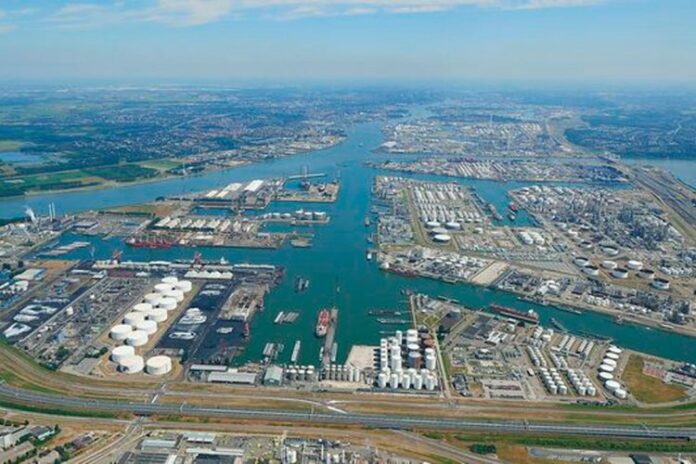
As Europe’s largest port and home to more than 200 industrial companies, the Port of Rotterdam is uniquely positioned to facilitate and implement this project in support of the energy transition. Yokogawa is able to leverage its simulation technology that supports optimal production planning, solutions for regional energy management, and consulting capabilities to uncover opportunities for efficiencies across multiple industrial systems.

The two companies have already completed a pre-feasibility study using computer simulations and comparisons with operations in the Rotterdam port industrial cluster to identify potential savings of a range of utilities. This was combined with deep-dive workshops and roundtable discussions with various companies active in the area. 

The pre-feasibility study showed up to 5% improvements in efficiencies from better alignment of the use of electricity, heat, steam, and feedstocks such as water and industrial gases, resulting in lower costs and a reduced carbon footprint. In the long run, deeper integration and optimization within the industrial cluster could yield savings as high as 10%. In this way, the Rotterdam area could develop towards an “industrial sharing economy” in which intensive sharing of resources and infrastructure leads to highly efficient operations for all companies in the region.

Following these promising initial evaluations, the Port of Rotterdam and Yokogawa have now started a feasibility study with several petrochemical and energy companies in the cluster to define concrete use cases based on existing operations. The first results of the feasibility study are expected by the end of 2023. If sufficiently positive, the next step will be to develop plans for carrying out field trials with cooperating companies in the port from 2024.

First KCC vessel equipped with Silverstream Technologies air lubrication system

0

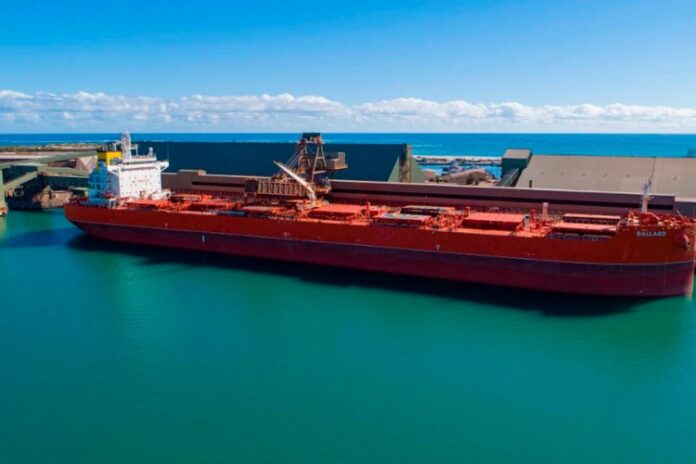
Among the measures include Silverstream Technologies’ air lubrication system, the Silverstream® System, making MV Ballard the first KCC, and one of the first vessels within the dry bulk/tanker space, to adopt this technology.

The Silverstream® System utilizes a series of air release units (ARUs) located along the flat bottom of the vessel. Oil-free compressors generate pressurized air that is sent through the ARUs, creating a uniform layer of microbubbles that traverses the hull, thereby reducing the friction between the hull and water. This reduction leads to a decrease in net fuel consumption and the subsequent CO2 emissions.

Additional installations:

  • WE Tech shaft generator – Converts rotational energy from the propeller shaft into electric power to supply the Silverstream system and other on-board systems. This generates electricity more efficiently from main engine, instead of the less efficient auxiliary engines.
  • Becker Mewis Duct – A custom-designed hull appendage that improves propeller inflow hydrodynamics.
  • Welding seem fairing – A material is applied to welding seams that are created where the steel sheets of a ship’s hull meet, thereby smoothing the hull and reducing friction.
  • Silicon paint – An application of friction resistant anti-fouling paint to further improve hull performance.
  • Kongsberg Ship Performance System – This provides real-time, high-frequency sensor data to onshore locations.
  • Starlink internet system – This will ensure high-speed, low-latency and high-capacity internet connectivity to facilitate digital collaboration and data exchange between the ship and shore.

CEO Engebret Dahm comments:

“The implementation of these efficiency improvements illustrates our commitment to take a front-runner position in delivering cost-effective decarbonization to our customers. We remain steadfast in our journey to implement a wide range of energy and operational efficiency technologies on our current fleet while we, in addition, prepare for the later utilization of zero-emission fuels on our newbuilds.”

Following the sea trials, Ballard has returned to service with performance data of the new installations continuously monitored. Should all technologies deliver in line with KCC’s expectations, an energy efficiency improvement of around 15% is anticipated aboard the vessel. Following MV Ballard, CLEANBU MV Baru is scheduled for a Silverstream® System retrofit in November 2023.