-10.1 C
New York
Home Blog Page 258

SeaRenergy Poland signed BC-Wind OSS Permit Design Deal

0

Ocean Winds and Polish SeaRenergy entity have signed a contract to prepare a conceptual design, construction permit design documentation and obtain a permit for Offshore Substation for the BC-Wind offshore wind farm in the Polish Baltic Sea.

The scope of the contract covers OSS topside concept design including electrical design which creates a basis for the construction permit.

Moreover, the preparation of the documentation necessary for applying and obtaining the Construction Permit is an integral part of this integrated service contract resulting in the final approval by the respective authorities. SeaRenergy will execute the project by including experienced partners also involving as much local content as possible to contribute to the Polish offshore wind development. The project execution started in August 2023.

“We are delighted to become Ocean Winds’ partner on the BC-Wind project and to deliver support to bring the project closer to obtain a building permit for the entire wind farm. To engage Seartec, the inhouse design company of Searenergy Group and Elbe-1 gives us the confidence to apply our one stop shop approach without compromising the market known SeaRenergy driven by quality, innovation and experience.” says Natalia Kress, Managing Director of SeaRenergy Sp. z. o. o.

The BC-Wind offshore wind farm is being developed by Ocean Winds, the international company dedicated to offshore wind energy and created by ENGIE and EDPR.

The 500 MW project is to be built about 23 kilometres north of the municipalities of Choczewo and Krokowa in the Pomeranian Voivodeship. It will comprise a maximum of 34 wind turbines located approximately 37 kilometres from the port of Władysławowo.

BC-Wind is being implemented according to schedule with geophysical and geotechnical surveys. The developer plans to start commercial operations of the offshore wind farm in 2027.

Marine plastic waste can spread antimicrobial resistance

0

Marine plastic waste may serve as a vector for the spread of antimicrobial resistance (AMR) from pathogenic bacteria, either to shellfish or directly to humans who are bathing in the sea or taking part in other recreational activities.

“The bacteria contained in sewage and wastewater discharged from households, hospitals and factories will form biofilms on plastic surfaces in the sea”, explains Gunhild Hageskal, who is a Senior Research Scientist at SINTEF. “Such bacteria may already possess resistant properties, but in any event, bacterial biofilms are known to act as incubators for antimicrobial resistance. The reason for this is that bacteria readily exchange so-called mobile genetic elements when assembled in large numbers at a single location”, she says.

There may also be antimicrobial and other chemical residues contained in the wastewater, and certain chemicals in the plastics themselves may influence the development of bacterial resistance.

Researchers at SINTEF will be investigating the extent of this problem as part of a project called PlastiSpread, which is a joint collaboration between SINTEF, NTNU and the University of Thessaly in Greece. The Norwegian part of the study will be carried out in Trondheim in close collaboration with Trondheim municipality and the wastewater treatment plants at Høvringen and Ladehammeren. In order to introduce a global perspective to this issue, a similar study will be carried out in Greece, where twice the amount of antibiotics are used as in Norway.

The PlastiSpread project has a budget of NOK 12 million and will be carried out between July 2023 and July 2027. It is being funded by the Research Council of Norway  and coordinated by NTNU, with SINTEF as project partner.

SLB, Aker Solutions and Subsea7 announce closing of the OneSubsea joint venture

0

Subsea7 has announced the final closing of the previously announced joint venture with SLB1 and Aker Solutions2. 

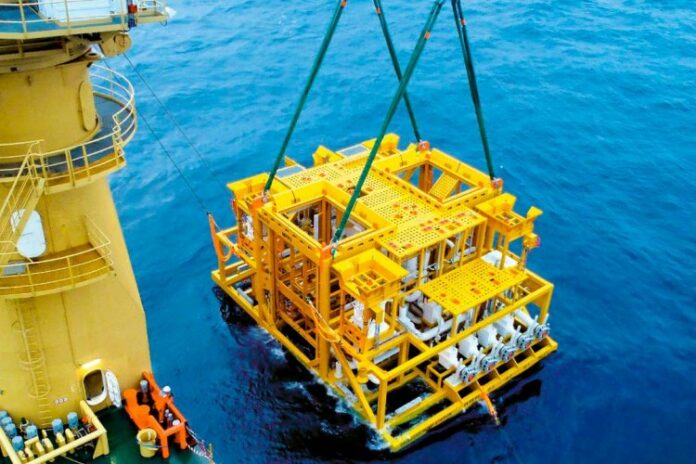
OneSubsea now comprises SLB’s and Aker Solutions’ subsea businesses, which include an extensive complementary subsea production and processing technology portfolio, world-class manufacturing scale and capacity, access to industry-leading reservoir and digital domain expertise, unique pore-to-process integration capabilities and strengthened R&D capabilities.

OneSubsea’s field-proven subsea processing capabilities are seen by its customers as unparalleled in enhancing reservoir recovery and enabling long tie backs. Its unique compression technology portfolio has proven its potential to reduce the structure and capital cost of developing new energy reserves, while subsea projects have shown to be inherently more carbon efficient than topside solutions.

OneSubsea will be headquartered in Oslo, Norway, and Houston, Texas, with 11,000 people working in all key operating regions around the world.

SLB holds a 70 percent equity stake in the joint venture, with Aker Solutions holding 20 percent. Subsea7 holds 10 percent of the joint venture, in exchange for a cash consideration of USD 306.5 million paid in two equal instalments in 2023 and 2024.

Mads Hjelmeland, CEO of OneSubsea said

“OneSubsea’s extensive technology portfolio and engineering expertise enable us to address future market trends and needs at a unique scale.  In doing so, we aim to fulfil our purpose of expanding the frontiers of subsea to drive a sustainable energy future. We will accelerate innovation and contribute to the ambition of our customers to optimize their production and reduce emissions in their subsea operations.”

John Evans, CEO of Subsea7 said

“Subsea7 is in the early stages of a prolonged upcycle driven by the continued growth of the world’s energy demand, combined with compelling competitive dynamics of the subsea industry. Our market-leading position is reinforced by the partnership with SLB and Aker Solutions in the OneSubsea joint venture and through Subsea Integration Alliance. We look forward to deepening the relationship with our clients as we work together to optimise value creation and deliver the lower-carbon energy the world needs.” 

Olivier Le Peuch, CEO of SLB said

“The offshore market is demonstrating a sustained resurgence as operators across the world look to accelerate development cycle times and increase the productivity of their offshore assets. With its combined technology portfolio that leverages digital innovation, OneSubsea is ideally placed to support customers in their drive to improve asset performance while increasing energy efficiency and reducing CO2 emissions.”

Accelleron and METIS to drive digital turbocharger service uptake

0

Accelleron has signed a strategic partnership with METIS Cyberspace Technology that will expand the number of marine installations and power generation facilities that can use data analytics to improve turbocharger operation and maintenance.

METIS develops data-collecting hardware and IoT solutions that can be easily deployed in vessels and facilities to achieve automated, real-time data availability. Under the cooperation, METIS will provide onboard and cloud-based data infrastructure to Accelleron customers, enabling the data collection that underpins Accelleron’s range of Smartly Enabled Service Agreements.

With many marine and power generation assets built before the advent of modern digital solutions, the cooperation will support operators in establishing the connectivity needed for real-time data collection and transfer. This capability is a pre-requisite for Accelleron’s digital solutions including Tekomar XPERT and Turbo Insight, and its service agreements Turbo MarineCare and Turbo SmartCare.

The marine class-approved data acquisition system from METIS can be tailored to meet the specific requirements of operators’ facilities. By partnering with METIS, Accelleron is broadening the number of customers that can benefit from the real-time insights and efficiency gains offered by its digital solutions.

Eleni Polychronopoulou, CEO, METIS, said:

“State-of-the-art information technologies are increasingly available and affordable, which means that the value data offers to unlock greater ship safety, efficiency and sustainability can be made more widely accessible wherever assets are operating. We are delighted to team up with Accelleron to drive the uptake of these essential optimization capabilities in sectors that may have previously considered them out of reach.”

Roland Schwarz, Division President Service, Accelleron, added:

“Digital solutions and data-enhanced services are increasingly understood as the keys to significant and cost-effective efficiency improvements in shipping and power generation. Accelleron has already invested in developing the tools and service agreements that enable customers to tap into these benefits. Our partnership with METIS will ensure we can extend those advantages to users that may otherwise have been unable to access them.”

Valenciaport promotes a Sustainable Transport to Work Plan

0

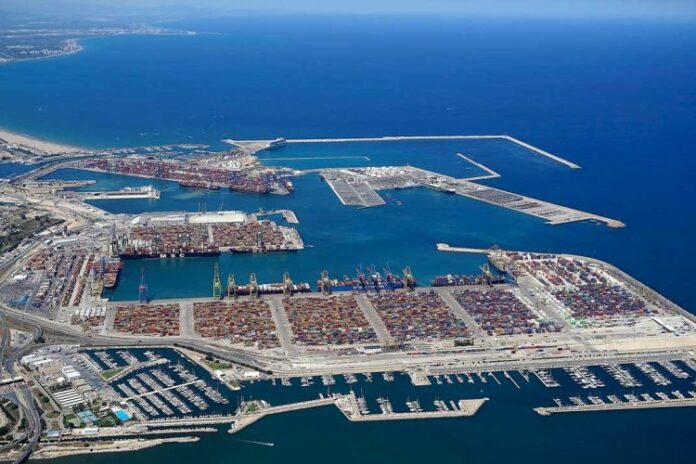
A 100% green port also implies that its staff travels to work in a sustainable way to its docks. With this objective in mind, Valenciaport has promoted the development of a ‘Sustainable Transport to Work Plan’ that aims to implement a series of actions to turn the Commercial Port of Valencia into an emission-free area that is accessible in all modes: pedestrian, cyclist, public transport, personal mobility vehicle and electric car.

Without forgetting that the commercial port is a fiscal precinct -that is, an area of economic activity with special characteristics- through this plan, the aim is to achieve the harmonization of spaces and the safe coexistence of common areas for pedestrians, cyclists and personal mobility vehicles, paying special attention to road safety.

In this sense, Valenciaport has awarded the development of this plan, in the formulation of which the workers of the enclosure will participate. With the implementation of the actions developed in it, it is expected to reduce in the short term at least 15% of trips in private vehicles and their equivalent in CO2 emissions.

In order to know the conditions of movement and access to the port facilities, Valenciaport has carried out a preliminary diagnostic study in which 24% of the staff participated, including office staff, stevedores and transport companies. The results of this participatory process indicate that a rearrangement of the port space is necessary to make it easier and safer to travel by bicycle, personal mobility vehicles -such as electric scooters- and even on foot.

Approximately 58% of port employees reside in the city of Valencia. According to the results obtained in the participatory process, a higher frequency of public transport to the port area would benefit this profile that is predisposed to leave the car at home if there were more bus lines or safe accesses for bicycle or skateboard are deployed. Those who live in nearby towns such as Paterna or Torrente suggest the use of shuttle buses. With all the information extracted from the participatory process, the company awarded the ‘PAV Sustainable Transport to Work Plan’ has about six months to submit a proposal for viable actions that represent a significant advance and facilitate sustainable journeys in itinere of the staff of the Commercial Port and the office area. In parallel to this plan, work is being carried out with social agents, city councils and public institutions in order to address and implement all the resolution measures that involve urban reorganization and improvement of public transport.

Corvus signs the first order for its inherently gas-safe Pelican Fuel Cell system

0

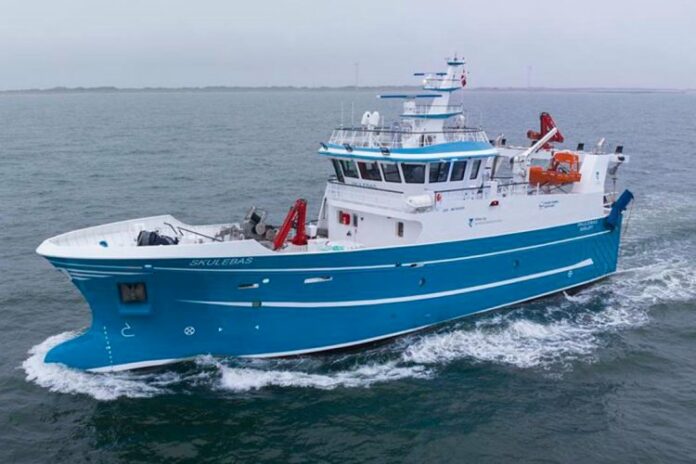
The 35-meter fishing and training vessel has the latest technology and commercial fishing systems installed and sets an example of innovation and cooperation within the maritime and education sectors. The vessel, which is owned by Vestland County and operated by Måløy Upper Secondary School, will be the first of its kind, combining both fuel cells and batteries in a fishing vessel. 

The Pelican Fuel Cell System, developed by Corvus through the three-year H2NOR project, builds upon well-proven technology from global fuel cell leader, Toyota. It is the only marine fuel cell that is designed to fully comply with the well-known inherently gas-safe principle, meaning it can be placed anywhere onboard a ship without additional safety systems.

Corvus will deliver a 340-kW PEM fuel cell system for Skulebas and Hexagon Purus will deliver the Hydrogen storage solutions. The hydrogen fuel cell system is scheduled for delivery in Q2 2024 and will be in full operation from Q3 2024.

Geir Bjørkeli, CEO of Corvus Energy, said:

“We need to thank the Hvide Sande Shipyard for choosing us as the supplier for MS Skulebas. This installation will be another big milestone for Corvus. Adding the Pelican fuel cell to the energy system onboard will make this the first zero-emission fishing vessel in the world. Skulebas will play a pivotal role in showcasing the feasibility, efficiency, and environmental benefits of fuel cells within the maritime industry, furthering the transition to decarbonize all vessels.”

“Vestland County was the first to invest in all-electric ferries back in 2014, and since then it has become a pioneer and global example with 19 out of 25 ferry routes being all-electric.”

MS Skulebas is already equipped with Orca batteries from Corvus Energy which will work together with the Pelican Fuel Cell System. By combining these two technologies you get the best of both worlds and significantly extend the range of zero-emission operations. Kristian Holmefjord – EVP and Project Director of Fuel Cells in Corvus explains:

“Adding our inherently gas-safe Pelican Fuel Cell System will enable the vessel to conduct the majority of its operations fully-electric, producing zero emissions, supplemented by clean hydrogen-powered energy when needed.”

MS Skulebas is owned by Vestland County, and the county mayor, Jon Askeland, is excited that the first hydrogen/electric hybrid fishing and training vessel will be operated by Måløy Upper Secondary School:

“A unanimous county council decision supported the need for this vessel. It will play a vital role in attracting and educating the future workforce. Investing in this project is one of the most forward-thinking uses of our funds, and it equips us to advance the fishing industry into a new era with evolving demands for more sustainable fishing methods, environmentally friendly propulsion, high flexibility, and above all, a high level of safety for all on board. Therefore, it is very gratifying to also introduce a cutting-edge hydrogen installation on the vessel.”

ITOCHU executes MoU for ammonia bunkering safety for ammonia-fueled container carrier

0

ITOCHU Corporation has executed a Memorandum of Understanding for the Joint Study of Ammonia Bunkering Safety for an Ammonia-fueled Container Carrier among 8 companies and organizations with the aim of implementing the use of ammonia as a marine fuel in shipping industry. 

Through this cooperation, well-known companies and organizations will come together to discuss and study safety issues during ammonia bunkering of a container carrier that uses ammonia as a main fuel.

A joint study that will be carried out under this MOU for Ammonia Bunkering Safety for Container Carrier is a successive phase of the existing Joint Study Framework launched in 2021 by 34 companies and organizations including ITOCHU and Joint Study Framework for Ammonia Bunkering Safety launched in 2022 by 16 companies and organizations including ITOCHU, and focused on discussion and study of safety issues of ammonia bunkering to ammonia-fueled container carriers among experts from port authorities, container liner operators, bunkering related players and shipping company. 

A key subject of the joint study under this MOU for Ammonia Bunkering Safety for Container Carrier is the safety assessment for simultaneous operations of container cargo operations and ammonia bunkering in a container terminal, which is generally required for container carriers to achieve operational efficiencies.

ITOCHU is promoting a development of ammonia-fueled container carriers with potential partners following the development of ammonia-fueled bulk carrier, which obtained Approval in Principle in 2022. ITOCHU will accelerate the development of an ammonia-fueled container carrier based on findings of this MOU for Ammonia Bunkering Safety for Container Carrier and plans to bring it to the international shipping market in late 2020s.

Aramco to enter global LNG business by acquiring stake in MidOcean Energy

0

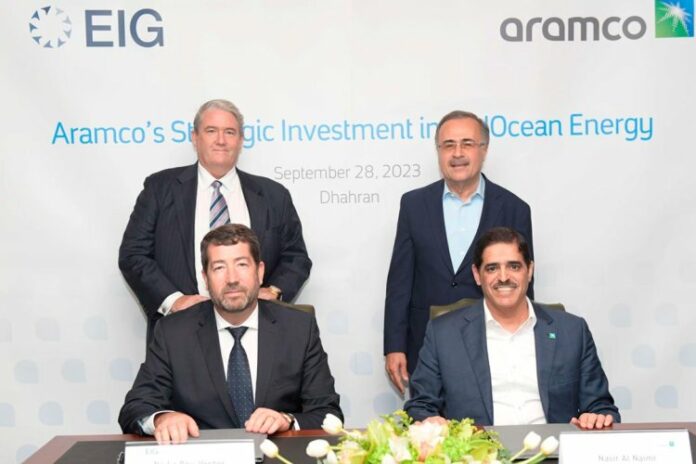
Aramco has signed definitive agreements to acquire a strategic minority stake in MidOcean Energy for $500 million. 

MidOcean Energy is currently in the process of acquiring interests in four Australian LNG projects, with a growth strategy to create a diversified global LNG business. The strategic partnership with MidOcean Energy marks Aramco’s first international investment in LNG.

The agreement builds on the relationship between Aramco and EIG, which was part of a consortium that acquired a 49% stake in Aramco Oil Pipelines Company, a subsidiary of Aramco, in 2021.

Completion of the transaction is subject to closing conditions which include regulatory approvals. Aramco also has the option to increase its shareholding and associated rights in MidOcean Energy in the future.

Amin H. Nasser, Aramco President & CEO, said:

“We are pleased to be strengthening our strategic partnership with EIG through this acquisition, which marks Aramco’s first international investment in LNG. We anticipate strong demand-led growth for LNG as the world continues on its energy transition journey, with gas being a vital fuel and feedstock in various industries. We believe that gas will be important in meeting the world’s rising need for secure, accessible and more sustainable energy.”

Nasir K. Al-Naimi, Aramco Upstream President, said:

“This is an important step in Aramco’s strategy to become a leading global LNG player. We see significant opportunities in this market, which is positioned for structural, long-term growth. MidOcean Energy is well-equipped to capitalize on rising LNG demand, and this strategic partnership reflects our willingness to work with leading international players to identify and unlock new opportunities at a global level.”

Blair Thomas, EIG Chairman and CEO, said:

“Energy transition informs every investment decision we make, and we believe LNG has a key role to play in enabling an orderly transition that balances society’s twin goals of decarbonization and energy security. Concurrent with that, we believe the LNG industry is ripe for change and there is a role for a nimble, pure-play company like MidOcean Energy. While our initial focus is on the announced transactions in Australia, we believe the opportunity set is global.”

Rawabi Vallianz orders entire offshore fleet to be outfitted with Praxis DP Systems

0

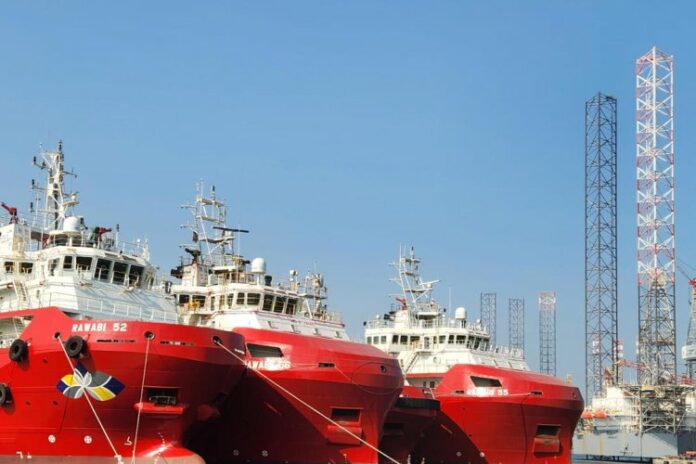
Praxis Automation has been awarded a long-term collaborative contract by Rawabi Vallianz Offshore Services (RVOS), a Saudi world class support service provider to the offshore industry. RVOS is one of the offshore service companies of Rawabi Energy company.

Under this RVOS fleet-wide contract, new build and existing offshore support vessels will be equipped with Praxis dynamic positioning systems, as well as customised equipment and software for digitization of the fleet in phases agreed with RVOS. This collaboration marks a pivot point in advancing maritime technology and safety in the gulf region.

In total Praxis Automation will supply 59 shipsets of Praxis DP-2 systems under this contract, facilitating a remarkable transformation of RVOS’s fleet capabilities. This comprehensive project encompasses the conversion of 39 vessels with existing DP systems to Praxis DP-2 System, including the supply to 20 newbuild vessels ordered by RVOS from other regions in the world. 

Ahmed Alqadeeb, Managing Director of Rawabi Energy, emphasized the importance of partnering with a technology leader like Praxis Automation, stating,

“Our fleet’s operational success hinges on a strong technology partnership. Praxis Automation has proven their performance during an earlier successful DP-1 to DP-2 retrofit project on 14 RVOS ships, justifying their status as a solid and reliable technology partner. With this new contract, we will boost our fleet status, having the most modern offshore support vessel (OSV) fleet in the kingdom, renowned for its technological prowess and digitalized operations catering to the needs of Saudi Aramco”.

Jerome Lin, Sales Director at Praxis Automation Far East, highlighted the pivotal role played by Praxis during the earlier 14 ships DP-2 refit program, in the success of this new contract. 

“Together with our local partner Integrated Maritime Service in the Kingdom of Saudi Arabia, Praxis Automation not only supplied the advanced DP-2 systems, but also extended its technological partnership to encompass the digitalization initiatives of RVOS’s fleet. Our commitment to guarantee through-life-support and non-obsolete parts throughout the vessel’s operational lifespan is paramount in ensuring uninterrupted vessel operations within the kingdom.”

MacGregor to deliver RoRo equipment for first methanol-fueled PCTCs

0

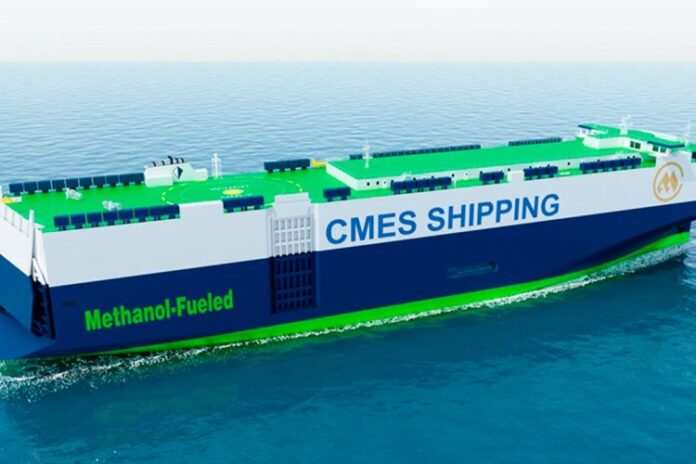
MacGregor has been chosen to deliver RoRo equipment for two of the world’s first methanol-fueled Pure Car and Truck Carriers (PCTC) for  China Merchant Energy Shipping to be built at China Merchants Heavy Industry (Jiangsu) Co., Ltd. in China.

The order was booked into Cargotec’s 2023 third quarter orders. The vessels are to be delivered to the owner between the third and fourth quarter of 2025.

MacGregor´s scope of supply is to design and deliver the key components consisting of external and internal ramps, covers, electrically operated doors, and liftable car decks, as well as installation support.

MacGregor was selected as the supplier for the reliability of its products and solutions. The customer was convinced of the competitiveness of MacGregor’s offerings and extensive service network. The highlight of the order were innovations such as Soft Flaps, which reduce noise in the harbour, and Ramp Position Indicator, the unique stern ramp landing surveillance system that allows the crew to see exactly where the ramp will land before operations start.

“As CMES is an important PCTC operator, we are pleased to be part of their new projects for the first time. We will do our best to build trust and cooperation in the future. We also have high appreciation for the very good cooperation with CMHI in many ongoing projects,” says Magnus Sjöberg, Senior Vice President, Merchant Solutions, MacGregor.