-11.8 C
New York
Home Blog Page 257

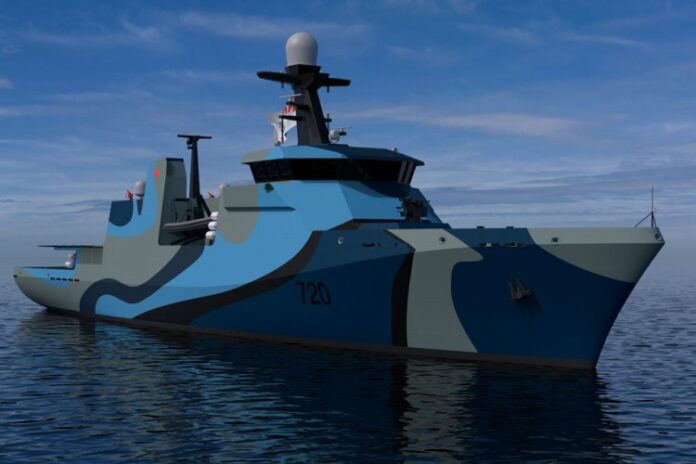
Vard Marine launches next generation Offshore Patrol Vessel

0

As a part of the ongoing development effort, Team Vigilance is now working to assemble a broad coalition of Canadian companies that can offer important services and vital equipment to the program.

Early identification of the members of this coalition will help to ensure Vigilance is designed in Canada, built in Canada, and equipped in Canada – a tenet of the Team Vigilance approach.  To this end, Team Vigilance has launched a Preferred Suppliers program.

Today, it is announced that VARD has selected American Bureau of Shipping Canada Inc. (ABS Canada) as a Preferred Supplier to Team Vigilance to provide Classification Society services and specialty engineering, in particular the application of their Light Warships, Patrol and High-Speed Naval Vessels rules, and their expertise in harsh environment operations.  

Additionally, a recent focus area for ABS Canada has been their work in certifying the use of Canadian made, CSA grade steel in shipbuilding projects. Thus, it is further announced today that ABS Canada has accepted the direct specification and use of CSA Standard steel for the design and construction of the Vigilance next generation OPV.

The ability to use of CSA Standard steels has significant benefits for Team Vigilance and the program writ large.  Leveraging local Ontario sources of supply will decrease project risk and cost while enhancing Team Vigilance’s value proposition with a higher direct Canadian content value.

Not only will the Vigilance Class provide the sailors of the Royal Canadian Navy and the Royal Canadian Naval Reserve the modern tools they need to protect Canada’s vital interests at home and abroad, it will also promote economic development in Canada and bring shipbuilding back to Ontario in a substantive way.

Derek Buxton, Vice President Business Development, Vard Marine Inc., said:

“We remain fully committed to the mantra that VIGILANCE will be designed, built and equipped in Canada.  Bringing ABS Canada onboard as a Preferred Supplier to Team Vigilance, with their support on the use of CSA Standard steels as we continue to mature the design of the vessel, is a big step in that direction.”

James Bond, Vice President, American Bureau of Shipping Canada Inc., said:

“As the class society of the Royal Canadian Navy’s non-combatant fleet, the alignment of transition and fleet renewal simply makes sense. The application of the newest and comprehensive light warship rule set, coupled with CSA steels direct usage and the growing ABS Canada team of professionals across the country speaks to the ABS commitment to Canada.”  

Ted Kirkpatrick, Director of Business Development and Government Relations, Heddle Shipyards., said:

“Ontario’s industrial supply chain is second to none, and steel production has long been the core of heavy industry across Ontario. With ABS as a preferred supplier of team vigilance, we have an even stronger path to bringing shipbuilding back to Ontario and leveraging the industrial might of this province.” 
Latest Wärtsilä engine to make its debut powering new luxury cruise ships

0

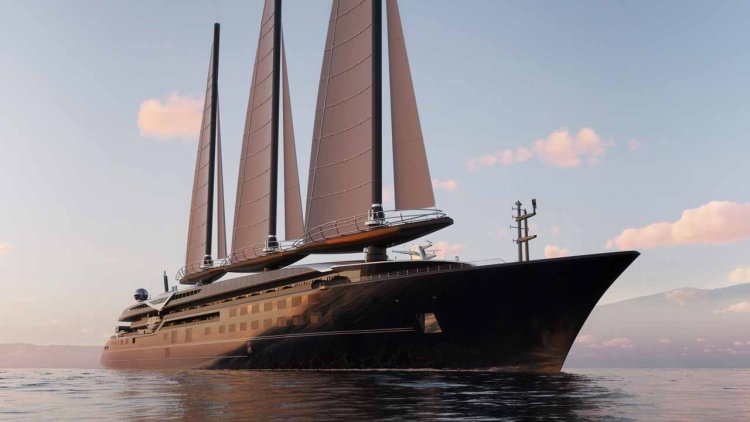
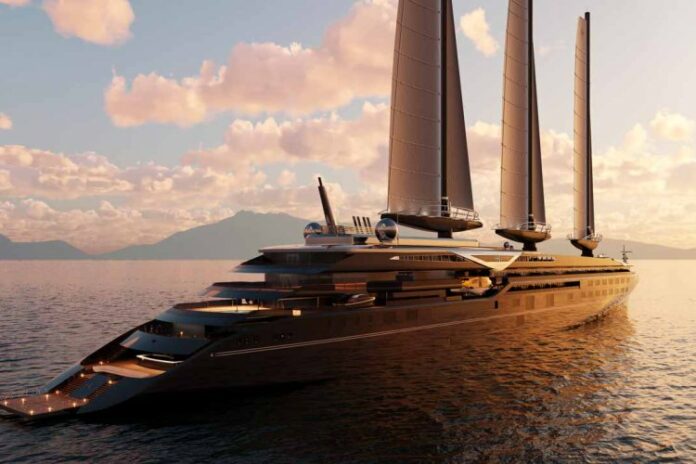
The vessels are being built at the Chantiers de l’Atlantique (CdA) shipyard in France for Orient Express Silenseas, part of French hospitality group, Accor. There is an option for an additional two vessels. The order was booked by Wärtsilä in May 2023.

The Wärtsilä 25DF engine is the most efficient and most environmentally friendly marine engine in its power range. It features a two stage turbocharging system, common rail fuel injection, and cylinder wise combustion control. This enables unparalleled power density and efficiency across the full operating range, delivering low fuel consumption and reduced emissions.

“These will be very special cruise vessels and have been designed to operate with a high level of environmental sustainability. For this reason, the Wärtsilä 25DF engine was selected. It is silent, compact in size yet powerful in performance, so it was the perfect choice for these ships,” said Yann Penduff, Chantiers de l’Atlantique Project Manager.

“The Wärtsilä 25DF is an engine that supports the shipping industry’s transition to greater fuel efficiency and a much-reduced carbon footprint. It marks the beginning of a new era of future-proof medium speed, small-bore engines, and comes as an important step towards the maritime industry meeting its decarbonisation goals. We are delighted that it has been selected for these very advanced cruise vessels,” commented Stefan Nysjö, Vice President, Power Supply, Wärtsilä Marine Power.

The full Wärtsilä scope includes for each vessel four Wärtsilä 25DF engines, each developing 2070 kW at 1000 rpm, four gas valve units (GVUs), and four Wärtsilä NOx Reducer (NOR) emission after-treatment systems. The equipment is scheduled for delivery to the shipyard commencing in autumn 2024.

The first of the 220 metre-long vessels will be named the ‘Orient Express Silenseas’. The ships are designed to accommodate approximately 116 passengers.

Altera awarded contracts with Eni for the Baleine Field

0

Altera Infrastructure has been awarded contracts for redeployment of the FPSO Voyageur Spirit and the shuttle tanker Nordic Brasilia for the Baleine Phase 2 project, located offshore Côte d’Ivoire. The vessels are set for deployment on the Baleine field with a 15-year firm contract.

The development of the project will be on a fast-track schedule with a planned start-up date for Phase 2 in the fourth quarter 2024. The vessels, Voyageur Spirit and Nordic Brasilia, are currently undergoing life extension work and field specific modifications at Drydocks World in Dubai. 

Voyageur Spirit is a cylindrical shaped FPSO, that previously operated on the Huntington field in the North Sea until 2020. The shuttle tanker Nordic Brasilia will be converted into an FSO to provide additional storage capacity to the Voyageur FPSO. Altera will own and operate both vessels.

The development of Baleine is Africa’s first net zero emissions project – (Scope 1 and 2) and Altera is excited to join Eni in moving the industry forward by focusing on more sustainable developments.

Chris Brett, President Altera Infrastructure Production, said:

“Securing contracts in a promising region like Côte d’Ivoire is a significant acknowledgment of Altera’s capability in delivering complex projects on a fast-track timeline. This is now our second contract award in short succession based on the redeployment of an existing FPSO and demonstrates that redeployments are some of the fastest, most cost-effective and emissions friendly ways for our customers to develop their projects in the current market. With this award, we continue to build our project presence in Dubai and already have a presence in Abidjan, Côte d’Ivoire where we intend to be committed and engaged contributors to the development of a growing industry for many years to come.”

Damen Naval builds full Virtual Reality version of new Combat Support Ship

0

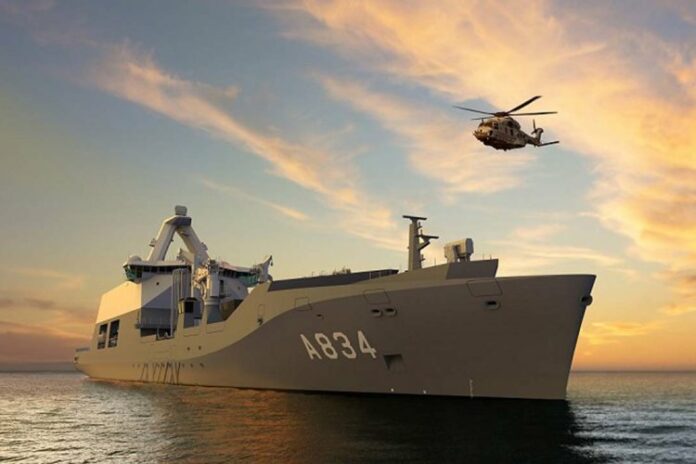
Shipbuilder Damen Naval has delivered a virtual copy of the ship to the Materieel & IT Command (COMMIT). It is the first time the company has created a VR version of an entire ship for and with the Royal Netherlands Navy.

“The slogan for new crew members on board used to be ‘Know your ship within 24 hours’. Now we can change that slogan to: ‘Know your ship 24 hours before you board’,” explains Damen Naval Project Director Arjan Risseeuw. “The virtual ship is a copy of the design created in our 3D design software Cadmatic. Everything is in it: the steel, the pipes and cableways, the equipment and all the spaces. So, you can walk through a virtual version of the ship, while the real ship is still being built.”

The VR version of the ship was created in collaboration with the Ministry of Defence’s maritime simulation centre (SCM). After the VR package was transferred to COMMIT, they in turn transferred it to the Royal Netherlands Navy. The idea is that her naval training institute will use the virtual ship for training sessions for the new crew. This will allow them to find their way on board the CSS even before they see or visit the ship in real life. And the technology can also be used to train maintenance engineers or security.  

“The VR model already allows us as crew to think remotely about details in the ship’s operations that you normally do on board,” says Captain Lieutenant at Sea Stefjan Veenstra, Commander of CSS Den Helder.

Damen Naval’s Technical Specialist VR Björn Mes and his team had to stretch the limits of hardware and software at times to create the virtual version. 

“We have never put such a large and detailed ship in VR before and the combined team from Damen Naval and the SCM spent a lot of hours ‘on board’. You don’t often see VR-projects of such scale, even within Damen Naval. It was a challenging project, but the end result looks really good.” 

This is the first time Damen Naval has used the toolchain developed inhouse for such a VR project. The toolchain was created to automate parts of the VR construction process and to speed it up.

“By cleverly using the models and metadata from our 3D software, we can save a lot of time,” explains Björn Mes. “A great example is the pipework in the engine room. Previously, a colleague spent weeks putting all the pipes and valves in the right place in the VR model. With the new toolchain, most of the CSS engine room pipework is generated in a few minutes and we only need to check it and adjust where necessary.”

The Combat Support Ship Den Helder is gradually coming to life. Last month, for instance, the diesel generators were tested. The ship is expected to go on sea trials in early 2024 and will be delivered to COMMIT later that year. The Royal Netherlands Navy will then carry out a part of the work itself, before the ship can be commissioned in 2025.

MOL and EDF Renewables partner up for offshore wind and green hydrogen opportunities

0

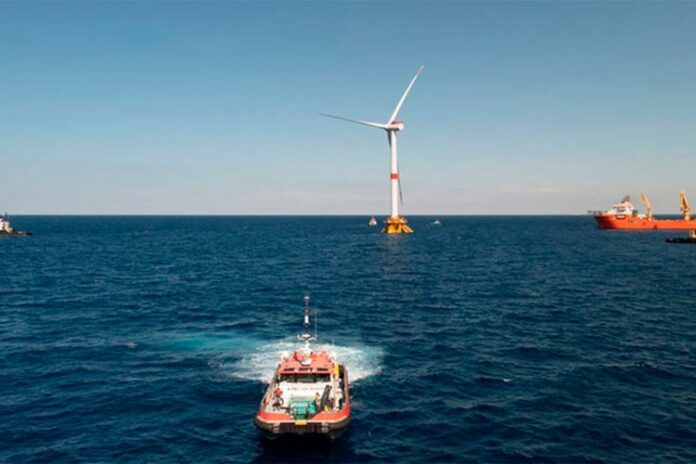
Mitsui O.S.K. Lines, Ltd. (MOL) and EDF Renewables have signed a memorandum of understanding (MoU) to cooperate in acceleration of the development of offshore wind and related business and to encourage developments in Green Hydrogen.

EDF Renewables is an international energy company, active in more than 20 Countries, with a more than 10-year experience in offshore wind, including in leading technology development in floating wind. MOL is a leading shipping company combining extensive worldwide experience in the maritime sectors and offshore business.

Frèdèric Belloy, Executive Vice President of International Operations for EDF Renewables said:

“We are very pleased to accelerate our partnership with MOL. As part of a global leader group in low carbon energy with a significant growth ambition in renewables and a more than 10-year experience in offshore wind, we’re very keen to the future innovation on maritime transport both in offshore wind business and green hydrogen development worldwide and committed to contribute to Japan’s energy transition.”

Masayuki Sugiyama, Executive Officer, Wind Power Project & Carbon Power Solution, MOL, said:

“We are honoured to have the opportunity to deepen our collaboration through this MoU. With EDF Renewables, who has vast experience in developing and operating offshore wind farms and green hydrogen projects internationally, we believe this collaboration would accelerate the development of offshore wind farm and green hydrogen projects all over the world.”.

Jumbo-SAL-Alliance has been contracted by Jan De Nul

0

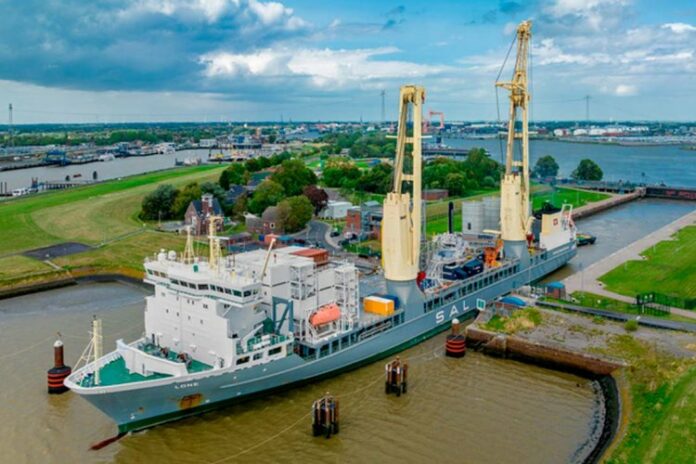
Jumbo-SAL-Alliance has been contracted by Jan De Nul to carry out the secondary steel installation at the Gode Wind 3 and Borkum Riffgrund 3 offshore wind farms.

Mid July 2023, the vessel mobilization for MV Lone was completed successfully, and the execution phase has begun. 

In Emden MV Lone was equipped with her Fly-Jib, additional living quarters, and the client-provided project equipment. Especially to mention is the installation of a new tugger arm arrangement at crane 2, which will improve offshore operations significantly. 

Furthermore, she embarked on a journey to Italy to collect further project equipment on behalf of Jan De Nul. Afterwards, Lone sailed to Eemshaven for her first lout-out of secondary steel components required for installation at Ørsted’s offshore wind farms, Gode Wind 3 and Borkum Riffgrund 3, with a combined capacity of 1,166 MW.

Two new wind farms in Germany, powered by state-of-the-art 11-MW Siemens Gamesa turbines, are set to provide clean energy to approximately 1.2 million households annually. Borkum Riffgrund 3 will join Ørsted’s offshore wind farms Borkum Riffgrund 1 and 2, while Gode Wind 3 will be located close to Ørsted’s Gode Wind 1 and 2. 

The wind farms are expected to become operational by 2024 and 2025.

“We anticipate that these projects will positively impact the environment and neighboring communities,”, says Morten Hinrichs, Head of Project Management at SAL Heavy Lift. “We are highly optimistic that these initiatives will create a positive impact on the lives of the local people and enhance the ecological balance in the region.”

The offshore installation vessel Les Alizés has already begun installing the 107 monopile foundations, including one for the Offshore Substation (OSS). MV Lone’s scope comprises installing boat landings, platforms, and corrosion protection systems on the foundations. The execution phase began on 6 August, during which Lone and the project team will maintain excellent service for the client.

“We are proud to be part of this project in the renewable energy industry, striving to develop sustainable energy further and provide more households with access to green electricity,” states Hinrichs.

PortXL and GTT partner to accelerate innovation in the maritime industry

0

PortXL has announced its partnership with GTT, the French technology and engineering group specialising in containment systems with cryogenic membranes for transporting and storing liquefied gases. 

PortXL and GTT will collaborate on various initiatives through this partnership, including the start-up acceleration program and industry-wide events. 

“We are delighted to add GTT to our partner base. Their advanced technological knowledge and innovative vision create great opportunities for start-ups and scale-ups. Also working together with the other partners in our maritime accelerator will contribute to the development of the whole maritime and port ecosystem as a whole”, says Christel Pullens, Managing Director at PortXL. 

“Collaborating with PortXL will give us access to a dynamic ecosystem made up of committed start-ups.”, says Jean-Baptiste Boutillier, Innovation VP at GTT. “We are convinced that the decarbonisation of the maritime industry will undeniably involve technological innovations. This collaboration illustrates our commitment to fostering a spirit of innovation and embracing disruptive ideas, propelling us towards a more sustainable and technologically advanced future for the entire industry.”

Wessels Reederei rolls out SERTICA to digitalize Fleet Management

0

WESSELS Reederei recognized the need to meet the ever-changing demands of the maritime sector. As such, the shipping company set out to find a comprehensive solution that would encompass various aspects of their operations, from onshore to onboard activities.

Starting with the Procurement modules, their next logical step is to implement the Maintenance, Docking, and Quality Management modules.

Hans Chr. Jensen, Head of Sales at RINA Digital Solutions remarked:

“Our prolonged dialogue with Wessels Reederei has fostered a rich understanding of their procurement requisites. I am confident that SERTICA’s tailored solutions will exceedingly meet their expectations, offering unmatched value in streamlining processes.”

Michael Eulrich, Fleet Manager at Wessels Reederei GmbH & Co. KG, said:

“In recent years, our fleet has expanded significantly, and we are facing the growing demands and challenges as ship managers. The successful integration of the SERTICA Fleet Management System at Wessels Reederei marks a significant milestone in our fleet’s digital transformation journey. SERTICA promises to substantially enhance the efficiency of our fleet operations, empowering us to adapt more effectively to the dynamic demands of the shipping industry. With SERTICA we are ready to set sails towards new goals.”

Wessels Reederei is currently operating 31 vessels. The shipping company is also preparing to implement SERTICA for several newbuilding projects.

£3.95bn awarded for next phase of AUKUS submarine programme

0

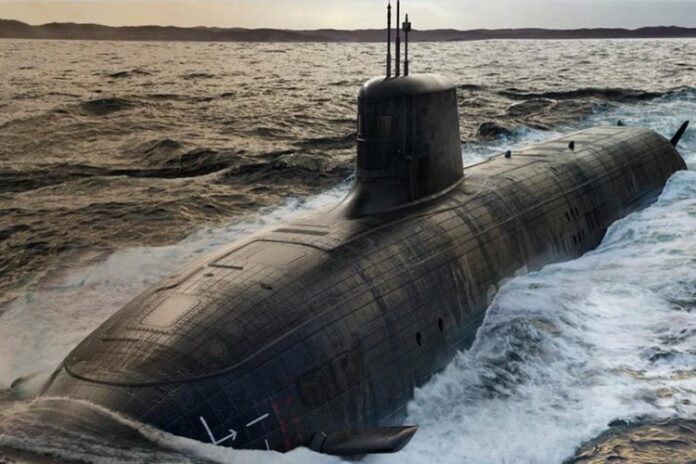
SSN-AUKUS will be the largest, most powerful and advanced attack submarines the Royal Navy has ever operated and will eventually replace the Astute class, which BAE Systems builds at its site in Barrow-in-Furness, Cumbria.

The funding follows the AUKUS announcement in March by the leaders of Australia, the UK and the United States. This will eventually see Australia and the UK operate SSN-AUKUS submarines, which will be based on the UK’s next generation design, incorporating technology from all three nations, including cutting-edge US submarine technologies.

Having started early design work in 2021, the £3.95bn funding will cover development work to 2028, enabling BAE Systems to move into the detailed design phase of the programme and begin to procure long-lead items. Manufacture will start towards the end of the decade with the first SSN-AUKUS boat due to be delivered in the late 2030s.

The award will also fund significant infrastructure investment at BAE Systems’ site in Barrow-in-Furness, investment in its supply chain and recruitment of a more than 5,000 people.

Grant Shapps, Defence Secretary, said:

“This multi-billion-pound investment in the AUKUS submarine programme will help deliver the long term hunter-killer submarine capabilities the UK needs to maintain our strategic advantage and secure our leading place in a contested global order. I’m committed to backing our defence industry, because it’s only with the mission critical support of businesses like BAE Systems that the UK can develop the advanced equipment our Armed Forces need to defend the British people in a more dangerous world.”

Charles Woodburn, BAE Systems’ Chief Executive, said:

“We’re incredibly proud of our role in the delivery of this vitally important, tri-nation submarine programme. This funding reinforces the Government’s support to our UK submarine enterprise and allows us to mature the design, and invest in critical skills and infrastructure to support our long-term national security.”

BAE Systems has already delivered five of seven Astute class submarines to the Royal Navy with the remaining two boats at advanced stages of construction. The Company is also designing and building the UK’s next-generation nuclear deterrent submarines, Dreadnought, with work underway on three of the four new boats.

Delivery of the UK’s submarine programmes is a national endeavour between government and industry. BAE Systems’ Submarines business plays a vital role in the UK economy, particularly in the north west of England. By the end of this year, its workforce will grow to 12,500, including around new 900 apprentices and graduates.

The business plans to recruit an additional 2,700 people next year, which will include a further 900 apprentices and graduates providing a significant employment boost for the region.

Approval in Principle for Methanol Superstorage solution on existing ships

0

Methanol Superstorage offers the potential for ships with years of service ahead to be considered for transition to a marine fuel established as a frontrunner for meeting IMO targets to cut greenhouse gas emissions from ships by at least 20% by 2030 and 70% by 2040 (against a base year of 2008). 

Other technologies, such as hydrogen fuel and carbon capture, will take some years to mature before they can help meet IMO’s net-zero target for around 2050.

Clarksons reported 14% of tonnage on order as methanol-capable earlier this year, compared to a 22% share for liquefied natural gas. The analyst has estimated that 1,200 ships could be powered by methanol by 2030.

However, while renewably-sourced methanol fits the net-zero framework, and is fairly easy to store and handle, it takes twice as much to generate the same energy as HFO. On board ship, this is a major storage issue, especially because low flashpoint fuel tanks conventionally require cofferdams.

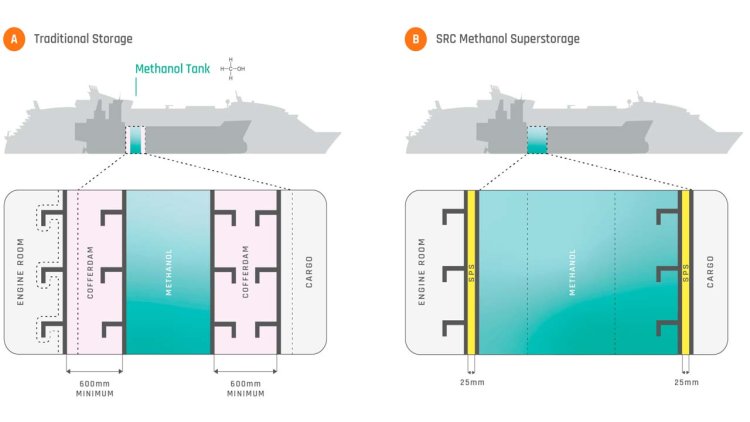
Although space penalties can be addressed in newbuild ship design, even the youngest existing ships were not built with retrofitting methanol in mind. Methanol Superstorage avoids cofferdams by constructing tank walls using Sandwich Plate System Technology, in a solution boosting volume by up to 85%. The extraordinary gain can be retrofitted with minimal impact on the general arrangement.

“Due to long-established use in other industries, availability and performance, methanol is the alternative marine fuel offering the strongest potential to reduce ship GHGs at pace,” said Hannes Lilp, CEO, SRC Group. “Methanol Superstorage reinvents methanol storage using the proven SPS Technology system. Instead of a cofferdam which extends – at least – to 600mm, the solution uses a 25mm thick SPS barrier to protect the tank from fire and as a triple barrier against leakage.”

Engineering, Procurement, Construction and Installation (EPCI) service provider SRC Group, whose experience in complex maritime and offshore refits extends across over 5,000 projects, developed Methanol Superstorage to ensure that existing ships play a full part in energy transition, he said. AiP for its supporting design documents opened the way for wider scrutiny of a concept which, subject to statutory approval, would be decisive in making methanol a mainstream fuel for existing ships.

The SPS Technology Sandwich Plate System is a permanent, A60 fire rating certified structural composite, used in maritime and offshore applications for over two decades and approved by all major IACS class societies across a range of applications.

AiP from LR relates specifically to ships outlined in Part G of SOLAS Ch. II-1. SRC would deliver EPCI services, fully integrating the new solution “from the bunkering station to the high-pressure pump,” said Lilp.