-11.8 C
New York
Home Blog Page 256

Sallaum Lines opts for Wärtsilä’s Decarbonisation Programme

0

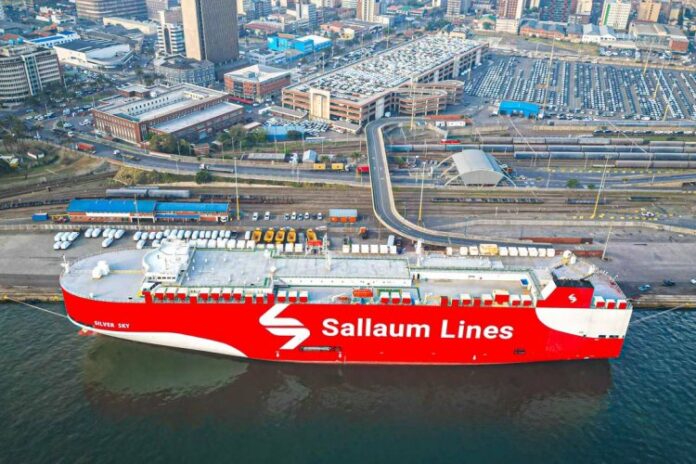
Technology group Wärtsilä’s unique Decarbonisation Programme will be applied to two Pure Car/Truck Carrier (PCTC) vessels operated by Sallaum Lines DMCC Dubai, an international RoRo cargo operator. 

Based on analysis and modelling, the programme will be tailored to these specific vessels so that the right solutions can be selected for optimal sustainability. Sallaum is the first Middle East operator to take advantage of this service. The order was booked by Wärtsilä in August 2023.

Among the potential solutions available through the Decarbonisation Programme are Wärtsilä’s energy saving solutions, as well as the introduction of alternative low- and zero-carbon fuels.

“This is an important step forward for us towards achieving net-zero greenhouse gas emissions by 2050. We are familiar with Wärtsilä’s capabilities in maximising operational efficiency and minimising environmental impact, and we look forward to benefitting from their experience and technical know-how,” said Puneet Arora, Technical Manager – Sallaum Lines.

“Decarbonisation is a central pillar of Wärtsilä’s customer support strategy. With this order from Sallaum Lines, we are helping to shape a sustainable future for the marine sector in the Middle East. Many companies in the region are in the early stages of their decarbonisation journey, and with this programme we can support and help them to invest in the most appropriate solutions for their particular vessels,” commented Rajan Khanna, Head of Sales, Middle East – Wärtsilä Marine Power.

The Sallaum Lines vessels selected for this programme are the 183-metre long ‘Silver Queen’ and ‘Silver Sky’ PCTC’s, both of which can carry 4,900 cars. The delivery time for the programme is three months.

Wärtsilä supports its customers in the region with more than 300 employees and a workshop in the United Arab Emirates.
DNV and Oceans of Energy collaborate to de-risk offshore solar technologies

0

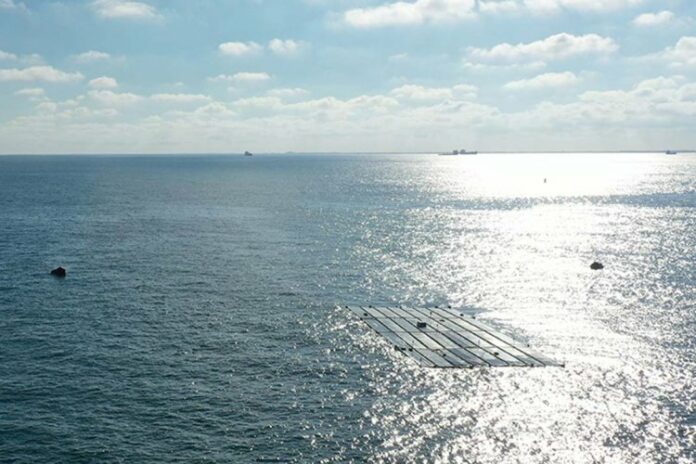
DNV and Oceans of Energy have joined forces to accelerate the deployment and scaling of offshore solar technologies. DNV has handed over a Statement of Conformity for the Basis of Design of their offshore solar solution to Oceans of Energy, marking a significant milestone in the development of their technology.   

The Statement of Conformity verifies that the design methodology complies with the comprehensive set of requirements and guidelines provided by DNV’s Recommended Practice for the design, development, operation and decommissioning of floating solar photovoltaic (FPV) systems – DNV-RP-0584, the world’s first of its kind, published in 2021.   

With ambitions to reach 150 MW-scale offshore solar farm systems by 2028, Oceans of Energy sought independent confirmation of their technology and system design, and contracted DNV to first deliver the aforementioned Statement of Conformity, and, in a later phase, conduct a prototype verification of their second-generation offshore solar farm design for rough North Sea conditions, as implemented in the current pilots.   

The North Sea Two location is operational at 400 kW and set to expand to 1 MW in the coming year. The future holds even greater ambitions with North Sea Three projected to reach a multiple MW system size, and subsequent projects expected to reach tens of MW. DNV’s Statement of Conformity confirms that Oceans of Energy’s basis of design complies with the requirements of DNV-RP-0584 for certain operational limits, thus providing crucial risk reduction for North Sea Two and forthcoming solar farms within offshore wind farms. 

“This verification is of global relevance, as the deployment and scaling of offshore solar technologies are essential to meet climate challenges worldwide”, noted Ditlev Engel, CEO, Energy Systems at DNV. “Our partnership will not only drive offshore solar for the energy transition in Europe, particularly in the North Sea region, but also serve as a model for implementation globally.” 

“Integrating offshore solar in offshore wind projects can result in up to five times more energy generated per km2 sea space per year and can be integrated on the offshore wind farm electrical infrastructure. Together with DNV we are applying best practices to have future large-scale projects certified, which will enable the investments associated with scaling our new energy generation sector” commented Allard van Hoeken, CEO of Oceans of Energy.

“This collaboration is a testament to our commitment to be a trusted voice in transitioning industries and governments to a deeply decarbonized, sustainable energy system,” added Prajeev Rasiah, executive vice president and Regional Director for Northern Europe, Energy Systems at DNV. “By providing independent confirmation of Oceans of Energy’s design basis, we are enabling them to scale in a safe and reliable way, contributing to the global effort to combat climate change.” 

With its immense potential for energy production, the North Sea is destined to become Europe’s power plant, and this project plays a role in realizing the region’s ambitious targets set in the Esbjerg and Ostend Declaration. Furthermore, it aligns with the Netherlands’ commitment to reduce CO2 emissions by at least 55% by 2030, as announced by Minister of Climate and Energy, Rob Jetten. The Dutch government has recognized the importance of offshore solar, with the announced ambition to have 3 GW installed by 2030 equivalent in scale to 3000 football fields.

Kongsberg to provide science equipment for Germany’s new ocean research vessel

0

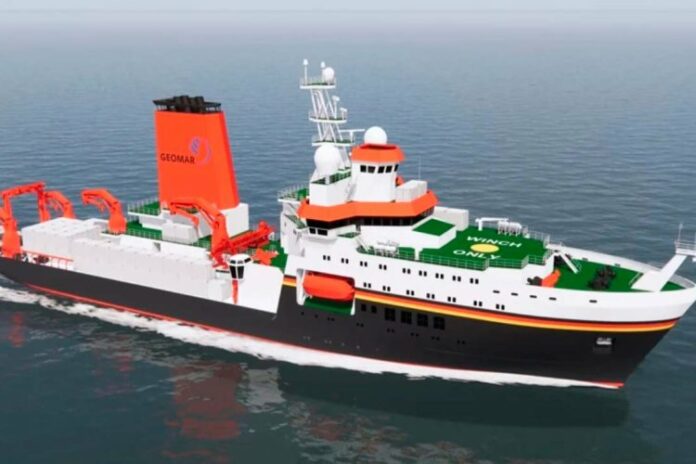
Germany’s new 135-metre ocean research vessel Meteor IV will feature a range of technology from KONGSBERG. Meteor IV is to be launched in 2026 and it will contribute to national and international marine science, particularly in the areas of climate and environmental research.

KONGSBERG will provide scientific sensors and scientific handling equipment for Germany’s new ocean research vessel, the 135-metre Meteor IV. The new 10,000GT vessel will be able to house 35 scientists plus 36 crew.

Meteor IV will be built by MeyerFassmer Spezialschiffbau (MFSB) for the German Federal Ministry of Education and Research. The vessel, due for delivery in 2026, replaces existing research vessels Meteor and Poseidon.

Stene Førsund, Executive Vice President, Sales and Marketing, Kongsberg Discovery, said: 

“A top priority of marine scientists is to map the entire seafloor by 2030, an enormous task that will require instruments and equipment with extremely precise calibration.”

“We need to build a better understanding of our changing climate and the effect it has on the marine environment to protect our oceans and future generations, Ocean research is now recognised as critical to our understanding of climate change, as well as a host of conservation issues. A top priority of marine scientists is to map the entire seafloor by 2030, an enormous task that will require instruments and equipment with extremely precise calibration.”

Kongsberg Discovery will supply Meteor IV with the EM 124 and EM 712 multibeam echo sounders, used for seabed mapping at various depths. Kongsberg Discovery will also provide the Seapath 380 with Motion Gyro Compass (MGC) R3, whose sensors use GNSS signals and inertial measurements. These combine with the EM series of echo sounders to create an exact picture of the seabed.

To monitor ecosystems and marine life, Meteor IV will use Kongsberg Discovery’s EK80, a high-precision scientific echo sounder with acoustic doppler current profiler capability, which may be used to measure the velocity of fish in a water column. The EK80 measures speed and direction of currents in a water column, which helps researchers understand how organisms, nutrients, and other biological and chemical constituents are transported through the ocean.

Kongsberg Maritime will supply a complete integrated scientific handling system for Meteor IV, enabling safe and efficient operations with cables and ropes up to 12,000 metres in length.

The scientific winch system comprises two direct pull winches, two conventional twin drum traction winch systems and a third traction winch system, which includes Kongsberg Maritime’s field-proven cable traction control unit (CTCU) for superior performance with synthetic fibre rope.

The delivery also includes overboard handling units; a stern A-frame, two handling beams, and a corer handling system, as well as cranes.

The control system, fully developed and maintained in-house by Kongsberg Maritime, features the proprietary predictive active heave compensation (AHC) algorithm providing accurate winch system response matched to vessel motion, by aid of Kongsberg Discovery’s motion reference unit (MRU).

Meteor IV is designed for worldwide multifunctional and interdisciplinary research, with a focus on the Atlantic Ocean. The new vessel will make important contributions to national and international marine science, particularly in the areas of climate and environmental research.

Damen signs contract with Port of Antwerp-Bruges for supply of six new RSD Tugs

0

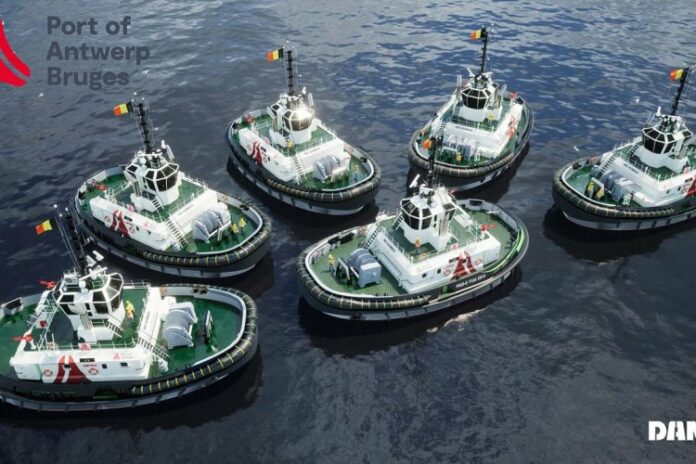
The Port of Antwerp-Bruges has placed an order with Damen Shipyards for five diesel-powered RSD Tugs 2513 fitted with the Damen Marine NOx Reduction System, and one electric RSD-E Tug 2513.

This is part of the ongoing renewal of its fleet. Port of Antwerp-Bruges bought the first diesel RSD Tugs 2513 three years ago and their performance has paved the way for this new order. 

It’s new RSD-E Tug 2513 will be the first all-electric tug to operate in Europe and it will be working in one of the world’s busiest ports. As a result, the towage industry will be watching it closely to see how its electric propulsion stands up to the high-pressure environment. 

IMO Tier-III compliance, reduced noise levels and all-round capability were all contributory factors to this latest order. In addition to minimising their environmental footprint in and around the port, the six new tugs will be fitted with extensive fire-fighting capabilities that can be used to support the Antwerp’s land-based fire-fighting teams. With building already underway, the vessels will be delivered between late 2024 and early 2025, with the RSD-E Tug 2513 being the first. Damen will also be delivering the charger and onshore electrical infrastructure for the new arrival.

“With the purchase of these new energy-efficient tugs, we have reached another milestone on our way to a green fleet,” says Rob Smeets, Chief Operations Officer Port of Antwerp-Bruges. “Our ambition is to be carbon-neutral by 2050 by pursuing various sustainability paths and daring to pioneer innovative technologies. These tugs are a prime example of what our sustainable future should look like.”

“This is a landmark in the adoption of all-electric tugs as mainstream harbour towage solutions,” says Vincent Maes,” Damen Area Sales Manager Benelux. “Port of Antwerp-Bruges’s support of our advanced tug solutions plays an important role in introducing them to the wider market and it is, as always, a pleasure to work with a client who shares Damen’s vision of a sustainable future.”

Port of Antwerp-Bruges is also converting one of its existing tugs to methanol propulsion and another to use hydrogen, all part of its leadership role in identifying the most effective solutions from the alternatives currently available. These programmes and others have the goal of enabling it to meet the 2040 and 2050 emissions targets and give other ports the confidence to do the same.

Chevron partners with 123Carbon on marine carbon insetting pilot

0

123Carbon, the first independent blockchain-based carbon insetting platform for the transport sector, today announced that it has completed an insetting pilot with Chevron by tokenising the emissions reductions associated with bunkering of biofuel for Chevron-owned vessel in Singapore. This pilot allows for further introduction of carbon insetting capabilities to other third-party customers.

Carbon insetting has the potential to allow fuel providers and carriers to allocate the emission reduction benefits and the associated costs of low carbon intensity fuels across the value chain to freight forwarders and shippers. It is a rapidly growing new emissions instrument for shipping and other modalities like air and road transport to create incentives for emission reductions. 

123Carbon provides the blockchain-based platform to create the inset and enables customers to create verified and immutable blockchain tokens for CO2-equivalent reductions across their supply chain. This can enable carriers to allocate carbon reductions and associated costs to customers without having to go through a robust insetting process themselves. The company partners with AllChiefs and Bureau Veritas to also support clients with implementation services and external assurance. 

Jeroen van Heiningen, Managing Director at 123Carbon, said:

“We are excited to work together with Chevron to help it make a real difference in reducing carbon intensity in its supply chains. Carbon insetting is a major driver in accelerating the journey to global net zero within transportation, as well as enabling companies and regulators to monitor the verifiable impact of these carbon reduction efforts. Our work with Chevron shows that transparent, high-quality innovation will play a critical role in the marine sector, ultimately driving meaningful emissions reductions.” 

Donny Suhartono, President of Chevron Product Supply and Trading, said:

“Through this pilot partnership, Chevron continues to expand our capabilities to meet customer needs, and support the acceleration of lower carbon transport.” 

Benjamin Lechaptois, Sustainability Strategy Leader of Bureau Veritas Marine & Offshore, said:

“We are proud to collaborate with 123Carbon and Chevron on this pioneering project, which demonstrates that carbon insetting can already play a significant role in helping companies to reduce CO2-equivalent emissions across their supply chains today. Carbon insetting is a key component of the lower carbon supply chains of today’s and tomorrow, helping realise a lower carbon transportation sector globally.”

The generated insets for Chevron were issued based on the Book & Claim methodology developed by Smart Freight Centre, a transport-focused NGO responsible for developing global guidance for carbon insetting.

LR awards Approval in Principle for ERMA FIRST’s Carbon Capture & Storage System

0

Lloyd’s Register (LR) has awarded Approval in Principle (AiP) to ERMA FIRST for its amine absorption-based Carbon Capture & Storage (CCS) system.

ERMA FIRST’s CCS system uses absorption technology to mix CO2 (carbon dioxide) flue gases with a proprietary amine solvent, which is then heated to produce a chemical reaction which reverses the absorption and separates the CO2 from the solvent. The CO2 from this process is then liquified and stored under cryogenic conditions onboard with the solvent ready to use in the same process again, creating a regenerative loop for CCS.

With the ability to capture a significant amount of CO2 from exhaust emissions, ship owners and operators will be able to meet and exceed the IMO’s strengthened emission reduction targets, whilst increasing their vessels’ lifecycle.

LR’s AiP, as part of the Risk-Based Certification process, has enabled the technology to achieve this important milestone and allows ERMA FIRST to proceed with onboard pilot testing of the application, whilst LR continues to support its industry partners in de-risking their maritime assets.

The AiP builds upon the commercial success of ERMA FIRST’s ballast water treatment system, the ERMA FIRST FIT BWTS, which received type approval from LR back in November 2018.

Nick Brown, CEO, Lloyd’s Register, said:

“LR is pleased to have awarded ERMA FIRST with Approval in Principle for its post combustion Carbon Capture & Storage system. CCS technology presents a real and credible route for the maritime industry to reduce its greenhouse gas emissions in the short to medium term and this AiP is evidence of LR’s tangible actions to support the global energy transition.

“Acting as trusted advisers and using our technical expertise throughout the certification process, LR continues to proactively identify a broad range of technologies that can de-risk operations for maritime stakeholders.”

Konstantinos Stampedakis, Co-Founder & Managing Director, ERMA FIRST, said:

“We are delighted to have received Approval in Principle from Lloyd’s Register for the ERMA FIRST CCS system. ERMA FIRST is committed to developing solutions that support the maritime industry’s green transition and achievement of the IMO’s decarbonisation ambitions. This AiP represents a significant milestone for our CCS project, and we look forward to continuing to work with Lloyd’s Register as we move into the next phase of this important project.”

Sicily-Fincantieri contract for new ferry

0

The fery will be distinguished by the propulsion technologies installed. 

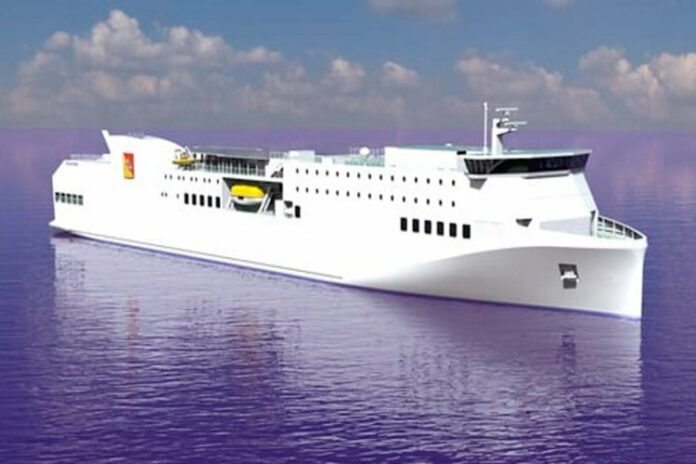
Sicilian Regional President Renato Schifani and Fincantieri CEO and Managing Director Pierroberto Folgiero have signed the contract for the construction of a new ferry (Ropax Class A) at the Palazzo d’Orleans, at the presence of Regional Councillor for Infrastructure and Mobility, Alessandro Aricò, for a base bid amount of nearly 120 million euros.

“The signing of this contract” said President of Sicily Schifani, “represents a turning point for connections with Sicily’s smaller islands. Ours is the first region in Italy to field the funds that the Ministry of Transport has allocated to sea connections and the first to be a full owner of a ferry. We will improve the quality and safety standards of naval transport for Lampedusa and Pantelleria, with a modern ship that also guarantees great attention to respect for the environment. We are giving a concrete response to residents and those who need to reach the islands for business or tourism. I also express particular satisfaction with the fact that the new unit will be entirely built in Palermo shipyards.It is a confirmation of the great professional quality of the workforce of the Palermo shipyard that I have personally witnessed, an asset that it is right to enhance in such a strategic sector as shipbuilding”.

Pierroberto Folgiero, CEO and Managing Director of Fincantieri, commented: 

“The awarding of this order represents an important test for Fincantieri. In an industrial sector that over time has moved to Asian shipyards, we have the opportunity to bring ferry production back to Italy, rehabilitate our historical competencies in the sector, and demonstrate our ability to be competitive while ensuring the highest production standards, with benefits in terms of operations and sustainability that will reach the end user. The strength of our project is, once again, technologies for reducing environmental impact, intercepting the needs of the energy transition, which are destined to outline the maritime transport sector of tomorrow”.

The new vessel will be entirely built in the Palermo shipyard, will be delivered in 2026 and will serve routes between Sicily and the islands of Lampedusa and Pantelleria. The ferry will have a length of about 140 meters and about 14,500 gross tons. It will be able to reach a maximum speed of 19 knots and a capacity of 1,000 people and 200 cars on board. Of note, the unit will be distinguished by the propulsion technologies installed. It will be equipped with a dual fuel engine, that is, powered by diesel and liquefied natural gas, the cleanest marine fuel currently available on a large scale, which significantly lowers nitrogen oxide and sulfur emissions. It will also have a photovoltaic system that, thanks to energy storage in a battery pack, will ensure that it will stay in port with zero emissions for about four hours.

“We succeeded, with President Schifani, in obtaining” said Councillor Aricò, “that Fincantieri would build the ship in its entirety in the Palermo shipyard: a 100 percent “Made in Sicily” ship, which will allow the Region to provide itself with an additional means of transport for the Sicilian islands, as well as to relaunch the Sicilian shipbuilding sector. The ship will be equipped with stabilizers similar to those on oil platforms that will allow it to dock even in prohibitive weather conditions. Today’s signing completes the work initiated by my predecessor Marco Falcone and implemented by this government. It is an extraordinary achievement: Sicily is the first region in Italy to have commissioned a ship, financed under Law 208/2015, which establishes a fund aimed at direct purchase for the improvement of public transport. The Region will have the possibility, as provided for in the notice, to exercise the option to build a second vessel”. 

Incat Crowther commissioned to design fleet of new fast support intervention vessels

0

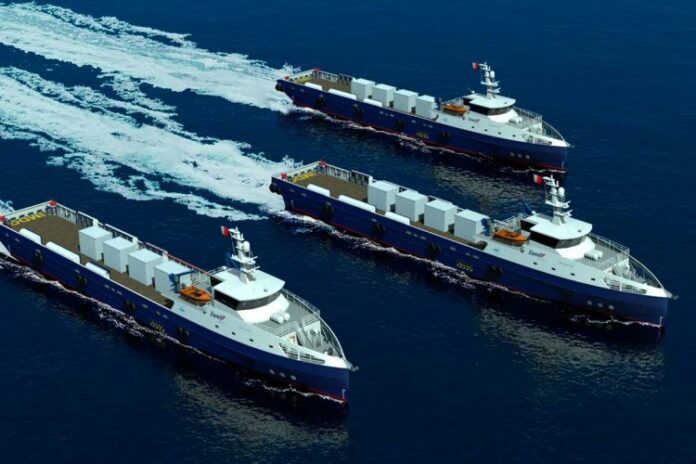
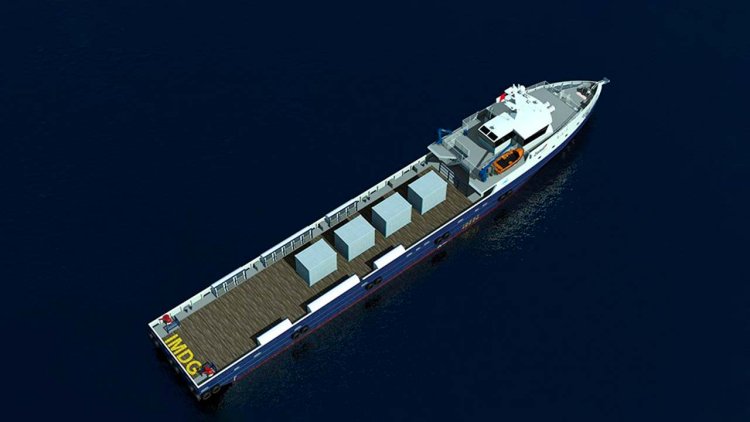
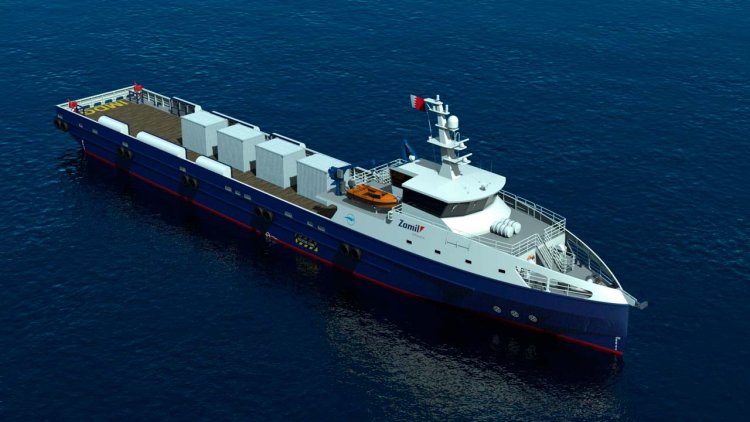
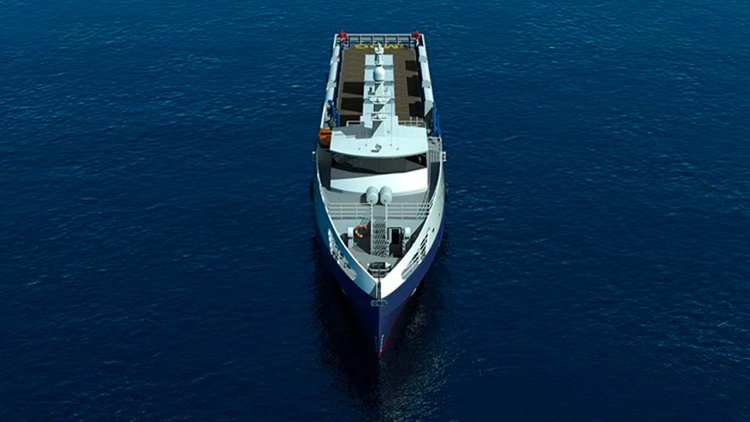
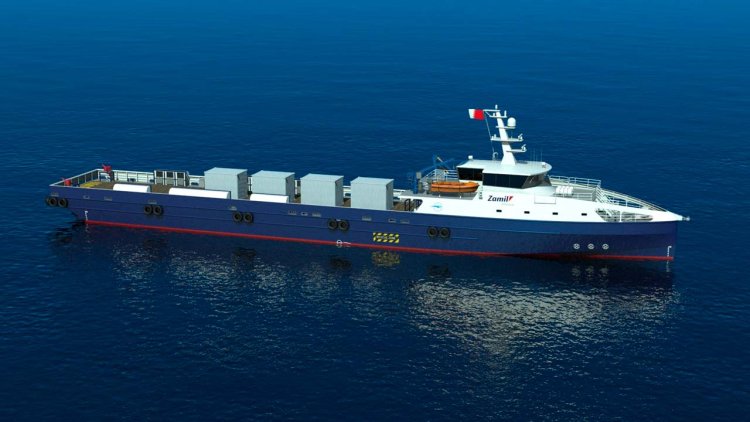
Incat Crowther has been commissioned by Singaporean shipbuilder Lita Ocean to design three new ABS-Classed monohull fast support intervention vessels (FSIVs) for Zamil Offshore. The vessels will comply with the latest MCVSR requirements from Saudi Aramco, including ABS SMART and IDM-A notations.

The new vessels will be powered by four MTU 16V4000 diesel engines coupled to ZF gearboxes driving Hamilton HT810 Waterjets, providing a full load service speed of 25 knots. Manoeuvrability of the DP2-certified vessels is enhanced by three Hydromaster tunnel bow thrusters, allowing safe docking and unloading of cargo and personnel. Two of the main engines will be coupled to 1200 m3/hr firefighting pumps offering FiFi-1 capability.

The vessels’ main deck offers an expansive 250m2 aft cargo deck rated at 2.5 t/ m2 and a climate-controlled forward cabin featuring business-class seating for 60 service personnel in a spacious passenger lounge, as well as three bathrooms, an office, snack bar and well-equipped medical bay. The vessels’ 18 crew are housed on the hull deck which offers four two-berth dorms, two four-bed dorms and two single-bed dorms. The hull deck also features a large pantry, mess, three bathrooms and laundry. The health of the crew is also prioritised with an isolation room located behind a sealed door.

Commenting on the project, Incat Crowther’s US Managing Director Grant Pecoraro said:

“By working closely with our valued partners at Lita Ocean, these vessels will provide Zamil Offshore state-of-the-art, low-draft FSIVs that are truly tailored to their operational requirements,”

“The design of these vessels offers an excellent combination of operational efficiency, seakeeping capability, manoeuvrability, and stability.”

Yeo Yingda of Lita Ocean said Incat Crowther was the natural partner for the design and development of the new FSIVs.  

“Lita Ocean has enjoyed partnering with Incat Crowther to deliver truly tailored and operationally efficient vessels to operators throughout Asia and the Middle East. We are pleased to tap into Incat Crowther’s vast experience with large FSIVs.”

Testing of the first vessel is expected to take place in 2024, with the final vessel delivered in 2025.

Saipem awarded new contract by ADNOC worth around 4.1 billion USD

0

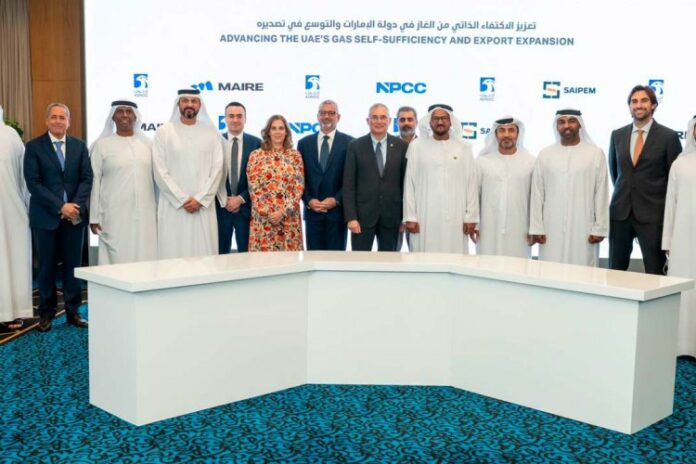
Saipem, in consortium with National Petroleum Construction Company (NPCC), has signed a letter of award with ADNOC for a new contract related to the Hail and Ghasha Development Project – Package 1 in the United Arab Emirates. Saipem’s share of the contract amounts to around 4.1 billion USD. 
The project is aimed at developing the resources of the Hail and Ghasha natural gas fields, located offshore Abu Dhabi, UAE. The project scope of work encompasses the Engineering, Procurement and Construction (EPC) of four drilling centres and one processing plant to be built on artificial islands, as well as various offshore structures and more than 300 km of subsea pipelines.

Saipem will leverage on its state-of-the-art shallow water offshore vessels, its advanced welding technology for corrosion resistant materials, as well as its renowned engineering expertise. Furthermore, Saipem will work with ADNOC to continue the project’s focus on biodiversity and responsible environmental stewardship.

This award reinforces Saipem’s long-standing relationship with ADNOC and further consolidates the company’s presence in Abu Dhabi, which includes an Engineering and Project Execution Centre, as well as a new Offshore Logistic base in Zayed Port.

Van Oord starts cable installation at Iberdrola’s Baltic Eagle offshore wind farm

0

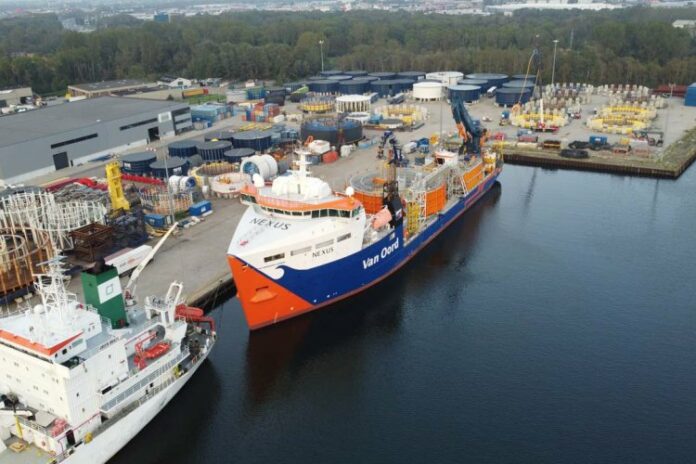
After Van Oord’s heavy lift installation vessel Svanen completed installation of all fifty monopiles for Iberdrola Deutschland’s Baltic Eagle offshore wind farm, Van Oord now continues installing transition pieces and starts cable installation. This week the inter-array cable loading onto Van Oord’s cable-laying vessel Nexus has commenced. 

In total, Van Oord will install approximately 70 kilometres of 66kV inter-array cables, manufactured by subcontractor TKF. To protect the cables, Van Oord will deploy its trencher Dig-It later this year to bury them. This Tracked Remotely Operated Vehicle (TROV) drives unmanned over the seabed and creates a trench for the cables by liquefying the seabed.

To complete the foundations for the wind turbines, Van Oord is currently installing the transition pieces on the previously installed monopiles. The transition pieces were transported from the manufacturing yard in Aviles to the Van Oord storage facility in Mukran, Germany. At Van Oord’s facility the final preparations and equipment is installed to enable the installation.

Luis Pérez Portela, Baltic Eagle Director at Iberdrola, said:

‘Very key milestones are being completed in the construction site and we’re looking forward to completing all installation work before commissioning can begin. I’d like to thank all vendors, suppliers, partners and staff for their commitment and perseverance which is allowing us to deliver this important project.’

Henk Jan van Dijk, Project Director at Van Oord, said:

‘The installation of the monopiles marks a key milestone in the construction of the Baltic Eagle offshore wind farm. The contours are now visible. Now that the transition pieces are being installed and our cable-laying vessel is ready to install the inter-array cables, construction is progressing well. A big thanks to the dedicated project team and all our partners driving this project.’ 

The Baltic Eagle offshore wind farm is located 30 kilometres northeast of the German island of Rügen and covers a 40 square kilometre area. With a production capacity of 476 MW, Iberdrola’s Baltic Eagle offshore wind farm will deliver renewable energy to 475,000 households while reducing carbon dioxide emissions by approximately 800,000 tonnes annually. It is scheduled to be fully operational by the end of 2024. Van Oord is responsible for the transport and installation of the wind turbine foundations and the supply, transport and installation of the inter-array cables.