-7.9 C
New York
Home Blog Page 251

Statkraft acquires two Swedish wind power companies

0

Statkraft has acquired two companies in onshore and offshore wind power: Njordr Offshore Wind AB, which develops offshore wind power and Svevind Nordic AB, a development company in onshore wind power. 

Svevind Nordic currently has 16 employees with high competence in project development, mainly within onshore wind power. The company also has a development project pipeline that is included in the acquisition. The development projects are in electricity pricing zone SE1 and SE2 with a total potential installed capacity of more than 16 000 MW. The project that is most developed is Hästliden with 600 MW that is currently with the Swedish government for necessary approvals. The intention is to fully integrate Svevind Nordic into Statkraft’s operations.

Jakob Norström, CEO of Statkraft Sweden, says:

“We are tremendously happy to be able to strengthen our operations with a group of extremely competent employees who, together with the project portfolio, will make an important contribution to our ambitions to grow in onshore wind power and not least to the industrial development in Northern Sweden.”

Wolfgang Kropp, founder and CEO of SVEVIND Energy Group, says:

“We are very proud that our Swedish team, with its unique expertise and experience gained over the years, will support such an important energy company as Statkraft in the future. In Statkraft, Svevind Nordic gets a strong owner who can continue the important work we have done and progress the project pipeline while providing for a continued positive work environment for the employees. Even if the career paths of long-time companions and colleagues part ways today, it feels right and beneficial for all parties.”

Njordr Offshore Wind, a joint venture between Njordr and Vindkraft Värmland, has developed a portfolio of early-stage offshore wind power projects. In addition, there is a team on site that can take the projects forth to delivery.

David Flood, Senior Vice President Offshore Wind at Statkraft, says:

“The Nordic countries to a large extent form a common energy market. With an estimated need for a doubling of the electricity supply by 2045, Sweden is of particular interest for us. It fits well with our strategic ambition to grow within offshore wind with an ambition to have 10 GW in operation in Europe by 2040. This deal comprises an attractive portfolio which gives Statkraft the opportunity to contribute to delivering more renewable energy to Sweden, one of our focus markets.”

The portfolio includes nine projects located in the Swedish part of the Western Sea, the Baltic Sea, the Bothnian Sea and the Gulf of Bothnia. The total potential capacity of the projects is approx. 21 000 MW with an expected annual production of over 80 TWh per year. As part of the company’s strategy to grow significantly in wind power, Statkraft is planning considerable investments in offshore wind power in Sweden going forward.

Anders Hærland, chairman of the board of Njordr, says:

“Njordr Offshore Wind has been a pioneer within offshore wind in Sweden, establishing a strong project team and a significant project pipeline by utilizing the project origination expertise of Vindkraft Värmland. This transaction validates Njordr’s strategy and how we are able to realise significant value from taking early positions.”

Work is now starting to integrate Svevind Nordic and Njordr Offshore Wind into Statkraft’s operations. The Svevind brand will remain for other operations that the Svevind Group conducts outside of Sweden. The Njordr Group also has operations in onshore wind and solar power in Sweden, Norway and Finland. These activities are not covered by the transaction.
Leonardo and Fincantieri sign strategic collaboration in underwater

0

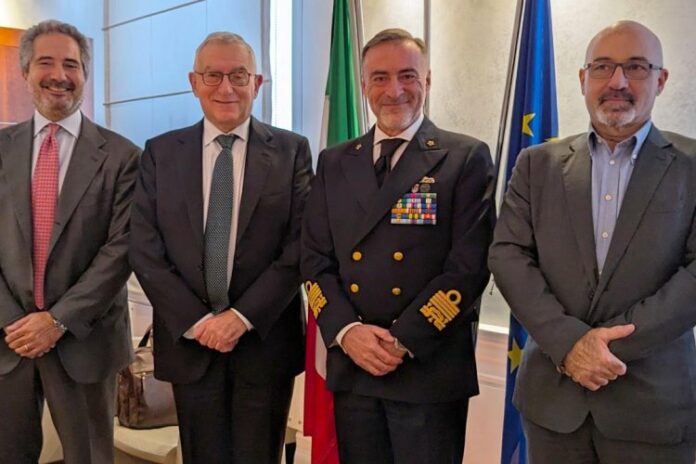
Fincantieri and Leonardo are strengthening their collaboration with the signing of a Memorandum of Understanding in the underwater domain, with the aim of pooling their respective expertise and capabilities in the sector. The initiative also stems from the imminent establishment of the National Underwater Hub (Polo nazionale della Subacquea), the Italian center which will enhance research and innovation in the underwater environment, to ensure its safety and promote industrial and economic opportunities.

The signing took place between the CEOs of the two companies, Pierroberto Folgiero and Roberto Cingolani, at the presence of Admiral Enrico Credendino, Chief of the Italian Navy.

In detail, the agreement aims at the joint development of a network of platforms and surveillance, control, and protection systems for critical infrastructures and underwater maritime areas, to respond to the needs indicated at the national level and within the scope of European initiatives. The companies, furthermore, aim to preserve and develop their respective capabilities and competences to provide potential customers with state-of-the-art systems, high and competitive performance.
The enhancement of the Italian supply chain is also planned through the support of SMEs and start-ups, which will be called upon to contribute to the development of innovative technologies for the specific environment and in a multi-domain perspective.

The scope of cooperation also includes the protection of strategic underwater networks, cables, communication backbones, offshore infrastructure, underwater threat alert systems, as well as the safeguarding of exploration, sea mining, and extraction activities on the seabed for access to valuable mineral resources.

Pierroberto Folgiero, CEO and Managing Director of Fincantieri, said:

“Our collaboration with Leonardo, already consolidated through the Orizzonte Sistemi Navali joint venture, is further strengthened with this Memorandum of Understanding in the underwater sector. The latter represents a universe full of opportunities on which Fincantieri intends to focus with determination: from the defense of critical submarine infrastructures to the use of drones. Our goal is to continue to innovate the sector with cutting-edge solutions”.

“The great depths of the underwater world represent a new frontier of security, to be faced with the development of a new generation of technologies. The approach can only be multidisciplinary, through the strong synergy of the national industry, which can boast unique, state-of-the-art and internationally recognized skills. The strategic objective is to guarantee control, surveillance, security and prosperity of the underwater space,” commented Roberto Cingolani, CEO and General Manager of Leonardo, adding: “With Fincantieri we are working to build an offer dedicated to this domain, starting from our most consolidated knowledge and skills, such as sensors, manned and unmanned systems.”

Fincantieri and Leonardo have been collaborating for years in the naval field, bringing their skills as world leaders respectively in the design and construction of surface ships and underwater vessels on one hand, and on the other hand, in the naval combat system. The latter consists of command and control, sensors, secure communications and data links, effectors,integrated navigation system and multi-domain Modeling and Simulation capabilities.
The companies also have specific expertise in remote piloting solutions and their complete integration into naval units.

Boskalis orders large 31,000 m3 trailing suction hopper dredger from Royal IHC

0

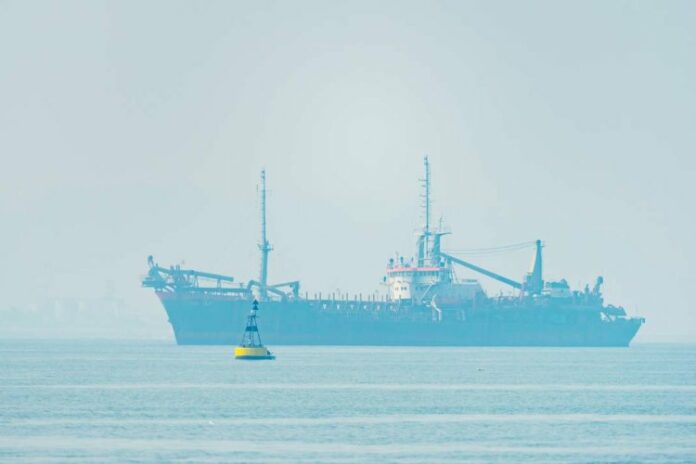
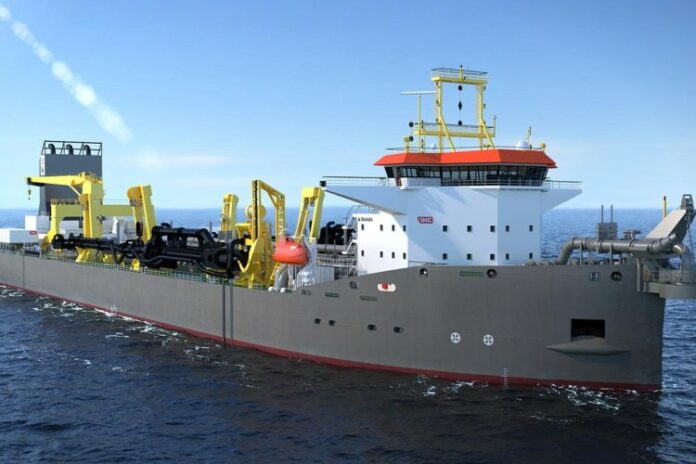
Boskalis has signed a contract with Dutch shipbuilding company Royal IHC to build a large state-of-the-art trailing suction hopper dredger. The award of the contract follows an extensive design phase. 

The new vessel will be one of the largest trailing suction hopper dredgers in the Boskalis fleet. Noteworthy features of the energy-efficient vessel design include the full diesel-electric installation and propulsion via Azipods™. These technological innovations, combined with the optimized underwater hull design and an advanced automation system, will contribute to a significantly lower fuel consumption.

The vessel is also being prepared for the use of (green) methanol as an alternative fuel. The methanol plant and storage tanks on board make this switch possible. Furthermore, the dual fuel main engines are equipped with two-stage turbos and can be powered by both conventional fuels and more sustainable alternatives such as biodiesel and methanol, providing for a substantial reduction of CO2 emissions.

With a double suction pipe equipped with underwater pumps and two discharge pumps with a combined discharge capacity of 15,000 kW, the new trailing suction hopper dredger is well suited to dredging material and discharge this over long distances to a reclamation site. This powerful performance also contributes to increased efficiency of the dredging process.

The new vessel is expected to enter service in mid-2026. Thanks to its advanced design and state-of-the-art technology, this vessel marks a significant step in making Boskalis’ dredging fleet more sustainable.

A trailing suction hopper dredger is a vessel used to extract and transport sand or sediment by dragging a trailing head attached to a long suction pipe with water jets while travelling over the seabed, as a result of which the material to be dredged is loosened in front of the suction head. Large centrifugal pumps transport the dredged material to the hopper from where it is later deposited (through bottom doors) or discharged (through a pipeline or sprayed – rainbowed – across the bow)  to a reclamation area. Applications of the hopper dredger include the deepening and maintenance of ports and waterways and protecting coastlines from erosion and the effects of climate change.

New project demonstrates the cost of tidal energy could be reduced by 17 per cent

0

The ELEMENT (Effective Lifetime Extension in the Marine Environment for Tidal Energy) project, which completed this summer, was a four-year €5 million Horizon 2020 project, bringing together the expertise of 11 partners, including tidal energy developers Nova Innovation, and the Offshore Renewable Energy (ORE) Catapult. It focussed on innovating the control system in a tidal turbine to improve performance and longevity – creating more efficient energy production.

ELEMENT enabled the intelligent control system to be successfully delivered in three key operational phases. Phase 1 included rigorous onshore testing at the Offshore Renewable Energy (ORE) Catapult’s testing facilities in Blyth, Northumberland to de-risk the technology and prove its viability before deploying in subsea conditions.

Phase 2 involved deploying the system in a real-world environment in the Étel Estuary in France, to test the turbine controller in estuary conditions. The third phase involved installing the system in an offshore environment in the Shetland Tidal Array in Scotland.

The 17.7 per cent cost reduction was achieved through gains in yield, reduction in damage and turbine lifetime extension, and based on a 10MW tidal array using Nova Innovation’s tidal turbines.

Simon Cheeseman, Sector Lead on Wave and Tidal Energy at ORE Catapult, said: “The ELEMENT project has proved to be a significant development in the journey of tidal energy.

“As part of ELEMENT’s onshore testing phase, Nova Innovation’s RE50 tidal turbine was put through its paces on ORE Catapult’s powertrain test rig at our world leading facilities in Blyth – to replicate the conditions of a tidal turbine operating underwater and verify the ELEMENT control system performance. The results produced by ELEMENT will help developers across the tidal sector see the benefits of introducing intelligent control systems in turbines to maximise the amount of tidal energy captured and reduce costs.”

The successful operation of the new control system in the RE50 turbine in France opens a new market opportunity to generate green energy from rivers. The ability to compare the performance of the new controller in a real-world offshore environment at the Shetland Tidal Array was also a major feature of the project. The results at the grid connected site showed that the intelligent control system increased electricity generation and allowed the turbines to better anticipate and manage loads, enabling them to run for longer.

Gavin Denham, ELEMENT project co-ordinator for Nova Innovation, added:

“ELEMENT has enabled us to deliver a step change improvement in performance and lower the cost of tidal energy. The successful operation in real-world estuary and offshore environments shows the huge potential for the technology.” 

Ocean Energy Europe has stated that ocean energy could provide 10 per cent of Europe’s current electricity needs by 2050 which is enough to power 94 million homes. Findings from the ELEMENT project have moved Europe closer towards the commercial roll-out of clean, green, tidal energy with the knowledge to create more efficient commercial multi-turbine tidal arrays. 

Bunker Holding and NeoGreen Hydrogen Corp sign green ammonia and synthetic fuels MOU

0

With the EU’s FuelEU Maritime regulations due to enter into force in 2025 and the expectation of new IMO regulations in 2027, pressure is building on the shipping industry to prepare for a low-carbon future, with ammonia and e-methanol being two of the most likely future fuels for the industry.

Valerie Ahrens, Senior Director of New Fuels and Carbon Markets at Bunker Holding, says:  

“Legislation is driving the necessity for our clients to have reliable access to alternative fuels, while there remains considerable uncertainty about the sources of supply. We are very pleased to apply our extensive sector expertise to assist with the unlocking of value from NeoGreen’s global pipeline of projects by facilitating the operations and logistics necessary to bring their products to market.” 

Rory Harding, Head of Corporate Development at NeoGreen, comments: 

“We are delighted to have entered into this relationship with Bunker Holding. NeoGreen’s strategy is to develop projects in geographies which offer access to the cheapest renewable electricity resources, as this has a dominant influence on the levelised cost of green hydrogen-based products. Our collaboration with Bunker Holding will ensure we benefit from their vast experience in operations, logistics, storage, and delivery of these maritime fuels to consumers. Bunker Holding will also be able to support NeoGreen in access to offtakers through its very significant existing client base across the global shipping industry.” 

Both parties believe that overcoming logistical and delivery challenges is key to assuring long-term offtake of new, environmentally friendly fuels and will cooperate across NeoGreen’s portfolio to optimise these operations, while Bunker Holding will also support in the marketing of NeoGreen’s products to its global client base.   

Orbital multi-turbine tidal array to be delivered in new EU project

0

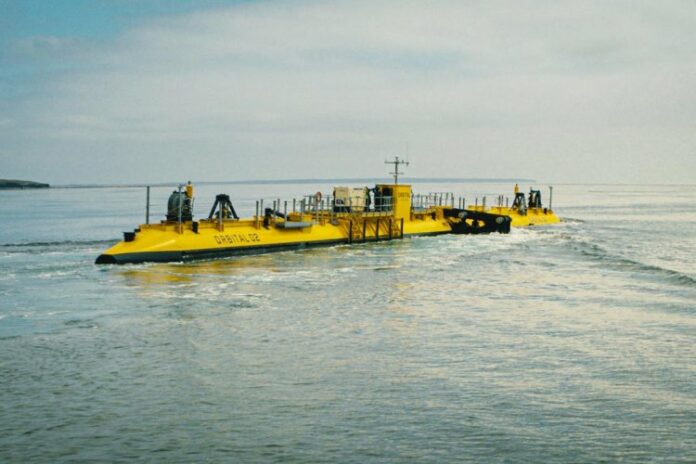
Orbital, along with sector leading project partners, has been selected by the European Commission’s Horizon Europe Programme to deliver a multi-turbine tidal energy project, EURO-TIDES*.

Key workstreams will focus on accelerating the commercial deployment of Orbital’s pioneering floating tidal stream technology.

The project will also bring together expertise from Ocean Energy Europe, Laborelec, Marasoft, European Marine Energy Centre (EMEC), Center for Wind Power Drives (CWD) of RWTH Aachen University, Energie De La Lune and the University of Edinburgh.

The EURO-TIDES project will deliver a step change in the wider commercialisation programme for the scale deployment of Orbital’s leading technology. This will be achieved through targeted work to demonstrate manufacturing solutions compatible with series production, optimisation of long-term operation and maintenance programmes while also accumulating accelerated operational performance data around Orbital’s technology.

The project will also work to bring forward commercial scale tidal projects in French waters to augment Orbital’s existing commercial project portfolio in the UK and overseas.

The European Commission has identified that transitioning from single turbine deployments to multi-turbine arrays is the next important milestone for the tidal stream sector as it moves towards contributing towards net zero targets in the UK, EU and beyond with a unique form of clean, predictable energy that generates like clockwork.

Andrew Scott, CEO of Orbital Marine Power, said:

“Orbital is committed to ensuring tidal stream energy makes a material contribution to decarbonising energy systems while supporting a just transition through the creation of a new industrial sector. The endorsement that comes from this selection is a huge boost to that objective while also enabling us, and our project partners, to accelerate that positive vision. We are looking forward to moving forwards with EURO-TIDES at pace early in 2024.”

*EURO-TIDES is the EUROpean Tidal energy pilot farm focused on Industrial Design, Environmental mitigation and Sustainability

TenneT places artificial reefs near offshore platform Hollandse Kust

0

This offshore transformer platform will connect the Ecowende (Shell/Eneco) consortium wind farm to the high voltage grid. 

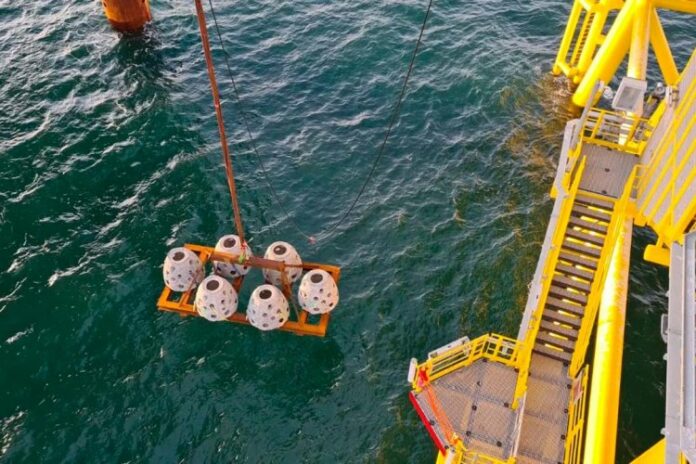
The aim is to build this wind farm with a healthy ecosystem and as little impact on nature as possible. The artificial reefs are part of a series of ecological measures by TenneT to monitor and encourage nature around offshore wind farms.

By 2050, energy production must be completely climate-neutral. One of the main pillars to achieve this goal is offshore wind energy and the North Sea is becoming our main power plant. However, all this infrastructure may have an impact on the ecology of the North Sea. 

Saskia Jaarsma, head of offshore development at TenneT:

“We are aware of the potential impact on the North Sea. That’s why we pay a lot of attention in researching what happens underwater. The installation of artificial reefs is another step in researching, monitoring and stimulating marine life.”

To find out which form works best, two types of artificial reefs have been placed near the Hollandse Kust west alpha jacket, located about 50 kilometers off the coast of Egmond aan Zee. Earlier, similar structures were placed at the TenneT platform at Hollandse Kust north. Six reef cubes are attached to one frame. Hollow square blocks made of nature-friendly recycled material with round holes in the walls. On the other steel frame are six reef balls, a similar structure but in the shape of a ball.

“These artificial reef structures are meant to stimulate marine life. With these, you create potential spots where coral and algae settle. Earlier research shows that fish, crabs and lobsters like to visit these spots for shelter and to look for food,” says Annemiek Hermans. As a marine biologist, she advises TenneT on nature-inclusive construction at sea.

The aim of the trial is to investigate which shape – ball or cube – works best in the waters off our coast. The hollows provide protection for young fish, but are also meant to increase the structure’s bonding surface. 

“In this way, we hope to provide a suitable place for numerous other animal and plant species in addition to juvenile fish, crabs and lobsters,” Hermans said. As a marine researcher, Hermans welcomes the similar initiatives being taken from the wind industry. Jaarsma:

“Only in this way can you gain the necessary knowledge and experience to build nature-inclusively. Otherwise you never find out what the success rate of a measure is. These pilots are relatively intensive to realise, but of great value for ecology. For example, the first effects of the ecological cable crossings at wind farm Hollandse Kust zuid are already surprisingly good, we see a lot of life developing there.”

“With the firm ambition for offshore wind, it is more than understandable that there are concerns about the ecological effects. After all, that roll-out comes with great responsibility for everything that lives in our North Sea. Gathering knowledge quickly as we are used to these days is unfortunately not going to work because nature will not be rushed in its development.”

Hermans expects that it takes up to three years to see clearly visible differences. “Until then, we monitor annually whether the diversity of life forms around the artificial reefs and fish hotels increases. Fish lose scales and cells, for example, and feces also end up in the water. By reading DNA in water samples, you can find out pretty quickly which guests have checked in.”

Jaarsma:

“A number of measures to stimulate marine life, such as the fish hotels on our jackets, are now standard at TenneT’s offshore assets, while we always keep an eye out for innovation. We assess new nature-enhancing proposals on technical feasibility, impact on planning, nature and on costs and risks. We monitor all measures for ecological success, in order to learn more about what works well and what does not. We continue to experiment in this and exchange our knowledge with all stakeholders in the North Sea, so that the whole sector can contribute to stimulating ecology around offshore wind farms.”

The EU and EIB Global to issue €40m grant for Medusa subsea cable

0

The European Commission signed an agreement with the European Investment Bank (EIB) for a €40 million EU grant to support high-speed fiber-optic connection under the Mediterranean as part of the “MEDUSA” a project led by AFR-IX telecom and supported by the EU’s Economic and Investment plan for the Southern Neighborhood.

This EU grant contribution will increase and guarantee the connectivity via the submarine cable and direct terrestrial links, up to the national research and education centers of EU’s Southern Neighborhood region.

Commissioner for Neighborhood and Enlargement Negotiations, Olivér Várhelyi, said:

“The Commission and the EIB are teaming up to implement one of the flagships of our Economic and Investment Plan to boost digital connectivity in the Southern Neighborhood. The €342 million MEDUSA project will directly connect, for the first time, the Northern and Southern shores of the Mediterranean Sea and the Southern countries among themselves via a high-capacity, multi-country, future-proof optical fiber submarine cable. Through this long cable, we will significantly upgrade the interconnectivity, stimulating innovation and research in the region, notably about 500 Universities, institutes of education and research centers and about 4,5 million students will benefit from increased connectivity. The MEDUSA project will inherently support the region’s economic and social development.”

EIB Vice-President Ricardo Mourinho Félix said:

“Digital transformation and high-speed digital connectivity is crucial in a post-pandemic world. The €40 million grant agreement signed today with the European Commission will improve connectivity between the EU and our North African Partners, bringing next generation access networks to the region while fostering socio-economic benefits. By working together, we can accelerate our efforts in promoting more integration in the region and encourage sustainable development and economic growth, providing more opportunities for all.”

A €40 million EU grant will secure direct high-speed connectivity in particular between the research and education communities and users in the North African countries and the EU via the landing station in Barcelona. The EIB is expected to provide the debt finance for the infrastructure with a contribution of up to €100 million in loans. The operation is still subject to the final approval of the EIB Governing Bodies.

This funding will also provide an alternative route for data traffic on the targeted EU routes and allow EU telecom operators to become essential partners in supporting socio-economic growth in the region. “MEDUSA” contributes to the EU’s Global Gateway and EIB Global. It is one of the flagship projects under the EU’s new Agenda for the Mediterranean adopted last year to boost digital connectivity in the EU’s Southern Neighborhood.

Louis Dreyfus Armateurs selected by Airbus to build and operate low-emission vessels

0

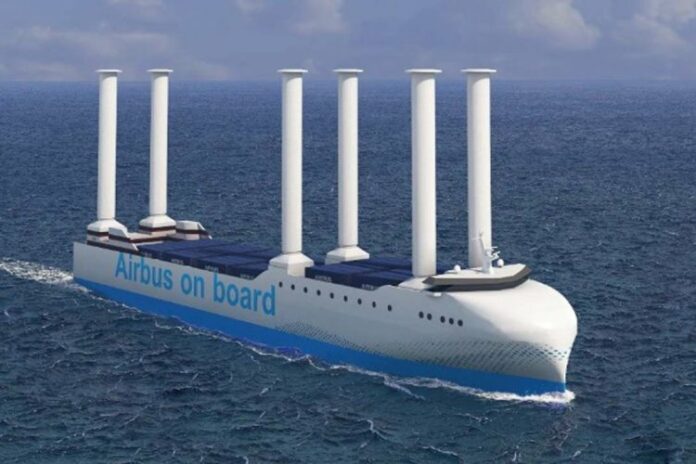
Airbus has commissioned LDA to build, own and operate these new highly efficient vessels that will enter into service from 2026.

The new fleet is expected to reduce average annual transatlantic CO2 emissions from 68,000 to 33,000 tonnes by 2030. This will contribute to Airbus’ commitment to reduce its overall industrial emissions by up to 63% by the end of the decade – compared to 2015 as baseline year – in line with the 1.5°C pathway of the Paris Agreement.

The chartered vessels that transport Airbus’ aircraft subassemblies across the Atlantic between Saint-Nazaire, France, and its single-aisle aircraft final assembly line in Mobile, Alabama, will be gradually renewed.

The new vessels will be powered by a combination of six Flettner rotors – large, rotating cylinders that generate lift thanks to the wind, propelling the ship forward – and two dual-fuel engines running on maritime diesel oil and e-methanol. Additionally, routing software will optimise the vessels’ journey across the Atlantic, maximising wind propulsion and avoiding drag caused by adverse ocean conditions.

The fleet renewal also supports Airbus ambition to increase A320 family production rate to 75 aircrafts per month by 2026. Each new transatlantic vessel will have the capacity to transport around seventy 40-foot containers and six single-aisle aircraft sub assembly sets – wings, fuselage, engine pylons, horizontal and vertical tail planes – compared to three to four sets with current cargo ships.

Nicolas Chrétien, Head of Sustainability & Environment at Airbus, said:

“The renewal of our marine fleet is a major step forward in reducing our environmental impact. The latest generation of vessels proposed by Louis Dreyfus Armateurs are more fuel efficient than their predecessors, using cutting-edge technologies like wind-assisted propulsion. This demonstrates our determination to lead the way in decarbonising our sector by innovating not just in aviation, but across all our industrial operations.»

Edouard Louis-Dreyfus, President, Louis Dreyfus Armateurs, said:

«We are very pleased to have been selected by Airbus to develop this state-of-the-art and low-emission fleet and to continue our longstanding partnership. This new project, setting high targets, reflects our ambition regarding the decarbonisation of the shipping industry. We are proud to support our customers in their energy transition, going even beyond their expectations by offering innovative solutions and sustainably driving change.» 

Marine battery system developed in Singapore receives approval from Bureau Veritas

0

Sea Forrest (SF), a provider of specialist marine electric propulsion and energy management solutions, has been awarded type approval from Bureau Veritas (BV) for its SEAGEN 11 modularised marine propulsion battery module system.

SEAGEN 11 is the first marinized lithium-ion battery system for marine propulsion to be designed, built, and assembled in Singapore. Together with the battery management system, which was also designed, built and programmed in Singapore in collaboration with GenPlus Pte Ltd, the modularised system allows flexibility of installation onboard different marine platforms, confined spaces, and ease of stringing up battery modules to meet various battery voltage requirements.

The type approval from BV confirms that SEAGEN 11 meets the IMO guidelines, which will facilitate its implementation onboard vessels by streamlining the Flag State approvals required for lithium-ion energy storage solutions. This will also support efforts to accelerate the adoption of electric propulsion as part of the broader decarbonisation efforts in the maritime sector, while also enhancing safety at sea.

Bureau Veritas and Sea Forrest are committed to continued collaboration beyond this type approval, exploring the development of high-performance batteries and advanced battery management systems. In addition, the two companies will work together on updating classification rules and standards to ensure relevance and easy application in the rapidly evolving landscape of marine batteries and propulsion technology. This ongoing partnership underscores their joint commitment to driving innovation and advancing the environmental, safety and operational performance of marine batteries.

George Lee, CEO of Sea Forrest, said:

“Sea Forrest believes that achieving net-zero in the maritime sector is paramount and inevitable. Aligned with IMO’s 2030 and 2050 strategies in charting a course toward a sustainable future, the type-approval from Bureau Veritas for our SEAGEN 11 marinized battery marks a significant milestone for our sustainability efforts in the maritime industry. This certification affirms the viability of our technology as a solution for lowering emissions on both new and existing ships. We hope that this innovation will propel the industry forward towards mass adoption to reduce the maritime carbon footprint.”