-7.9 C
New York
Home Blog Page 250

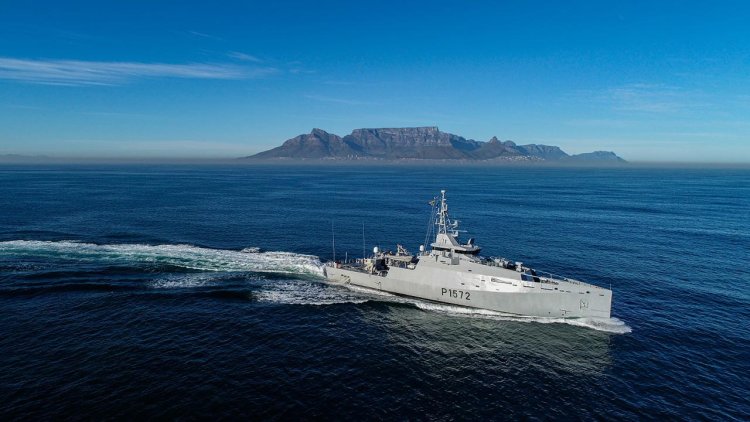
South African Navy naming ceremony of 2nd Multi Mission Inshore Patrol Vessel

0

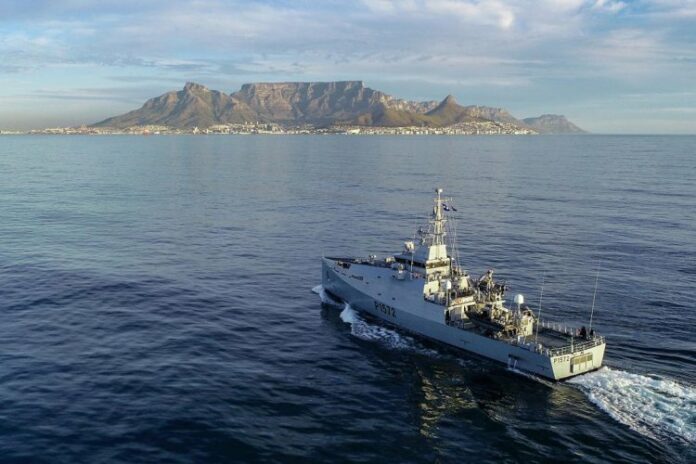
The South African Navy proudly named the second (2nd) of three Multi Mission Inshore Patrol Vessels (MMIPVs) in Durban harbour on Friday. 

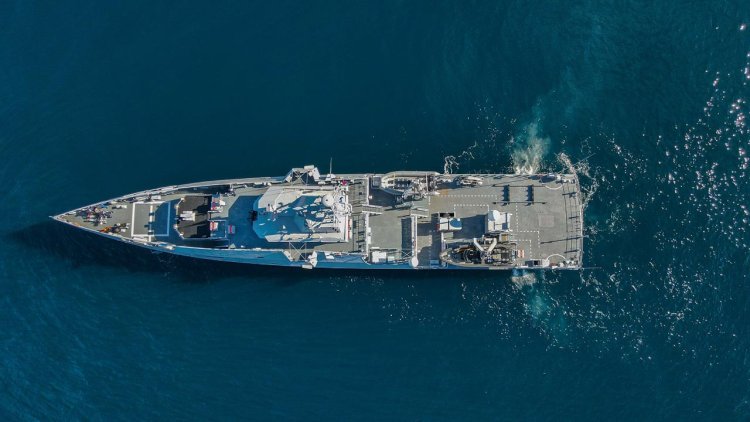
During the ceremony, the vessel was officially named SAS King Shaka Zulu. Named for the great Zulu King the vessel was built entirely in South Africa at Damen Shipyards Cape Town and it was designed to deliver rapid response capabilities along South Africa’s extensive 2,798-kilometre coastline and it is poised to play a pivotal role in safeguarding national waters. 

The use of King Shaka’s name is significant as it stands as a symbol of strength, which will now live forever at sea, paying tribute to Zulu nation’s significant role in South Africa’s rich history. 

The vessel’s Sea Axe hull design, patented by Damen, ensures exceptional seakeeping behaviour, reduced fuel consumption, and enhanced safety and comfort onboard. These vessels, equipped with advanced military equipment bolster the navy’s ability to respond effectively and swiftly to threats such as piracy, illegal fishing, and smuggling operations. 
The MMIPV project has not only fortified South Africa’s maritime security but also contributed significantly to job creation and the development of small and medium-sized enterprises (SMEs). A total of 848 local vendors have actively participated in the construction of the MMIPVs, highlighting the effectiveness of South Africa’s industrial participation policy.

Throughout the project’s duration, it is estimated to have generated more than one million man-hours of work, supported over 1,000 direct jobs at Damen Shipyards Cape Town, and engaged nearly 4,000 individuals indirectly. The project has also fortified regional supply chains and created opportunities for skilled job seekers, promoting economic prosperity in South Africa’s Ocean Economy.

“I must congratulate Damen Shipyards Cape Town, Armscor, the Defence Materiel Division and the SA Navy who all formed part of the Integrated Project Team for their absolutely sterling work of building these ships on time, in budget and to specification. This was indeed a monumental task and serves as a testament to the willingness of various companies and organisations to come together to produce something that will benefit the people of South African for many years,” Vice Admiral Lobese said. 

Sefale Montsi, Director of Damen Shipyards Cape Town, emphasised the broader impact of this project on the nation’s industrialisation journey.

“South Africa must continue to prioritise supporting local vessel suppliers because this creates jobs and develops transferrable skills which are in demand and can be used in other industries. New technologies are developed, opportunities from abroad are facilitated, and a base for growing exports is created and taken advantage of. As a result of our work on the MMIPV project, DSCT has exported vessels built here and equipped with South African products to Djibouti and UAE,” she said. 

The MMIPV project represents a significant success story for the South African Navy and the country’s shipbuilding and maritime industry. 
Subsea7 awarded major contract offshore Brazil

0

Subsea7 has confirmed the award of a major1 contract amendment by Petrobras for the development of the Mero 4 field2 located approximately 200 kilometres off the coast of the state of Rio de Janeiro, Brazil, at 2,200 metres water depth in the pre-salt Santos basin.

The award was announced in redacted form on 27 September 20233 and was recorded in backlog in the third quarter of 2023.

The contract amendment scope includes engineering, procurement, fabrication, installation and pre-commissioning of 76 kilometres of rigid risers and flowlines for the steel lazy wave production system.

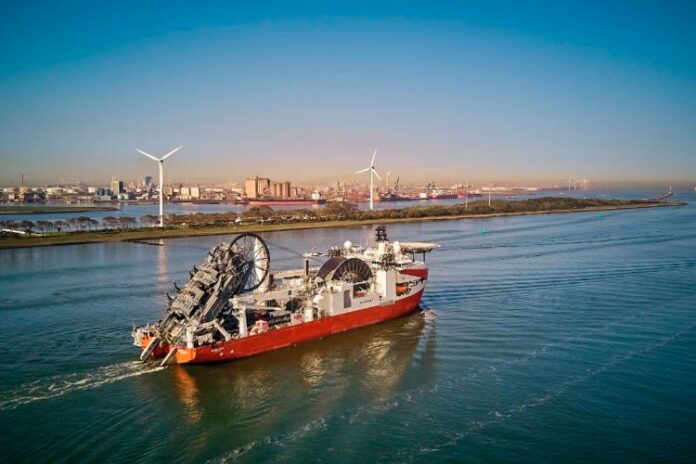
Project management and engineering will commence immediately at Subsea7’s offices in Rio de Janeiro and Paris. Fabrication of the pipelines will take place at Subsea7’s spoolbase at Ubu in the state of Espirito Santo and offshore operations are scheduled to be executed in 2025 and 2026.

Yann Cottart, Vice-President Brazil said:

“This contract builds on decades of experience executing major EPCI projects around the world and extends our portfolio of projects in Brazil. Subsea7 looks forward to continuing its strong, collaborative relationship with Petrobras as we work together to successfully deliver the Mero 4 project.”

Underwater robot finds new circulation pattern in Antarctic ice shelf

0

More than merely cracks in the ice, crevasses play an important role in circulating seawater beneath Antarctic ice shelves, potentially influencing their stability, finds Cornell University-led research based on a first-of-its-kind exploration by an underwater robot.

The remotely operated Icefin robot’s climb up and down a crevasse in the base of the Ross Ice Shelf produced the first 3D measurements of ocean conditions near where it meets the coastline, a critical juncture known as the grounding zone.

The robotic survey revealed a new circulation pattern—a jet funneling water sideways through the crevasse—in addition to rising and sinking currents, and diverse ice formations shaped by shifting flows and temperatures. Those details will improve modeling of ice shelf melting and freezing rates at grounding zones, where few direct observations exist, and of their potential contribution to global sea-level rise.

“Crevasses move water along the coastline of an ice shelf to an extent previously unknown, and in a way models did not predict,” said Peter Washam, a polar oceanographer and research scientist at Cornell University. “The ocean takes advantage of these features, and you can ventilate the ice shelf cavity through them.”

Washam is the lead author of “Direct Observations of Melting, Freezing and Ocean Circulation in an Ice Shelf Basal Crevasse,” published in Science Advances.

The scientists in late 2019 deployed the Icefin vehicle—roughly 12 feet long and less than 10 inches around—on a tether down a 1,900-foot borehole drilled with hot water, near where Antarctica’s largest ice shelf meets the Kamb Ice Stream. Such so-called grounding zones are key to controlling the balance of ice sheets, and the places where changing ocean conditions can have the most impact.

On the team’s last of three dives, Matthew Meister, a senior research engineer, drove Icefin into one of five crevasses found near the borehole. Equipped with thrusters, cameras, sonar and sensors for measuring water temperature, pressure and salinity, the vehicle climbed nearly 150 feet up one slope and descended the other.

The survey detailed changing ice patterns as the crevasse narrowed, with scalloped indentations giving way to vertical runnels, then green-tinted marine ice and stalactites. Melting at the crevasse base and salt rejection from freezing near the top moved water up and down around the horizontal jet, driving uneven melting and freezing on the two sides, with more melting along the lower downstream wall.

“Each feature reveals a different type of circulation or relationship of the ocean temperature to freezing,” Washam said. “Seeing so many different features within a crevasse, so many changes in the circulation, was surprising.”

The researchers said the findings highlight crevasses’ potential to transport changing ocean conditions—warmer or colder—through an ice shelf’s most vulnerable region.

“If water heats up or cools off, it can move around in the back of the ice shelf quite vigorously, and crevasses are one of the means by which that happens,” Washam said. “When it comes to projecting sea-level rise, that’s important to have in the models.”

ABP and Hynamics form hydrogen partnership at the Port of Barry

0

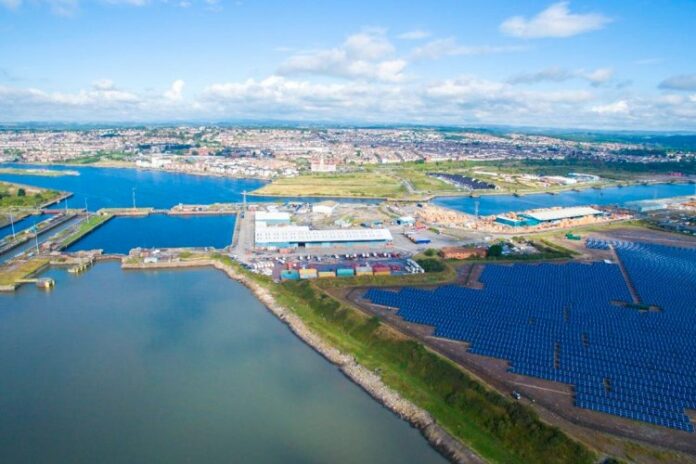
The UK’s leading port company, Associated British Ports (“ABP”), and Hynamics, EDF Group subsidiary, have announced an ambitious partnership to evaluate developing low-carbon hydrogen production and distribution at the Port of Barry in order to help reduce local industries’ CO2 emissions.

The parties have entered a Memorandum of Understanding (MoU) to deliver a feasibility study that will look at ways to use low-carbon hydrogen to decarbonise industrial processes. The partnership forms the first part of a wider plan to develop a decarbonised growth hub at the Port of Barry, that would seek to decarbonise existing industry, which supports a number of jobs and is a major driver of the local economy.

ABP and Hynamics will explore opportunities to replace natural gas used in industrial production processes with low-carbon hydrogen. They will also explore ways to use low-carbon hydrogen as an alternative to fossil fuels in other sectors such as port operations and transport.

In addition to existing industry, it is intended that the combination of low carbon and transport infrastructure will attract investment and job creation from new industry. This is one of the key components of the South Wales Industrial Cluster’s Vision.

Commenting on the announcement, Ralph Windeatt, Head of Business Development at ABP said:

“ABP has exciting plans for the Port of Barry to become a Clean Growth Hub for low-carbon manufacturing. This forms part of the company’s wider Ready for Tomorrow sustainability strategy where we are not only working on our own decarbonisation transition but increasingly play a crucial role in the decarbonisation of other industries such energy, industry and transport.

“Hydrogen will be a critical resource to support Wales and the UK’s journey to net zero.  This is a significant development to drive low-carbon infrastructure at the Port of Barry.

“A successful study will also research a roadmap for future expansion of large-scale, low-carbon hydrogen deployment at the port. It will also explore opportunities for flexible low-carbon hydrogen supply direct to local industry, while providing refuelling capability for municipal and local transport. Working with our external partners at SWIC, Welsh Government and the Vale of Glamorgan, we intend to attract new industry to the Clean Growth Hub to drive investment and job creation for the region.”

Nicholas Hughes, Senior Business Development Manager at Hynamics said:

“We are delighted to enter a partnership with ABP and potentially play an important role in the future development of a low-carbon hydrogen ecosystem in the Port of Barry.”

“The Hynamics team is ready to bring its expertise and share knowledge gained from its project at Teesside to realise the full potential of decarbonisation opportunities at the Port of Barry for industry and transport.”

“As of today’s announcement, we will be working to explore the project’s technical parameters and evaluate, then secure, interested offtakes.”

Wallem Group welcomes two LNG dual-fuel tankers

0

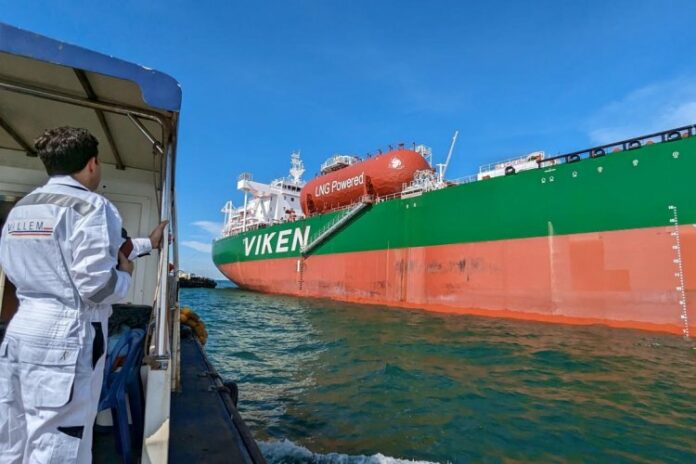
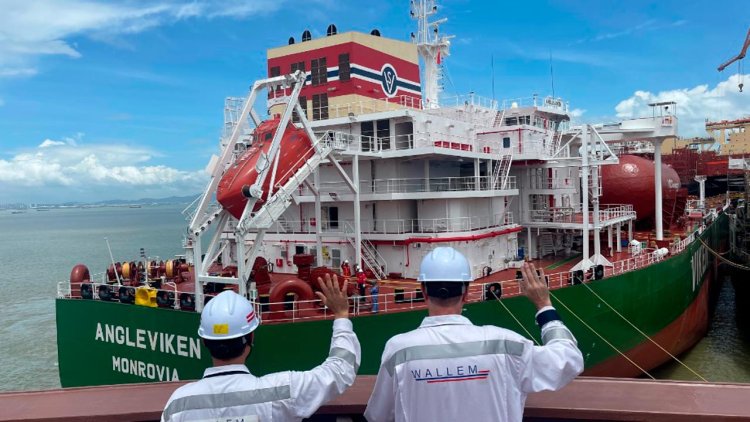
The two LR2 tankers, delivered by Guangzhou Shipyard International, demonstrate Wallem’s commitment to building its expertise in managing and operating the vessels of the future and being a partner to our clients who drive decarbonisation in the maritime industry.

Wallem is also preparing to take delivery of multiple new build DF PCTC vessels in the near future.

Ioannis Stefanou, Managing Director Ship Management, Wallem Group said:

‘Since its foundation 120 years ago, Wallem has been at the forefront of maritime global services with a keen eye to adopt industry change. In the 21st century decarbonisation leads the sector’s agenda, and Wallem’s key focus is to develop and build our expertise both onboard and ashore in new technologies and alternative fuel systems.’

‘Despite technological advances, we still believe the Future is Human. These dual fuel vessels have brought exciting opportunities for our crew to expand their expertise. They provide a platform to train experienced crews of various ship types on dual fuel engine system requirements. Wallem is ready to manage any type of vessel equipped with dual fuel engines for our clients.’  

ZeroNorth and Alpha Ori strike deal to forge shipping tech giant

0

Subject to regulatory approval, the two companies plan to generate synergies by combining Alpha Ori Technologies’ expertise in IoT sensors and high frequency data and ZeroNorth’s multi-service technology platform to create new sustainability solutions for shipping.

The agreement will allow the two companies to serve their customer bases from a single offering and create a strong data ecosystem on one platform with multiple services within the market.

The company intends to operate under the ZeroNorth brand and Søren Meyer, ZeroNorth’s current CEO, will remain at the helm of the joint set-up. Both of AOT’s current Co-CEOs, Bala Sankaran and Rajesh Unni, will become non-executive board members of the joint business.

The two proposed partners already supply cutting-edge technology to more than 4,000 ships trading globally. The agreement will enable customers to access 12 different services using one platform and one data source. This will help to significantly advance industry developments and policy efforts across the global trade value chain. 

ZeroNorth will interconnect data, providing collection, insights, and analysis, which will enhance quality and compliance for customers. By unlocking operational efficiencies and increasing reliability, customers will also benefit from cost savings, increased profits, and emissions reduction.

The joint business will remain an independent company with robust financial backing and heritage from top industry leaders, leveraging their deep shipping knowledge to deliver transformative solutions that positively impact the sector.

The company will retain its global office presence, headquartered from Copenhagen, and a combined workforce of 780 people, approximately one third of whom are full-time consultants, will work together to create significant further impact on the planet. 

Speaking on the announcement, Søren Meyer, CEO, ZeroNorth, said:

“This is a strategic move that will not just benefit our customers, but the sector as a whole. It will enable us to serve the industry as its leading maritime optimisation provider of choice and underlines our commitment to bettering both profit and planet.

“ZeroNorth and Alpha Ori Technologies chose each other because of our shared values and common mission to drive impactful change for shipping and the wider global trade value chain. The combined ecosystem that this partnership will create will enable us to touch from shore to ship and back to shore.

“It will accelerate our technology development, strengthen our innovative mindset, and enable us to continue to help our customers focus on profit and planet in an increasingly complex and volatile world.”

Bala Sankaran, Co-CEO, Alpha Ori Technologies, added:

“Joining forces with ZeroNorth secures a market leading position for our companies, and enables us to propel the industry towards greater profitability and sustainability outcomes. We believe that this is the perfect time for us to scale and do bigger things together, and this agreement is perfectly in line with our ambition to drive sustainability, performance, and business results for our customers.

“ZeroNorth is an ideal fit for AOT’s ambitions regarding digital transformation of the Maritime industry due to our considerable expertise and specialism in high frequency data. The agreement with ZeroNorth brings significant advantages, enabling us to leverage our combined scale for increased investment and improved customer value.”

Feng Miao substation contract awarded to Semco Maritime and PTSC M&C

0

Early October 2023, the consortium consisting of Semco Maritime and PTSC Mechanical & Construction (PTSC M&C), led by Semco Maritime, has been awarded an engineering, procurement, and construction (EPC) contract for a 500MW offshore substation in the Feng Miao offshore wind farm project invested and developed by Copenhagen Infrastructure Partners, the Danish fund manager dedicated to greenfield renewable energy investments.

The Feng Miao OWF Project is located approximately 36 kilometres off the coast of Taichung city on the Taiwanese west coast and has been awarded 500 MW grid capacity by Taiwan’s Ministry of Economic Affairs with expected commissioning by 2027.

The contract for the offshore substation includes design, engineering, procurement, construction, and commissioning and is effective from early October 2023 with the parties immediately initiating the execution phase for the project. All structures for this project will be fabricated at PTSC M&C’s yard in Vungtau City (Vietnam) and Semco Maritime will design, procure, and install high and medium voltage, SCADA and auxiliary systems supported by primary sub-contractor ISC Consulting Engineers. The contract duration is scheduled in the 2023-2026 period.

“Feng Miao is an exciting project representing a great opportunity for our consortium to further build on our joint experience from the Taiwanese Hai Long project, while simultaneously strengthening ties with the world-class team from Copenhagen Offshore Partners with a solid track record of leading offshore project development in Taiwan since 2017. We look forward to contributing to the continued development of the Taiwanese offshore wind industry in the coming years,” says Vice President Renewables, Semco Maritime, Frank Holm.

“Once again, we are honored to accompany our partner Semco Maritime in this offshore substation project. This project shall also help extend our portfolio in the renewable energy sector and we are proud to contribute to the global energy transition trends,” says Mr. Dong Xuan Thang, PTSC M&C’s Managing Director.

“Feng Miao is CIP’s first project in Taiwan to feature an offshore substation. We are very pleased to cooperate with experienced partners such as Semco Maritime and PTSC M&C,” Claire Lohan, CEO of CIP Taiwan Round 3 projects, said. “An offshore substation is an integral part of an offshore wind farm. By signing this EPC contract, we have taken a big step in the development process of the Feng Miao project and have once again demonstrated our commitment and confidence to complete the project in 2027 as scheduled.”

This is the third offshore substation project awarded to the Semco Maritime-PTSC M&C Consortium since the first collaboration in the Hai Long OWF Project recently followed by the Baltica 02 project. Both projects are on-going and progressing according to plan.

Damen delivers three new tugs to Poland’s WUZ Port and Maritime Services

0

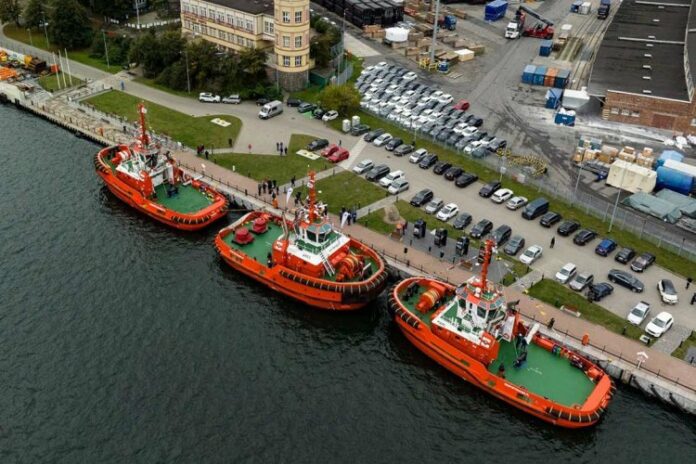
In the presence of a large group of Polish and international associates and company employees, the new tugs were welcomed into the fleet. 

This followed the christening ceremony of the second ASD Tug 2811 that took place in September in Rotterdam. Named Pax (in Latin “Peace”), the vessel is the last in a three-tug order placed at the beginning of 2023 by the Polish operator and well-known Damen customer WUZ Port and Maritime Services, Poland’s largest towage company.

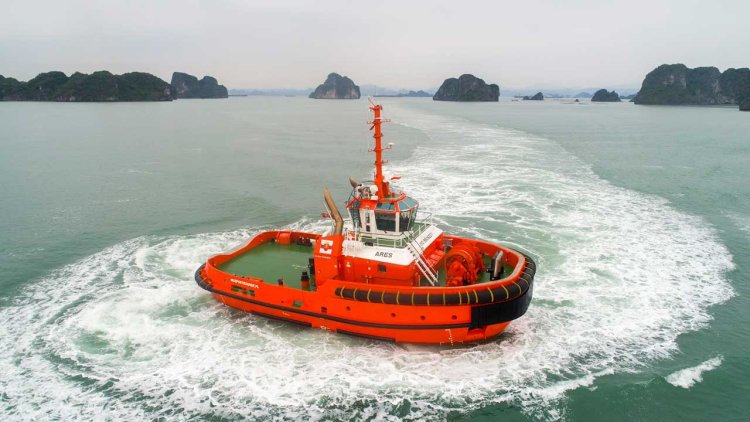
The first two vessels, Ares, an ASD Tug 2813, and Mars, an ASD Tug 2811, were delivered to WUZ Port and Maritime Services by Damen in July this year. They were built at Damen Song Cam Shipyard in Vietnam and began operations in August in the client’s home port of Gdansk following their christening in Rotterdam. 

Pax was built by Albwardy Damen in Sharjah, U.A.E. and, as an ASD Tug 2811, is a next-generation vessel featuring optimal performance and efficiency as well as advanced connectivity. It is also designed to meet the increasing demand for higher bollard pull in compact tugs as commercial vessels get bigger while the harbours stay the same. At just 28-metres in length, it delivers high bollard pull and has excellent manoeuvrability. 

With the delivery of Pax, WUZ Port and Maritime Services now has seven Damen tugs in their capable fleet that totals 17 vessels. Their role is vital to the Port of Gdansk, handling the tankers, container vessels, bulk carriers and drilling rigs that use the port, as well as undertaking deep-water and coastal towage and other support activities. 

The recent acquisitions are in response to the Port of Gdansk Authority’s expansion of its industrial areas and quaysides including a new container terminal. A new LNG import and regasification facilities are also going to be constructed in the Gulf of Gdansk. All the new Damen vessels have FIFI 1 capability and are well equipped to serve the LNG terminal operations.

“We are very pleased to welcome the final tug of this order to our fleet,” said Marek Wengrzyn, CEO of WUZ Port and Maritime Services. “Damen’s tugs have proven themselves to be reliable, and these compact tugs will be a valuable asset in the port and will further enhance the service provision that we offer to our clients.”

“We were honoured to celebrate this latest significant moment together with the WUZ representatives in Rotterdam,” says Justin Rietveld, Sales Manager East & South East for Damen Shipyards. “This has become a tradition for our companies and we are looking forward to continuing our strong relationship together.”

MOL and Cosmo Oil sign MoU to study ocean transport

0

Mitsui O.S.K. Lines, Ltd. and Cosmo Oil Co., Ltd. have announced the signing of a memorandum of understanding (MoU) on the study of ocean transport, with the goal of establishing a carbon dioxide capture and storage (CCS) value chain. 

CCS is regarded as one of the most effective solutions to realize a low-carbon/decarbonized society. MOL and Cosmo Oil will collaborate on the establishment of a “CCS value chain consisting of separation, capture, transport, injection and storage” of CO₂ emitted from Cosmo Oil’s refineries (emission sources), and conduct the following studies.  

MOL and Cosmo Oil will accelerate this CCS value chain project through the MoU, and contribute to the realization of a low-carbon society. 

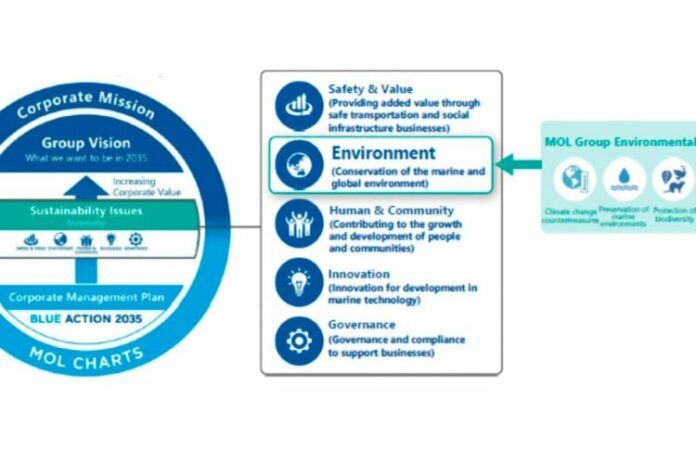
The MOL Group Vision is to develop a variety of social infrastructure businesses in addition to traditional shipping, and will meet evolving social needs, including environmental conservation, with innovative technology and services. 

TotalEnergies commissions its LNG floating terminal in the Port of Le Havre

0

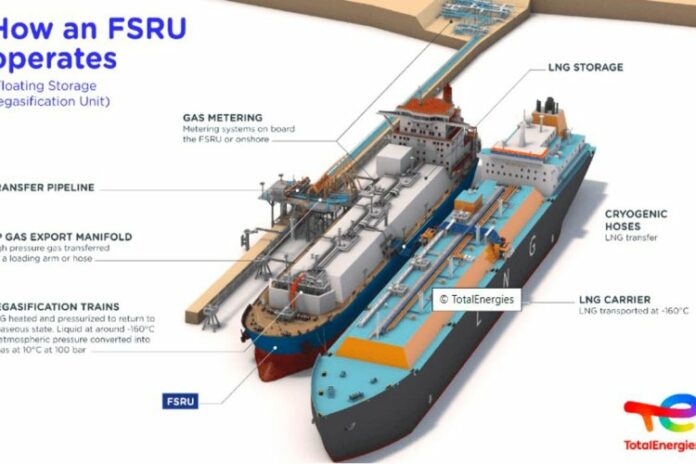
TotalEnergies announces the commissioning of the Cape Ann, its floating storage and regasification unit (FSRU) for liquefied natural gas (LNG) located in the port of Le Havre.

The terminal injected its first megawatt-hours (MWh) of gas into the grid operated by GRTgaz, using LNG from Norway.

TotalEnergies has contracted 50% of the terminal’s annual capacity of around 5 billion cubic meters, to supply it with LNG from its global portfolio. The remaining capacity will be marketed according to rules approved by the regulator.

Cape Ann in Key Figures:

  • Maximum regasification capacity: 5 billion cubic meters per year, or around 10% of French consumption
  • Storage capacity: 142,500 cubic meters
  • Vessel dimensions: 283 meters x 43.40 meters
  • Draught: 50 meters
  • Deadweight: 112,457 tons
  • Lightship: 31,676 tons
  • Date of first launch: June 2010
  • Owner: Höegh LNG
  • Flag: French