-5.8 C
New York
Home Blog Page 249

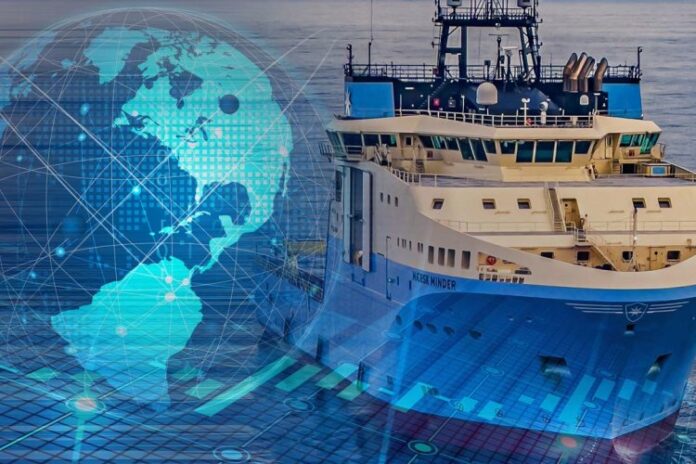
Maersk Supply Service selects Inmarsat Fleet Data end-user API

0

Maersk Supply Service has selected Fleet Data IoT platform from Inmarsat Maritime, a Viasat business, to help optimise the performance of its first vessel battery installation onboard Maersk Minder Offshore Supply Ship, in a solution which will also allow the owner to evaluate how best to optimise the use of zero-emission energy storage systems across its fleet.

An end-user API seamlessly gathers data from onboard equipment, automatically organises it with time-stamps, synchronises it, and uploads it to the customer’s visualisation tools, all presented in a user-friendly format.

Beyond streamlining in-house reporting and analytics, the API makes data available to original equipment manufacturers (OEMs), such as VPS, whose data-driven decarbonisation system, Maress, provides real-time insight into vessel performance to support fuel savings and emissions reduction. Crucially, Maress will help Maersk to evaluate the effectiveness of the battery system in terms of peak shaving and energy efficiency and determine the requirements for future battery installations for the rest of the fleet.

Sindre Bornstein, Chief Commercial Officer, VPS Decarbonisation, said:

“If the maritime industry is to achieve its emissions-reduction targets, it will rely on transparency, smart use of data and collaboration – and the Maersk Minder project combines all three. By providing an open platform for data analytics, Inmarsat enables Maress to deliver actionable insights, which in turn help Maersk Supply Service to enhance vessel efficiency in the short term and decarbonise its fleet through optimised battery-enabled operations in the long term.”

With complete visibility into the performance of the vessel and its hybrid battery system, Maersk can adapt its operations swiftly to keep pace with evolving environmental regulations. Notably, one of Maersk’s clients has already stipulated the use of battery power in certain offshore operations. This underscores the competitive advantage gained by sharing real time data on the impact of the Electric Storage System (ESS) on vessel efficiency and emissions with the charterers.

Sverre Vange, Energy Performance Manager, Maersk Supply Service, said:

“There are various economic and regulatory motivations for installing battery power on an offshore vessel, but charterer expectations are a particularly compelling factor. In the years ahead, attracting charterers will increasingly rely on the deployment of a battery system so the ability to keep charterers informed of the system’s performance will be invaluable.”

Automating data flows also frees seafarers up from manual NOx emissions reporting, added Vange, saving time and money, while yielding more accurate and consistent information. Vessels operating in Norwegian waters must reconcile NOx emissions data against a record of the type/location of offshore work done and ports called to establish their obligations under Norway’s NOx tax scheme.  

Richard Goudbeek, Technical Sales Manager, Digital at Inmarsat Maritime, said:

“Data by itself is not useful unless it is processed to obtain information. Data processing involves analysing data and reasoning to gain insight and turn the results into fact-based decision-making. The Fleet Data end-user API allows Maersk to extract maximum value from available data and share it with OEMs and third parties like VPS. This collaboration is pivotal in developing actionable insights and advancing decarbonisation strategies within the industry.”

Zeeland coastline reinforced by Van Oord’s new LNG hopper dredgers

0

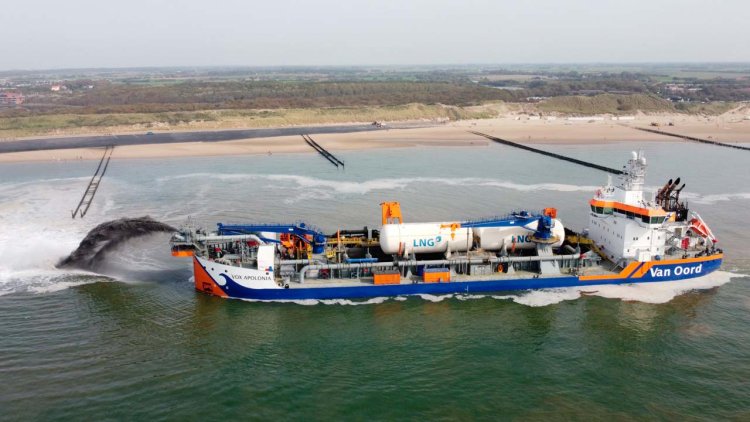
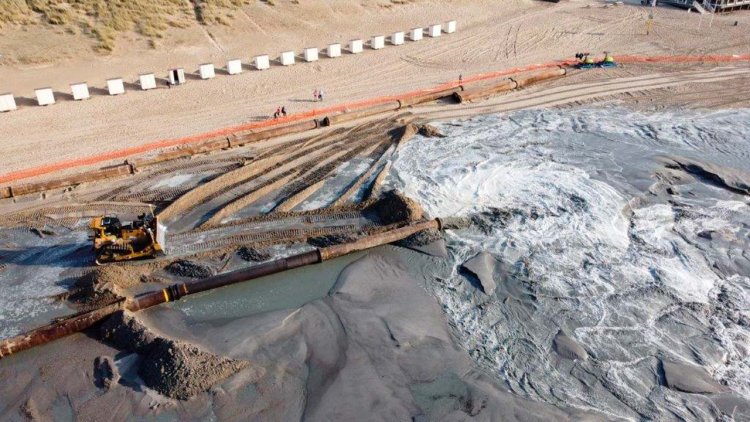
As a result, the coastline has been stabilised and coastal towns and infrastructure are well protected for the coming years. The work was carried out by Van Oord’s three new hopper dredgers, including the Vox Alexia, which was christened in September. During the project execution, the vessels were powered by LNG, a more sustainable fuel. The project is part of the Coastline Care programme of Rijkswaterstaat, the executive agency of the Dutch Ministry of Infrastructure and Water Management.

To reinforce and protect the coast of Zeeland, Van Oord carried out sand replenishment at the Westkapelse Zeedijk and Nieuwvliet-Groede. The hopper dredgers were used to collect sand from the seabed and pump it through a pipeline to the beach. On the beach, weather and wind will ensure further spreading and will enable the dunes to grow. In this way, the coast is being reinforced with the help of nature’s own forces. At the Oostgat shipping channel, the channel wall was replenished, i.e. the channel just offshore was partly backfilled with sand. Because the channel is now not as close to the shore, less sand disappears from the beach and the coastline stays in place longer.

In total, approximately 4 million cubic metres of sand were applied. This is important not just for the safety of the coast but also for preserving nature conservation areas, opportunities for recreation, and drinking water extraction.

Van Oord used its three new LNG suction dredgers – Vox Ariane, Vox Apolonia, and Vox Alexia – to carry out the beach nourishment works. For the Vox Alexia, which was christened recently, this project was a first. During operations, the vessels were powered by LNG. This is a more sustainable fuel alternative to marine gas oil (MGO) because it is free of sulphur and particulates. The combustion process is also different to that of MGO, resulting in much lower nitrogen dioxide emissions. It was partly because of this that Rijkswaterstaat awarded the project to Van Oord. This is in line with Rijkswaterstaat’s goal of net zero CO2 emissions and fully circular operations by 2030. 

Silvester Vermunt, Contract Manager at Rijkswaterstaat, said:

‘Thanks to the beach nourishment that companies like Van Oord carry out for us, the Netherlands remains well protected from the sea. We work not just with nature, but also in the midst of it. To reduce emissions from the coastline maintenance work, we very much need the expertise and innovativeness of the contractors. Companies that take measures to reduce their nitrogen and CO2 emissions have an edge when tendering for sand replenishment contracts. We at Rijkswaterstaat are therefore pleased that Van Oord was immediately able to deploy these three new LNG-hopper dredgers for us along the Zeeland coast. Bon voyage, Vox Ariane, Vox Apolonia and Vox Alexia!’

Final stage of construction now underway at New York’s first offshore wind farm

0

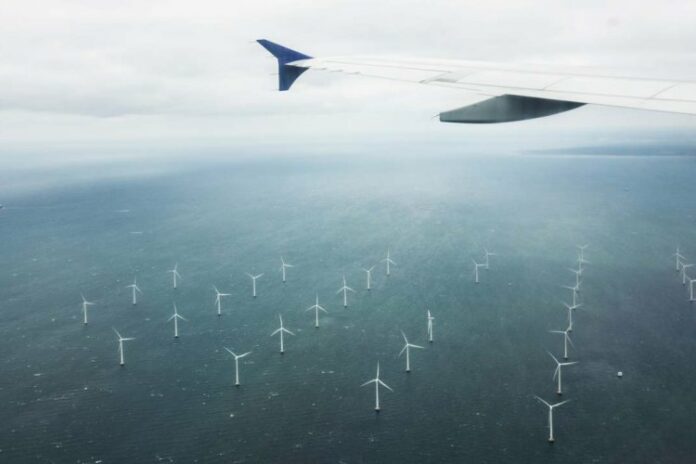
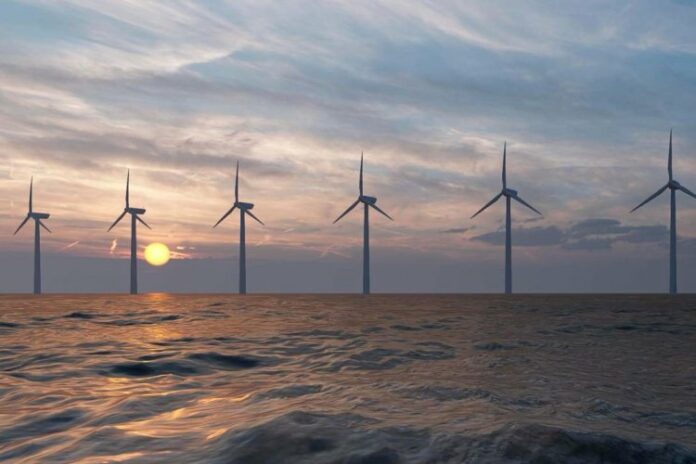
The first of South Fork Wind’s 12 Siemens Gamesa wind turbine generators – pre-assembled tower sections; a nacelle; and three blades each longer than a football field – was loaded onto a U.S.-flagged transport barge pulled by two U.S.-flagged tugboats destined for the project site 35 miles off Montauk, New York. The first turbine will be installed in the coming days.

The wind farm supports New York’s Climate Leadership and Community Protection Act goal to develop 9,000 megawatts (MW) of offshore wind by 2035 as required by the Climate Leadership and Community Protection Act (Climate Act). 

Once completed, the 130-megawatt offshore wind farm will generate enough renewable energy to power roughly 70,000 Long Island Power Authority (LIPA) customers, while eliminating up to 6 million tons of carbon emissions, or the equivalent of taking 60,000 cars off the road annually over a 25-year period. 

David Hardy, Group EVP and CEO Americas at Ørsted, said:

“The upcoming installation of this first turbine has been nearly a decade in the making and will stand as a testament not just to our hardworking teams but also to all those who have long supported this historic project. We have busy weeks ahead, but we’re now closer to fulfilling the promise of clean energy for Long Island’s East End and the growth of a new industry for New York.”

Joe Nolan, Eversource Energy’s President, Chief Executive Officer, and Chairman, said:

“Soon, through our newly built onshore substation, South Fork Wind will provide renewable energy to nearly 70,000 homes and move New York closer to achieving its clean energy objectives.” 

Marc Becker, Offshore CEO at Siemens Gamesa, said:

“A project like South Fork Wind represents the next generation of renewable energy in the United States and years of hard work by our partners and us to make today a reality. We look forward to continuing to buildout this project, alongside Ørsted and Eversource, to generate and deliver 130 megawatts of clean electricity to the people of New York.”

First approved by LIPA’s Board of Trustees in 2017, South Fork Wind began construction in February 2022, beginning with the onshore export cable system that links the project to LIPA’s energy grid. The wind farm reached its “steel in the water” milestone in June 2023 and has completed the onshore substation, and installation offshore of the turbine foundations, advanced foundation components, the first U.S.-built offshore wind substation, and the array and export cables that bring the power to shore.

Van Oord’s offshore installation vessel, the Aeolus, will install the turbines.  

Once in operations, South Fork Wind will be supported by U.S.-built crew transfer vessels and eventually by America’s first offshore wind Service Operations Vessel. The wind farm’s construction has already been served by the first helicopters supporting the U.S. offshore wind industry, based out of Quonset State Airport, Rhode Island.

ABS and Sea Forrest sign MOU to advance maritime electrification technology

0

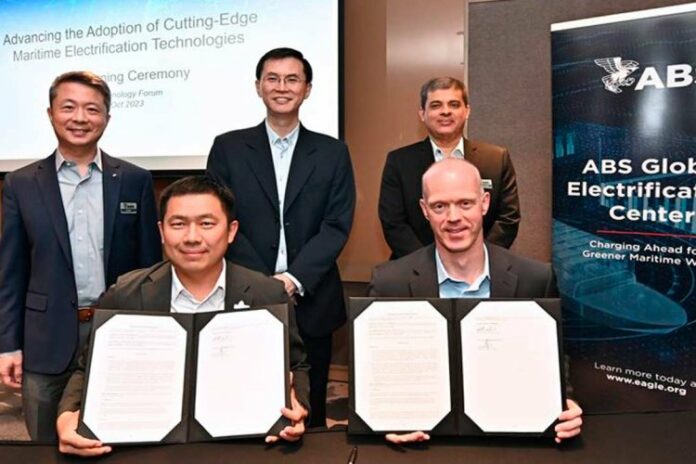
ABS and Sea Forrest Power Solutions Pte Ltd (Sea Forrest), a subsidiary of BH Global, signed a Memorandum of Understanding (MOU) to drive advancements in cutting-edge maritime electrification technologies.

Supported by the new ABS Electrification Center in Singapore, the agreement will cover projects for electric vessels, shore charging infrastructure along with related industry standards and marine classification requirements. ABS and Sea Forrest also intend to collaborate on a project to study the pertinent safety considerations for the development of fire resilient battery room or enclosure designs.

“ABS is well-positioned to use our deep industry knowledge to advance emerging battery technologies and shore power connection technologies to understand the risks of electrified vessels and to support infrastructure planning as ports become increasingly electrified and connected. We look forward to working together with innovators such as Sea Forrest to enhance the safety of the maritime industry and bring about a smooth transition to clean energy,” said Gareth Burton, ABS Vice President, Technology.

In response to this groundbreaking collaboration, Sea Forrest CEO George Lee said:

“We are excited to partner with ABS to drive innovation and safety in maritime electrification technology. Sea Forrest is proud to contribute our technical expertise, operational insights and practical experiences in battery and energy storage applications on board electric and hybrid-powered vessels. This partnership underscores our commitment to advancing cleaner energy solutions in the maritime sector, and we are eager to work alongside ABS and other industry leaders to make our oceans more sustainable and our vessels safer and more efficient.”

The MOU was signed in Singapore during the ABS Technology Forum: Enabling Electrification and Model-based Approaches, a conference connecting key stakeholders across the maritime value chain. 

ABB and Carnival Corporation sign strategic partnership for Azipod® propulsion services

0

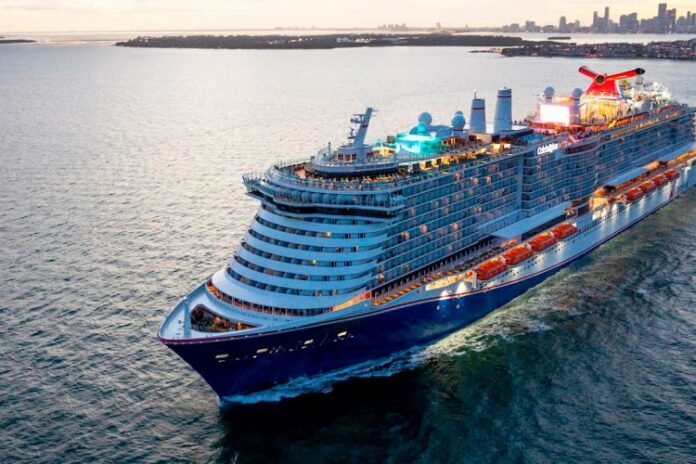
ABB and Carnival Corporation have signed a long-term partnership agreement to collaborate on continued operational excellence and ship performance across the cruise company’s fleet using systematic maintenance planning, critical spares management, and cutting-edge digital solutions for condition monitoring. The contract was booked in Q3 2023.

The 15-year agreement covers maintenance for Azipod® XO propulsion systems powering vessels operating within several Carnival Corporation world-class brands. Azipod® XO propulsion is ABB’s solution for high-power open water applications, particularly suited for cruise vessels.

The agreement will simplify service management of Azipod® XO propulsion units, with ABB experts remotely available 24/7 to support the vessels’ electric engineering crew on maintenance, based on ABB Ability™ Remote Diagnostic System and ABB Ability™ Condition Monitoring for Azipod® propulsion. The owner accumulates data about Azipod® propulsion performance, making spare part management and dry dock planning increasingly predictable and cost-efficient.

“This agreement helps optimize our long-term fleet performance while supporting our ongoing efforts to further improve energy and fuel efficiency and reduce emissions throughout our global operations,” said Michael Kaczmarek, Senior Vice President, Marine Technology, Carnival Corporation. “We are also creating predictability on maintenance costs and spares planning, which delivers significant gains for planning, procedures and ship performance over the long term. We see this strategic and collaborative agreement as an excellent example of what can be achieved in our ship performance objectives through collaboration with our key technology suppliers.”

“The agreement and its 15-year timeframe further strengthen the long-standing collaboration between ABB and Carnival Corporation. We take great pride in making sure Carnival Corporation’s cruise vessels get the full benefits of an optimized maintenance plan, service offering and access to our digital ser-vices around the world,” said Juha Koskela, Division President, ABB Marine & Ports.

ABB secured its first Azipod® propulsion order for the Carnival Cruise Line ship Carnival Elation in 1995, and after selecting the solution for a second Fantasy-class vessel, Carnival Corporation has gone on to specify Azipod® propulsion for more than 40 vessels for its various cruise brands.

From its creation three decades ago to its leading position in shipping today, Azipod® propulsion has revolutionized marine transport by delivering unparalleled gains for performance, efficiency, sustainability and reliability. The gearless, steerable propulsion system, with the electric drive motor in a pod outside the ship’s hull, can rotate 360 degrees to increase vessel maneuverability and efficiency, while cutting fuel consumption by up to 20 percent compared to conventional shaftline systems. Since the first installation on a cruise ship over 25 years ago, Azipod® technology has saved more than one million tons of fuel in the cruise segment alone.

Coastal Virginia Offshore Wind Farm gets federal approval

0

The Biden-Harris administration today announced its approval of the Coastal Virginia Offshore Wind (CVOW) commercial project – the fifth approval of a commercial-scale, offshore wind energy project under President Biden’s leadership. 

Today’s announcement supports the Administration’s goal of deploying 30 gigawatts of offshore wind energy capacity by 2030, following the approval of the Vineyard Wind 1, South Fork Wind, Ocean Wind 1, and Revolution Wind projects. When completed, these five projects will collectively add more than 5 gigawatts of clean, renewable energy to our nation’s grid, enough to power more than 1.75 million homes. 

Located approximately 23.5 nautical miles offshore Virginia Beach, the CVOW commercial project is the largest yet, and would provide about 2,600 megawatts of clean, reliable offshore wind energy, capable of powering over 900,000 homes. The project is expected to provide about 900 jobs each year during the construction phase and support an estimated 1,100 annual jobs during the operations phase, generating vital economic development for Virginia’s Hampton Roads area and supporting investments in the Virginia coastal region as a hub for offshore wind development and support. 

“The Interior Department is committed to the Biden-Harris administration’s all-of-government approach to the clean energy future, which helps respond to the climate crisis, lower energy costs, and create good-paying union jobs across the manufacturing, shipbuilding and construction sectors,” said Secretary of the Interior Deb Haaland. “Today’s approval of the largest offshore wind project in U.S. history builds on the undeniable momentum we are seeing. Together with the labor community, industry, Tribes and partners from coast to coast, we are aggressively working toward our clean energy goals.”  

“Today’s announcement is the result of hard work by the BOEM team and our ongoing conversations with Tribes, federal agency partners, state and local leaders, ocean users, industry and others to help inform the development of this project every step of the way,” said Bureau of Ocean Energy Management (BOEM) Director Elizabeth Klein. “We look forward to continuing to work together to responsibly develop this clean energy resource and ensure a sustainable future for generations to come.” 

“The Biden-Harris administration just greenlit construction of the nation’s fifth massive-scale offshore wind project, growing a new American industry, lowering energy costs, creating good-paying jobs, and tackling the climate crisis,” said White House National Climate Advisor Ali Zaidi. “More progress and economic opportunity are on the horizon as we put to use every tool available to bring offshore wind benefits to American workers and communities nationwide.” 

President Biden’s Investing in America agenda is growing the American economy from the middle out and bottom up – from rebuilding our nation’s infrastructure, to driving over $500 billion in private sector manufacturing and clean energy investments in the United States, to creating good paying jobs and building a clean energy economy that will combat the climate crisis and make our communities more resilient.   

Since the start of the Biden-Harris administration, the Department has approved the nation’s first five commercial-scale, offshore wind energy projects. BOEM has held four offshore wind lease auctions totaling almost $5.5 billion in high bids, including a record-breaking sale offshore New York and the first-ever sales offshore the Pacific and Gulf Coasts. BOEM has also advanced the process to explore additional opportunities for offshore wind energy development in the U.S., including the Gulf of Maine and offshore Oregon and the U.S. Central Atlantic coast. The Department has also taken steps to evolve its approach to offshore wind to drive towards union-built projects and a domestic-based supply chain.  

With today’s milestone, BOEM remains on track to complete reviews of at least 16 offshore wind energy project plans by 2025, representing more than 27 gigawatts of clean energy.     

After carefully considering the analysis and alternatives in the Final Environmental Impact Statement (EIS), including public comments on the Draft EIS, the Department has approved a combination of Alternative B and Alternative D-1, which includes up to 176 wind turbine generators, each with a capacity of 14.7 megawatts. This combination will reduce impacts to navigation and a known fish haven, allow for ocean co-use, and meet the energy needs of Virginia. Invaluable feedback was gathered through nation-to nation consultations with Tribes, input from federal, state and local agencies, and from public meetings and comments in analyzing the project’s potential environmental impacts and developing possible alternatives and mitigation measures. 

Concerns regarding Ukrainian seafarers entering Russian ports and territorial waters

0

Since the beginning of the war in Ukraine, seafarers, regardless of nationality, employed on board vessels trading in the Black Sea and the Sea of Azov area have been negatively impacted, which is why the Joint Negotiating Group (JNG) and the International Transport Workers’ Federation (ITF) have designated areas in the Black Sea and the Sea of Azov as ‘Warlike Operations Areas’ triggering an increased security level and other entitlements for seafarers in the war zone.

The hostilities and conflict continue to pose a serious threat to seafarers, but there is now an additional danger for Ukrainian seafarers on board ships entering Russian territorial waters and/or ports despite these areas being outside the agreed Warlike Operation Areas.

Therefore, to ensure the protection of Ukrainian seafarers, the JNG should discourage their Member companies from sending these nationals to Russian ports. In any case employers should notify all Ukrainian seafarers if their ship is scheduled to enter Russian territorial waters and/or ports and allow them the right to refuse to sail, with repatriation at the company’s cost and, under certain circumstances, compensation equal to a maximum of 2 month’s basic wage.

Application of the IBF CBA provisions in relation the above, the ITF and the JNG agreed:

  • Where a vessel is heading to any Russian ports and/or territorial waters, a Ukrainian Seafarer shall have the right to ask for repatriation at the company’s cost.  The Seafarer shall receive payment of basic pay whilst in transit and any board and lodging required until the seafarer returns home or has reached the original place of engagement.
  • The company shall make every effort to re-deploy the repatriated Seafarer within 30 days after the date the seafarer returns home or reaches the original port of engagement, to either continue the original contract terms and conditions or be offered a new contract.
  • Where the seafarer is not re-deployed within 30 days after the date the seafarer returns home or reaches the original port of engagement, the Company shall pay the Seafarer compensation, as follows:
    – Where the Seafarer Employment Agreement (SEA) term has 2 months or more left, the compensation is 2-months of basic pay.
    – Where the SEA  term has less than 2 months left, the compensation is pro-rated at the basic pay level.

KVH and Kognitive Networks sign exclusive maritime agreement

0

KVH Industries and Kognitive Networks Inc. have announced an exclusive, multi-year maritime agreement. 

KVH will integrate Kognitive’s suite of enterprise-grade network and bandwidth management tools into KVH’s mobile communication service offerings. Kognitive’s software will become an integral element of KVH’s multi-orbit, multi-channel marine communication solutions.

“We are thrilled to be working with Kognitive Networks to deliver robust maritime network and bandwidth management for shipboard operations, crew, owners, and guests over the KVH ONE® global hybrid network,” explains Chad Impey, Senior Vice President of Global Sales. “This innovative technology enables us to seamlessly integrate the communication channels found aboard commercial and leisure vessels, including 5G/LTE, VSAT, Starlink, Wi-Fi, Ethernet, and more using advanced network management tools both on virtual machines on our fielded equipment as well as within a compact belowdeck appliance.”

The new suite of tools offers a powerful onboard addition to a vessel or yacht’s network infrastructure by integrating and managing all onboard connectivity with such features as:

  • Cloud-managed user interface with real-time data metering and analysis
  • WAN combination and control with advanced routing and channel bonding for increased speed and performance
  • Network protection and security with Deep Packet Inspection, Traffic Policies, and VPN
  • Easy network and bandwidth management via a versatile mobile application

“We are incredibly excited about this new chapter with KVH and their leading hybrid connectivity solutions.” says Anand Chari, Chief Executive Officer of Kognitive Networks. “This agreement affirms our commitment to crafting solutions that harmonize network performance and security with ease of use, and it will benefit our existing and future customers alike.”

KVH has integrated this advanced technology into the KVH ONE OpenNet Program, which migrates third-party VSAT terminals to KVH’s global HTS network. It will also deliver greater versatility in KVH’s ongoing Starlink integration and enhance KVH’s award-winning TracNet™ and TracPhone® connectivity systems. In addition, KVH will offer the network management hardware and services as a standalone product for other onboard marine applications.

Commencing modification to sail the world’s first ammonia-fueled vessel

0

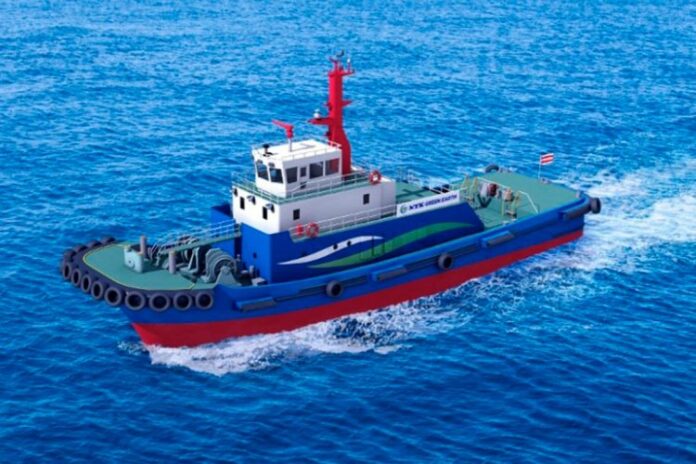
NYK has commenced conversion of the liquefied natural gas (LNG) fueled tugboat Sakigake to an ammonia-fueled tugboat (hereinafter “A-tug”) at the Oppama factory of Keihin Dock Co. Ltd. to achieve further reductions in greenhouse gas (GHG) emissions.

Sakigake is operated in Tokyo Bay by the NYK Group’s Shin-Nihon Kaiyosha.

This modification involves the development of vessels equipped with a domestically produced ammonia-fueled engine through an effort that was initiated in October 2021 by NYK, Japan Engine Corporation, IHI Power Systems Co., Ltd., and Nihon Shipyard Co., Ltd. as part of the Green Innovation Fund Project of Japan’s New Energy and Industrial Technology Development Organization (NEDO).

To replace the entire engine, including the main engine and fuel tank, the engine room will be cut to remove the existing LNG-fueled equipment and install the new ammonia-fueled machinery. The new engine has been tested at IHI Power Systems’ Ota Plant (Gunma Prefecture) to confirm virtually zero emissions from the unburned ammonia and the nitrous oxide (N2O), which has a greenhouse effect about 300 times greater than carbon dioxide (CO2).

A-tug is scheduled for delivery in June 2024. The vessel will continue to be operated by Shin-Nihon Kaiyosha to verify its decarbonization effect and operational safety as the world’s first ammonia-fueled vessel.

Norsepower, IINO Lines, and Mizuho Leasing combine to launch rotor sail leasing initiative

0

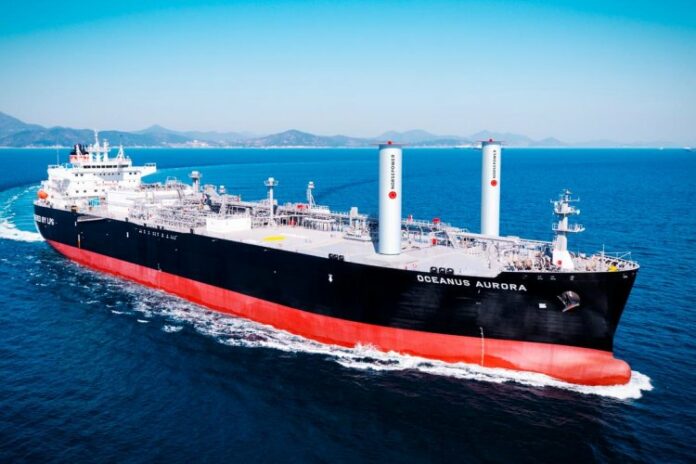
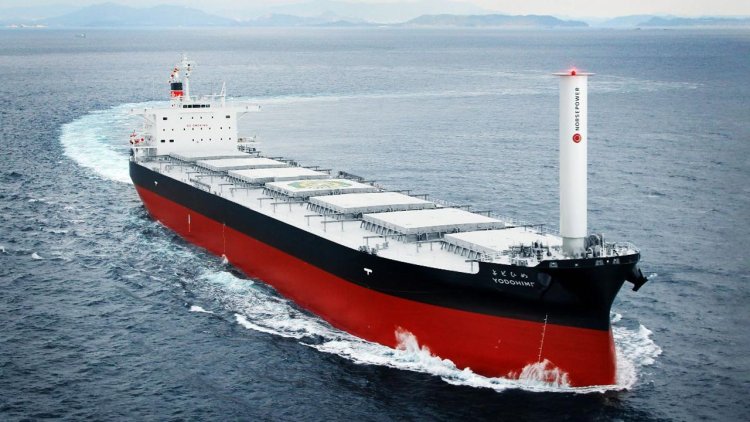
Norsepower Oy Ltd., IINO Lines, and Mizuho Leasing Company have jointly and exclusively signed a co-operation agreement to launch a ground-breaking mechanical sail leasing initiative for the Norsepower Rotor Sail™. 

This aims to increase shipping companies’ access to Norsepower’s product to help reduce fuel consumption, greenhouse gas (GHG) and other related emissions. 

The International Maritime Organization (IMO) recently set a net zero emissions target for close to 2050. However, the adoption of proven, commercialised energy efficiency products such as the Norsepower Rotor Sail™ is hindered by the traditional requirement for upfront investment. This initial investment can be a significant barrier to technology take-up for small to medium-sized shipowners and operators, despite the achievable fuel consumption, GHG and other emissions reductions. This failure means that thousands of vessels on the water today are missing out on the potential benefits of the Norsepower Rotor Sail™. The new service aims to remove these barriers and enable greater accessibility to finance Norsepower’s product. 

The initiative’s focus is to provide shipowners and operators with leasing packages for the Norsepower Rotor Sail which start at a minimum five-year term against a fixed monthly fee. 

The concept is being developed amid growing recognition that GHG and other emissions reductions with low carbon or green fuels alone prior to 2030 will be minimal. This is due to the limited availability of alternative fuels, placing an onus on energy efficiency solutions like Norsepower Rotor Sails™ to maximise energy efficiency savings.

Tuomas Riski, CEO, Norsepower, said:

“Norsepower Rotor Sails™ are now an undisputed choice for making meaningful emissions reductions and managing escalating fuel bills. Having our product as standard onboard all suitable vessels should be feasible for shipowners and operators of all sizes. That’s why we’re delighted to introduce new, competitively priced leasing services with our partners. By doing so, we could lower upfront capital requirements and encourage vessel owners to take action and upgrade their fleets.” 

Ryuichi Osonoe, Director, Senior Managing Executive Officer at IINO Lines, commented:

“We have fostered a strong relationship with Norsepower, installing its rotor sails on two of our vessels. Now, we want to make this product more accessible to the industry. We are confident that bringing together our complementary leasing and finance capabilities with Norsepower’s proven product will accelerate the shipping industry’s journey to decarbonisation.” 

Yasuhiko Hashimoto, Managing Executive Officer at Mizuho Leasing, added:

“Through our work in other sectors, we have seen first-hand how improving access to finance and providing flexible options for accessing sustainable technologies can make a real-world impact on improving environmental performance.”

The Norsepower Rotor Sail™ is a modernised version of the Flettner rotor. It uses a small amount of the ship’s electric power to rotate cylinder-shaped rotors to generate powerful thrust that saves fuel and reduces emissions. Vessel and cargo owners have already used the product for nearly 10 years, accumulating around 300,000 operating hours of verified performance data that show average fuel consumption savings of between 5-25%, or more in good conditions. These savings have been measured and analysed independently in various projects by Lloyd’s Register as well as ABB, NAPA, RISE, Chalmers University of Technology and VTT.

Nearly 30,000 vessels across tankers, bulk carriers, gas carriers, roll-on/roll-off, and passenger vessels currently on the water can benefit from Norsepower Rotor Sails™.