-5.1 C
New York
Home Blog Page 248

NYK Group to establish system for aggregating total GHG emissions

0

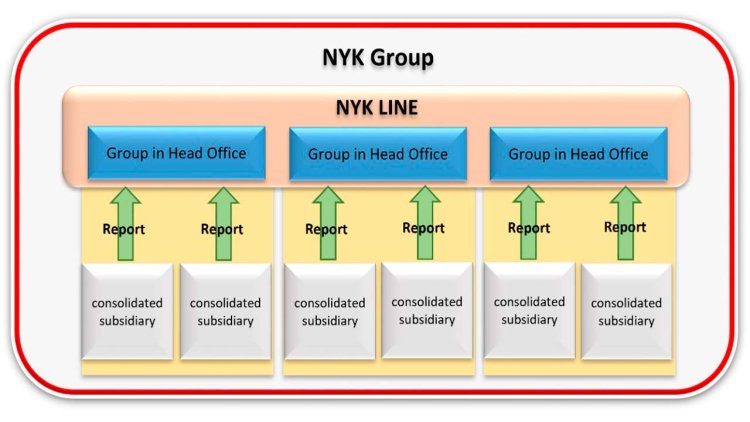
NYK Line and NTT DATA will establish a system to aggregate total greenhouse gas (“GHG”) emissions from the NYK head office and approximately 80 domestic and overseas consolidated subsidiaries by December 2023 to visualize the NYK Group’s GHG emissions in a comprehensive manner.

Of the NYK Group’s GHG emissions, all of the following have already been disclosed: Scope 1 emissions, which represent direct emissions from fuel use, etc.; Scope 2 emissions, which represent indirect emissions from electricity use, etc.; and some categories of Scope 3 emissions, which are emissions from other companies related to the activities of the business. However, appropriate aggregation boundaries and calculation methods for all Scope 3 emissions have not been established. This is one of the key challenges for achieving net-zero emissions by 2050.
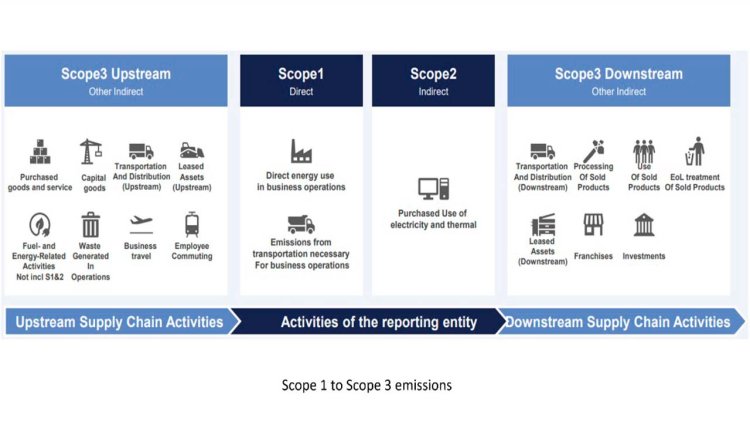
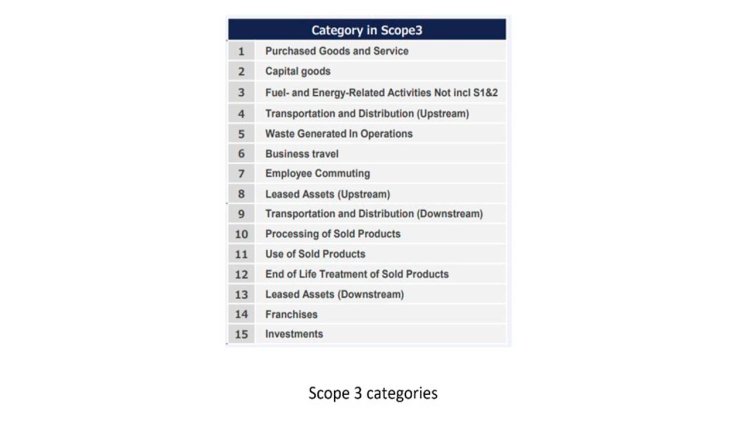
To resolve this issue, the two companies signed a GHG emissions visualization support consultancy agreement in August and have been working on Scope 3 emissions, for which a compilation system is not yet in place, including the selection of targets for compilation and the examination of a compilation system and calculation logic.

In the future, based on the studies carried out, NYK will establish a system to collect and aggregate Scope 3 emissions data while continuing to utilize the existing aggregation system. By adding Scope 3 data to Scope 1 and 2 data, NYK aims to visualize the GHG emissions of the entire NYK Group, i.e., not only the ship transport business but also all other businesses such as wholesale, manufacturing, and other transport. This will enable quantitative analysis of efforts to reduce GHG emissions and is expected to contribute to more effective GHG emission reductions.
Akira Kono, Representative Director, Executive Vice-President Executive, Officer and Chief Executive of ESG Strategy Headquarters, said:

“NYK Line Given the NYK Group’s wide-ranging business development, one of the challenges has been understanding the full scale of Scope 3 GHG. In addition to the cooperation of NYK Group companies, the establishment of an appropriate calculation system with the generous calculation support provided by NTT DATA is a vital step in our efforts to reduce GHG emissions. We will take the initiative in understanding the GHG emissions of our supply chain and lead the way toward a decarbonized society.”

Isao Arima, Director and Senior Executive Vice President, NTT DATA JAPAN CORPORATION, said:

“In international shipping, countries worldwide have agreed to reduce greenhouse gas emissions to zero by 2050, and more efforts are required to identify and reduce emissions accurately.

NYK has established a system for all its domestic and overseas operations and is working to provide accurate calculations for not only its Scope 1 and 2 emissions but also its advanced Scope 3 emissions. We are very pleased to be able to work together with NYK on this kind of project. NTT DATA will continue to support decarbonization management beyond visualization.”
ONE completes terminal acquisitions in US West Coast, Rotterdam

0

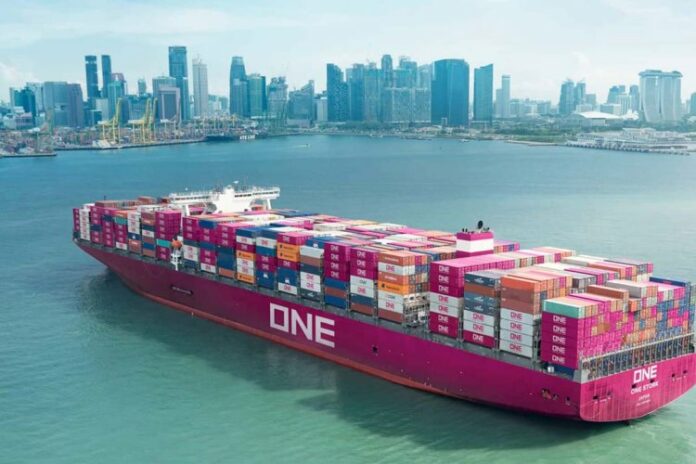
Ocean Network Express (“ONE”) is pleased to announce it has obtained all necessary regulatory approvals and completed its acquisition of a 51% stake in each of TraPac LLC (“TraPac”) and Yusen Terminals LLC (“YTI”), and a 20% stake in Rotterdam World Gateway (RWG). 

In addition to strengthening ONE’s presence in the global supply chain, these acquisitions safeguard its access to terminal capacity in key and strategic gateways, support its growth ambitions, and enhance its service offerings to customers.

TraPac and YTI are container terminal operators and vessel stevedores that provide container terminal services in Los Angeles and Oakland, California. Both terminals are equipped with the latest technology and have been serving liners at the Port of Los Angeles since 1987 and 1991 respectively. With a combined capacity of 4.3 million TEU annually, the acquisition of these two terminals further strengthens ONE’s position on the US West Coast.

RWG operates a highly automated container terminal in the Port of Rotterdam with an annual capacity of 2.6 million TEU. A stake in RWG gives ONE long-term capacity and strengthens ONE’s position as a key hub in the region.

These acquisitions are part ONE’s midterm strategy to continuously invest in its operations. Hiroki Tsujii, Managing Director of ONE’s Product & Network Division, emphasized the strategic value of these acquisitions:

“Container terminals are a critical link in the supply chain with the unique ability to cushion the impact of operating disruptions. ONE will leverage these terminals to help customers manage supply chain disruptions and improve service quality. In addition, these assets will enable ONE to deliver faster and more reliable service to our customers.”

With the completion of these three acquisitions, ONE has established a strong presence in three key strategic locations: the US West Coast (Trapac, YTI), North Europe (RWG), and South East Asia (Magenta Singapore Terminal). 

Port of Kalundborg to electrify all cranes in its box terminal

0

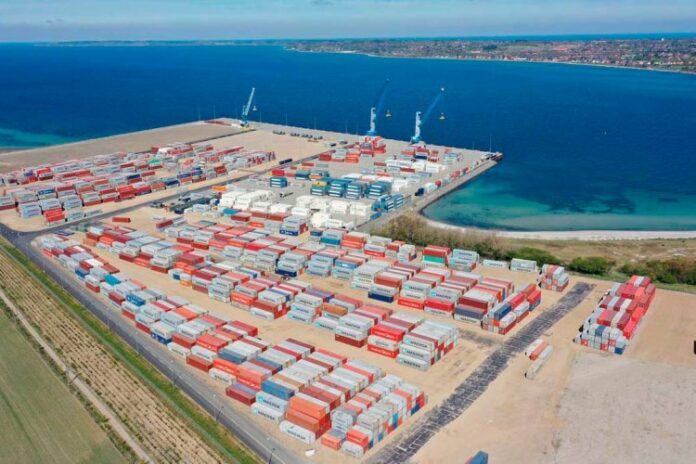
The terminal, operated by APM Terminals since March 2021, additionally announced that the container handling equipment in the short term will run on HVO100 fuel – or hydrotreated vegetable oil – reducing CO2 emissions by 90 percent. In the longer term, the terminal will look into other decarbonized solutions for the container handling equipment, for instance batteries.

The announcement was made on October 31 ahead of the first call at the terminal by Laura Maersk, the world’s first hydrogen powered container vessel. The commitment by Port of Kalundborg to electrify its cranes, and for APM Terminals to switch to HVO100 fuel means that within months, the terminal will offer customers a huge reduction in landside emissions.

Kalundborg will become one of only a handful of APM Terminals to use the biofuel, joining APM Terminals Gothenburg and P400 in Los Angeles which has used a similar renewable diesel since 2021.

Mikael Gutman, CEO APM Terminals Nordics, said the Port of Kalundborg has “vast potential” as an environmentally friendly and faster route to the important market in and around Zealand. 

“With the measures we are taking, we can offer a green gateway to the Zealand market,” said Gutman. “Not only is this unique in a Danish context – it is also unique internationally and places Kalundborg on the world map as a leader of the green energy transition,” he said.

Megamas contracts Ulstein for ship concept design

0

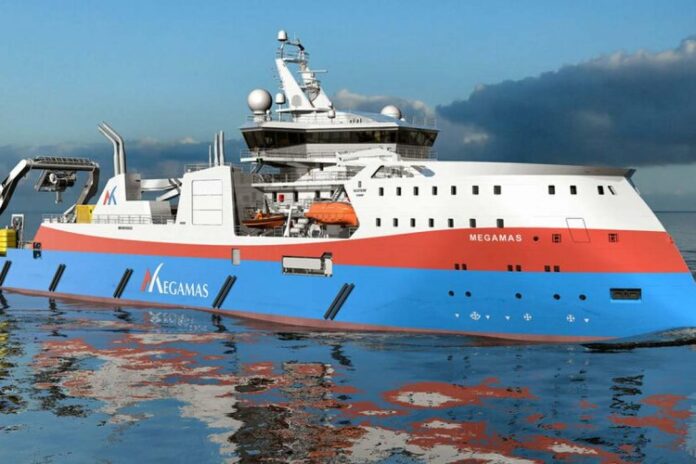
Singapore based Megamas Resources in partnership with Renaissance Technologies (RTM) has contracted Ulstein Design & Solutions AS for the design of a modern, advanced, highly integrated, and fuel-efficient cable laying and repair vessel.  

This decision was taken in view of the shortage of cable ships, as well as an aging fleet in the submarine cable industry. Megamas Resources will be introducing 2 new-builds with the first targeting to be ready for service early 2026, to fill the gap in meeting the industry demands.  

The vessel is designed for the laying and maintenance of submarine cables, both fibre-optic telecommunication cables and power cables, covering the inter-array and export power cables for offshore wind farms. 

The cable ship will be 120 metres long with a beam of 23 metres. She can accommodate 70 people, with a deadweight capacity of 8,000 tonnes, and is yet able to achieve a passage speed of 14 knots. 

The cable ship is DP2 Class and can operate in shallow water down to 15 metres. She also has a built-in advanced acoustic sonar capable of producing seabed maps quicker and with greater quality, ensuring the highest resolution data and hence reducing ship survey time and cost. 

She will be equipped with two cable tanks, of which one to be fitted with a carousel system and a guided spooler. An integral hangar enabling operations and sheltered maintenance of TROV (Trenching ROV) and an A-Frame for plough deployment over the stern enable the vessel to undertake all type of cable burial operations. 

”We are happy to announce that together with the experts from Ulstein, the submarine cable industry will soon be able to enjoy not one but two, newly built, state of the art, high-performance cable ships. We aim to deliver excellence beyond boundaries with green solutions to our existing and potential clients in the submarine cable industry,” says Captain Tiew Sien Kheng, Megamas Resources Managing Director.

“The cable-laying industry is growing, and we are happy to provide the concept design for two new vessels in this segment. Our vision is to create tomorrow’s solutions for sustainable marine operations and to secure the shipowner long-term competitiveness. We are dedicated to providing designs for cost-efficient vessel operations, taking into account the safety and comfort of the crew and the efficiency of operations”, states Rolf Petter Almli, sales manager at Ulstein Design & Solutions AS. 

Team Electric expands in Poland with Remontowa agreement

0

The three-year agreement coincides with the Finnish turnkey engineering solutions provider opening Team Electric (Poland), Gdynia as a subsidiary.

With capacity for 4100 lane metres and 400 passengers, the three ships represent an auspicious debut for Remontowa as a newbuilding yard, given their use of liquefied natural gas as a fuel and the integration of battery power and state-of-the-art hybrid propulsion systems. Two will be operated by Unity Line, with the third for Polferries. The first 195.6m ship is due delivery by the end of 2025.

On each Polsteam ship, Team Electric personnel will project manage bridge systems installation (including navigation and satcomms), as well as providing solutions for air conditioning rooms, the emergency generator room, crew accommodation and across several ship-wide applications.

“This is a decisive step for Team Electric in Poland and establishes a strategic relationship with Remontowa,” said Mattias Jörgensen, CEO, Team Electric. “Electrical systems are a key deliverable on any newbuilding, repair or conversion project. Conversations we are having with clients indicate that the Team Electric-Remontowa combination will also be a highly attractive proposition where energy efficiency projects for existing ships are concerned.” Remontowa’s ship repair and conversion activities currently lead to around 200 ships docking per year.

Team Electric’s new Polish subsidiary will be managed by Dawid Janik, Director Procurement, Team Electric, whose tasks include simplifying and enhancing hiring arrangements for workers domiciled in Poland, whether engaged at home yards, at other European yards or beyond.

“Establishing Team Electric S.A. as a separate entity in Poland made perfect sense at this time, and it will strengthen the ties we have developed over many years with Poland’s talented shipyard workforce, to develop employment opportunities locally and as a core part of the skills pool supporting our global activities,” said Jörgensen.

New high-speed low-draft landing craft in operation on Australia’s Great Barrier Reef

0

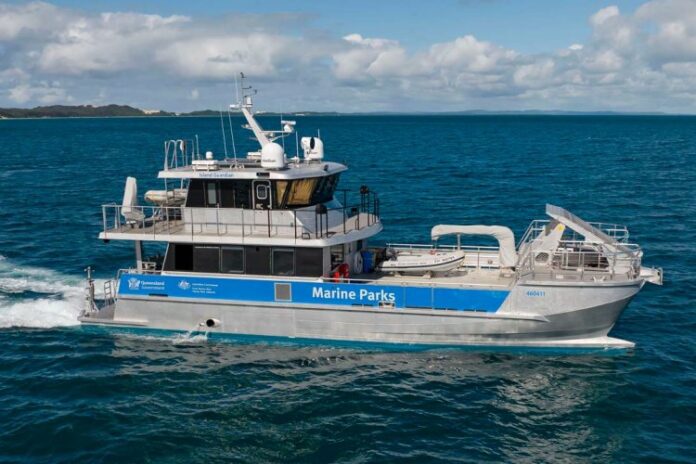
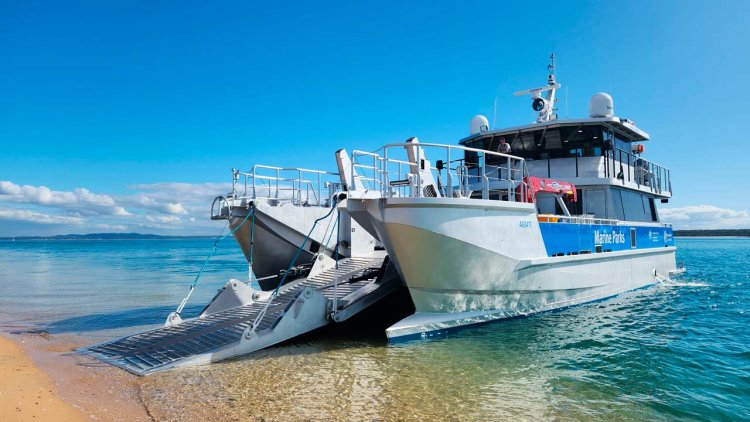
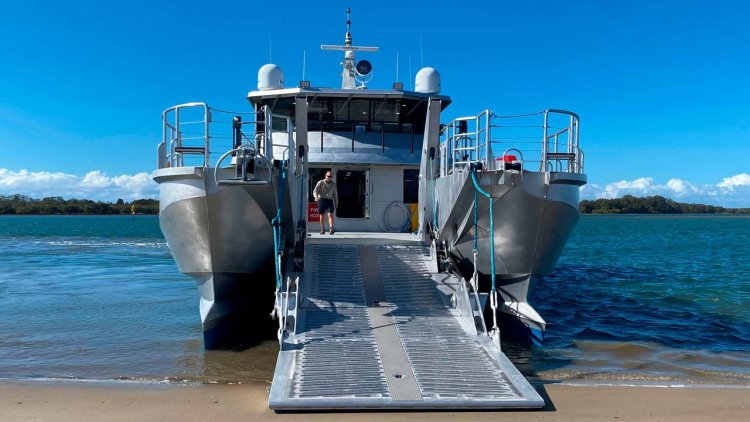
Island Guardian, a new high-speed low-draft landing craft designed by leading digital shipbuilder Incat Crowther, has been delivered to the Great Barrier Reef Joint Field Management Program in Australia. 

The Great Barrier Reef Joint Field Management Program is delivered jointly by the Great Barrier Reef Marine Park Authority and the Queensland Parks and Wildlife Service, part of the Department of Environment and Science. Constructed by Norman Wright & Sons in Queensland, Island Guardian is the fourth Incat Crowther-designed vessel delivered to the program.

Island Guardianhas been designed specifically to allow the transportation of equipment and vehicles to remote areas of the reef. The vessel can carry up to 7.5 tonnes of deck cargo including vehicles such as four-wheel drives, trailers, excavators, compact track loaders or small tractors.

Cargo loading is facilitated by an Incat Crowther custom designed bi-folding vehicle ramp on the bow. In conjunction with a lowdraft of only three and a half foot and a reinforced forefoot, the vessel can safely land on a large range of gradients, including beaches or boat ramps. A deck crane has also been fitted with the ability to lift a payload of 680kg at a 7.5 metre radius.

The robust engineering of the bow ramp also allows Island Guardian the capability to safely rescue and release marine life weighing up to 600kg.

The vessel has a very economical cruising speed of 20 knots and capability to travel at a maximum speed of 25 knots. The hull has been designed to incorporate the bow ramp while not limiting the ability to combat rough seas from south-east trade winds. Propeller tunnels facilitate the use of efficient propulsion whilst maintaining low draft for beach landings.

Island Guardian can transport up to 24 personnel in addition to its cargo. The main deck has a galley, crew lounge, crew mess, and bathroom. Twin crew berths are located on the main deck, port hull and starboard hull. Additional seating for service personnel is located on the working deck via folding seats. Multiple deck lockers add to the vessel’s functionality.

The wheelhouse features a full walkaround and has been designed to ensure excellent visibility of the working deck and bow ramp from both its central helm position and exterior wing stations. The wheelhouse features a single masters berth, ample storage and crew seating. The exterior of the wheelhouse deck features the vessel’s rescue boat, additional freezer space, a laundry and a bathroom.

Incat Crowther’s Technical Manager Dan Mace said: 

“The brief we received from the Great Barrier Reef Joint Field Management Program was a complex, yet exciting one. The challenge was to deliver a vessel with several unique elements to enable it to operate safely and efficiently in one of the most pristine environments in the world”.

“Our goal was to design a low-draft vessel that could deliver valuable cargo on high-speed transits in rough seas, land on a range of beaches and boat ramps, and support rescue and recovery missions all whilst minimising impact on the environment. Our team collaborated closely with the client to achieve this, and we are pleased that the customer is incredibly happy with the final product.”

PASM and EnBW sign deal for He Dreiht offshore wind farm

0

Power and Air Condition Solution Management GmbH (PASM), a wholly owned subsidiary of Deutsche Telekom AG, is expanding its renewable energy PPA portfolio.

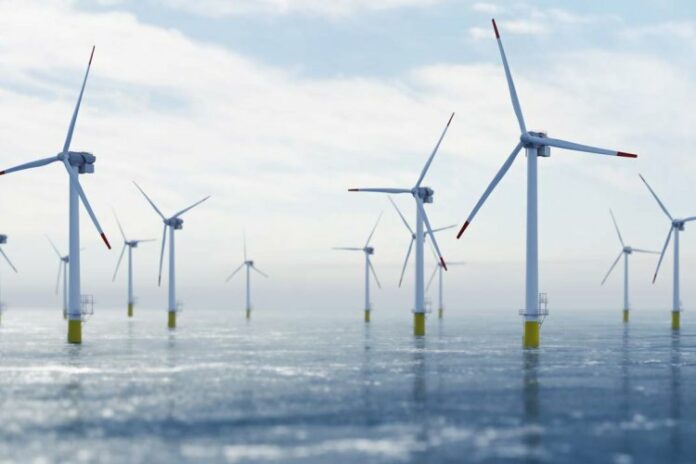
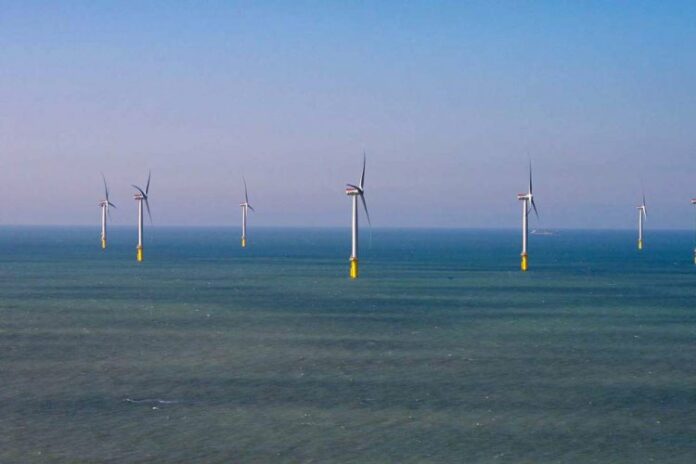
Deutsche Telekom’s in-house energy provider has signed a long-term power purchase agreement (PPA) with energy group EnBW for power from the 960 megawatt (MW) He Dreiht offshore wind farm. Under the PPA with EnBW, PASM will source 100 MW from the new wind farm in the German North Sea. EnBW will supply the North Sea wind energy over a 15-year contract term.

Bernd Schulte-Sprenger, Managing Director of PASM:

“Our partnership with EnBW under the power purchase agreement (PPA) for the He Dreiht wind farm enables us to jointly advance the energy transition and make a good contribution towards achieving our climate targets.”

Located approximately 90 kilometers northwest of the island of Borkum and approximately 110 kilometers west of Heligoland, the He Dreiht wind farm is expected to be operational by the end of 2025. EnBW won the rights in Germany’s first offshore tender in 2017 with a zerocent bid, setting a new trend in the offshore market. This subsidy-free offshore wind farm is currently one of the largest energy transition projects in Europe. It will also be the first to use turbines with a capacity of 15 MW each.

PPAs are an increasingly important factor in the energy transition. 

“We can only achieve the energy transition by working together. PPAs serve as a tool to this end. They help companies to achieve ambitious climate targets and provide developers of renewable projects with a reliable source of funding. This benefits the economy and the climate in equal measure,” explained Dr. Georg Stamatelopoulos, Chief Operating Officer Sustainable Generation Infrastructure at EnBW. “In PASM, we have gained a further dependable partner for our He Dreiht offshore wind farm, and we have now secured more than half of He Dreiht’s capacity with PPAs.”

Construction of the EnBW He Dreiht offshore wind farm is expected to start in May 2024.

Ørsted: US projects Ocean Wind 1 and 2 will not be built

0

South Fork Wind Offshore Construction Continues, with Turbine Component Loadout Underway

“Macroeconomic factors have changed dramatically over a short period of time, with high inflation, rising interest rates, and supply chain bottlenecks impacting our long-term capital investments,” said David Hardy, Group EVP and CEO Americas at Ørsted. “As a result, we have no choice but to cease development of Ocean Wind 1 and Ocean Wind 2. We are extremely disappointed to have to take this decision, particularly because New Jersey is poised to be a U.S. and global hub for offshore wind energy. I want to thank Governor Murphy and NJ state and local leaders who helped support these projects and continue to lead the region in developing American renewable energy and jobs.” 

The decision to cease development of Ocean Wind 1 and Ocean Wind 2 is part of an ongoing review of Ørsted’s U.S. offshore wind portfolio with an update planned for its Q4 2023 results announcement. The company remains committed to the U.S. renewable energy industry, including offshore wind and land-based technologies. The board decided today to take FID on Revolution Wind, a 50/50 joint venture with Eversource. 

“With our final investment decision, we’re solidifying our commitment to building our second commercial-scale offshore wind farm in the United States, helping to deliver more American energy and American jobs,” Hardy added. “I want to thank our Ørsted employees who helped achieve FID for Revolution, as well as our team at South Fork Wind building New York’s first offshore wind farm, our New Jersey team that worked tirelessly to advance these projects, and our land-based team delivering across our portfolio. As we manage and deliver in a challenging market, our team of experts sets itself apart.”

Included below is a summary of the company’s offshore wind energy projects in the U.S. 

QatarEnergy LNG delivers the 1,000th LNG shipment to South Hook LNG Terminal

0

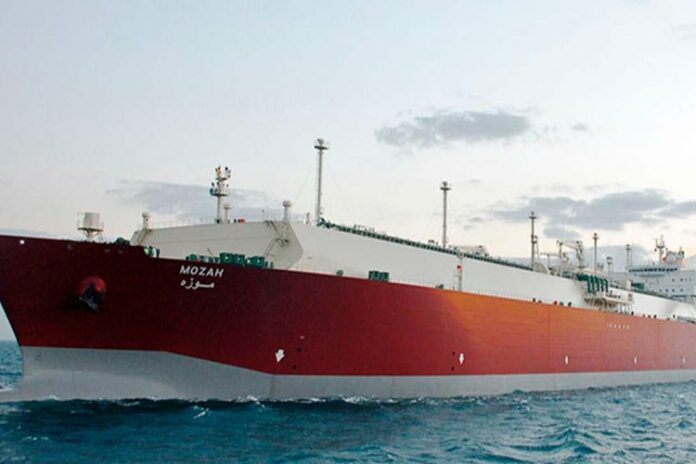
QatarEnergy LNG has delivered the 1,000th LNG shipment to the South Hook LNG Terminal at Milford Haven in the United Kingdom.

The landmark delivery was made by the Q-Max LNG carrier “Mozah,” which already has another landmark achievement to its name: the 10,000th LNG cargo from Ras Laffan Port in 2006.

Commenting on this occasion, His Excellency Mr. Saad Sherida Al-Kaabi, the Minister of State for Energy Affairs, the President and CEO of QatarEnergy, said:

“The 1,000th LNG delivery is another strong affirmation of our commitment to ensuring a reliable supply of cleaner energy to our customers around the world, which is vital for a sustainable energy transition.”

H.E. Minister Al-Kaabi said:

“The South Hook LNG terminal symbolizes the importance of Qatari LNG to one of the world’s most dynamic and vibrant economies, as well as the long and historic relations that tie Qatar and the UK. We are thankful to our partners ExxonMobil and TotalEnergies as well as to the Welsh authorities for their continuous support. We are also grateful to the efforts by QatarEnergy LNG and Nakilat for their safe and reliable LNG supply and shipments.” 

With the arrival of the 1,000th vessel, South Hook Terminal has received and processed almost 100 million tonnes of LNG, which is the equivalent of supplying natural gas to every household in the UK for almost 5 years.

Located on the Pembrokeshire coast near Milford Haven in Wales, South Hook LNG Terminal became commercially operational in 2009 with the arrival of its commissioning cargo on board the QFlex class LNG carrier “Tembek”. 

The terminal has the capacity to process up to 20% of the United Kingdom’s needs of natural gas. 

Wärtsilä debuts ultra-low emission version of the 31DF engine

0

Technology group Wärtsilä has introduced a new ultra-low emissions version of its already efficient Wärtsilä 31DF engine. Whilst operating on LNG, this new version can further reduce methane emissions on a 50 percent load point by up to 56 percent and nitrogen oxide (NOx) by up to 86 percent.

On a weighted average, this new technology can reduce methane emissions by 41 percent more than the standard Wärtsilä 31DF engine, which has already the lowest emission levels on the market.

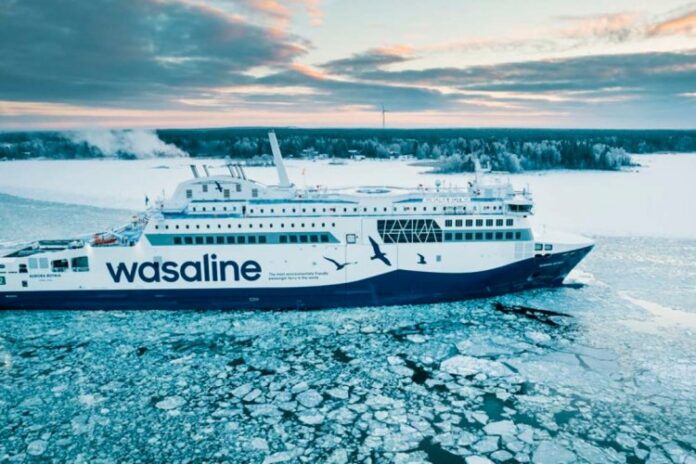
The new version, which is applied on one of the four engines on board Wasaline’s Aurora Botnia ferry, has already helped the Finnish-Swedish ferry operator further reduce the Aurora Botnia’s methane emissions by 10 percent. As part of the EU co-funded Green Ray and SeaTech projects*, Wärtsilä piloted the ultra-low emissions concept onboard the Aurora Botnia with exceptional results verified through an independent study conducted in December 2022 by VTT, the Technical Research Centre of Finland. Encouraged by the positive results, Wärtsilä has now launched the new ultra-low emissions version of the Wärtsilä 31DF engine to the commercial market.

This latest collaboration forms part of a long-term partnership between Wärtsilä and Wasaline to reduce emissions onboard the Aurora Botnia, the world’s most environmentally friendly RoPax ferry today.

“We are very committed to decarbonisation, and we have worked closely with Wärtsilä to make sustainable shipping a reality. It is a goal-oriented partnership that benefits both companies, as well as the industry as a whole. We have been pleased to allow the ‘Aurora Botnia’ to be utilised as a floating laboratory, and we are excited to see the success of this latest Wärtsilä technology breakthrough,” commented Peter Ståhlberg, Managing Director of Wasaline.

Launched in 2015, the Wärtsilä 31DF engine platform is widely recognised for its exceptional fuel economy, high performance, and minimal GHG impact. The engine, as a standard version, already meets today’s regulatory requirements. The new version will enable operators to go even further in reducing methane emissions, helping to futureproof their vessels in the longer term against potentially tightening global requirements. What’s more, improving dual fuel technology to enable methane emissions reduction will have a major impact on the long-term viability of LNG as a marine fuel.

“Our work around reducing methane slip and GHG emissions is part of Wärtsilä’s effort to continuously improve efficiency and reduce emissions of our products, and this new innovation is one more very important step along the road to decarbonisation,” commented Stefan Nysjö, Vice President of Power Supply, Wärtsilä Marine Power.

Nysjö continued: “The building of an LNG fuel infrastructure has been an important factor in shipping’s transition towards cleaner operations, and Wärtsilä continues to create solutions that support this journey. Our focus has always been to improve and optimise existing solutions, and to develop exciting new ones. With this latest introduction, we are clearly delivering on this commitment.”

Although methane slip from engines is a relatively small amount, from a percentage standpoint, it is significantly more potent than CO2 – up to 28 times greater. Across the shipping industry, cutting methane emissions is one of the most effective ways to decrease overall GHG emissions from engines over the next 10 years, complementing other efforts to reduce CO2 emissions.