-5.1 C
New York
Home Blog Page 247

DEME secures several dredging contracts in Asia

0

At Kakinada port in India, where DEME has frequently been performing dredging works, the newly awarded scope includes deepening of the existing berths, turning circle and the inner- and access channel to a depth of 18 m at the deepest point.

Works will kick off in Q1 2024 with hopper dredgers and run until the second half of 2024.

On behalf of the Jawaharlal Nehru Port Trust (JNPT) in Mumbai,the leading container handling port in India, DEME will execute maintenance dredging works at the main harbour access channel and Jawaharlal Nehru Port. This will be carried out by DEME’s hopper dredgers and a water injection dredger in 2023-2024.

Meanwhile in Goa, DEME has already successfully carried out the first campaign of maintenance dredging at Mormugao Port under a multi-year award until 2026.

DEME is also returning to the Maldives and Malaysia. In the Maldives dredging works will be carried out for two resorts located at the Ranfaru Reef and the Vaavedhdhifaru Lagoon. Works will start in Q4 2023 and will continue during the first half of 2024. In Samalaju Port in Malaysia, DEME will execute maintenance dredging works in the access channel.

Three new Romanian coastal protection projects awarded to Van Oord

0

Van Oord has been awarded three new contracts to reinforce the Romanian coast, with a combined value of approximately EUR 200 million. 

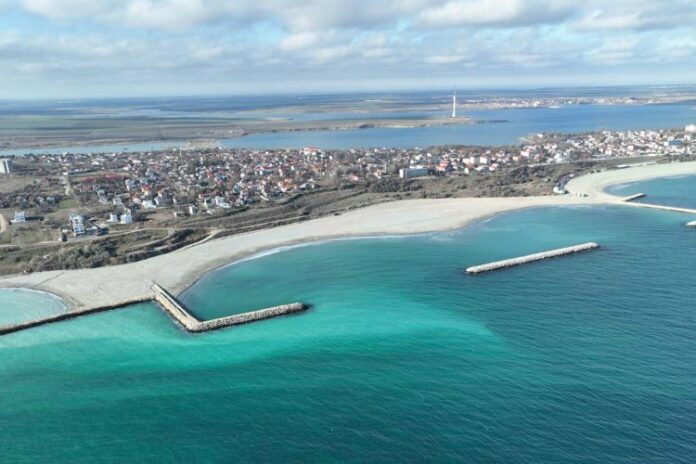
This time the Administratia Bazinala de Apa Dobrogea-Litoral (ABA-DL) awarded Van Oord to design and construct 6.7 km of resilient coastline for the Romanian seaside resorts of Costinesti, Mangalia-Saturn and 2 Mai. 

The projects are an addition to similar projects Van Oord is executing in the region, like in Eforie. With this new award the total length of the Romanian coastline reinforced by Van Oord exceeds more than 26 km.  

To protect these popular coastal areas from further erosion by the waves of the Black Sea, Van Oord will design and construct new groynes and beaches. Several of the current breakwaters will be removed, and redeveloped to make way for more nature-friendly alternatives. The construction of the groynes is envisaged to start in 2024, after a design phase of about 12 months. Van Oord will deploy a trailing suction hopper dredger to restore the beaches. The project is expected to be completed in 2026.

Van Oord’s ambition, to have a net-positive impact on the world, is rooted in its core purpose and values. On this project, in addition to reinforcing the coastline, space will be created for nature conservation and recreation. As part of the work scope, the value of marine habitats will be increased trough artificial reefs and bio-structures. The replantation of over 64  hectares of varying species of seagrass and algae on the seabed will stimulate and enrich marine life. Similar initiatives have already been successfully implemented in the earlier projects in the area and tie in very well with Van Oord’s vision and strategy on sustainability and climate adaptation.

Kongsberg selected by Svitzer Australia to deliver world-class simulation capability

0

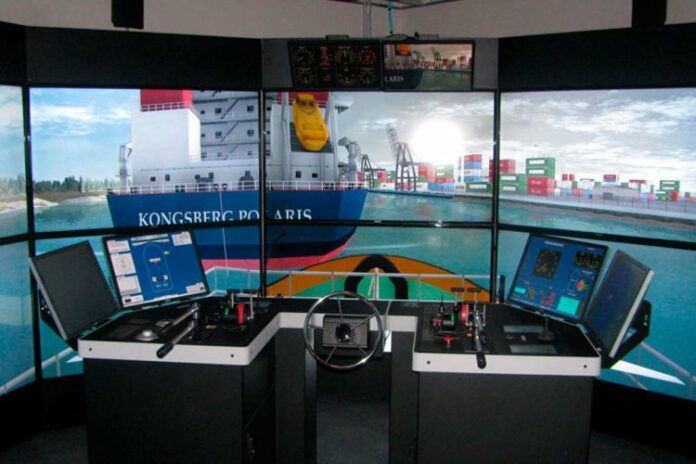
Svitzer has selected Kongsberg Digital to deliver state-of-the-art simulators in support of crew training at its Port of Newcastle base in Australia. 

The new simulator and training facilities reflect  Svitzer’s ongoing investment into world-class towage infrastructure across Australia and commitment to upskilling future generations of Australian seafarers. The contract comprises the delivery of a groundbreaking training suite in Q2 2024. Notably, the delivery encompasses a full-mission 360° K-Sim Navigation simulator configured as a tug bridge, and a part-task 180° K-Sim Navigation ship’s bridge simulator. It also includes an advanced Instructor System with a CCTV system for monitoring and debriefing, comprehensive training of the Instructors, and a robust warranty for the entire system.

Designed for Svitzer’s Tug Master training on the new TRAnsverse Tug, this state-of-the-art simulator suite will be installed at their operations facility in Newcastle. Not only will it serve the training needs of harbor pilots and tug masters from Newcastle port, but it will also cater to professionals worldwide.

David Phillips, Chief Operating Officer, Svitzer Australia, said,

“We are committed to investing in safe, reliable, and efficient maritime solutions and to providing the latest and most advanced training and technology for pilots, tug masters, and other maritime professionals. Kongsberg Digital met all our criteria in terms of quality, price, delivery time, support, and warranty. Their collaboration with AMC Launceston, which has modeled the Maersk/Robert Allan TRAnsverse Tug, brings added value and we are looking forward to working with them closely on this project and future opportunities.”

Peering into the future, there are further opportunities to connect the simulator in Newcastle with other simulators around Australia and the world, pioneering Pilot/Master integrated training across distant locations.

Are Føllesdal Tjønn, Managing Director of Maritime Simulation at Kongsberg Digital, expressed his enthusiasm:

“Svitzer Australia represents a fresh partnership for Kongsberg Digital. Their drive to leverage integrated simulation training across extended distances showcases the potential for experts in diverse domains to collaboratively participate in a singular simulated exercise, enhancing realism and training efficacy.”

U.S. Navy accepts delivery of Ship to Shore Connector, Landing Craft, Air Cushion 108

0

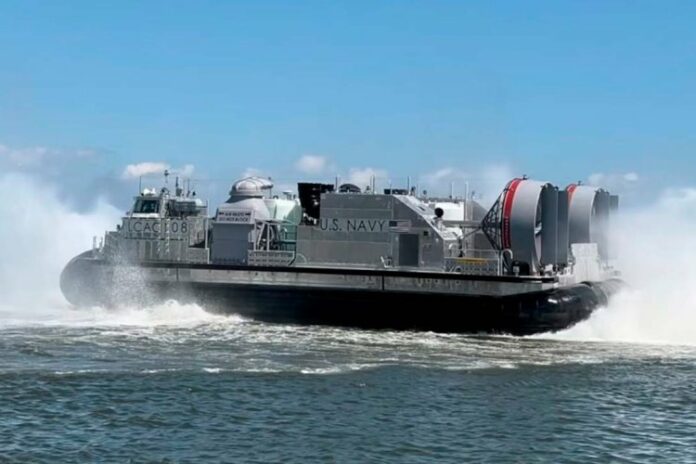
The Navy accepted delivery of the next-generation landing craft, Ship to Shore Connector (SSC), Landing Craft, Air Cushion (LCAC) 108, from Textron Systems, Nov. 3.

The delivery comes after successful completion of acceptance trials conducted by the Navy’s Board of Inspection and Survey, which tested the readiness and capability of the craft to effectively meet its requirements. Delivery represents the official transfer of the ship from the shipbuilder to the Navy.

“These next-generation craft provide our Navy and Marine Corps team with essential agility and speed to complete their missions,” said Capt. Jason Grabelle, program manager for Amphibious Assault and Connectors Programs, Program Executive Office (PEO) Ships. “SSC provides the fleet with agility and speed to assist with current and future mission requirements.”

LCACs are built with configurations, dimensions, and clearances similar to the legacy LCACs they replace – ensuring that this latest air cushion vehicle is fully compatible with existing, well deck-equipped amphibious ships, the Expeditionary Sea Base and the Expeditionary Transfer Dock. LCACs are capable of carrying a 60 to 75-ton payload. They primarily transport weapon systems, equipment, cargo, and assault element personnel through a wide range of conditions, including over-the-beach.

Textron Systems is currently in serial production on LCACs 109-120.

As one of the Defense Department’s largest acquisition organizations, PEO Ships is responsible for executing the development and procurement of all destroyers, amphibious ships, special mission and support ships, boats and craft.

Vattenfall and TKF sign framework agreement for 66 kV inter-array cable systems

0

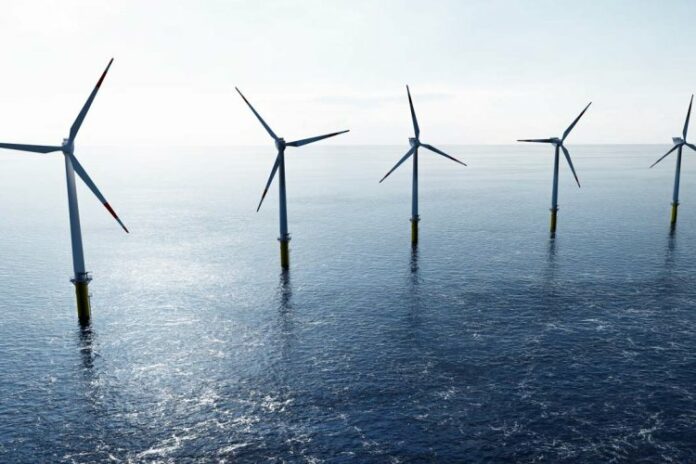
Vattenfall and TKF announce to have signed a multi-year partnership for the supply of inter-array cables for offshore wind farms in Europe. 

The framework contract concerns a multi-year single source agreement and will take effect immediately. The first project to be called off will be for the German Nordlicht cluster. The contract is initially signed for three years and can be extended by five more years

During the procurement process a high focus has been put on sustainability measures and TKF has made specific commitments that will help to reduce the CO2 impact and increase circularity of our cables, such as the use of low-carbon aluminium and recycled copper for the cables’ conductor material.

Catrin Jung, Head of Offshore Wind at Vattenfall, said:

“At Vattenfall, we are working for fossil freedom and offshore wind farms play an important role in realising our ambitions. We are pleased that in TKF we have found a partner that provides innovative technology while committing to the reliability and sustainability of the offshore electricity network. With this framework agreement we are taking a major step in the synergy of project specifications and therewith in the reliability and efficiency of wind farm projects.”

Alexander van der Lof, CEO TKH Group, said:

“We are excited to announce this multiple year agreement with Vattenfall for our subsidiary TKF. After a successful cooperation with Vattenfall in the Hollandse Kust Zuid 1+2 projects, we are looking forward working together in the coming projects. TKF has invested significantly in electrification with expansions in capacity for state of the art offshore wind subsea cable solutions. With this important milestone we confirm our strong position and our key role in empowering a sustainable future with our innovative and sustainable cable solutions.”

Kongsberg and Solstad Offshore to collaborate on decarbonisation technologies

0

Kongsberg Maritime will work with Solstad to increase fuel efficiency and reduce greenhouse gas emissions on Solstad vessels. 

Kongsberg Maritime and Solstad Offshore have entered into a collaboration agreement to identify and trial decarbonisation technologies across Solstad’s fleet.  

The companies will work together to identify and utilise Kongsberg Maritime products and services to increase fuel efficiency and reduce greenhouse gas emissions on Solstad vessels. The agreement will also investigate the use of other new, digital technologies to drive operational efficiency.

The Solstad fleet comprises about 40 modern ships operating worldwide, and all ships have equipment from Kongsberg Maritime onboard. The company is one of the largest offshore shipping companies in the World.

“Kongsberg Maritime are excited to continue our historic collaboration with Solstad Offshore,” said James Poulton, SVP Aftermarket Sale Kongsberg Maritime. “Close partnerships are key to developing the next generation of integrated technologies so that we together can support the goal of decarbonisation within the maritime industry.”

Sustainability Director Tor Inge Dale of Solstad emphasized,

“Collaboration is the cornerstone of the ongoing energy transformation process. Kongsberg and Solstad share a rich history of partnering to advance and enhance technology, and this partnership will now extend to our collective efforts in decarbonisation.”

Van Oord awarded contracts for new offshore wind projects in Baltic Sea and Taiwan

0

Van Oord has been awarded two new offshore wind projects: Baltic Power in the Baltic Sea and Greater Changhua 2b and 4 in Taiwan. The contracts have a combined value of more than EUR 500 million. 

The Baltic Power offshore wind farm is being developed by a joint venture between ORLEN (Poland) and Northland Power (Canada). The wind farm will be located in the Polish Exclusive Economic Zone of the Baltic Sea, 23 kilometres from shore. The wind farm will feature 76 wind turbines with a total capacity of 1.14 GW and will ultimately supply renewable energy to more than 1.5 million households in Poland. Baltic Power will be Poland’s first offshore wind farm and an important step in the country’s transition to renewable energy.

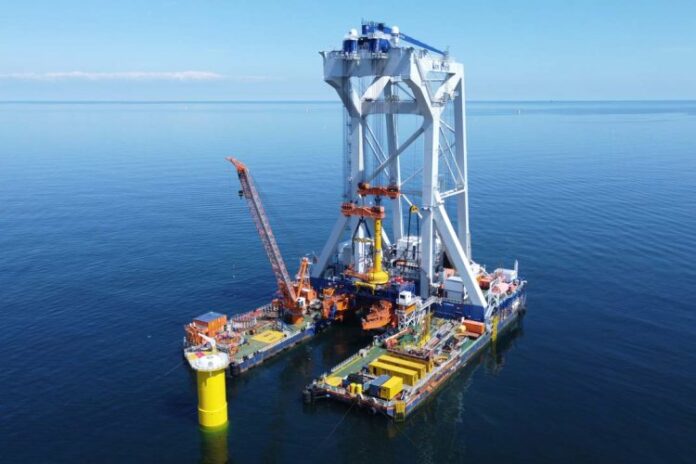
Van Oord will transport and install 78 foundations, 76 WTG foundations (each one consisting of a monopile and a transition piece), and an additional two foundations for offshore substations. To install the monopile foundations, Van Oord will deploy its heavy-lift installation vessel Svanen. The 76 transition pieces will be installed by a third-party DP installation vessel. The transport and installation of the foundations is scheduled to start in 2024 and is expected to be completed in summer 2025. 
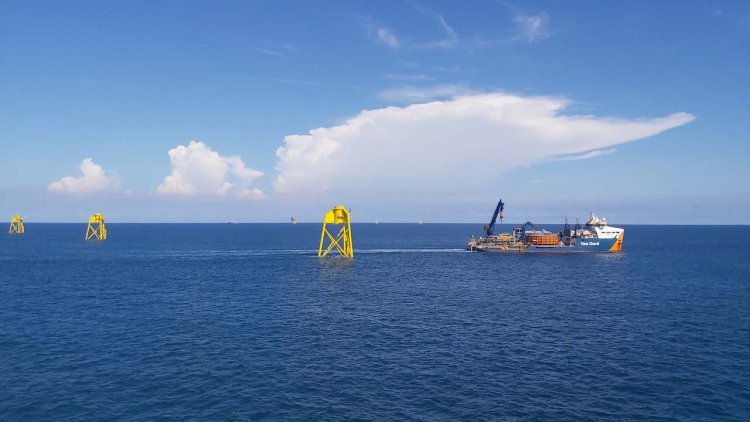
The Baltic Sea holds enormous potential for offshore wind in Europe, thanks to its shallow waters, strong winds and other favourable conditions. This makes it possible for the Baltic states to embark on an effective energy transition. The Svanen is specifically designed to cope with conditions in the Baltic Sea, including the challenging soil composition, and has proven its suitability on a large number of projects there, including Baltic 2, Arkona, Danish Kriegers Flak and Baltic Eagle.

Like the Baltic Sea, Taiwan also has an ideal environment for developing offshore wind energy due to its geographical location and weather conditions. Van Oord recently signed on to the Greater Changhua 2b and 4 project. These wind farms are being constructed by Ørsted, 50 kilometres off the west coast of Taiwan. With a total capacity of 920 MW, they will supply renewable energy to approximately 1 million Taiwanese households per year.
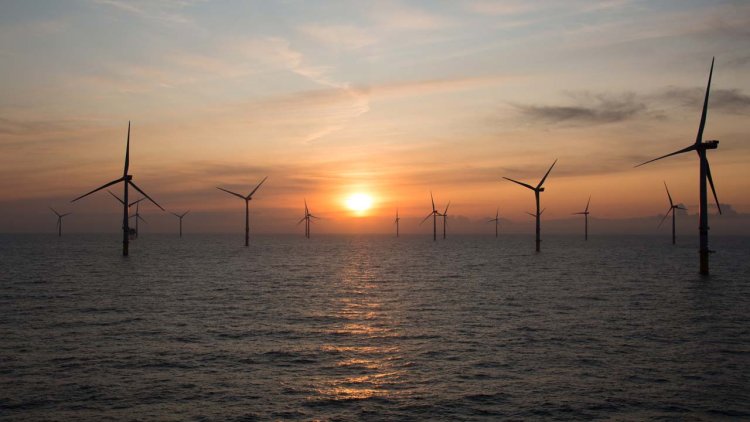
Van Oord will be responsible for the transport and installation of three export cables, with a total length of approximately 175 kilometres. To transport and install the cables, Van Oord will deploy its dedicated cable-laying vessel Nexus. Van Oord’s own trencher Dig-It will bury the cables to the required depth. To pre-excavate cable joint pits down to the necessary burial depth, Van Oord will deploy its LNG-powered hopper dredger Vox Apolonia. The works are scheduled to start in 2024 and expected to be finished in 2025.

The Greater Changhua wind farms are familiar territory for Van Oord. Earlier this year, the company successfully completed the cable installation works at Greater Changhua 1 and 2a. Van Oord was responsible for the transport, installation and burial of the inter-array and export cables. With dedicated professionals, highly specialised equipment and a local supply chain and workforce, Van Oord is committed to further developing the Taiwanese offshore wind farms.

Arnoud Kuis, Managing Director Offshore Energy at Van Oord, said:

“At Van Oord we are committed to the large-scale rollout of offshore wind. We are therefore proud that two clients trust Van Oord to support their development projects in the offshore wind industry.”

Wartsila to supply cargo handling systems for LPG carrier vessels in South Korea

0

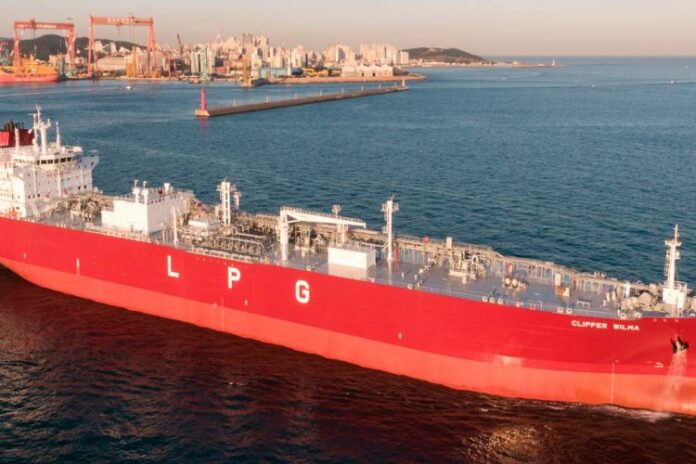
Technology group Wärtsilä will supply the Cargo Handling Systems for five new very large LPG carrier vessels to be built at the Hyundai Heavy Industries (HHI) yard in South Korea. The order with Wärtsilä was booked in Q3, 2023.

The ships have been contracted by Norwegian ship owner Solvang in a joint venture with Gunvor Group Ltd in Geneva. The VLGCs are of Panamax size and form the next generation of eco-vessels.

“Being a trusted partner to our customers is something we have worked hard to achieve. It comes through delivering efficient and reliable solutions, and by providing lifecycle support. We are, therefore, very pleased to secure this order and continue our good relationship with both HHI and Solvang,” commented Patrick Ha, Sales Manager, Wärtsilä Gas Solutions. 

The vessels will have a cargo carrying capacity of 88,000 m3. The Wärtsilä equipment is scheduled for delivery to the yard commencing in early 2025, and the first ship is expected to commence operations towards the end of 2026.

Gas discovery by Gina Krog in the North Sea

0

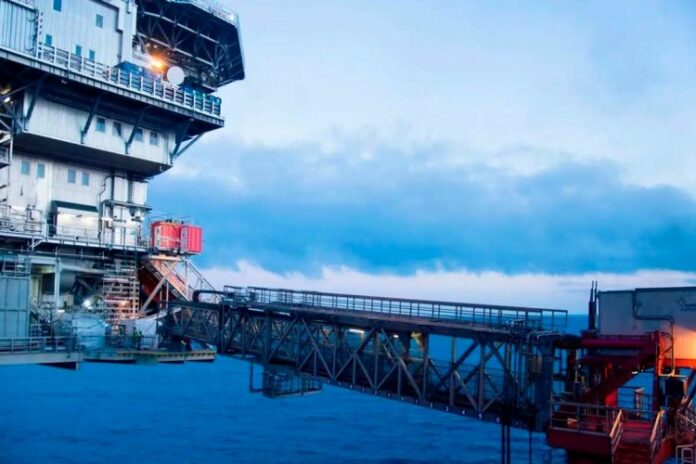
The recoverable volumes are estimated to be between5 og 16 million barrels of oil equivalent. The well was drilled by the Noble Lloyd Noble rig. Equinor is the operator with KUFPEC and PGNiG as partners.

The discovery is considered commercially viable, partly because it can make use of existing infrastructure by the Gina Krog platform. The well has been drilled as a development well with exploration target, and the plan is to put the well into production during the fourth quarter of 2023.

Preparations have already been carried out on Gina Krog so that the well can quickly start production.

“The discovery will help extend the lifetime and strengthen the profitability of Gina Krog and is important for the entire Sleipner area. It will quickly bring new gas to Europe with good profitability and low CO2 emissions from production. Gina Krog is already electrified and has spare capacity. This shows how important it is to explore in mature areas on the Norwegian continental shelf,” says Camilla Salthe, senior vice president for field life extension in Equinor.

When the energy crisis hit in 2021, there was close collaboration with Norwegian authorities to deliver the maximum amount of gas to Europe. The Gina Krog partnership significantly increased its gas export by exporting gas previously used for injection for oil extraction. At the same time, it triggered a need to accelerate projects that can extend the lifetime of the field. Together with the Eirin development, the discovery is an important part of this work.

Equinor is the operator (58.7%) with KUFPEC Norway AS (30%) and PGNiG Upstream Norway AS (11.3%) as partners.

This is the first commercial discovery in the Gina Krog license since 2011.

LNG bunker vessel, Alice Cosulich sets sail for Europe from Qidong, China

0

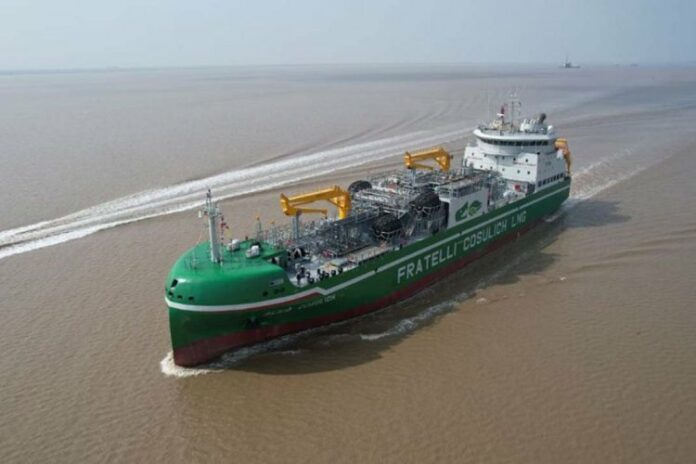
Alice Cosulich will be operational in Europe from early December 2023 and will be immediately busy facilitating supply. The bunkering vessel has an LNG and liquified biomethane (LBM) bunkering capacity of 8,200 m3 and will operate predominantly in the ARA area for now. 

The addition of Alice Cosulich to Titan’s fleet increases the flexibility of its clean fuel operations. This new addition to the fleet will enable better loading efficiencies – larger fuel parcels can be delivered and better combinations for various bunkering can be made, making scheduling easier with less dependence on reloading slots.

In addition, Alice Cosulich is well-suited to performing more complex operations like cooldowns and gas-ups of various types of vessels, from car carriers and container vessels to cruise ships and tankers.

Michael Schaap, Commercial Director Marine at Titan commented:

“We warmly welcome Alice Cosulich to our expanding fleet. As the European market for alternative fuels continues to grow, she will significantly enhance our LNG and LBM bunkering capabilities, enabling us to supply LNG to even larger vessels. Alice Cosulich is one of the most versatile vessels in the fleet, ensuring we can deliver 2 larger parcels, supply to membrane containment systems, and more complex operations like cooldowns and gas-ups.”

“Demand for LNG and LBM is rising as these alternative fuels are practical and available today, enabling ship operators to reduce emissions now. We will supply other clean fuels when they become feasible and available, but for now we see LNG and its sister grades as the leading alternative fuel pathway to a zero emissions future for shipping.”