-8.2 C
New York
Home Blog Page 246

Australian scientists to investigate climate change impact on Antarctic current

0

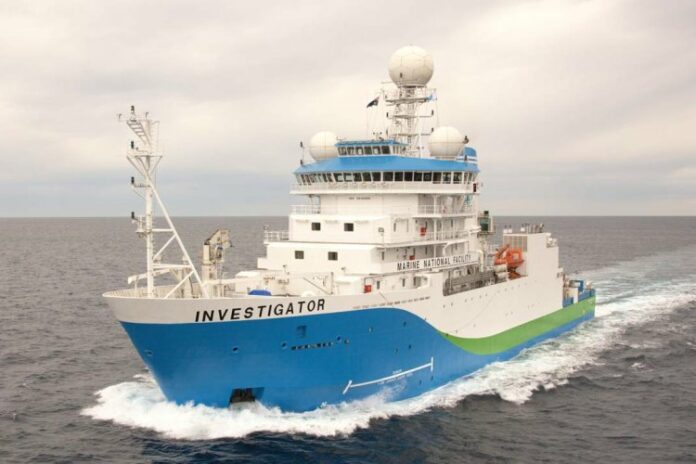
CSIRO’s research vessel (RV) Investigator is heading into the heart of the Antarctic Circumpolar Current to investigate why the planet’s strongest current that helps keep the Antarctic frozen is leaking warm water into the polar seas.

The science team led by Australia’s national science agency, CSIRO, and the Australian Antarctic Program Partnership is seeking to understand how currents in the Southern Ocean contribute to melting Antarctic ice shelves.

Voyage chief scientist CSIRO’s Dr Benoit Legresy said the Antarctic Circumpolar Current plays an important role in understanding the impact ice melt has on sea rise.

“The Antarctic Circumpolar Current flows around the icy continent from west to east and acts as our safety belt so that the warm water doesn’t reach the Antarctic and melt the ice,” Dr Legresy said.

“But the Antarctic Circumpolar Current generates the whirling eddies and finer scale dynamics that we’re trying to understand, and which are the prime suspect for warm water seeping towards the pole.

“There are five ‘eddy heat flux gates’, or hot spots, identified around the Antarctic Circle and they’re acting as a gateway for the heat to go south. We’re going to track down those small features that we think explain the heat seeping into polar waters.”

The voyage will be the first time scientists validate imagery of the Southern Ocean taken by the new Surface Water and Ocean Topography (SWOT) satellite, jointly developed by NASA and the French space agency Centre National d’Études Spatiales (CNES).
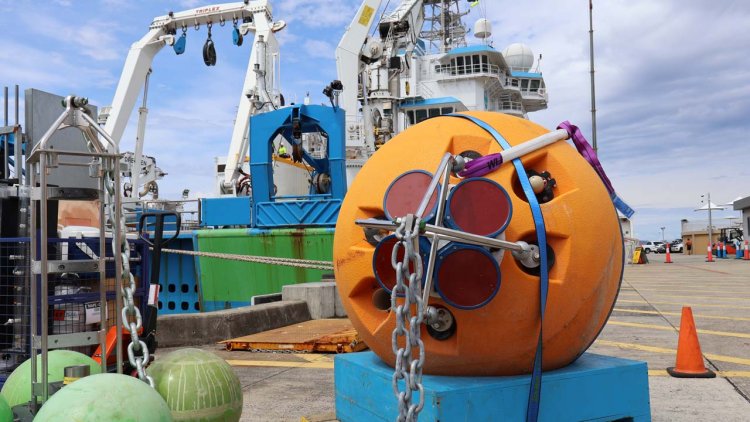
While the ship measures the properties of the ocean inside the current, the satellite will measure the height of the ocean surface from space. The SWOT satellite is revolutionising how scientists observe Earth’s water elevation with 2km pixel, high-definition imagery.

Passing over the Southern Ocean, it will take the highest resolution ocean topography to date of the Southern Ocean and the Antarctic Circumpolar Current.

These small-scale ocean features contribute to redistributing heat and carbon and energy in the ocean, major components in global climate change.

Dr Rosemary Morrow, CNES SWOT Ocean Lead, said SWOT was a “breakthrough satellite mission”.

“Our first images already show the incredible two-dimensional structure of ocean eddies and fronts, and how they are stretched and strained by the turbulent ocean,” Dr Morrow said.

“These small-scale ocean dynamics are key in stirring heat and carbon across the ocean, but also in pumping them deep into the ocean interior.

“The new SWOT observations, combined with measurements taken on RV Investigator, will usher in a new era, by extending our knowledge from one-dimensional sections to the full 3-D ocean variations.”

The voyage continues a tradition of highly collaborative, international science concentrated on the Antarctic and the preservation of the icy continent.

Principal investigators relying on data collected from the voyage as part of their ongoing research include scientists from CSIRO, the University of Tasmania, Caltech (the California Institute of Technology), Woods Hole Oceanographic Institution, the University of Washington and the Laboratoire d’Etudes en Géophysique et Océanographie Spatiales.

The voyage departs Hobart this week and returns 20 December.

This research is supported by a grant of sea time on RV Investigator from the CSIRO Marine National Facility which is supported by the Australian Government’s National Collaborative Research Infrastructure Strategy (NCRIS).
Sri Lanka Shipping Company places an order for two Damen ASD Tugs 2312

0

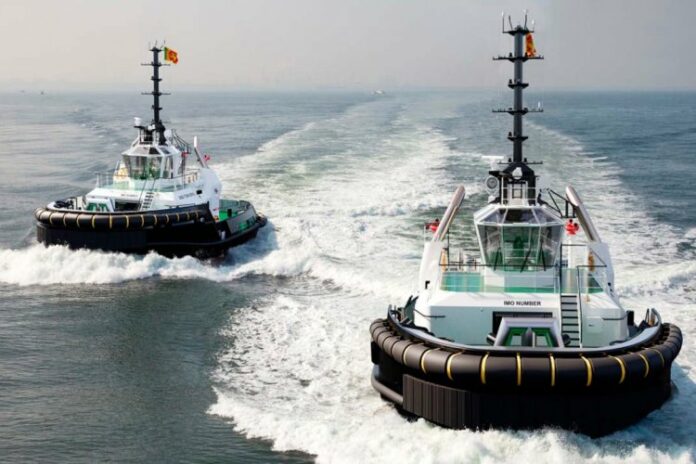
Last month at the annual Damen Maritime Festival in the Netherlands, Sri Lanka Shipping Company, a subsidiary of Advantis Group, and Damen Shipyards signed a contract for the delivery of two new ASD Tug 2312 tugboats. This is the first time that the two organisations have done business together, and the vessels are already being built at Damen’s Song Cam Shipyard in Vietnam.

Sri Lanka Shipping Company chose the ASD Tug 2312 based on its outstanding performance as the most versatile vessel in its class. Just 23 metres in length, it delivers up to 70 tonnes of bollard pull while the patented Twin Fin skeg plus twin Azimuth thrusters ensure excellent manoeuvrability. Sri Lanka Shipping Company has also opted for Damen’s Triton remote monitoring system on both vessels. These deliver a wide range of real-time performance information including fuel consumption and carbon emissions to the shore-side team as well as the ships’ crew.

The vessels will be delivered in mid-2024 as they are already under construction at Damen Song Cam Shipyard in Vietnam. This is due to Damen’s policy of building its best-selling vessels in series so as to minimise delivery times. They will join the company’s existing three anchor handling tugs and the harbour tugs and will represent a significant increase in capability. They will operate primarily in the South Asian and South-East Asian regions.

For Sri Lanka Shipping Company the contract was signed by Deputy Managing Director of Advantis Group Shano Sabar, and Director/CEO of Sri Lanka Shipping Company Surindha de Abrew, followed by Damen CEO Arnout Damen and Damen’s Regional Sales Director Asia Pacific Rabien Bahadoer. 

Speaking on behalf of Advantis Group and Sri Lanka Shipping Company, Shano Sabar commented;

“The ASD Tugs from Damen Shipyards excel in both quality and delivery time. In addition, our management team holds a strong belief that our choice of Damen for our tugs will enable us to elevate our service to the highest standards for our valued customers.”

“We are honoured to welcome Sri Lanka Shipping Company into the Damen family,” added Rabien Bahadoer. “They reviewed all the options available before choosing our successful ASD Tug 2312. As well as the patented Twin Fin skeg, the advanced design features a centralised double drum winch that can be operated over either the foredeck or the aft deck. In addition, the tugs also meet the latest standards for increased crew comfort during towage operations, with the COMF-NOISE 3 and COMF-VIB 3 Class notation.”

Once they are delivered, the tugs will have 24/7 access to Damen’s comprehensive support services via Damen’s South-East Asia’s Service Hubs in Vietnam, Sharjah and Bangladesh.

SunGas Renewables to support Tasmanian green hydrogen and methanol project

0

SunGas Renewables has been selected by Australian green hydrogen and methanol project developer, ABEL Energy, to supply green methanol for a new $1.4 billion facility in Northern Tasmania, Australia. Johnson Matthey was also selected to supply key technologies for the project. 

The ABEL Energy Bell Bay Powerfuels Project is expected to produce 300,000 tonnes of green methanol per year. This amount is three times Australia’s current methanol consumption and is the shipping fuel equivalent of removing 540,000 tonnes of carbon dioxide from the atmosphere annually.

The project requires 240 megawatts of electrolysis to produce green hydrogen, and robust methanol synthesis and biomass gasification technologies. SunGas Renewables’ state-of-the-art renewable syngas generation unit, the SunGas System 1000,™ is specifically designed to convert sustainably sourced wood fiber into renewable syngas. It is this renewable syngas that is used to make renewable biofuels for facilities like Bell Bay.

Johnson Matthey has optimized the design of the methanol synthesis loop and combined it with its highly robust methanol synthesis catalyst. The process combines efficient technology with cutting edge catalysts and absorbents to maximize plant performance and reduce operating costs. The addition of green hydrogen increases methanol production and leads to increased carbon utilization efficiency.

SunGas Renewables worked closely with ABEL Energy and Johnson Matthey on design and optimization studies to fully integrate these leading technologies into the proposed facility. The Bell Bay Powerfuels Project is expected to commence in 2027.

“SunGas has been working closely with ABEL Energy to optimize the integration and deployment of the SunGas System 1000™ gasifier for the project,” said Robert Rigdon, CEO of SunGas Renewables. “It’s been a wonderful collaboration with ABEL’s engineering team, and we’re very excited about seeing this great project come to fruition.”

“We’re very proud and excited to have Johnson Matthey and SunGas Renewables agree to take a role in our Bell Bay Powerfuels Project, said Rhys Tucker, Chief Technology Officer at ABEL Energy. “We really do feel we have brought the very best technologies in the world to Tasmania, and we’re grateful to JM and SunGas for their enthusiastic support of our project.”

“Green Methanol is emerging as a key route to decarbonizing the shipping industry,” said Alberto Giovanzana, Managing Director – CT Licensing, Johnson Matthey. “This exciting project will use our world leading technology for green methanol production, building off our deep experience and decades-worth references in methanol. We look forward to working with ABEL Energy and SunGas Renewables on the development of this project and scaling up green methanol as an important decarbonization pathway.”

The surge in demand for green methanol follows a host of new orders by most of the world’s major container shipping companies, including Danish multinational A.P. Moller – Maersk, for new ships to be fueled by this sustainable clean-burning fuel.

In July, SunGas Renewables announced the formation of Beaver Lake Renewable Energy, LLC, a new green methanol production facility in Central Louisiana which will exclusively produce 400,000 metric tons of green methanol per year to fuel Maersk’s fleet of methanol-powered container vessels.

Crown Estate to increase offshore wind capacity

0

The Crown Estate is taking steps to enable the generation of up to an additional 4GW of green electricity from several offshore wind farm projects in development, within the timeframe of the Government’s offshore wind target of 50GW by 2030. This follows requests from the developers of seven offshore wind farm projects who believe additional capacity can be generated from the areas of the seabed they hold existing rights for.

The move recognises that since awarding seabed rights to these projects, offshore wind technology has improved, enabling more clean energy to be generated from the same seabed area. In considering the requests, The Crown Estate will balance the economic and clean energy potential of these projects with its commitments to nature and biodiversity and duty to make the most effective and efficient use of a valuable, but increasingly busy, seabed. Any decision taken will be subject to a ‘Plan-Level Habitats Regulations Assessment’ (HRA) to understand the collective environmental impact of the additional capacity across all seven projects. This will include consultation with relevant stakeholders, including Statutory Nature Conservation Bodies (SNCBs) and regulators.

Gus Jaspert, Managing Director, Marine, at The Crown Estate, said:

“As demands on the seabed intensify, we’re taking a more strategic, holistic and data-led approach than ever before to ensure we make the most of this vital resource and that each area of the seabed we lease is working as hard as it can to contribute to the needs of our country and nature.

“These proposed capacity increases make use of seabed areas that have been previously granted rights, are not being fully utilised, and may have limited options for alternative uses. We are therefore pleased to launch a process to examine whether this additional capacity can be made available in a way which remains true to our commitment to nature and biodiversity.”

Dan McGrail, Chief Executive of RenewableUK, said:

“Maximising the amount of offshore wind capacity we can install in areas where leasing agreements are already in place is vital to get us closer to the Government’s target of 50GW by 2030. Utilising these areas of seabed to the full could add up to 4GW, which is more than a quarter of the UK’s current offshore wind capacity, representing a significant step forward. Accelerating deployment in this way would make projects even more cost-effective through economies of scale, which is good news for consumers as well as creating further opportunities for us to grow our supply chain.

“The industry is working closely with other seabed users and nature conservation bodies to ensure that we continue to develop projects in an environmentally sensitive way which protects and enhances the UK’s rich marine biodiversity. Rapid improvements in offshore wind technology since these leases were awarded mean that the time is now right to reassess carefully how we can make the most of our main source of renewable power in the years ahead”.

The Crown Estate has worked closely with government to define an assessment process which balances the needs of the industry with the needs of nature and the marine environment, and which proceeds at pace, with the aim of seeking a determination of additional capacity within 12 months, subject to regulated planning processes. The process will include consideration of environmental factors and other activities taking place or planned in the increasingly busy and complex marine environment, to ensure that opportunities are aligned, treated consistently and provide confidence in the additional capacity available to developers as soon as possible.

Ukraine claims it hit two Russian landing craft in Crimea with sea drones

0

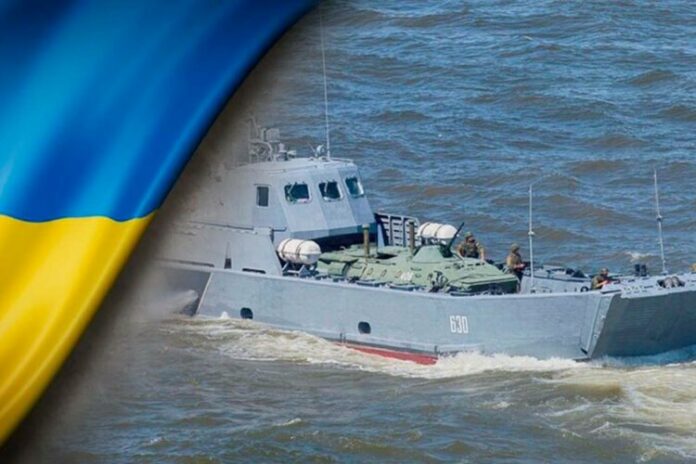
Ukraine claimed it hit two Russian landing craft in occupied Crimea with sea drones in an overnight operation, the latest in a series of escalating strikes on the peninsula illegally annexed by Russia in 2014.

“Two Russian assault boats have been hit with Ukrainian sea drones near Chernomorske, Crimea,” Andriy Yusov, a representative of Defense Intelligence of Ukraine (GUR), told CNN. 

GUR put out a video showing what it claims is the moment of the strikes. The video appears to show two sea drones approaching targets that appear to be landing craft at a dock. The second drone appears to film the first one as it hits the landing craft. As the second drone approaches its target, the video shows what looks like heavy equipment onboard.

“The boats were crewed and loaded with armored vehicles,” GUR claimed in the post on Telegram.

Russia has not officially commented on the incident.

Kyiv has ramped up assaults on occupied Crimea in recent months, in an attempt to undermine Russian forces. In September, the Ukrainian military unleashed a fierce attack on a Russian naval base in Sevastopol, in what was its most destructive strike on the port since the Kremlin launched its full-scale invasion in February 2022.

The Russian Defense Ministry said its forces intercepted three Ukrainian drones over Crimea in the early hours on Friday. No casualties were reported.

GUR claimed Russia used similar landing craft to those destroyed on Thursday in its occupation of Zmiinyi Island, an uninhabited outpost in the Black Sea between Ukraine and occupied Crimea, at the beginning of its full-scale invasion.

Since Ukraine has ramped up attacks in the Black Sea, Russian naval air defense capabilities have been degraded and such landing craft have been serving as an alternative platform for air defense systems, according to GUR.

“In the conditions of actual lack of shipboard air defense systems after a series of attacks by the Security and Defense Forces of Ukraine, such boats with air defense systems on board served as cover for the invaders’ ships on the Black Sea Fleet raids,” GUR claimed.

Kyiv’s strikes on Crimea are an attempt to isolate the peninsula and make it harder for Russia to sustain its military assault on the Ukrainian mainland, a Ukrainian source familiar with the strategy previously told CNN.

The Ukrainian military refocused efforts on striking Crimea after Moscow resumed its siege on Ukrainian ports following the collapse of the Black Sea Grain Initiative in July, preventing crucial grain exports and threatening global food security.

Source: CNN

Med Marine launches MED-A2575 RAmparts 2500-W series harbour tug

0

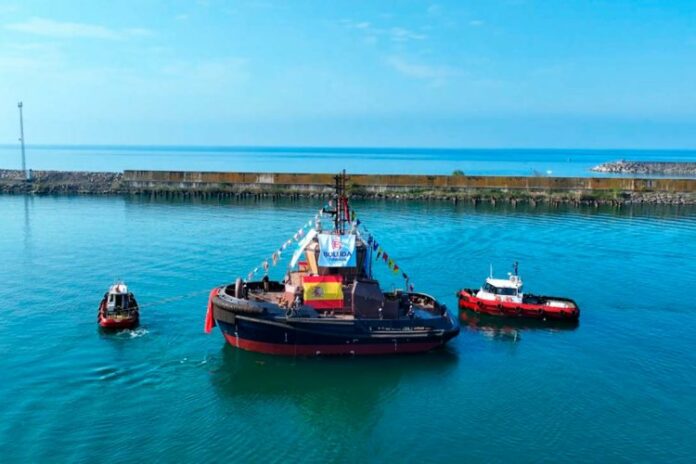
Renamed as VB AHMOSE, the vessel is a RAmparts 2500-W Series Harbour Tug designed by Robert Allan Ltd. Med Marine and Spain’s Boluda Towage signed the sales contract of the vessel back in the summer of 2023.

The high-quality Harbour Tug delivering 75 tons of Bollard Pull, is equipped to meet Class FIFI-E requirements. It is a multi-purpose tug, working off a forward winch and an aft winch for ship handling, towing, pushing, mooring, firefighting facilities and also equipped with an aft towing hook. She has a length of 25,20m, the beam of 12m and the depth of 4,60m.

Med Marine’s Sales Director, Melis Üçüncü, stated,

“We are delighted to have VB AHMOSE launched, built for Boluda Towage and cannot wait for her to be delivered. We are pleased to see Boluda come back to us on this occasion; We have delivered last April to Boluda VB Magnum and this underscores our commitment to providing high-quality maritime solutions to our clients once again.”

NYK launches seventh LNG-fueled PCTC

0

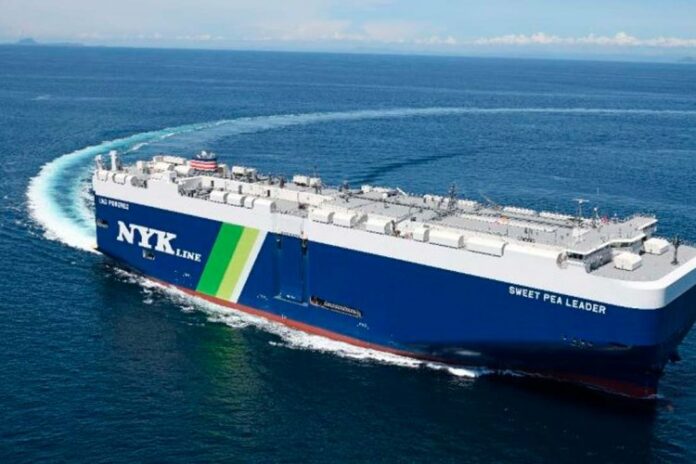
On October 26, NYK took delivery of the LNG-fueled pure car and truck carrier (PCTC) Sweet Pea Leader at Tadotsu Shipyard Co., Ltd., a member of the Imabari Shipbuilding Group. 

The vessel had been ordered by NYK from Nihon Shipyard Co., Ltd. and is NYK’s seventh LNG-fueled PCTC. NYK will introduce a total of 20 new LNG-fueled PCTCs by 2028 as a bridge-solution to achieve net-zero emissions of greenhouse gas (GHG) by 2050 for the NYK Group’s oceangoing businesses.

Like NYK’s other LNG-fueled PCTCs, the vessel was named after flowers with the desire to realize and pass on a healthy global environment through environment-friendly transportation.

NYK has established “Sail GREEN” as the company’s brand to emphasize NYK’s efforts to reduce GHG emissions through the transport of goods and contribute to the eco-friendly supply chains of customers, regardless of the mode of transport (e.g., by sea or land, through terminals, etc.). Completion of this vessel is an initiative of that brand.

Vessel Particulars

  • Name: Sweet Pea Leader
  • LOA: 199.90 m
  • Beam: 38.00 m
  • Loadable Cargo: 7,000 units
  • Gross Tonnage: 77,644 tons
  • Year Built: 2023
  • Flag: Liberia

Wärtsilä and Seaspan transform maritime operations with SmartDock autodocking system

0

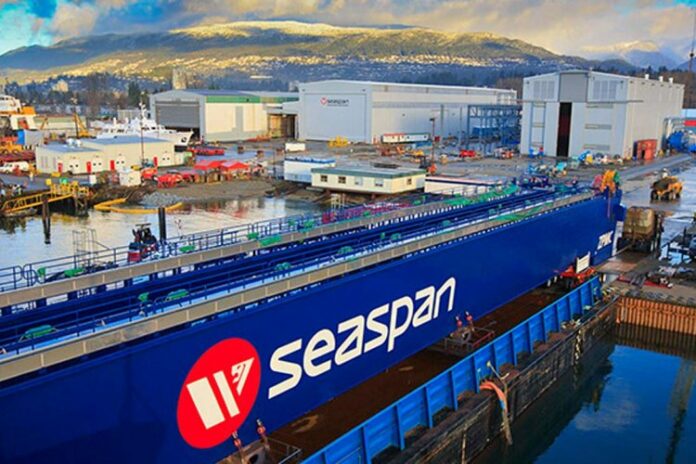
The SmartDock system developed by Wärtsilä ANCS enables Seaspan to perform autonomous docking manoeuvres even in challenging conditions, where currents reach up to two knots. With its advanced technology, SmartDock guarantees consistent, safe, and predictable docking and undocking manoeuvres every time, reducing the need for intensive interaction from the vessel’s captain.

Wärtsilä ANCS’s scope of work, which was signed in 2021, includes providing the autonomous SmartDock system, including track development for autodocking at Tilbury, Duke Point, and Swartz Bay ports in Canada. Notably, the SmartDock system employs an advanced UKF (Unscented Kalman Filter) estimator, combining sensor measurements from various sources, such as GNSS (Global Navigation Satellite System) and Wärtsilä ANCS’s laser sensor Cyscan AS, to calculate precise position and rate estimates of the vessel’s motion. This data is then compared to a preprogrammed ideal trajectory of the vessel, and the advanced controller allocates thrust and steering commands, ensuring safe and consistent autonomous docking and undocking manoeuvres.

The commissioning of the Seaspan Trader cargo vessel has just been completed, with the Seaspan Transporter cargo vessel scheduled to be commissioned in late 2023/early 2024. These vessels, equipped with the SmartDock system, will operate in the waters of British Columbia, Canada.

“Wärtsilä ANCS is excited to continue supporting Seaspan and build on an already strong working relationship. We look forward to the potential implementation of the SmartDock product across some other vessels in Seaspan’s ferry fleet, further advancing the automation and efficiency of maritime operations,” commented Klaus Egeberg, Director, Dynamic Positioning, Wärtsilä ANCS.

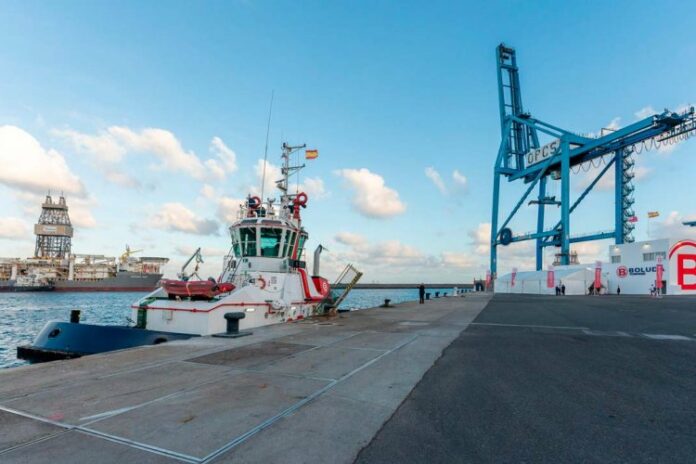
Boluda Towage inaugurates new marine towing base in the Port of Las Palmas

0

One of the many advantages of the new space is the ability to have all operations centralized in one place. This will lead to a significant reduction in fuel consumption and reduce the environmental footprint of all operations.

Another significant advance towards decarbonization is the implementation of the OPS (Onshore Power Supply System) shore power supply. This mechanism makes it possible to supply power to ships while they are docked, thus eliminating exhaust emissions when tugboats are in port.

In addition, the strategic relocation of the tugboat base decreases the sailing distance required in port entry and exit maneuvers. Companies and users experience significant benefits from the reduced response time of the tug fleet, both in routine towing maneuvers and in emergency situations.

These improvements, in addition to the benefits highlighted, will allow, in a more global way, to increase the quality of life in the port area by reducing the noise of the operations and by eliminating a consequent part of the emissions of combustion gases.

Vicente Boluda Fos, President of Boluda Towage, stated that:

“We are very proud to inaugurate this new tugboat base today, which, by optimizing the operation of the port of Las Palmas, represents a crucial step for logistics development in the Canary Islands and a symbol of our continued commitment to the region. We have been working side by side with the port of Las Palmas for more than 30 years and will continue to innovate and invest to increase the safety and efficiency of the service.”

New hybrid-drive tug on South America’s west coast soon to enter service

0

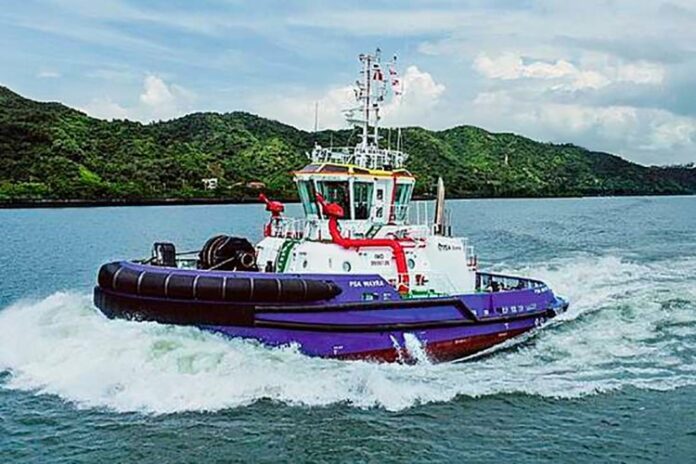
With this latest addition to the fleet, PSA Marine Peru, a wholly owned subsidiary of PSA Marine (Pte) Ltd, underscores their commitment to advancing sustainability within in the harbour tug sector in Peru.

Hong Kong-based Cheoy Lee Shipyards has built the PSA Wayra in the RAmparts 2400W design. The tug is propelled by SCHOTTEL RudderPropellers featuring patented SYDRIVE-M technology. This mechanical hybrid solution without the costly complexity of common hybrid technology reduces both the vessel’s maintenance costs and its fuel consumption. It has a particularly efficient and sustainable impact on the operation profile of harbour tugs that regularly alternate between towing and transit operations.

The main propulsion of the ASD tug consists of two diesel-driven type SRP 460 SCHOTTEL RudderPropellers (2,240 kW each) featuring fixed-pitch propellers with a diameter of 2.6 metres. With this thruster configuration, the 24.4-metre-long and 11.25-metre-wide tug has more than 70 tonnes of bollard pull.

Besides this, the rudder propellers feature the certified SCHOTTEL LeaCon sealing system which provides safe and reliable protection against contamination of seawater by operating materials.

SYDRIVE-M connects a port and starboard mounted azimuth thruster in one vessel, allowing the thrusters to be driven together by only one of the main engines. This then reduces main engine operating hours, thus lowering maintenance costs as well as less fuel consumption and lower emissions.

The system needs no additional electronical components which offers many advantages as demonstrated by three main operating modes: Light Operation or Free Sailing Mode, Full Thrust Operation Mode and FiFi Mode.