-8.2 C
New York
Home Blog Page 245

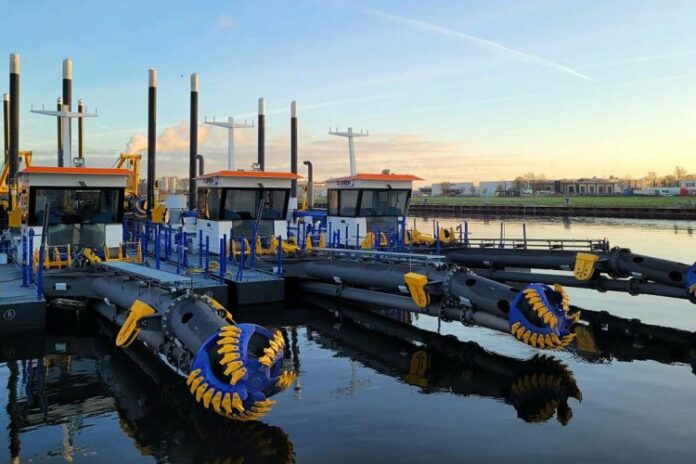
Damen delivers another batch of cutter suction dredgers for Mexico

0

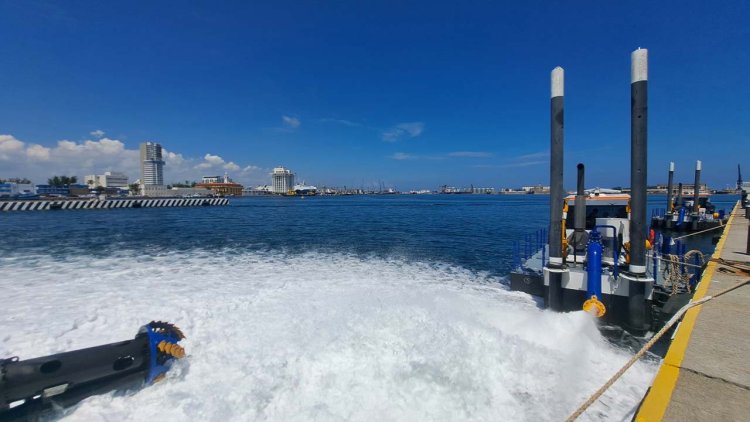
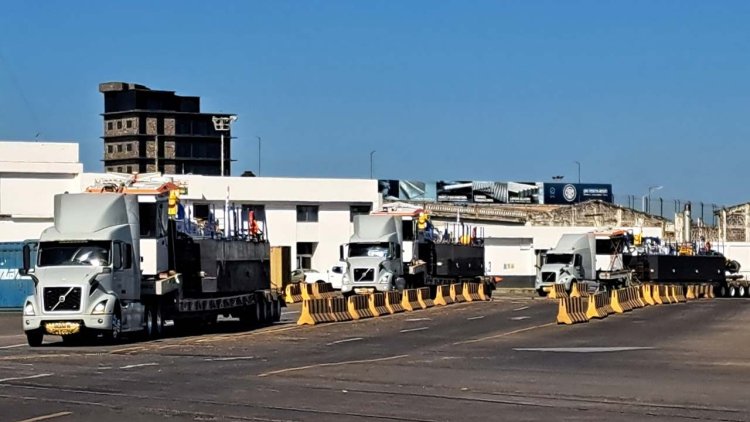
The dredgers, built in the Netherlands by Damen Dredging Equipment (DDE), have been added to the fleet of SEMAR. They have been acquired as part of a fleet expansion programme, and will be put to good use on various dredging projects in Mexico.

The three CSD250s are not the first Damen dredgers to be operated by SEMAR. Over the past few years, Damen has delivered a number of CSD500s, a CSD450 and a CSD650. All of these dredgers operate on an array of projects along both coastlines of Mexico. 

“It has been a pleasure to renew our cooperation with SEMAR,” Mr Horacio Delgado Bravo, Sales Manager at Damen Shipyards states. “All three of these standard CSD250s were built at the Damen Dredging yard in the Netherlands. After inspection by the customer they were dismounted and shipped to Veracruz. Commissioning ticked off, they are now ready to start their various dredge jobs.”

KCC to fit four more ships with Silverstream air lubrication systems

0

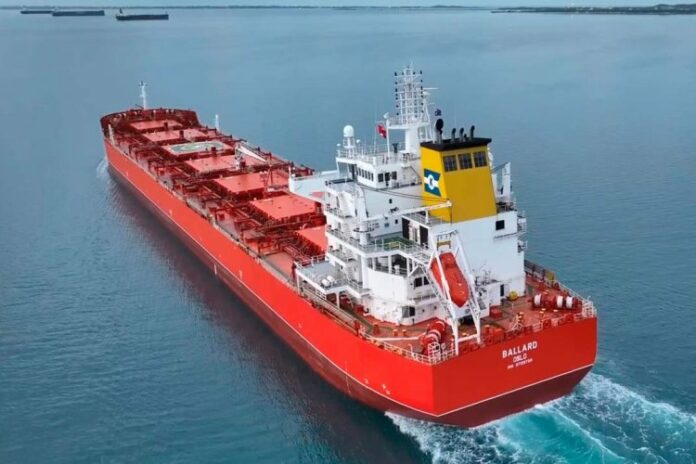
The technology will be first installed on CLEANBUs Barracuda and Barramundi, with CABUs Balboa and Baffin due to follow. They join the already outfitted MV Ballard and upcoming MV Baru, bringing the total number of KCC vessels fitted with Silverstream’s technology to six.

The Silverstream® System utilizes a series of air release units (ARUs) located along the flat bottom of the vessel. Oil-free compressors generate pressurized air that is sent through the ARUs, creating a layer of microbubbles that lubricate the hull, thereby reducing the friction between the hull and water. This reduction leads to a decrease in net fuel consumption and the subsequent CO2 emissions.

KCC CEO Engebret Dahm comments:

“Improving the energy efficiency of our fleet through proven and reliable technologies is crucial to our commitment of delivering cost-effective decarbonization for our customers. Early performance data from the first installation of the Silverstream solution on MV Ballard in September confirms a fuel consumption reduction in line with our expectations. We look forward to expanding its rollout.” 

Silverstream Technologies Founder & CEO Noah Silberschmidt adds:

“Our collaboration with KCC goes from strength to strength. They are a great collaboration partner for Silverstream Technologies and we are proud to support them on their journey towards net zero. The wet and dry bulk segment is an important one for Silverstream and we are pleased to be able to demonstrate the savings our Silverstream® System achieves in-service on these efficient combination carriers.”

It is expected the Silverstream solution will reduce emissions by an average of 5-7% on KCC’s vessels. In combination with the other energy efficiency measures underway in the fleet, this figure ranges approximately 15% when compared against performance as newbuilds. In addition to the agreed four vessels, KCC carries options for vessels built 2016-2021 to also equip the technology.

Seaqualize successfully executes first ever offshore transfer lifts on Vineyard Wind 1

0

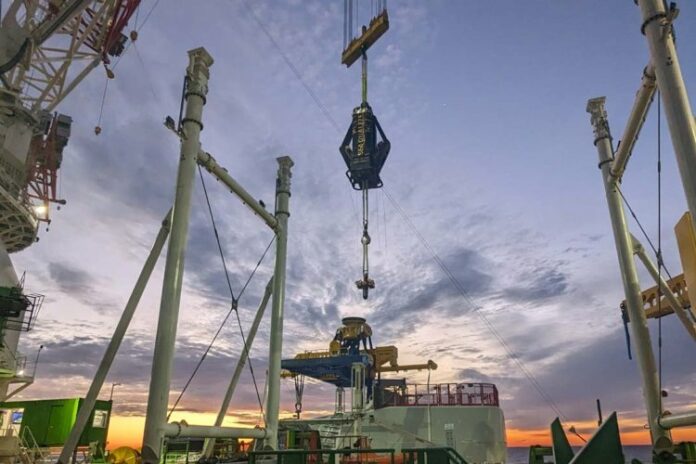
Dutch heave compensation specialist Seaqualize executed the world’s first offshore transfer lifts of wind turbine components from a heaving supply vessel. 

Their newly developed offshore lifting device, the Heave Chief 1100 is deployed by DEME Offshore US. Together with the feeder barge solution developed by DEME Offshore US with partners Barge Master, Foss Maritime and Seaqualize, and the operators and equipment from GE Renewables, this technology will ensure that the Halliade X 13 MW turbines can be installed year round, to form the first commercial scale wind farm installation project in the USA, Vineyard Wind.

Over the last years, many have spoken about how to execute safe and continuous feeder barge operations: the supply of wind turbine components on a heaving supply vessel to a jacked up installation crane vessel, out in the open Atlantic Ocean preferably year round.  Now, it’s finally been done. The team of DEME Offshore, GE Renewables, Barge Master, Foss Maritime, Seaqualize and many other US partners both on- and offshore, have transferred and installed the first turbines, and are working closely together to get the other turbines out in the water. 

Seaqualize is responsible for executing the fast lift from the barge to the installation vessel, while compensating for heave motions. Never before have such delicate but heavy lifts been done, under safe compensation, and with full active heave control. It now needs to be done hundreds of times more in the upcoming months, to make sure the team can keep installing wind turbines all year round, even in adverse weather conditions. 

DEME Offshore is the first contractor embarking on such an operation, by transporting and installing  wind turbine generators for the Vineyard Wind 1 project. Each turbine will be transported in  separate components from the supply harbor to DEME’s installation vessel Sea Installer. 
The project, lead by Avangrid Inc. and CIP, located off the coast of Massachusetts, is a significant step towards reducing carbon emissions and meeting clean energy goals by delivering clean energy to 400.000 homes, while offering increasing opportunities for U.S. companies to join, build expertise, add jobs and grow into this market.

Seaqualize develops and operates inline Balanced Heave Compensators, a next generation lifting tool specifically designed for heavy lift, in-air active load control. Their newest HC1100, is capable of compensating and fast lifting 1100 mT, required to balance turbine components of the 15MW generation. Normally such lifts would require extremely flat seas, as re-hits with the heaving barge deck, or shock loads to the lifting crane would cause serious damage. Over the first set of lifts made so far, the HC1100 has shown it can seriously increase the workability of such operations: lifting can continue while the machine continues to fully compensate heave motions up to 3,5m and the first lifts showed it can fast-lift full loads at speeds of over 70cm/s (42 m/min). For the tall tower sections of up to 70m high, two separate systems by Barge Master further compensate pitch and roll motions.

The HC1100 allows for flexibility in the planning of the operation. Weather conditions can impact the timing and order of the lifting sequence. For offshore crews, it is helpful to have a machine on board that is ready within minutes, and can easily switch between varying loads, or types of operation while remaining in the crane hook: besides fast-lifting turbine components, the HC1100 is also used to carefully place back delicate component frames to the supply vessel for the return trip, required for the next load out. This requires the machine to actively follow the motions of that barge vessel and thus greatly reducing set down speeds.

Managing Director Gjalt Lindeboom says:

“Some will say: ’Haven’t we done floating lifts for years already in the Oil & Gas industry? The answer is ‘yes’, but not at this scale, frequency and with such delicate, standard components. In Oil & Gas, it is not uncommon to wait several days or even weeks to execute one single safe floating transfer lift of, for example, a heavy platform top side, or vessel module. It only has to be done once and that is the project. Furthermore, the component is usually engineered and fabricated to withstand any undesired transport, lifting or installation loads, simply by adding protective steel.”  

Both are not possible in the extremely cost-driven and competitive Offshore Wind Sector. For example: the Vineyard Wind project requires more than 800 lifts, with loads ranging anywhere between 10 and 1,000mT, all in the quickest succession possible. Windfarms already planned for the upcoming years are sometimes even almost twice as large.  Every couple of hours of waiting per lift for the right conditions is immediately a huge delay for having first power coming from the wind farm. Plus, these components have to be lifted exactly as they are mass produced and designed. Those designs have a 30yr lifetime of generating electricity at sea in mind, not the bumpy transfer lifts. 

Lindeboom:

“We are very proud of these first successful fast-lifts and the contract and cooperation with DEME. In addition, the second Seaqualize Heave Chief – the HC750 – is about to start operations this month, on another wind farm installation project ramping up in the US. We are currently planning the production of additional machines to support projects in 2024 up to 2026. Combined with the first successful results from Vineyard Wind, this cements Balanced Heave Compensation as the way to go for safe and efficient offshore feeder lifts. Floating offshore heavy lifting has many complex problems. For now, it’s been shown that ‘heave compensation’ is not one of them… anymore!”

 

Boskalis commissions 2 GWh shore power facility in Rotterdam

0

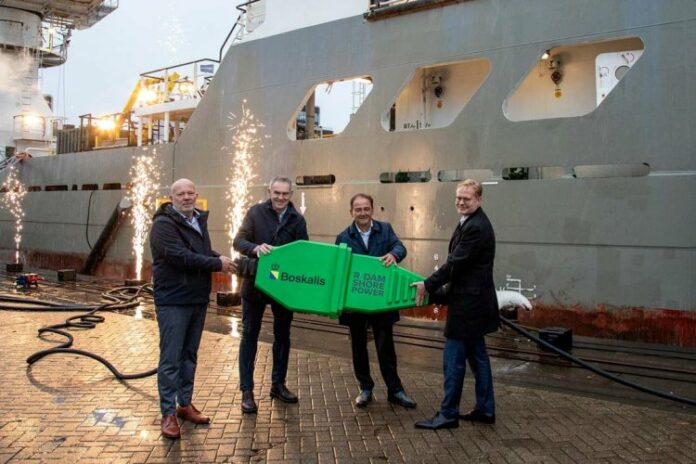
Boskalis commissioned a large-scale shore power facility yesterday afternoon at its premises in the Waalhaven in Rotterdam, the Netherlands. 

Boskalis vessels are (de)mobilized for own projects at this service center. From now on, the moored vessels will switch off their diesel-powered generators and use green shore power. In addition, Rotterdam Shore Power’s shore power installation will be used for a variety of land-based electrical equipment deployed by Boskalis to carry out projects in the region.

The shore power installation is expected to generate 2 GWh of green electricity per year, resulting in an annual CO2 reduction of 1,600 tons. In addition, shore power contributes significantly to improving air quality by reducing particulate matter and nitrogen emissions and contributes positively to the living environment by reducing noise levels.

The new shore power installation is part of a series of measures taken by Boskalis to reduce its carbon footprint and promote the use of renewable energy sources at its offices and service centers. In recent years, for example, many thousands of solar panels have been installed on the roofs of the offices on the Boskalis campus in the Dutch city of Papendrecht and in Singapore and on the roof of the central distribution center in Vlaardingen, the Netherlands. Furthermore, a large-scale electric vehicle charging facility was commissioned on the Papendrecht campus; with 252 charging points, one of the largest of its kind in the Benelux region.

Boskalis sources the green shore power from Rotterdam Shore Power (a joint venture between Eneco and the Port of Rotterdam Authority), which owns the shore power installation, with Boskalis having realized the grid connection in-house. The green power supplied by Eneco originates from its Dutch wind and solar sources. The project is co-financed by the municipality of Rotterdam and the European Union through the European Regional Development Fund.

Enova backs Viasea’s hydrogen ship investment

0

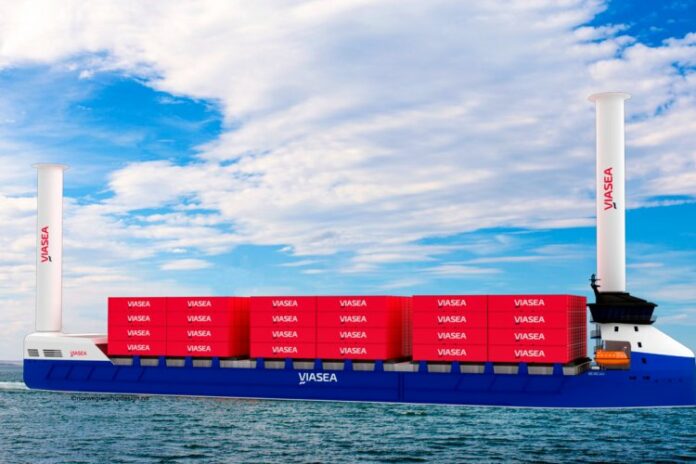
Enova, a Norwegian government enterprise, tasked with speeding the low-emission transition has granted NOK171.8m (about €14.4m) for constructing two container carriers to run on (green) hydrogen.

Initial hydrogen bunkering is planned to take place in Norway. Once hydrogen becomes available in other locations served by Viasea Shipping, the Norwegian shipping line intends to sail on hydrogen only. On the onset, a mix of hydrogen and diesel will be used, resulting in a 75% lower footprint vs a diesel vessel, according to Viasea Shipping.

Additionally, the carriers will be equipped with rotor sails.

The Norwegian Ship Design Company has been tasked with providing the ship concept. The design will be based on the modified Powered by Nature blueprint (an 88 m long, 5,500 dwt self-discharging bulker) created for Egil Ulvan Rederi.

“We believe that advanced green hydrogen technology will revolutionize maritime transport in Europe, resulting in zero emissions. Since the founding of Viasea Shipping seven years ago, the goal has been to deliver more sustainable transport to the market. First as a greener alternative to road transport and now with a focus on zero-emission maritime transport in Europe. This is our first step,” commented Morten Pettersen, Viasea Shipping’s Managing Director.

Rohit Sharma, Sustainable Advisor, Viasea Shipping, ColliCare Group, added, “Viasea’s commitment to building these advanced ships demonstrates that logistics companies can be pioneers for a sustainable future. Through our investments in innovative technology, we are not only leading in the transport industry but also setting a bold example of how logistics can offer customers innovative and sustainable solutions, forming the basis for a sustainable future.”

Framo secures contract for Ørsted’s offshore wind project in Taiwan

0

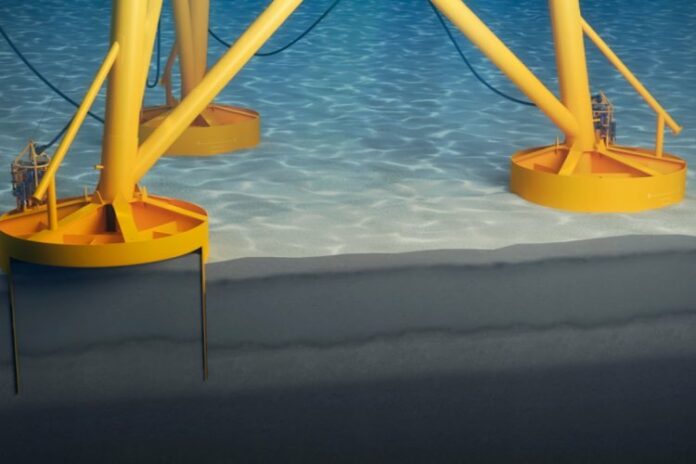
The Framo Suction Pump Spread Systems will be produced at the Framo factory at Flatøy outside Bergen, Norway. Framo, in collaboration with geotechnical expertise from the Norwegian Geotechnical Institute, will deploy its offshore personnel to oversee and manage the suction operation at sea. Ørsted´s 920 MW Greater Changhua 2b and 4 offshore wind projects are located 35 – 60 km from the Changhua coast in Taiwan. The delivery is scheduled for early 2025.
 
The technology of suction bucket foundation has secured and safely anchored platforms and offshore installations around the world for many years. “We are proud to be chosen as partner in the Greater Changhua projects”, says Hans Petter Arnesen, Area Manager Renewable Energy at Framo.
 
Larger wind farms are using this technology on jackets to overcome difficult and variable soil conditions, whilst gaining faster installation speed and avoidance of pile driving noise.

Compared with installing monopiles, suction bucket technology has a more environmentally friendly footprint. Besides the increased installation speed compared to traditionally piled jackets, the concept provides for easier decommissioning.
 
Ørsted is a global leader in offshore wind. The Danish company constructs and operates offshore wind farms in Denmark, UK, Germany, Netherlands, Taiwan, and the USA. In 2018 Framo and NGI successfully installed 20 suction bucket jackets at Ørsted’s wind farm Borkum Riffgrund 2.
 
“Framo pumping solutions have been critical in marine and offshore operations for more than 50 years. This order further strengthens our position in the fast-growing renewable energy market.”, says Hans Petter Arnesen.

Wintershall Dea joins CCS Project Poseidon in the United Kingdom

0

Wintershall Dea has entered a second carbon capture and storage (CCS) project in the United Kingdom. The company joins the ‘Poseidon’ CCS project after acquiring a ten per cent stake in the licence from Carbon Catalyst. 

The licence was awarded to Perenco and Carbon Catalyst as part of the UK’s first CO2 storage licensing round. Perenco is the designated operator of the project, while Carbon Catalyst and Wintershall Dea will now hold non-operated positions in it.

“We are proud to expand our presence in the country and contribute to the UK’s efforts in achieving a net-zero future. Through our involvement in this project, we are further growing our expertise in the CCS field and reconfirming our efforts to decarbonise European industries,” said Hugo Dijkgraaf, Chief Technology Officer and Executive Board Member at Wintershall Dea, about the company’s growing activities in the UK.

“As an expert E&P company with over 60 years of experience in the North Sea and our growing CCS expertise from projects in Norway and Denmark, Wintershall Dea can contribute valuable subsurface and technical knowledge to this outstanding project,” said Matthias Pfeiffer, Country Lead UK for Carbon Management & Hydrogen at Wintershall Dea. “We are looking forward to working together with our partners Perenco and Carbon Catalyst in order to mature this project in a safe and most efficient way,” Pfeiffer added.

‘Poseidon’ is among the largest CO2 transportation & storage projects in the UK. It is scheduled to be operational by 2029, with a total annual storage capacity of up to 40 million tonnes in its full development stage. It envisages the permanent geological storage of approx. one billion tonnes of CO2. The project is expected to connect a wide range of CO2 emitters across the East and Southeast of England and has the potential to significantly decarbonise the area. The CO2 is planned to be transported via the Perenco-operated Bacton Gas Terminal to the offshore ‘Poseidon’ storage site. The carbon storage licence is located in the UK Southern North Sea, about 65 kilometres off the coast from Bacton in the county of Norfolk. It covers the geological structures of the Leman gas field and offers a combination of depleted reservoirs and saline aquifers suitable for safe and permanent carbon storage.

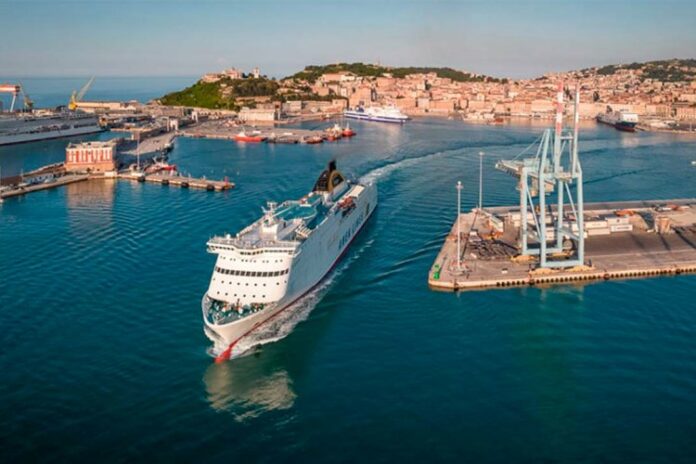
Fincantieri and ADSP sign agreement for the development of the port of Ancona

0

The Port System Authority of the Central Adriatic Sea (ADSP) and Fincantieri have signed a program agreement to foster the development of the port of Ancona. 

The agreement was signed by Fincantieri’s CEO and Managing Director Pierroberto Folgiero and ADSP President Vincenzo Garofalo.

The goal of the agreement is to develop the port’s current infrastructure – construction piers, dry dock, technological and lifting facilities – and to employ it for the construction of ships of greater size and tonnage, both in the cruise and merchant sector.

The value of the investment is €80 million, of which €40 million is publicly funded: 20 for the building of a new construction pier and 20 for the extension of the dry dock, including the securing of the breakwater. The remaining €40 million will come from a private investment by Fincantieri as part of the procedure for the granting of the new state concession for the next 40 years and will concern the development of shipbuilding in the port of Ancona.

The Group’s investment consists of industrial projects aimed at achieving the highest production and quality levels according to the best international standards in the sector, and this while applying the principles of better environmental sustainability and greater protection of work safety.

The program agreement follows the Memorandum of Understanding for strategic infrastructural investments for the development of shipbuilding in the port of Ancona in 2018 signed by the Ministry of Infrastructure and Transport and the Authority, and the subsequent ministerial decree with which the public financing of €40 million was approved.

Vincenzo Garofalo, President of the Port System Authority of the Central Adriatic Sea, noted that it is

“An agreement and an investment that will have a strong impact on the future development prospects of the port of Ancona, with positive economic and social repercussions on the city and the region. Fincantieri, one of the port’s primary operators, has thus reaffirmed its confidence in the possibilities of growth and development of the facility in Ancona and the entire port infrastructure”.

Pierroberto Folgiero, CEO and Managing Director of Fincantieri, commented:

‘With the development of the port of Ancona we’re moving into the future with ambition and innovation. This agreement underscores our ability to invest in the Italian system and to create value for the region and the entire shipbuilding sector. It’s an important step: to make things happen resources aren’t enough, you have to actually put them on the ground”.

Vattenfall supplies first power from Denmark’s next offshore wind farm

0

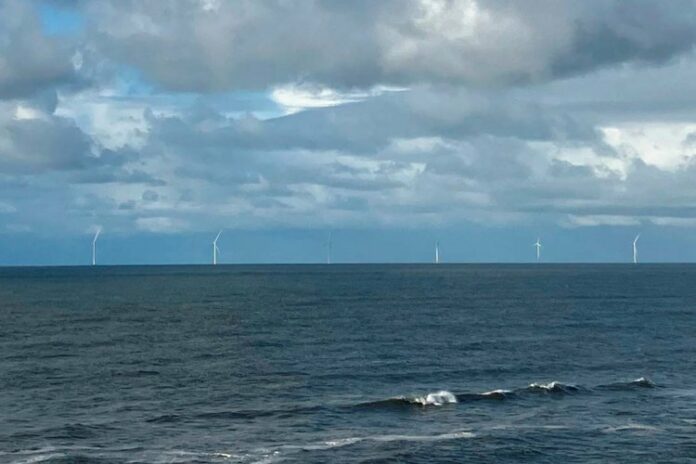
It was a culmination of almost seven years’ work on the wind farm, when the blades of the first wind turbine were turned up against the wind and started generating fossil-free electricity.

“It’s a huge relief being able to finally supply power from Vesterhav Syd. We feel a tremendous sense of pride,” says Mathilde Damsgaard, Vattenfall’s Project Director for the Vesterhav Syd and Nord Offshore Wind Farms.

The 20 wind turbines at Vesterhav Syd were erected from July to September this year, and now Vattenfall is carrying out the last electrical connection works.

Currently, two of Vesterhav Syd’s turbines are generating electricity, while the remaining 18 are expected to be connected to the power grid one by one during the next weeks. Meanwhile, Vattenfall is working on also connecting turbines from the Vesterhav Nord Offshore Wind Farm to the power grid. Both wind farms have a deadline for full connection to the grid at year end.

Together, the Vesterhav Syd and Nord Offshore Wind Farms will generate fossil-free electricity equivalent to the consumption of 350,000 households.

Facts about Vesterhav Syd and Nord:

  • Total installed capacity of 344 MW – 168 MW at Vesterhav Syd and 176 MW at Vesterhav Nord.
  • The wind farms will consist of 20 and 21 turbines, respectively, with a capacity of 8.4 MW each.
  • Electricity production can cover the annual consumption of more than 350,000 Danish households.

Eqva reaffirms strategic direction, divests Havyard Leirvik

0

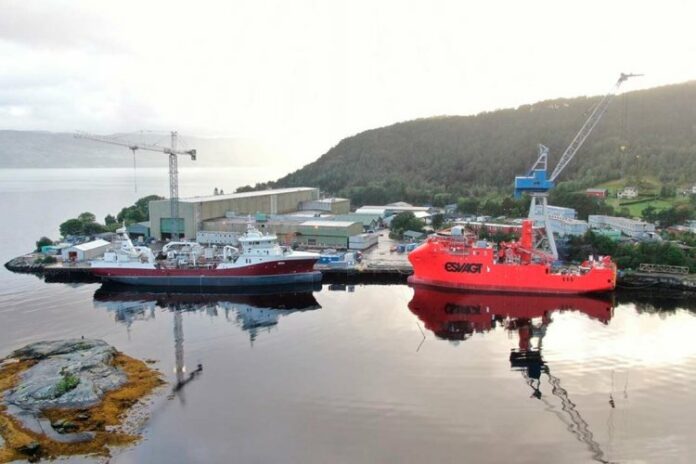
Eqva ASA has entered into agreement to divest its Havyard Leirvik yard in Norway, reaffirming the company’s strategic direction and ambition to become an industrial investment company listed on the Oslo Stock Exchange.

Among its current holdings is BKS, which is a leading fully integrated system supplier for maritime, offshore and landbased industries. In addition, Eqva holds 100 per cent of the stakes in Fossberg Kraft, a specialist in the development, construction, and operation of small hydropower plants in Norway, and 50 percent of the platform supply vessel (PSV) Havila Charisma.

“The sale of Havyard Leirvik will free up important resources, both human and financial, enabling a concentrated focus on further development of Eqva’s current industrial portfolio, and look for new investment opportunities,” said Even Matre Ellingsen, Chair of the Board of Eqva.

As an active owner, Eqva will be targeting opportunities in industrial service companies that contribute to the green transition in maritime, power intensive and renewable industries. The ideal candidates have a strong knowledge base, while being light on assets.

BKS is Eqva’s largest operational asset and has grown substantially over the past few years. This due to increasing demand from power-intensive industry and shipping for greener solutions. Founded in 2008, BKS recorded NOK 385 million in revenues in 2022.

Fossberg Kraft and BKS is included in the business segment Products, solution & renewables which had revenues of NOK 330 million and an EBITDA margin of 6.6 percent for the first six months in 2023.

Havyard Leirvik is being sold to Tersan Shipyard, a leading global shipbuilder in Turkey.

The transaction is based on a share sale, where Eqva ASA is selling its shares (100%) in Havyard Leirvik Holding AS, where the subsidiaries Havyard Leirvik AS and Havyard Leirvik Eiendom AS are included. The transaction is settled by NOK 30 million in cash.

“We are confident that Tersan will be a strong new owner for Havyard Leirvik, with a clear strategic interest in continuing its proud industrial tradition. As a leading player in the industry, Tersan has proven expertise and local knowledge from collaborating with a wide range of customers in maritime and aquaculture industries. For Eqva, it is important that we are leaving the yard in good hands,” says Matre Ellingsen.

“We are looking forward to becoming part of Tersan Shipyard. It is a highly reputable company with a good standing in international shipping and maritime circles, and with a clear ambition to further strengthen its position in Northern Europe with Havyard Leirvik as steppingstone,” said Tor Leif Mogstad, CEO of Havyard Leirvik.