-12.9 C
New York
Home Blog Page 243

First offshore wind turbine installed at South Fork

0

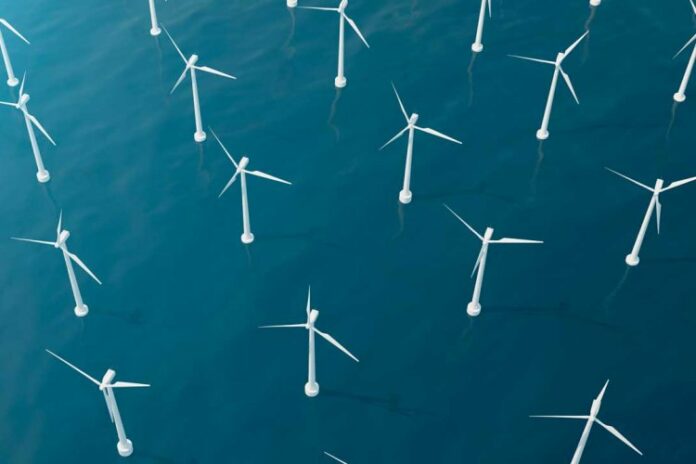
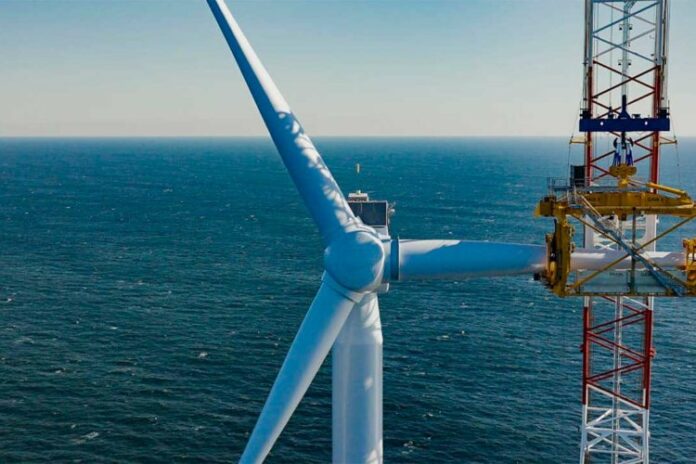
Governor Kathy Hochul announces the completed installation of the first offshore wind turbine for South Fork Wind, a historic milestone for New York’s offshore wind development and what will be the first completed utility-scale wind farm in the United States in federal waters.

Once completed, the 130-megawatt offshore wind farm will address a growing reliability challenge for Long Island’s electrical grid, while also generating enough renewable energy to power approximately 70,000 Long Island homes, eliminating up to six million tons of carbon emissions, or the equivalent of taking 60,000 cars off the road annually over a 25-year period. The announcement supports progress towards the State’s Climate Leadership and Community Protection Act goal to install nine gigawatts of offshore wind by 2035.

The first of South Fork Wind’s 12 Siemens Gamesa wind turbine generators was hoisted into place by the offshore construction team at the project site 35 miles off Montauk, N.Y. Hundreds of U.S. workers and three Northeast ports have supported South Fork Wind’s construction, helping to stand up the foundations of a new domestic supply chain that’s creating local union jobs across the Northeast. All 12 turbines are expected to be installed by the end of 2023 or early 2024.

First approved by the LIPA Board of Trustees in 2017, South Fork Wind began construction in February 2022, beginning with the onshore export cable system that links the project to the local energy grid, which was completed early this year. The wind farm reached its “steel in the water” milestone in June 2023 with the installation of the project’s first monopile foundation.

Van Oord’s offshore installation vessel, the Aeolus, is installing the turbines. Turbine installation involves using a crane to place the steel turbine tower onto the foundation. The nacelle and rotor are then installed on top of the tower. Lastly, the blades are lifted and installed one by one by bolting them to the rotor. 

Once in operation, South Fork Wind will be supported by U.S.-built crew transfer vessels and eventually by America’s first offshore wind Service Operations Vessel.

County Executive Steve Bellone said,

“The installation of South Fork Wind’s first wind turbine is a significant step towards a cleaner and more sustainable future. Alongside the wind developers, New York State and local stakeholders, we are demonstrating our collective resolve to combat climate change and protect our natural resources for generations to come.”

East Hampton Town Supervisor Peter Van Scoyoc said,

“I am pleased to see that South Fork Wind has now reached another important milestone toward providing thousands of homes on the South Fork with clean, renewable, wind-generated energy.”

Long Island Federation of Labor President John R. Durso said,

“Construction of the South Fork offshore wind project is a historic achievement for New York State and Long Island. Our union movement knows all too well the demands placed on working people in the wake of natural disasters, which are occurring with increased frequency due to the climate crisis we are all forced to endure. After years of planning and advocacy, we must mark the milestones of today and continue to build momentum for the projects still to come. This region is building New York’s first offshore wind farm addressing the crisis head on. Development of unionized, green jobs in the process will strengthen our communities and offer long-lasting careers to a new generation of workers.”

New York State Building Trades President Gary LaBarbera said,

“Offshore wind projects, like South Fork Wind, are crucial not only in New York’s standard-setting pursuit of a commonsense clean energy transition, but the creation of thousands of family sustaining careers for hard working New Yorkers. This is why we welcome this historic milestone and applaud Governor Hochul and NYSERDA for their steadfast commitment to this project that will act as a spark plug for our green economy and the revival of our middle class.”

Building and Construction Trades Council of Nassau and Suffolk Counties President Matthew Aracich said,

“The Empire State is about to establish a new alternative to conventional methods used to power Long Island with Offshore Wind. Instead of burning fossil fuels Orsted and Eversource will harness the power of wind, delivering 132 megawatts of clean green energy powering 70,000 homes.”
VIDEO: Yemen’s Houthi rebels seize cargo ship in Red Sea

0

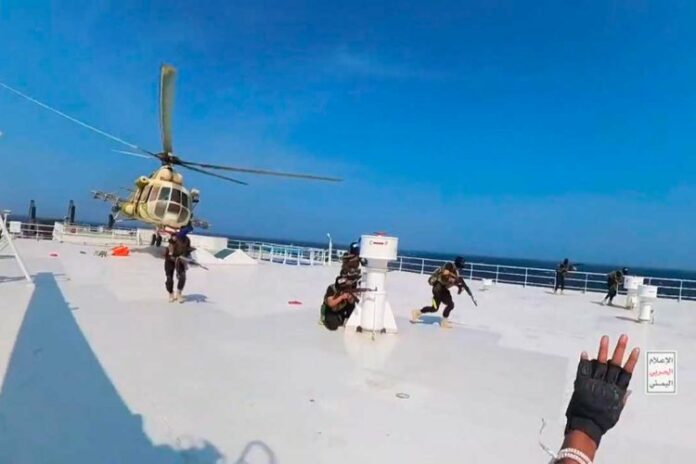
The footage was released by the movement’s TV channel Al Masirah on Monday.

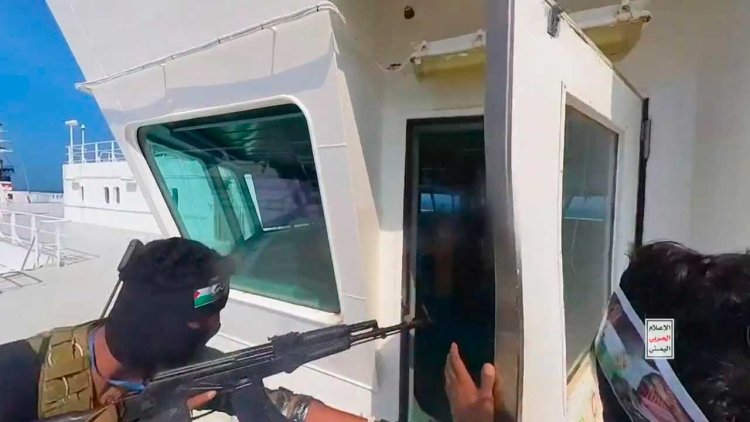
The video from Yemeni Military Media shows at least seven masked men, carrying what appears to be AK-47s, drop from a helicopter and land on the top deck of the ship.

The video purportedly shows the rebels successfully seizing control of the vessel, and appear to have raised both the Yemeni and Palestinian flags on board.

The Houthis, who control northern Yemen and its Red Sea coast, said the ship was Israeli, but Israel described it as a British-owned and Japanese-operated cargo vessel with no Israeli nationals on board.

Some 25 people are believed to have been on board the Galaxy Leader when it was seized en route from Turkey to India.

Source: SKY News

Turkish ship with 12 crew missing in Black Sea

0

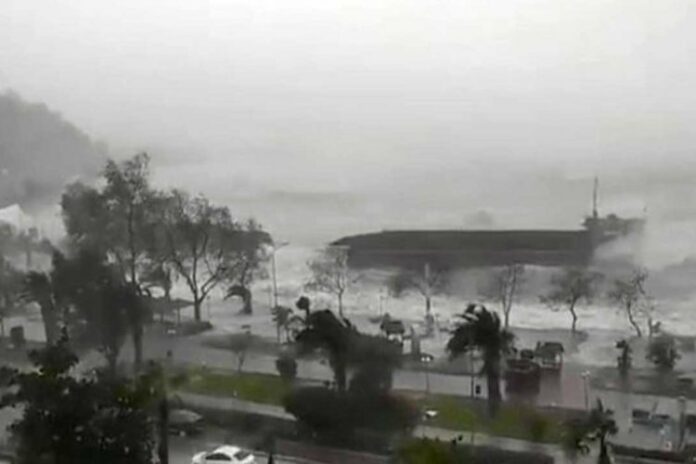
In the midst of a violent storm off Turkey’s Black Sea coast, a Turkish cargo ship identified as ‘Kafkametler’ vanished without trace. The authorities have been unable to make contact with them since, local authorities said.

The ship, carrying 12 crew members and a cargo of ferrosilicon, was last reported drifting perilously close to a breakwater off Eregli, located in the northwest Zonguldak province of Turkey. 

The captain of the Turkish flagged Kafkametler had reported during the Sunday morning that the ship was drifting towards a breakwater off Eregli, in northwest Turkey’s Zonguldak province, the provincial governor’s office said.

The region was hit by powerful storms on Sunday and the statement said the adverse weather prevented air and sea vessels from carrying out searches.

Search and rescue teams were deployed in the region and were ready to launch operations when the weather permitted, the governor’s office said.

The violent storm has not only resulted in the disappearance of the Kafkametler but also wrought havoc across Turkey. Another ship flying the flag of Cameroon was literally torn in two by the violent waves off Eregli.

Source: USNews, BNN

Kenmare awards IHC Mining with contract for two customised mining dredgers

0

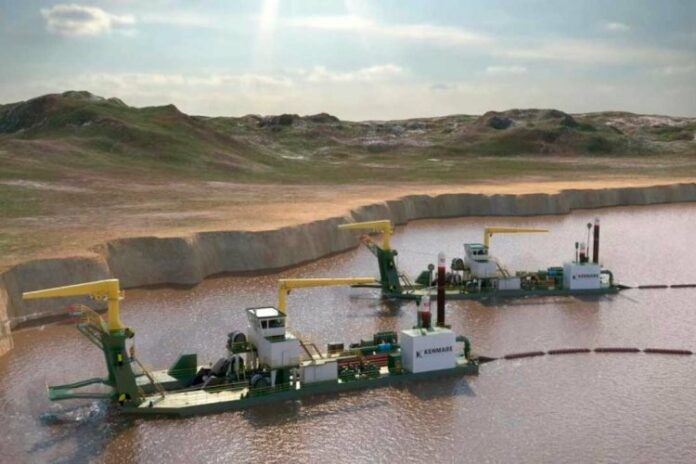
Kenmare Resources plc (“Kenmare”) and IHC Mining have signed the contract for the delivery of two large customised mining dredgers. The two dredgers will each have a total installed power of 6,800 kVA and a cutter power of 1,350 kW.

As they are electrically powered by using renewable hydro-electric power, these dredgers will contribute to Kenmare’s goal of reducing the carbon footprint of their operations. The vessels will be built concurrently at Royal IHC’s yard in Kinderdijk (Netherlands).

Kenmare operates the Moma Mine, a mineral sands operation in Mozambique, for which IHC Mining has already delivered three dredgers in the past, with the JULIA the most recent (2019).

The two new dredgers will operate at Nataka, a newly extended mine site, expected to operate for several decades. Kenmare is going to upgrade and transition their Wet Concentrator Plant A to Nataka, and the two dredgers are an important element in the new operation.

Managing Director IHC Mining Hans Greve, comments:

“We are very proud of our long-standing relationship with Kenmare. The award of this contract underlines how we continuously strive to develop and deliver sustainable and responsible solutions that meet our clients’ needs.”

Ben Baxter, Chief Operating Officer of Kenmare adds:

“The two dredgers are an important element of our project of upgrading our WCP A and transitioning to Nataka. IHC Mining understands our challenges and we value the high service levels IHC Mining has always delivered and their local presence.”

Terntank vessel uses shore power for unloading ops at Gävle port

0

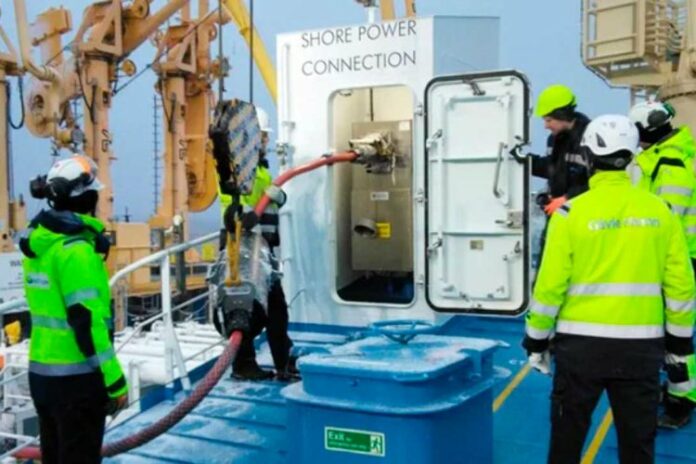
On Tuesday, a globally unique connection of the product tanker Tern Fors to shore power was carried out in Gävle harbor. The vessel was connected for over three hours and, for the first time, conducted an unloading operation using shore side electricity as the power source.

Years of preparation from both the port and Terntank culminated in a central and globally unique milestone on Tuesday when Tern Fors connected to the newly built shore power connection in Gävle harbor. The vessel was connected for three hours and carried out an unloading operation, the most energy-consuming operation for a tanker, as the vessel’s own pumps had to be operated. A total of 1,424 kWh was consumed during the operation.

“It was a completely magical feeling at the moment when we switched to shore power. It felt like we were experiencing something groundbreaking,” says Robert Friborg, the chief engineer on board Tern Fors.

Shore power for tankers is only available in one port in the USA for regular traffic, nowhere else in the world. Connecting tankers to shore power is complex due to a permanent risk of explosions when a tanker is docked in energy ports, as flammable products are pumped that can easily be ignited by electrical equipment. Gothenburg Port leads the Green Cable project with the aim of developing a new global standard for the electrical connection of tankers at the dock in a hazardous environment, together with classification societies, oil companies, shipping companies, the Swedish Transport Agency, and Gävle Port.

During the connection, the crew on board Tern Fors had direct contact with technicians from subcontractors in both Norway and China, while Gävle port had its electricians on site.

“We did encounter some challenges during the day, but we solved the issues that arose, made some adjustments, and then it went as planned,” says Lennart Knutsson, the captain on board. Tern Fors tested the connection in Gävle in February of this year, but without connecting the power. Since then, various improvements and adjustments have been made, both to the onshore facility and on board.

“Now everything fell into place, and we were unloading completely without any auxiliary machines connected. If anything were to happen to the connection, we have batteries that kick in, ensuring that there is never a blackout on board,” says Lennart Knutsson.

The vessel connects the cable amidships. The connection points, both on board and ashore, are in specially adapted environments. On the dock, the cable is in a container with overpressure with air to prevent any gases from entering. The small connection house on board the vessel is then filled with nitrogen to ensure it is under 5 percent oxygen so that nothing can explode if a spark occurs.

Evaluations are now awaited from both the port and the shipping company before Tern Fors, and also the sister vessel Tern Island, can connect next time.

“The next time we do it, it will probably go much smoother; now we know more about how the connection should be made and that it works as intended. Next time, it will likely be much quicker,” says Lennart Knutsson.

Med Marine delivers three state-of-the-art tugboats to Svitzer on the same day

0

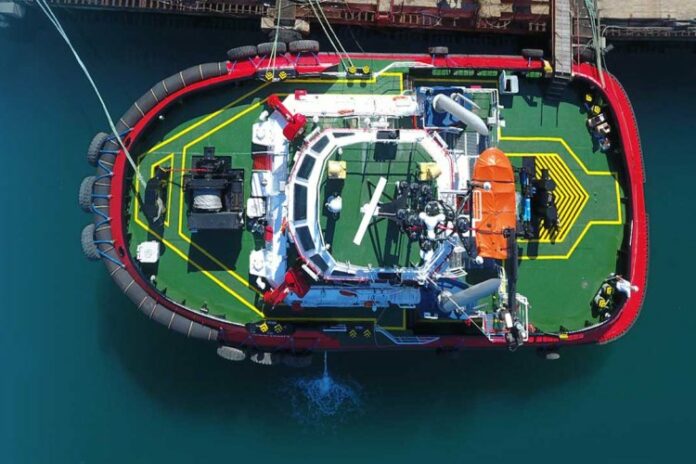
Med Marine has successfully delivered three cutting-edge RAstar 2800 tugboats to Svitzer in one single day. 

The vessels boast state-of-the-art features, embodying the latest advancements in tugboat technology. The design and quality of the vessels will ensure optimal performance in diverse and demanding maritime environments.

Med Marine’s Sales Manager, Melis Üçüncü  stated:

“Our success in delivering three tugboats to Svitzer in a single day is a testament to Med Marine’s unwavering dedication to excellence and our team’s exceptional skillset. This achievement not only highlights our commitment to pushing the boundaries of what’s possible in maritime engineering but also solidifies our strong partnership with Svitzer.”

All three tugs will be deployed in Greece to serve Gastrade’s Alexandroupolis Independent Natural Gas System LNG terminal.

Austal enters MoU with Harland & Wolff Group to pursue opportunities in the UK

0

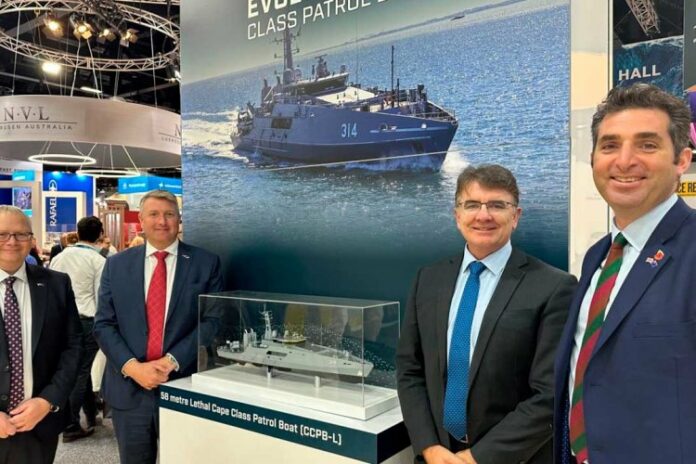
Both parties have identified opportunities in the UK market, including the Border Force vessel replacement programme, and intend to work jointly in a non-exclusive partnership on such opportunities.

The MOU, signed at the 2023 Indo Pacific Maritime Exposition in Sydney, includes the transfer of technology, skills, and shipyard capabilities required to build the next generation of patrol vessels for the United Kingdom for maritime security agencies.

Austal Limited Chief Executive Officer Paddy Gregg said the MOU was the first step towards winning new business in the United Kingdom, collaborating with Harland & Wolff, an established manufacturing, services and support company operating in the maritime defence industry.

“Harland & Wolff is an ideal partner for Austal in the pursuit of defence opportunities in the United Kingdom with the facilities, expertise and capabilities to effectively pursue and help deliver new vessels for organisations such as the UK Border Force. We look forward to collaborating with Harland Wolff on new opportunities that leverage Austal’s proven leadership in aluminium patrol boat design and construction.”  

John Wood, Group Chief Executive Officer of Harland & Wolff said

“I am delighted to have signed this MoU with Austal, a global leader in the aluminium vessel market. As we embark on the next phase of the Company’s growth and development, we will be partnering with Austal not only for the transfer of technology to build aluminium vessels but to also join hands with them when bidding for contracts. Austal’s skills and decades of experience in the aluminium build space and border security vessels are second to none. I look forward to working closely with them to build the next generation shipyard capability for aluminium vessels in the UK.”

Berge Bulk unveils the world’s most powerful sailing cargo ship

0

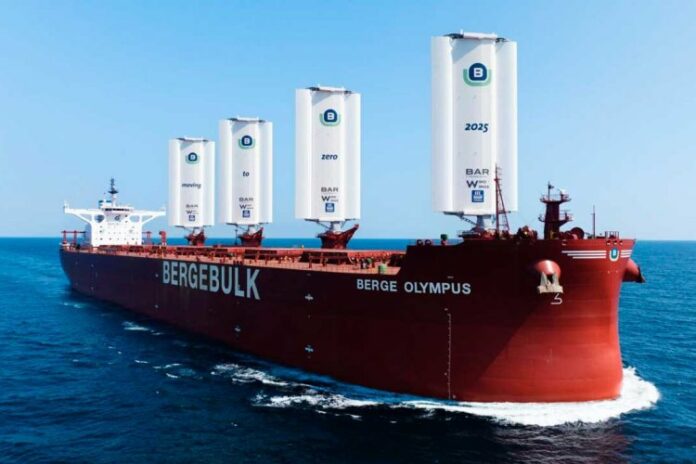
Berge Bulk launches its Newcastlemax bulker, Berge Olympus, with four retrofitted BARTech WindWings by Yara Marine Technologies. 

The WindWings installation is part of Berge Bulk’s ambition to become carbon neutral by 2025and marks the Berge Olympus as the world’s most powerful sailing cargo ship.

With four WindWings installed, each possessing an aerodynamic span of 37.5 metres height and 20 metres width, the Berge Olympus will save 6 tonnes of fuel per day on an average worldwide route and, in the process, reduce CO2 emissions by approximately 19.5 tonnes per day. With these fuel savings and CO2 reductions, Berge Bulk is evaluating the potential of installing WindWings on more of its vessels that trade on routes with favourable wind conditions.

Berge Bulk’s WindWings project is a testament to its commitment to lead the way towards a zero-carbon future while enhancing vessel efficiency. This initiative aligns with the new IMO goals, to reach net-zero GHG emissions from international shipping by or around, i.e., close to 2050, as well as indicative check-points for international shipping to reach net-zero GHG emissions for 2030 (by at least 20%, striving for 30%) and 2040 (by at least 70%, striving for 80%). Contributing to this mission, Berge Bulk’s WindWings project reflects its dedication to environmental sustainability and technological advancement.

In addition to the installation of the WindWings, Berge Olympus has been retrofitted with a shaft generator system. The shaft generator is driven by the main engine to supply electric power to the vessel, thus saving fuel and reducing emissions. With a 1MW capacity, it is sized to eliminate the need to operate auxiliary engines while at sea. This installation is in itself ground-breaking and concludes a program that saw multiple vessels retrofitted with the technology.

As part of the global effort to reach future decarbonisation goals, Berge Bulk is forging a trail to carbon neutrality by 2025 through safe, efficient and sustainable shipping. To achieve this milestone, Berge Bulk has deployed a four-pillar decarbonisation plan that focuses on improving fleet efficiency, leveraging the latest maritime technology, piloting new fuels and investing in carbon capture, Berge Bulk calls it the Marshall Plan. Berge Bulk’s adoption of WindWings – the culmination of years of research by naval architect BAR Technologies – highlights the clear opportunity for vessel owners to swiftly retrofit new technologies to make a rapid and profound difference to the climate impact of their fleet.

James Marshall, Chief Executive Officer, Berge Bulk concluded: “At Berge Bulk, we are constantly striving to enhance our efficiency and reduce the environmental impact of our existing fleet. From 2008 until today, we have achieved a remarkable 46% reduction in our CO2 emissions per tonne mile, already surpassing the 2030 IMO target for reducing carbon emissions intensity. There’s still so much to do as we accelerate the transition to new fuel in the zero-carbon future. That is why we are proud to partner with BAR Technologies and Yara Marine Technologies to pioneer this WindWing system. The Berge Olympus is a testament to innovation and sustainability.”

OESI invests $2.7 million to advance offshore wind safety

0

The OESI received 45 project proposals for four distinct research pathways in response to the Wind Energy Request for Proposals (RFP). Total funding for the six research projects selected will reach $2,689,928 pending successful contract negotiations.

Organized under an agreement between BSEE, DOE (the U.S. Department of Energy), and TEES (the Texas A&M Engineering Experiment Station), OESI is a world-class program for research and development that brings together industry, national labs, nongovernmental organizations, and academia to support the development of safety, environmental monitoring, and operational improvements related to oil and gas, offshore wind, and marine and hydrokinetic energy technologies. With today’s investment, OESI has funded over $7.7 million in research grants to advance the safety of offshore renewable and traditional energy.

Kevin Sligh, Director of the Department of the Interior’s Bureau of Safety and Environmental Enforcement (BSEE), said:

“The research facilitated by OESI helps to ensure offshore energy exploration and production remain safe and environmentally sustainable. OESI’s work leverages the knowledge and skills in the traditional energy operational space to the emerging fields of offshore wind and marine energy. These rapidly developing areas within the national energy portfolio are benefitting from OESI’s work.”

Jeff Marootian, Principal Deputy Assistant Secretary for EERE, said:

“Our oceans are a source of abundant clean power and represent significant opportunities to provide reliable domestic energy for American homes and businesses. However, as we develop offshore wind and marine energy technologies, we also aim to be stewards of our natural environment. OESI’s important investments ensure we’re using the best available research to integrate safety and sustainability throughout the lifecycle of offshore renewable energy projects.”

Brad Crabtree, Assistant Secretary for FECM, said:

“Today’s efforts by the Ocean Energy Safety Institute to enhance the performance of U.S. offshore energy, whether it be oil and gas safety, environmental monitoring, or ground-breaking technology development, will benefit our country’s energy security and environmental health far into the future. The Department of Energy benefits greatly by supporting collaboration through the Institute’s work.”

The wind energy research projects selected for funding will focus on the safe installation, operation, and maintenance of offshore wind energy systems and improving the overall safety of offshore workers. Specifically, the research will help advance technologies that reduce the risk of injuries during personnel transfers, as well as from exposure to other physical hazards. The research will also enhance understanding of site conditions and improve modeling of dynamic loading on turbines. For additional information about the projects selected, see OESI’s wind energy announcement page.

CNOOC limited announces Payara Project in Guyana commences production

0

CNOOC Limited announces that Payara Project has commenced production safely

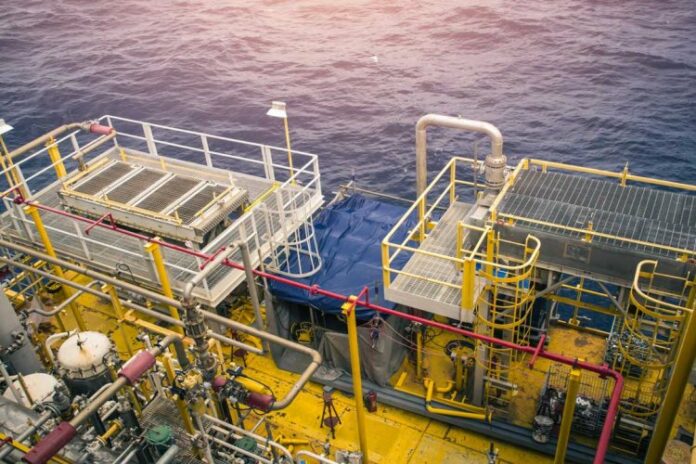
Payara Project produces with 1 FPSO and 41 subsea wellheads. The FPSO is the third production facility in the Block following the two serving Liza Phase I and Liza Phase II. It was constructed in China and Singapore, and arrived in Guyana in April 2023. It is moored in water depth of about 1,930 meters and will be able to store around 2 million barrels of crude oil. Payara Project is expected to reach its peak production of approximately 220,000 barrels of crude oil per day in 2024.

Mr. Zhou Xinhuai, CEO and President of the Company, said:

“The delivery of Payara Project was a milestone for the partnership and production growth of the Stabroek Block. By 2024, the daily production of the Block is expected to reach approximately 620,000 barrels of crude oil per day, which will further fuel the high-quality development of the Company.”

CNOOC Petroleum Guyana Limited, a wholly owned subsidiary of CNOOC Limited, holds 25% interest in the Stabroek Block. ExxonMobil Guyana Limited is the operator and holds 45% interest, and Hess Guyana Exploration Ltd. holds 30% interest.