-13 C
New York
Home Blog Page 241

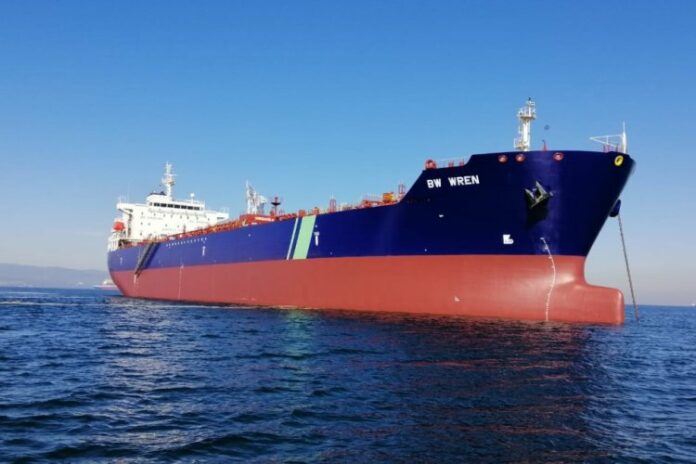
Wärtsilä to retrofit ten Hafnia tankers for improved propulsion efficiency

0

The combination of the two Wärtsilä systems ensures an optimised waterflow over and after the propeller, thereby improving propulsion efficiency considerably. The order was booked by Wärtsilä in October 2023.

EnergoFlow is an innovative pre-swirl stator that creates an optimal inflow for the propeller, reducing fuel consumption and emissions in all operating conditions. The EnergoProFin is an energy saving propeller cap with fins that rotate together with the propeller. It reduces the energy losses created by the propeller hub vortex, increasing overall propulsion efficiency and significantly reducing underwater noise.   

By improving the vessels’ fuel efficiency, emissions are reduced, operating costs are lowered, and both the Carbon Intensity Indicator (CII) rating and Energy Efficiency Existing Ship Index (EEXI) value are improved.

“There are many benefits to be gained by improving the operating efficiency of our vessels’ propulsion systems and we look forward to having these innovative Wärtsilä solutions installed,” said Ralph Juhl, EVP, Technical Director at Hafnia. “At Hafnia we are working hard to decarbonise our operations and these retrofitted solutions will support this commitment.”

“Wärtsilä’s OPTI Design methodology takes advantage of computational fluid dynamics along with our extensive in-house know-how. The EnergoProFin propeller cap and EnergoFlow pre-swirl stator work together to deliver meaningful fuel savings and better environmental performance, which are key ambitions for today’s leading operators,” commented Francois Emin, Product Manager – Propulsion, Wärtsilä.

The Wärtsilä equipment is scheduled to be delivered commencing in 2024. The project will be carried out over a two-year period for the 10 vessels.

Portuguese Navy signs contract with Damen for innovative Multi-Purpose Vessel

0

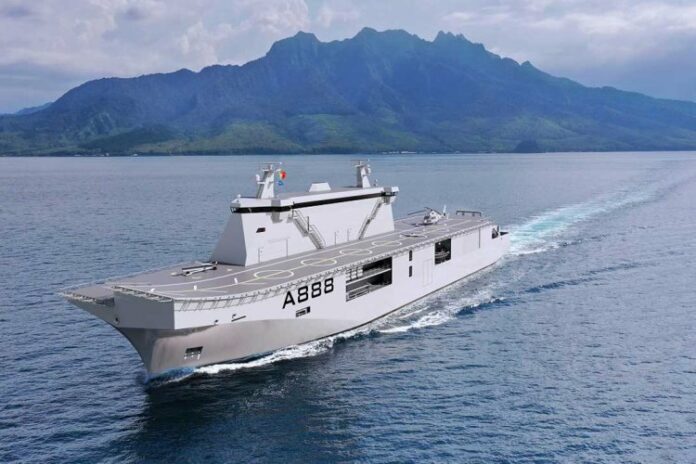
The Portuguese Navy has contracted Damen Shipyards Group for the design, construction and outfitting of a state-of-the-art Multi-Purpose Vessel. 

The contract was signed by Director of Ships Rear Admiral Jorge Pires and Damen Shipyards Group CCO Jan Wim Dekker. The project follows a European tender process and is funded by the European Union’s Recovery and Resilience Facility (RRF) that is part of NextGenerationEU (the economic recovery package to support EU member states affected by the COVID-19 pandemic).

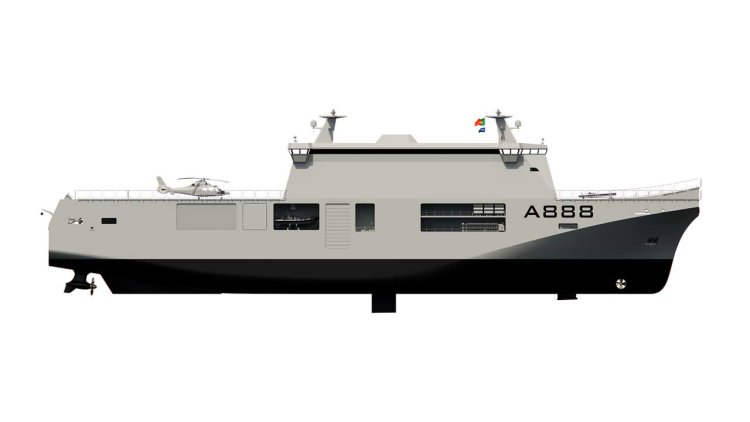
Damen has developed this 107-metre long Multi-Purpose Vessel based on the specific requirements of the Portuguese Navy. The resulting design is truly a multi-purpose platform, with primary mission roles including oceanic research, search and rescue, and emergency relief in addition to maritime safety and naval support operations. To this end, the vessel will be capable of deploying unmanned drones and helicopters. 

For the oceanic research and monitoring scope of operations, the vessel will be equipped with laboratories and accommodation for scientific staff. For the naval support aspect, the Damen-built vessel will have numerous design features to enable such operations. This will comprise a stern ramp for UUVs and USVs (Unmanned Underwater Vehicles and Unmanned Surface Vehicles) as well as a 94×11-metre flight deck and hangars for UAVs (Unmanned Aerial Vehicles).

The new vessel will be classified by the Portuguese Navy as a Multifunctional Naval Platform (PNM). To fully match this vessel designation, Damen has collaborated closely with the Portuguese Navy to incorporate future-versatility into the design. This consists of a 650m2 cargo deck and space for twelve 20-foot containers. Modular systems such as containerised hospital facilities, hyperbaric chambers, or ROV equipment can therefore be installed as required.

“We are proud to have been selected to build this spectacular vessel for the Portuguese Navy,” Damen Shipyards Group CEO Arnout Damen said after the contract signing ceremony. “We are convinced that this vessel will represent a major milestone in the naval sector. It is the first of its kind, with the highest capabilities to create awareness, deploy and manage all types of drones. This vessel’s multi-purpose functionality will enable the Portuguese Navy to develop the most demanding missions and at the same time the ability to perform research activities in the deepest areas of the ocean. It also underlines Damen’s firm relationship with the Portuguese Navy and shows a further example of European defence industry cooperation”

The Portuguese Navy currently has two Damen-built vessels in service. These are the 122-metre long Bartolomeu Dias class multi-purpose frigates NRP Bartolomeu Dias and NRP D. Francisco de Almeida. Both vessels originally served in the Royal Netherlands Navy (as Karel Doorman class frigates) before undergoing a substantial modernisation programme by Damen and the Dutch Command Materiel and IT (COMMIT) agency.

Steerprop to supply Arctic bow thrusters for Canada’s new Polar Icebreaker

0

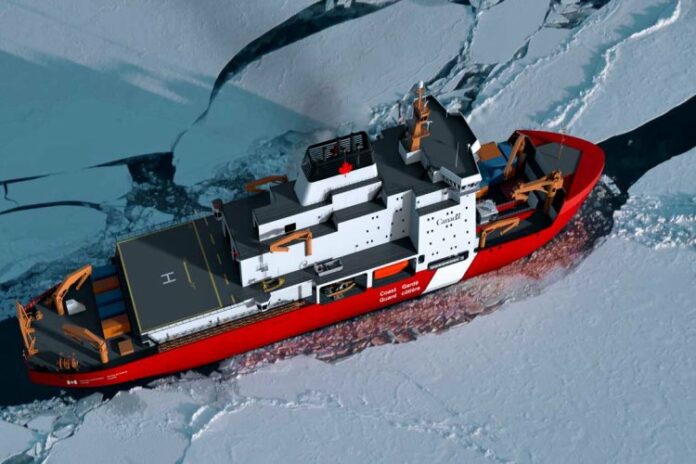
Steerprop has been chosen to supply advanced ice-classed bow thrusters to the Canadian Coast Guard’s new Polar Icebreaker. 

Steerprop will equip the Polar Icebreaker with two arctic tunnel thrusters specially designed to meet the most demanding ice conditions, even without the protection of tunnel grids. This will be Steerprop’s first delivery of this unique ice-strengthened tunnel thruster, which will take the performance and reliability of tunnel thrusters to the next level. The delivery scope also includes a bridge control system and an offline oil filtering system.

Steerprop has designed an optimal solution for the scope and operational profile of the icebreaker based on the company’s decades-long experience of delivering ice-classed solutions, and “fit for purpose” resolve. In addition to optimizing operational performance, the fully integrated propulsion solution will increase reliability and safety, while reducing lifecycle costs and keeping maintenance requirements at a minimum.

The multi-mission Polar Icebreaker has a displacement of 27,876 tonnes. It will be 150 meters long, 28 meters wide, and will accommodate up to 100 people. With an ice class Polar Class 2 (PC2) rating, the second highest ice class according to the IACS, it will be able to operate in more difficult ice conditions (including in multi-year ice) and for longer periods than any other Canadian icebreaker.

“The Polar Icebreaker will be an incredibly complex ship, designed to operate in the Arctic’s ice-covered waters. It will play a critical role in enabling the Canadian Coast Guard to transit and protect the Arctic coastline. A reliable and efficient propulsion system is therefore essential, and the Steerprop solution has been selected to deliver this. Furthermore, the vessel will help sustain a year-round presence in Canada’s North, responding to emergencies and supporting local communities, arctic sovereignty, and high-Arctic science,” says Russell Davison, Vice President of Coast Guard Programs at Seaspan.

“The arctic conditions require extreme reliability – reliability is always the most important thing. Our R&D has always taken this kind of ultimate dependability to be the foundation of everything we do. The propulsion system must be able to perform, day in and day out,” says Juho Rekola, Director, Sales and Project Management at Steerprop. “For demanding arctic conditions, the thrusters need to be built for the purpose taking into account severe ice conditions and the operational area. This, in combination with our vast experience of delivering propulsion systems to ice-classed vessels, has resulted in a truly optimized solution for this Polar Icebreaker.”

Steerprop delivered its first propulsion units for an icebreaker in 2008 and has been a recognized player in this demanding segment ever since, continuously accumulating operational experience from icebreakers in both the Baltic Sea and the Arctic Ocean. Throughout the years, Steerprop has put great emphasis on developing the performance and reliability of its solutions specifically for the world’s most challenging areas, including the Polar Code regions.

Nova Scotia government retreats on plan to fast-track wind farms in coastal bays

0

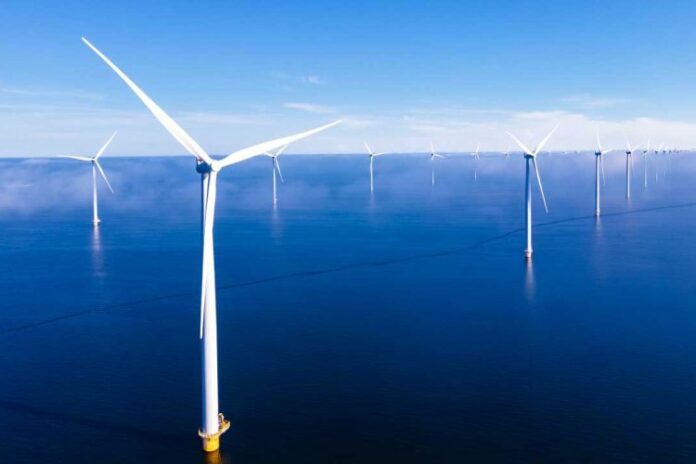
Canadian province of Nova Scotia has announced its intention to pause consideration of offshore wind development in provincial waters until the framework for jointly managed federal-provincial areas is in place.

The Province has decided to focus first on building the regulatory framework for offshore wind energy development in areas jointly managed with the federal government before considering waters under solely provincial jurisdiction.

“Offshore wind is an important part of our clean energy plan, and we are working with our federal partners to ensure a clear path for sustainable development of this new sector,” said Tory Rushton, Minister of Natural Resources and Renewables. “We’re pausing any consideration of waters within provincial jurisdiction until the framework for jointly managed offshore areas is in place. The regional assessment that’s ongoing will help inform our decisions for the regulatory framework for both areas, and I encourage Nova Scotians to continue participating and sharing their input. Our decision to focus on jointly managed waters first reflects that we are listening to the feedback through this process.”

Offshore wind in jointly managed federal-provincial waters will be governed by the Act to amend the Canada-Newfoundland and Labrador Atlantic Accord Implementation Act and the Canada-Nova Scotia Offshore Petroleum Resources Accord Implementation Act (Bill C-49) and associated regulations. Bill C-49 amends the existing Accord Acts, which governed offshore oil and gas development in Nova Scotia and Newfoundland and Labrador, to include the regulation of offshore renewable energy like offshore wind.

The Bill was introduced into the House of Commons in May 2023 and is currently being considered by the Standing Committee on Natural Resources. Bill C-49 is expected to enter into force in 2025, in time for the Province of Nova Scotia’s projected first offshore wind lease auction.  

Damen delivers Damen Multi Cat to Maritime Craft Services

0

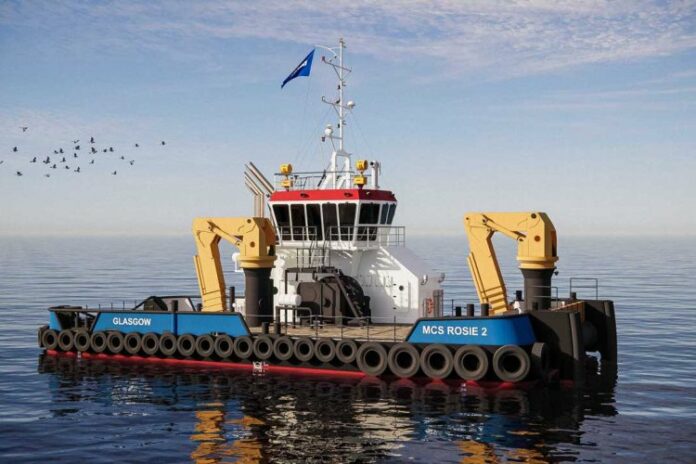
Damen Shipyards has delivered one of its versatile, multi-purpose, Multi Cats to workboat specialist Maritime Craft Services (Clyde) Ltd. The order was placed just six weeks earlier

Based on the Firth of Clyde on the west coast of Scotland, Maritime Craft Services (MCS) operates a fleet of 17 workboats, of which 13 have been built by Damen. They are made up of eight Fast Crew Suppliers, two Shoalbusters and now three Multi Cats. The company’s services are in demand across north-west Europe, the Middle East and beyond by offshore energy contractors and dredging clients for activities including anchor handling, towing, cable laying, dive support and general support / supply services. 

The christening and handover took place on the tenth of November at Damen Shipyards Gorinchem. The new vessel was named MCS Rosie 2 after the youngest child of director Menno and his wife Heather Kuyt. Speaking in English and Dutch, Rosie, who is also the vessel’s godmother, wished the crew safe and prosperous sailing with the vessel. 

Rosie was photographed onboard with her father Menno, her mother Heather, sister Anneke and brother Cees, alongside MCS co-owner and Rosie’s aunt, Nikki Kuyt. They were joined at the christening by MCS employees Nigel Skea, John Grieve, Galvin Mckechnie and Steve Janes. Hosting the event was Damen’s Jeroen van Woerkum, Commercial Manager at Damen Shipyards Hardinxveld, where MCS Rosie 2 was built.

This latest acquisition by MCS is in response to an increase in demand for their services as offshore activity accelerates after the pandemic. The vessel already has its first charter booked and is now on en route to start its first assignment. Like all Damen Multi Cats it comes with a comprehensive equipment package. For the MuC 2712 this includes two deck cranes, a bow thruster and a towing & anchor handling winch. It has a bollard pull of up to 32 tonnes and a top speed of ten knots. 

“As a company that is aways looking for new opportunities, we require vessels that are flexible, reliable and efficient,” said Menno Kuyt. “Not only was the delivery time exceptional, our history with Damen also gives us confidence that this vessel has everything it needs to be a multi-purpose, multi-functional asset capable of taking on a wide range of projects.” 

“We are delighted that MCS has returned to us for their latest addition to their fleet,” adds Jeroen van Woerkum. “The MuC 2712 is an exceptional vessel, having been continually upgraded and optimised over the years. The only significant adjustment to this stock vessel was painting it in the company colours!”

ONE embarks on wind propulsion trial

0

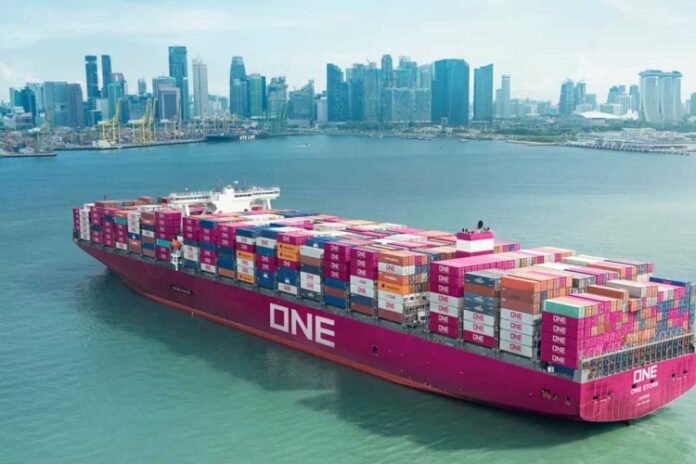
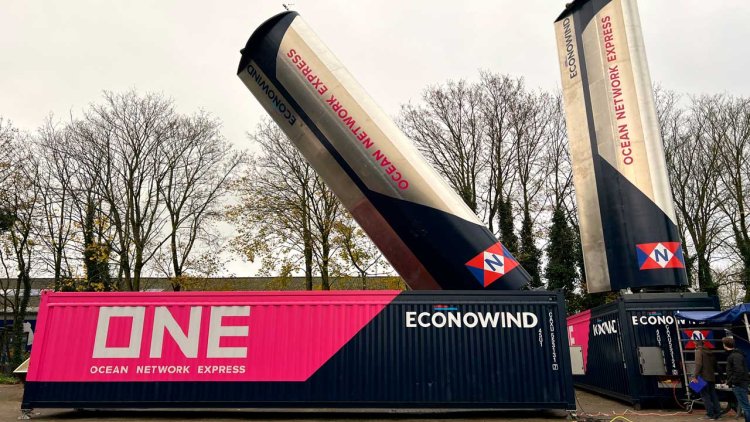
Following the successful completion of a factory test, ONE, in partnership with Dutch maritime wind-powered technology experts Econowind, is set to install two containerized wind assist devices, known as VentoFoil containers, on the MV Kalamazoo. 

The 1,036 TEU feeder vessel operates between Pusan, Yokohama, and Honolulu, and is owned by NORSE UK and managed by Goodwood Ship Management, Singapore.

The VentoFoils, which resemble airplane wings, are designed to harness wind energy, resulting in a significant reduction in fuel consumption and greenhouse gas emissions. Each VentoFoil is equipped with smart suction system that optimize airflow and maximize thrust, and has the potential to generate up to 400kW of power, reducing fuel consumption by 5%. They are fully automatic, adjust for wind speed and direction, and can be started from the ship bridge. 

“ONE is committed to minimizing our environmental impact and achieving net-zero emissions by 2050,” said Hiroki Tsujii, Managing Director at ONE. “This trial with Econowind is an important step forward in our efforts to explore innovative and sustainable solutions for the maritime industry.”

The trial, scheduled to begin in January 2024 and run for approximately six months, will be a comprehensive study, with ONE closely monitoring the performance of the VentoFoils. Data on fuel consumption, emissions reductions, and overall operational efficiency will be collected. The results of the trial will be used to assess the long-term viability of wind propulsion as a sustainable shipping solution.

Proman Stena Bulk names methanol-fuelled tanker duo

0

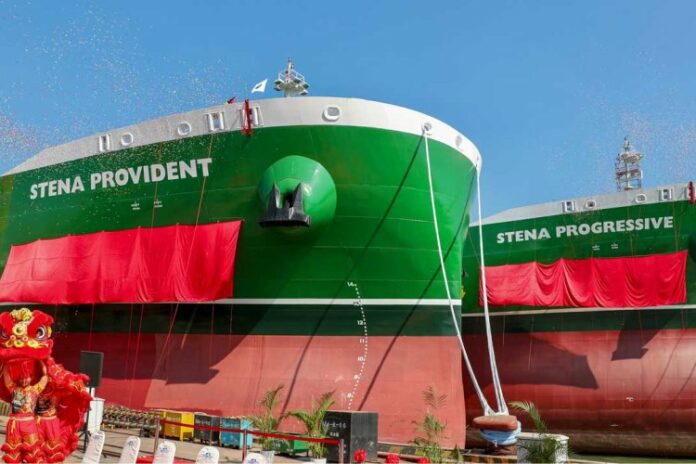
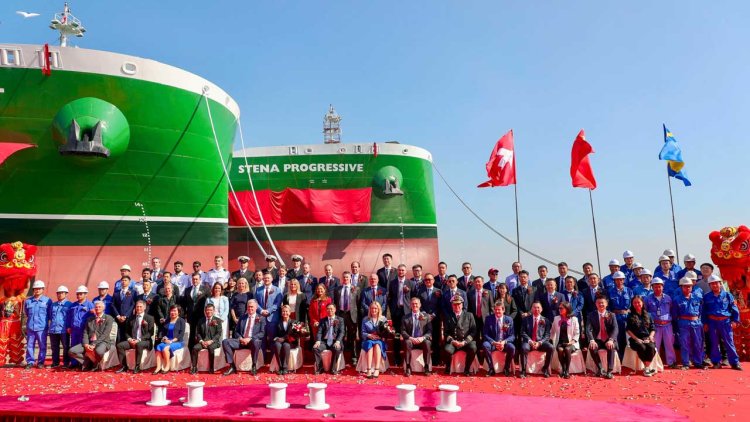
Proman Stena Bulk, the joint venture between leading tanker company Stena Bulk and the leading methanol producer Proman, has today formally christened Stena Provident and Stena Progressive, the final two vessels in its initial six-strong methanol-fuelled tanker fleet. 

The two 49,900 DWT tankers were named at a ceremony held at Guangzhou Shipyard International Co Ltd (GSI) in China.

The naming ceremony for both vessels was attended by representatives from Proman, Stena Bulk and GSI, as well as from the local maritime community in southern China. 

The decision to name the final two vessels at GSI recognises the shipyard’s pivotal role in the construction of the six joint venture methanol tankers. The construction of Proman Stena Bulk’s fleet was executed by the shipyard over the last three years, including during the Covid-19 pandemic. 

Executing the newbuildings during this unique period required close collaboration between Stena Bulk, Proman and GSI. It has created a blueprint for the industry to follow as it scales up methanol-fuelled shipping over the coming decade.
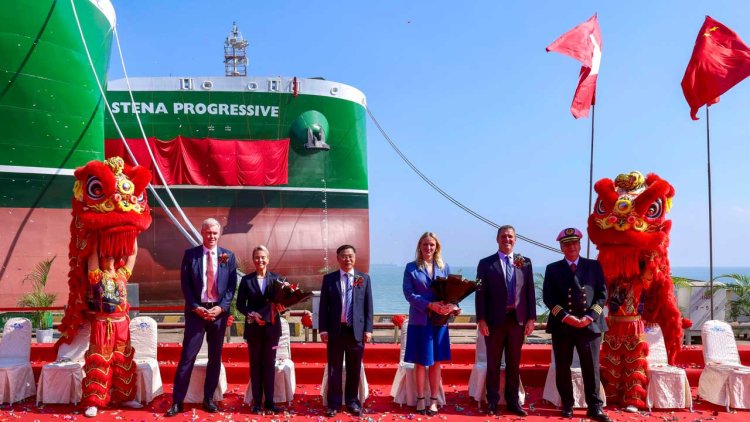
The naming ceremony of the two tankers also saw Miss Alicia Schnabel named as the godmother of Stena Provident, and Ambassador Marie-Claire Swärd Capra, Consul General of Sweden in Shanghai, named as the godmother of Stena Progressive.

Both vessels are 49,990 DWT dual-fuel mid-range (MR) tankers. Once operational, the ships will consume 12,000 tonnes of methanol annually, realising reduced NOx emissions by 80%, the virtual elimination of SOx and Particulate Matter (PM), and a CO2 emissions reduction of 15% on a tank-to-wake basis compared to conventional marine fuels. 

Uniquely for the joint venture fleet, Stena Provident and Stena Progressive’s tanks are equipped with the industry’s best-in-class high performance polymer MarineLINE cargo tank lining, affording them greater cargo flexibility. As the vessels are set to be time chartered, this means that a greater range of organisations and charterers will be able to build experience operating with methanol-fuelled ships and realise near-term positive sustainability impacts.
David Cassidy, Chief Executive of Proman, said:

“Naming Stena Provident and Stena Progressive at GSI is a fantastic milestone for the Proman Stena Bulk joint venture. We now have a market-leading fleet of futureproofed methanol tankers that clearly show the way for methanol as a marine fuel.

“That these two tankers will be time-chartered means that more players across the market can familiarise themselves with methanol and the considerable near-term benefits it can bring to their operations. We look forward to working with partners across the supply chain to continue demonstrating the upsides of using methanol today.”

Erik Hånell, President and CEO of Stena Bulk, added:

“Naming Stena Provident and Stena Progressive at GSI provides us with the perfect opportunity to celebrate the pivotal role that the shipyard has played in realising our joint venture methanol-fuelled tanker fleet. 

“Together, Stena Bulk, Proman and GSI have developed unique and industry-leading experience about how to make methanol shipping a reality; an experience that we hope to share more widely across our sector as we all work together to reach the ambitious decarbonisation targets set out before us.”

This final naming ceremony for the last vessels in the joint venture’s initial fleet means that Proman Stena Bulk’s tankers now account for one quarter of the currently operational methanol-fuelled ships on the water, according to data from Clarksons. 

Pollution from ships: stricter measures to stop illegal discharges

0

Transport and Tourism Committee has voted to update EU rules on preventing pollution from ships in European seas and ensuring perpetrators face fines. It would ensure all international standards on preventing illegal discharges from ships, developed by International Maritime Organisation, become part of EU law and as a result become more easily enforceable.

MEPs supported the proposal to extend current EU rules prohibiting the discharge of oil and noxious liquid substances to include the discharge of sewage, garbage, and residues from scrubbers.

They want ship-owners to bear the responsibility for any environmental damage caused by ship pollution, in case the master or crew responsible for the illegal discharge can no longer be found or cannot afford to pay the full amount of the penalty. MEPs also want EU governments to avoid setting maximum or minimum penalties for infringements to ensure that the effectiveness and proportionality of penalties are not undermined.

Current EU rules have been responsible for the introduction of the CleanSeaNet, a European satellite-based alert system for oil spill and vessel detection. Because this system lacks reporting on how pollution incidents were followed up, Transport MEPs are in favour of encouraging more information exchange between member states and the Commission on pollution incidents. They also want 50% of CleanSeaNet alerts to be verified on the spot and as soon as possible, to prevent an illegal discharge from dispersing and therefore becoming undetectable by the time of arrival on the location.

“The current EU rules do not work, because they are weakly applied by member states. This is unacceptable. It is time for member states to step up and protect European seas from the harmful effects of ships illegally dumping waste. It is necessary to effectively detect illegal discharges and set penalties at levels that serve as a real deterrent,” EP rapporteur Marian-Jean Marinescu (EPP, Romania) said.

The revision of the directive on ship-source pollution is a part of the Maritime safety package presented by the Commission in June 2023. The package aims to modernise and reinforce EU maritime rules on safety and pollution prevention.

The new rules focus on administrative fines for ship-source pollution, while criminal sanctions are to be addressed in separate legislation MEPs are currently negotiating with EU governments.

Maersk Supply Service extends its contract with The Ocean Cleanup

0

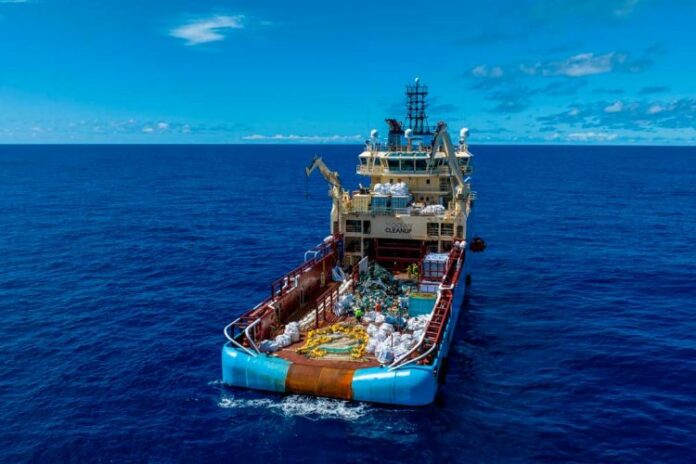
Maersk Supply Service, A.P. Moller – Maersk and The Ocean Cleanup have agreed to extend their collaboration to complete the validation of the system. 

Maersk Supply Service and A.P. Moller – Maersk will provide support to the program, which includes project management, the operation of two Maersk Supply Service vessels towing the system as well as logistics services for waste collection and transportation for recycling. At the same time, the A.P. Moller Foundation will provide a one-time grant to The Ocean Cleanup.

Robert M. Uggla, CEO of A.P. Moller Holding and Chair of A.P. Moller – Maersk:

“The Ocean Cleanup holds an important mission to remove plastics from the oceans, one of the biggest environmental challenges of our time. Today plastic pollution impacts hundreds of marine species and it contaminates the marine food chain with toxic pollutants. With this in mind, Maersk Supply Service, A.P. Moller – Maersk and the A.P. Moller Foundation have decided to extend support to The Ocean Cleanup to finalise and validate their technology and system.”

​Petrobras and Shearwater have entered into a collaborative technology agreement

0

Petrobras and Shearwater have entered into a collaborative technology agreement aimed at reshaping seismic exploration and field developments in Brazil

The multi-year strategic partnership is set to evolve the seismic industry to new levels of performance.

Central to this endeavour is Shearwater’s marine vibrator, with the engineering name of project BASS. This innovative seismic source technology promises significant gains in operational efficiency, seismic data quality, and reduced sound emissions when compared to traditional methods. This enduring commitment will encompass the industrialisation of Shearwater’s marine vibratory source technology and associated services for the Brazilian offshore basins.

Roberta Alves Mendes, Reservoir Technology General Manager at Cenpes Petrobras, said:

“This project aims to accelerate the exploration and development of the Brazilian fields, leveraging increased operational efficiency, innovative geophysical improvements and better control of seismic frequencies emitted in the Brazilian waters.”

Irene Waage Basili, CEO at Shearwater, said:

“This historic collaboration merges cutting-edge technology and innovation with our well-established business rapport with Petrobras in Brazil. The combination of this groundbreaking seismic source with our inhouse Pearl node technology, empowers Shearwater and Petrobras to elevate the standards of quality, efficiency, and sustainability within the realm of seismic solutions.”