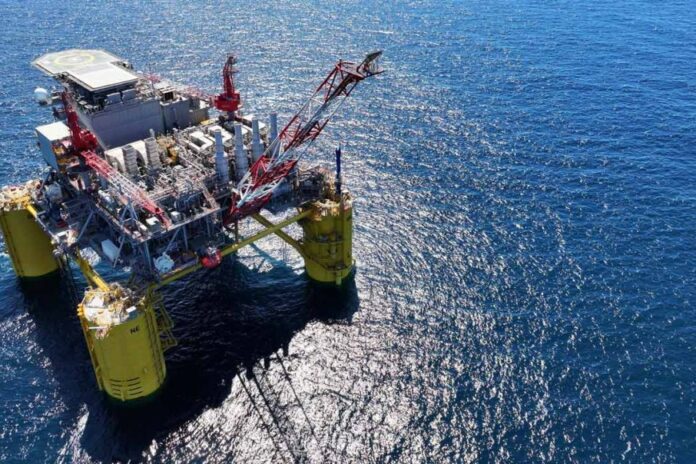
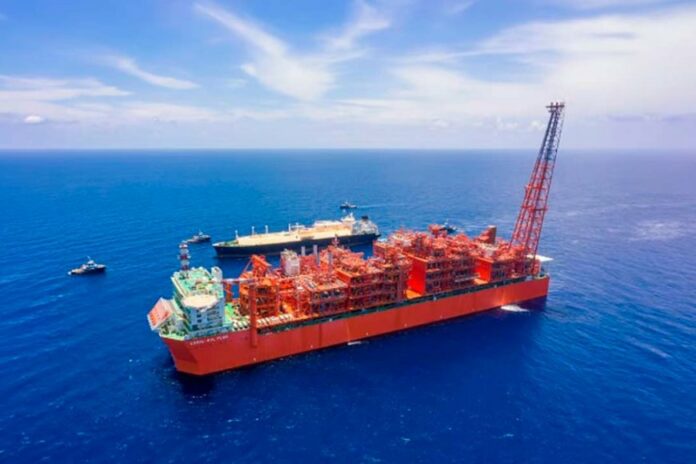
Shell Nigeria Exploration and Production Company Limited (SNEPCo), a subsidiary of Shell plc, together with Sunlink Energies and Resources Limited, have taken a final investment decision (FID) on the HI gas project offshore Nigeria.
When completed, the project will supply 350 million standard cubic feet (approximately 60 thousand barrels of oil equivalent) of gas per day at peak production to Nigeria LNG (NLNG; Shell interest 25.6%), which produces and exports liquefied natural gas (LNG) to global markets. Production is expected to begin before the end of this decade.
“Following recent investment decisions related to the Bonga deep-water development, today’s announcement demonstrates our continued commitment to Nigeria’s energy sector, with a focus on Deepwater and Integrated Gas,” said Peter Costello, Shell’s Upstream President. “This Upstream project will help Shell grow our leading Integrated Gas portfolio, while supporting Nigeria’s plans to become a more significant player in the global LNG market.”
The increase in feedstock to NLNG, via the Train 7 project that aims to expand the Bonny Island terminal’s production capacity, is in line with Shell’s plans to grow its global LNG volumes by an average of 4-5% per year until 2030. It will also bolster NLNG’s contribution to Nigeria’s national economic development goals, including jobs in construction and operations.
The HI field was discovered in 1985 and lies in 100m of water depth around 50km from the shore. The current estimated recoverable resource volumes of the HI project are approximately 285 mmboe (million barrels of oil equivalent).
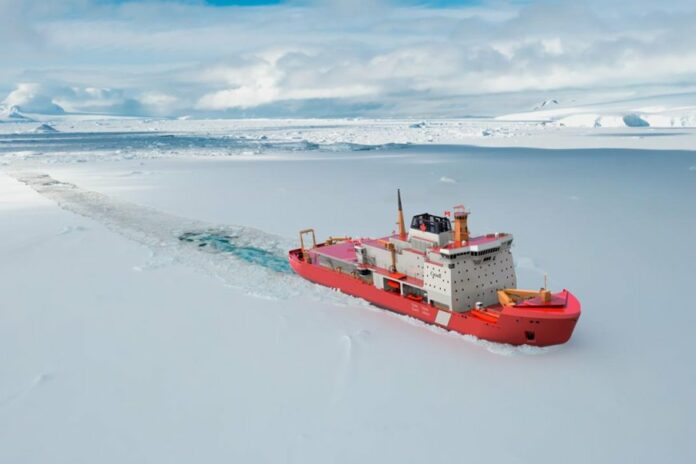
Seaspan Vancouver Shipyards (Seaspan) has awarded a significant contract to Elomatic Consulting Inc. (Elomatic), an international consulting and engineering company, to provide engineering and design support services for the Canadian Coast Guard’s Polar Icebreaker build contract.
As one of the primary partners throughout the functional and production design phases of the Polar project, this award further strengthens Elomatic’s ongoing partnership with Seaspan and reflects the company’s proven expertise in delivering complex heavy icebreaker vessel design solutions.
Under this contract, Elomatic will provide build design support, ensuring that the Polar Icebreaker is optimized for construction at Vancouver Shipyards and is fully equipped to meet the Canadian Coast Guard’s demanding Arctic mission requirements.
The Polar Icebreaker is being designed and built entirely in Canada under the National Shipbuilding Strategy (NSS). Measuring approximately 158 metres in length and 28 metres in beam, the vessel will feature more than 40 MW of installed power, specialized laboratories, a moon pool, a helicopter deck and hangar, and capacity for remotely piloted aircraft systems. Once complete, it will be one of the world’s most capable Polar Class 2 icebreakers, enabling year-round operations in the Arctic.
Since joining the project in 2021, Elomatic has significantly expanded its Vancouver office to support the evolving needs of the Polar Icebreaker program. The company has strengthened its local team by recruiting and developing Canadian talent, while also relocating experienced specialists from Europe, many of whom have committed to long-term assignments in Vancouver. This strategic growth ensures that the build phase is primarily supported by local experts, combining deep international expertise with a strong Canadian presence.
Elomatic has committed to achieving 100% Canadian Content Value (CCV) requirements through its expanding Canadian workforce of almost 40 employees, as well as investments with Canadian post-secondary institutions and small and medium-sized businesses. This strategic growth ensures that the project execution combines local strengths with international excellence.
Kate Morton, Vice President, Supply Chain Management, Seaspan Shipyards, said: “Elomatic’s expertise in marine and offshore engineering, combined with their deep experience in heavy icebreaker vessel design, makes them an invaluable partner as we progress into the build phase of this landmark project. Together, we are delivering a vessel that will serve Canada’s Arctic communities, strengthen sovereignty, and advance scientific research for generations to come.”
Rami Hirsimäki, Senior Vice President, Marine at Elomatic, said: “We are proud to support Seaspan and the Canadian Coast Guard on this historic program. Entering the build contract marks the final phase, and we’re excited to see our long-term design work become reality. In the spirit of the ICE Pact, we’re contributing our expertise to strengthen Canada’s shipbuilding capabilities while growing our own Canadian team, led by local talent and supported by European specialists. We’re committed to delivering the Polar Icebreaker and to continue our collaboration with Seaspan, both in Canada and internationally.”
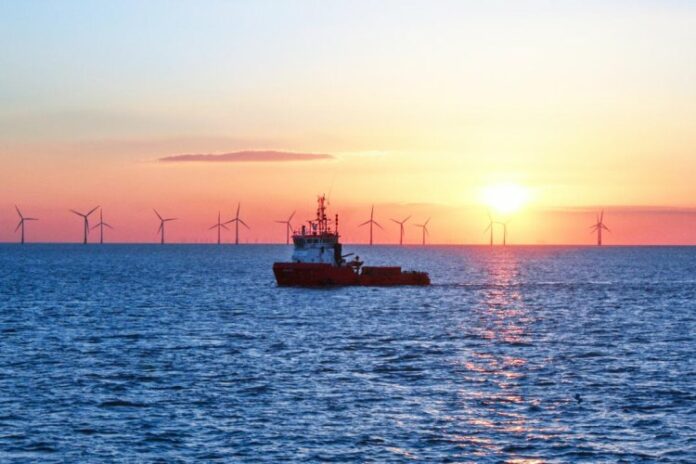
NYK has entered into a long-term time-charter agreement for an offshore wind crew transfer vessel (CTV) with Oga Katagami Akita Offshore Green Energy LLC, a joint venture established by JERA Nex bp Japan LLC, Electric Power Development Co., Ltd., Tohoku Electric Power Co., Inc., and Itochu Corporation.
The vessel will be built by Kosaba Shipbuilding Co., Ltd. in Kamaishi City, Iwate Prefecture, and will operate along the coasts of Oga, Katagami, and Akita, engaging in Japan’s first offshore wind project in general sea areas.
The vessel’s design is based on a model operated by Northern Offshore Services AS, Europe’s largest CTV operator, with modifications to facilitate domestic construction. Building the vessel in Japan will boost the shipbuilding industry, create jobs, and support regional development. The vessel will be managed by Japan Offshore Support Co., Ltd., an Akita-based joint venture between NYK and Akita Eisen Co., Ltd. This joint venture also trains and hires local crew, contributing to the growth of offshore wind projects and regional revitalization.
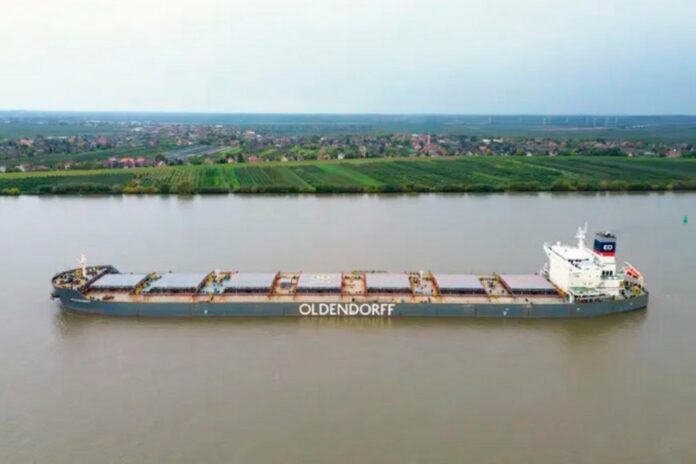
Salzgitter Flachstahl GmbH and Oldendorff Carriers have entered into a long-term agreement to reduce carbon emissions in the maritime transport of iron ore, marking a further step toward decarbonizing Salzgitter’s steel supply chain.
Starting in January 2026, Oldendorff will transport iron ore for Salzgitter from various loading ports to Hamburg using bulk carriers operated with a focus on fuel-efficient practices. By optimizing cargo flows and routing, the collaboration is expected to reduce CO₂e emissions by at least 20%. Salzgitter will incur no additional costs as a result of these measures – in fact, the reduction of transport fuel consumption will lead to cost savings.
This collaboration is projected to cut approximately 19,000 tonnes of CO₂e, equivalent to removing over 4,000 passenger cars from the road for a year. The reductions represent Scope 1 emissions for Oldendorff and Scope 3 emissions for Salzgitter.
Gunnar Groebler, Chairman of the Executive Board of Salzgitter AG:
“In our SALCOS® project, we are focusing not only on decarbonizing the internal production route for steelmaking, but also on related process steps along the entire value chain. Logistics – particularly seaborne raw material transport – plays a central role in this context. We are therefore pleased to have Oldendorff, a long-standing partner, at our side as a strong companion on our transformation journey.”
Henrik Christiansen, Executive Director and Head of Sustainability at Oldendorff:
“Decarbonizing maritime operations is a complex challenge that requires coordination across the entire value chain. This partnership with Salzgitter cements the relationship between two major German companies and reflects the kind of industry collaboration needed to make meaningful and immediate progress in lowering emissions and advancing more sustainable transport solutions.”
This German collaboration reflects the decarbonization strategies of both companies, with each pursuing concrete measures to reduce emissions across their operations.
Oldendorff’s fleet primarily consists of modern “eco”-type bulk carriers, which are designed to reduce fuel consumption compared to earlier vessel generations. Optimized hull forms, advanced engine technology, and additional fuel-saving features contribute to a lower carbon intensity per tonne of cargo transported.
MPCC has signed contracts for two 1,600 TEU high cube container vessels with Chinese Fujian Mawei Shipyard and deliveries scheduled in the second half of 2027.
The total investment amounts to USD 66 million and the Company holds options for additional vessels, offering future scalability in line with market opportunities.
Each vessel has been fixed on 8-year time charter (plus a 2-year optional period) with a leading global liner company, expected to generate approximately USD 92 million in revenue and contribute around USD 54 million in EBITDA over the contracted charter period, providing substantial earnings visibility as well as derisking.
The vessel features a state-of-the-art, fuel-efficient design optimized for the Northern Europe trade and its restricted channels. A refined hull form, shallow draft, and high manoeuvrability ensures efficient operations, while energy-saving systems deliver best-in-class environmental performance.
This newbuilding order is a continuation of supports MPCC’s transition toward a modern, more efficient, and environmentally compliant fleet, reducing exposure to regulatory and environmental risk.
The project will be financed through a balanced mix of equity and debt, ensuring flexibility and a prudent capital structure. The newbuildings are expected to be accretive to both earnings per share (EPS) and dividends per share (DPS) upon delivery.
“We are pleased to mark another step in the transformation of our fleet,” said Constantin Baack, Co-CEO of MPCC. “This transaction is part of our long-term fleet renewal strategy, designed to generate sustainable value through modernization and optimization. It underscores our strong strategic position and proven ability to execute value-enhancing deals that secure long-term charters with leading liner companies, reinforcing strategic partnerships, enhancing earnings visibility, and supporting disciplined growth.
At the same time, we maintain a strong and flexible balance sheet with significant investment capacity, enabling us to advance our renewal program while remaining well-positioned to act on market opportunities should conditions soften.
We continue to view the supply fundamentals in our core segments as favorable, due to the comparably low orderbook – where only 6% of the fleet is expected to be replaced in the next 2–3 years, while 24% of vessels are already over 20 years old.”
Hydropower plays a significant role in Sweden’s electricity supply and transition to a fossil-free society.
However, hydropower has an impact on biodiversity and ecosystem functions in regulated rivers. For this reason, Vattenfall is developing and testing various solutions that can favour biodiversity where the right conditions exist.
“In rivers with hydropower dams, water levels can change rapidly and dramatically. The idea of floating islands is that they follow the variation of the water surface and provide a stable surface for flora and fauna to establish themselves on. The islands act as nesting platforms for birds above the surface, and create a favourable environment for plankton, fish and algae in shallow areas,” says Henrik Viklands, Head of Vattenfall Hydropower’s Biodiversity Programme.
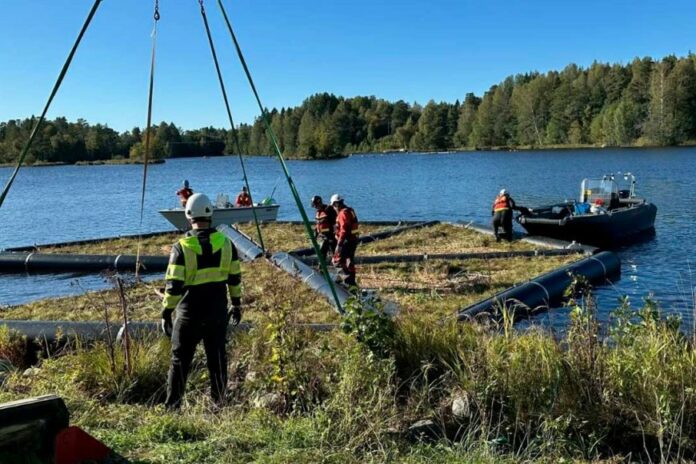
The artificial floating islands are about 15 square metres in size, and the six islands are connected to form a hexagonal island with a total surface area of about 90 square metres. They are designed and built by Vattenfall’s R&D laboratory in Älvkarleby with plants typical of the beach and water environment in the area.
“The project is very promising and can contribute to the efforts to fulfil global sustainability goals and to achieve our vision of implementing the biodiversity plan by 2030,” says Choudhury Maidul, biologist at Vattenfall Research and Development.
Italy’s Eni and Argentina’s YPF have finalized a engineering agreement on a Vaca Muerta liquefied natural gas (LNG) project, they said in a presentation on Friday to sign the deal.
Eni at that time said the deal would cover production, treatment, transportation and liquefaction of gas through floating units for a total capacity of 12 million metric tons per year.
“YPF will be responsible for the upstream, and we will be responsible for the floating liquefaction,” Eni CEO Claudio Descalzi said at the event on Friday. “We need to reach the market before 2029.”
YPF CEO Horacio Marin said the project will require drilling 800 new wells and aims to double the company’s 2024 gas production. Marin estimated the initiative will need $25 billion in infrastructure investment and $15 billion for upstream development.
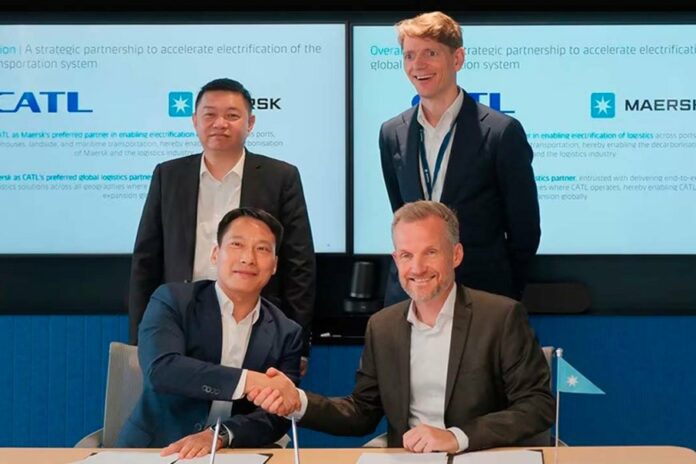
Maersk and Contemporary Amperex Technology have signed a strategic Memorandum of Understanding (MoU) to jointly advance decarbonisation across global supply chains and further strengthen CATL’s global logistics.
Under this new agreement, Maersk will serve as CATL’s preferred global logistics partner, delivering integrated services including ocean freight, air freight, project logistics, and warehousing. The two parties will also explore effective and scalable models to help CATL maintain supply chain resilience in a rapidly evolving global landscape. Tailored solutions will be developed to meet the specific needs of diverse markets. These joint efforts aim to drive operational excellence across CATL’s supply chains and support its international growth ambitions.
Maersk and CATL will also collaborate to electrify key nodes across the supply chain by leveraging CATL’s advanced battery technologies. This includes exploring the electrification of container shipping and the port ecosystem, inland transportation and warehousing. These initiatives will be supported by electric system design, energy management, and end-of-life battery recycling solutions. Under this agreement, CATL will be regarded as a preferred battery technology partner to support Maersk’s decarbonisation roadmap.
Maersk has an ambitious target of achieving net-zero greenhouse gas emissions across its entire business by 2040. While reducing greenhouse gas emissions is a shared goal among many companies, this partnership will contribute to the transition by co-developing scalable electrification solutions that support a lower emissions future for the logistics industry.
Morten Bo Christiansen, Senior Vice President, Global Head of Energy Transition, A. P. Moller Maersk, said:
“The collaboration between Maersk and CATL has continued to expand and evolve. We’re pleased to enter this new phase of partnership, combining CATL’s cutting-edge battery technologies with our integrated logistics capabilities to redefine what’s possible in logistics. This partnership presents a powerful opportunity to accelerate the decarbonisation of global logistics – not only for Maersk, but also for our customers and the broader industry.”
CATL is committed to becoming a zero-carbon technology company, focusing on three strategic business areas including transportation electrification, industrial decarbonisation, and zero-carbon grid. CATL plans to achieve carbon neutrality in its core operations by 2025 and across the battery supply chain by 2035.
Libin Tan, Chief Customer Officer, Co-President of Sales & Marketing of CATL, said:
“As a global giant of integrated logistics, A.P. Moller – Maersk, just like CATL, is committed to promoting energy transition and achieving a net-zero emissions future. At this new stage of development, both parties aim to deepen collaboration in shipping, end-to-end supply chain, digitalisation, and new energy applications, working together to accelerate decarbonisation in the global logistics industry.”
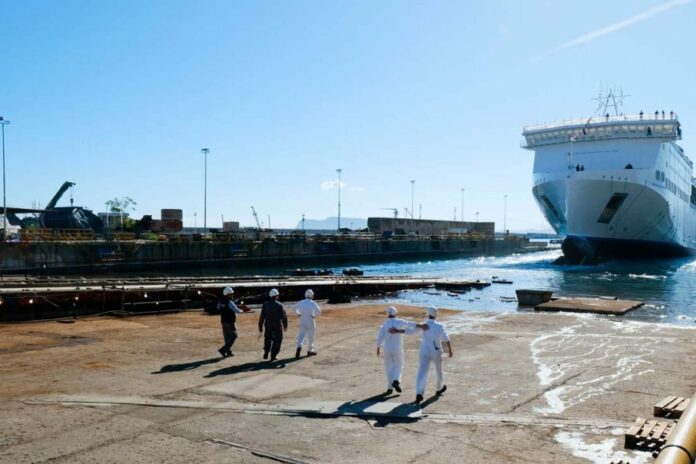
The Naos-designed CONSTANZA I DI SICILIA is scheduled for delivery in the summer of 2026 and will provide service between Lampedusa and Pantelleria.
With a length of about 140 meters and a gross tonnage of about 14,500 tons, the ship will be able to carry up to 1,000 passengers and 200 cars, reaching a speed maximum of 19 knots. Propulsion will be ensured by engines dual fuel, powered by marine gasoil and liquefied natural gas. The unit will also have a photovoltaic system which, in combination with a battery pack, will allow the stay in port with zero emissions for about four hours.
The signing of the contract between Fincantieri and the Region Sicily, which will be the first Italian regional body to be Totally proprietary of such a unit, it includes also the option for a second ferry ( of 9 October 2023 and 13 September 2024). The objective of the Region is to strengthen connections with the islands of Lampedusa, Linosa and Pantelleria.
On the occasion of the launch ceremony, the CEO and General Manager of Fincantieri, Pierroberto Folgiero, specified that “today’s launch is a starting point to relaunch the construction site as part of the new business plan of Fincantieri, which we will present by the end of the year. The construction of This ship – he specified – is not just a return to the production, but an investment in the future, in skills and Italian manufacturing, in a sector where people represent the most valuable resource. Palermo has a unique vocation in the Mediterranean and will become increasingly central to the strategy of our group»
As the largest recipient of the agency’s Offshore Wind Energy Waterfront Facility Improvement Program from state bond funding, the Port of Long Beach will match $11 million to complete engineering, environmental, business planning and community outreach requirements needed to begin construction on Pier Wind. The proposed $4.7 billion facility aims to help California meet a goal of generating 25 gigawatts of offshore wind energy by 2045 – enough to power 25 million homes statewide.
“Our Pier Wind project will ensure California’s offshore wind energy goals are achieved,” said Port of Long Beach CEO Mario Cordero. “We thank the California Energy Commission for funding the Pier Wind project, which will enhance the nation’s energy independence and strengthen the electric grid to support electrification investments across the supply chain.”
“California’s offshore wind energy goals cannot be achieved without onshore development at port facilities like Pier Wind, which will create thousands of manufacturing jobs across the U.S.,” said Long Beach Harbor Commission President Frank Colonna. “We are grateful for this state funding to make offshore wind a part of California’s energy portfolio.”
The grant funding came from Proposition 4, the climate bond measure approved in 2024 by California voters which set aside $475 million for port infrastructure projects connected to offshore wind development. The Port of Long Beach will seek additional Proposition 4 proceeds for Pier Wind as the state releases those funds.
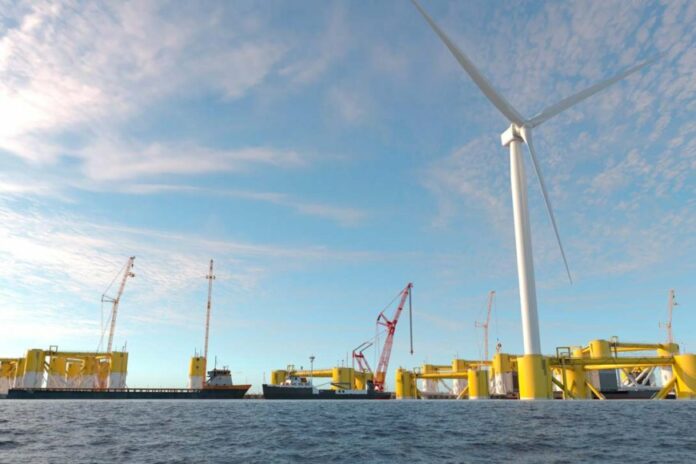
Pier Wind would allow for the staging, storage and assembly of some of the world’s largest offshore wind turbines, standing as tall as the Eiffel Tower. The fully assembled turbines would be towed by sea from the Port of Long Beach to wind lease areas 20 to 30 miles off the coast in Central and Northern California.
The proposed project is undergoing extensive environmental review by local, state and federal regulatory agencies as the Port of Long Beach gathers input from the community. Construction could start as soon as 2027, with the first 200 acres completed in 2031, and the final 200 acres coming online in 2035. A recent preliminary economic impact report found that Pier Wind could create more than 6,000 jobs and generate $8 billion in labor income, $14.5 billion in economic output and $1.3 billion in state and local taxes between now and 2045.
“The $20 million award from the California Energy Commission is a commitment and investment in healthy, thriving communities and a sustainable future,” said state Sen. Lena Gonzalez. “With this funding, the Pier Wind project will break ground, creating jobs, boosting economic growth, and propelling progress on our state’s ambitious goals for offshore wind energy and emissions reductions.”
“Despite facing significant challenges in this year’s budget, we remained laser-focused on investing in our priorities, including offshore wind development,” said Assemblyman Josh Lowenthal. “The funding we secured will support critically important offshore wind projects in our district, lift up marginalized communities, and create new opportunities for underrepresented populations in the workforce, including women and previously incarcerated individuals, to build careers in engineering, construction, and maintenance of offshore wind construction sites and our farms.”
Gov. Gavin Newsom signed a bill last year that would streamline the design and development of Pier Wind by allowing the Port of Long Beach to use alternative construction delivery methods. In 2024, the California Energy Commission adopted a final strategic plan for offshore wind energy developments for the state, authorized through Assembly Bill 525. The plan references the need to prioritize seaports, like the Port of Long Beach, to serve as assembly and staging sites for wind turbines.
The California State Lands Commission and the ports of Long Beach and Humboldt entered into a memorandum of understanding in December 2024 to collaborate on permitting, community engagement, environmental justice, clean energy strategies and Native American Tribal consultation to advance a multiport strategy for offshore wind deployment and workforce development.