5.9 C
New York
Home Blog Page 23

Lloyd’s Register issues first roadmap for nuclear-powered shipping

0

Lloyd’s Register (LR) has published Navigating Nuclear Energy in Maritime, a new guidance document providing the first roadmap for the safe and responsible use of nuclear technology in commercial shipping and offshore industries. 

As the maritime sector accelerates its transition towards sustainable energy solutions, nuclear power has re-emerged as a viable solution to achieve net-zero ambitions.  

The guidance, developed in partnership with Global Nuclear Security Partners (GNSP) and marine insurer NorthStandard, sets out the practical steps project teams must take – outlining regulatory, technical, operational and financial requirements for integrating nuclear technology, such as small modular reactors (SMRs), into maritime assets. 

With no international regulatory framework yet in place, the document discusses the roles of key bodies, including the International Maritime Organization (IMO) and the International Atomic Energy Agency (IAEA), highlighting the importance of harmonising maritime and nuclear standards.  

Topics covered include safety classification, environmental impact assessments, structural integrity, and the development of a robust nuclear safety case. Security measures are also addressed, with emphasis on physical and cyber protection systems, as well as insider threat mitigation. 
 
Operational and financial aspects are thoroughly explored, including personnel qualifications, emergency response planning, and quality assurance throughout the project lifecycle. The document also examines insurance and reinsurance challenges, advocating for a predictable liability framework to support commercial viability.  

Mark Tipping, LR’s Global Power to X Director, said: “Nuclear energy has the potential to transform maritime, providing a scalable and zero-carbon energy source that can accelerate the industry’s energy transition. However, its adoption requires clarity, collaboration and trust across regulators, operators, insurers and wider society. This guidance offers a comprehensive starting point for stakeholders to navigate the risks and opportunities ahead.” 

Nick Tomkinson, Senior Partner, Global Nuclear Security Partners, said: “Maritime nuclear will only succeed when safety, security and safeguards are considered together from the start. This guidance document helps first movers align maritime and nuclear frameworks, apply goal-based approaches where prescriptive rules are absent, and build the confidence required by regulators, insurers and the public. GNSP is proud to contribute to this important step for the sector.” 

Helen Barden, Director – External Affairs at NorthStandard, added: “NorthStandard are proud to have been invited to contribute our expertise to the Navigating Nuclear Energy in Maritime guidance document. We collaborated with Lloyd’s Register to explore the insurance and reinsurance considerations for nuclear energy – particularly the interlink between classification and insurance, current P&I limitations around pooling nuclear risks and the importance of liability frameworks. 

“We welcome the growing recognition that nuclear could play a meaningful role in the decarbonisation of shipping and we are proactively supporting the maritime industry when it comes to the insurance and regulatory challenges ahead.”  

LR’s guidance builds on its industry-leading Fuel for Thought: Nuclear research programme and aims to fill a critical knowledge gap. It brings together decades of classification, safety and compliance expertise with specialist nuclear insight to provide an evidence-based framework for project teams at every stage of development. 
The Ukrainian Navy received new T12 boats for maritime special operations

0

The boats were donated by the Diana Podolyanchuk Charity Foundation, which is constantly raising funds to purchase boats for Ukrainian intelligence officers.

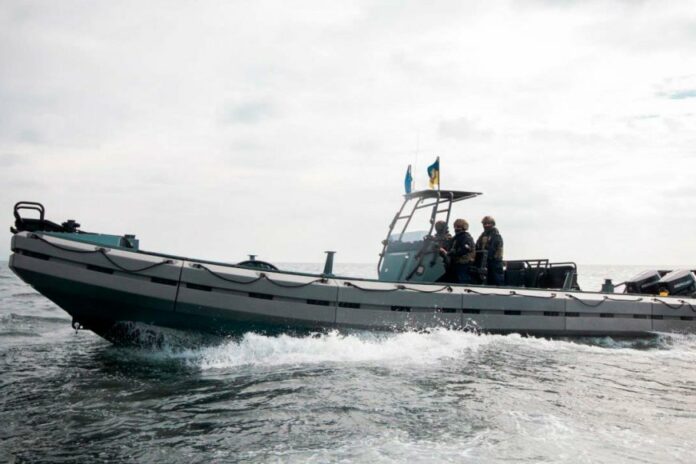
The active operations units of the Defense Intelligence of the Ministry of Defense received three new T12 boats designed for sea and river special operations. This was reported by the Defense Intelligence press service.

“Very soon these boats will be used by our special forces fighters. These are 12-meter boats with powerful 400-horsepower engines. They are capable of performing logistical, landing, assault and evacuation tasks. We thank everyone who is involved in this project – Ukrainians and our foreign partners,” said Diana Podolyanchuk.

The Defense Intelligence units are already effectively using the previously donated T12 boats to patrol water areas and conduct special operations, including in temporarily occupied territories.

A Defense Intelligence fighter with the call sign “Khoma” confirmed that the equipment has proven itself well in combat conditions.

“These boats are very helpful in carrying out missions at sea. They are not inferior to foreign analogues, and in some cases even better,” the military man commented.

The “Boats for GUR” initiative is still ongoing. You can join the collection at the link.

Also, as USM wrote, the day before, the Defense Intelligence published new data on more than a hundred vessels of the Russian “shadow fleet”.

Source: usm

ClassNK to class Japan’s first hydrogen fueled tugboat TEN-OH built by TSUNEISHI

0

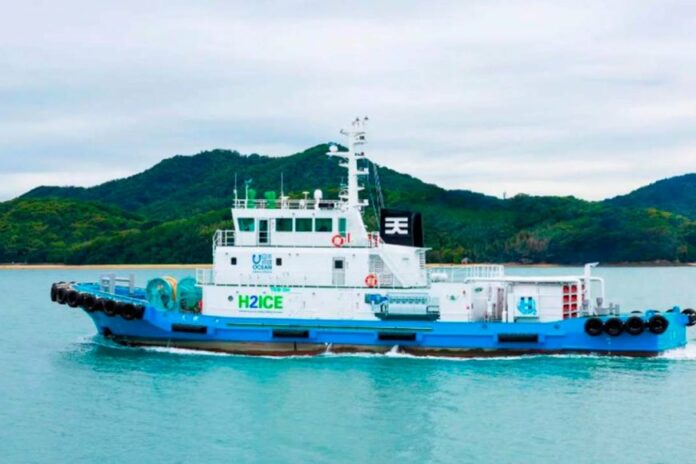
ClassNK has added Japan’s first hydrogen-fueled tugboat TEN-OH to its register, which is built by TSUNEISHI SHIPBUILDING Co., Ltd.

This vessel was developed and build under the ‘Nippon Foundation Zero Emission Ships Project’, a grant program by The Nippon Foundation aimed at developing ships with zero CO2 emissions.

Based on discussions among the parties involved during the planning stage of the vessel, ClassNK reviewed the safety requirements and countermeasures for hydrogen-fueled ships by applying Part GF of its ‘Rules and Guidance for the Survey and Construction of Steel Ships’ etc.

These reviews focused on issues such as preventing explosions caused by the high ignitability of hydrogen and mitigating the potential impacts of hydrogen fuel leakage on crew members and the environment.

On completion of the necessary surveys in line with the relevant class rules etc., ClassNK added the vessel to its register on 9 October 2025.

Mr OKUMURA Sachio, Representative Director, President & Executive Officer of TSUNEISHI SHIPBUILDING Co., Ltd. commented:

“It is a great honour to deliver Japan’s first hydrogen dual-fuelled tugboat. Across our domestic and overseas operations, we are developing vessels powered by next-generation fuels such as methanol and LNG. By building on the expertise gained through this project and leveraging the collective strength of the Group, we will continue to drive innovation and contribute to a more sustainable future for the maritime industry.”

Production started from Bacalhau, Equinor’s largest international field

0

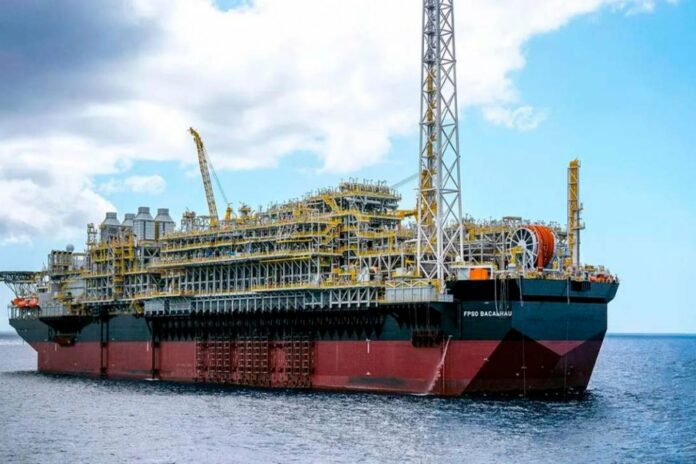
On 15 October, at 22.56 Rio time, Equinor and its partners ExxonMobil Brasil, Petrogal Brasil (JV Galp|Sinopec) and Pré-sal Petróleo SA (PPSA) achieved start-up of production from the large Bacalhau field in Brazil. 

“The safe start-up of Bacalhau marks a major milestone for Equinor. Bacalhau represents a new generation of projects that bring together scale, cost-efficiency and lower carbon intensity. With this development, we are strengthening the longevity of our oil and gas production and securing value creation for decades to come,” says Anders Opedal, President and CEO of Equinor.

Bacalhau is located in the pre-salt region of Brazil’s Santos Basin in ultra-deep water exceeding 2,000 metres. The field features one of the most modern Floating Production Storage and Offloading vessels (FPSO) in the world, measuring 370 metres in length and 64 metres in width, with a production capacity of 220,000 barrels of oil per day (bpd).

Phase 1 development consists of 19 wells, producers and injectors, which will be brought online in sequence as we ramp up and sustain production. Equinor will be positioned to provide an update in 2026 during the ramp-up phase.

“Around 70 million hours of work have been recorded in the project with solid safety results. I would like to sincerely thank our partners, suppliers, and employees for making this achievement a reality. With its size, water depth and lower carbon intensity, Bacalhau is a testament to our engineering capabilities and ability to operate internationally,” says Geir Tungesvik, Executive Vice President, Projects, Drilling and Procurement.

The Bacalhau FPSO features combined-cycle gas turbines (CCGT), a technology that significantly reduces carbon intensity. With an expected CO₂ intensity of around 9 kg per boe, and advanced abatement across flaring, processing, power generation, and storage, the field sets a new benchmark for cost efficient and lower emission deepwater production.

“Brazil is a core area for us and Bacalhau will be a major contributorto Equinor’s goal of generating more than 5 billion dollars of free cashflow by 2030 from our international portfolio. Bacalhau will also deliver positive ripple effects and long-term benefits to Brazil´s economy, creating approximately 50,000 jobs over its 30-year lifetime,” says Philippe Mathieu, Executive Vice President for Exploration and Production International.

MODEC, the FPSO contractor, will operate the unit for the initial phase. Thereafter, Equinor plans to operate the Bacalhau facilities until end of the license period.

Exail expands presence in the Baltic Sea with first DriX H-8 delivery to Orlen Petrobaltic

0

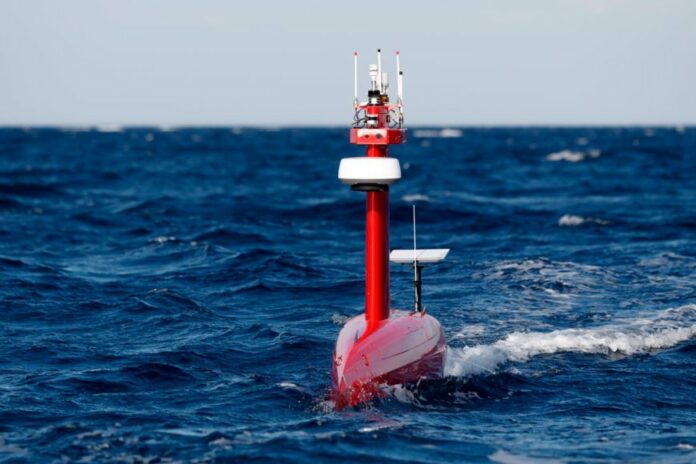
This marks the very first commercial deployment of DriX in Poland, where the complex maritime environment of the Baltic Sea demands innovative and resilient solutions for offshore operations.

The Exail’s DriX H-8 USV is known for its robustness, endurance, and ability to deliver high-quality hydrographic and geophysical data. With its autonomous capabilities and ability to operate in challenging offshore conditions, the DriX H-8 offers a safer, more efficient, and environmentally friendly alternative to traditional crewed vessels.

Orlen Petrobaltic will deploy the DriX H-8 in the Baltic Sea to support offshore platform activities. For this project, the DriX H-8 will be equipped with a Norbit B51S multibeam echosounder (MBES), integrated on the platform for the very first time. This new configuration provides Orlen Petrobaltic with a next-generation hydrographic survey capability, enhancing data quality and efficiency while operating in the Baltic Sea’s demanding conditions.

“Deploying DriX H-8 in the Baltic Sea for the first time is another illustration of how Exail pushes the boundaries of uncrewed maritime operations,” said Jens Higgen, Regional Sales Director at Exail. “Together with Orlen Petrobaltic, we’re proud to shape a new standard for offshore data acquisition and autonomy.”

Saipem: three new offshore contracts in Azerbaijan

0

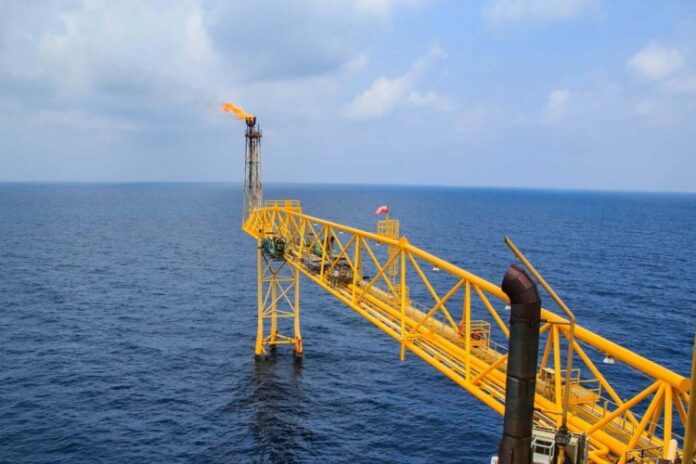
Saipem, in consortium with BOS Shelf LLC and BOS Shelf International FZCO, (both companies being affiliates to the State Oil Company of the Azerbaijan Republic, SOCAR) has been awarded three new offshore contracts for the Shah Deniz Compression project operated by bp in Azerbaijan. 

Saipem’s scope of work encompasses the Transportation and Installation (T&I) of a new 19,000-ton compression platform in the Azerbaijan sector of the Caspian Sea, as well as the Engineering, Procurement, Construction and Installation (EPCI) of approximately 26 km of offshore pipelines to connect the new compression platform to the existing facilities, and all major permanent subsea works.

The main vessels employed for offshore operations will be the Khankendi, a state-of-the-art subsea construction vessel owned by the Shah Deniz consortium, and the pipelay barge Israfil Huseynov owned by the “Azerbaijan Caspian Shipping” Closed Joint-Stock Company. Both vessels will be managed and operated by Saipem for the execution of the project. The use of local naval assets and the integration with Azerbaijani partners confirm the commitment to the enhancement of skills and technologies of the Country and the contribution to local content.

The contracts will be executed under the existing framework agreement in force between the parties, as announced on July 12, 2024.

The offshore activities are expected to commence in the third quarter of 2026, with completion targeted for 2029.

The award of these new contracts reinforces Saipem’s presence in the region and confirms its reputation as a reliable partner in the execution of major projects. Moreover, it further builds on the long-standing and successful collaboration with bp as operator in the Caspian, which has included various projects executed for the Azeri-Chirag-Gunashli and Shah Deniz fields.

BV to class Møre Sjø’s 2+2 hydrogen-powered cargo ships

0

Bureau Veritas Marine & Offshore (BV) has entered into a contract with Gelibolu Shipyard and eCap Marine, for the classification of 2+2 hydrogen-powered cargo vessels to be built for Norwegian shipowner Møre Sjø AS. This project represents the first general cargo ships in BV class to use hydrogen propulsion.

Designed with the integration of a high-pressure hydrogen power system, a battery pack and electric propulsion, the vessels will measure 88.7 meters in length and 14.2 meters in breadth, with a maximum draft of six meters and an estimated gross tonnage of 3,750. The vessels are designed to transport heavy and occasional dry bulk cargoes under the Norwegian flag.

On delivery from the yard, the vessels are being designed to meet the requirements for BV’s HYDROGENFUEL-PREPARED notation. The hydrogen power system is currently being designed by eCap Marine, which will also be responsible for its installation, commissioning, and the execution of the Alternative Design Approval process. BV will be closely involved throughout the review and approval process to help ensure the safe and reliable integration of the system. Once completed, the vessels will be eligible to be assigned the HYDROGENFUEL notation.

In addition to their alternative fuel capability, the vessels are intended to be classed with a comprehensive scope including Cyber Resilient, Unrestricted Navigation, AUT-UMS, In-Water Survey and OPS (On-shore power system) notations. These standards will help ensure the vessels meet the requirements for safety, performance and operational flexibility while being able to run as zero-emission vessels.

Matthieu de Tugny, Executive Vice President, Industrials and Commodities at Bureau Veritas, said: “This project marks an important step in advancing hydrogen as an alternative fuel for general cargo shipping. By working together with Gelibolu Shipyard, eCap Marine and Møre Sjø AS, we are helping to ensure the safe and reliable deployment of new technologies, combining efficiency with readiness for future fuels. At BV, we are proud to support our stakeholders in preparing for the energy transition, and these vessels illustrate how forward-looking owners and builders can lead the way towards a lower-emission future.”

Torstein Holsvik, Managing Director of Møre Sjø, said: “Our ambition is to build Norway’s leading zero-emission shipping company for coastal freight – a profitable, scalable and disruptive company with a clear green profile as its competitive advantage.”

Bespoke research vessel now under construction for Cape Fear Community College in the US

0

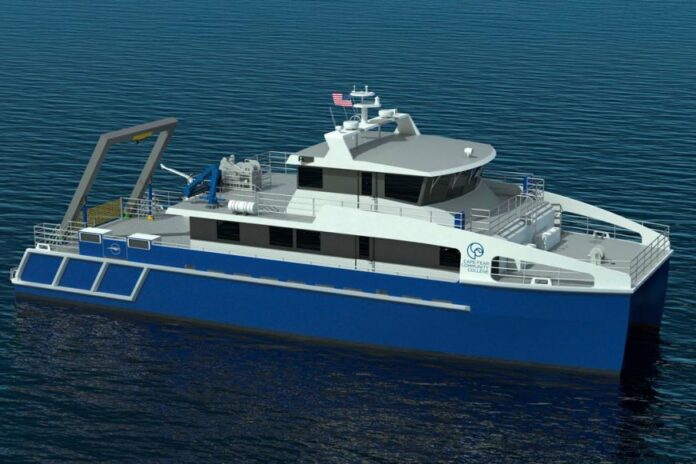
The new vessel boasts a robust aluminium structure allowing it to be used by CFCC’s Marine Technology program for extended multi-day and week-long on-water research and education activities throughout the Cape Fear River system and up to 100 nautical miles offshore.

Operational flexibility of the new vessel is enhanced via the inclusion of a heavy-duty retrieval system comprising an A-Frame capable of lifting a wide range of research equipment up to 8,000lbs (3,629 kg). A telescopic davit and heavy-duty winches are also included for further operational efficiency across the upper and main decks. The vessel also boasts a stern platform for providing quick access to the water for divers or for researchers taking water samples.

The multifunctional vessel has the ability to accommodate up to 24 personnel on multi-day missions or 40 personnel on single-day missions across two spacious and cleverly designed decks. The vessel’s main deck features one four-person berth, two six-person berths, three bathrooms, a large galley and mess area as well as large dry and wet labs for scientific and educational activities. Ample storage lockers are also available on the vessel’s foredeck.

The vessel’s upper deck features two four-person berths, a large bathroom and the vessel’s ergonomically designed bridge. The vessel’s bridge optimises daily operations and provides the vessel’s captain with excellent vision, including wing stations for maximum visual manoeuvrability.

Incat Crowther’s Managing Director North America Grant Pecoraro said: “Incat Crowther is excited to be working on this project following a competitive tender process undertaken by the Cape Fear Community College. We have a strong track record of designing award-winning, bespoke research vessels here in North America and our team of naval architects has been working closely with the team from Cape Fear Community College to ensure this vessel is optimised for their operations, as well as the local environment.”

Jim Morton, President, CFCC said: “The purchase of this new research vessel represents an investment in the future of our Marine Technology program. By equipping our students with a reliable, modern vessel for hands-on learning, we are ensuring the program’s long-term success and preparing graduates to thrive in the maritime industry.”

Shawna Rowe, Program Director – Marine Technology, CFCC said “For more than 60 years, CFCC’s Marine Technology program has prepared students for careers in marine scientific support across offshore, nearshore, and inshore environments. The new research vessel will carry on this legacy, serving as a floating classroom and laboratory where students will gain practical experience in biological sampling, hydrographic surveying, and the deployment of oceanographic instrumentation. With modernized technology and equipment, the vessel will support immersive learning experiences that mirror the challenges and expectations of the marine industry today.”

NYK: Ammonia-fueled tug helps create world’s ‘first’ environmental value

0

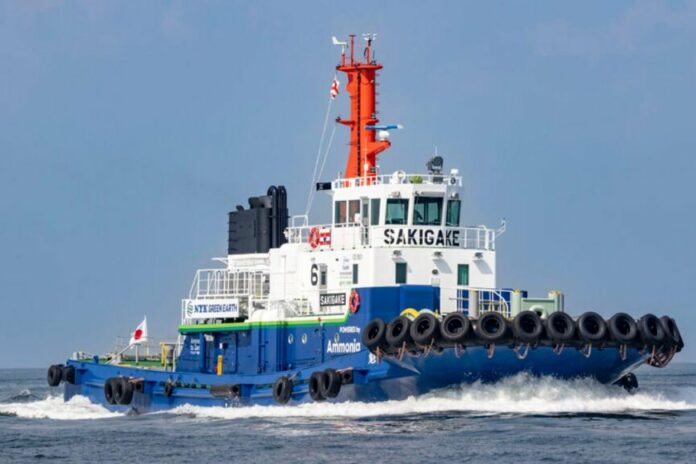
Shin Nippon Kaiyosha obtained third-party certification on 25th September, 2025 for the environmental value representing the quantified greenhouse gas (GHG) emissions reduced through the towage services provided by the ammonia-fueled tugboat Sakigake (the “vessel”).

This certified environmental value can be allocated to purchasers through the Book & Claim method and is expected to contribute to the reduction of Scope 3 emissions by transportation service users in the future. This is the world’s first instance that environmental value derived through the operation of an ammonia-fueled vessel has received third-party validation.

Selected in October 2021 as part of NEDO’s Green Innovation Fund project, “Developmentof ships withammonia fueled domestic engines”, Sakigake is the world’s first ammonia-fueled vessel developed for commercial use. The vessel is fueled by low-environmental-impact ammonia “ECOANN,” manufactured by Resonac Corporation and provided by JERA Co., Ltd. Since its completion in August 2024, Sakigake has been providing safe and low-carbon tugboat services in Yokohama port.

GHG emissions from cargo transportation are commonly classified as Scope 3 for transport service users, requiring collaboration across the entire supply chain to reduce them. By visualizing GHG reductions in the shipping industry, this initiative paves the way for future Scope 3 emission reductions by shippers and consideration of additional GHG reduction measures, further expanding the potential environmental contribution of ammonia as a marine fuel.

Bollinger Shipyards, GDEB christen new floating dry dock in US

0

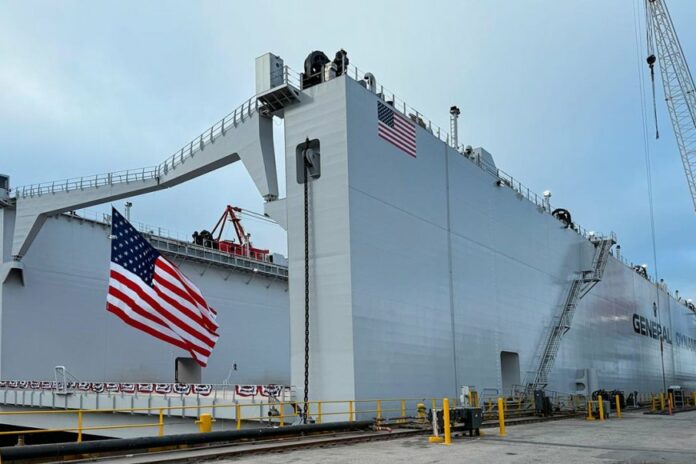
Bollinger Shipyards in partnership with General Dynamics Electric Boat have hosted a christening ceremony for the state-of-the-art floating dry dock ATLAS. 

ATLAS will play a critical role in the construction and sustainment of the Columbia-Class Ballistic Missile Submarine Program, providing essential dry dock capacity for construction, maintenance, and long-term sustainment.

“Bollinger Shipyards is proud to deepen our partnership with Electric Boat and take a leading role in strengthening America’s dry dock capacity with the delivery of the ATLAS,” said Ben Bordelon, President & CEO of Bollinger Shipyards. “This project isn’t just a build, it’s a strategic investment in our Navy’s future. Modernizing the fleet demands cutting-edge infrastructure, built right here at home. Bollinger is all-in on driving innovation, reinforcing the U.S. industrial base, and delivering the tools our Navy needs to stay ahead.”

ATLAS measures at 618ft by 140ft. Electric Boat is the prime contractor on the design and build of the Columbia Class submarine, which will replace the aging Ohio-Class of Ballistic-Missile Submarines due to begin to retire from service in 2027. Submarines of the Columbia class will be the largest ever built by the United States, at two-and-a-half times the size of the existing Virginia-class attack submarines.

“Dry docks are the backbone of America’s fleet modernization efforts, especially for programs like Columbia-class, where precision, scale, and readiness are paramount,” said Chris Remont, EVP of New Construction at Bollinger Shipyards. “The delivery of ATLAS is a testament to American engineering and the skilled workforce driving our shipbuilding capabilities. At Bollinger Shipyards, we’re steadfast on building capacity to support the Navy’s evolving mission and ensure our fleet remains ready, resilient, and equipped for the challenges of tomorrow.”