-10.7 C
New York
Home Blog Page 238

Deltamarin wins design contract for La Méridionale’s new ro-pax vessels

0

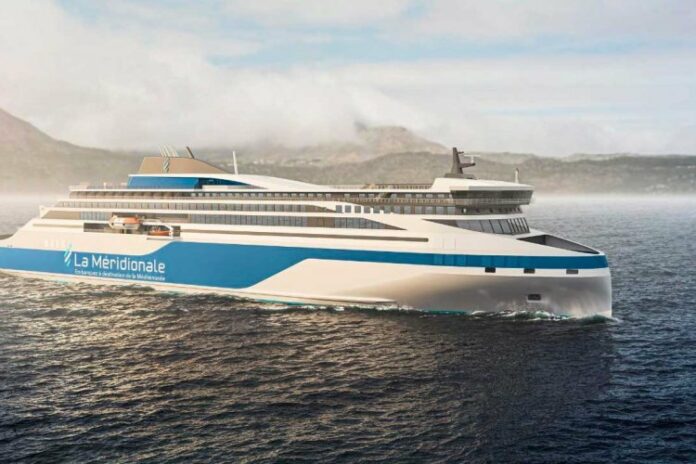
As a part of the contract, Deltamarin will be responsible for providing both the approval and detail design services for the construction of the new ro-pax vessel pair. Deltamarin has earlier provided the shipyard with consultancy and contract design services on the project.

Expected for delivery in early 2027 from China’s CMI Jinling Weihai yard, the vessels will each accommodate 1,000 passengers across 264 cabins in seven categories, including 21 luxury cabins with balconies.

With dimensions of 180 meters in length and 30.8 meters in width, the vessels will operate on two engines with a combined output of 21,000 kW. While primarily using conventional LNG, the engines include multi-fuel capabilities, accommodating future adoption of biogas and synthetic methane.

Moreover, the integration of a 13 MWh battery pack will enable zero-emission capabilities while in port—a significant advantage, especially at the port in Corsica, given the limited availability of shore power solutions.

Toxic chemicals in UK whales and dolphins are exceeding safe limits

0

The compounds, once used in pesticides, flame retardants and coolants, are having significant impacts on the health and reproduction of the animals.

The UK’s whales and dolphins are full of toxins—and it might only get worse.

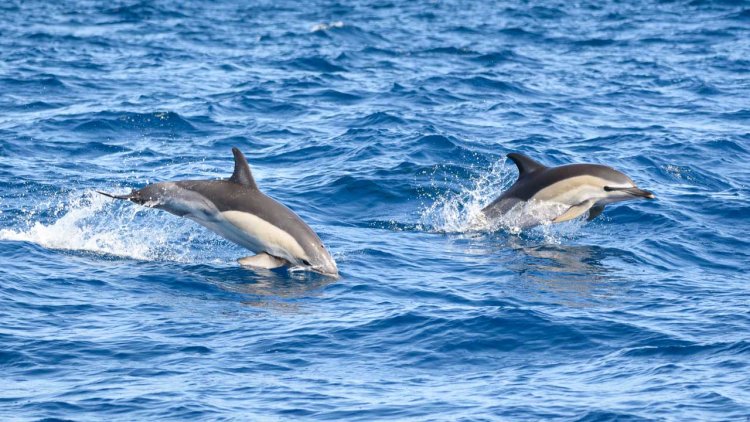
Despite many being banned almost 20 years ago, levels of persistent organic pollutants (POPs) remain high in the oceans. In fact, these chemicals may breach safe limits in as many as half of all marine mammals living around the UK, based on a new study of stranded animals.

While the researchers found that levels of six key POPs are declining, they’re concerned that the chemicals currently contained in coastal landfill sites could increasingly leak out as flooding, extreme weather and coastal erosion are enhanced by climate change.

Dr. Rosie Williams, the lead author of the study at the Zoological Society of London, says, “This is a huge wake-up call. It’s been over 20 years since several of these chemicals were banned globally, yet we still see concerningly high concentrations in wildlife.”

“We need to act now, learn from our past mistakes and employ stronger, science-backed measures to curb pollution. Ambitious and urgent action is required and by beginning today we can start mitigating the profound impact that chemical pollution continues to have on marine life.”

The findings of the research were published in the journal Environmental Science & Technology.
Many POPs were first developed in the twentieth century as part of a new wave of synthetic chemicals. At the time, they were seen as groundbreaking new compounds which could be used in stronger pesticides, longer lasting paint, and more fire-resistant furniture.

However, the same properties that made these chemicals so useful came at a cost: they are highly toxic and do not easily break down in nature. Over time, these chemicals leached into our soil, air and rivers, eventually making their way into the ocean.

“These toxins are initially taken up by plankton at the bottom of the food chain,” Rosie explains. “Unable to be broken down or excreted, these persistent chemicals increase in concentration the further up the food chain they go in a process known as biomagnification.”

“As apex predators, many marine mammal species consume large amounts of toxins every time they feed, making them some of the most contaminated wildlife species.”
While the effects of these chemicals vary, they are unfailingly harmful. As they build up in the body’s fats, they can damage the reproductive system, the immune system, and hormonal cycles.

When this was recognized in the 1970s, countries began to introduce rules on their use. However, it wasn’t until 2004 that the Stockholm convention came into force which bans or restricts the production and use of the most damaging compounds.

Despite this, the staying power of these chemicals means that marine mammals will remain vulnerable to their impacts for many years to come. Though no death of a marine mammal has ever been directly linked to pollution, the chemicals continue to provide another threat to animals already under pressure from fishing bycatch, noise pollution and climate change.

Every year hundreds of marine mammals end up dying after becoming stranded on the coast of the UK. Many of these animals are reported to the UK’s Cetacean Strandings Investigation Program, who investigate the events which led up to their death.
As a result of this work, the team have toxicology samples dating back more than 30 years. This is allowing researchers to reveal what impact the pollutants are still having on marine mammals.

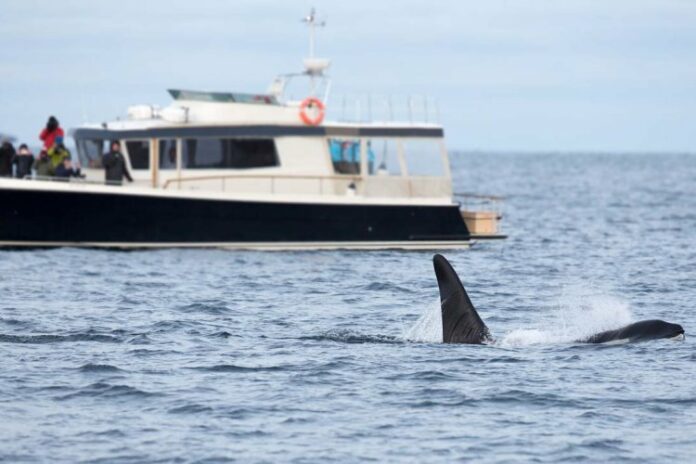
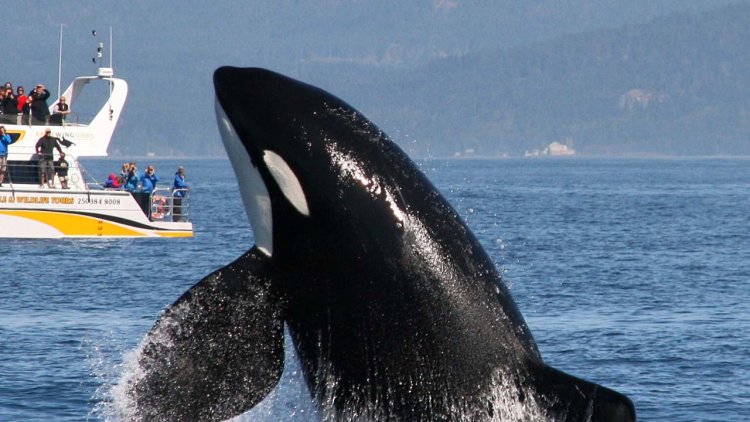
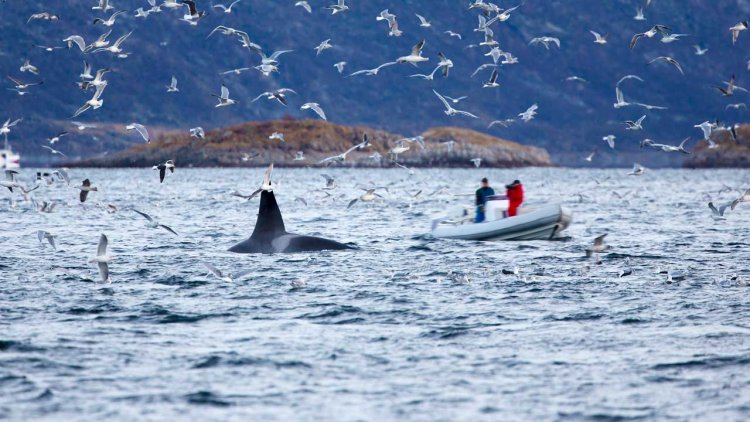
One of the clearest examples of the effect these chemicals can be found off the north coast of Scotland. The UK’s only resident orca population lives here, a group of four males and four females.

However, you’ll find no calves among them. In fact, no calf has been born to the pod in more than 20 years, which may be a result of them being highly contaminated with particular POPs known as PCBs which have an impact on reproduction.

Andrew Baillie, the cetacean stranding officer at the Natural History Museum, says, “The UK’s resident orcas are massively overburdened with toxins. In fact, they contain levels of PCBs as much as 30 times higher than the point at which they start to have negative health effects.”

“Orcas are probably at greater risk than other species because they eat seals, which are already very contaminated in their own right, and because they live for a long time.”

In fact, PCBs were the most abundant POP found in the study. From 2014 to 2018, 48% of animals had levels of this chemical higher than the point where it starts to have noticeable effects on hormones and the immune system.
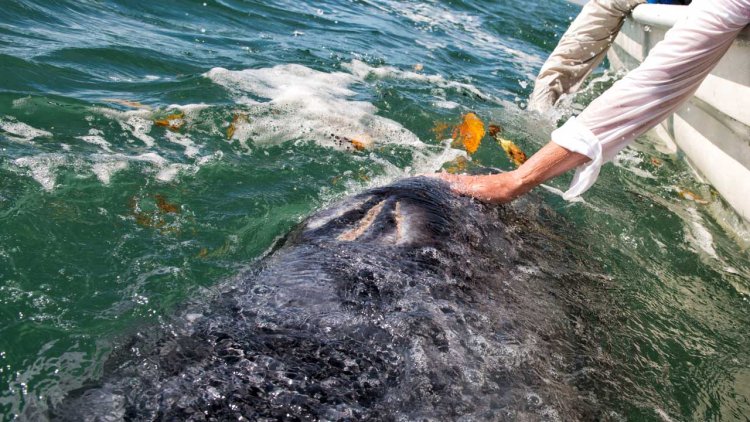
Many of these animals were bottlenose dolphins, which have to contend with a historic legacy of pollution in the area they call home.

“Many bottlenose dolphins live in the southwest of the UK,” Andrew says. “Historically, there used to be a factory in Newport which manufactured PCBs and released them into the Bristol Channel, meaning that these animals are more saturated with these chemicals than those living elsewhere.”

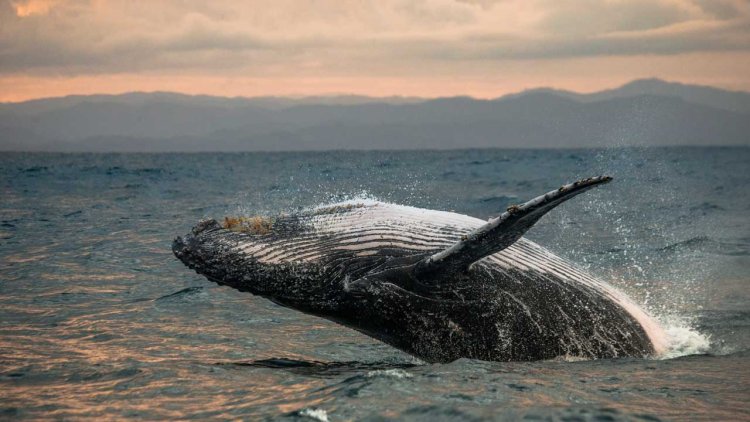
Over half of bottlenose dolphins were also over a critical level of DDT, a pesticide that is known to harm the immune system of mammals. However, sperm whales appeared to be most affected by this chemical, being the only species where DDT was the most abundant POP in their body.

While the findings present a concerning future for the UK’s marine mammals, there were a few reasons for hope. Though levels of POPs remain high in the oceans, their concentration in wildlife appears to be in decline.

“Persistent organic pollutants are, by their very nature, persistent,” Andrew says. Once they’ve been created, they’re out there in the environment and they’re very hard to get rid of.”

“However, more recent strandings contain a lower amount of these chemicals than animals from 30 years ago. Some of that decline might be because these chemicals are now dispersing more widely, having been banned.”

“It shows that, with concrete action, we can make a difference to our environment and help these marine mammals.”
Despite this progress, the scientists remain concerned that leaks of existing POPs and newly developed chemicals could set this progress back. They’re calling for urgent action to improve pollution control measures, and to phase out the non-essential use of hazardous chemicals as soon as possible.

“The global costs associated with environmental chemical exposure, such as medical treatment, has been estimated to be around 10% of the entire world’s GDP,” Rosie says. “This means there’s a huge economic incentive to address this problem now.”

“Tackling the issue of chemical pollution will not only protect the environment and our wildlife, but will also protect humans too.”

At the same time, it will also be vital for the strandings program to continue its research on the current condition of the UK’s marine mammals. 

Van Oord completes installation of Hollandse Kust Noord offshore wind farm

0

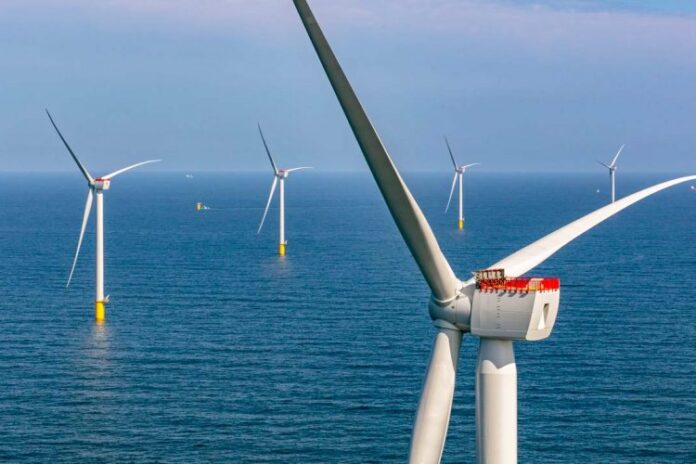
CrossWind, a joint-venture between Shell and Eneco, contracted Van Oord in 2020. As a Balance of Plant contractor, Van Oord’s activities encompassed the design, engineering, procurement and transport and installation of the 70 wind turbine foundations, inter-array cables, as well as the transport and installation of the wind turbines themselves.  

Van Oord started installing the foundations of the wind farm in October 2022 and completes its scope now within the year, making this one of the fastest installed wind farms of its kind. Van Oord deployed amongst others its flexible fallpipe vessels Bravenes and Nordnes, offshore installation jack-up vessel MPI Resolution, cable-laying vessel Nexus and trencher Dig-It and teamed up with other industry partners DEME, Seajacks and Cadeler.  

Offshore wind is essential in achieving the energy transition in the Netherlands. Over the past years, Van Oord has played an important role in the development and construction of Dutch offshore wind farms, such as Gemini Offshore Wind Park, Windpark Fryslân and offshore wind farm Borssele III & IV and site V. With the completion of the Hollandse Kust Noord offshore wind farm, Van Oord can add another project to its impressive track record in offshore wind.  

Tjalling de Bruin, CEO and Project Director at CrossWind, said:

‘Thank you and congratulations to our partner Van Oord who have worked tirelessly and safely to achieve this major milestone in the construction of our Hollandse Kust Noord offshore wind park, accelerating the Dutch energy transition.’

Roeland Ris, Project Director Van Oord, said:

‘A big thanks to the dedicated project team and all partners involved who worked with great commitment and enthusiasm to complete this offshore wind farm. We’re very proud of this achievement, installing this wind farm so fast, yet with the highest quality standards and with an impeccable safety performance. We are very pleased to collaborate with Shell and Eneco on this prestigious project and look forward to working together again on the construction of the offshore wind farm Hollandse Kust (west) lot VI.’

RWE and Masdar form joint ventures to co-develop 3 GW Dogger Bank South offshore projects

0

RWE has signed an agreement with clean energy powerhouse Masdar as a new partner for its UK Dogger Bank South (DBS) offshore wind development projects. 

Both partners will continue to drive the delivery of these flagship projects. Closing of the transaction is subject to customary approvals and expected for the first quarter 2024.

The partners acknowledged the signing of the new partnership during a ceremony at COP28 in Dubai, marking a clear indication of the pair’s commitment to clean energy. Masdar will acquire a 49% stake in the landmark renewables projects while RWE, with a 51% share, will remain in charge of development, construction and operation throughout the life cycle of the projects. Masdar reimburses RWE for 49% of Devex incurred to date and will co-develop the project.

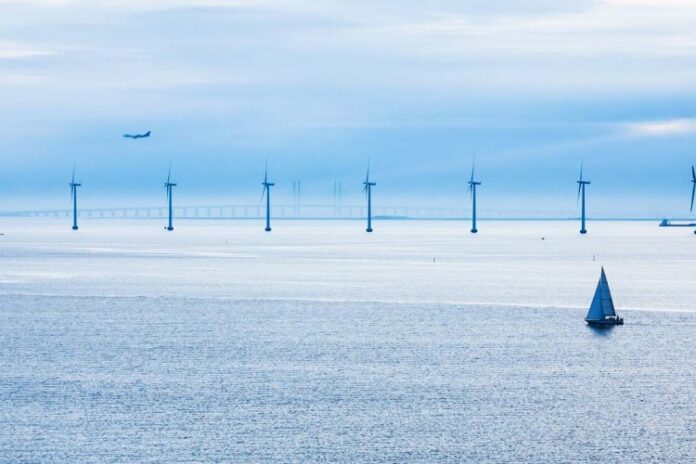
Located in shallow waters in the North Sea over 100 km from the east coast of England, DBS consists of two offshore wind projects, each 1.5 gigawatts (GW) in size. With an estimated combined installed capacity of 3 GW of new clean electricity, DBS has the potential to make a major contribution to the delivery of net zero in the UK once operational. The two projects are expected to be capable of powering up to 3 million typical UK homes with green electricity.

Masdar will join DBS at a key stage in the projects’ development, as they approach the end of consultation with stakeholders and communities ahead of submitting Development Consent Orders likely in Q2 2024. Construction could start as early as 2025, first 800 megawatts (MW) of electricity is planned to come online in 2029 with the aim to fully commission the projects by late 2031.

Markus Krebber, CEO of RWE AG, said:

“We’re delighted to welcome Masdar onboard as our partner and co-investor in the delivery of our Dogger Bank South projects which, at 3 GW in size, make up RWE’s largest offshore wind development in the UK. With Masdar, we have a strong and renowned partner at our side who shares our ambition to further drive the growth of offshore wind energy. In combination with RWE’s many years of experience in the development, construction and operation of offshore wind farms, we are in an excellent position to strongly support the decarbonisation of the UK.”

RWE and Masdar already have an active partnership in global offshore wind. In September 2022, RWE and Masdar signed a Memorandum of Understanding to explore collaborations on offshore wind projects both in and outside Germany. Since 2008, Masdar has been a partner in the 630 MW London Array which, at the time of entering operation, became the world’s largest offshore wind farm.

Masdar’s Chief Executive Officer, Mohamed Jameel Al Ramahi, said:

“The UK is the world’s second largest offshore wind market and offers huge growth potential. Masdar has been active in the UK for more than a decade, pioneering world-class clean energy projects such as Dogger Bank South which demonstrate how innovation and collaboration can lead to a cleaner, greener future. As global leaders strive to form a unified and urgent plan to tackle the climate crisis at COP28, Masdar will continue to expand its wind energy portfolio as we target a total global capacity of 100 GW by 2030 in support of key climate goals.”

RWE entered into Agreements for Lease for the two DBS projects with The Crown Estate in January 2023. Combined, the projects will make an important contribution to the region’s and the UK’s economic growth. During construction, the DBS projects expect to support more than 2,000 full-time equivalent jobs, and a further 1,000 direct and indirect jobs during operations.

Nova wins EU funding for Orkney project

0

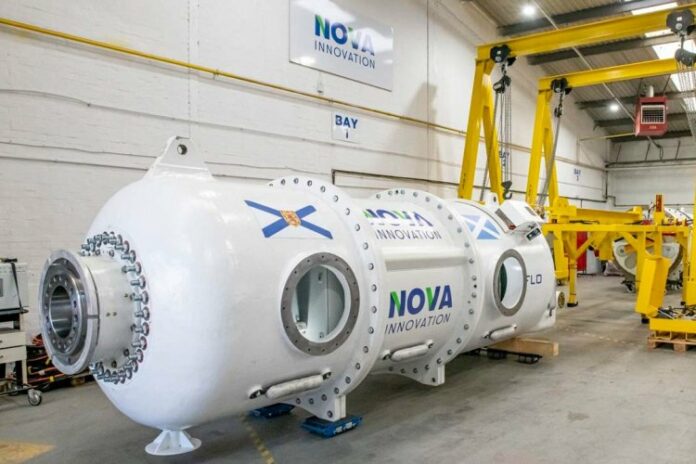
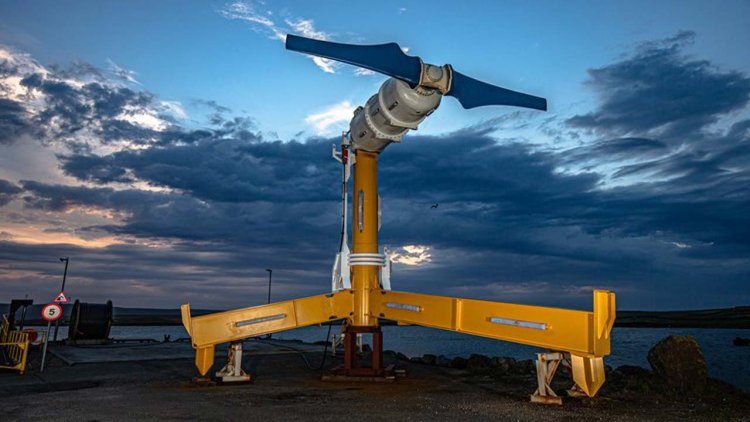
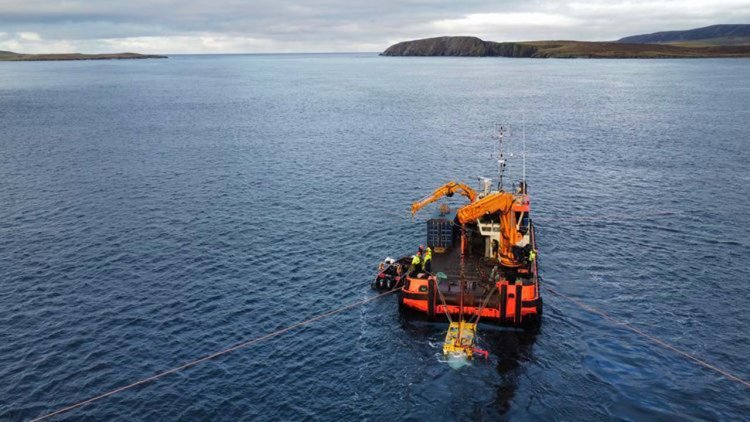
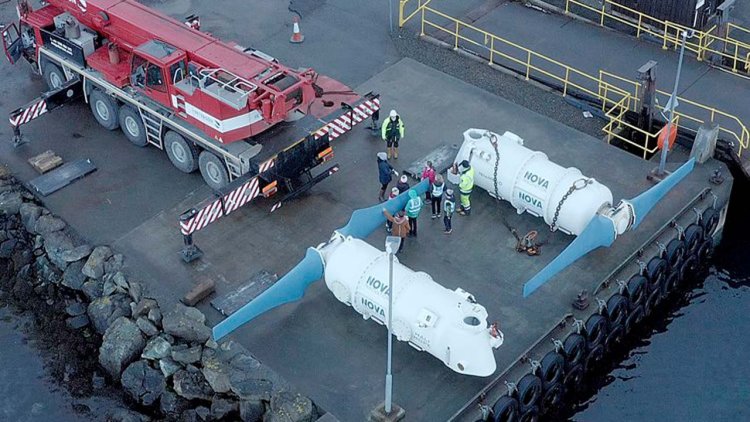
Nova Innovation has won EU funding for a 4 MW tidal energy farm that will be home to the largest number of tidal turbines anywhere in the world. 

Nova will lead a pan-European consortium that will kick-start mass manufacturing of tidal turbines in the tidal industry at Nova’s headquarters in Edinburgh. The trailblazing project, unveiled at COP28, marks a crucial step in unlocking a new global source of renewable energy in the battle against climate change.

Humza Yousaf, First Minister of Scotland, said:

“Scotland is a world leader in marine renewable energy as a result of consistent and committed support from the Scottish Government, together with the expertise, investment and innovation of the industry. Nova’s project at the European Marine Energy Centre (EMEC) in Orkney will accelerate the development of a new industry and helps to show how Scottish ingenuity is helping us to capture the immense potential of renewable energy from our seas and oceans.”

The SEASTAR project builds on the achievements of Nova’s Shetland Tidal Array (the world’s first offshore tidal array) which has been powering homes, businesses, and the Shetland grid since 2016. During this time, Nova enhanced its technology and slashed the cost of tidal energy by an impressive 40%. SEASTAR opens the next exciting chapter of Nova’s success story – paving the way for a new source of renewable energy across the globe.

The flagship project is funded by the EU’s Horizon Europe programme – dedicated to fostering innovation and technology. SEASTAR reinforces the collaborative partnership between Scotland and Europe. The project not only pioneers a green marine energy revolution, but also catalyses the creation of high-quality green jobs and enhances Europe’s position as a global frontrunner in the marine energy supply chain.

Simon Forrest, CEO of Nova Innovation, said:

“This is a huge win for Nova and a huge vote of confidence for the tidal energy sector. To be awarded this flagship European tidal energy project with turbines made and deployed here in Scotland, using a pan-European supply chain, is testament to our track record of success. The SEASTAR project will see more turbines installed than all other current deployments worldwide combined. This will enable Nova to start mass manufacturing, deploy at scale and continue to drive down the cost of tidal energy.”

The project partners include EMEC, Ocean Energy Europe, Leask Marine, Wood Group, SKF, DLA Piper, Renewable Risk Advisers, Primo Marine, Wave Venture and Nature Positive.

The UK is surrounded by tidal energy that could meet 11% of current electricity demand, whilst the global ocean energy market is forecast to be worth €145 billion by 2050. Tidal energy offers many unique advantages. With solar and wind, there are times when the sun doesn’t shine, and the wind doesn’t blow, but the tide can be accurately predicted days, months, and even years ahead.  This predictability is a game-changer, enhancing energy security and providing a reliable source of renewable energy, in the fight against climate change.  

BMT and PA Consulting collaborate on groundbreaking study

0

BMT and PA Consulting have conducted a collaborative study exploring the feasibility of retrofitting medium-sized Ro-Pax ferries with cutting-edge hydrogen propulsion and storage technology. 

The joint white paper will be showcased at The International Workboat Show 2023.

As the global maritime sector faces mounting pressure to reduce greenhouse gas emissions, BMT and PA have delved into alternative fuels for decarbonisation. This study focuses on the potential of one of these fuels, hydrogen, as a low-carbon alternative for Ro-Pax ferries. The objective is to assess the economic and technical feasibility of retrofitting existing vessels with hydrogen propulsion systems, presenting three retrofit alternatives with varying complexity, hydrogen demand, and costs.

The transport sector’s imperative to reduce emissions resonates strongly within the maritime industry, responsible for approximately 11% of global CO2 emissions. Ro-Pax ferries alone contribute 37 million tonnes of annual CO2.

Dr. Thomas Beard, Senior Analysis Engineer at BMT and co-author of the industry white paper unveiled at the Marine Log’s 36th Annual FERRIES Conference in the New York City area on November 14th and 15th, 2023, shared insights, stating:

“The recently launched white paper, ‘Feasibility of retrofitting medium-sized Ro-Pax ferries to utilise hydrogen propulsion and storage technology,’ delves into the challenges and opportunities unique to the maritime sector. The study, introduced earlier this month at Marine Log’s 36th Annual FERRIES Conference, underscores the urgent need for tailored solutions within this dynamic industry.”

“The requirement to meet Net Zero will require a change in fuel, as such BMT are exploring several options to support the maritime transition onboard vessels. However, the total cost of ownership (TCO) is an important aspect and collaboration with PA allows the techno-economic facts to be fully explained.”

The white paper employs an 85-meter Ro-Pax catamaran as a case study, analysing the vessel’s characteristics, operational profile, and potential for retrofitting. The vessel’s size, speed, and operational frequency make it an ideal candidate for transitioning to hydrogen propulsion. The study considers three retrofit options, incorporating technoeconomic modelling to assess costs and benefits.

Lee Hedd, Regional Sales Director for BMT in North America and Canada, adds:

“I am thrilled to be part of our collaboration with PA, showcased at The International Workboat Show 2023. BMT, with a rich history of addressing complex engineering challenges, is committed to delivering innovative solutions. Our joint effort with PA, focusing on retrofitting Ro-Pax ferries with hydrogen propulsion technology, exemplifies our dedication to pioneering sustainable advancements in the maritime sector. This study not only explores alternative fuels but underscores our team’s capability to tackle the unique challenges of decarbonisation.” 

Mike Davis, energy transition expert at PA Consulting, says:

“The need to identify credible decarbonisation pathways in the maritime sector is more pressing than ever, and we need to start looking closely at the various practical decarbonisation solutions that are available. Our aim for this study was therefore to move beyond high-level analysis and present a detailed technical and economic assessment of a realistic low-carbon retrofit option, considering an example vessel in operation today. This allowed us to get right to the heart of some of the key questions that we’re hearing from the sector as it looks to adopt low-carbon fuels, such as the quality of the business case for vessel operators, realistic expected emissions reduction benefits, and the detail around key technical challenges.”

Viking Vela floated out in Ancona

0

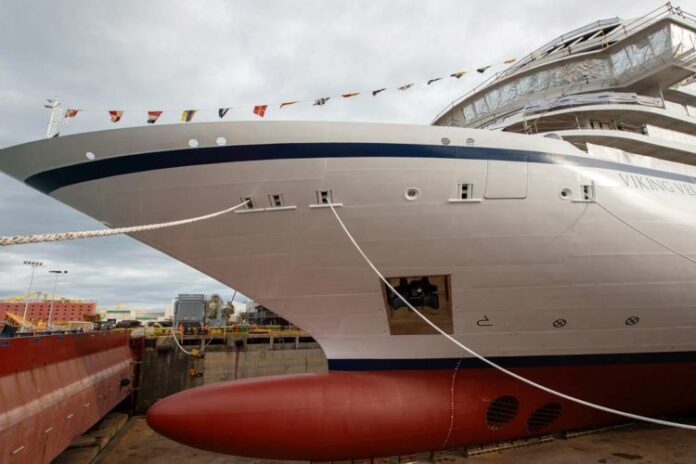
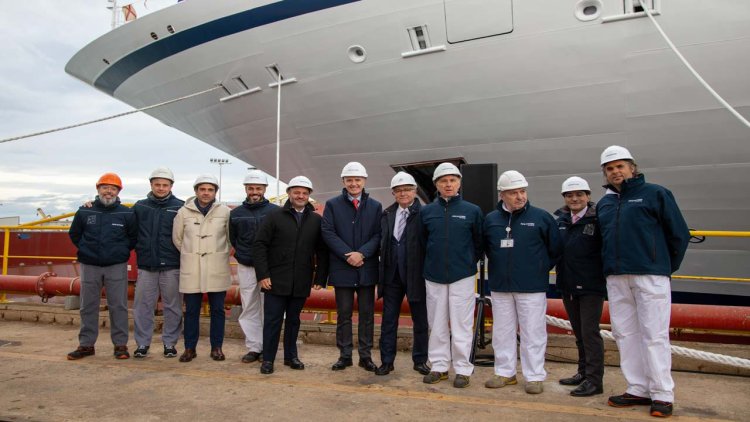
Viking Vela, the first of a new series of cruise ships that Fincantieri is building for the shipowner Viking, has been floated out today at the shipyard in Ancona. 

The unit will be placed in the small cruise ship segment. She will have a gross tonnage of about 54,300 tons, will be equipped with 499 cabins and will be able to accommodate 998 passengers on board.

The Viking ships are built according to the latest navigation and safety regulations, are equipped with high-efficiency engines and systems that minimize the pollution of exhaust gases and that meet the strictest environmental regulations.

New charging station to power electric trucks in Port of Long Beach

0

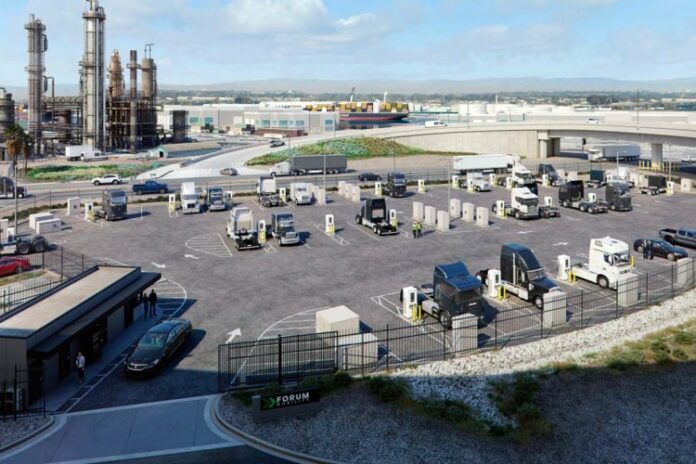
The growing fleet of electric trucks serving the Port of Long Beach will be able to charge at a new depot scheduled to begin construction in mid-2024 along Pico Avenue just north of the Long Beach International Gateway Bridge.

The Port is partnering with Forum Mobility, a leading zero-emission drayage trucking solutions provider, to offer 19 dual-port chargers and six single-dispenser chargers at the new station, capable of charging heavy-duty electric trucks in about 90 minutes, depending on battery size. The depot, located at 260 Pico Ave., is scheduled to go online in fall 2024.

“Forum Mobility is taking the next step toward helping the Port achieve its goal of having 100 public charging stations in the Port available for heavy-duty trucks by 2026, which will help us transition away from diesel fuel and move toward a zero-emission future,” said Port of Long Beach CEO Mario Cordero. 

“With the support of the Port of Long Beach, Forum is building the infrastructure for heavy-duty trucks to transition from diesel to electricity,” said Matt LeDucq, CEO and co-founder of Forum Mobility. “This partnership provides drayage truckers a solution to comply with California Air Resources Board regulations at a convenient location and at a competitive cost. Forum is building a network of charging depots at the ports, along freight corridors and near distribution centers to serve owner-operators and carriers of all sizes in the transition to zero emission vehicles. We make it easy to go electric.”

In addition to the Port of Long Beach, Forum Mobility has eight charging depots in advanced stages of development scheduled to open within the next two years at seaports and along goods movement corridors throughout California.

The announcement comes as the California Air Resources Board will require any new drayage trucks registered to serve the San Pedro Bay ports complex as of Jan. 1, 2024, to be zero-emissions and for the entire drayage fleet to be zero-emissions by 2035.  

Fugro selected by KREDO Offshore to support offshore wind development in South Korea

0

KREDO Offshore develops and operates a growing portfolio of onshore and offshore wind farms and energy storage systems. Fugro will provide a turnkey solution encompassing technology deployment,  provisioning, operations, maintenance and comprehensive data reporting.

The project site is currently in the initial investigation stage to assess its suitability for investment. A total of four Seawatch® Lidar buoys have been strategically deployed within the study area. These buoys measure a comprehensive range of metocean parameters which include wind, waves, current and meteorological conditions. The data collection will take place in the next 12 months, with real-time data provision for decision makers and consultants with data in advance of final reporting.  

Mike Hallett, Director of Engineering, KREDO Offshore said:

“The acquisition of quality site data is critical to optimise the offshore windfarms design to the specific site conditions, for cost and risk minimisation. Fugro’s extensive experience in offshore wind and its tried and tested solutions provided us with confidence that we would get the reliable data we need. Accurate data is essential for our decision making, giving insights into the viability of our plans.”

Kit Moss, Service Line Manager, Metocean and Measurements, APAC said:

“We are excited to partner with KREDO on this project. KREDO‘s commitment to advancing a sustainable energy ecosystem aligns perfectly with Fugro’s mission to create a safe and liveable world. Our extensive track record in collecting metocean data across South Korea and globally ensures that we are well-equipped to contribute valuable insights to this project.”

ZeroNorth enables Golden Island to become Singapore’s first 100% digital bunker supplier

0

ZeroNorth has announced that it has enabled its customer Golden Island Diesel Oil Trading Pte Ltd (Golden Island) to become the first marine fuel supplier in Singapore to go 100% digital in its use of Electronic Bunker Delivery Notes (eBDN).

Golden Island has chosen ZeroNorth Bunker’s eBDN solution, developed by BTS and recently consolidated under the ZeroNorth Bunker brand. The company will be able to provide 100% digital processes to increase transparency and improve collaboration. Enabled by ZeroNorth’s technology platform, Golden Island plans to stop issuing physical BDNs from Friday 1st December, as part of the company’s digitalisation initiative to move away from manual, paper-based processes and reduce its environmental impact on the journey to greener operations.

ZeroNorth’s eBDN service will digitalise the bunker delivery process for its customers, with Golden Island the first to benefit and swiftly and securely verify purchased fuel quantities, eliminate delays and ensure smooth transactions.

This move will help Golden Island to streamline the bunkering documentation process, increasing transparency, and driving efficiency and productivity across its marine fuel delivery operations. Digitalisation will enhance crew productivity and operational efficiencies. By eliminating paper forms with ZeroNorth’s solution, Golden Island expects to save at least two hours of manual data entry work each day.

By digitalising the bunkering process, ZeroNorth will turn millions of data points into actionable recommendations for Golden Island on where it can drive efficiencies and achieve greener operations. With more data being interpreted through the digitalisation of BDNs, increasingly robust insights and analysis of emissions will then be generated for customers, further powering up the marine fuel market’s data flywheel. This will also enhance reporting, as information is standardised and readily available in a digital format.

Commenting on the news, Tomohiro Yamano, General Manager, Marine Fuel Department at Golden Island said:

“A month after the Maritime and Port Authority of Singapore (MPA) launched its digital bunkering initiative as the first port in the world to implement eBDN, we are proud to be the first company to fully switch to eBDN in the Singapore bunkering market. To achieve this, we required a solution that would facilitate a seamless workflow to enhance the productivity and efficiency of our marine fuel delivery operations.”

Kenneth Juhls, Managing Director for ZeroNorth Bunker at ZeroNorth, added:

“Bunker procurement has been a traditionally cumbersome process, burdened by manual documentation. We’re delighted to be helping Golden Island eliminate these manual processes to streamline documentation, drive efficiencies and boost productivity across its operations as a global eBDN solution on the market.

“Given the integral role marine fuels are set to play in decarbonising shipping, ZeroNorth is proud to help our customers and the wider industry digitalise bunker operations. The data generated will in turn help enable the data flywheel effect, driving actionable recommendations on where further efficiencies can be created for the benefit of both profit and planet.”