-7.4 C
New York
Home Blog Page 237

South Fork Wind delivers first offshore wind power to Long Island

0

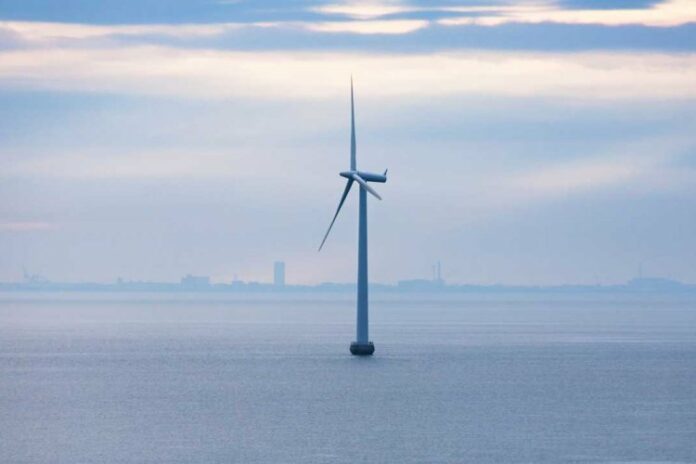
Governor Kathy Hochul today announced the successful delivery of clean power to Long Island from the first operational wind turbine at South Fork Wind, marking a historic milestone of the first utility-scale offshore wind farm in federal waters to begin “powering up” in the United States. 

The project has completed the installation of two turbines, with one operational, approximately 35 miles off Montauk with all 12 turbines expected to be installed by early 2024. 

Governor Hochul said: “South Fork Wind will power thousands of homes, create good-paying union jobs and demonstrate to all that offshore wind is a viable resource New York can harness for generations to come.”

When complete, South Fork Wind will generate approximately 130 megawatts of renewable energy, enough to power approximately 70,000 Long Island homes. The renewable energy from South Fork Wind will eliminate up to six million tons of carbon emissions each year, the equivalent of taking 60,000 cars off the road.

New York State Department of Environmental Conservation Commissioner Basil Seggos said,

“Thanks to the support of Governor Hochul and the efforts of DEC’s partners at LIPA and NYSERDA, New York State is taking critical steps to reduce climate-altering greenhouse gas emissions while creating jobs and bolstering local economies. The successful delivery of wind-powered energy to Long Island’s South Fork is a notable milestone in moving New Yorkers toward a green future powered by cleaner sources of energy.”

Ørsted Group EVP and CEO Americas David Hardy said,

“East Hampton has now made history as the first community in New York to receive clean energy from an offshore wind farm. South Fork Wind is not just a trailblazing project for the state, it’s also one of the foundations of America’s offshore wind energy industry and a testament to our team’s commitment, expertise and hard work.”

Eversource Energy Chairman, President and CEO Joe Nolan said,

“South Fork Wind is a project by New Yorkers, for New Yorkers. Clean, renewable offshore wind energy is now flowing to the local grid in East Hampton thanks especially to the hard work of local union workers and contractors who helped us build South Fork Wind’s transmission system and onshore substation. This has been a year of firsts for New York’s offshore wind industry, and there’s a lot more to come in the weeks ahead for this groundbreaking project and the growth of the U.S. offshore wind sector.”

First approved by the LIPA Board of Trustees in 2017, South Fork Wind began construction in February 2022, beginning with the onshore export cable system that links the project to the LIPA energy grid, which was completed early this year. The wind farm reached its “steel in the water” milestone in June 2023 with the installation of the project’s first monopile foundation. Van Oord’s offshore installation vessel, the Aeolus, is installing the turbines.

South Fork Wind includes the first U.S.-built offshore wind substation. More than 350 U.S. workers across three states supported construction of this offshore substation, a topside structure that collects the power produced by wind turbines and connects it to the grid. New York union workers supported its installation offshore.

Long Island-based contractor Haugland Energy Group LLC (an affiliate of Haugland Group LLC), installed the underground duct bank system for South Fork Wind’s onshore transmission line and led the construction of the project’s onshore interconnection facility. LS Cable installed and jointed the onshore cables with support from Long Island’s Elecnor Hawkeye. The onshore cable scope of work alone created more than 100 union jobs for Long Island skilled trades workers. Roman Stone, also on Long Island, manufactured concrete mattresses to protect the undersea cables, and Ljungstrom, located in western New York, in partnership with Riggs Distler & Company, Inc., provided specialized structural steelwork.

Jiangnan Shipyard and BV sign a cooperation agreement on shipyard digitalization

0

Jiangnan Shipyard (Group) Co., Ltd. and Bureau Veritas have issued a Joint-Declaration on 3D Auditing and Recognition, aiming at accelerating the process of 3D Submission and Approval by shipyards and classification societies. A partnership agreement was signed during Marintec China 2023, taking place in Shanghai, China.

The partnership aims to meet the needs of the digital transformation of ship and sea equipment design and construction, promote the deep integration of digital technology, empower the transformation and upgrading of traditional industries, support the emergence of new industries, and enable the use of a single source of data in the ship design and building processes in the future.

The cooperation agreement comprises four main initiatives: strengthening digital transformation; defining interoperability, common standards and data security strategies; assisting full lifecycle digitization; and creating opportunities for sharing and co-innovation to further enable digital twins to create a larger ‘three-dimensional community of application’ within the maritime sector.

Alex Gregg-Smith, Senior Vice President of BV Group, President of BV Classification France, North Asia & China, said: “Digitalization is one of the major trends in the transformation of the maritime industry. In today’s world, digitalization plays an increasingly significant role in the process of ship design, review, manufacture, operation and decommissioning, and it profoundly affects the development pattern of the shipbuilding and shipping world. Among them, 3D digital review, including sending and returning, is an important part of the ship digital ecology and one of the hot spots in the development of today’s shipbuilding industry.”

ABB launches digital tool for enhanced transparency on emissions in vessel operations

0

ABB has launched a new digital tool allowing shipowners, operators and designers to estimate the emission-reduction impact of various ABB technologies used on board ships when compared to alternative solutions and in scenarios specified by the user.

The CO2e (carbon dioxide-equivalent) Calculator is applicable to five ABB solutions for the maritime industry – Azipod® electric propulsion, energy storage, Onboard DC Grid™ power system platform, shaft generator, and shore connection – highlighting their potential to support the shipping industry’s decarbonization objectives in line with targets set out by the International Maritime Organization (IMO).

For Azipod® propulsion, the CO2e Calculator demonstrates the estimated reductions in CO2e emissions that result from powering a vessel with Azipod® propulsors rather than with a traditional shaftline system. It covers typical scenarios for cruise ships, yachts, ferries, offshore support vessels, and potentially other vessel types with similar operational profiles.

When applied to ABB’s energy storage system, the tool shows the emissions reductions a vessel can achieve using batteries charged from the shoreside grid in place of a conventional combustion engine running on fossil fuels.

For Onboard DC Grid™, it shows the estimated emission-reduction benefit of the solution’s variable-speed function for internal combustion engines compared to a fixed-speed function.

For an ABB shaft generator, the CO2e Calculator estimates how much a shaft generator installed on the main engine shaft can reduce emissions when compared to auxiliary engines driven by the auxiliary generator.

Finally, for ABB shore connection, the tool calculates the estimated reduction in emissions that can be achieved by drawing from the shoreside utility grid instead of generating electric power using onboard generators.

“ABB has a long history of developing energy-efficient solutions for the maritime industry, and now we can demonstrate the tangible emission-reduction impact of those products to our customers,” said Tommi Lempiäinen, Head of Strategy and Sustainability, ABB Marine & Ports. “With this level of transparency, shipowners are empowered to make informed decisions on which solutions to invest in – calculated for the specific scenario in question. This is a small but nonetheless significant step within the framework of our broader commitment to driving maritime decarbonization in accordance with the IMO’s net-zero ambitions.”
 

KPI OceanConnect, Titan, and SFL collaborate on LNG bunkering operation

0

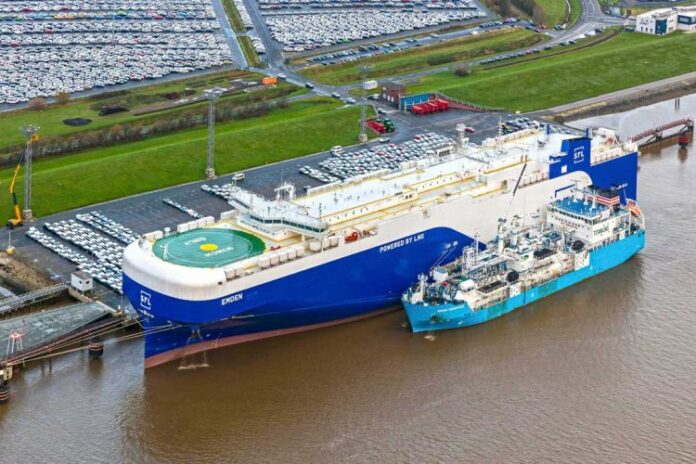
Executing an LNG cool down and bunkering operation entails different challenges, often requiring more time-consuming and detailed processes compared to a conventional fuel supply, including compatibility assessments between the receiving vessel and the LNG bunkering vessel.

The success of the operation performed by Titan with the collaboration of KPI OceanConnect and SFL, highlights the flexibility and efficiency of all parties, and their shared commitment to ensuring a smooth bunkering process. 

Michael Schaap, Commercial Director, Titan, commented:

“Demand for LNG is rising as it is becoming a mainstream fuel since it is widely available today and enables ship operators to reduce emissions now. This operation highlights our commitment to consistently serve our clients as a trustworthy provider of cleaner fuels and we look forward to continuing to enhance our LNG and bio-LNG bunkering capabilities as the market grows, enabling us to supply (bio)LNG to even larger vessels.”

Jesper Sørensen, Global Head of Alternative Fuels and Carbon Markets, KPI OceanConnect, commented:

“The operation marks our inaugural LNG deal for a car carrier – testament to the company’s dedication to advancing sustainability through partnerships up and down the supply chain.”

“Partnership plays a key role, not just in the development of future alternative fuels, but also in the delivery of those already available in the market. Cooperation between fuel providers and buyers in the market is essential to supporting capacity growth and, crucially, immediately reducing greenhouse gas emissions from the industry.”

The three companies collectively recognise LNG as a crucial component of the future fuel mix for the maritime industry. LNG offers substantial environmental benefits, with potential GHG emission reductions of up to 23% on a well-to-wake basis and depending on engine technology. Notably, LNG achieves nearly total reduction in local SOx emissions and particulate matter, and up to a 95% reduction in NOx emissions.

ClassNK issues AiPs for vehicle carrier trio

0

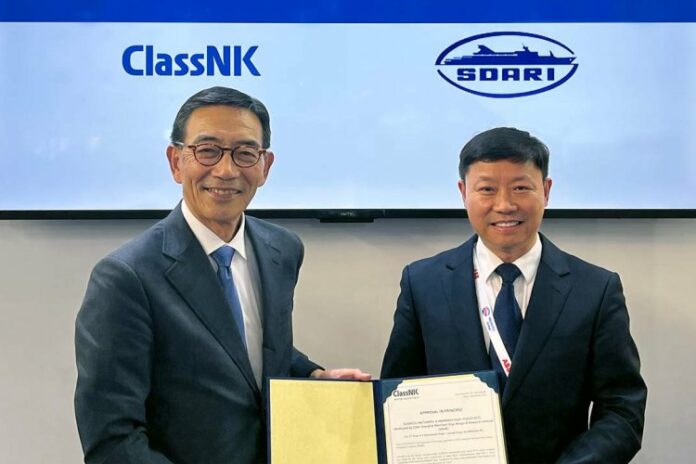
ClassNK awards AiPs for SDARI’s green fuels powered vehicle carriers for ammonia ready LNG dual fueled 7,000CEU, and both methanol/ammonia dual fueled 10,000CEU

The first AiP acknowledges an ammonia ready LNG dual fueled vehicle carrier with a capacity of 7,000 CEU, a significant first in China’s independently developed design. For the ship with the dimension of LOA 199.99m x B 38m × D 37m, Draft 8.6m, SDARI integrates the GTT MARK III Flex containment system for LNG and ammonia fuel storage to maximize the cargo capacity efficiently.

Furthermore, ClassNK has granted AiPs for both methanol dual fueled and ammonia dual fueled vehicle carriers, each with a capacity of 10,000 CEU, which is envisioned to lead the development of ultra-large vehicle carriers.

SDARI has created these three models exemplify the new generation of green vehicle carriers, adaptable to various alternative fuel options and catering to future market demands. ClassNK has engaged in SDARI’s development projects, and carried out its review in accordance with the relevant standards, including its latest structural rules Part C and Guidelines for Ships Using Alternative Fuels. Marking the AiPs as the milestone, ClassNK is committed to further providing expertise to assist the design firm’s initiative in expanding the industry’s pathway for the transition to decarbonization.

Steerprop to help outfit Finnish Border Guard ships

0

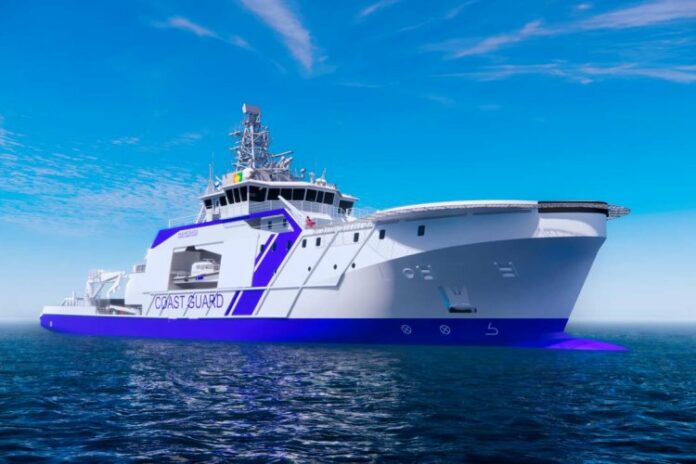
Steerprop has announced a new contract with Meyer Turku shipyard to supply tunnel thrusters and retractable combi thrusters for two newbuild multi-purpose patrol vessels for the Finnish Border Guard.

The Finnish Border Guard will replace three obsolete patrol vessels with two new offshore patrol vessels, similar in size to the Turva (Finnish for “protection” or “security”), the largest patrol vessel in the fleet to date. With the new vessels, capabilities will be increased to the level required by the challenging duties and operating environment of the Finnish Border Guard. The operational ability of the Border Guard in the open sea is largely based on the constant operation and readiness of multi-purpose patrol vessels. The new patrol vessels’ main purpose will be ensuring border safety and open sea patrol. Additionally, they will be able to support the important work of many other authorities at sea and in the archipelago.

“Our new patrol vessels are multi-purpose vessels that have the capacity to handle a wide range of national and international duties all year round in the diverse conditions of the Baltic Sea,” says Commander Marko Aheristo, Head of Ship Technical Unit at the Finnish Border Guard. “The vessels are also designed to meet higher emissions standards and prioritize energy efficiency, making them a practical, functional, and cost-effective solution,” Mr. Aheristo continues.

Steerprop will equip the Finnish Border Guard’s new vessels with a Steerprop combi retractable thruster and a Steerprop tunnel thruster, both delivering a power of 850 kW per unit. This will be the first delivery for the Steerprop retractable thruster series. The combi retractable thruster is a combined azimuth thruster and a tunnel thruster with a robust retracting mechanism. It enables flexible maneuvering in harbor operations when the thruster is retracted, and energy-efficient station-keeping when the thruster is deployed.

“These unique vessels called for the kind of unique expertise and customized solutions that Steerprop are so well known for in the market,” says Juho Rekola, Director, Sales and Project Management at Steerprop. “In addition, we never compromise on the reliability of our solutions, making them a perfect fit for these vessels’ demanding operations in the vulnerable Baltic Sea in which the expectations on reliability are extremely high,” Mr. Rekola explains.

“The ship propulsion and the maneuvering systems play a key role in a ship’s ability to perform demanding operations. Therefore, we are happy to expand our offering with new, high-quality Steerprop solutions to support the marine industry. By utilizing Steerprop’s expertise in Computational Fluid Dynamics (CFD), we are able to optimize the integration of thrusters on board to achieve maximum performance, energy efficiency, and comfort,” he continues.

The planned delivery of the equipment will be in 2024 and 2025.

Damen Naval marks official start of construction phase F126 frigates

0

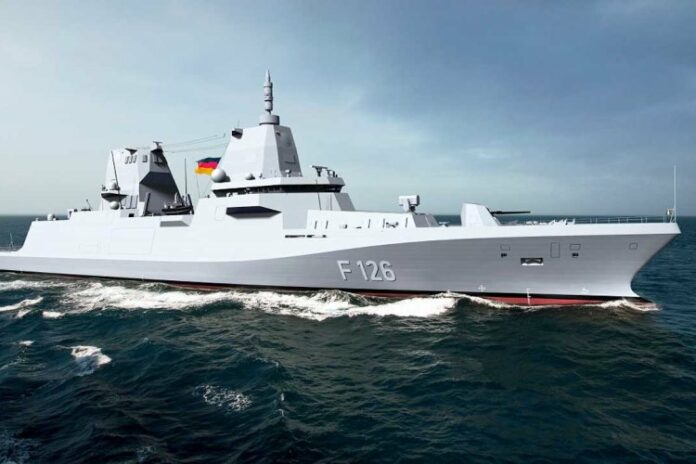
Main contractor Damen Naval and project partner NVL Group invited more than 200 guests to attend the official and festive ceremony at the Peene shipyard in Wolgast, Germany. The cutting of the first steel marks the official start of the project’s construction phase. 

“We are proud to be able to start cutting steel entirely on schedule on 5 December. We were able to complete the development phase in record time, something that is partly due to the excellent cooperation with BAAINBW, the Navy and the other German authorities,” said Damen Shipyards Group CEO Arnout Damen. “The F126 project is an important contribution to the technological sovereignty of the German, Dutch and European defence industry. The cooperation with our partners Blohm+Voss and Thales is excellent, and the project is now also recognised worldwide as one of the most exciting frigate construction projects.”

In June 2020, the equipment management organisation of the Bundeswehr, BAAINBw, awarded the construction contract for the four F126 frigates to Damen Naval as head contractor, together with subcontractors Blohm+Voss and Thales. It is the largest shipbuilding project in the history of the German navy and the contract includes an option for two more frigates.

Over the past three and a half years, Damen Naval and its partners have worked hard on the design for the vessels, although that work has been largely invisible to the outside world, says Magiel Venema, Director of Damen Naval Germany.

“The steel cutting is the first visible shipbuilding step of the project as well as the first tangible milestone taking place in Germany itself. The ships will now start taking shape, so everyone can see what is slowly being created.” 

The ships will be built entirely in Germany at shipyards in Wolgast, Kiel and Hamburg. The steelwork and pre-assembly for the stern will take place at the Peene shipyard in Wolgast, part of the NVL Group. The foreship will be built in Kiel, where it will be assembled with the stern and towed by sea to Blohm+Voss in Hamburg. Final outfitting, commissioning, testing and delivery, as well as outfitting of the on-board systems, will take place at Blohm+Voss in Hamburg. Delivery of the first ship is scheduled for 2028.

Parliamentary State Secretary at the Federal Ministry of Defence of Germany, Siemtje Möller MdB states,

“With the F126 frigates, the navy has a modern asset that, in future, can serve as an effective deterrent and defence for our alliances and for our own security in all maritime operations and operational areas around the world. In doing so, we demonstrate our reliability and professionalism, but above all our determination and will to stand up for our security and that of our partners. Now, the focus should be to stay on course so that the ships are delivered on time.”

With a length of 166 metres and a displacement of up to 10,000 tonnes, the F126 frigates will be the largest in the German naval fleet. The versatile multi-mission platforms can operate all over the world and in all conditions, from the tropics to the polar regions. 

“We are delighted to start production of the F126 today and to contribute our shipbuilding skills and expertise to the project together with head contractor Damen,” NVL Group CEO Tim Wagner explained. “Our yard in Wolgast is a reliable partner for the German Navy in the construction and repair of highly complex naval vessels. Thanks to targeted support measures, extensive investments in infrastructure, and the high motivation of our employees, the Peene-Werft is a shipyard with clear prospects for the future. The construction of the stern ships will secure employment until 2028 – with positive effects for the entire region.”

WinGD signs four-way partnership to deliver CMBTECH ammonia engines

0

Swiss marine power company WinGD has concluded a four-party agreement underwriting Belgian bulk carrier operator CMB.TECH’s order of X72DF-A ammonia-fuelled engines.

CSSC Qingdao Beihai Shipbuilding (QBS) and engine builder CSSC Engine Co (CSE) were the other signatories in the joint undertaking to power a series of 210,000 DWT bulk carriers to be delivered from Qingdao through 2025 and 2026.

Following confirmation of the engine order, the agreement advances the project between WinGD and CMB.TECH announced in January to develop the 72-bore ammonia-engine. The close cooperation and shared responsibility reflected in the agreement highlights the groundbreaking nature of the order: the vessels will be the first ammonia-fuelled bulk carriers to be built; the WinGD engine designs will be the first of their size for ammonia; and they will be the first ammonia engines built in China.

CMB.TECH CEO, Alexander Saverys said:

“CMB.TECH sees green ammonia as one of the big solutions to decarbonise long-distance shipping and this order brings to fruition our active commitment to develop this pathway. The gathering of expertise under this agreement will ensure that our first ammonia-fuelled vessels are built and powered in a safe and sustainable way, as well as helping to decarbonise our business and our customers’ logistics.”

WinGD CEO, Dominik Schneiter said:

“Having progressed the engine design and vessel integration concept rapidly with CMB.TECH over the past nine months, enlisting the mutual cooperation of the shipyard and engine builder is a critical next step. As well as safeguarding the successful entry into operation of these innovative engines, this collaboration will also accelerate the spread of ammonia capabilities across key stakeholder groups, placing the whole industry on surer footing as it explores a vital decarbonisation pathway.”

QBS Executive VP, Gu Kechao said:

“CMB.TECH’s decision to have its first ammonia-fuelled vessels built by CSSC Qingdao Beihai Shipbuilding underscores the company’s faith in the quality and value of our work. It also highlights growing acknowledgement of the wider Chinese capability in complex shipbuilding projects. Building among the first ammonia-fuelled vessels in the world will place QBS in a strong position to support further customers with their maritime decarbonisation projects.”

CSE Chief Engineer, Zhang Guangwei said:

“Bringing a new engine design into commercial operation is aways the result of strong joint effort between engine and vessel designer, engine builder, shipyard and owner. CSE is honoured to be the first engine builder in China to deliver ammonia-fuelled engines to the maritime market, and to take an early role in what will become a significant market as ammonia fuel is used more widely in shipping.”

WinGD’s X-DF-A engines operate using high-pressure fuel injection with a small portion of pilot fuel, and will have performance and fuel efficiency comparable to the company’s diesel-fuelled X-Engines. No aftertreatment is required for N2O emissions, while selective catalytic reduction is used to ensure Tier III NOx compliance in both ammonia and diesel modes.

Wärtsilä to introduce four methanol engines to its portfolio

0

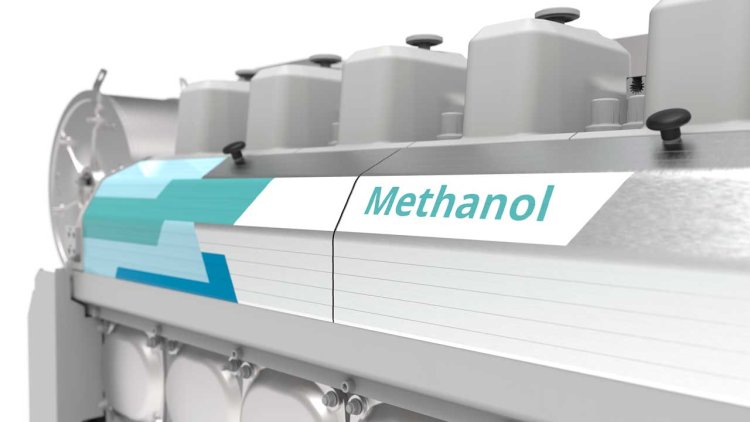
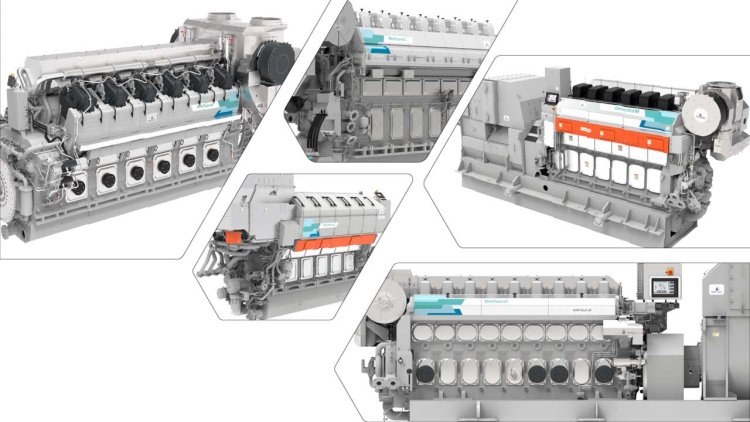
In addition to the Wärtsilä 32 methanol engine launched last year, Wärtsilä will add the Wärtsilä 20, Wärtsilä 31, Wärtsilä 46F and Wärtsilä 46TS to its portfolio of engines capable of operating with methanol fuel.

Methanol is one of the primary alternative fuel choices for the shipping industry to achieve net zero carbon emissions by 2050. For example, ‘green’ methanol can be produced using renewable energy sources and carbon capture technology, making it a sustainable and carbon-neutral option. It can also be rather easily integrated into existing shipping operations as it can be stored and transported using the existing infrastructure for conventional liquid fuels.

Throughout the Wärtsilä diesel engine portfolio, covering both new engines, as well as those currently in operation, Wärtsilä is developing the corresponding methanol retrofit capabilities. Methanol upgrades are either available or under development for the Wärtsilä 31, Wärtsilä 32, Wärtsilä 46F, Wärtsilä 46TS and Wärtsilä ZA40S engines. Whereas the Wärtsilä 20 engine family can be ordered with methanol combustion capabilities. By making these engines capable of running on methanol fuel, Wärtsilä has expanded its methanol offering to a wide range of vessel types across the marine industry.

“Decarbonisation is front and centre to our strategy going forward, and the development of engines capable of running on future fuels is crucial to that. Wärtsilä takes an innovative approach to supporting the marine industry’s transformation to more sustainable operations, and this broad range of methanol engines emphasises this,” says Roger Holm, President of Wärtsilä’s Marine Power business.

“Wärtsilä is backing its extensive experience with strong investments in developing new fuel flexible technologies and products. We recognise that it is vital for ship owners to have maximum flexibility and to keep options open as the industry navigates the uncertain pathway to net zero, and we are working hard to deliver this operational flexibility. Our track record is already very solid, and this expanded engine portfolio adds to both our accomplishments and our long-term commitment to the maritime industry,” says Stefan Nysjö, Vice President of Power Supply, Wärtsilä Marine Power.

New partnership delivers new classification notations for smart shipping

0

A smartship partnership bringing together ship management company Laskaridis Shipping, digital technology provider METIS Cyberspace Technology and classification society Bureau Veritas (BV) has developed new notations reflecting the latest advances in digitalisation, and in particular the use of augmented data to optimise the efficiency of shipping operations and reduce greenhouse gas emissions. 

The results of this partnership were made official during a meeting at the offices of Laskaridis Shipping Co. LTD. on the 17th of November 2023.
 
The project, which was launched in June 2022, led to BV delivering an Approval in Principle to METIS Cyberspace for its METIS Ship Connect System, an automated data acquisition platform for the monitoring of vessel operations and subsystems. Furthermore, two new classification notations were awarded to the bulk carrier LETO, built in 2015 and managed by Laskaridis Shipping CO. LTD., which is one of the 20 ships of the company’s fleet equipped with METIS Ship Connect.
 
METIS Ship Connect serves as the onboard Internet of Things (IoT) component within the METIS solution. METIS Ship Connect collects data streams from onboard sensors, instruments and automation control systems that are utilized by the METIS cloud–based platform to generate actionable intelligence. Essential vessel metrics such as fuel oil consumption, engine performance, electrical power production etc. are monitored in real time and through advanced data analytics and machine learning techniques the METIS platform provides optimization recommendations, predictive insights and regulatory compliance management.
 
With METIS Ship Connect on board, the bulk carrier LETO became the first vessel to be awarded the DATAINFRA notation, which was developed by Bureau Veritas as part of the project. The DATAINFRA notation recognises that the ship is equipped with data infrastructure consisting of data assets, technologies, organisations and data management processes, ensuring the reliable collection, transmission, storage, sharing and availability of data to multiple data consumers.
 
The LETO is also the first in-service vessel to receive BV’s SMART (EnE1-W, -S, -Em) notation, which recognises that the company and the vessel incorporate software and hardware that provide smart functions for the collection, transmission, analysis and visualisation of data related to energy efficiency, speed optimisation, weather routing and emissions monitoring.
 
Focusing on the use of big data and AI technology, the new notations and the METIS Ship Connect platform will help shipmanagers reduce greenhouse gas emissions from vessels and optimise performance. The project and notations scope support ship-to-shore connectivity, remote decisions and remote operations.
 
Mrs Eleni Polychronopoulou, CEO at METIS Cyberspace Technology, said:

“Shipping is now coming to accept that real-time vessel data, predictive analysis and artificial intelligence will be crucial to meeting the needs of the transition ahead. Used correctly, data not only helps optimise maritime operations to boost energy efficiency, but also supports better decision-making at the strategic level. Approval in Principle from Bureau Veritas confirms that Metis Ship Connect as already fully ready and fit for purpose to help the maritime industry navigate its digital challenges”.

Mr. Suzanna Laskaridis, Chairwoman of Lavinia Corp., said:

“Digital technologies have tremendous potential to drive operational excellence and enhance sustainability, which is why they are at the heart of our long-term strategy. Through cooperations in innovation like this one we can open the way for transformative developments, unlocking new possibilities in the field of maritime digitalization that can benefit our companies but also the industry at large”.
 
Mr. George Christopoulos, COO of Laskaridis Shipping Co. LTD. noted:

“All of our newbuildings with BV Class will have the SMART notation. We want to take advantage of the evolution in technology until 2027 when the ships will be delivered. We have agreed with the shipyards to perform sea trial using high frequency data. The shipyards also want to add the SMART notation as their designs are upgraded. Our target is to expand the concept and prove that we are actively engaged in data driven operations. Our biggest charterers are already requesting high frequency data analytics. On our side we are totally transparent and agree to include in our charter parties specific clauses for CII and EU ETS. We are also in the process of upgrading to mass flow meters which very much improve our consumption measurement accuracy”.
 
Mr. Nicholas Tsoulakos, Innovation & Technology Manager of Laskaridis Shipping noted:

“We are in the era of digitalization and the high frequency data collection systems that we have installed on our vessels are the basis for the upcoming AI systems that are coming or are already available in the maritime industry”.
 
Mrs Paillette Palaiologou, Vice President for South East Europe, Black Sea & Adriatic (SEEBA) Zone at Bureau Veritas Marine & Offshore, said:

“Digitalisation is the essential foundation for progress on decarbonisation and operational efficiency more broadly. This project builds on Bureau Veritas’ strategy to support technological advances and digitalisation in shipping, enabling safe innovation as the industry progresses towards more digitalised and autonomous ships.”