-7.9 C
New York
Home Blog Page 236

Jan De Nul signs first two contracts with TenneT

0

Jan De Nul Group together with its consortium partners LS Cable & System and Denys, has signed the contracts for two 525 HVDC cable systems for the two grid connection systems BalWin4 and LanWin1. 

These mark the first two contracts signed under the long-term framework agreement that TenneT and Jan De Nul have signed earlier this year. The projects comprise the design, manufacturing, transport, installation, protection and testing of three 525 kV cable systems for connecting offshore wind farms to the onshore grid via the BalWin4 and LanWin1 grid connections.

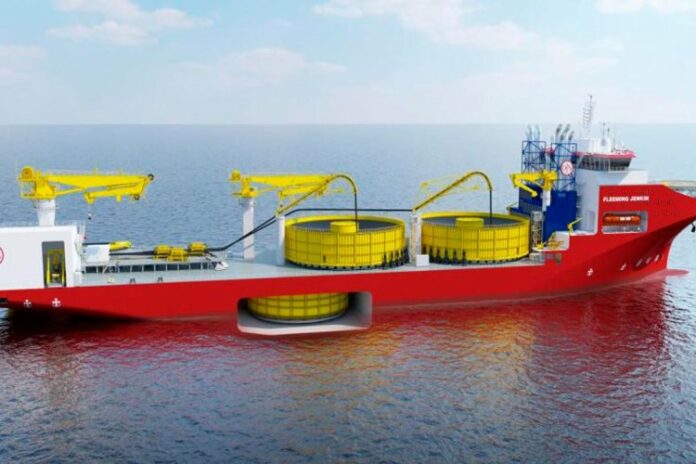
Jan De Nul will take care of the transport, installation, burial and protection of the offshore cables. For this, it will use a variety of its specialised vessels and assets including the Fleeming Jenkin, the company’s recently ordered XL cable-laying vessel. LS Cable & System will design, manufacture, terminate and test all cables with Denys being responsible for civil and cable pulling scope related to the onshore cable routes. Together, the three companies provide TenneT with the much-needed experience and innovative techniques in support of its ambitious 2GW Program. In total, more than 1,000 km of HVDC will be designed, manufactured, transported, installed, protected, and tested for these two projects.

Wouter Vermeersch, Manager Offshore Cables at Jan De Nul Group:

“We are delighted to sign these first two projects under the partnership frame agreement we signed earlier this year with TenneT. This marks an important milestone in support of TenneT’s 2GWProgram and the construction of the energy transition. We look forward to providing delivery excellence of these projects within the challenging North Sea environment together with TenneT and our partners.”

The cable systems of the two grid connections BalWin4 and LanWin1 coming from the offshore converter stations will cross the Wadden Sea and be connected to the extra-high voltage grid in Unterweser. The grid connections will enable renewable electricity from offshore wind farms with a transmission capacity of altogether 4 GW to be fed into the German grid.

BalWin4 and LanWin1 are part of the 2GW Program. With its transnational approach and a new standard for offshore grid connection systems, the 2GW Program accelerates European offshore grid expansion and secures energy supply for Europe. Together, the total of 14 offshore grid connections in the 2GW program will supply up to 35 million households with green wind energy.

XL cable-laying vessel Fleeming Jenkin, an Ultra Low Emission vessel (ULEv) with unrivalled carrying capacity of up to 28,000 tonnes, will transport and install the 525kV HVDC offshore cables. The two power core cables together with the metallic return cable as well as a fibre optic cable will be installed simultaneously using the three (3) carousels and fibre optic tank onboard the Fleeming Jenkin.

Apart from the ULEv technology, the ship is equipped with hybrid engines that can run on both biofuel and green methanol. This significantly reduces CO2 emissions. The 2.5 MWh battery and drive technology optimises energy use on board. Fleeming Jenkin will meet the strictest standards on emissions, such as the European Stage V and EURO VI emission standards.
MacGregor gets order to supply comprehensive RoRo equipment

0

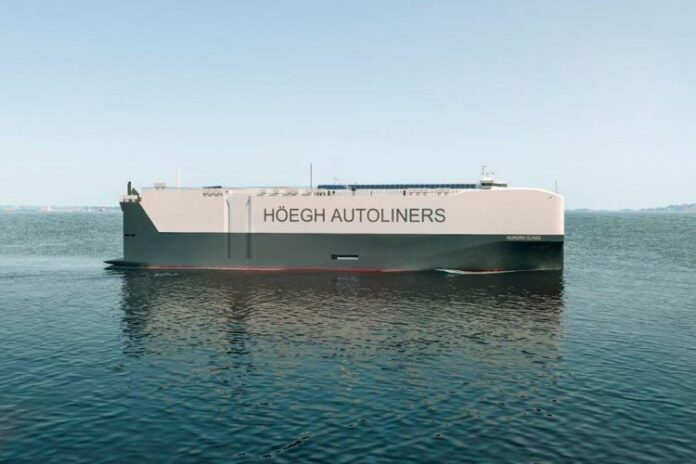
MacGregor, part of Cargotec, has been selected to supply comprehensive packages of RoRo equipment for an additional four multi-fuel and zero-carbon ready Aurora class Pure Car and Truck Carriers (PCTCs) for Höegh Autoliners. 

This will extend Höegh Autoliners’ Aurora class newbuilding program to twelve vessels, all of which will be built by China Merchant Heavy Industries (Jiangsu) Co., Ltd.
 
The significant order is booked into Cargotec’s 2023 fourth quarter order intake and the vessels will be delivered between the second quarter 2026 and the first half of 2027.

The Aurora class will be the future of the PCTC industry with capabilities to transport up to 9,100 cars and by being the world’s largest and most environmentally friendly car carrier. The class will have DNV’s ammonia and methanol ready notations. MacGregor’s scope of supply encompasses design, supply and installation support for a large stern quarter ramp and for a door, a side ramp and a door, internal ramp systems, and liftable car decks on all four vessels.

“Höegh Autoliners has a clear commitment towards a more sustainable future and we are pleased that they have chosen to continue collaborating with us moving towards safer, more efficient and eco-efficient shipping,” says Magnus Sjöberg, Senior Vice President, Merchant Solutions, MacGregor.

“We are very pleased to be continuing our partnership with MacGregor. Our Aurora newbuilding program is a definitive step in our commitment to a net zero emissions future by 2040, and MacGregor’s world leading technology and expertise will benefit our operations and ensure that the Aurora vessels are built to the highest standards. It is our ambition to be the preferred green partner in deep sea shipping, and we are committed to building a more sustainable future,” says Andreas Enger, CEO of Höegh Autoliners.

ClassNK endorses MARIC’s lineup of alternative fueled vessels with AiPs

0

The four designs – a 210k methanol dual-fueled bulk carrier, a 210k ammonia dual-fueled bulk carrier, a 210k LNG dual-fueled bulk carrier, and an 88k LPG dual-fueled very large gas carrier – represent MARIC’s approach to offer a range of environmentally friendly alternatives for the industry transitions towards the ultimate goal of net-zero emissions.

For these accomplishments, ClassNK conducted the verification in line with relevant rules corresponding to respective ship type, including its Guidelines for Ships Using Alternative Fuels. 

Mr. Fumihiko Higashi, President, Headquarters of ClassNK (China) said:

“ClassNK is proud to have completed the design review for these AiPs. We believe this certification, stemming from the collaborative efforts of MARIC and ClassNK, will serve as a testament to the integrity of these diverse designs. More importantly, it acts as a catalyst in accelerating the uptake of alternative fuels onboard, aligning with global environmental goals.” 

ABB supplies world-first maritime megawatt charging system for new electric ferries

0

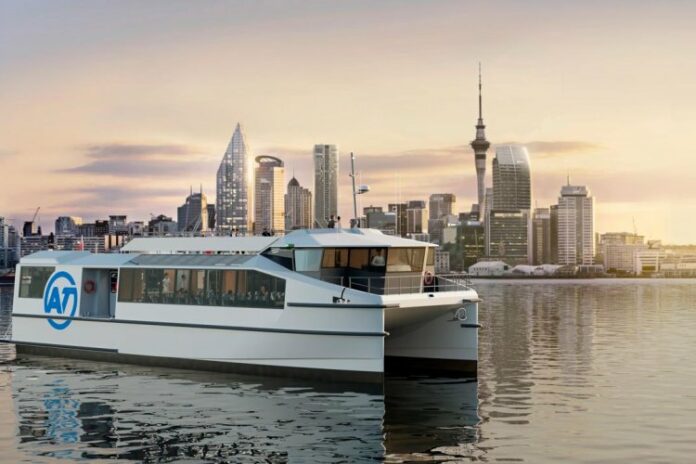
ABB has secured a contract with Auckland Transport (AT) to deliver the maritime world’s first megawatt charging system (MCS) to recharge electric ferries using the same interface as trucks and airplanes. 

Lowering the barrier to entry, the standardized and highly adaptable system is expected to improve electric vessel competitiveness against fossil-fueled counterparts.

As part of its Mission Electric initiative, AT has ordered two 200-seat all-electric ferries and two 300-passenger hybrid-electric ferries and is expected to become the largest electric ferry fleet operator in the Southern Hemisphere by 2030. Replacing conventional, diesel-operated ferries, the new ferries are estimated to help AT cut diesel use by 1.5 million liters, and CO2e emissions by 4,000 metric tons per year, equivalent to the annual emissions generated by about 90 diesel buses. 

“It is incredibly exciting to lead the way with modern, low-emission public transport,” said Nathan Cammock, Programme Director, Auckland Transport. “Our new Auckland-owned ferries will bring greater passenger capacity, improved accessibility and a more consistent customer experience. They will rely on modern charging infrastructure to deliver on these capabilities.”

While ferries carry only six percent of public transport users in Auckland, their diesel engines produce 20 percent of the city’s public transport greenhouse gas emissions.1 New Zealand has set decarbonization goals by including a 2050 net-zero emissions target in its Zero Carbon Act. Given its responsibility for public transport infrastructure around the Hauraki Gulf, AT has chosen to electrify its ferry network using the CharIN megawatt charging system standard.

ABB will work with local partners to deliver, engineer and install five complete charging solutions during 2024 and 2025 at several ferry terminals. Each system will feature a pair of 1.65MW chargers, consisting of a transformer, ACS880 converters, MCS plugs and cable management on the ferry pontoons.

The chargers will deliver over three megawatts of direct current (DC) power to sustain the short turnarounds and high-power demands needed to maintain an efficiently operated ferry fleet. The connectors will be handled by crew during passenger turnarounds.

The Auckland installation will also be the first MCS supplied by ABB to benefit from the standardized plug-in interface, although the group has been delivering shore-to-ship power for over 20 years since an initial contract with Princess Cruises in Alaska. The Auckland solution will be similar in charging capacity to ABB’s landmark project to support 10 all-electric ferries for public transportation provider Transtejo Soflusa in Lisbon, Portugal.

“ABB’s proven experience in delivering robust and high-performance ship charging solutions and their willingness to embrace the megawatt charging system were major considerations in AT’s choice,” commented Murray Burt, Chief Engineer, Auckland Transport. “It was important to combine ABB’s global support capabilities and long-standing local presence for a project that will transform Auckland’s ferry services.”

“Ferries connect communities and have a significant impact on the environment,” said Palemia Field, Ferry Segment Manager, ABB Marine & Ports. “There’s a well-known Māori proverb which says ‘ka pū te ruha, ka hao te rangatahi’, or ‘once the old fishing net is worn, it is put aside to make way for the new fishing net’. Electrification is crucial and we must move away from emissions-generating technologies. Noise- and emission-free operations benefit both the broader and local communities, while passengers onboard enjoy improved travel comfort thanks to less vibration.”

As the electrification of the global ferry fleet increases, ABB expects more operators to opt for a standardized interface that is familiar from other industries. “We are ready to deliver the MCS solution to meet the demand, wherever standardized connections make it easier for operators to design their ferries and terminals,” Field said. 

Electric ferry orders made up 37 percent of the maritime battery capacity deliveries between 2019 and 2022, according to research published by IDTechEx2. A 2023 forecast from Spherical Insights3 suggests that the market for all types of electric ships will double in value by 2030 over a 2021 baseline, to surpass $10.5 billion. 

Deltamarin and partners secure AiP for their new expedition vessel

0

The project was published at Marintec Shanghai on December 7, 2023, alongside the presentation of AiP certificates to the involved parties.

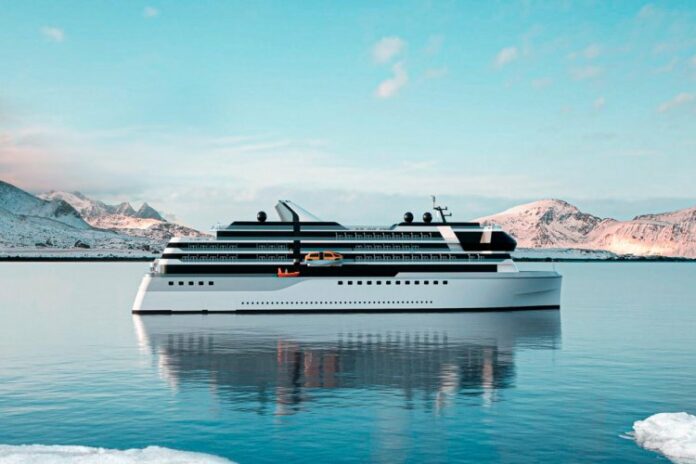
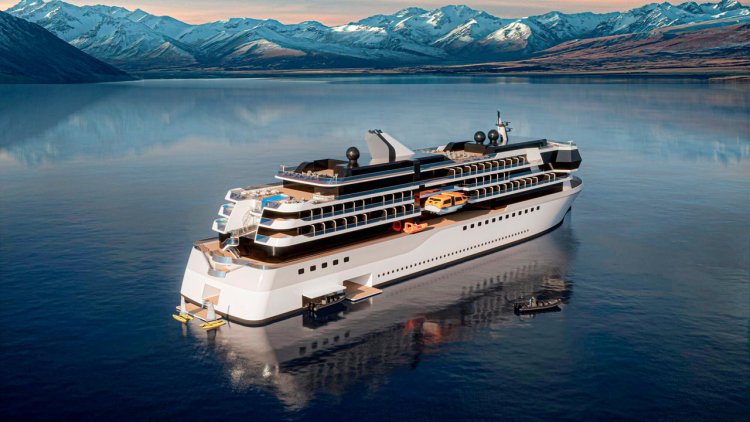
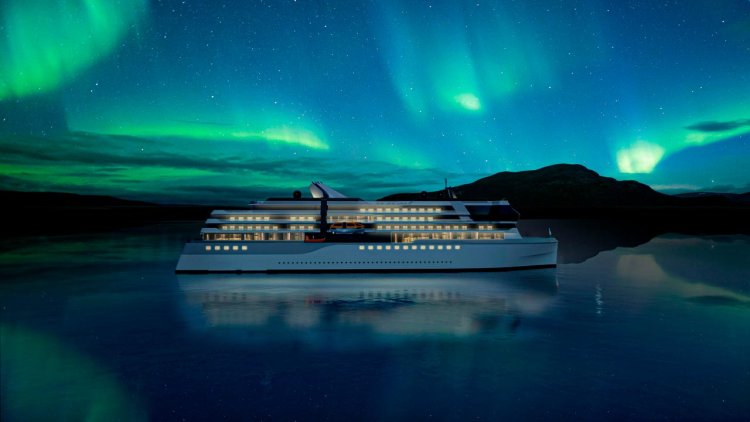
The innovative 17,000 GRT vessel is designed for 200 passengers for worldwide service, covering both Arctic and tropical regions. One of its unique design features is the full capacity for simultaneous Zodiac expedition trips for all passengers.

Environmental friendliness is the key design criterion of the vessel, which is fitted with state-of-the-art technology for green operations. The design of the vessel has been developed jointly by the owner EWE cruises, naval architect Deltamarin, architectural designer Tillberg of Sweden, and in close collaboration with Chinese Polar Guide Association.

The approval from DNV proves that the design basis for the project is compliant with prevailing rules and regulations.

Alfa Laval to provide the fuel supply system to Maersk

0

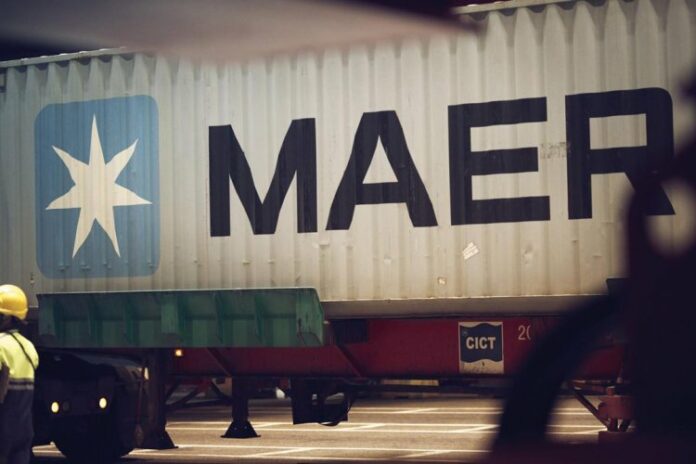
Alfa Laval will support A.P. Moller-Maersk (Maersk) with installation of FCM Methanol low-flashpoint fuel supply system (LFSS) on board the 15,000 TEU Maersk Halifax. The retrofit is scheduled by mid-2024. 

This pioneering container vessel conversion will enable the vessel to sail on green methanol with dual-fuel capabilities.

“At Alfa Laval, we collaborate with the industry frontrunners in exploring and embracing innovative ways for decarbonization,” says Viktor Friberg, Head of Marine Separation & Fuel Supply Systems, Alfa Laval. “The project with Maersk gives us a unique opportunity to take up a new challenge – retrofitting our equipment for methanol use, for the first time. We are immensely proud to extend our expertise to this innovative retrofit project.”

The project will involve adding a new fuel line for methanol alongside the traditional fuel line, respecting the existing space constraints and the tight time schedule. The retrofit of the FCM Methanol is a landmark project that requires advanced engineering and understanding of the practical considerations of working with methanol.

“We have set an ambitious net-zero emissions target for 2040, and retrofitting of engines on our vessels to run on methanol is an important nut in our strategy. Retrofitting solutions to accommodate new fuel thereby enabling the engine to operate on methanol is a complex task that requires expertise, and we are happy to have Alfa Laval on board on this project,” says Ole Graa Jakobsen, Head of Fleet Technology, A.P. Moller-Maersk.  

Sailing with green methanol fuel is a sustainable option to reduce emissions, but it requires a fuel supply system that can handle the fuel safely and effectively. With over 80 ships contracted, Alfa Laval has the longest experience in methanol FSS installation and service since 2015. It is the only system that has been powering methanol-fuelled vessels so far, with over 450 000 hours of operations and unmatched expertise.
 

Deltamarin’s PCTC and LNG carrier designs receive AiPs from DNV

0

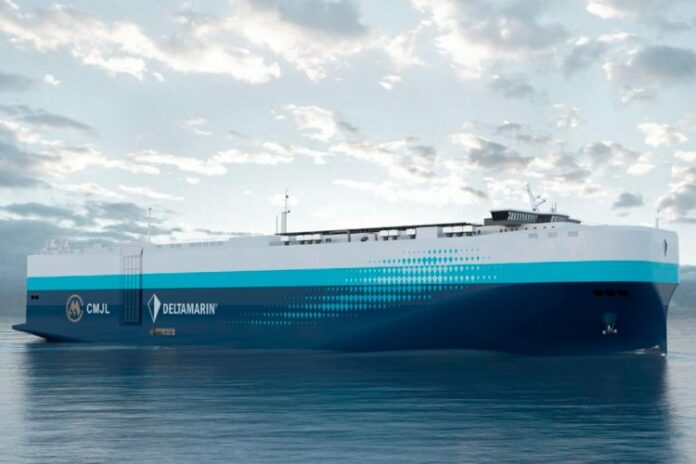
On Tuesday, December 5th, three designs developed by Deltamarin received Approval in Principle (AiP) from the classification society DNV. The certificates were handed over at Marintec China to China Merchants Heavy Industry (Jiangsu), China Merchants Jinling Shipyard (Nanjing) and Deltamarin.

Deltamarin and CMJL (Nanjing) have been collaborating on the development of a new 11 000 CEU PCTC design. The new LNG powered vessel introduces an entirely new size class, characterized by high energy efficiency, excellent Environmental Efficiency Index (EEDI) performance, and a hull optimized for hydrodynamic efficiency. The design also incorporates innovative features such as solar panels, waste heat recovery, and air lubrication systems. It builds upon our track record in developing new PCTC designs in the recent years, marking a natural continuation of our commitment to advancing novel vessel design and delivering innovative and future-proof solutions to the market.

The 180,000cbm LNG carrier, designed by Deltamarin and built by CMHI (Jiangsu), features GTT membrane cargo tanks and is the largest LNG carrier currently under construction in China. Featuring key attributes such as strong environmental friendliness, high energy-efficiency, reliability, and compatibility, the Deltamarin-designed twisted skeg hull form aims to achieve world-leading overall efficiency. This design targets an EEDI with a 50% reduction compared to the baseline requirement, significantly reducing methane slip.

Building upon the design of the developed 180,000cbm LNG carrier and with further optimizations on the main dimension and propulsion configuration, the design of 200,000cbm LNG carrier maximize the total cargo tank capacity within the limited overall length and minimize the BOR under existing conditions. These design improvements significantly enhance its market competitiveness.

Teck and Oldendorff to install Flettner Rotors

0

Teck Resources Limited (“Teck”) and Oldendorff Carriers GmbH & Co. KG (“Oldendorff”) today announced an agreement to use wind propulsion to further reduce CO2 emissions in Teck’s supply chain. The joint investment will see the vessel Dietrich Oldendorf, which carries shipments of Teck steelmaking coal from the Port of Vancouver, outfitted with a Flettner Rotor system by mid-2024.

The Flettner Rotors generate lift from the wind, which is translated into additional thrust, thereby reducing fuel consumption on voyages across the Pacific. The addition of the rotors, along with other emission savings measures, is expected to reduce emissions by 55% resulting in an annual reduction of over 17,000 tonnes of CO2 emissions, equal to removing 3,500 gasoline-powered passenger vehicles from the road. Since the November 2021 announcement of the start of Teck and Oldendorff’s joint efforts to reduce supply chain emissions, an estimated 115,000 tonnes of CO2 emissions have been eliminated, the equivalent of removing over 25,000 gasoline-powered passenger vehicles from the road.

“This innovative agreement to utilize wind power in shipping will reduce the carbon footprint in Teck’s supply chain and help advance the development of green transportation corridors,” said Jonathan Price, President and CEO, Teck. “Teck is collaborating with our customers and suppliers to reduce emissions in our supply chain as part of our climate strategy.”

Patrick Hutchins, CEO of Oldendorff Carriers added.

“We are excited to harness the power of the wind in the transpacific dry bulk trade with a progressive partner like Teck. Our mutual determination to drive a decarbonized supply chain can only be realized through cooperation and collaboration. The energy transition has begun, and we are prepared to make the necessary joint investments that will provide a meaningful reduction of emissions. Forty years of historical weather data show that the trade between the Pacific Northwest and Asia is one of the best trade lanes for producing reliable wind energy.”

Manufactured by Norsepower, the rotors are constructed in part with recycled materials from approximately 342,000 plastic bottles.

Teck and Oldendorff are also currently piloting the use of biofuel on another bulk carrier as another means to lower emissions.

Laskaridis, METIS and BV deliver classification notations for smart shipping

0

A smartship partnership bringing together ship management company Laskaridis Shipping, digital technology provider METIS Cyberspace Technology and classification society Bureau Veritas (BV) has developed new notations reflecting the latest advances in digitalization, and in particular the use of augmented data to optimise the efficiency of shipping operations and reduce greenhouse gas emissions. 

The results of this partnership were made official during a meeting at the offices of Laskaridis Shipping Co. LTD. on the 17th of November 2023. 

The project, which was launched in June 2022, led to BV delivering an Approval in Principle to METIS Cyberspace for its METIS Ship Connect System, an automated data acquisition platform for the monitoring of vessel operations and subsystems. Furthermore, two new classification notations were awarded to the bulk carrier LETO, built in 2015 and managed by Laskaridis Shipping CO. LTD., which is one of the 20 ships of the company’s fleet equipped with METIS Ship Connect. 

METIS Ship Connect serves as the onboard Internet of Things (IoT) component within the METIS solution. METIS Ship Connect collects data streams from onboard sensors, instruments and automation control systems that are utilized by the METIS cloud–based platform to generate actionable intelligence. Essential vessel metrics such as fuel oil consumption, engine performance, electrical power production etc. are monitored in real time and through advanced data analytics and machine learning techniques the METIS platform provides optimization recommendations, predictive insights and regulatory compliance management. 

With METIS Ship Connect on board, the bulk carrier LETO became the first vessel to be awarded the DATAINFRA notation, which was developed by Bureau Veritas as part of the project. The DATAINFRA notation recognizes that the ship is equipped with data infrastructure consisting of data assets, technologies, organizations and data management processes, ensuring the reliable collection, transmission, storage, sharing and availability of data to multiple data consumers.

The LETO is also the first in-service vessel to receive BV’s SMART (EnE1-W, -S, -Em) notation, which recognizes that the company and the vessel incorporate software and hardware that provide smart functions for the collection, transmission, analysis and visualization of data related to energy efficiency, speed optimization, weather routing and emissions monitoring.

Focusing on the use of big data and AI technology, the new notations and the METIS Ship Connect platform will help shipmanagers reduce greenhouse gas emissions from vessels and optimise performance. The project and notations scope support ship-to-shore connectivity, remote decisions and remote operations.

Drone delivery heralds a new era for S5 Agency World at Singapore anchorage

0

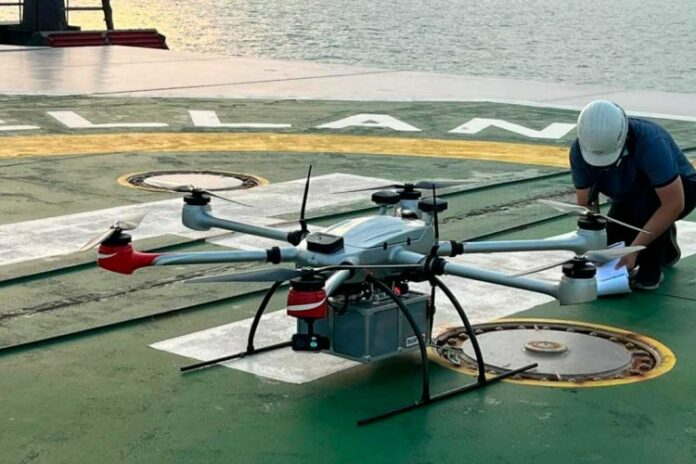
Working in collaboration with leading drone services provider Skyports Drone Services, this achievement exemplifies S5 Agency World’s commitment to innovation, environmental sustainability, and operational efficiency.

In collaboration with Skyports Drone Services, S5 were able to bring cutting-edge technology to the essential logistics of port agencies. The partnership offers a new way to realise carbon emissions reductions and reduce the environmental impact of port services. 

The successful drone delivery unlocks new possibilities for reducing greenhouse gas emissions in the maritime industry. Compared to traditional methods of transportation, the company estimates a significant impact with the reduction of CO2 emissions from drone delivery services. Drone deliveries of this type can be completed in around 15 minutes, significantly faster than using traditional vessels, which take much longer. The approach substantially reduces GHG emissions and as a means to reduce delays in port calls, can create a more sustainable port visit, while minimising port time. 

Mak Sin Cherng, S5 Agency World’s Global Sales Manager, commented on this accomplishment, stating,

“This innovative delivery approach shows how we can transform the operational landscape of port agency, but identifying new ways to conduct operations that reduce time, save costs and minimise emissions while vessels are in port. S5 is committed to delivering a new operating model for port services that embraces environmental, social and governance practices and, by creating more sustainable port calls, contributes to the maritime industry’s drive towards a cleaner future.” 

“As part of our sustainability goals, we are actively working towards reducing our overall emissions by 40% by 2025 and achieving net zero emissions by 2050.”

Sanjay Suresh, General Manager (APAC) of Skyports Drone Services said,

“We are delighted to be able to partner with S5 Agency Worldwide on this project and realise the potential that our drones have to support decarbonisation in the shipping industry. Working with the S5 team, we were are able to provide speedy, net-zero delivery solutions on this port calls and reduce delays and waiting times for the vessel.”

Transitioning from traditional launch boats to drones for delivering Cash to Master (CTM) to vessels at sea is a game-changer for S5 Agency World. This new approach not only enhances operational safety by eliminating the need for agents to board vessels but also addresses the common risks associated with such operations.

This successful drone delivery demonstrates S5 Agency World’s commitment to operational excellence and reinforces its pledge to spearhead positive change in the maritime industry.