-10.3 C
New York
Home Blog Page 234

Neptune Energy announces Kyrre discovery & confirmed Ofelia volumes in Gjøa area

0

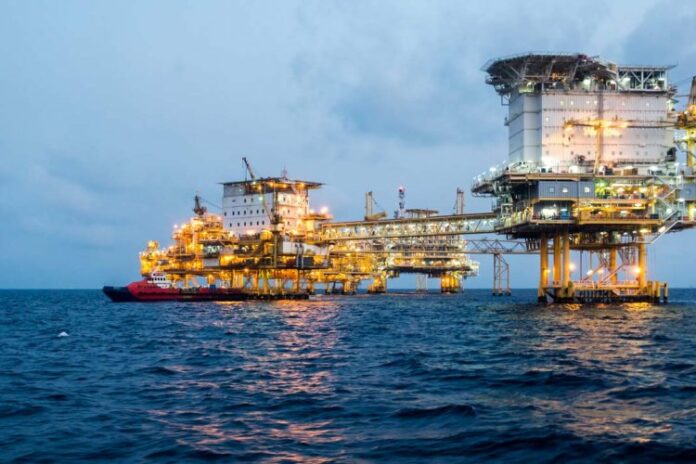
Neptune Energy and its partners have announced a new discovery at the Kyrre prospect and confirmed the volumes for the Ofelia appraisal well, both located in the PL 929 licence, close to the Gjøa field in the Norwegian sector of the North Sea.  

Neptune has completed the Ofelia appraisal well, 35/6-4 ST2, in the Agat formation. The estimated recoverable volume is in the range of 16-33 million barrels of oil equivalent (mmboe).

In addition, the 35/6-4 A side-track was drilled into the overlying Kyrre prospect, resulting in a new gas discovery. Estimated recoverable resources are between 11-19 mmboe of gas, bringing the total recoverable volume from both discoveries to approximately 27-52 mmboe. 

Neptune Energy’s Managing Director for Norway and the UK, Odin Estensen, said:

“Confirming the Ofelia volume as well as making another discovery nearby, further strengthens our understanding of the Greater Gjøa Area which is an important growth hub for the business in Norway.  The dual discoveries allow for a potential fast track, low cost, and low carbon development.”

Located 23 kilometres north of the Neptune-operated Gjøa platform, Ofelia Agat and Kyrre will be considered for development as tie-backs to Gjøa. Neptune will also evaluate if the company’s oil and gas discovery Gjøa Nord (Hamlet), with estimated recoverable volumes between 8-24 mmboe, can be jointly developed.  

The Gjøa platform is electrified with power from shore and produces at less than half the average carbon intensity of Norwegian Continental Shelf fields1. 

Neptune’s Director of Exploration & Development in Norway, Steinar Meland, added:

“The reservoir quality in the Kyrre discovery is very good, which allows for high production rates. We are preparing for several other exciting exploration opportunities in the area, such as the Cerisa well early next year.” 

Wells 35/6-4 ST2 & 35/6-4 A were drilled by the Deepsea Yantai, a semi-submersible rig, owned by CIMC and operated by Odfjell Drilling. 
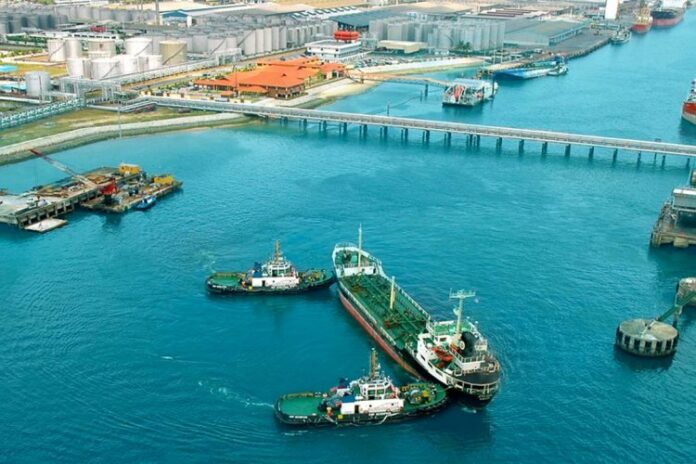
 

Innovez One to advance digitalisation of Johor Port with AI-powered system

0

Johor Port Berhad, a major trade hub in Southern Malaysia, has announced an agreement with Innovez One to accelerate the digitalisation and boost the efficiency of Marine Services and Port Operations. 

The partnership will leverage artificial intelligence (AI) to optimise operations and reduce GHG emissions at the fully Integrated Multi-Purpose Port, which is the world’s single largest Edible Oil Terminal and one of the few approved London Metal Exchange (LME) locations in the region. Innovez One’s AI-powered software, “marineM” will be used to digitalise and optimise the entire chain of Marine Services for ships arriving and departing Johor Port, from vessel registration to billing. 

MarineM will use machine learning, a subset of AI, to automate and optimise the scheduling of Port, Tug and Pilotage services. Algorithms, using data on Johor Port’s unique operations, will dispatch Pilots and Tugboats in the most efficient way, and reallocate resources seamlessly when vessels’ ETAs change. This is key to maximising fuel efficiency and reducing greenhouse gas emissions from those fleets, while also minimising congestion for visiting ships. 

Crucially, the marineM platform will provide Port Managers with real-time tracking of Marine Services operations, while also integrating data into a single dashboard for business and operational analytics. This will unlock new insights that will help optimise operations further and facilitate critical decisions such as investments in new infrastructure, for example. 

For visiting ships, the Digital System will enable Agents to register their vessels, request services and track the progress of each job in real time through an Online portal that can be accessed wherever they are, and whatever device they are using. The System will also automate the Billing process and Tariff management, which will help eliminate billing issues, delays and disputes.

Md Derick Basir, CEO of Johor Port, said:

“As the Southern Gateway for Malaysia, Johor Port plays a vital role not only for our local communities and businesses, but also for the economy of the entire region. Our ambition is to deliver smart, efficient and sustainable Port Operations, while ensuring safety at all times, and digitalisation is at the heart of our strategy to deliver that vision. We are proud to partner with Innovez One to harness the latest advances in artificial intelligence to optimise planning and, ultimately, achieve greater fuel and operational efficiency. This will enable us to serve our customers and communities better while reducing our environmental footprint.” 

David Yeo, CEO of Innovez One, said:

“Ports around the world are experiencing profound and fast-paced transformations. They are pressed to not only tackle congestion and reduce greenhouse gas emissions, but also to play new roles as energy hubs for green shipping – and do all this while continuing to thrive commercially. Digitalisation is the essential foundation on which progress can be built, helping ports become smarter, greener and more transparent, while also delivering key insights to support strategic decision-making. We are delighted to support Johor Port as it joins the growing ranks of the fully digitised ports of tomorrow.”

Wintershall Dea completes appraisal well on Bergknapp discovery in Norway

0

The team is now assessing potential field development options. The Bergknapp discovery, part of the PL836S licence, is situated in a strategic area for Wintershall Dea in Norway, 8 kilometres west of the operated Maria field and 200 kilometres north of Kristiansund on Norway’s west coast. It is in close proximity to several other producing fields. 

“In recent years, we have had achieved significant success with our strategy of exploring areas where we have in-depth subsurface knowledge and access to existing infrastructure. The focused exploration strategy maximises our chances of making commercial discoveries and also shortens the time required for their development,” said Michael Zechner, Managing Director of Wintershall Dea Norge. “We take pride in our expertise in subsea developments, and see the potential to create value for Wintershall Dea, our partners and the entire Norwegian society.”

The appraisal well, completed by the Transocean Norge rig in early December, was drilled to minimise volumetric and subsurface uncertainties in the Bergknapp discovery, including the underlying discovery in the Åre Formation.

The updated recoverable resource estimate for the oil discovery in the Garn, Ile and Tilje formations is between 44 million and 75 million barrels of oil equivalent, while estimates for the underlying Åre Formation discovery are between 6 and 25 million barrels of oil equivalent.  

Wintershall Dea originally discovered oil in the Bergknapp prospect in 2020, followed by a gas discovery in the deeper Åre Formation during a successful re-entry and sidetrack in 2021.

The PL836S Bergknapp licence is located 200 kilometres north of Kristisansund in the Haltenbanken region of the Norwegian Sea. This a core area for Wintershall Dea, containing the operated Maria and Dvalin fields, as well as the Dvalin North development, the Adriana-Sabina discovery, and several exploration licences.

The Transocean Norge rig, under a long-term contract for Wintershall Dea and OMV, will now move to the nearby Wintershall Dea operated PL211 CS licence, where it will drill another appraisal well on the Adriana and Sabina discoveries.

“We have a strong belief in the potential of this area and will continue to leverage our existing position here to invest in new exploration and development opportunities,” said Roy Davies, VP Exploration for Wintershall Dea Norge.

Wintershall Dea is the operator of the PL836S Bergknapp licence with a 40 per cent share, while partners Equinor and DNO Norge each hold 30 per cent.

KPI OceanConnect delivers biofuel bunkering first for Fujairah

0

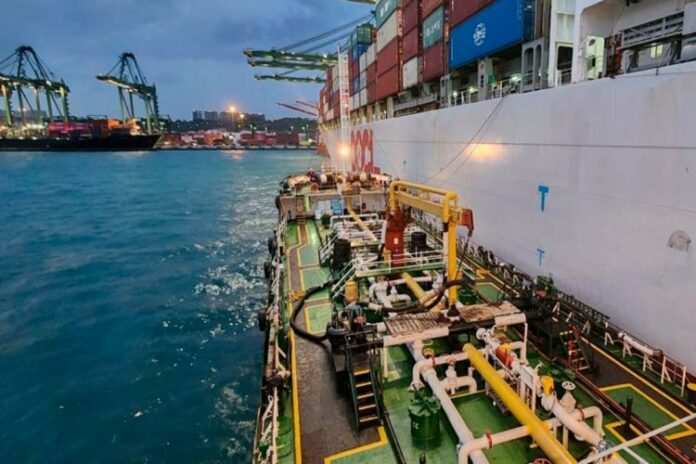
KPI OceanConnect has supplied 200mt of B24 VLSFO to the bulk carrier GCL Tapi for its client ArcelorMittal at Fujairah. The bunkering of the vessel took place last week on 8th December at Fujairah anchorage. 

KPI OceanConnect supports biofuel deliveries in 85 ports worldwide, acting to aggregate supply for its customers and deliver top-quality fuel. This first biofuel stem for the Port of Fujairah was followed by a second operation on 13th December, delivered by KPI OceanConnect for the same client, supplying 200mt B24 VLSFO to the vessel GCL Sabarmati. 

Biofuel bunkering continues to grow worldwide, with close to one million tonnes of biofuel blend being bunkered in 2023 in Singapore and Port of Rotterdam – two of the world’s largest bunkering hubs. The innovative development of biofuel bunkering in Fujairah and its facilitation by KPI OceanConnect, will increase opportunities for vessel owners and operators to act on reducing the net greenhouse gas emissions of voyages.

Speaking on the delivery of the biofuel, Jesper Sørensen, Head of Alternative Fuels and Carbon Markets at KPI OceanConnect said,

“We expect to see demand for low-carbon energy solutions increase as regulations to restrict greenhouse gas emissions come into force, and consumer pressure for sustainable shipping increases. In response, we continue to develop our infrastructure to support bio and alternative fuel bunkering.”

“Biofuels offer a viable pathway for operators in the shipping industry to reduce their GHG emissions in the short term. To create a stable supply that will help the shipping industry meet its sustainability goals, first movers on both sides of the market will need to invest in supply development and provide a demand signal. By building partnerships and sharing knowledge across the sector, the industry can support and grow biofuel availability.

WinGD and Alfa Laval to advance ammonia engines

0

Ammonia is anticipated to become a key fuel in the shipping industry´s efforts to reduce its impact on carbon emissions. To advance the use of zero-carbon fuels, WinGD is at the forefront of developing ammonia-fuelled engines, with the recent achievement of the first-ever Approval in Principle (AiP) from Lloyd’s Register for their X-DF-A dual-fuel range powered by ammonia.

In the next step of their ongoing ammonia test campaign, WinGD has partnered with Alfa Laval to provide two customised ammonia fuel supply systems for their Engine Research and Innovation Centre in Winterthur, Switzerland. Alfa Laval will deliver the FSS for the injector test system and FSS for the engine test bench in early 2024. The project is in the framework of WinGD’s and Alfa Laval’s earlier agreement for cooperation on methanol and ammonia, signed in 2022. This gives both companies the chance to optimise the overall fuel supply and use it for later application onboard.

“Strategic collaboration, like this one with WinGD, represents a definitive pathway towards achieving decarbonisation and fuel transition,” says Viktor Friberg, Head of Marine Separation & Fuel Supply Systems, Alfa Laval. “We have expanded our technological expertise to be ready with solutions for ammonia engines in alignment with our ambition. This joint research and development project is an efficient pathway to facilitate the use of one more alternative fuel.”

“With each new collaboration we are one step further on the path to running engines with zero carbon emissions,” says Sebastian Hensel, R&D Director, WinGD. “Our ammonia testing campaign began in 2021 with extensive research into the combustion characteristics of the fuel. The fuel supply system is an important next step in the technology development, keeping pace with our delivery targets of 2025. We are confident that Alfa Laval’s expertise and proven experience in fuel supply applications will be valuable to help us reach our goal.”

Alfa Laval’s role in the project will draw heavily on its vast technical know-how in fuel supply technology and experience with a wide range of fuels, both conventional and alternative. Alfa Laval FCM, the industry’s leading low-flashpoint fuel supply system (LFSS), has a flexible design and fully automated operations to ensure safe and smooth process control.

“Alfa Laval is supporting customers of all types and in all stages of the fuel transition,” says Viktor. “We work with a wide range of existing and future marine fuels and adapt our technology to support our customers, regardless of their fuel choice. Drawing on our expertise with LPG, we are ready to handle ammonia in a safe and effective way.”

This project will provide a testing environment to help both the companies carry out development activities of the engine and equipment associated with it. Alfa Laval will also investigate and develop a mitigation system to secure safe handling of ammonia.

NYK, JERA, and Resonac start joint study on supplying ammonia as fuel to vessels

0

On December 12, NYK, JERA Co., Inc. (hereinafter “JERA”), and Resonac Holdings Corporation (hereinafter “Resonac”) signed an agreement to jointly study the supply of ammonia as fuel to ships.

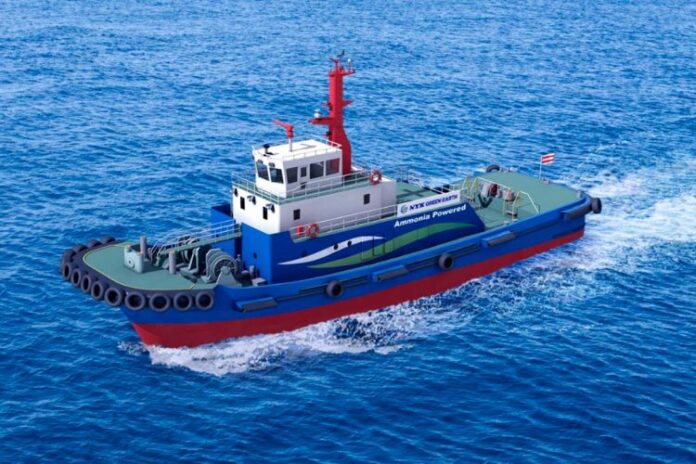
As part of the Green Innovation Fund Project of the New Energy and Industrial Technology Development Organization (NEDO), NYK is conducting research and development of a tugboat equipped with a domestic ammonia-fueled engine (hereinafter “A-Tug”) together with other partner companies. 

As part of this initiative, in conjunction with the completion of the A-Tug scheduled for next June, we will work together to realize the world’s first safe and secure supply of fuel ammonia to ships.

Outline of Joint Study
・Establishment of safe operation methods for supplying ammonia as marine fuel
・Establishment of a system to transport and receive ammonia as marine fuel to and from the port area
・Lobbying relevant authorities to formulate rules on supplying ammonia as a marine fuel

As the energy shift towards a decarbonized society accelerates, the shipping industry is facing the urgent task of reducing greenhouse gas (GHG) emissions, and research and development is underway to convert marine fuels from conventional heavy oil to liquefied natural gas (LNG) and next-generation zero-emission fuels such as hydrogen and ammonia.

Since ammonia does not emit carbon dioxide (CO2) when combusted, it is expected to be a next-generation fuel that contributes to the prevention of global warming. Furthermore, by utilizing CO2-free hydrogen as the raw material for ammonia, achieving zero emissions is possible, considering the fuel’s life cycle.

Currently, there are no examples of bunkering ammonia as marine fuel for ships equipped with ammonia-fueled engines, and this joint study is expected to promote the use of ammonia as marine fuel in the shipping sector.

SOFEC obtains Approval in Principle from ABS for its electric charging buoy

0

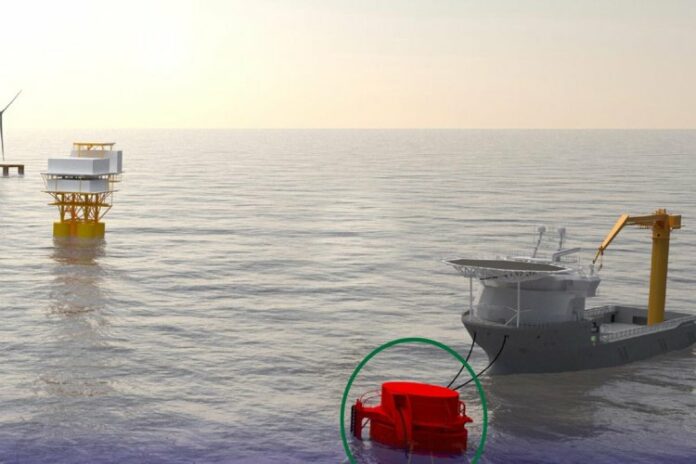
MODEC has announced that SOFEC, a MODEC Group company, has been awarded an Approval in Principle (“AiP”) by the American Bureau of Shipping (“ABS”) for its Electric Charging Buoy.

A global effort to reduce carbon emissions and pollution has led to the review of trends in the marine industry. One area of interest is expanding the use of electric shore power and renewable energy as fuel sources. Vessels at sea, or in harbor that are not quayside, are not typically afforded the benefit of shore electric power, which allows the vessel to switch off on-board fossil fuel engines or battery systems. Additionally, in the near future, same as the Electric Vehicles (EVs), offshore vessels like tugboats, Crew Transfer Vessels (CTVs), Service Operation Vessels (SOVs), among others will be full electric, therefore the need of offshore electric charging stations.

SOFEC has adopted its experience of more than 50 years in the design of Marine Terminals and Mooring Systems to address the need for offshore power transfer. Traditional SOFEC Catenary Anchor Leg Mooring (CALM) buoy designs have integrated electrical power cable management solutions that allow vessel(s) mooring while utilizing externally supplied power. By using this proven concept, SOFEC can leverage its buoy designs and modify them to accommodate offshore electric power transfer from seaports or offshore wind farms substations to Electric Vessels. Earlier this year, SOFEC announced the award on an AiP from DNV for our Refrigerated Ammonia Jetty-less Transfer Systems. 

AtoB@C Shipping takes delivery of next-generation electric hybrid vessel Electramar

0

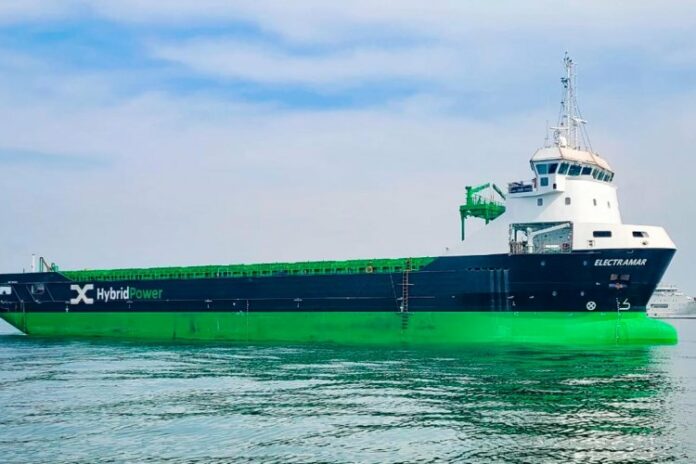
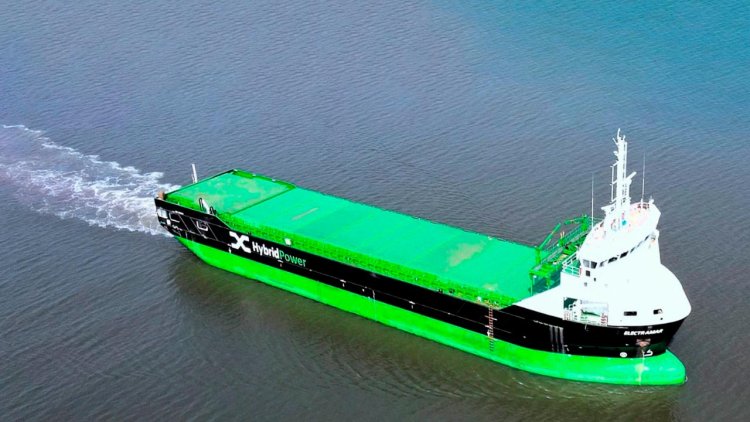
AtoB@C Shipping, a subsidiary of ESL Shipping, has today 15 December taken delivery of Electramar, the first vessel in the series of twelve highly energy-efficient plug-in hybrid vessels. 

These vessels reduce CO2 emissions by up to 50% compared to the present generation of vessels. 

Shore power connectivity and a large battery installation provide superior fuel efficiency and the possibility to minimise noise and emissions while in port.

“We are proud to be at the forefront of green shipping with these innovative vessels that combine high efficiency, flexibility and sustainability. Electramar is the first of many vessels that will help us achieve our vision of being the most responsible and reliable partner for our customers and stakeholders”, says Mikki Koskinen, Managing Director of ESL Shipping and Chairman of the Board of AtoB@C Shipping.

Vessels are optimised for a wide variety of bulk and breakbulk products. Thanks to the crew accommodation and the bridge at the bow, the vessels have a long unobstructed deck, which enables loading more deck cargo and longer project cargoes than present vessels in the fleet.

“We have designed vessels that answer to the demand we foresee in our trading areas. Our customers’ need for a modern and sustainable fleet is increasing day by day and we are happy to respond to this demand with these vessels”, says Commercial Director Frida Rowland.

The second vessel in the series, Stellamar, was launched on the 1st of October. Every other vessel in the series of 12 next-generation electric hybrid vessels will be sold, as announced earlier, to the company established by the pooling investor group.

Wärtsilä hybrid propulsion solution selected for three new cargo vessels

0

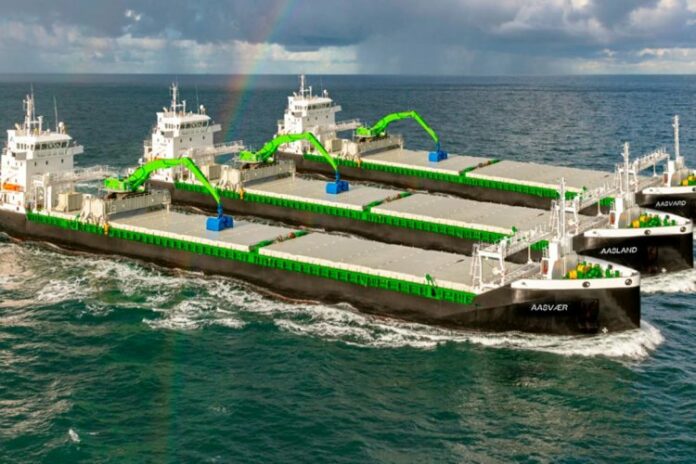
As part of the solution, the ships will feature the latest addition to Wärtsilä’s engine portfolio, the Wärtsilä 25, which was launched in September 2022. The engines and vessel are prepared for operation on sustainable fuels in the future. The order was booked by Wärtsilä in September 2023.

Wärtsilä delivered a similar hybrid propulsion solution to two earlier Aasen Shipping vessels, the ‘Aasfoss’ and ‘Aasfjell’. These ships have successfully operated with the hybrid propulsion solution for almost two years, and this success has been cited as a prime consideration in the award of this new contract. To cater to the increasing demand for hybrid integrated machinery solutions, Wärtsilä works closely with customers, such as Aasen Shipping, from the early stages of a newbuild project in order to firstly, optimise the performance and efficiency of the vessel, and then secondly, by “de-risking” the project at the design phase.

“We have been very satisfied with Wärtsilä’s support and close cooperation in helping us to achieve more efficient and cleaner cargo transport. This is important to us. Plus, the Wärtsilä engines are made ready for us to switch later to sustainable fuels, which will allow us to significantly further reduce carbon emissions in line with our fleet decarbonisation aims,” said Torbjørn Torkelsen, CEO – Aasen Shipping.

“We are delighted to have received this repeat order for our hybrid solution. The combination of the highly efficient and flexible Wärtsilä 25 engine with batteries provides both optimised operations and environmental sustainability. The ships can use electrical battery power when in harbour and for low-load operations, and then switch to the main engines for transit,” commented Stefan Nysjö, Vice President of Power Supply, Wärtsilä Marine Power. “We look forward to continuing our collaboration with both Aasen Shipping and Royal Bowedes on our shared commitment to decarbonising marine operations.”

“As we understand that becoming emission-free is the biggest challenge of our generation, our focus at Royal Bowedes is to build innovative, sustainable and cost-efficient vessels for the industry. We are proud to be working alongside Aasen Shipping and Wärtsilä to utilise technology and solutions which will ensure these new self-discharging cargo vessels are able to cut emissions and reduce fuel costs, whilst keeping carbon-costs to a minimum,” commented Johan Tiemersma, Project Manager – Royal Bowedes.

The three 9500 DWT vessels will each operate with one six-cylinder Wärtsilä 25 main engine fitted with a Wärtsilä NOx reduction system, a Wärtsilä gearbox and controllable pitch propeller with shaft line, a Wärtsilä Pro-Touch bridge control system, the Hybrid system with DC hub and 620kWh battery capacity, the control system, as well as the battery, power and energy management systems.

The Wärtsilä equipment is scheduled for delivery to Royal Bodewes in December 2025 and in 2026. From dry cargo vessels to self-discharging cement carriers, and specials, like tankers and RoRo, Royal Bodewes has been building vessels since 1812. Royal Bodewes is currently building at three yards simultaneously in the north of the Netherlands. Among the current orders are highly efficient hybrid powered, methanol-ready self-dischargers.

Incat Crowther to design new passenger ferry for US Virgin Islands

0

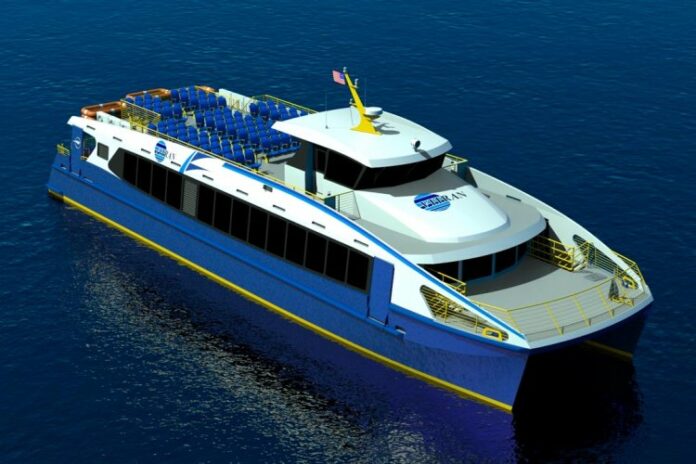
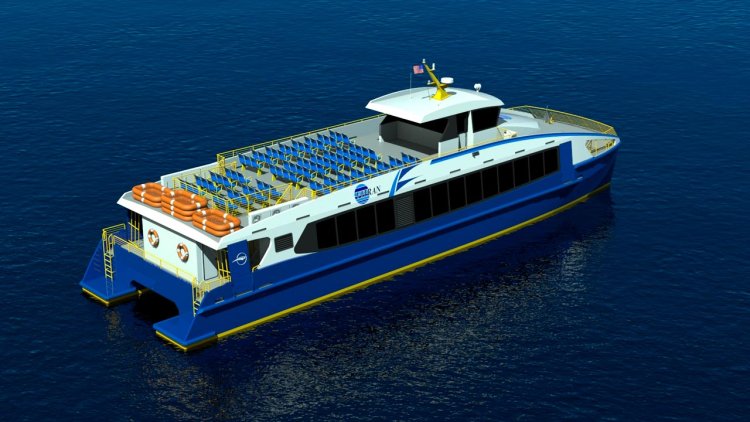
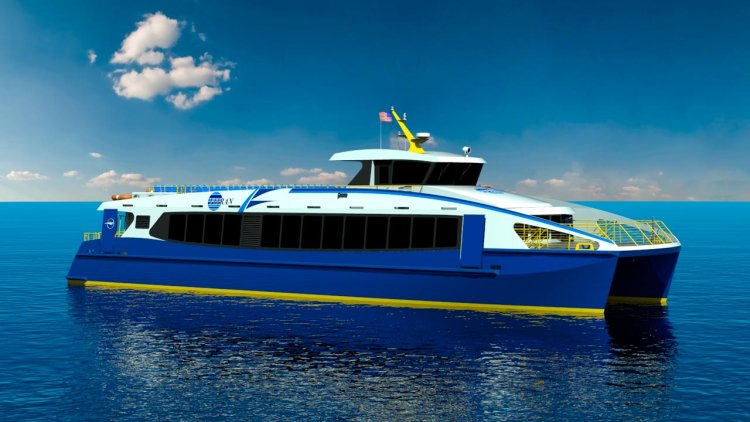
Global digital shipbuilder Incat Crowther will partner with Gulf Craft LLC in Franklin, Louisiana to design and deliver a new USCG Subchapter-K approved, 104-foot (32-metre) passenger ferry for the government of the U.S Virgin Islands. Construction of the new ferry began in November 2023.

The new ferry will service the busy tourist and commuter route between Red Hook on the island of St. Thomas, and Cruz Bay on the island of St. John. Currently, two other Incat Crowther-designed 28-metre vessels service this route.

The simple yet stylish new ferry will be designed with accessibility and an elevated customer experience in mind and will be capable of transporting up to 300 passengers at speeds of up to 28 knots. The vessel will also be fitted with the latest diesel engine emission control technologies in compliance with EPA Tier 4.

The air-conditioned main cabin provides seating for up to 202 passengers, including five dedicated wheelchair accessible spaces. Two ADA-compliant bathrooms and a fully enclosed luggage room are also provided on the main deck level, along with integrated side boarding ramps for a safe and efficient boarding experience.

The vessel’s upper deck will transport up to 100 passengers in spacious outdoor seating, while the vessel’s wheelhouse provides the captain with an excellent line of sight and 360-degree visibility. Wing helm stations are also provided for the captain to ensure safe docking of the vessel.

Commenting on the project, Incat Crowther USA Managing Director Grant Pecoraro said the commissioning of the new ferry adds to Incat Crowther’s growing footprint in the Caribbean.

“Incat Crowther has a proven track record of designing and delivering tailored passenger ferries for operators throughout the Caribbean. We are pleased to be collaborating with our longstanding partner, Gulf Craft, to deliver another vessel to this region,” said Mr Pecoraro.

“Our team of naval architects understand that no two routes are the same. Our digital shipbuilding process enables us to carefully focus on specific operational requirements to ensure our designs are tailored specifically for local conditions, existing dockside infrastructure and with the operator and its customers in mind,” said Mr Pecoraro.

“It is evident that the two existing Incat Crowther ferries which have been successfully servicing this route for over a decade provided confidence to the U.S Virgin Island government to again select an Incat Crowther vessel to service the local community in the future,” said Mr Pecoraro.