-10.3 C
New York
Home Blog Page 233

Port of Long Beach receives $283 million for ‘America’s Green Gateway’

0

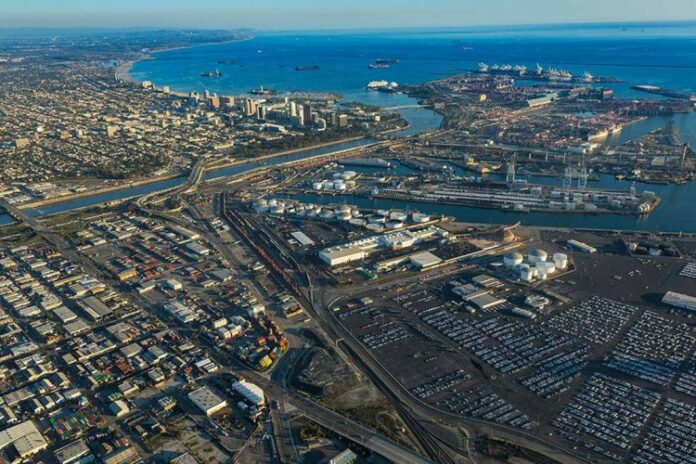
The Port of Long Beach will receive $283 million from the federal government to assist in building “America’s Green Gateway,” a rail project which will enable one of the nation’s busiest seaports to move more cargo by trains, speeding deliveries across the entire national supply chain, easing congestion and lessening local environmental impacts.

The funding was awarded for the Port’s Pier B On-Dock Rail Support Facility through the U.S. Department of Transportation’s Mega Grant Program. The $1.567 billion project is the centerpiece of the Port’s on-dock rail construction improvements.

Moving cargo by on-dock rail – directly moving containers to and from marine terminals by trains – is cleaner and more efficient, as it reduces truck traffic. When the new facility opens, no cargo trucks will visit. Instead, smaller train segments will be brought to the facility and joined together into a full-sized train.

U.S. Sen. Alex Padilla said:

“Reliable and efficient transportation of goods is crucial for keeping our economy thriving while protecting the air we breathe. The Port of Long Beach is a leading international hub for transporting major cargo, and this project will slash truck emissions while supporting economic growth and efficiency. Thanks to the Bipartisan Infrastructure Law, we are strengthening our supply chain while creating jobs and improving air quality in near-port communities across the region.”

U.S. Rep. Robert Garcia said:

“This is a home run and significant investment for Long Beach and trade across the country. This grant will create over 1,000 local jobs and 13,000 jobs across the country. As the former mayor of Long Beach I know how impactful this project will be to supporting the supply chain while reducing harmful pollution for families here at home.”

California Transportation Secretary Toks Omishakin, who led a state delegation to Washington, D.C., over the summer to engage with top U.S. transportation officials about increased investments in California’s ports:

“This Mega grant – which follows California’s $158.4 million award for the Pier B On Dock Rail project as part of a historic investment in supply chain infrastructure earlier this year – shows the power Governor Newsom’s and President Biden’s infrastructure packages can have when working together.”

Port of Long Beach Chief Executive Officer Mario Cordero said:

“The impact this funding will have on developing this project of national importance is staggering. This is a facility that will help move cargo more efficiently to homes and businesses across America, and from U.S. producers to overseas markets, resulting in systemwide benefits to the supply chain.”

Due to the importance of the Pier B On-Dock Rail Support Facility to the national supply chain, the Port continues to seek funding partners for the project. The California State Transportation Agency – CalSTA – in July 2023 announced a grant of $158 million from the Port and Freight Infrastructure Program to help fund the Pier B project as an important part of the state’s cargo movement strategy. The federal government previously awarded almost $105 million to the project. To date, the Port has secured more than $640 million in grant funding for Pier B.

Construction is expected to begin next year. The new facility will more than double the size of the existing Pier B rail yard from 82 acres to 171 acres and more than triple the volume of on-dock rail cargo the Port can handle annually, from 1.5 million twenty-foot equivalent units (TEUs) to 4.7 million TEUs. The yard will also feature a depot for fueling and servicing up to 30 locomotives at the same time and a full-service staging area to assemble and break down trains up to 10,000 feet long. The overall project will be built in phases, each improving cargo flow, with completion by 2032. View the project fact sheets and more information at the project page. 
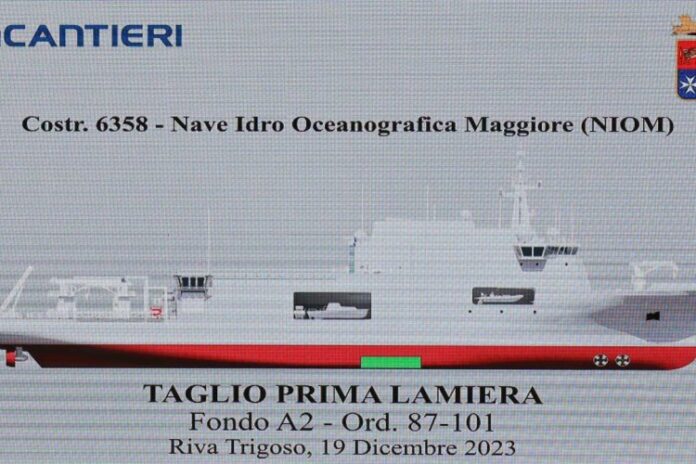
Fincantieri: steel cutting of the new hydro-oceanographic ship of the Italian Navy

0

The steel cutting ceremony of the new Hydro-Oceanographic Ship (N.I.O.M.) of the Italian Navy, intended for mapping and scientific monitoring activities, as well as in support of the initiatives of the Hydrographic Institute, took place today at the Riva Trigoso shipyard.

Among those present at the event were Dario Deste, General Manager Naval Vessels Division of Fincantieri, the Director of the Hydrographic Institute, Rear Admiral Massimiliano Nannini and the Director of Naval Armaments, Chief Inspector Admiral Giuseppe Abbamonte.

The renewal program of the naval units of the Navy’s hydrographic service is part of an innovative European project involving the Ministry of Defense. Within the scope of this project, a funding agreement has been reached between the European Investment Bank (EIB) and the Italian Ministry of Economy and Finance (MEF).

The unit was designed paying the utmost attention to green aspects. Among its main features are technologies to contain emissions, a diesel-electric propulsion system to optimise fuel consumption, hull shapes to reduce drag and the use of environment-friendly materials. In the area of sustainability, the production process also participates in the company’s ongoing commitment to environmental management systems, as witnessed by all the Group’s Italian sites’ compliance with the ISO 14001 international standard.

The conception of the N.I.O.M. and its numerous scientific capabilities qualify it as a direct means of supporting the UN’s Sustainable Development Goals on the sea.

A further key driver of the ship will be the focus on health&safety, aimed at ensuring the well-being of all personnel who will operate the ship during its operational life. Working with first-class suppliers, Fincantieri took a proactive approach to identify the best technical solutions to fully meet the customer’s operational requirements.

In 2018 Fincantieri supplied the Kronprins Haakon, an oceanographic icebreaker intended to operate in polar waters, to the Institute of Marine Research (IMR), the Norwegian government’s oceanographic and fisheries research organisation.

Furthermore, in 2021 the Group oversaw an exceptional refit of the Laura Bassi, Italy’s only oceanographic research icebreaker, owned by the National Institute of Oceanography and Experimental Geophysics.

The Hydrographic Institute of the Italian Navy is the Cartographic Body of the State appointed to produce official national nautical documentation.

Damen hands over two tugs to the Ghana Ports and Harbours Authority

0

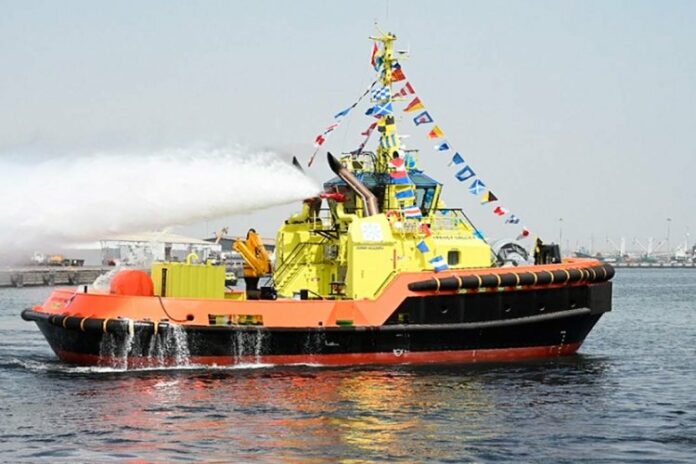
Named the Capt. Edward A. A. Awuviri and Nestor Percy Galley after two former Director Generals, these additions to the GPHA fleet deliver 83 tonnes bollard pull ahead and up to 77 tonnes astern. This makes them ideal for manoeuvring the range of large vessels that use the Ghanaian ports of Takoradi and Tema, two of the largest in West Africa, as well as other supporting activities.

The vessels were built at Damen’s dedicated tug building facility Damen Song Cam Shipyard in Vietnam. In addition to the comprehensive standard specification, they have also been equipped with fire-fighting equipment and oil spill response capability. 

Damen has a long and productive history of working with ports on Africa’s west coast together with its local partner Krane International Limited. Its relationship with GPHA goes back over twenty years and the group maintains a full-time service hub in Port Harcourt, Nigeria, to support its customers and the wider maritime community. As part of the package for GPHA, Damen is also providing training at its Gorinchem headquarters for not only the vessels’ masters and crew, but also the shoreside technicians and engineers who will maintain the tugs.

“Our collaboration with Damen since the inception of GPHA has played an important role in our success,” said Director General of GPHA, Mr. Michael Achagwe Luguje. “Your commitment to excellence aligns seamlessly with our mission, fostering growth and innovation. We’re excited about the prosperous future that our partnership holds.” 

“The delivery of these two new tugboats signifies the solidification of a robust relationship between GPHA and Damen,” said Eline Holtes, Regional Services Manager Damen, “and we are confident that these additions will contribute significantly to the growth and success of Ghana’s maritime endeavours. From maintenance and troubleshooting to innovations and upgrades, Damen Services will be there to keep them running smoothly far into the future.”

Singapore expands green corridor network to six Japan ports

0

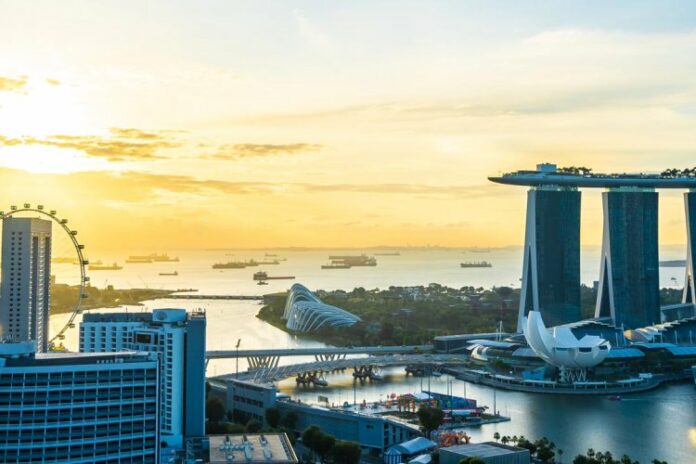
The Ministry of Transport of the Republic of Singapore (MOT) and the Ministry of Land, Infrastructure, Transport and Tourism of Japan (MLIT) signed a memorandum of cooperation (MoC) to establish the Singapore – Japan Green and Digital Shipping Corridor on Friday (16 December), according to the Maritime and Port Authority of Singapore.

With the establishment of the Green and Digital Shipping Corridor, MPA and the Japanese port partners aim to embark on pilot projects and trials for alternative marine fuels such as ammonia and hydrogen. The two sides will also work together to develop the necessary bunkering infrastructure, standards and training. They will also encourage development and adoption of technologies to decarbonise port infrastructure.

Signed by Mr Chee Hong Tat, Acting Minister for Transport, and Mr Saito Tetsuo, Minister of Land, Infrastructure, Transport and Tourism, this MoC marks the first Green and Digital Shipping Corridor established between Singapore and Japan to develop standards and best practices supporting the decarbonisation, digitalisation and growth of the maritime industry.

Japan is one of Singapore’s top ten trading partners, and the trade volume between the two countries totalled SGD 65 billion (USD 48.8 billion) in 2022. Under the milestone collaboration, the Maritime and Port Authority of Singapore will work together with six Japanese ports – namely, the Port of Tokyo, Port of Yokohama and Port of Kawasaki supporting the Kanto Region, the Port of Osaka and the Port of Kobe supporting the Kansai Region and the Port of Nagoya supporting the Chubu Region.

These six Japanese ports are the key nodes for the major economic regions of Kanto, Kansai and Chubu. They handled a combined cargo total of about 57 million tonnes in 20201, representing a significant proportion of total cargo handled in Japan. They have also been respectively embarking on various initiatives under the MLIT’s overarching Carbon Neutral Port plan.

On the digitalisation front, Singapore and Japan will identify and implement digital solutions to streamline port clearance processes. Both sides will also exchange information and best practices on maritime cybersecurity risks as well as other aspects of maritime digitalisation.

The establishment of the Singapore – Japan Green and Digital Shipping Corridor reaffirms the strong commitment by Singapore and Japan to accelerate maritime decarbonisation and digitalisation. Looking forward, Singapore stands ready to work with like-minded stakeholders across the maritime and port ecosystems of Japan, towards advancing the sustainability and growth of the maritime industry.

Steel cutting for SunStone’s final vessel in innovative Infinity Series

0

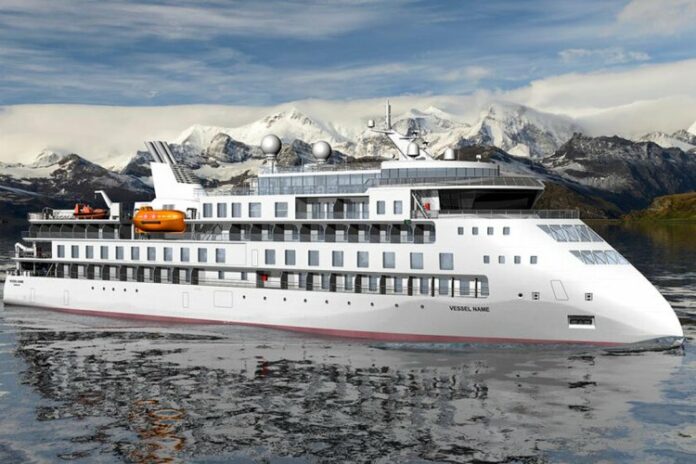
Set to redefine the cruising experience, this new expedition cruise vessel has been designed with a focus on luxury, safety, and environmental consciousness, offering unparalleled amenities and adventures for its future passengers.

The steel-cutting ceremony is a traditional shipbuilding event marking the start of construction and was arranged at China Merchants Heavy Industries shipyard in Haimen. Niels-Erik Lund, CEO of SunStone Maritime Group, highlighted the company’s commitment to exceptional cruise experiences characterized by comfort, safety, and sustainability. 

The vessel is based on the ULSTEIN CX103 design. It has an ICE CLASS 1A certification for polar cruising. It adheres to the highest standards of comfort and safety, including the SOLAS (Safety of Life at Sea) certification with a Safe Return to Port passport.

The new PC6-class expedition cruise ship, which has not yet been named, is scheduled to enter service in 2025. It is designed to offer travellers an immersive and comfortable experience, featuring up to 95 passenger cabins. The ship will have various amenities, including restaurants, a lecture space, lounges, a 180-degree indoor observation deck, outdoor viewing areas, a gym, a sauna, a spa, and a specially designed platform for kayakers and divers. Additionally, the vessel will include a sea-level Zodiac loading platform and a mudroom to enhance off-board activities.

While all SunStone’s Infinity-class vessels share the same basic design – 104.4 metres in length and 18.4 metres in width – each is customised according to client specifications, including passenger and crew capacity and the design of public spaces. A distinctive feature of this vessel, shared with three other vessels in the series, is the inclusion of windows around the bow lounge, offering a bright, nature-integrated indoor environment.

DNV and SDST to establish Joint Innovation Studio

0

The shift towards a more digital and sustainable maritime industry is both a monumental challenge but also a big opportunity. New fuels, technologies, and operational methods will require cooperation from many different stakeholders and a mindset of innovation and exploration.

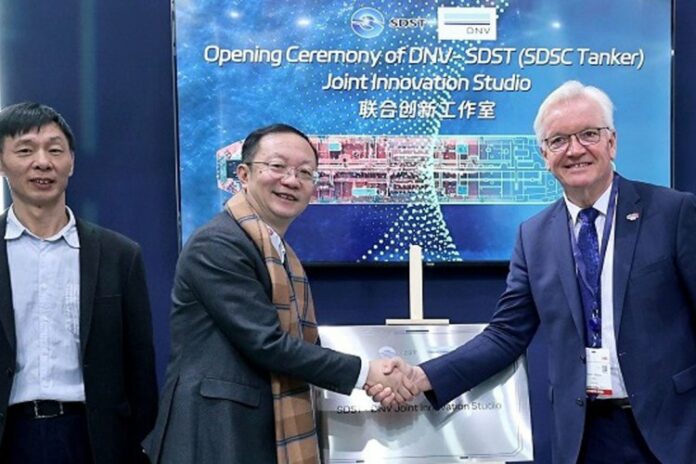
To realize these possibilities, DNV and SDST launched a dedicated Joint Innovation Studio. The Studio, which emerged from a cooperation framework agreement signed in November 2023, will serve as a platform for SDST to carry out technical cooperation with DNV in the shipping and maritime industries. With a goal of helping to achieve carbon neutrality and promoting data-smart shipping, the Studio will explore and promote the application of decarbonization technologies and smarter digitalization, providing technical support and solutions for the transformation of the shipping industry.

The Joint Innovation Studio, co-managed by SDST and the DNV Maritime Smart Center, will be based at SDST’s Qingdao headquarters. Established to drive collaboration on decarbonization and digitalization, it aims to grow collectively with industry leaders in this transformative decade. The Studio’s activities will kick off with a joint innovation project, to cooperate on value-chain Green House Gas (GHG) management covering:

  • An analysis of business scenarios, key use cases, implementation processes, and the required support system, relating to the GHG management of SDST’s own fleet and stakeholders across the value chain;
  • Joint development and implementation of an Emissions Trading System (ETS) management module for SDST’s fleet technical and commercial operation systems;
  • Joint development and implementation of a fuel strategy operational support module to enable a compliant and cost-effective transition to greener fuels for the SDST fleet;
  • Exploration and support of GHG co-management along the value chain, in cooperation with cargo owners, charterers, financiers, insurers, and other stakeholders.

“The complexity of the challenges facing our industry means that we need a new level of collaboration, over the long-term, that sets aside competitive instincts for a more sustainable future. DNV is proud to be working with future focussed partners like SDST, because they recognize that we need to activate the entire value chain, act now, and work towards a new golden age of maritime innovation,” said Norbert Kray, Regional Manager Greater China at DNV Maritime.

InfraVia backed Molgas becomes Titan’s strategic partner

0

Titan Energy Holding, the parent company of Titan Clean Fuels (hereafter Titan) closed a successful funding round for a 45% equity stake with further follow-on rights from Molgas Energy, backed by infrastructure fund investor InfraVia Capital Partners. 

Molgas is a leader in small-scale downstream LNG and Renewable Gas supply and distribution in Western Europe with over 20 years’ experience in the energy service sector for LNG to industrial, cogeneration, vehicular and maritime applications.

Titan is a leading independent liquified biomethane (LBM/bio-LNG) and LNG supplier to the maritime and industrial sectors. It owns and operates a diverse fleet of small-scale LBM/LNG supply vessels deployed globally. LBM/LNG has been safely delivered via Ship-to-Ship operations across Northern Europe, the Mediterranean, Southeast Asia, Cape Verde Islands, and the Caribbean. Titan is part of the consortium building the world’s largest LBM liquefaction plant in the Port of Amsterdam, which will produce over 100,000 tonnes of LBM per year. The investment in Titan aims to accelerate the global uptake of alternative fuels like LBM in the maritime sector and complements Molgas’ build-out of alternative fuels supply across Europe and beyond. Molgas’ entrepreneurial growth journey is made possible with the support and financial strength of Paris-based InfraVia Capital Partners.

Niels den Nijs, CEO of Titan, commented:

“We have been considering a growth partner for some time and believe we have found the perfect partner in InfraVia and Molgas. Titan will retain independence, while benefiting from the complementary service offering of Molgas. Legislation and public scrutiny are stimulating the demand for low and zero-emissions fuels with growing momentum. The new capital will allow us to accelerate our growth plans and focus all our efforts on the maritime sector exactly at the time of fast-growing market need.”

Fernando Sarasola, Executive Chairman of Molgas, commented:

“We are thrilled to team up with Titan, which we recognize as the leading independent company in the marine bunkering field. Our portfolio of complementary offers will establish the group as the “go to” partner for energy transition LNG and alternative fuels to off-grid industrials, trucking and maritime businesses across Europe. This investment is part of the growth plan that the newly appointed executive team led by Sofoklis Papanikolaou, CEO and Juan Menchero, COO is set to implement in the coming years, with a lot of enthusiasm together with our pan-European teams. We look forward to growing our partnership with Niels den Nijs and the Titan team further and welcome his team in the wider group”.

Athanasios Zoulovits, Partner at InfraVia Capital Partners, commented:

“The critical need for LNG as a transition fuel for the industrial, mobility and maritime sectors and its efficient pathway to further decarbonisation through LBM and e-LNG is becoming increasingly clear. Our acquisition of Molgas in 2020 enabled us to get started in this space. Molgas has grown at a fast pace to become a leader in onshore solutions in Western Europe. We have been working for a while together with Fernando Sarasola and the newly appointed CEO Sofoklis Papanikolaou to accelerate the roll-out of energy transition solutions for the marine industry. We are very pleased that Molgas will become the strategic partner of Titan who has the specialist expertise and scale to make the group a leader in the high growth maritime space. As other alternative fuels become commercially viable, Titan also has the specialist experience and pipeline to bring those fuels to the maritime space at scale”.

MODEC and Toray jointly develop FPSO and FSO repair technique

0

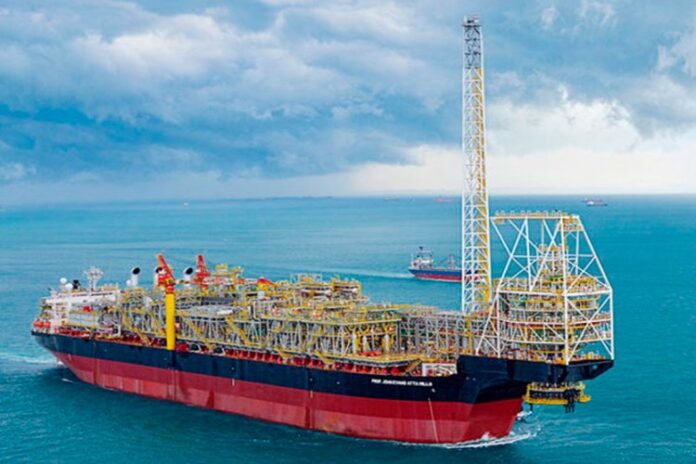
MODEC and Toray Industries have jointly developed a carbon fiber-reinforced plastic (CFRP) patch technique for repairs on Floating Production, Storage and Offloading (FPSO), and Floating Storage and Offloading (FSO) systems.

FPSO and FSO repair services provided by MODEC, a general contractor specializing in engineering, construction, operation, and maintenance services of offshore oil and gas vessels, will utilize this CFRP patch technique for pitting corrosion repair from 2024.

The American Bureau of Shipping (ABS), which provides classification services for marine and offshore assets, approved this technique for repairing areas with diameters of up to 300 millimeters that have suffered damage from pitting corrosion.

FPSO and FSO maintenance takes place without interruption to oil and gas production. Accordingly, developing a repair technique that facilitates the efficient deployment of materials and equipment offshore and does not involve hot work is vital. These considerations prompted MODEC and Toray to jointly develop a vacuum-assisted resin transfer molding (VaRTM) process1 for CFRP repairs in 2020. ABS approved applying CFRP to steel to restore its mechanical strength.

While excellent for repairing large corrosion areas, this process was less suitable for pitting corrosion repairs. The new CFRP patch technique is a more straightforward and more effective solution in such cases. It only requires bonding prefabricated CFRP patch flat plates over pitting corrosion, thereby reducing the workforce by half and improving lead times (referring to onsite times compared with the VaRTM process and excluding materials procurement lead times).

This technique eliminates the need for vacuum pumps and other equipment and streamlines the process of transporting reinforcement materials and construction tools onboard. Moreover, this technique ensures minimal disruption in oil and gas production because it eliminated the need for hot work.

Together with Toray, MODEC will cater to the diverse corrosion repair needs of FPSO and FSO operators by offering the in-situ VaRTM technique for extensive repairs and the CFRP patch technique for localized repairs. The two companies will continue to develop repair technologies for these vessels to promptly address market needs while tackling environmental and other social issues to contribute to a sustainable economy.

Erma First’s shore power connector Blue Connect receives Bureau Veritas Approval

0

ERMA FIRST’s system, which can be housed in a container or provided in a stand-alone configuration, enables most ships to connect with different shore power systems based on their required power. BLUE CONNECT can be plugged into a port’s infrastructure (external connection) and to a vessel’s electrical grid (internal connection).

Connection to shore power will be a requirement for containerships and cruise ships in European ports from 2030 and may be demanded by other customers looking to eliminate or reduce emissions while in port.

The BLUE CONNECT system has been designed for a specific maximum load capacity according to individual vessel specifications and to meet specific port requirements. This provides maximum flexibility for access to shore power while at berth. High voltage shore connection (HVSC) equipment can either be standalone or included in the 40ft container.

Bureau Veritas has confirmed that the BLUE CONNECT HVSC system meets its requirements for safety, including structural integrity of the containerised ‘box’ containing the connection system, allowing the unit to be stored on a ship’s deck and deployed when required.

Athens-based Paillette Palaiologou, Vice President, Marine & Offshore for Bureau Veritas, said:

‘It’s always a pleasure to be able to support innovation – and for us, based here, to support innovation in Greece. Our approval helps enable the rapid application of the BLUE CONNECT solution by providing the confidence that our classification requirements for safety and performance will be met.’

Konstantinos Stampedakis, Co-Founder & Managing Director of ERMA FIRST, said:

“We are delighted to receive this Approval in Principle from Bureau Veritas, which confirms that BLUE CONNECT’s safety and operational profile meets the in-principle expectations of the classification society. Developing solutions that not only protect the environment, but also have a positive impact on our customers’ operations has always been a priority for ERMA FIRST.”

Theodosia Digalaki, Technical Product Manager at ERMA FIRST, said:

“BLUE CONNECT is a highly advanced shore power solution than can significantly reduce emissions in ports and enhance CII ratings for ships. Throughout the development process, flexibility, reliability and safety were key priorities and we are pleased that the exhaustive approach taken by ERMA FIRST has been recognised by Bureau Veritas through the award of this AiP.”

Wärtsilä to supply cargo handling and fuel supply systems for Avance Gas carriers

0

Technology group Wärtsilä will supply the cargo handling and fuel supply systems for four new 40,000 m3 gas carrier vessels. 

The order was booked by Wärtsilä in Q4 2023.

Wärtsilä’s range of complete cargo handling systems for gas tankers are designed to reduce operating costs and improve the vessel’s Energy Efficiency Design Index (EEDI). The award of this contract represents an endorsement of these benefits.

The Wärtsilä LPG Fuel Supply System (LFSS) is an innovative and reliable system that enables the use of LPG as fuel. This increases operational efficiency and supports environmental sustainability.

“We are very familiar with Wärtsilä’s capabilities in gas handling applications, and we are confident that they are the best solution for these new vessels. The global support they can offer through their broad and comprehensive service network is another reason why they were chosen,” said Wenbao Gao, Vice President of CIMC ENRIC, CEO of CIMC SOE.

“Wärtsilä enjoys a very positive relationship with both the SOE shipyard and Avance Gas, which is based on our ability to develop and supply high quality and reliable solutions that feature outstanding performance. We have a market leading position with an unmatched number of excellent references, and this order extends our position even further,” commented Patrick Ha, Sales Manager, Cargo Handling Systems, Wärtsilä Gas Solutions.

These will be the first medium sized LPG carrier vessels built at the SOE yard. The Wärtsilä equipment is scheduled to be delivered in the latter part of 2024, and the ships are expected to be delivered in 2nd half 2025 and onwards.