-12.4 C
New York
Home Blog Page 232

ClassNK issues Approval in Principle for MOL’s FSRU

0

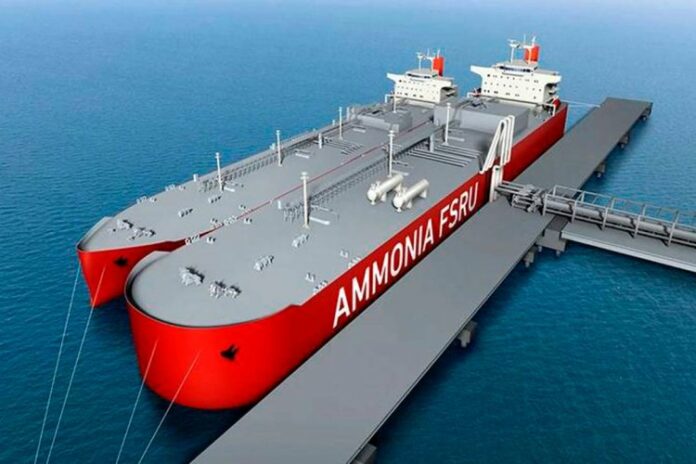
ClassNK has issued an Approval in Principle (AiP) for an Ammonia FSRU (Ammonia Floating Storage and Regasification Unit) jointly developed by Mitsui O.S.K. Lines, Ltd. (MOL) and Mitsubishi Shipbuilding Co., Ltd.

Ammonia, which does not emit CO2 during combustion, is projected to be widely used as a source of clean energy for decarbonization, while the development of onshore facilities for storage and regasification is a challenge.

FSRU is a floating facility designed for liquified gases and equipped with storage tanks and a regasification facility that receives liquified gas on the water, vaporizes it and sends it ashore. FSRU has the advantages of lower costs and shorter construction periods than those of the equivalent facilities onshore. The Ammonia FSRU, developed by MOL and Mitsubishi Shipbuilding this time, applies this technology to ammonia. It is expected to contribute to the development of ammonia value chain as an alternative carbon neutral fuel.

ClassNK carried out a review of a conceptual design of the Ammonia FSRU based on its Part N of Rules for the Survey and Construction of Steel Ships for ships carrying liquefied gases in bulk, “Guidelines for Floating Offshore Facilities for LNG/LPG Production, Storage, Offloading and Regasification” and the other relevant rules, and examined risk assessment taking into account the results of gas dispersion study. Upon confirming it complies with the prescribed requirements, ClassNK issued the AiP.
 

Damen explores Zeabuz’s technology for next-gen maritime solutions

0

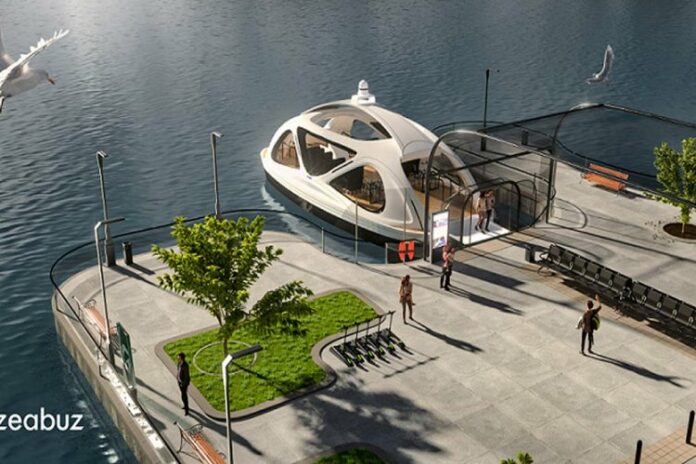
Damen has embarked on a comprehensive study of Zeabuz’s cutting-edge technology for autonomous sailing. 

Damen and Zeabuz are on a mission to enable autonomous operations on different levels in the coming years. Working with a promising high-tech scale-up like Zeabuz underlines Damen’s commitment to being at the forefront of innovative advancements in the maritime market.

Zeabuz specialises in software for autonomous maritime operations, bringing autonomy to the market with a thorough and solid approach. Zeabuz’s gradual introduction of autonomous solutions supports the establishment of a robust foundation and enables swift scalability of the technology across diverse application areas. Autonomy holds the potential to revolutionise vessel operations by enhancing safety protocols, optimising asset effectiveness, and paving the way for the creation of new business models.

The industry’s growing interest in autonomous and technologically advanced solutions underlines the need for collaboration between advanced knowledge partners. The exploration process will encompass rigorous testing, analysis, and collaborative endeavours aimed at pinpointing areas where Damen’s expertise in systems integration can potentially bolster and enhance Zeabuz’s technology.

This collaboration represents the next step in the strategic endeavours of Damen’s journey towards embracing innovation. As the collaborative efforts progress, the interaction between Damen and Zeabuz holds the promise of unlocking transformative applications, reshaping the maritime landscape, and setting new benchmarks for advanced and autonomous maritime technology.

Blue Orange Wave’s software earns ClassNK certification for maritime training excellence

0

Blue Orange Wave announces the Certification of Type Approval from Nippon Kaiji Kyokai (ClassNK) on its product, Edumersive.

Edumersive is a virtual reality (VR) e-learning solution designed to elevate learning and training experiences in the maritime sector. According to Blue Orange Wave, the platform is poised to revolutionize the way seafarers are trained, offering a comprehensive approach to bridge the gap from knowledge to skills and provides situational awareness in the workplace for seafarers worldwide.

One pivotal feature of Edumersive is its capacity to create, maintain, evaluate and administer e-learning content seamlessly. Training providers and shipowners can produce and design their own content within the platform, eliminating the need for a third-party intervention. This capability empowers users to tailor training programs to their own specific needs, fostering a more efficient and personalized learning environment.

Learners can access and utilize the platform’s educational content via an app on their mobile devices both online and offline, ensuring continuous learning opportunities regardless of location. This adaptability is particularly crucial in the maritime industry, where seafarers may be on board, at home, or in remote locations, yet they can consistently engage with the platform’s content.

Captain Naoki Saito, General Manager and Head of Cyber Security from the Innovation Development Division of ClassNK, says:

“Personally, I proudly endorse Edumersive – a visionary leap in education empowered by proven VR technology. Having certified its excellence, we confidently recommend this solution as the newest experience in immersive maritime learning. This transformative platform not only meets but exceeds the rigorous standards set by ClassNK due to its simplicity and possibilities for the provider as for the learner. It is marking a new era where certified innovation seamlessly integrates with education.” 

Another key factor that impressed ClassNK is Edumersive’ s ability to conduct online assessments seamlessly. The platform incorporates in-platform user validation, allowing for efficient and reliable evaluation of seafarers’ knowledge to skills. This capability enhances the overall training experience and contributes to the platform’s recognition as a leader in maritime education.

“The ClassNK-certified Edumersive software is not just a platform; it’s a testament to our dedication to advancing maritime education and ensuring seafarers are equipped with the skills and knowledge they need for a safer and more efficient maritime future” says Blue Orange Wave CEO Capt. Tim Lodder. As education and training providers seek modern and effective solutions, the already existing accreditation by the Netherlands Maritime Authority (ILT), and now this ClassNK certification positions Edumersive as a standout choice, according to Capt. Lodder.

Bolidt and Chantiers de l’Atlantique extend collaboration

0

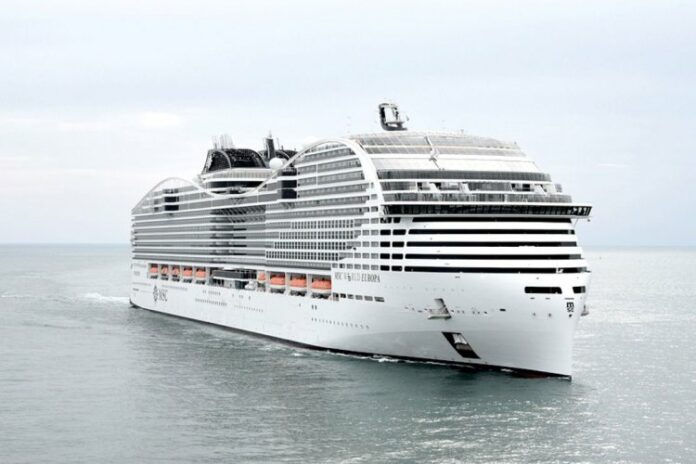
Leading resin-applications specialist Bolidt has signed an exclusivity agreement with long-standing customer Chantiers de l’Atlantique covering all of the French shipyard’s newbuild cruise vessels – in addition to several navy ships, and offshore projects – until 2027.

The joint undertaking is the latest in a 32-year relationship that has so far seen Bolidt supply its decking systems to around 100 Chantiers de l’Atlantique-built vessels – primarily cruise ships.  Notable projects include Cunard’s RMS Queen Mary 2; Celebrity Cruises’ Edge-class vessels featuring the innovative ‘Magic Carpet’ movable platform; MSC’s World Class series, and Accor’s Orient Express Silenseas, which, upon entry into service in 2026, will be the world’s largest sailing ship.

“I have personally been working with Chantiers de l’Atlantique for more than 10 years, and have found their exceptional team to be open, reliable and professional,” said Jacco van Overbeek, Director Maritime, Bolidt. “They are also eager to learn about innovation in solutions such as ours, often sending new team members to our R&D facilities in the Netherlands to show them who we are, what we do, and what we stand for.”

Bolidt is currently developing pre-fabricated parts with support from the Saint-Nazaire-based shipbuilder, Van Overbeek added.  

“Our collaboration is not a typical supplier–customer relationship but more of a partnership between two parties that understand and rely on each other’s expertise, working together to achieve the best solutions for the finished vessels.”

Throughout its long and fruitful collaboration with Chantiers de l’Atlantique, Bolidt has also been enhancing its product portfolio in response to evolving demands from the cruise lines. This approach has resulted in innovations such as Bolidt’s industry-leading Bolideck® Future Teak, which closely resembles real teak but is lighter and more durable with a lower environmental impact.

Van Overbeek also emphasised the priority the supplier continues to give to sustainability, including its targets for incorporating more bio-based materials and recycled parts into its decking systems. While many of its products already comprise 80% organic material, Bolidt wants to increase this figure in line with the International Maritime Organization’s ambition to achieve net zero in shipping-related emissions by 2050, he said.

Equinor sells its interests in Azerbaijan

0

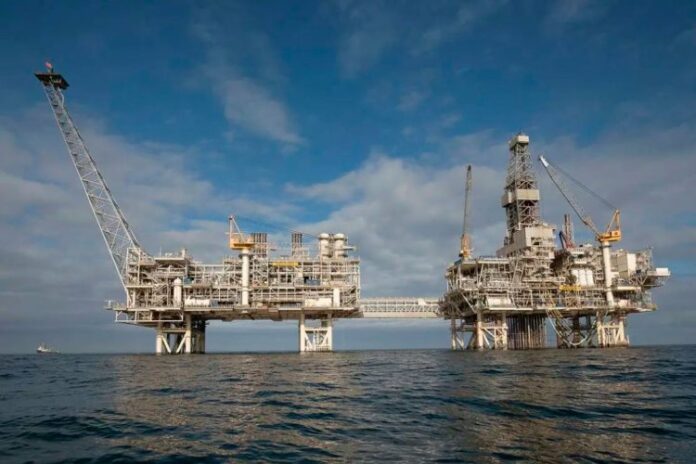
The assets comprise a 7.27% non-operated interest in the Azeri Chirag Gunashli (ACG) oil fields in the Azerbaijan sector of the Caspian Sea, 8.71% interest in the Baku-Tbilisi-Ceyhan (BTC) pipeline and 50% in the Karabagh field. SOCAR already holds a 25.0% stake in ACG, a 25.0% stake in BTC via Azerbaijan BTC Limited, and 50% in Karabagh.

Equinor has been present in Azerbaijan since 1992. ACG, operated by bp, is the largest oilfield in the Azerbaijan sector of the Caspian basin and the BTC pipeline is used to transfer crude oil to the Turkish Mediterranean coast.

“Azerbaijan has been an important part of Equinor’s international portfolio over the past 30 years. Together with SOCAR and the other partners in ACG, we have created significant value for the partnership and for the Azerbaijani society. SOCAR is well positioned to create further value from the assets for the longer-term and we have appreciated the close collaboration over the years,” says Philippe Mathieu, Equinor’s executive vice president for international exploration and production.

“Equinor is in the process of re-shaping its international oil and gas business, and the divestments in Azerbaijan are in line with our strategy to focus our international portfolio,” says Philippe Mathieu.

The closing of the transaction is subject to the satisfaction of certain conditions including all regulatory and contractual approvals.

Equinor and SOCAR also signed a memorandum of understanding (MoU) to share experience and best practice on low carbon solutions, reducing greenhouse gas emissions and carbon management.

Asia Break Bulk and CSL Shipping sign strategic partnership

0

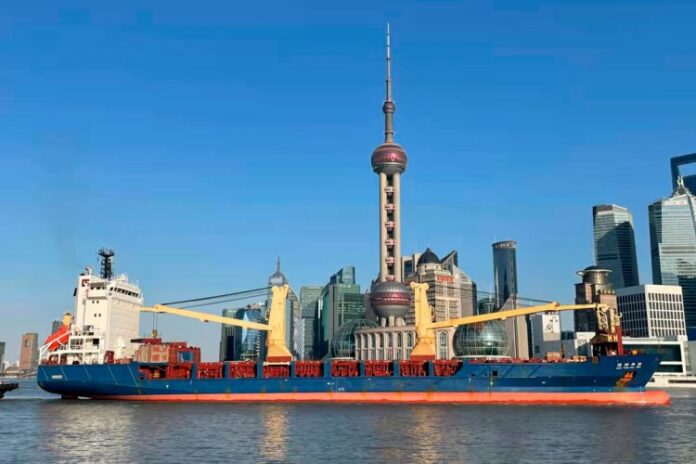
COLI Group’s subsidiary Asia Break Bulk (Singapore) has entered a Strategic Partnership with CSL Shipping (China). CSL & ABB will work closely together to market CSL’s multipurpose carrier ‘Jian Yang Hua Qing’. The vessel has 2 x 250 mt cranes for loading breakbulk, heavy lift and project cargo and is active for both companies as of now.

Felix Peinemann, Managing Director of the COLI Group, states:

“This partnership will expand our footprint in the MPP market. COLI is steadily expanding its activities to offer clients more sailing possibilities and increase its footprint in the Chinese market. Recently, we already added the ‘MV ABB Victoria’ to our fleet, an F240 type multipurpose carrier. With this additional vessel we can entertain an even  bigger variety of cargoes and projects up to 500 tonnes lifting capacity. We look forward to a fruitful collaboration with our partners at CSL Shipping.”

MPP operator Asia Break Bulk and Shanghai-based CSL will jointly operate the vessel, enabling both companies to gain additional market coverage in the MPP segment and expand their availability for their global clientele. To offer clients flexibility, any commercial enquiry can be handled by CSL’s Shanghai office, ABB’s Singapore team or COLI Group’s HQ in Hamburg.

Jack Lee , Managing Director at CSL Group, says:

“This partnership will strengthen our global network, so that we can offer better services to our customers. The commercial, operations and engineering teams of both companies will work in close cooperation to ensure the highest quality and standards for our joint clients. Indeed, we see this step as  a big milestone for CSL.”

WinGD adds MITSUI E&S Tamano Factory to Japanese engine building network

0

Swiss marine power company WinGD has concluded an agreement with Mitsui E&S Diesel United (MESDU), part of the Mitsui Engineering & Shipbuilding group, that will see WinGD engines being built at its main Tamano works for the first time.

WinGD engines have previously been built only at the company’s Aioi Factory, which was acquired from IHI Group when the Diesel United business was sold to MITSUI E&S earlier this year. The new agreement, which complements an earlier cooperation agreement signed with Diesel United in 2015, means that WinGD engines can now be built at both the Aioi and Tamano Factory.

WinGD Director Operations Rudolf Holtbecker said:

“Expanding in Japan in close collaboration with MESDU is a natural step as we see significant changes in vessel specifications from Japanese shipyards. As new designs emerge for vessels using alternative fuels including methanol and ammonia, as well as cutting edge LNG and hybrid technologies, Mitsui E&S DU (MESDU) will now be ready to fulfil the increased demand for domestically built WinGD engines.”

MESDU President Hiroyuki Takumi said:

“This agreement gives MITSUI E&S even more capacity to offer shipyards and shipowners the quality main engines that will power future generations of sustainable vessels. We are happy to be able to deliver on WinGD’s efficient and reliable engine designs to support even more Japanese vessels through the energy transition.”

As well as WinGD’s existing diesel-fuelled X-Engines and LNG dual-fuel X-DF engines, the additional building capacity at the Tamano Factory will also be dedicated to X-DF-A ammonia-fuelled and X-DF-M methanol-fuelled engines, which will be available for delivery from Q1 2025.

Japan is a key market for WinGD engines, with recent notable engine and system integration orders for LNG-hybrid vessel series for NYK Line and K Line. The country has also long been a core element of WinGD’s technology development process; the new Variable Compression Ratio (VCR) technology, which allows dual-fuel engines to dynamically optimise combustion for each fuel, was the result of more than a decade of co-development with MESDU and its forerunner Diesel United.

MacGregor receives cargo handling solution order from Philly Shipyard

0

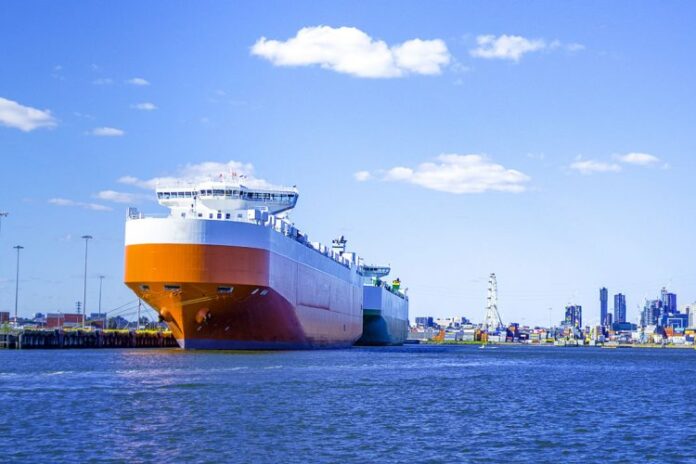
The order is booked into Cargotec’s fourth quarter 2023 order intake, with deliveries planned to commence during the fourth quarter of 2024 and completed within 2026.

MacGregor’s scope of supply encompasses design, hardware and supply for hatch covers, lashing bridges, deck stanchions, fixed and removable cell guides in hold and container fixed fittings.

“We are excited about this order, which is a nice continuity for the Aloha Class series and for the good collaboration with SM Solutions and Philly Shipyard. Philly Shipyard is a forward-thinking shipbuilding facility and we are committed to providing cutting-edge solutions and look forward to contributing our expertise to ensure their success,” says Magnus Sjöberg, Senior Vice President, Merchant Solutions Division, MacGregor.

Wärtsilä gas handling systems again selected for a medium gas carrier newbuild project

0

Technology group Wärtsilä will supply the cargo handling and LPG (liquefied petroleum gas) fuel supply systems for a new Medium Gas Carrier (MGC) vessel being built for Turkish ship owner Pasco Gas. The contract was signed with Hyundai Mipo Dockyard (HMD) and was booked by Wärtsilä in Q4 2023.

The 45,000 m3 capacity vessel was ordered as an option following an earlier newbuild contract signed in February 2023. The Wärtsilä scope of supply is the same for both ships. HMD is a key customer of Wärtsilä, and the two companies have cooperated on  several newbuild projects.

Wärtsilä continues to develop innovative solutions that enhance the safety, reliability, and efficiency of gas cargo handling.

“We are pleased to add this vessel for Pasco Gas to our impressive list of references and  to extend our close and long relationship with HMD” commented Hans Jakob Buvarp, Sales Manager, Cargo Handling Systems, Wärtsilä Gas Solutions.

Baseblue cooperates with Stad Amsterdam on renewable biodiesel bunkering operation

0

The delivery made by Baseblue is an HVO30 blend of fuel consisting of 10PPM gasoil mixed with HVO100. HVO, meaning Hydrotreated Vegetable Oil, represents a renewable diesel fuel produced from vegetable oils through an advanced hydrotreating process.

Baseblue Trader, Daan C. Jager said: “We are proud to have been selected by Stad Amsterdam to complete the supply of HVO30. This delivery underscores Baseblue’s commitment to promote renewable biodiesel adoption, fostering sustainable practices within the shipping industry and helping the maritime sector to achieve its emissions targets whilst aligning with its evolving needs.”

“Driven by the new IMO GHG strategy and new European regulations such as EU ETS and FuelEU maritime, the demand for lower carbon fuels is rising. Baseblue has been working diligently to deliver on a global scale, the right fuel at the right time to the most convenient port ensuring biofuel availability at numerous ports” said Baseblue Trader Patrick Benink.

Commenting on the announcement, Reinoud van der Heijden, Operations Manager at Rederij Clipper Stad Amsterdam, said: “We are doing our utmost to keep the CO2 footprint as low as possible. Obviously, it is of great help that we are a sailing ship and where possible, we carefully choose our sailing routes in order to take the best advantage of prevailing winds. However, this sailing ship also has generators and a main engine. After an extensive study with the help of a student from the TU Delft University, we were certain that HVO30 fuel was the right choice. Our ambition is to sail with HVO100 but to achieve this several tests must still be carried out in cooperation with our classification society.” 

“Drop-in” renewable biodiesels such as HVO are a key component of the future fuel mix for the maritime industry. These can use the existing bunkering infrastructure, ensuring easier supply worldwide. Furthermore, all the biofuels emit nearly zero CO2 and SOx, offering substantial environmental benefits.

“Catom PDM, involved as distributor of this bunker delivery, recognizes the benefits that various biofuels have to offer. Our aim is to be a key enabler for companies in their quest to reduce their CO2 footprint by providing their biofuel of choice.” explains Mike Halters, Business Development Manager. “We believe intercompany collaborations like this are necessary to achieve the goals set for the maritime industry. Catom and its subsidiaries offer the necessary distribution network and knowledge required to deliver the renewable biofuels for all industries. Together with Baseblue we managed to deliver in compliance with all regulatory affairs and quality standards. It is very rewarding to see how everything comes together to the satisfaction of everyone involved.” added Robert-Jan Hofstra, Commercial Manager Catom PDM.