-12.4 C
New York
Home Blog Page 231

Hokuyo Kaiun receives ISO certification for crew transfer vessel for offshore wind industry

0

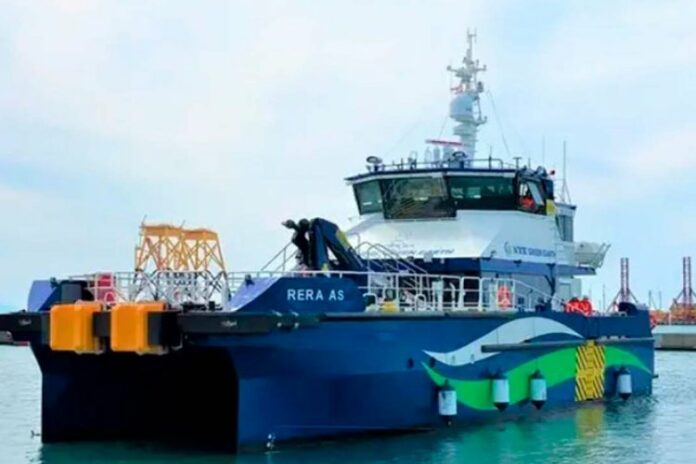
On December 21, the NYK Group’s Hokuyo Kaiun Co. Ltd. received ISO 9001:2015 and ISO 45001:2018 certifications from ClassNK for the safety management system (SMS) of its crew transport vessel (CTV) for the offshore wind industry.

On December 26, a ceremony to award a certificate of registration was held in Tokyo and attended by Katsuya Nakano, president of Hokuyo Kaiun; Capt. Hisaya Higuchi, managing executive officer at NYK; and Tsutomu Yokoyama, executive officer at NYK.

The certification was obtained by combining the experience of Hokuyo Kaiun, which operates and manages the CTV Rera As for the Ishikari Bay New Port offshore wind farm in Hokkaido Prefecture, with the knowledge of NYK, which obtained ISO 9001:2015 certification for its activities to promote the safe operation of its CTV in August. This certification will enable Hokuyo Kaiun, which mainly operates towing vessels in Japan, to operate and manage CTVs using an SMS compliant with international standards, thereby ensuring an even higher level of safety in vessel operations.

Katsuya Nakano, President of Hokuyo Kaiun, said:

“With the cooperation of all parties concerned, we were able to obtain ISO 9001 and 45001 certifications for our CTV ship-management operations. We are proud to participate as a member of the NYK Group in the offshore wind industry, which is an extremely important social issue that is aimed at decarbonization. We will continue to contribute to the stable operation of power generation projects by safely and efficiently transporting workers responsible for the maintenance and management of power generation facilities.”

Capt. Hisaya Higuchi, Managing Executive Officer at NYK, said:

“We are pleased to have been of assistance in obtaining this certification. The NYK Group emphasizes safety in all aspects of ESG management, including safe ship operations and employee safety, and this certification is a testament to our commitment. We will continue our efforts to further improve the quality of our vessels and ensure an even higher level of occupational health and safety for our crew members.”
Uniper looking into Provaris’ compressed hydrogen carriers for hydrogen import

0

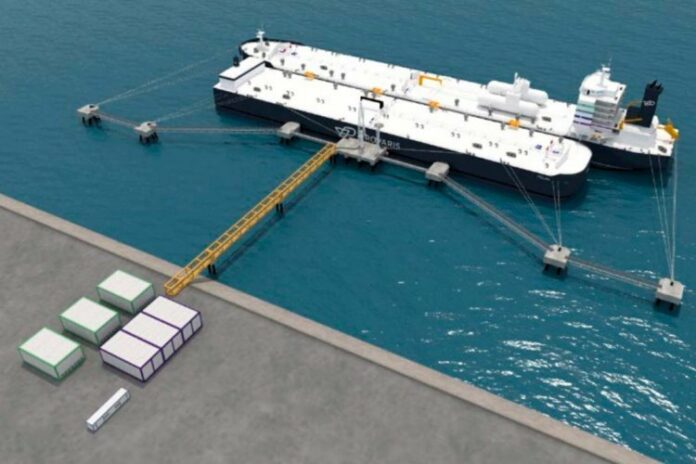
Uniper to evaluate the supply of green hydrogen to Germany using Provaris’ compressed hydrogen H2Neo carriers.

Provaris Energy Ltd has entered into a non-binding Memorandum of Understanding (MOU) with Uniper Global Commodities SE (Uniper), an international energy company that operates approximately 22.5 GW of generation capacity in Europe.

Provaris and Uniper will work together to qualify the technical, operational, and economic benefits of Provaris’ H2Neo carriers and compressed hydrogen supply chain.

The supply of green hydrogen is key to energy security and decarbonization ambitions for German industrial sectors and the energy generators. The development of a national hydrogen infrastructure is of great importance for the competitiveness of the German economy and central to achieving decarbonisation targets.

Uniper is systematically evaluating a portfolio of alternatives and opportunities for hydrogen along the entire value chain, from production and trading to transport, storage and distribution.

Provaris’ Managing Director and CEO, Martin Carolan, added: “Our focus on the development of regional supply chains provide a practical and relevant delivery model, providing flexibility to a portfolio of hydrogen import alternatives required for Germany. Provaris continues to gain the attention of industrial users in Germany due to an increased understanding of the benefits of compression that include a focus on capital and energy efficiency.”

US offshore wind poised for success next year after turbulent 2023

0

The U.S. offshore wind industry is eying a brighter 2024, with work expected to start on several projects following a year marked by stalled developments and billions of dollars in write-offs.

But progress slowed in 2023 after offshore developers canceled contracts to sell power in Massachusetts, Connecticut and New Jersey, and threatened to cancel agreements in other states, as soaring inflation, interest rate hikes and supply chain problems increased project costs.

European energy companies Orsted, Equinor and BP took about a combined $5 billion in writedowns on U.S. offshore wind projects that were in development because existing power sales contracts would not cover the cost of building and financing the projects.

Next year, developers hope to revive projects with canceled or threatened power sales contracts by bidding their facilities in upcoming solicitations in several states, including New York, New Jersey, Massachusetts and Connecticut.

“While auction clearing prices may increase, states appear to remain committed to clean energy goals,” said Eli Rubin, senior energy analyst at energy consulting firm EBW Analytics Group.

There were only two small offshore wind projects operating in the U.S. at the start of 2023, one in Rhode Island and another in Virginia, with total capacity of just 41 megawatts (MW). Capacity is set to jump to almost 1,000 MW in 2024 as commercial-scale projects off New York and Massachusetts enter service.

One thousand megawatts of offshore wind can provide power to around 500,000 U.S. homes.

“State procurements and policies will continue to drive demand for offshore wind energy and federal support will enable more job creation, supply chain investment and domestic energy production,” said Ryan Ferguson, spokesman at Danish energy company Orsted.

New York last month launched a solicitation that allowed companies to exit old contracts and re-offer projects at higher prices. It will announce winners of an expedited solicitation for offshore wind in February.

The state accelerated the solicitation in October after several developers, including Orsted, BP and Equinor, threatened to cancel contracts to sell power that were awarded in 2019 and 2021 before the Federal Reserve started hiking interest rates in March 2022 to fight soaring inflation.

New York’s first offshore wind farm, Orsted’s 132-MW South Fork provided first power in December.

In New Jersey, Governor Phil Murphy directed state utility regulators in November to launch an accelerated offshore wind solicitation in early 2024 after Orsted, the world’s biggest offshore wind company, canceled its two Ocean Wind projects.

Elsewhere in New Jersey, Shell (SHEL.L) and France’s EDF continue to develop the 1,510-MW Atlantic Shores wind farm, which should produce power by 2027-2028, according to the project’s website.

In Virginia, U.S. energy company Dominion Energy (D.N) said its roughly $10 billion, 2,587-MW Coastal Virginia Offshore Wind project remained on budget and on track to start offshore construction in May 2024. First power is expected in the second half of 2025 and completion is set for late 2026.

In Massachusetts, Avangrid (AGR.N) and Copenhagen Infrastructure Partners’ 806-MW Vineyard Wind 1 project is on track to produce first power in the near future.

Avangrid, which canceled contracts to sell power from projects off Massachusetts and Connecticut in 2023, said it plans to re-bid its 1,232-MW Commonwealth Wind off Massachusetts and 804-MW Park City off Connecticut in future solicitations.

“What you’re going to see in 2024 is a lot of competitive bids that will lead to contracts that will enable projects to go forward,” said Ken Kimmell, chief development officer for offshore wind at Avangrid.

Avangrid is majority owned by Spanish energy company Iberdrola (IBE.MC).

Orsted, meanwhile, said it plans to start offshore construction in the spring of 2024 on its roughly $4 billion Revolution Wind project, which will supply 704 MW to consumers in Rhode Island and Connecticut.

Reporting by Scott DiSavino, Editing by Rosalba O’Brien

Source: Reuters

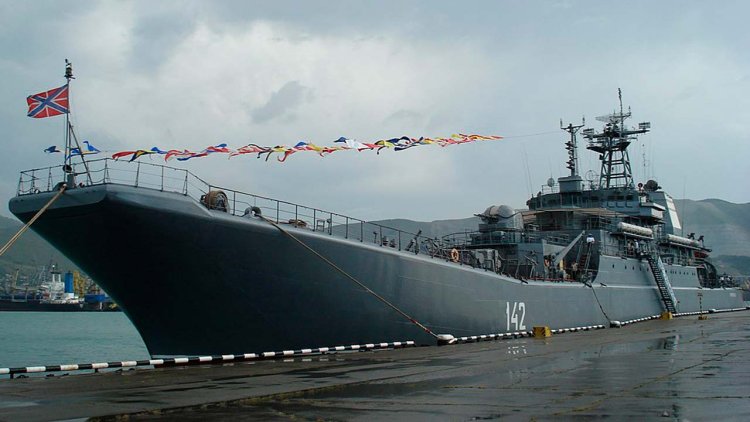
Ukraine destroys Russian Navy’s Novocherkassk landing craft in occupied Crimea

0

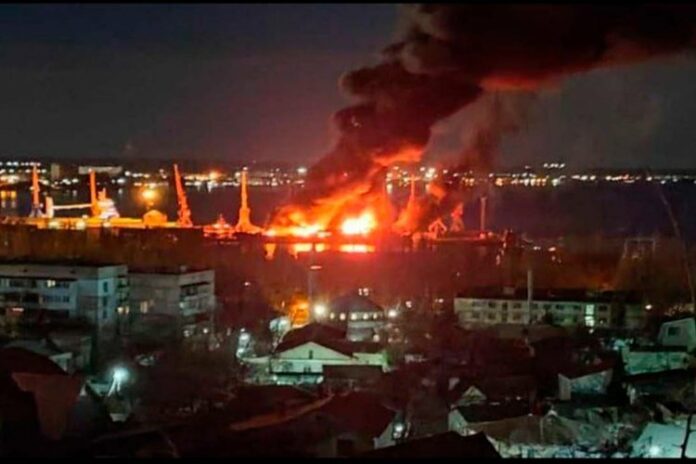
On 26 December at around 2:50 a.m. Kyiv time, numerous videos emerged on social media showing a large fire in the port of Feodosia in the east of occupied Crimea. Local sources claimed there were hits that started the fire. Later footage showed a massive secondary explosion.

At 3:16 a.m., Sergey Aksyonov, the head of Russia’s occupation administration of Crimea, confirmed the attack on Feodosia Port, claiming that the fire was localized and the detonation stopped:

“There was an enemy attack in the area of Feodosia. The port area is cordoned off. At the moment the detonation has stopped, the fire has been localised. All relevant services are working on the site. Residents of several houses will be evacuated,” the quisling official wrote on Telegram.

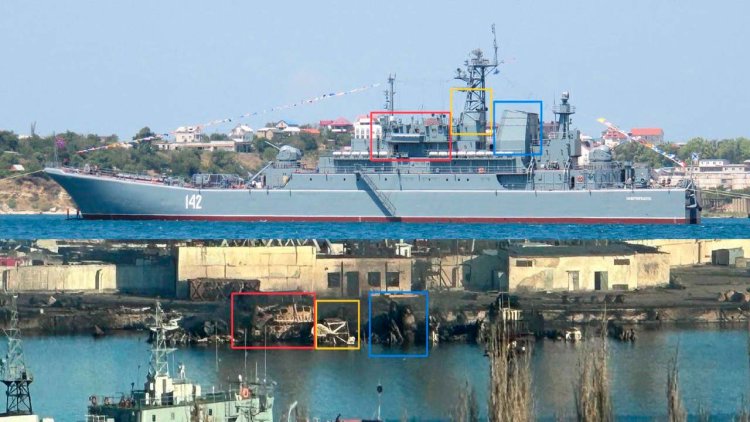
Russia’s defense ministry says Ukrainian missile attack “damaged” the Russian Navy’s Novocherkassk landing ship, but a photo from occupied Feodosia shows its submerged wreckage.

At 03:47, Lt-Gen Mykola Oleshchuk, Ukraine’s Air Force commander shared footage from Feodosia and reported that Ukrainian pilots destroyed the Russian Navy’s Novocherkassk large landing ship: 

“And Russia’s fleet is getting smaller and smaller!
“This time, the flagship of the Russian Black Sea Fleet, the cruiser Moskva (destroyed in 2022, – Ed.), is followed by the large lanfing craft ‘Novocherkassk.’ I thank the pilots of the Air Force and everyone involved for their filigree work!” Oleshchuk wrote.

The involvement of the Air Force of Ukraine implies the use of the Storm Shadow/SCALP-EG missiles in the attack.

The Novocherkassk was earlier damaged in Berdiansk port in March 2022, another large landing ship, Saratov, was destroyed in the same attack.

Earlier, Navy spokesman Dmytro Pletenchuk said that Ukrainian forces were responsible for the destruction of 15 Russian warships in the Black Sea, with an additional 12 suffering damage since the beginning of the full-scale invasion.

The Russian Black Sea Fleet suffered the most significant blow in April 2022, marked by the sinking of its flagship, the Moskva cruiser, after being struck by two Ukrainian Neptune missiles.

In September 2023, a Ukrainian missile attack destroyed the Russian landing ship Minsk and submarine Rostov-on-Don in the Sevastopol shipyard in occupied Crimea. In the same month, the Russian Black Sea Fleet’s headquarters in Sevastopol, occupied Crimea, was destroyed by Ukrainian missiles.

Source: Euromaidan Press

Ecowende contracts Van Oord to build most ecological wind farm yet

0

Van Oord has been contracted for the construction of the offshore wind farm Hollandse Kust (west) lot VI. Ecowende, a joint venture of Shell and Eneco, is determined to contribute to a sustainable future for offshore wind that positively contributes to the North Sea’s ecology. 

As Ecowende’s contractor, Van Oord will be responsible for transporting and installing the foundations. Van Oord will also lay, connect and bury the cables between the wind turbines. Finally, Van Oord will be handling the transportation and installation of the wind turbines at sea.

Building wind farms in harmony with nature is an important condition for eventually achieving these targets. Besides reducing the negative impact of an offshore wind farm, it is also necessary to implement ecological measures that can contribute to the development of wind farms with a net-positive impact. Ecowende and Van Oord will collaborate on implementing various innovations, large-scale mitigations and stimulating ecological measures. In addition, the parties will join forces in various feasibility studies and solution developments.

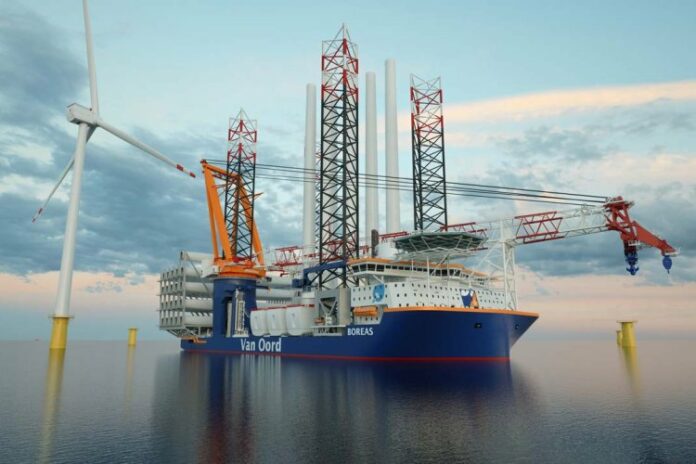
Van Oord will deploy its brand-new offshore installation vessel Boreas, currently being built, for the transport and installation of the foundations and turbines. To minimise the noise of the construction of the wind farm, Van Oord will deploy an alternative installation method for the foundations. A vibro hammer, using vibrations will drive the monopiles to their required depths. This will be the first large scale implementation of this innovative technique at a Dutch offshore wind farm. Van Oord’s cable laying vessel Nexus will be deployed for the installation of the connecting inter-array cables between the wind turbines.

The installation of scour protection is required to avoid the effects of erosion. This is achieved by high precision rock installation around the foundations. Van Oord has advised Ecowende on nature enhancing components in the design of the scour protection to help stimulate a diverse habitat for marine life. One of Van Oord’s flexible fallpipe vessels will be deployed to accurately and efficiently install the eco-friendly scour protection.

The Ecowende wind farm (Hollandse Kust (west) lot VI) will be located about 53 kilometres off the Dutch coast, near IJmuiden. The wind farm will have an operational capacity of approximately 760 MW, making 3% of the current Dutch electricity demand greener. Ecowende plans to have the wind farm fully operational and commissioned in 2026.

VARD secures contract for one Cable Laying Vessel for Prysmian Group

0

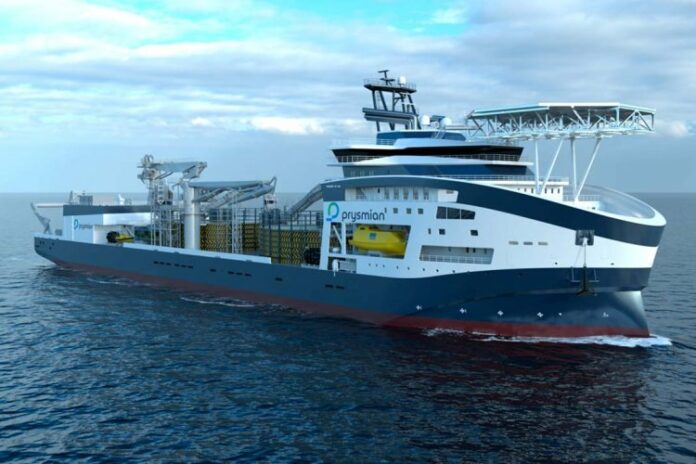
VARD has secured a new contract for the design and construction of another Cable Laying Vessel for Prysmian Group in Italy. 

The third vessel is an evolution, based on knowledge and experience from the two previous vessels Prysmian has contracted with VARD. One – named Monna Lisa – is still under construction and the first vessel, Leonardo da Vinci, was delivered from VARD to Prysmian in 2021. Prysmian is securing yet another contract because of the fruitful relationship based on the quality and performance of the existing ship.

Hakan Ozmen, EVP Project BU, Prysmian Group, commented:

“As global leader in submarine cable business we are fully committed to support the development of greener and smarter power grids, enabling the energy transition. We are delighted to work once again with VARD and Fincantieri – leaders in the design and construction of state-of-the-art vessels for the offshore market – to strengthen even more our installation capabilities” 

The new vessel is of VARD 9 18 design and especially designed for advanced subsea operations. With a length of approximately 185 m and a breadth of about 34 m, this brand-new designed vessel will be equipped with advanced cable installation solutions, such as three carousels for a total capacity of 19. 000 tonnes, positioning itself among the highest cable loading capacity vessels in the market and enabling a reduced transportation time from the factory to the site, for an overall improved project efficiency.

A bollard pull in excess of 180 tonnes will allow the vessel to perform complex installation operations of simultaneous cable lay and burial (up to 4 cables) with a variety of ploughs, for an unrivalled optimization of offshore operations. The vessel will be equipped with state-of-the-art DP3 positioning and seakeeping systems and will be operational by beginning of 2027.

Russia’s Novatek issues force majeure notices over Arctic LNG 2 project – sources

0

Novatek, Russia’s largest producer of liquefied natural gas (LNG), has sent force majeure notifications to some of its clients over future supplies from its Arctic LNG 2 project, four industry sources told Reuters on Thursday.

Novatek declined to immediately comment on the situation.

The notifications were issued after the United States last month imposed sanctions on Arctic LNG 2, which is due to start production before the end of this year or in early 2024.

Arctic LNG 2’s designed capacity, with three trains, is 19.8 million metric tons per year and 1.6 million tons per year of stable gas condensate.

The project is a key element of Russia’s drive to increase its market share on the global LNG market to a fifth by 2030 – from around 8% now. The first LNG tankers from the project were expected to set sail in the first quarter of next year.

One of the sources said that clients who had contracted to buy the LNG, such as China’s Shenergy Group and Zheijang Energy and Spain’s Repsol (REP.MC), had received force majeure notifications.

Repsol, which signed heads of agreement with Novatek on LNG supplies from Arctic LNG 2 and other projects in 2019, said it did not have a firm gas supply contract and the company had not received any force majeure notification.

Shenergy Group and Zheijang Energy were not immediately available for comment outside of business hours.

A seller of goods or services may declare force majeure in the event that they cannot supply them due to circumstances beyond their control. In such a case, they must notify the other party and offer an explanation.

Source: Reuters

NYK to adopt air compression system on PCCs to reduce GHG emissions

0

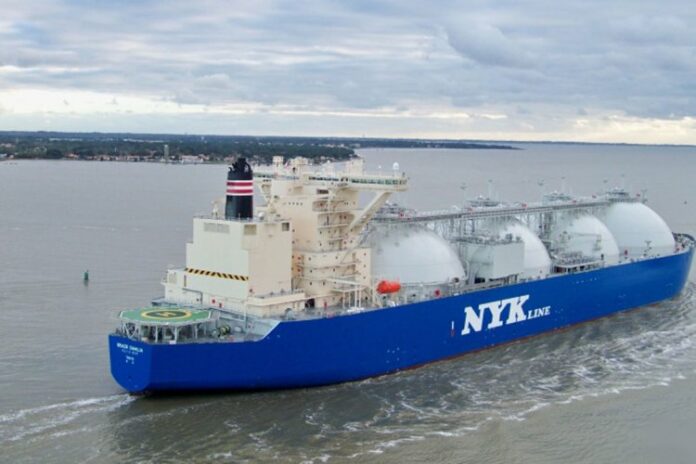
NYK will install a Variable Compression Ratio (VCR) system on LNG (liquefied natural gas) fueled car carriers to be built by Shin Kurushima Dockyard Co., Ltd. The first vessel is scheduled to be delivered in 2026.

The VCR system can adjust the air compression ratio in the engine combustion chamber to an optimal balance according to engine power and LNG fuel properties. This optimal adjustment will improve fuel efficiency during operation by about 3% in LNG gas mode and about 6% in diesel oil mode. The system is also expected to play an important role in reducing GHG emissions from existing ships and improving engine efficiency when decarbonized fuels are introduced.

Using its technology and experience with large low-speed marine engines, Mitsui E&S DU Co., Ltd. developed the VCR system together with Winterthur Gas & Diesel Ltd, a Swiss engine licensor.

In the “NYK Group ESG Story 2023” published in November, we set new targets that include a “45% reduction of the NYK Group’s GHG (Scope 1+2) emissions by FY2030 (versus FY2021)” and “Total net-zero GHG (Scope 1+2+3) emissions by FY2050 for the NYK Group.”

In particular, with regard to reducing GHG emissions in Scope 1+2, one of the tactics is to maximize energy efficiency, and improving fuel efficiency through technological enhancement is essential to achieving the new decarbonization targets set by the NYK Group. The NYK Group will continue to actively collaborate with partners in Japan and overseas to promote initiatives related to energy-saving technologies, with the aim of realizing a decarbonized society.

Shell invests in the Sparta Development in the Gulf of Mexico

0

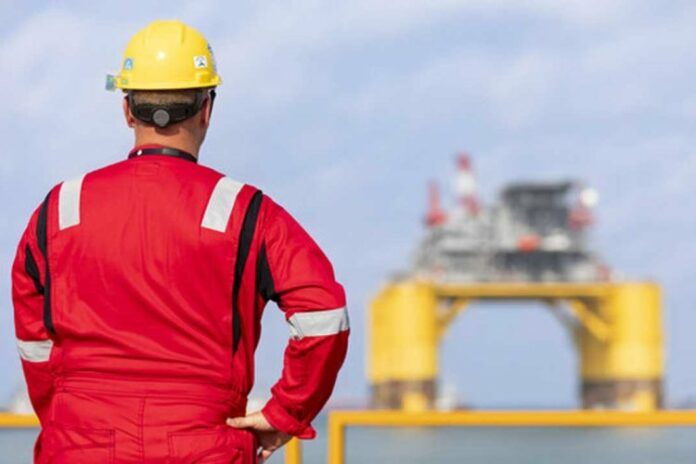
Shell Offshore Inc., a subsidiary of Shell plc, has announced the Final Investment Decision (FID) for Sparta, a deep-water development in the U.S. Gulf of Mexico that represents our competitive approach to simplifying and replicating projects. 

Owned by Shell Offshore Inc. (51% operator) and Equinor Gulf of Mexico LLC (49%), Sparta is expected to reach a peak production of approximately 90,000 barrels of oil equivalent per day (boe/d) and currently has an estimated, discovered recoverable resource volume of 244 million boe. Sparta will be Shell’s 15th deep-water host in the Gulf of Mexico and is currently scheduled to begin production in 2028.

Sparta showcases Shell’s cost-efficient development approach through standardized, simplified host designs, first utilized at the Vito development and later replicated at the Whale development. An enhanced replication of Vito and Whale, Sparta replicates about 95% of Whale’s hull and 85% of Whale’s topsides.

“Shell’s latest deep-water development demonstrates the power of replication, driving greater value from our advantaged positions,” said Zoë Yujnovich, Shell’s Integrated Gas & Upstream Director. “This investment decision is aligned with our commitment to pursue the most energy-efficient and competitive projects while supplying safe, secure energy supplies today and for decades to come.”

Building on more than 40 years of deep-water expertise, Sparta also marks Shell’s first development in the Gulf of Mexico to produce from reservoirs with pressures up to 20,000 pounds per square inch.

The Sparta development will be the first of Shell’s replicable projects to feature all-electric topside compression equipment, significantly reducing greenhouse gas intensity and emissions from our own operations.

Svitzer takes delivery of ‘Svitzer Estelle’ from Uzmar

0

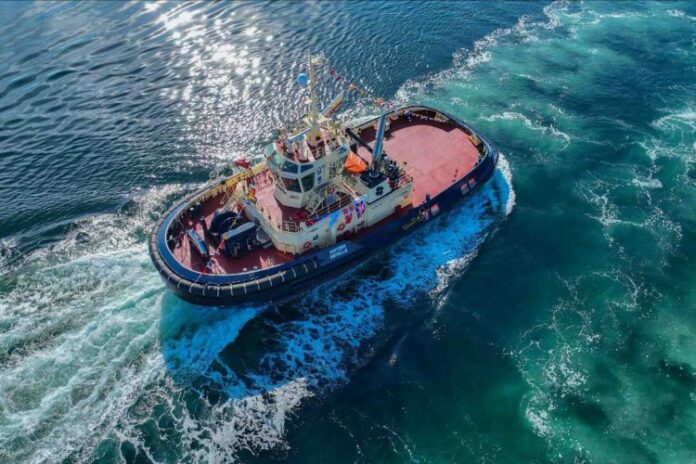
Svitzer has announced the successful delivery of Svitzer Estelle, the second tug built as part of the company’s ongoing partnership with Uzmar Shipyards, a world-class tug builder, based in Turkey.

Svitzer Estelle represents another step in Svitzer’s ongoing European fleet modernisation and expansion programme. The newly built, Robert Allan Ltd. designed RAstar 3200W will be deployed by Svitzer on the River Thames and the River Medway, bolstering the company’s operations in the busy Port of London. 

The first tug delivered by Uzmar Shipyards in May 2023, Svitzer Elizabeth, is currently in service in the Port of Liverpool. Svitzer’s partnership with Uzmar Shipyards began with the delivery of two tugs for the company’s fleet in Australia. Success over the years has enabled the two businesses to work together to support the safe, efficient, and sustainable delivery of marine towage services.

Svitzer Estelle has a bollard pull of 80 tonnes, and has an L.O.A. of 32 metres, with a beam of 13.2 metres and a depth of 5.5 metres. The RAstar 3200W series tug has a 199m3 fuel capacity and 40m3 freshwater capacity, with Escort Tug and Firefighting1 notation. 

The vessel is powered by two Caterpillar 3516E main engines rated at 2525 bkW at 1,800 rpm, with IMO III certified after treatment, and has two Kongsberg US255 Z-drives with 2.8m FP propellers.

Speaking on the announcement, Cliff Chow, Svitzer’s London Port Manager, said:

“The delivery of the Svitzer Estelle marks a pivotal moment in the continued modernisation of our UK fleet, and will enable us to continue to meet our customers’ demands as well as ensure safe, reliable, and efficient operations. The waters of the Thames and the Medway are dynamic and unique, so we need tugs that can meet and exceed their specific challenges. Just like Svitzer Elizabeth, we are confident that Svitzer Estelle will represent a significant advancement of our capabilities.”

“We’d like to thank the team at Uzmar Shipyards for their ongoing commitment to this partnership and for the completion of another successful project.”

As Svitzer Estelle is UK-based, the vessel will be able to fall under Svitzer’s EcoTow net-zero carbon harbour towage solution. As part of EcoTow, Svitzer deploys sustainable marine biofuel across its UK fleet to reduce the carbon impact of towage for its customers.