6.8 C
New York
Home Blog Page 22

Tanker loads Arctic LNG 2 cargo as China receives tenth shipment despite sanctions

0

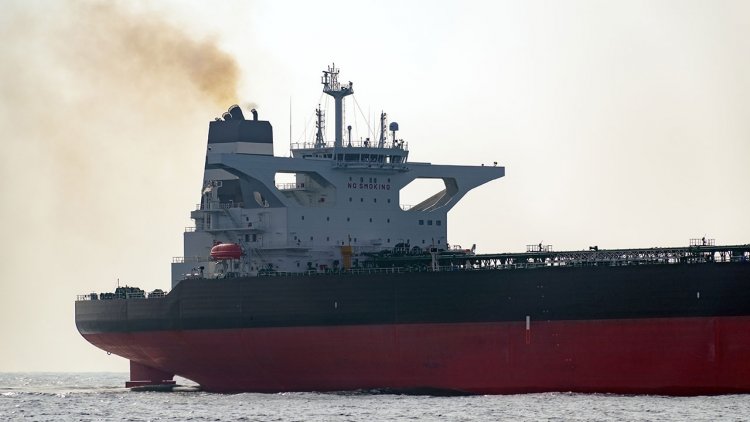
A liquefied natural gas tanker has left Russia’s Arctic LNG 2 after loading a cargo there, according to data compiled by LSEG and analytics firm Kpler, as the project continues output despite Western sanctions over Moscow’s war in Ukraine.

The Christophe De Margerie tanker arrived at Arctic LNG 2 on October 17 and departed loaded on October 20, according to Kpler data. Shipping database Equasis lists the tanker’s registered owner as Zelitiko Shipping, and its ship or commercial manager as Gas Carriers SCF Management, both with registered addresses in Dubai.

On the other hand, China has received a tenth cargo of LNG from the same project. The Arctic Mulan tanker, which is also under Western sanctions, berthed at the Beihai LNG Terminal in the southwestern region of Guangxi on October 17, Kpler data showed.    

Its registered owner is Zinnia International and its commercial manager is Skyhart Management Services, both with registered addresses in India, according to shipping database Equasis.    

It had picked up a cargo from the Koryak floating storage unit in Kamchatka, eastern Russia, on October 4, a facility only used for handling LNG from Arctic LNG 2, according to Kpler. It departed Beihai terminal on October 18.

PipeChina, operator of the Beihai LNG Terminal, did not immediately respond to a Reuters request for comment.

Arctic LNG 2 had been set to become one of Russia’s largest LNG plants, with eventual output of 19.8 million tonnes a year, before it was placed under U.S. sanctions. It has delivered 10 cargoes to China’s Beihai terminal in the southern region of Guangxi this year.

While Western countries have sought to cripple Moscow’s oil and gas sector to punish it for its 2022 full-scale invasion of Ukraine, China has ramped up energy imports from Russia.

Source: bairdmaritime

NAPA and Interoutes launch Expert Route Monitoring service

0

NAPA and Interoutes have announced the launch of their new Expert Route Monitoring service. 

Through direct communication with experts onshore, captains receive real-time, optimized route recommendations and weather updates, to help ensure vessels arrive on time, minimize fuel consumption, and reduce emissions – even when navigating challenging weather conditions. This approach enables captains to make better decisions, enhances voyage safety, and streamlines the handling of complex and dynamic sources of weather data at sea.

In practice, the Expert Route Monitoring process begins when NAPA receives the itinerary and objectives shared by the shipping company. Interoutes’ experts then use NAPA Voyage Optimization to prepare voyage planning and weather forecast reports. After careful review, the routing proposals are uploaded directly into the NAPA system onboard the vessel and shared with the vessel’s captain, along with an open line of communication for feedback and assistance.

Through the service, captains have direct access to Interoutes’ routing experts – including well-seasoned captains, master mariners and first mates – and will be able to get frequent and detailed advice from them on voyage planning. Routing experts deliver these insights based on their access to detailed NAPA Performance Models, allowing them to increase the accuracy of route projections, compare different route configurations, and get the necessary support for captains at sea to make the best decisions. 

QatarEnergy commences utilization of LNG storage at the UK’s Isle of Grain terminal

0

The capacity of up to 7.2 million tons per annum will be utilized pursuant to a long-term agreement signed in October 2020. The first LNG cargo to be delivered under this agreement was successfully unloaded at the Isle of Grain terminal on 15 July 2025, marking the start of the 25-year term of the agreement.

Commenting on this occasion, His Excellency Mr. Saad Sherida Al-Kaabi, the Minister of State for Energy Affairs, the President and CEO of QatarEnergy said: “We are pleased to commence utilization of the LNG storage, and regasification capacity at the Isle of Grain terminal. This is an important milestone, which expands our LNG storage portfolio, and marks a significant step in QatarEnergy’s strategic expansion into the UK gas market through Europe’s largest LNG receiving terminal.”

Commencing the utilization of the Isle of Grain’s terminal capacity also complements QatarEnergy’s wholly owned subsidiary, QatarEnergy Trading’s existing LNG terminal capacities at Zeebrugge (Belgium) and Montoir (France), reinforcing its commitment to providing reliable LNG supplies across Europe, while enhancing the flexibility of its global LNG portfolio and supporting the rapid growth of its business.

New high-speed Ro-Pax ferries now in operation for the Integrated Transport Centre

0

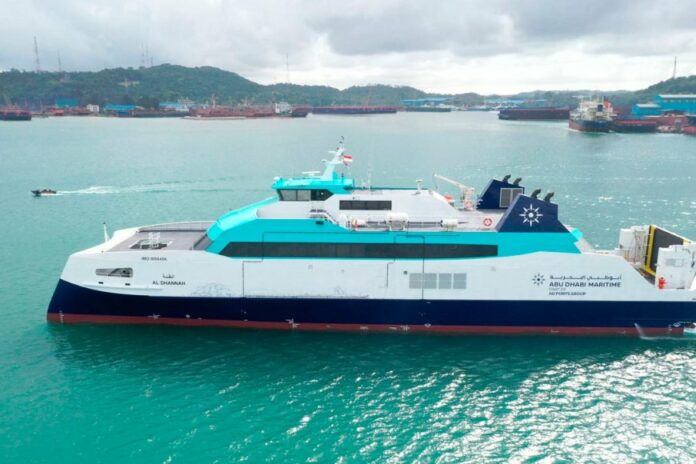
Two new aluminium high-speed Ro-Pax ferries designed by global digital shipbuilder Incat Crowther for the Integrated Transport Centre (ITC), an affiliate of the Department of Municipalities and Transport in Abu Dhabi, have successfully completed sea trials and are now operating on the ~42-kilometre route between Dalma Island and Jebel Dhannah on the UAE mainland.

The new 56-metre vessels, Jazirat Dalma and Al Dhannah, built by Singapore based, publicly listed, designer, builder, owner and operator, Penguin International Limited in Batam, Indonesia, can transport up to 192 passengers and 25 vehicles at speeds of up to 39 knots, equivalent to roughly 70 km per hour. Each vessel boasts a spacious, air-conditioned passenger deck which provides comfortable seating for 185 passengers, space for an additional seven wheelchair passengers and two large viewing areas at the bow and stern.

With sleek catamaran hulls and aluminium construction, Jazirat Dalma and Al Dhannah offer speed, stability and efficiency, and have been designed with comfort and accessibility in mind. Each vessel features a VIP room for eight passengers, two cafés, five bathrooms, and a playroom for children. Ample luggage and cargo spaces have also been included throughout both the passenger and vehicle decks, which are connected via an onboard elevator.

Each vessel is powered by four MTU engines and propelled by Kamewa waterjets with Jazirat Dalma and Al Dhannah designed specifically for extreme temperatures and sandy conditions in the Arabian Gulf.

The vessels’ vehicle deck has been designed for operational efficiency and allows for quick roll-on and roll-off operations. The elevated wheelhouse provides each vessel’s captain with excellent lines of sight while the bridge deck also features a crew mess and bathrooms for the vessel’s ten crew.

Ed Dudson, Incat Crowther’s Managing Director, Europe said, “The successful entry into service of Jazirat Dalma and Al Dhannah is testament to the strong collaboration that defined this project. Our team of naval architects has worked closely with shipbuilder Penguin International throughout and we’re proud to see these vessels in operation.”

CIMC Raffles delivers “Norse Wind” offshore wind turbine installation vessel

0

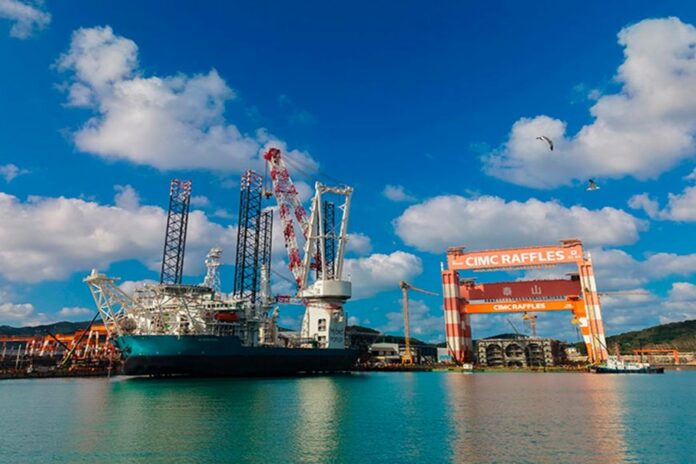
On October 15, CIMC Raffles, a subsidiary of CIMC Group, successfully delivered the offshore wind turbine installation vessel (WTIV) “Norse Wind” to DEME on time, a leading Belgian marine engineering company.  

The Norse Wind project is the first vessel in the NG20000X series, representing the world’s first WTIV designed with a full DC power distribution system. Unlike conventional vessels, this new-generation WTIV consumes significantly more electrical power during jacking and lifting operations. The DC power system overcomes the inefficiencies and high energy consumption of traditional AC systems. By intelligently controlling generator speeds, it reduces fuel consumption, enhances operational efficiency, and improves environmental performance.

As a flagship project supporting Europe’s clean energy transition, the Norse Wind is equipped with a DP2 system, featuring exceptional deck load capacity and lifting performance. The vessel is capable of transporting and installing multiple types of wind turbines, meeting the demanding operational conditions of the North Sea continental shelf.

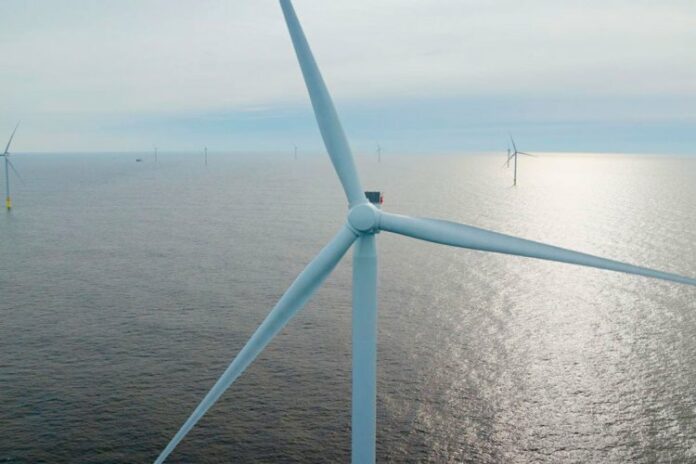
Compared with previous generations, Norse Wind is fitted with a 3,200-ton main crane and the latest hybrid battery propulsion system. Notably, the battery system can fully replace the output of one main engine — a technological breakthrough that reduces carbon emissions per megawatt installed by more than 70%. After delivery, the vessel will be deployed to the Nordsee Cluster wind farm in Germany, contributing to the generation of more clean energy for the world.

It is worth mentioning that the Norse Wind project, one of the most highly automated wind turbine installation vessels today, has been successfully delivered and highly commended by the shipowner and DNV. Both parties expressed recognition for CIMC’s professional technical capabilities and its performance in delivering the project on time with high quality. Next, the vessel will be deployed at the German NordseeCluster wind farm, contributing more clean energy to the world.

Parkwind Installs MJR Offshore Charging System

0

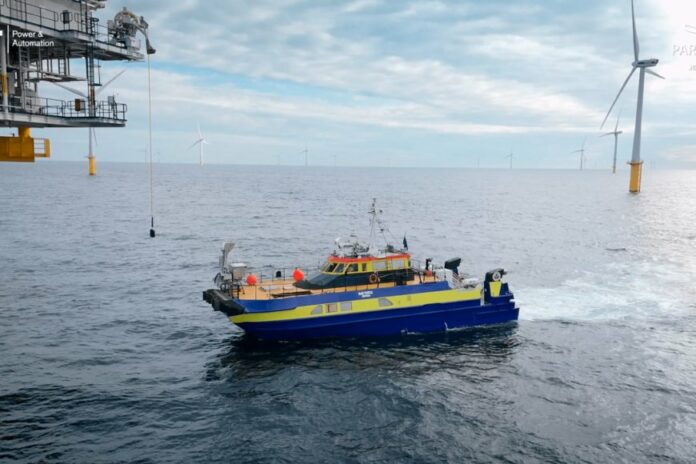
Parkwind has installed a pioneering boat charging station system at sea, designed to minimize greenhouse gas emissions from maintenance vessels and promote sustainable operations. 

Powered by local, renewable energy sources, this innovative infrastructure investment is a crucial step towards enabling low-carbon water transport. By utilizing locally-sourced renewable electricity, we are further supporting our mission to generate clean energy while diligently minimizing our environmental footprint. This ground breaking initiative not only enhances sustainable maritime practices but also reinforces Parkwind’s commitment to leading the transition to a greener future.‍

This innovative system, operational for the first time at the Nobelwind wind farm, enables vessels to use green, locally generated energy directly. The technology, developed by UK-based partner MJR, and integrated and deployed in collaboration with Parkwind, allows ships to connect to the charging cable and thus stay in place while charging, despite sea currents.

The automatic coupling and uncoupling process and charge management have been extensively tested and found to be successful. With this progressive concept, Parkwind aims to strengthen its position as a pioneer in the offshore wind sector and strive for fully sustainable operations.

US forces destroy Colombian drug-smuggling vessel

0

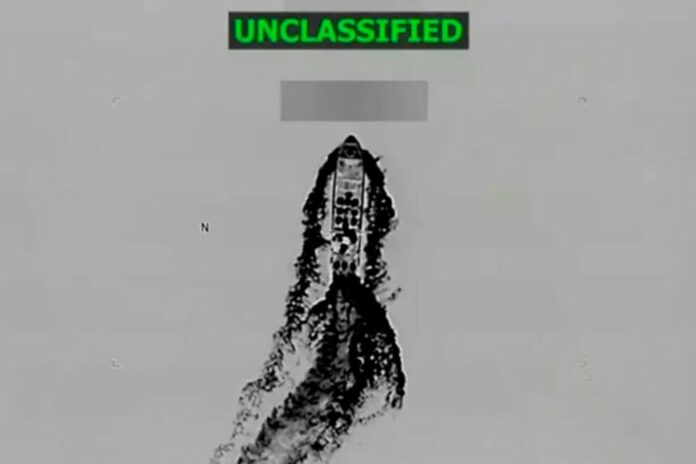
US forces attacked a drug-smuggling vessel on Friday, killing three people aboard, Defence Secretary Pete Hegseth said on Sunday. He alleged that the boat was linked to a Colombian guerrilla organisation.

”The vessel was known by our intelligence to be involved in illicit narcotics smuggling, was traveling along a known narco-trafficking route, and was transporting substantial amounts of narcotics,” he said in a post on X.

Earlier today, US President Donald Trump on Sunday labelled Colombian President Gustavo Petro an “illegal drug leader” and said the United States would stop “large scale payments and subsidies” to Colombia.

Trump claimed that the country’s drug production fuels the sale of “massive amounts of product into the United States, causing death, destruction, and havoc,” in a post on Truth Social.

It is unclear which payments the president was referring to. Colombia was once among the top recipients of US aid in the Western Hemisphere, though funding was sharply reduced this year following the closure of USAID, America’s humanitarian assistance arm.

Source: firstpost

US sinks international deal on decarbonizing ships

0

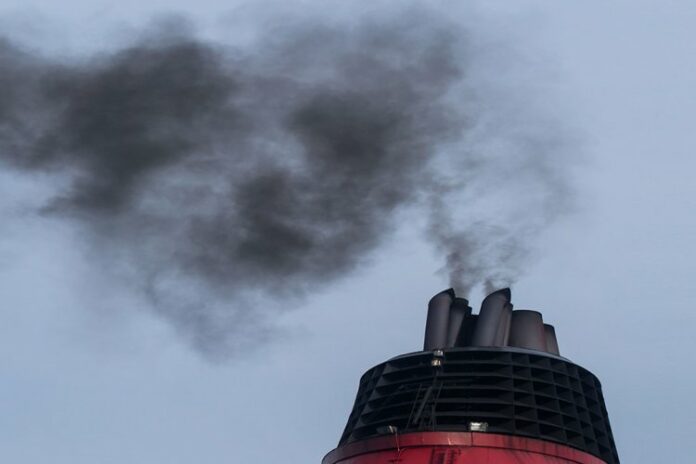
The London-based International Maritime Organization (IMO), a United Nations body that governs shipping, voted in April for a global pricing system to help curb greenhouse gases.

But a vote Friday on whether to formally approve the deal was delayed until next year after US President Donald Trump threatened sanctions against countries backing the plan.

Increased divisions, notably between oil-producing nations and non-oil producers, emerged this week at meetings leading up to Friday’s vote.

Delegates instead voted on a hastily arranged resolution to postpone proceedings, which passed by 57 votes to 49.

Trump had said Thursday that the proposed global carbon tax on shipping was a “scam,” after the United States withdrew from IMO negotiations in April.

A Russian delegate described the proceedings as “chaos” as he addressed the plenary Friday after talks had lasted into the early hours.

Russia had joined major oil producers Saudi Arabia and the United Arab Emirates in voting against the carbon-reduction measure in April, saying it would harm the economy and food security.

IMO Secretary-General Arsenio Dominguez, representing 176 member states, said Friday that he hoped there would be no repeat of how the week’s discussions had gone.
“It doesn’t help your organization, it doesn’t help yourself,” he told delegates.

A European Union source told AFP that “many countries have changed their minds under pressure from the United States.

A spokesman for UN chief Antonio Guterres called it “a missed opportunity for member states to place the shipping sector on a clear, credible path towards net zero emissions.”

The International Chamber of Shipping, representing more than 80% of the world’s fleet, also expressed disappointment.

“Industry needs clarity to be able to make the investments needed to decarbonize the maritime sector,” its Secretary General Thomas Kazakos said in a statement.

Since returning to power in January, Trump has reversed Washington’s course on climate change and encouraged fossil fuel use by deregulation.

“I am outraged that the International Maritime Organization is voting in London this week to pass a global Carbon Tax,” Trump wrote on his Truth Social platform Thursday.

“The United States will NOT stand for this Global Green New Scam Tax on Shipping,” he added, telling countries to vote against it.

Washington threatened to impose sanctions, visa restrictions and port levies on those supporting the Net Zero Framework (NZF), the first global carbon-pricing system.

Major oil-producer Saudi Arabia also called for Friday’s vote to be postponed.

“We agree with the United States that it’s important that these conversations are brought to light,” a Saudi representative said.

Ahead of this week’s London gathering, a majority 63 IMO members that in April voted for the plan had been expected to maintain their support and to be joined by others to formally approve the NZF.
Argentina, which in April abstained from the vote, now opposes the deal.

Leading up to Friday’s decision, China, the EU, Brazil, Britain and several other members of the IMO reaffirmed their support.

The NZF requires ships to progressively reduce carbon emissions from 2028 or face financial penalties.

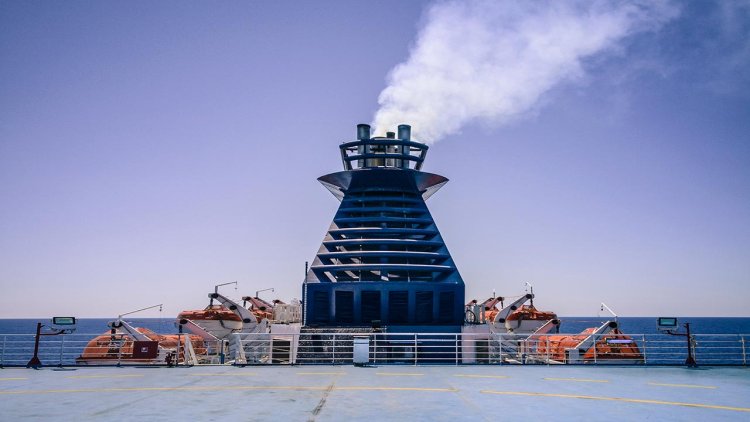
Shipping accounts for nearly 3% of global greenhouse gas emissions, according to the IMO.

The plan would charge ships for emissions exceeding a certain threshold, with proceeds used to reward low-emission vessels and support countries vulnerable to climate change.

If the global emissions pricing system were adopted, it would become difficult to evade, even for the United States.

IMO conventions allow signatories to inspect foreign ships during stopovers and even detain non-compliant vessels.

Source: france24

Ørsted to cut work force by 25 percent

0

Founded as a Danish oil and gas company, Ørsted invested heavily in offshore wind power and was closely identified with the U.S. push to develop turbine installations over more than a decade. The company still owns the first Northeast pilot wind project, the five-turbine Block Island Wind  turbine array off Rhode Island, opened in 2016.

But its future prospects were shattered this year with the second Trump administration’s campaign to destroy renewable energy projects.

Meanwhile the company’s other projects are still under relentless pressures that have affected all wind power ventures. Ørsted cut its portfolio target of 50 gigawatts of renewable energy capacity by 2030, to 35-38 GW and again to 27 GW this year.

The work force reductions, from around 8,000 employees total to 6,000 head count, will come as attrition and redundancies as Ørsted wraps up major projects, CEO Rasmus Errboe said in an Oct. 9 statement.

“This is a necessary consequence of our decision to focus our business and the fact that we’ll be finalizing our large construction portfolio in the coming years – which is why we’ll need fewer employees,” said Errboe.

“At the same time, we want to create a more efficient and flexible organization and a more competitive Ørsted, ready to bid on new value-accretive offshore wind projects,” said Errboe. “We’re building a more financially robust and competitive company with solid earnings, which will increase as we complete our projects.”

In late August Ørsted was hit with a stop-work order from the Trump administration on the company’s Revolution Wind project off southern New England, already 80% completed, as part of the administration’s ongoing efforts to kill already permitted projects.

Ørsted won a limited reprieve in federal court, with a temporary injunction lifting the stop-work order and allowing construction to resume. But Ørsted and other developers trying to keep their U.S. projects alive appear locked into a legal trench war with Trump’s executive branch agencies.

 Source: nationalfisherman

RINA awarded FEED contract for PETRONAS’ flagship CCS project in Malaysia

0

RINA has been awarded the Front-End Engineering Design contract by PETRONAS CCS Ventures Sdn. Bhd. for the Southern Onshore Facilities of Malaysia’s Carbon Capture and Storage (CCS) landmark development. 

Awarded following the successful execution of pre-FEED services in 2024, the FEED contract entrusts RINA with advancing engineering for the Southern onshore CO2 receiving terminal in Peninsular Malaysia. The terminal is designed to receive CO2 from multiple domestic and international industrial emitters, which will subsequently be transported and injected into offshore geological storage.

Michele Budetta, Chief Executive Officer of RINA Consulting, said, “Securing the FEED phase underscores the trust placed in RINA’s engineering depth and execution capability. We are proud to continue our collaboration with PETRONAS in advancing this strategic carbon management project. This phase introduces greater complexity and higher expectations, and we are committed to supporting the delivery of Malaysia’s most strategic CCS infrastructure to date.”

With a global team of over 6,600 specialists, advanced testing facilities and expertise in integrity assessments, RINA will provide support and guidance to the development of Malaysia’s flagship CCS project, with a focus on safety, efficiency, and objectivity in technology selection and system design.

This project supports Malaysia’s climate commitments and demonstrates the increasing readiness of Southeast Asia to implement large-scale, low-carbon infrastructure. RINA’s appointment to the FEED phase confirms its ability to support such strategic programmes and contribute to real-world decarbonisation.