-9.4 C
New York
Home Blog Page 228

Stena RoRo places order for yet another E-Flexer RoPax vessel

0

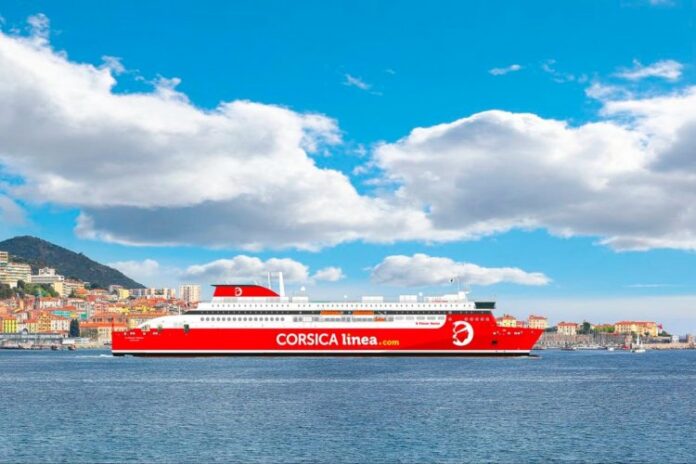
Stena RoRo has placed an order for yet another RoPax-class E-Flexer vessel from the Chinese shipyard CMI Jinling (Weihai). The vessel will be delivered in the first quarter of 2026 to Corsica Linea and will operate between Marseille and Corsica. 

“The arrival of this new LNG vessel in the fleet is a strong signal that is in line with the ambitious course set for Corsica Linea the coming years: to become the most modern shipping company in the Mediterranean by 2030. This new and highly efficient ship will be an important factor in our green transition and a part of our objective to reduce our CO2 emissions with 40 % by 2030”, says Pierre-Antoine Villanova, CEO of CORSICA linea.

The E-Flexer series is based on a concept with larger vessels than today’s standard RoPax ferries, and is very flexible. Each ship is tailored to the customers’ needs, both commercially and technically. Optimized design of the hull, propellers and rudders help to ensure that the E-Flexer vessels are at the forefront when it comes to sustainability, performance and cost.

The vessels’ engines are of the multi-fuel type and can run on LNG, conventional marine fuel (MGO) or biodiesel. The vessels have been designed in line with future environmental requirements and, through their technical design, can meet both existing and future international requirements by a wide margin. The vessels will be designed with the classification society notation “Battery power” which means that in the future the vessels will also be able to utilize batteries as a means of propulsion.

“This ship is a further development of our previous RoPax concepts, where the focus on sustainability and future-proofing has been a top priority,” says Per Westling, Managing Director, Stena RoRo. “Through the further development and optimization of the hull shape in combination with multi-fuel engines and battery hybrid technology, ordering new vessels will be the most important and powerful measure to reduce CO2 emissions from shipping in the future.”
MAN Energy Solutions and Karpowership signed a contract for 48 dual-fuel engines

0

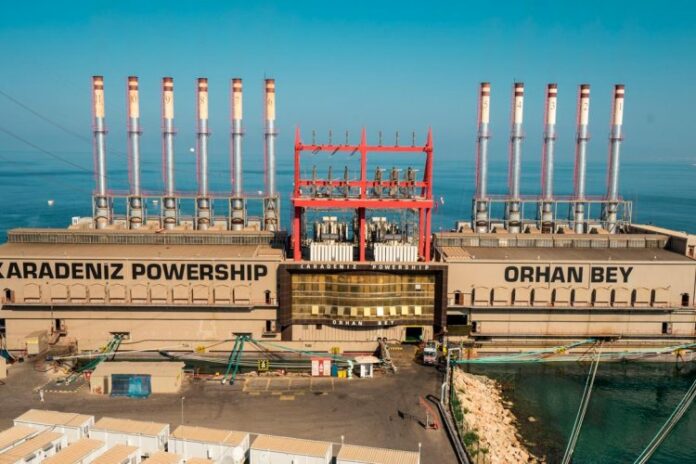
MAN Energy Solutions and Karpowership have signed a contract for the delivery of a total of 48 dual-fuel engines for Karpowership’s fleet of power plant ships (Powerships). The engine order consists of MAN 18V51/60DF dual-fuel engines with a mechanical output of 20.7 MW each.

The engines will be split between a number of Powerships. In addition to the engines, MAN Energy Solutions will also supply the control systems for the Powerships as well as other electromechanical equipment.

Alexander Stöckler, Head of Sales, Tendering & Project Management, Power Segment at MAN Energy Solutions, said: “MAN Energy Solutions has been supplying engines for Karpowership’s floating power plants since 2009. And we are proud of playing our role in Karpowership’s ability of realising the energy transition in a fast-track manner in any location in the world by now expanding the company’s fleet by a considerable 1,000 MW with this major order. Our dual-fuel technology has already proven itself in other Powerships, and we have now even been able to increase the engine output from 19 MW to almost 21 MW, which will make the upcoming Powerships even more effective.”

Karpowership has the world’s largest fleet of Powerships. The active fleet currently comprises a total of 36 Powerships with a total capacity of 6,000 MW. The future newbuilds equipped with MAN engines will also be deployed globally.

“Powerships stand for flexibility. After all, the floating power plants bring electrical energy to where it is urgently needed and help to alleviate urgent energy shortages,” explained Tilman Tütken, Vice President Strategic Projects, Power, at MAN Energy Solutions. “The Powerships will be deployed in various regions of Asia, South and Central America and Africa.”

Timur Iyi, Managing Director of MAN Energy Solutions Turkey, added: “We have a long-standing partnership with Karpowership. Quality in product and services and a trustful relation and dialog is the key for this success. The company has already commissioned us to supply over 100 engines and together we have always been able to find solutions for emerging issues. We are delighted that Karpowership has placed its trust in us again and that we can continue to contribute to the success of this unique Powership concept with our technology.”

New partnership to develop North Atlantic right whale protection technologies

0

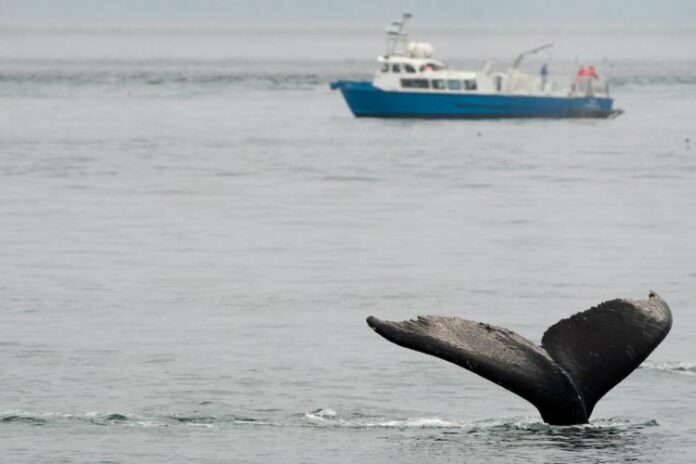
The administration of U.S. President Joe Biden has issued a USD 10 million (EUR 9.1 million) contract to the Center for Enterprise Modernization to develop technologies that can help protect endangered North Atlantic right whales.

“NOAA and its partners are working to stabilize the North Atlantic right whale population and prevent extinction of this species,” U.S. Secretary of Commerce Gina Raimondo said. 

The Center for Enterprise Modernization is run by the nonprofit MITRE, an organization that operates several federally funded research and development centers. Under the contract, the center will work on developing technologies related to whale detection, vessel strike avoidance, and ropeless fishing gear.

The contract was funded through the USD 82 million (EUR 75 million) the federal government dedicated to right whale recovery efforts in the Inflation Reduction Act, which the administration announced in September 2023.

The contract follows the Massachusetts Department of Fish and Game’s Division of Marine Fisheries (DMF) 29 December 2023 announcement that it will receive more than USD 4.6 million (EUR 4.2 million) from Congress for its right whale conservation program.

The department will use the funding and a USD 475,000 (EUR 434,000) grant from the National Fish and Wildlife Foundation to develop “innovative fishing gear technologies, increase ongoing research and monitoring, and provide fishing gear to lobster industry participants to reduce harm to right whales.” 

“We have a special responsibility to help these endangered animals and to promote innovative measures to support whale recovery and Massachusetts’ important lobster industry,” Massachusetts Energy and Environmental Affairs Secretary Rebecca Tepper said. “Massachusetts near-shore waters annually host up to 80 percent of the total population of North Atlantic right whales in late winter and early spring, as the whales migrate north and feed in the nutrient-rich waters of Cape Cod Bay and Massachusetts Bay. These funds are particularly beneficial to the small boat fishers who contribute so much to our economy, food security, and heritage of Massachusetts coastal communities.”

The state expects to receive more than USD 23 million (EUR 21 million) from NOAA Fisheries for the five-year program.

With only about 360 individual North Atlantic right whales left, conservationists and the U.S. government have prioritized implementing protections that can help the species survive. NOAA Fisheries declared an “Unusual Mortality Event” was affecting the species in 2017, primarily placing blame on vessel strikes and fishing gear entanglements.

A collection of seafood processors working together with retailers and fishery organizations has announced a new fishery improvement project (FIP) designed to reduce right whale entanglements in the U.S. and Canadian lobster fisheries.

“Our retail and foodservice clients are committed to supporting the North American lobster industry but expressed concern that the fishery addresses whale entanglement risk,” New Bedford, Massaschussetts, U.S.A.-based Northern Wind Chairman and Founder Ken Melanson said. “This fishery improvement project will give participants in the lobster fishery the information they need to avoid setting traps in areas where whales are known to be or are expected to be.”

FIP participants reviewed whale migration patterns, fishing locations, and harvest times to better understand how to implement strong avoidance measures while minimizing impacts on commercial fishing operations. Companies are also working to pair electronic traceability systems with whale tracking data to help them reduce entanglement risks.

“This puts our industry ahead of the curve to maintain lobster harvesting while addressing entanglement concerns,” Melanson said.

The FIP was developed by the Fishery Impact Fund and approved by Fishery Progress. The three-year project received initial funding from Northern Wind, Legit Fish, and the Massachusetts Division of Marine Fisheries. 

New RAstar 3200-W tugs to be built at Sterling Shipyard

0

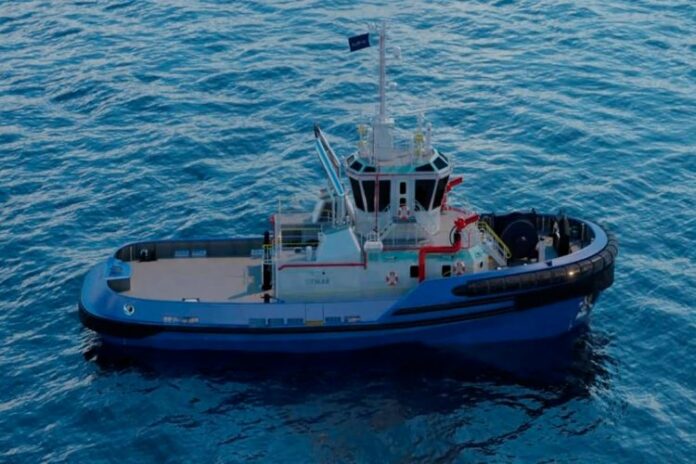
Robert Allan Ltd. has announced that the company’s longtime clients Bay-Houston Towing and Suderman & Young Towing Company, have awarded construction contracts to Sterling Shipyard in Port Neches, Texas for multiple new tugs of RAstar 3200-W design. 

The specially designed RAstar 3200-W tug for this application is based on the very successful RAstar 3200 design series to which more than 100 units have been delivered or under construction worldwide.

The tug will be powered by a pair of EMD 16 E23B HD tier 4 EPA compliant engines and propelled by two Schottel SRP-610 units generating bollard pull of 105 metric tonnes. When performing escort operations, the 105-foot long escort tug will be capable of providing a steering and braking force of 115 tonnes and 162 tonnes respectively at speeds up to 10 knots. The tug will be fitted with a towing winch on its aft deck for coastal towing service.

The tug will have ABS notations of ✠ A1, Towing Service, ✠ AMS, Escort Service, Fire-Fighting Vessel 1, Low Emission Vessel (US).

Robert Allan Ltd. is to provide a production design package including steel parts and piping spools, etc. to Sterling Shipyard as well.

Austal USA delivers 14th expeditionary fast transport to United States Navy

0

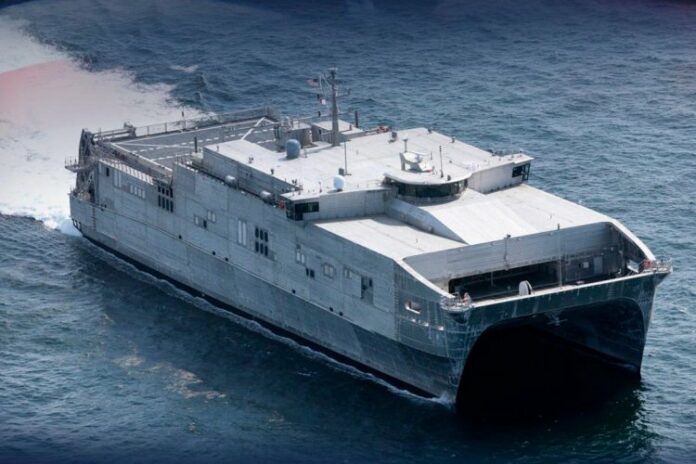
Austal Limited Chief Executive Officer Paddy Gregg said the ‘Flight II’ EPF’s provide a Role 2E medical capability that allows surgeons to perform medical procedures in an onboard operating suite, underway.

“Cody is the US Navy’s first EPF to include enhanced medical facilities that enable a broader range of surgical procedures to be undertaken at sea, with 2 operating rooms and an onboard pharmacy, blood bank and laboratory to support missions,” Mr Gregg said.

“The Flight II variants also have the added capability to support V-22 Osprey flight operations and launch and recover 11 metre RHIB’s.”

Austal USA and the Navy’s Expeditionary Fast Transport (EPF) program team successfully completed acceptance trials of EPF 14 in the Gulf of Mexico in December 2023, involving the execution of intense, comprehensive tests of the ships major systems and equipment while underway. USNS Cody is the 14th EPF ship to join the United States Military Sealift Command’s global fleet.

Austal USA is currently constructing two more EPF’s (15 and 16) at the Mobile, Alabama shipyard.

The 103 metre Spearhead-class EPF ships are currently providing high-speed, high-payload transport capability and logistics support to United States Navy Fleet and Combatant Commanders around the world; and are representative of Austal USA’s diversified portfolio which includes surface combatants and auxiliaries, submarine modules and autonomous vessels.

This ASX announcement has been approved and authorised for release by Paddy Gregg, Austal Limited’s Chief Executive Officer.

The EU fisheries control system gets a major revamp

0

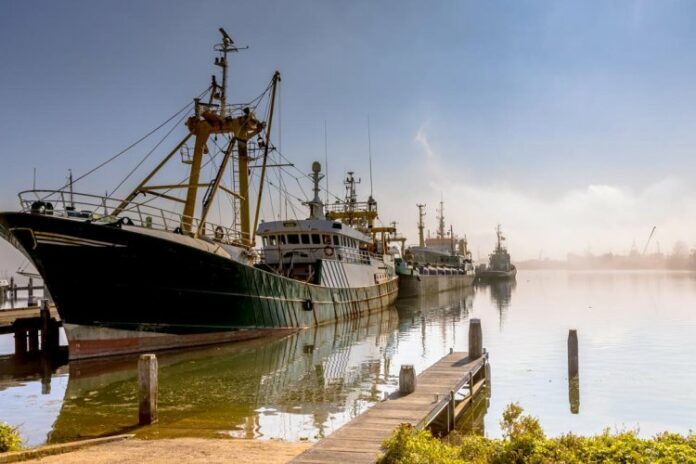
The revised EU fisheries control regulation updates most of the rules for controlling fishing vessels to bring them in line with technological developments and make EU fishing more sustainable.  

The main changes relate to improved monitoring of fishing activities and traceability of catches by making use of the best available technology and sanctioning those breaching the rules.  

Commissioner for the Environment, Oceans and Fisheries Virginijus Sinkevičius said:

“The revised fisheries control system is the culmination of five years of negotiations. With it, we are significantly updating the way fishing activities are monitored, to ensure that our precious marine resources are better protected, and fisheries control rules are better enforced through the whole chain, from the net to the plate.”

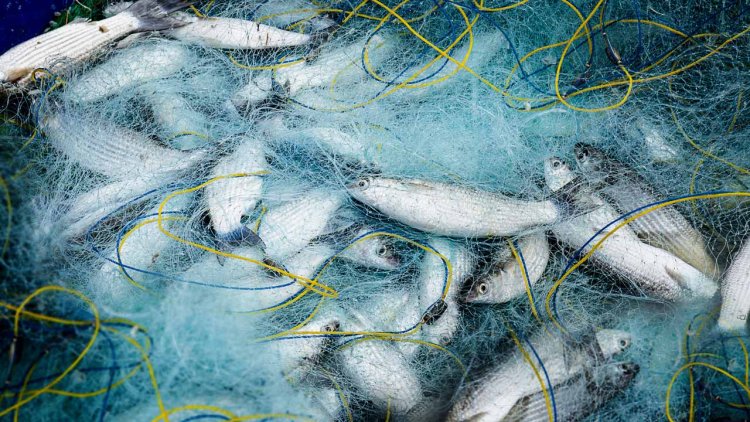
The control of fishing activities will be entirely digitalised – from the net to the plate – by gradually expanding the geo-localisation and electronic reporting to all fishing vessels, irrespective of their size, and mandating catch recording and reporting in certain recreational fisheries.  

All fishing vessels will be tracked via a vessel tracking systems (VMS) and all catches will need to be recorded via electronic means. 

User-friendly tools such as apps on mobile devices will be used to remove the burden for fishers. 

For the first time, full digital traceability will be mandatory along the supply chain, enabling the authorities to more effectively tackle illegal fishing. The system will be mandatory for fresh and frozen fishery and aquaculture products. It will gradually be expanded to processed fishery and aquaculture products, such as canned products, giving consumers more information on the origin. These rules will apply to all fishery and aquaculture products, including imports. 

The new EU control system rules also strengthen the compliance of the ‘landing obligation’ (to make sure unwanted catches are not illegally discarded at sea, but brought to shore): they include obligations for remote electronic monitoring (with onboard cameras) for fishing vessels above 18 meters that present a high risk of non-compliance with this obligation.  

The new rules include harmonised sanctions for breaching the rules of the common fisheries policy, in particular in the case of serious infringements. 

The regulation enters into force on 9 January 2024 but there are transitional provisions to leave enough time for the EU’s fishing authorities and other relevant stakeholders to adapt to the new requirements. 

Most provisions of the amended regulation will apply in 2 years, from 10 January 2026. Derogations to the margin of tolerance apply in 6 months (from 9 July 2024). 

Some provisions will apply only after 4 years (from 10 January 2028), as their implementation may require some preparatory work, such as the remote electronic monitoring, or electronic tracking and catch recording for small scale fleet.  

Few other provisions will apply only after 5 years (from 10 January 2029), such as the ones on traceability for prepared and preserved fishery and aquaculture products or for algae. 

In the coming months and years the European Commission will adopt the necessary regulations to ensure a harmonised implementation of the new rules across the EU.  

Jumbo Offshore awarded mooring pre-installation contract by MODEC for Errea Wittu

0

Jumbo Offshore Installation Contractors B.V. (“Jumbo Offshore”) has been awarded a contract by MODEC Guyana Inc. (“MODEC”) for the pre-installation of the mooring spread of the FPSO Errea Wittu, which will be located offshore Guyana. 

The FPSO “Errea Wittu”, the name of which means ”abundance”, will have the capacity to store 2 million barrels of oil. It will produce approximately 250,000 barrels of oil per day and will have gas treatment capacity of 540 million cubic feet per day, and water injection capacity of 350,000 barrels per day.

MODEC Group was authorised to proceed with the engineering, procurement, construction and installation (EPCI) scope for the FPSO in May 2023, following a final investment decision on the Uaru project by ExxonMobil Guyana Limited and its co-venturers. The FPSO mooring system will be supplied by SOFEC, Inc., a MODEC Group company,  and consists of a total of nineteen (19) mooring legs. 

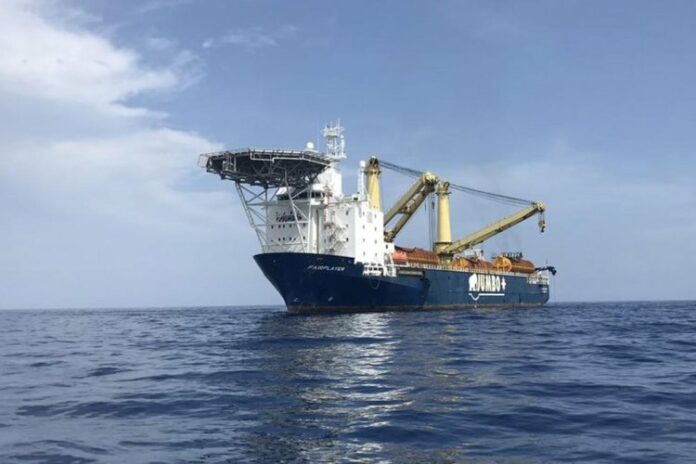
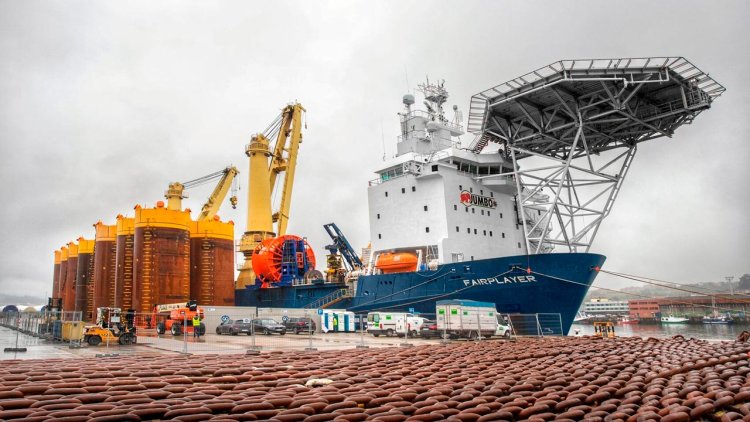
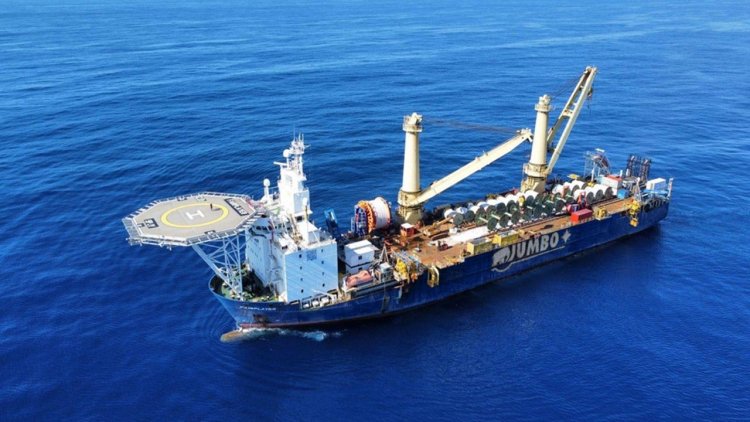
Jumbo Offshore will be using its unique Heavy Lift Construction Vessel Fairplayer, which allows the transport and installation of the 19 suction anchors, 8,800m of chain sections and 43,168m of polyester rope in the minimal amount of installation voyages, simplifying the logistics involved. 

Igor Rijnberg, Head of Sales and Business Development Subsea at Jumbo Offshore, said,

“The Jumbo Offshore team is very grateful to MODEC for this opportunity. We will use the extensive deep-water mooring installation experience gained over the last years to deliver a reliable, smart and efficient project execution.” 

Brian Boutkan, Manager of Commerce at Jumbo Offshore, said,

“On behalf of the entire team, we are very much looking forward to undertaking this project. MODEC can count on Jumbo Offshore’s total commitment to providing a safe and reliable execution. As always, we will be approaching this project as a partner to our client, working in close collaboration with MODEC to ensure the outcome entirely meets their expectations.”

Gasum procures SEFE LNG cargo to the Inkoo FSRU terminal

0

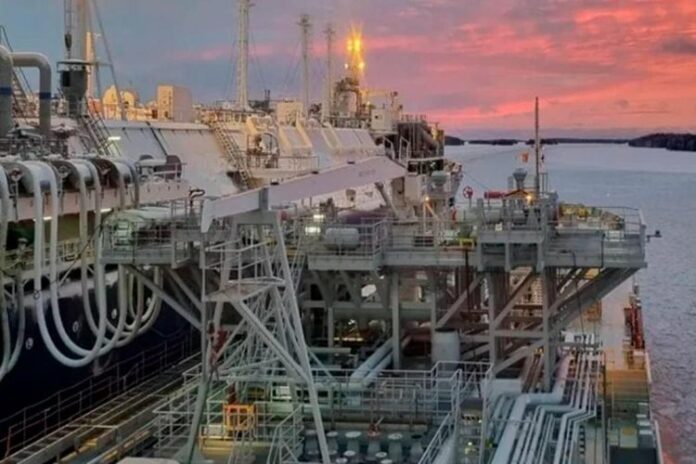
The cargo has arrived on 10 January and unloading is carried out in due course. At the FSRU the LNG is regasified and fed into the Finnish gas pipeline grid.

This is the fourth large LNG cargo Gasum has delivered to the Inkoo FRSU since the Balticconnector gas pipeline between Finland and Estonia suffered a rupture and was shut down in early October. In addition, Gasum delivered a smaller 100 GWh cargo with its own LNG vessel Coral Energy early January to Gasgrid to ensure system balancing and mitigating the risk of inadequate gas during the extraordinarily cold period. While the pipeline is being repaired, all Finnish natural gas demand must be met through imports of LNG.

“We have been working hard to secure supply of natural gas during the winter season to our customers, whose operations depend on a steady supply of gas. The cold period has increased local gas demand and thus, we are very pleased that we were able to secure the required ice-classified LNG vessels for the winter season with the offer coming from SEFE Marketing & Trading Ltd. This transaction highlights the importance of a broad cooperation network in challenging situations”, says Jouni Liimatta, Head of Trading and Optimizing at Gasum.

The LNG cargo is approximately 800 GWh in size, it is supplied by Gasum’s new LNG trading partner SEFE Marketing & Trading Ltd, a 100% subsidiary of SEFE (Securing Energy for Europe) and comes from the USA. SEFE is a German state-owned multinational energy company with a presence in Europe, Asia and the US.

“Thanks to SEFE’s technical and logistical expertise, we can fulfil our mission even during harsh winters in Northern Europe and reliably supply the markets in Finland and neighbouring countries with LNG. SEFE is proud to be able to support Gasum and the energy security of the region.” comments Frederic Barnaud, Chief Commercial Officer at SEFE.

In addition to this delivery, Gasum has reserved another slot at the Inkoo FSRU for the latter part of the winter season. These two cargoes will ensure that Gasum can meet the natural gas demand of its customers until spring 2024. 

First coffee cargo sailboat travels to North America

0

During its 20-day voyage, the cargo sailboat carried 72,000 kilos of coffee beans on the wind, in a constant effort to run on clean energy. 

The decision to opt for environmentally friendly shipping is part of the company’s drive to reduce its carbon footprint and promote sustainable practices throughout its supply chain.

“It’s a commitment to sustainable transport, but also to setting a precedent for other players in the sector,” emphasizes Serge Picard, owner of Café William.
“It was vital for us to find an alternative method of transporting coffee, which largely depends on fossil-fuel cargo ships. With a first voyage as a proof of concept for the cargo sailboat, this is just the beginning of plans to supply zero-emission coffee” 

According to Café William’s projections, the company could see a reduction of around one tonne of shipping-related CO2 per container, thanks to the cargo sailboat. The company hopes to increase its cargo sailboat shipping capacity to 100% of the volume imported for Café William in the long term.

Deltamarin to design new wind-assisted RoRo vessels for LDA

0

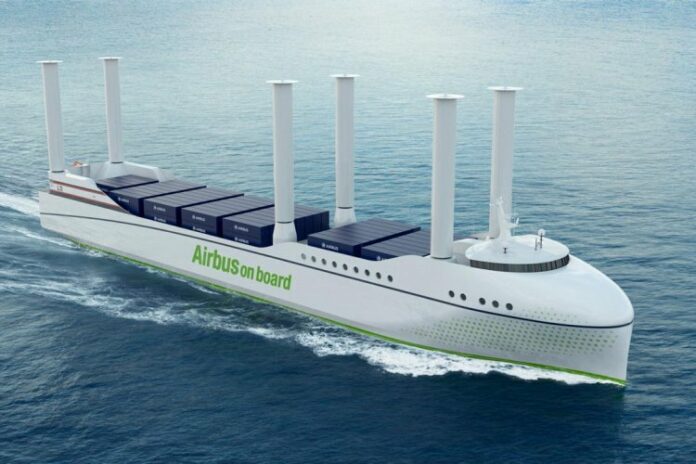
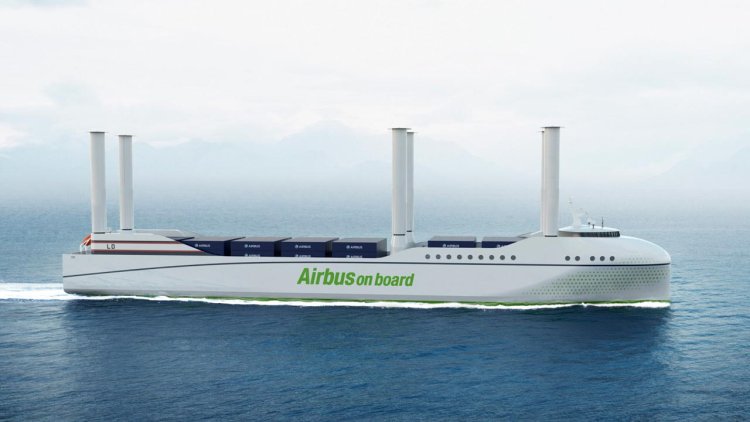
Deltamarin has announced its collaboration with Louis Dreyfus Armateurs (LDA) and Wuchang Shipbuilding Industry Group Co Ltd. (WSIG) in designing three modern and eco-friendly roll-on / roll-off vessels for Airbus aircraft subassembly transportation. 

Airbus has selected the French shipowner Louis Dreyfus Armateurs to modernize its entire fleet of chartered vessels that transport aircraft subassemblies between production facilities in Europe and the United States.

Deltamarin has previously collaborated with Louis Dreyfus Armateurs on the concept design of the vessels, and now continues with the basic and detail design for the Wuchang shipyard.

Powered by a combination of six Flettner rotors and two dual-fuel engines running on marine diesel oil and e-methanol, the vessels are designed for minimal environmental footprint. The new fleet is expected to reduce average annual transatlantic CO2 emissions from 68,000 to 33,000 tonnes by 2030.

Each new transatlantic vessel will have the capacity to transport around seventy 40-foot containers and six single-aisle aircraft subassembly sets, a substantial increase from current cargo ships.

The vessels will be built, owned, and operated by LDA and are expected to commence operations in 2026.