-7.4 C
New York
Home Blog Page 227

BMA, A2B-online and Sedef partner in sustainabl small containership project

0

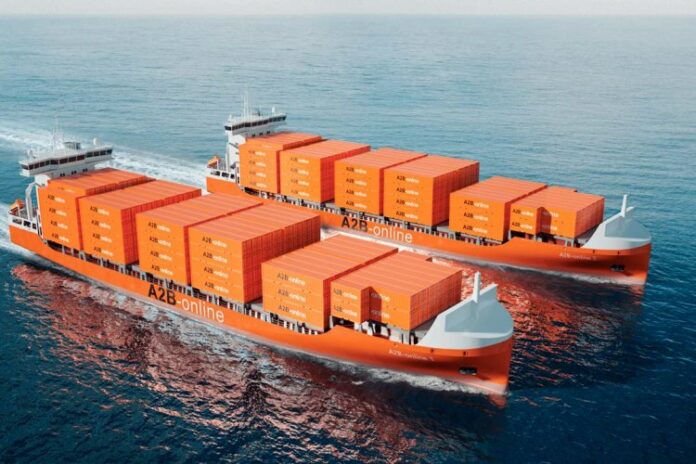
BMA Technology has provided a comprehensive suite of electrical solutions to power A2B-online’s forward-thinking initiative. 

This includes cutting-edge components such as Electric Drives, Motors, LI-ION  batteries, Low Voltage Switchboards and  Alarm Monitoring & Control System. These essential components are at the heart of A2B-online’s two revolutionary container vessels, each driven by 3.2 MW propulsion power.

Hakki Yigit Bayrak, Business Development Director at BMA Technology, emphasized the importance of this partnership, saying,

“Our collaboration with A2B-online and Sedef Shipyard is a testament to our commitment to sustainable maritime solutions. We are proud to be part of this vision, which showcases our dedication to reducing environmental impact through cutting-edge electrical technologies. The number of projects in which we have implemented these and similar solutions have now reached 7 ships.”

With a firm focus on sustainability, these vessels have been meticulously designed to incorporate the latest technologies aimed at drastically reducing CO2 emissions. In fact, these vessels are expected to achieve emission reductions of up to 95%, setting a new industry standard for eco-conscious shipping.

One of the key features of these vessels is their multi-fuel methanol-electric propulsion system. This innovative technology significantly minimizes emissions, ensuring cleaner and more environmentally friendly maritime operations. The vessels are also equipped with 1.5 MWh battery capacity, enabling them to operate emission-free during harbor and inland water operations.

ONE orders its first 12 methanol dual-fuel container ships

0

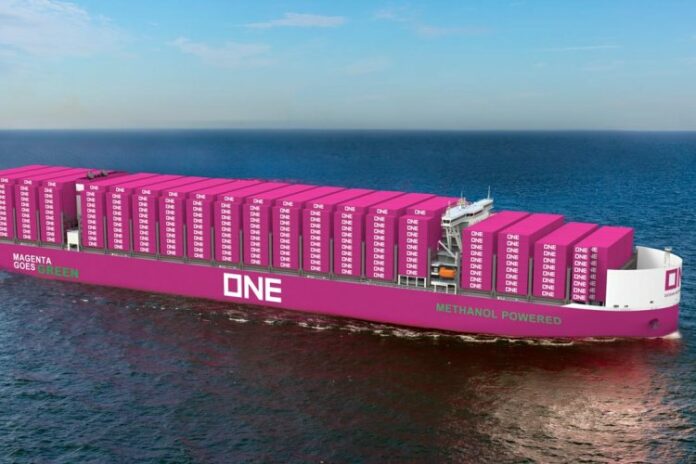
Ocean Network Express Pte. Ltd. (ONE) has signed Ship Building Contracts with Jiangnan Shipyard and Yangzijiang Shipbuilding for a total construction of twelve 13,000 TEU methanol dual-fuel container ships. 

Each shipyard will build six vessels and are all scheduled to be delivered from 2027. This significant milestone represents ONE’s inaugural fleet of methanol-dual fuel vessels and plays a key role in reaching ONE’s sustainable goals as part of the Green Strategy. 

These vessels are designed with capabilities to be flexible and agile which will seamlessly integrate into ONE’s evolving and dynamic global network. This investment and purchase are aligned with ONE’s stringent procurement policy aimed at meeting customer demand and being adaptable for any future change in global sustainable supply chains. 

In the current maritime and sustainability landscape, methanol is anticipated to hold significant potential for emission reduction. Moreover, these vessels will include state of the art technologies such as optimized hull form, waste heat recovery systems and bow windshield. Selected vessels will also be equipped with an air lubrication system and shaft generator to help with exploring potential enhancements in fuel efficiency and the reduction of greenhouse gas (GHG) emissions. These innovations can help accelerate ONE’s decarbonization efforts and ensure compliance are in line with regulations in the shipping industry.

Commenting on the announcement, CEO Jeremy affirmed:

“Our decision to invest in methanol-dual fuel vessels aligns with ONE’s Green Strategy as part of our key initiatives. Upcoming new fleet is pivotal in achieving our goal of deploying the first alternative fuel ships by 2030 and marks a significant milestone in our journey towards a greener and more sustainable maritime industry.”

ONE Green Strategy has an ambitious target to achieve net-zero GHG emissions, encompassing Scope 2 and 3, by 2050. To achieve the target, transition from conventional fuel to alternative fuels is defined as ONE’s key pillar of Green initiatives, and it is consistent with Operational Efficiency, Green Investment, and Alternative fuels in our key initiatives.

Equinor awarded 39 new production licences on the Norwegian continental shelf

0

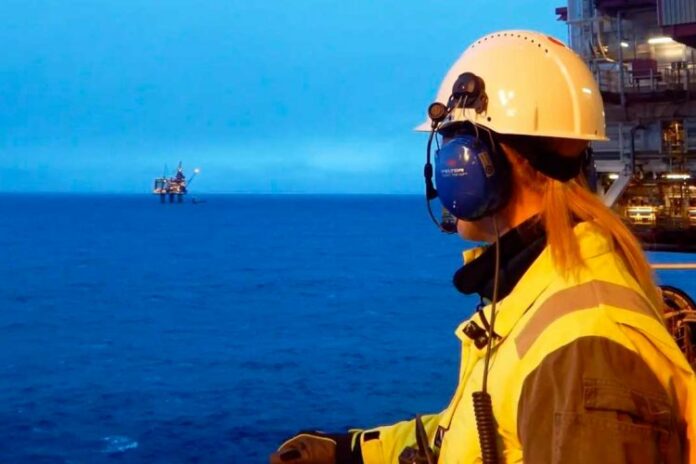
Equinor was awarded 18 production licences in the North Sea, 13 in the Norwegian Sea, and 8 in the Barents Sea. Equinor is the operator of 14 of the awarded licenses, and a partner in 25.

“We are pleased with the award. These licences give Equinor and our partners new opportunities to further develop the Norwegian continental shelf (NCS) as an energy province. We are familiar with the geology and confident that we will make new discoveries,” says Jez Averty, Equinor’s senior vice president for subsurface, the Norwegian continental shelf.

“Continued active exploration is necessary in order to reduce the production decline that will occur on the NCS. Phasing in oil and gas from new discoveries will secure long-term activity and contribute to energy security in the European and UK energy transition,” Averty says.

In Norway, Equinor is the operator of 35 offshore platforms with low production emissions, and processing and export infrastructures that have largely been paid off. Infrastructure-led discoveries can be rapidly developed, at low cost, and with low greenhouse gas emissions from production and transportation.

“We are modernising the infrastructure on the NCS with an eye to the energy transition. Based on our plans for electrification and continued cuts in our own greenhouse gas emissions, the production from new discoveries in brownfield areas will not increase our production and transportation emissions. For discoveries that will require new development solutions, we will aim at technological solutions with low emissions. Equinor’s energy transition plan, committed to cutting emissions in line with the Paris Agreement, also includes phasing in production from new discoveries,” says Averty.

The authorities increased this year’s round of awards by 92 blocks in the northwest of the Norwegian Sea and west of the Barents Sea.

“Equinor’s Snøhvit Future and Johan Castberg projects are underdevelopment in the North. We now focus on exploration to uncover the potential for gas in the Barents Sea, working closely with Vår Energi and Aker BP to explore as much as possible with good rig utilisation,” adds Averty.

Klaveness and Sibelco cooperate to enhance emissions tracking with CargoValue

0

Klaveness Digital has announced a new cooperation with Sibelco, a global leader in mineral solutions, to integrate CargoValue’s advanced emissions tracking capabilities into their supply chain management. 

With an increasing focus on environmental accountability, Sibelco’s commitment to sustainability finds a match in CargoValue’s emissions tracking technology. This integration will enable Sibelco to gain a comprehensive view of their shipping emissions, contributing significantly to their goal of reducing environmental impact across their operations.

“We are thrilled to partner with Sibelco, a company that shares our vision of a more sustainable and efficient maritime industry,” says Aleksander Stensby, CEO of Klaveness Digital. “CargoValue is positioned to support Sibelco in achieving their environmental goals, offering insights into emissions data and helping drive informed decision-making.”

Sibelco will leverage CargoValue to track and analyze greenhouse gas (GHG) emissions from their maritime transportation activities, an integral part of their Scope 3 emissions. This data will be crucial in identifying areas for emissions reduction and in meeting global sustainability standards.

“We recognize the importance of sustainable operations in today’s world.  The joint effort with Klaveness Digital is a stride towards our commitment to environmental stewardship,” said Sustainability CoE Climate Change Expert, Simone Ghio from Sibelco. “The insights provided by CargoValue will be instrumental in enhancing a more sustainable supply chain and better decisions in alignment with our global sustainability objectives.”

Trafigura signs long-term LNG agreement with Tourmaline

0

Trafigura has signed a long-term LNG agreement with Tourmaline, Canada’s largest natural gas producer.

Tourmaline has increased its exposure to JKM by entering into a netback agreement with Trafigura based on 62,500 mmbtu/d of Liquified Natural Gas (~0.5mpta) for a seven-year term starting January 2027, with the potential for extension up to December 2039.

Tourmaline has also expanded its international exposure to include a physical netback agreement with Trafigura Canada Limited which will receive Dutch TTF index pricing. Starting in March 2024, Tourmaline will deliver 50,000 mmbtu/d of natural gas at AB-NIT and receive a Dutch TTF index price (less associated deductions) until December 2026.

Mike Rose, President and CEO for Tourmaline said:

“We are excited about our recent transaction with Trafigura and the opportunity to expand our exposure to international LNG markets.”

Richard Holtum, Global Head of Gas, Power and Renewables for Trafigura said:

“We’re delighted to build on our relationship with Tourmaline at a time when Canadian gas producers are starting to play a pivotal role in global LNG markets. Today’s agreements support our commitment to these markets and to the growth of our long-term portfolios, while demonstrating our ability to provide innovative, tailor-made solutions and ensuring security of supply for our customers worldwide.”

Wintershall Dea awarded 13 exploration licences on the Norwegian Continental Shelf

0

Wintershall Dea has been awarded 13 exploration licences by the Norwegian Ministry of Energy in the 2023 Award in Predefined Areas (APA) – five licences as operator, and eight as partner.

Wintershall Dea has been an active and successful explorer in recent years, participating in 19 discoveries since 2019. Most of these are the result of licences awarded in previous APA rounds.

“The annual APA licensing rounds are crucial for our continued growth and investment on the Norwegian Continental Shelf. In terms of our operated fields, in the last two years we have begun production on Dvalin and Nova, and we will start production on Dvalin North and Maria Phase 2 in the coming years. Most of these developments began with our gaining of licences through awards in previous APA rounds. The continued development of fields ensures that we can supply much needed gas to Europe and especially Germany, where Norway was the most important gas supplier in 2023,” said Michael Zechner Wintershall Dea Norge Managing Director.

The licence awards are divided as follows:

  • Three in the North Sea (one as operator) and ten in the Norwegian Sea (four as operator). 
  • Nine of the awards are new licences, and four are area extensions to existing licences.

The awarded licences are all located in core areas, supporting Wintershall Dea’s strategy of investing in exploration near existing owned infrastructure.

“Exploring in mature areas where we have a presence means we are already familiar with the geology, thus maximising our chances of making a discovery. Meanwhile, proximity to existing assets means discoveries with lower volumes can still be commercially developed, since they tap into existing infrastructure,” said Roy Davies, Wintershall Dea Norge Vice President for Exploration.

The Norwegian Sea awards are located in the Vøring Basin, where Wintershall Dea has a stake in the Aasta Hansteen field, and the Haltenbanken area, where Wintershall Dea is the operator of the Maria and Dvalin fields. In the North Sea, the awards are located in the Q35 area, close to the Wintershall Dea operated Nova and Vega fields, and the Tampen area close to the Snorre field where Wintershall Dea is a partner.

Damen Shipyards to supply four fully electric, passenger car ferries to British Columbia

0

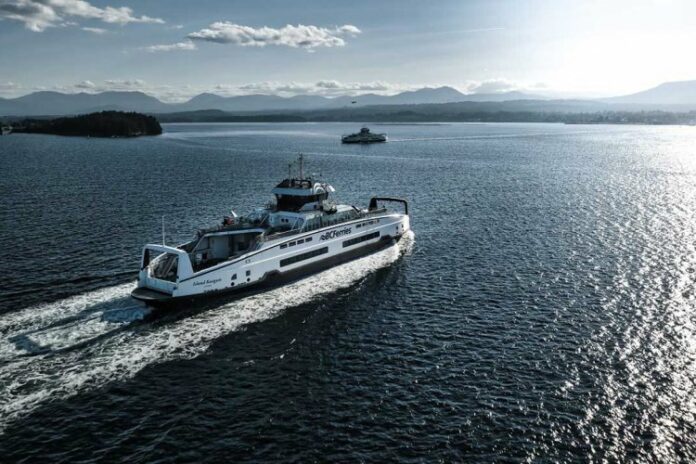
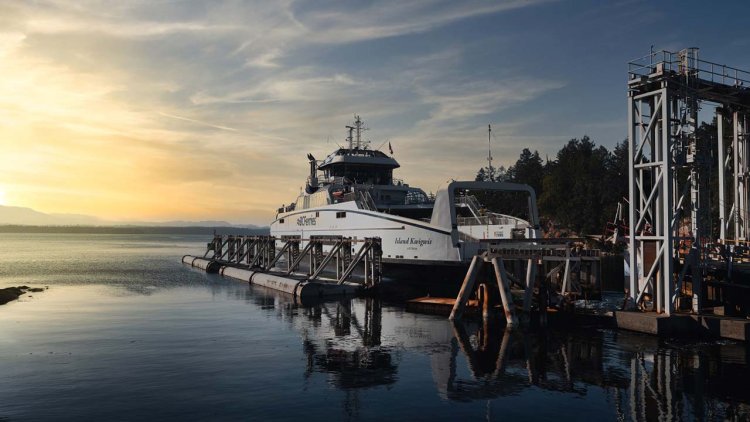
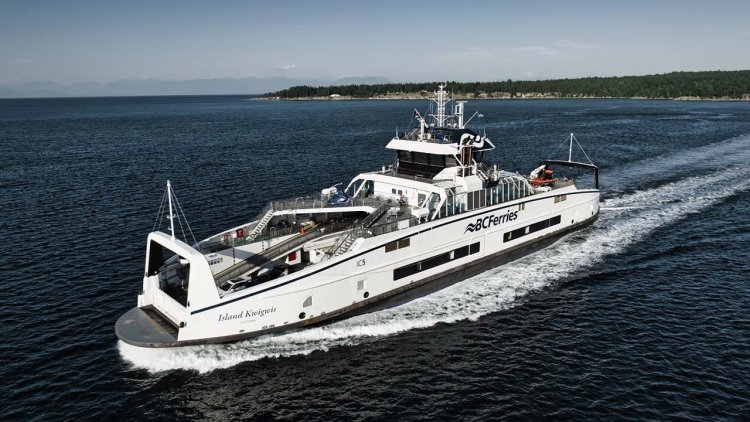
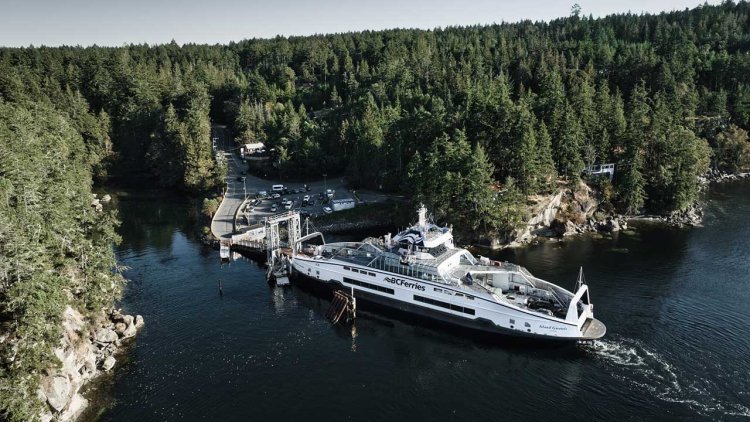
These will be used for short-range services in the coastal waters of the Canadian province of British Columbia (BC). This order will take the total number of ferries that Damen has supplied to BC Ferries in recent years to ten. However, these latest additions will be the first to operate using 100% electrical power. 

The vessels will be based on Damen’s double-ended Island-class RoRo 8117 E3 model. Each will be capable of carrying up to 47 vehicles and 390 passengers. Battery packs with a capacity of 2,000 kilowatts will supply the electricity for the power trains. Rapid recharging using renewable electricity will take place while the ferries disembark and embark their passengers and vehicles at each end. Each vessel will also have auxiliary diesel engines installed for back-up and general redundancy.

The shoreside charging equipment will also be supplied by Damen. A leader in this field, this will be the fourth time that Damen has provided this service, the first also being in Canada, in 2021, to support two hybrid Damen ferries delivered to the Ministry of Transportation, Ontario. These were followed by projects in Copenhagen, Denmark, and Dordrecht, the Netherlands.

“The new hybrid electric vessels will further standardize our fleet, both increasing capacity and improving our flexibility to move ships across routes so our passengers can have confidence that we’ll get them where they need to go,” said Nicolas Jimenez, BC Ferries’ President and CEO. “Adding more Island Class vessels will also make it easier to deploy crew, create efficiencies in training costs, and promote safe, reliable and environmentally conscious ferry services up and down the coast.” 

Leo Postma, Damen’s Area Director Americas, added: “We are very excited and extremely pleased with the award of an order of four more Island Class type vessels for BC Ferries. We have been working alongside the technical staff at BC Ferries for seven years now and together we have developed a series totalling ten ferries that are highly efficient; meeting all the future requirements of safe, reliable and sustainable waterborne public transport.”

The four vessels are scheduled to begin operations by 2027 with two vessels each on the routes connecting Nanaimo Harbour and Gabriola Island, and Campbell River and Quadra Island.

Odra floating offshore wind project: Environmental Impact Assessment submitted

0

The Environmental Impact Assessment (EIA) procedure has begun for Odra Energia, the floating offshore wind project that the partnership between Renantis and BlueFloat Energy plans to develop off the southern coast of the province of Lecce, Italy. 

After a year-long study and research phase, the EIA study was submitted to the Ministry of the Environment and Energy Security (Mase), and the Ministry of Culture (MiC). The EIA study comprises a set of documents detailing the intended project hypothesis, and this will be published for public consultation in the coming weeks.

In 2021, the partnership began a voluntary environmental scoping process, opening the project to the observations of local authorities, associations, and other local, regional, and national stakeholders. This has facilitated closer alignment with the expectations of the local communities and has resulted in several project adjustments, such as a 30% increase in the distance of the proposed wind farm from the coast compared to initial plans, and a reduction in the number of turbines to be located in the first rows.

The project has been designed to maximise the production of energy from the wind resource in the open sea, where it is more abundant and stable than on land. It will produce clean energy while reducing the onshore footprint that an onshore wind farm would make , limiting the footprint to infrastructure works related to the grid connection. Floating marine technology has a less invasive impact on the seabed compared to fixed bottom structures thanks to the floating platforms that adapt to site conditions.

The project proposes 90 floating wind turbines for an expected maximum installed capacity of about 1,300 megawatts (MW) and an expected production of about 4 TWh/year. This is equivalent to the consumption of more than one million Italian households, avoiding more than two million tonnes of carbon dioxide emissions into the atmosphere per year. The overall investment in project construction and development is estimated at more than 4 billion euros.

The benefits of this project go beyond the security of domestic energy supply and contribution to the decarbonisation target. Positive effects are expected on local economies, both during the construction and operation phases, with further indirect opportunities in other related sectors. Around 1,500 direct jobs are expected through the wind farm’s manufacturing, assembly and construction phases, with up to 4,000 during peak activity periods, and more than 150 permanent jobs estimated for the entire lifespan of the wind farm, estimated at 30 years. The partnership continues to explore further opportunities for local economic development jointly with local communities, stakeholder groups, representatives of local industries, Port Authorities, as well as with fishing associations.

“The months leading up to the finalisation of the Environmental Impact Assessment Study,” commented Ksenia Balanda, General Manager of Renantis-BlueFloat Energy Partnership for Italy, “made it possible for us to optimise the project through the dedicated environmental and engineering campaigns that we conducted, both onshore and in the open sea. The result is a project that is technically feasible and optimal, while being environmentally sustainable and contributing to the local economy growth.

TenneT certifies Ecowende grid connection

0

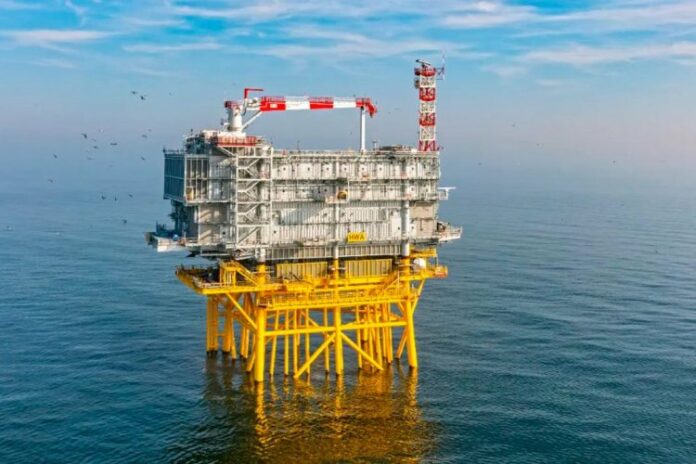
After extensive preparation and three years of construction on land and sea, the grid connection for Hollandse Kust (west) Alpha is officially ready for commissioning. This means that wind farm operator Ecowende can connect the wind turbines, which will be located about 50 kilometers off the coast of Egmond aan Zee, to grid operator TenneT’s ‘socket’ at sea.

Whereas completion was scheduled for the first quarter of 2024, TenneT received the grid readiness certificate from DNV before the holidays in 2023. This makes the grid connection of the ‘socket at sea’ to the national electricity grid officially ready for use after a series of extensive tests. Via the cable connection coming ashore at Heemskerk/Wijk aan Zee, power has been put on this new part of the grid from the high-voltage substation along the A9 near Beverwijk.

“With this, we finished three months ahead of schedule,” TenneT interface and system integration manager Anne-Marie Taris announced. She is responsible for the system integration and flawless cooperation of the transformer station in Wijk aan Zee, the underground (sea) cable connection and the platform at sea. “A fine achievement that the Equans/Smulders contractor combination can also be proud of. Both the teams at sea and on land have done a great job in recent months.”

In 2016, the national government designated TenneT as the offshore grid operator. This means that TenneT will connect the new offshore wind farms to the national high-voltage grid. The Ministry of Economic Affairs and Climate commissioned five standardized grid connections of 700 megawatts by 2024. A connection from sea to land has been completed every year since 2019.

Taris: “In the Energy Agreement ten years ago, it was agreed that by the end of 2023 at least 4.5 gigawatts of installed capacity for wind at sea had to be realized. That is equivalent to the annual consumption of five million households. That assignment has been achieved on schedule and on budget by all parties involved. Earlier than planned, grid connection number six has now been added with Hollandse Kust (west) Alpha.”

Last September, the more than 3,600-ton superstructure (topside) of the offshore socket was placed on the undercarriage (jacket). Almost two years earlier, the first steel cut took place in Antwerp for this second transformer platform built by Equans/Smulders for TenneT. Sustainable electricity is already being brought ashore from the first platform for wind farm Hollandse Kust (north).

Following the installation of the topside, a hotel ship was placed next to the platform so that the Equans/Smulders team could carry out the welding work and further installation. Earlier, Jan de Nul Group and LS Cables installed the two sea cables that will soon bring the green power ashore in 2023. “Despite the challenging weather conditions of recent times, we managed to perfectly complete the installation of the platform and all the test work for the connection in a timely manner,” Taris said.

Now that the grid connection is ready for use, the wind farm operator Ecowende (a joint venture between Shell and Eneco) can connect the wind turbines in the offshore wind farm as soon as they are built. With an installed capacity of about 760 megawatts, Ecowende is going to green about 3% of the current Dutch electricity demand in the coming years.

Fratelli Cosulich orders its first methanol dual-fuelled bunker tanker

0

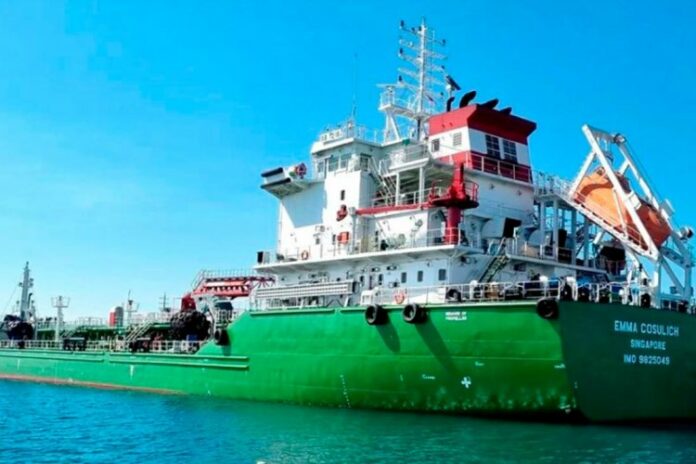
Fratelli Cosulich Group has announced that on December 15, the Company placed an order for its first methanol dual-fuelled chemical bunker tanker. The 7,990 dwt IMO Type II chemical vessel will be built at Taizhou Maple Leaf Shipbuilding Co., Ltd in China. With a capacity of over 8,000 m3, its cargo tanks will be coated to enable carrying both green methanol and biofuels.

The vessel will be delivered in the last quarter of 2025 and will be located at the Port of Singapore under a fixed-rate time charter contract with global commodities trader Trafigura. It will be deployed to deliver marine fuels for TFG Marine, Trafigura’s international marine fuel supply and procurement joint venture with shipowning companies Frontline Ltd and Golden Ocean Group Ltd. Fratelli Cosulich Bunkers Singapore will oversee the technical management and operations of the vessel for TFG Marine.

Green methanol has recently been gaining prominence as a future, viable marine fuel, as the global order book for methanol-fuelled ships has been gaining ground and many shipping companies have included methanol in their decarbonisation strategy.

The Port of Singapore is also undertaking necessary planning to ensure a steady supply of methanol from 2025 onwards in order to meet these future bunkering needs.

“We believe in a multi-fuel future and this is an additional important step by our Group in that direction, after having built two LNG bunker vessels. With this important investment the Group wants to reaffirm its commitment to decarbonisation,” states Guido Cardullo, Head of Business Development of Fratelli Cosulich Group.

“The vessel has been designed to our technical specifications, including stringent safety considerations, so that it can be continually powered by methanol. Delivery of the vessel in the last quarter of 2025 should coincide with growing demand for methanol as a bunker fuel from shipowners,” said Kenneth Dam, TFG Marine’s Global Head of Bunkering. “Deploying a vessel powered by a renewable fuel such as green methanol also helps TFG Marine to meet its licence requirement with and TFG’s commitment to the Maritime & Port Authority of Singapore.”

The vessel will have twin fixed pitch propellers, each driven by an electrical motor via gear box, and three dual-fuelled generator sets supplied by MAN Energy Solutions. An onboard battery storage system will optimise the use of the dual-fuelled generators.