-11.5 C
New York
Home Blog Page 229

Vattenfall connects Danish offshore wind farm to the grid

0

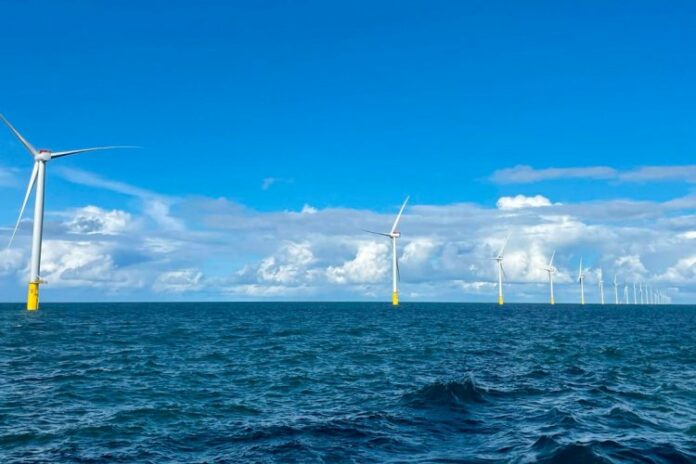
Every single turbine at the offshore windfarm Vesterhav Syd has now supplied the first power and the offshore wind farm is now completely connected to the Danish power grid. The milestone is the culmination of almost seven years’ work on the offshore wind farm.

“At Vattenfall, we are always happy when we finish an offshore wind farm and thereby contribute to fossil freedom. This time, we allow ourselves to be even more happy, since there is a cold winter in Denmark and Northern Europe where fossil-free and reliable electricity is of the essence,” says Mathilde Damsgaard, project director for Vesterhav Syd and Nord at Vattenfall.

Vesterhav Syd’s 20 wind turbines were erected from July to September last year. On 10 November 2023, Vattenfall delivered the farm’s first power. Since then, the turbines have been connected to the grid one by one and the wind farm is now 100 per cent completed.

In 2016, Vattenfall won the tender for Vesterhav Syd with a historically low strike price of 47.5 Danish øre per kWh.

Vattenfall is also operating Vesterhav Nord offshore wind farm approximately 80 kilometers from the southern twin. Vattenfall expects to connect Vesterhav North to the grid during the first quarter this year. Combined, the Vesterhav Syd and Vesterhav Nord offshore wind farms will generate fossil-free electricity equivalent to the consumption of more than 350.000 Danish households.

Launch and recovery procedure for utility scale tidal powerplant Dragon 12 verified

0

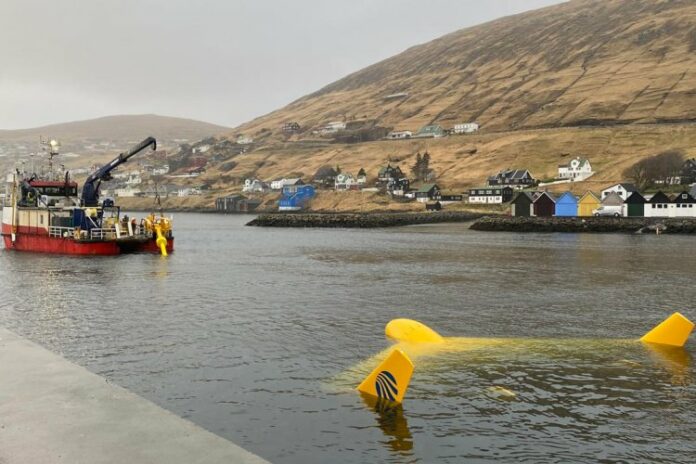
Minesto has successfully executed the Launch & Recovery method (LARS) for the first megawatt tidal kite Dragon 12 (1.2 MW, 25 tons). The operations developed for the Dragon 4 (100kW, 2.5 tons) were proven equally effective with the large-scale kites utilizing the same small work vessel.

The commissioning of the Launch and Recovery System (LARS) of the Dragon 12 has been successfully completed. The scale-up of the powerplant has not required changes in the smaller Dragon 4 kite operation for launch and recovery when applied to the Dragon 12. The D12 is ten times heavier, three times larger, uses a longer tether and is installed at larger water depth. These changes in the kite parameters proved to be fully manageable with the existing LARS method, thus verifying both technical method and assessments of operating costs.

“By efficiently launching and recovering the Dragon 12 for the first time, we have now verified the critical Launch and Recovery System. It is satisfactory that the smaller kite operations are proven effective also with large-scale kites”, said Dr Martin Edlund, CEO of Minesto.

The launch and recovery were respectively done in less than 2 hours elapsed time.

“A complete run-through of the launch and recovery of the Dragon 12 powerplant over the last 24h has successfully verified the core marine operations of our kite-based power plants. This is a truly unique procedure at the core of our competitive LCOE-levels”, said Martin Edlund.

The commissioning of the Dragon 12 continues at site leading to the goal of electricity production.  Operations of the smaller Dragon 4 power-plants will continue in parallel.

Ulstein Verft: Two offshore wind farm CSOV newbuild contracts with J.P. Morgan

0

The contracts have been entered into on behalf of institutional investors advised by J.P. Morgan Asset Management and include two additional options.

In 2023, Bernhard Schulte Offshore ordered the design and construction of two such vessels from Ulstein, a contract which included options for two + two vessels. These options have been transferred to institutional investors advised by J.P. Morgan Asset Management, who declared the first two. 

“We are excited to add to our existing presence in the offshore wind maintenance sector,” commented Andrian Dacy, Global Head of J.P. Morgan Asset Management’s Global Transportation Group.  He added, “These latest technology Construction Service Operation Vessels (CSOVs) will play a critical role in the development and delivery of renewable energy and global energy decarbonization.” 

”The offshore wind industry is an important enabler to achieve the climate goals, and we believe that our fuel-efficient ships will be vital assets in this mission,” states Ulstein Group CEO Gunvor Ulstein. 

The ships have a large, centrally positioned walk-to-work motion-compensated gangway and elevator tower for personnel and cargo transfers. Furthermore, a 3D compensated crane capable of 5-ton-offshore-cargo lifts is installed. The optimized on-board logistics includes large storage capacities and stepless approach to the offshore installations.  

The vessels have a length of 89.6 m and a beam of 19.2 m. The ULSTEIN SX222 design platform is adapted to the shipowner’s needs, including single cabins for 110 persons. In total, the vessels will be able to accommodate 132 people. The ships will have hybrid battery propulsion and be prepared for methanol fuel to enable carbon-neutral operations. They are flexible and attractive for work within areas such as O&M (Operation and Maintenance) or construction support, especially in challenging weather and sea conditions. 

BAE Systems to provide critical Mk 45 upgrade to Australian Navy frigates

0

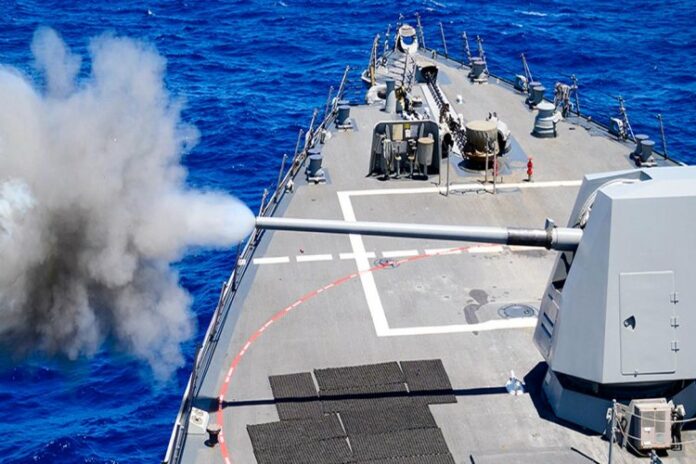
BAE Systems was awarded a contract by the Commonwealth of Australia to upgrade existing Mk 45 Mod 2 naval gun systems on Anzac class frigates with a Common Control System (CCS).

The CCS upgrade replaces electronics on earlier Mk 45 Mod 1 and Mod 2 gun systems to be compatible with the Mk 45 Mod 4, the latest configuration used by the U.S. Navy. In addition to delivering commonality and interoperability with the U.S. Navy’s gun systems, the upgrade will equip the Mk 45s with the capability to integrate future extended-range precision guided munitions, such as the hypervelocity projectile.

“The Common Control System upgrade is the most cost-effective way to extend the life of Mk 45 gun systems, enabling them to provide critical ship naval fires and creating a configuration that allows for the integration of future precision guided munitions” said Brent Butcher, vice president of weapon systems at BAE Systems. “We are committed to modernizing and equipping allied nations with enhanced Mk 45 gun systems to address current and future threats.”

The cost-effective CCS upgrade ensures that Mk 45 gun systems remain supportable for decades to come and ready to integrate the latest, most innovative technology features to support advanced munitions and future mission capabilities for a significantly lower cost than a new gun.

Work on the contract will take place at the BAE Systems production facility in Louisville, Kentucky with the first delivery planned in early 2026.
 

ABS approves Chinese shipbuilding industry’s first methanol-fuelled Ultramax

0

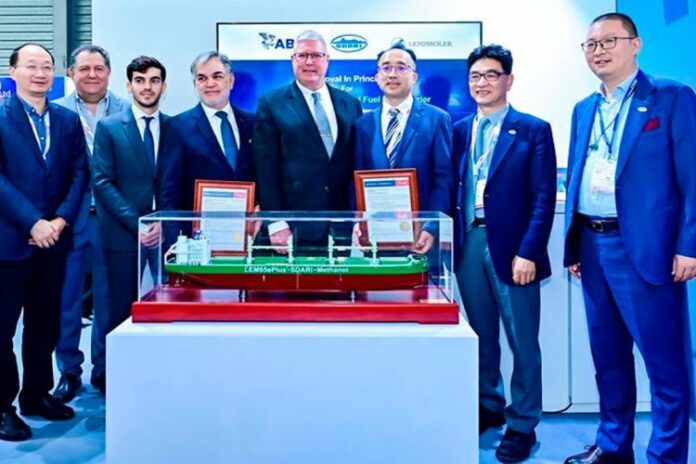
Lemissoler Navigation Ltd. and Shanghai Merchant Ship Design and Research Institute (SDARI) received ABS approval in principle (AIP) for its design of a 65K DWT methanol-fueled ultramax bulk carrier, the first such methanol vessel for China’s shipbuilding industry.

“ABS understands and is deeply involved in supporting clients with decarbonization solutions. Getting to net zero by 2050 is an ambitious target for the industry, requiring more renewable energy options, zero-carbon fuels, carbon-neutral fuels and carbon capture technologies. Lemissoler and SDARI’s new design using methanol is an important piece of the puzzle to create a more sustainable shipping industry,” said Christopher J. Wiernicki, ABS Chairman and CEO.    

The design explores the feasibility of using methanol as fuel to accelerate the reduction of carbon emissions to reach the IMO’s net-zero target by 2050. With the implementation of EU ETS and FuelEU regulations, the vessel, when burning green methanol, will have a greater potential to reduce the cost related to carbon emissions. The vessel has been thoroughly optimized and its preliminary Energy Efficiency Design Index (EEDI) was reviewed and indicated that the vessel exceeds EEDI Phase 3 standards. ABS completed design reviews based on class and statutory requirements.

“We at Lemissoler are once again pioneering new technological and innovative designs for our Dry Bulk fleet. The collaboration with SDARI and ABS is proof of how much can be achieved collectively. This new evolutionary design is another step toward Lemissoler’s target to become net zero by 2045,” said Philippos Philis, Chairman and CEO of Lemissoler Navigation Ltd.

“As the designer of this innovative methanol-fueled vessel, SDARI is always committed to the tailor-made and practical solutions for customers’ demands, offering an optimized design to satisfy future maritime rules and regulations,” said SDARI Vice President Zhou Zhiyong.

Port of Oakland, Parsons and partners launch new app

0

Parsons Corporation joins the Port of Oakland, California, Advent eModal, Mobile Programming and key stakeholders to announce the launch of the Freight Intelligent Transportation System (FITS) at the Port.

Since 2020, Parsons has worked closely with the Alameda County Transportation Commission (CTC), Port staff, the City of Oakland, the California Department of Transportation, and subcontractors including Advent eModal, Mobile Programming, Elite Transportation Group, Kalmar, Wisetech Global, QuayChain, Bear Electric, and Iteris, to develop and implement the FITS solution. Construction and system integration is now complete, and the Port of Oakland is entering the ongoing operations and maintenance (O&M) phase.

“This has been a true team effort, and we are grateful to the Port of Oakland as well as all of the partnering agencies and subcontractors who joined us in delivering this revolutionary smart port system,” said Mark Fialkowski, president, Infrastructure North America for Parsons. “We look forward to continuing our work with the Port and partners to enhance the efficiency and reliability of goods movement in the seaport area, empowered by the company’s proven integrated traffic management solutions.”

Parsons’ award-winning advanced traffic management software (ATMS) solution, iNET®, integrates with an enhanced version of the SecūrSpace smart parking system and a new custom GoPort website and mobile application for iOS and Android, to create a fully functional operating system. This system combines innovative technologies to improve the efficiency, safety, operations, circulation and reliability of truck and rail access.

“The launch of the Freight Intelligent Transportation System is a bold new step forward for the Port of Oakland,” said Port of Oakland Maritime Director, Bryan Brandes. “This gives us real-time visibility on goods movement. Our customers will be able to move cargo through the port more efficiently and securely. We appreciate our partners who have worked to implement this critical technology at the Oakland Seaport.”

“Congratulations to Danny Wan, executive director, Bryan Brandes, director of maritime, and the dedicated Port of Oakland team on this great achievement,” said David Casey, senior vice president of commercial strategy with Advent eModal. “The port community and broader supply chain ecosystem stand to benefit from this collaborative initiative, driven by the Port’s leadership. We look forward to working alongside Parsons, the Port, and the other subcontracting providers to turn this visionary project into a reality.”

“This collaboration between the Port of Oakland, Parsons, Advent, and Alameda CTC represents a strategic alliance set to redefine transportation management through our cutting-edge Oakland Portal Mobile App and Website,” said Ishwari Singh, CEO of Mobile Programming.

Now entering the next phase of the project, the Port of Oakland has selected Parsons and its team to provide operations and maintenance of the FITS program. The five-year contract will expand the tasks of Parsons’ existing role as the FITS system integrator to include 24/7 operations and maintenance for the FITS devices and applications.

In addition, Parsons and its partners will leverage artificial intelligence with video and data analytics to predict freight wait times and develop predictive models around road blockages at train crossings. The data collected will also be used to create customized dashboards for custom border protection and port shipment tracking.

Parsons’ iNET® is the Smart Mobility Platform that cities, states, and municipalities around the world rely on to help improve the management, efficiency, and safety of their transportation networks. With more than 100 cutting-edge deployments, Parsons’ technologies connect thousands of devices and traffic signals to help improve mobility.

Provaris engages DNV for H2Neo carrier FEED review

0

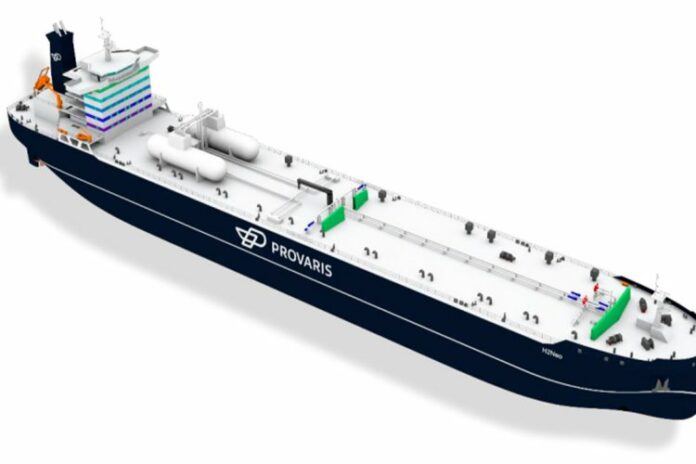
Provaris Energy has engaged DNV for the review and approval of its H2Neo carrier’s proprietary hydrogen cargo containment system.

DNV will leverage their long-term experience with maritime storage and deep understanding of the transportation of numerous gases in compressed and liquid forms with resources from its Gas Carrier Excellence Centre throughout the construction and testing process. DNV also have intimate knowledge of, and experience with, Prodtex’s manufacturing processes and capabilities for complex steel structures, allowing for an effective collaborative effort to successfully execute on the multilayered welded steel plates required in the Prototype Tank construction and testing program. Construction remains on track to commence in Q1 CY2024 with completion expected by the end of Q2 CY2024.

Provaris will work together with DNV to qualify the H2Neo design and hydrogen containment tanks. Additional parties involved in the work program located in Norway include Prodtex AS for construction and SINTEF, who will be responsible to perform the prototype testing and reporting.

Provaris’ Chief Technical Executive Officer, Per Roed commented:

“The Prototype testing program is an exciting phase of our technical and H2Neo approvals program. We continue to see an increasing demand for safe and cost-effective solutions to store and transport gaseous compressed hydrogen, and to be able to validate our proprietary solution through Prototype testing can be a game changer to unlocking a significant market opportunity. Our focus has been to establish a strong team of contributors and partners on this journey, and the engagement of DNV will further strengthen the N2Neo Class approval.”

DNV’s Global Business Director Gas Carriers, Martin Cartwright added:

“Transporting hydrogen securely and efficiently is going to be one of the linchpins of the energy transition. To make sure that this market can really take off, we need to draw on the lessons we have learned from other fuels and build from a sound technical foundation. This is why we are very pleased to be working with Provaris, bringing DNV’s experience, expertise, and cooperative spirit to help them deliver this innovative concept.”

The H2Neo carrier received FEED design approval in December 2022, with final approval for construction subject to the completion of a prototype of the proprietary containment tank design being constructed and tested to the satisfaction of Class requirements.

OOCL introduces the first eco-friendly 24,188 TEU vessel in 2024

0

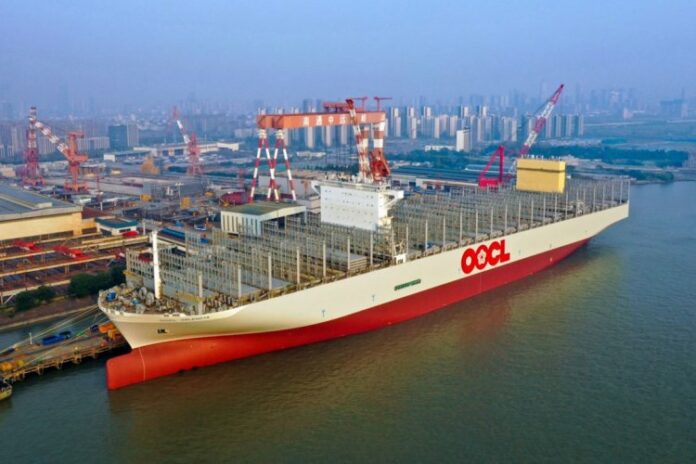
Orient Overseas Container Line Ltd. (“OOCL”) has introduced another new 24,000 TEU mega vessel.

The newest member in OOCL’s fleet was named “OOCL Valencia” in the ceremony held at Nantong COSCO KHI Ship Engineering Co., Ltd. (NACKS) shipyard today. She is the seventh eco-friendly 24,188 TEU vessel in a series of twelve ordered by OOCL and also the first OOCL new vessel in 2024 that will serve OOCL’s Asia-Europe LL1 service.

OOCL was honored to have Ms. YING Xiuzhen, Director and Vice President of China-Base Ningbo Group Co., Ltd. to name the vessel as “OOCL Valencia” and give her blessings.

Ms. YU Tao, Director and Member of Executive Committee of OOCL, said at the ceremony:

“Last year, OOCL received a total of six new container vessels and thus rapidly optimized the fleet structure of both OOCL and the group. In the new year, in addition to the OOCL Valencia, more high-quality and high-performance ships will sail from here. OOCL and NACKS will continue to work for win-win cooperation, grow together, and strive to create value for customers and society. Back by the spirit of ‘take it personally’, OOCL continues to serve as the vital link to global trade, actively respond to the future challenges, and strive to providing customers with better and greener end-to-end integrated logistics and supply chain solutions, which will contribute to the construction of a world-leading shipping technology enterprise for the group.”

Meratus Line’s SBON service starts calls to EJMT

0

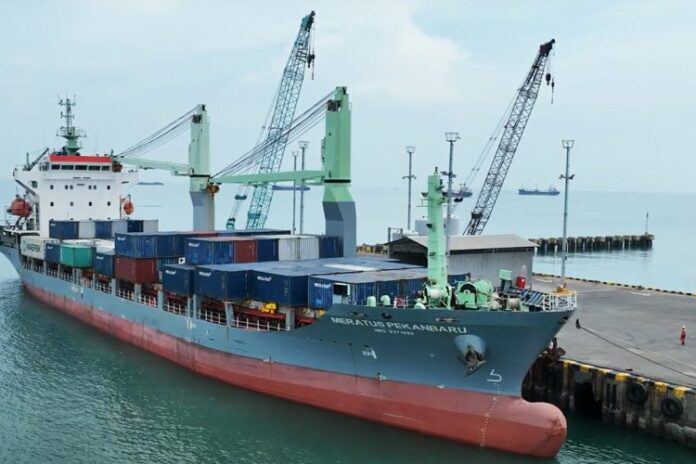
East Java Multipurpose Terminal (EJMT), International Container Terminal Services, Inc.’s (ICTSI) operation in Lamongan Regency, Indonesia, received the inaugural call of Meratus Line’s SBON service on Sunday, 3 December.

The weekly domestic service is operated by two 629-TEU multipurpose vessels and calls the Indonesian ports of Surabaya, Makassar, Ambon and Lamongan. The recent addition of Lamongan to the port rotation provides customers from the Lamongan and Tuban area with access to the Makassar and Ambon markets. 

“We congratulate Meratus Line on the newly added Lamongan port call to their SBON service. With the new service calling at our terminal, it will provide our surrounding customers with closer port access and an empty depot located in the same facility that allows trucks to complete two-way running with containers. Hence, we expect a reduction in their transport costs and overall carbon emissions,” said Patrick Chan, EJMT chief executive officer.

The collaboration between EJMT and Meratus Line is aligned with the latter’s goal of enhancing connectivity in Indonesia and enabling industry owners to expand their businesses. 

“Seeing the potential for Lamongan to become a new industrial center in East Java, we aim to consistently support these plans and strategic developments by streamlining logistics,” explained Budi Pranoto, Meratus Logistics chief commercial officer.

EJMT is currently building a new multipurpose facility that consists of a new breakwater, a 300-meter quay line, a 500-meter swinging basin, two post-Panamax mobile harbor cranes, various cargo handling equipment and a 13.5-meter draft. The project is scheduled for completion in September 2024.

Noatum Terminals acquires APM Terminals Castellón

0

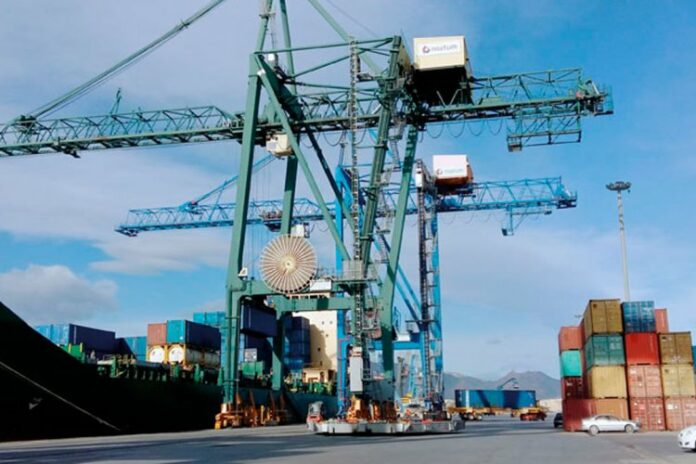
AD Ports Group announces that Noatum Terminals, the terminals operations business of Noatum Group, has acquired 100% ownership of APM Terminals Castellón in Spain for a total purchase consideration (Enterprise Value – EV) of EUR 10 million.

The agreement, which was reached with APM Terminals, has obtained all regulatory and stakeholder approvals and the change of ownership will take place effective immediately. In parallel, a long-term agreement with the stevedoring union has been achieved which will assure stability and high productivity in the coming years.

Noatum Terminals’ investment in Castellón, where it has already been managing a multipurpose terminal since 2004, is part of its strategy to consolidate its position in Spain. The acquisition follows various improvements implemented at Noatum Terminal Castellón, aimed at modernising and maintaining existing facilities and equipment.

With the acquisition of APM Terminals, Noatum’s combined capacity at Castellón is 250,000m2 in size and an annual capacity to handle 250,000 TEUs, representing around 70% of the container volume capacity of the Port of Castellón. Furthermore, the two terminals, which can also handle 2 million tonnes of bulk cargo alongside RoRo, are connected via direct rail links to the hinterland and serve the Mediterranean, Middle East, and North Africa regions – thereby positioning the port to be more competitive in capturing volumes and serving various industry sectors. It is also worth mentioning that the Castellón region holds the world’s largest tile production, with 80% of its production destined for export.

The acquisition allows Noatum Terminal Castellón to expand its operational capacity for bulk, general cargo, and container processing while maintaining APM Terminals’ third-party services and agreements at this location.

Joaquin Ramon Lestau, CEO of Noatum Terminals, Noatum, Logistics Cluster, AD Ports Group, said:

“With this acquisition, we strengthen our position as a leading multipurpose port operator in the Western Mediterranean region. Noatum Terminals is committed to providing dedicated service, in line with the Noatum Group’s quality standards, to both existing and new customers, while making the necessary investments for the terminal’s operations to run smoothly and efficiently well into the future.”