-7.4 C
New York
Home Blog Page 226

BV Solutions M&O delivers its web application to Brittany Ferries

0

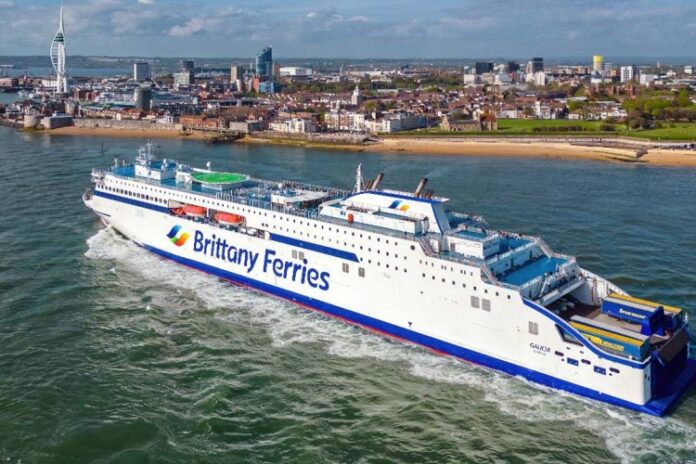
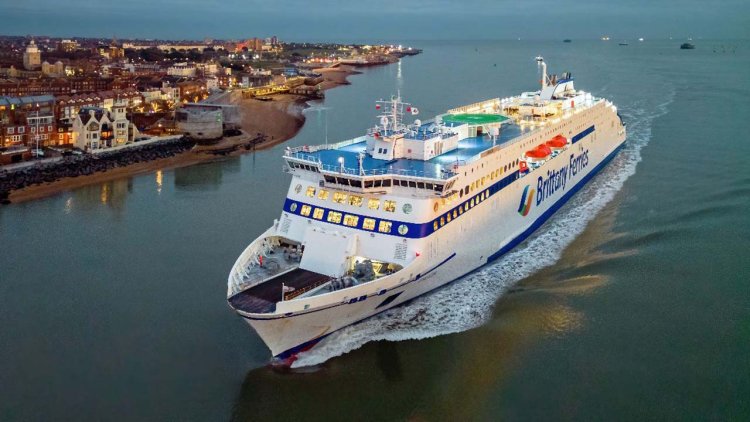
Bureau Veritas Solutions Marine & Offshore (BV Solutions M&O) has developed and now delivered a ‘Fleet Energy and Emissions Forecast’ tool to Brittany Ferries, the European Ferry operator with routes between France, the United Kingdom, Ireland and Spain.

Brittany Ferries approached Bureau Veritas Solutions (BVS), the technical advisory component of Bureau Veritas Group, looking for support in forecasting performance, fuel consumption and greenhouse gas emissions across their fleet. Brittany Ferries wanted each department to be able to meet CII and EU ETS requirements and, in the longer term, to map out the most efficient vessel utilisation, capacity planning, route planning, retrofit scheduling, timetabling and voyage management fleet-wide. 

Focused on the key metrics of vessel speed and fuel consumption, BVS developed a new application and, working with Brittany Ferries, tested its effectiveness. The Fleet Energy and Emissions Forecast tool, which is web-based and uses a theoretical approach validated and calibrated by actual performance data, models the fuel consumption and emissions for every ship. BVS developed ship-specific energy models which, combined with ports and route data, enable forecasting adapted to the decision making process.

Brittany Ferries can now use the application independently, adjusting parameters to develop detailed scenarios that enable its teams to plan for fleet-wide optimised and efficient operations, thereby reducing fuel consumption, emissions and costs. 
Brice Robinson, Manager Naval Projects dept., Brittany Ferries said:

“Forecasting is crucial in the decision-making process. This web application gives us the confidence to model and plan individual ship energy requirements and, vitally, make decisions to manage our greenhouse gas emissions and operating costs for different ship and fleet scenarios. We recognise and are excited by the benefits delivered by the BVS web application to optimise route planning to maximise performance and minimise our fuel costs.”

Laurent Verney, BVS France Director, Bureau Veritas Solutions Marine & Offshore said:

“We are proud to work together with Brittany Ferries on this great project, which uses the latest advances in digital and modelling tools to deliver efficient and sustainable operations. This partnership has brought together our digital expertise with key insights and validation from Brittany Ferries, whose pioneering spirit, enthusiasm and energy were critical success factors in delivering this real-life digital decarbonisation solution.”

In parallel to this development BVS has worked and is continuing to work with Brittany Ferries to support operational decision-making with an advanced weather routing solution from software provider Adrena, which was developed with a common R&D process based on CFD calculations and BV’s SEECAT ship energy modelling software.
SucroCan Sourcing and HOPA Ports announce plan to build Canada’s largest sugar refinery

0

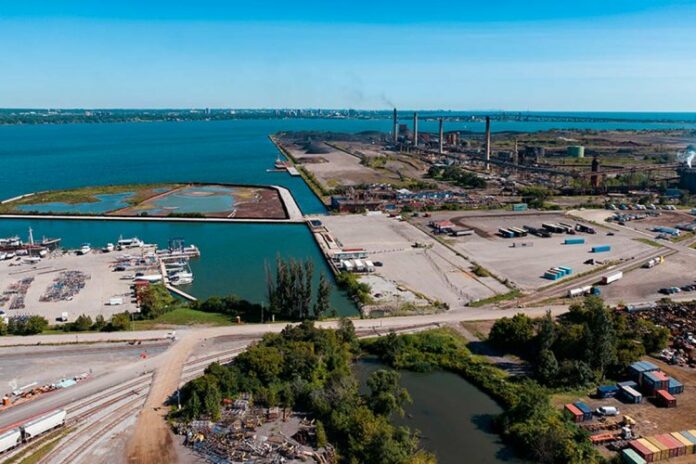
SucroCan Sourcing LLC, a growing integrated sugar refiner, has announced its plans to build Canada’s largest sugar refinery at the Port of Hamilton, Ontario, on lands owned by HOPA Ports (Hamilton-Oshawa Port Authority).

The new refinery will be the largest in Canada, with an expected future annual refining capacity of 1 million metric tonnes, representing an estimated investment of $135 million CAD.

“The sugar markets in both Canada and the United States are experiencing steady, long term, sustainable growth, and Sucro is investing to supply these growing market demands,” said Jonathan Taylor, Founder and CEO of SucroCan Sourcing. “We have a customer base that is loyal and growing, benefiting from the new competition we are bringing to the market.”

“Despite steady demand from an expanding food processing sector, overall refining capacity in both Canada and the United States has been stagnant for years”, said Taylor. “Especially in Ontario, where the demand for sugar is growing at one of the fastest rates in North America.”

SucroCan’s focus on improving its customers’ supply chains is one of the keys to its success, and a key reason for choosing the Port of Hamilton as the location for its new refinery.

“HOPA Ports is thrilled to be working with SucroCan to make this historic investment a reality,” said Ian Hamilton, President & CEO of HOPA Ports. “We worked closely with SucroCan to understand its location and logistics needs, and those of its customers. The new refinery in the heart of southern Ontario’s food processing cluster, has access to marine, rail and highway transportation options. The facility’s new capacity and reliability will give Ontario food processors the confidence to invest in their own operations. For us this is a huge win: driving a resilient and efficient supply chain, growing the economy and creating jobs.”

Maersk and Hapag-Lloyd are entering into an operational cooperation

0

Hapag-Lloyd and Maersk A/S, an entity under A.P. Moller – Maersk (Maersk), have signed an agreement for a new long-term operational collaboration called ”Gemini Cooperation”, which will start in February 2025. The ambition is to deliver a flexible and interconnected ocean network with industry-leading reliability.

“Teaming up with Maersk will help us to further boost the quality we deliver to our customers. Additionally, we will benefit from efficiency gains in our operations and joint efforts to further accelerate the decarbonisation of our industry,” says Rolf Habben Jansen, CEO of Hapag-Lloyd.

The new cooperation between Hapag-Lloyd and Maersk will comprise a fleet pool of around 290 vessels with a combined capacity of 3.4 million containers (TEU); Maersk will deploy 60% and Hapag-Lloyd 40%.

“We are pleased to enter this cooperation with Hapag-Lloyd, which is the ideal ocean partner on our strategic journey. By entering this cooperation, we will be offering our customers a flexible ocean network that will be raising the bar for reliability in the industry. This will strengthen our integrated logistics offering and meet our customers’ needs,” says Vincent Clerc, CEO of Maersk.

As a part of the agreement, the two companies have set the ambitious target of delivering schedule reliability of above 90% once the network is fully phased in. As well as improved service quality, customers will also benefit from improved transit times in many major port-to-port corridors and access to some of the world’s best connected ocean hubs.

Both companies are committed to the decarbonisation of their fleets and have set the most ambitious decarbonisation targets in the industry with Maersk aiming for net-zero in 2040 and Hapag-Lloyd in 2045.

As a consequence of joining this cooperation, Hapag-Lloyd will leave THE Alliance end of January 2025. In January 2023, Maersk and MSC announced that the 2M alliance will end in January 2025.

During 2024, Maersk and Hapag-Lloyd will carefully plan the transition from their current alliances to the new operational cooperation. Concurrently, service to customers will continue along existing agreements.

Further details about ”Gemini Cooperation”, including the new vessel schedules, will be announced in due course once available.

“Gemini Cooperation” will be a long-term operational cooperation starting in February 2025. Both companies will provide dedicated operational teams to manage the cooperation

Both Hapag-Lloyd and Maersk can flexibly adjust their operations outside the network to scale capacity in line with their customers’ needs

As a part of the agreement, the two companies have set the ambitious target of delivering a schedule reliability of above 90% once the network is fully phased in. This objective is backed by a strong governance model and contractual obligations

“Gemini Cooperation” will leverage Hapag-Lloyd and Maersk’s combined unparalleled global networks and terminal presence, and the extensive logistics expertise of our teams. The cooperation comprises around 290 vessels with a combined capacity of 3.4 million containers (TEU); Maersk will deploy 60% and Hapag-Lloyd 40%

The cooperation will cover 7 trades: Asia / US West Coast, Asia / US East Coast, Asia / Middle East, Asia / Mediterranean, Asia / North Europe, Middle East – India / Europe and Transatlantic

”Gemini Cooperation” will comprise of 26 mainline services. The mainline ocean services will be complemented by a global network of dedicated shuttles centered around owned and/ or controlled transshipment hubs – thereof 14 shuttle services in Europe, 4 in the Middle East, 13 in Asia and 1 in the Gulf of Mexico. These shuttle services will offer a fast connection with flexible capacity between hubs and ports served by shuttle services, and vice versa.

Snøhvit Future contract will generate 200 person-years of employment in the north

0

On behalf of the Snøhvit partners, Equinor has awarded a substantial construction and installation contract worth some NOK 1.5 billion to Leonhard Nilsen & Sønner (LNS). 

LNS is headquartered in Andøy in Nordland county, and the contract will generate spinoffs for Finnmark, Troms and Nordland.

“We are pleased to award this contract to a company in Northern Norway. LNS estimates that around 70 percent of the generated value will end up in Northern Norway, creating about 200 person-years (FTEs) of employment. For Equinor, it has been important that the Snøhvit Future project should create ripple effects throughout the region,” says Trond Bokn, Equinor’s senior vice president for project development.

The Snøhvit Future project will strengthen Norway’s position as a reliable long-term supplier of gas produced with very low greenhouse gas emissions. The project will secure jobs in the north and energy supply to Europe towards 2050.

The project partners are Petoro, TotalEnergies, Neptune Energy and Wintershall Dea.

LNS will build a tunnel and landfall for the power cable that will run from Hyggevatn to Melkøya, in other words, an infrastructure allowing power from Statnett’s transformer substation at Hyggevatn to be transmitted to Hammerfest LNG on Melkøya.

As specialists in tunnelling, LNS has delivered several large-scale projects both in Norway and abroad, and construction work will start once the necessary approvals/permits have been received.

First newbuilds delivered to Baltnautic Holdings

0

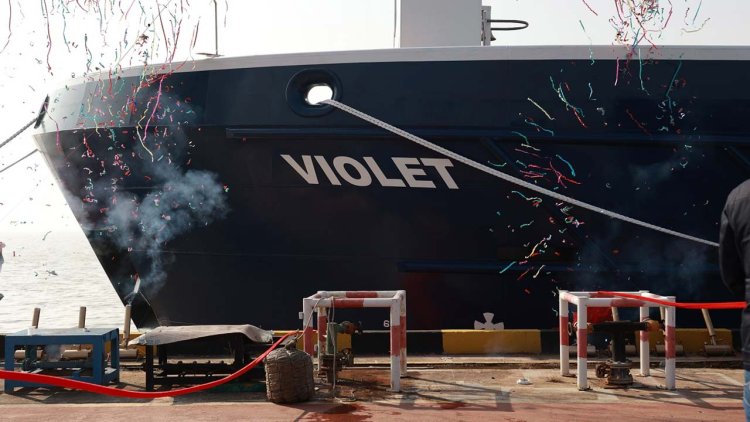
2024 is off to a good start with the successful delivery of a second Damen Combi Freighter 3850, Violet to Baltnautic Holding B.V, following the handover of the first vessel, named Indigo, just nine days earlier. The ceremony took place on the 11th of January in Shanghai, China. 

Both vessels were built at Damen Yichang Shipyard in China as a part of a highly successful programme of the Combi Freighter series built at the shipyard in the last three years. Indigo and Violet are the 18th and 19th vessels delivered. The third Combi Freighter for Baltnautic Holding B.V. is currently under construction at the same yard and is set to be delivered in November this year.

The vessels are being delivered to Europe to meet the needs of Baltnautic Holdings’ customers who are exploring new business opportunities, and to support the company in establishing a stronger global presence. In this way Indigo and Violet will contribute substantially to the modernisation and overall growth of the company. 

Coincidentally, both Damen Yichang Shipyard and Baltnautic celebrated their 25th anniversary in 2023 and the two companies enjoy a great synergy as well as sharing a significant milestone in their development. 

“We are glad and proud to have participated in the official delivery ceremony of our second new vessel, built by Damen Yichang Shipyard for us. They are the first new builds in the history of Baltnautic Holding B.V., which makes this moment very important for us. And what makes this moment even more special and one that we are especially proud of, is that these new vessels have been made for us by the famous and worldwide-recognised Damen Group of Shipyards,” said Igor Kuzminov, Deputy Director.

“It is a great honour for us to be present here in Shanghai on behalf of Damen Shipyards together with our honourable client Baltnautic Holding B.V. on the occasion of the ceremonial delivery of the remarkable dry cargo vessel type Combi Freighter 3850 Violet”, added Vadim Akimov, Sales Director for Damen Shipyards. “This event symbolises the culmination of hard work, dedication, and collaboration of all the parties involved.” 

Vår Energi awarded 16 new NCS licenses

0

Vår Energi is offered licenses in the North Sea, the Norwegian Sea and the Barents Sea – most of them in areas close to existing infrastructure, supporting the company hub strategy. 

Rune Oldervoll, Vår Energi EVP Exploration & Production is pleased with the results:

“I’m pleased to see that we are offered licenses in all our key areas on the Norwegian Continental Shelf. We continue to build our diversified portfolio and strengthen our position as a leading operator – especially in the north. All licenses support our long-term growth strategy and give us continuity in our work to develop opportunities and create value.”

Vår Energi is also offered licenses in the western Barents Sea – in a more unexplored area of the Barents region. 

Vår Energi CEO Nick Walker explains:

“In addition to further development in and around existing fields, we are intensifying our work to unlock the hydrocarbon potential in the western Barents Sea – building on our leading exploration track record. Norway is a vital supplier of energy to Europe. Access to new exploration acreage is key to maintaining our long-term position as a reliable supplier.”

Vår Energi is offered following licenses: (op) = operator

  • The North Sea: 4 (1 op)
  • Norwegian Sea: 5 (1op)
  • Barents Sea: 7 (2 op)

McDermott wins contract for Kasawari CCS project

0

McDermott has been awarded an offshore contract from Malaysia Marine and Heavy Engineering Sdn Bhd (MMHE) for the Kasawari Carbon Capture and Storage (CCS) project, located offshore Sarawak in East Malaysia.

Under the scope of the contract, McDermott will perform transportation and the structural installation of a 138-kilometer (85 miles) pipeline section, a 15,000 metric tonne (MT) CCS platform jacket, and bridge connecting to the existing central processing platform.

“Set to become one of the largest offshore CCS projects in the world, the Kasawari CCS award showcases the valuable role we have in supporting our clients through the energy transition,” said Mahesh Swaminathan, McDermott’s Senior Vice President, Subsea and Floating Facilities.

The installation activities will be performed by one of McDermott’s heavy-lift and pipelay vessels.

Operated by PETRONAS Carigali Sdn Bhd, the Kasawari CCS project is expected to reduce carbon dioxide volume emitted via flaring by 3.3 MtCO2e per annum.

HD Hyundai Heavy Industries, NAPA and CADMATIC join forces to develop digital shipyard

0

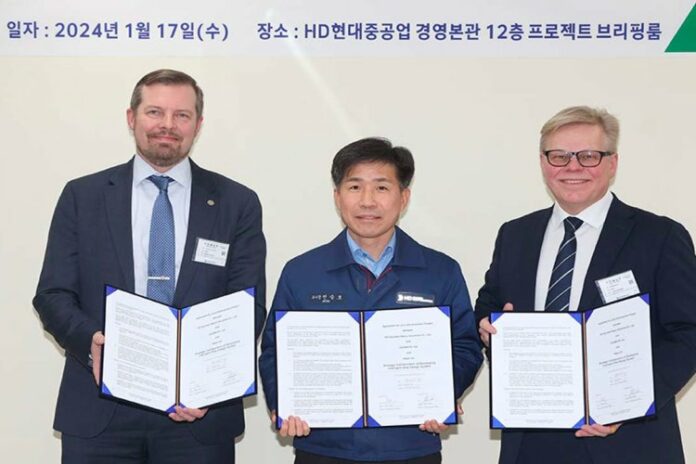
HD Hyundai Heavy Industries has announced a joint development project (JDP) with NAPA and CADMATIC, two leading providers of smart 3D maritime design, engineering and information management software, to accelerate the digital transformation of the shipbuilding industry.

The joint project will develop a next-generation ship design and information management solution, which will also embed a product lifecycle management (PLM) system. The partnership will harness advanced 3D models and the latest developments in information management technology to create intelligent solutions to support the entire ship building process.

This will help HD Hyundai Heavy Industries implement its vision of a “digital shipyard”, where smart data and digital twins support the optimization of the design process from the early stages to construction and production, and then provide a valuable source of information throughout the ship’s lifetime at sea.

The new partnership aims to deliver high shipbuilding efficiency including shorter time schedules, lower costs, and higher quality in large and more complex shipbuilding projects via digitalization and a seamlessly integrated solution. The platform will enhance the collaboration of different shipyard departments and significantly improve information accessibility between the hundreds – if not thousands – of people involved in the ship design and building process. The goal is to optimize processes and enable error-free design for production and safe operation.

By digitalizing and optimizing the ship design and construction processes, the project will also help HD Hyundai Heavy Industries to respond to growing demand by shipowners for innovative energy-efficient designs that will support their decarbonization transition, and enhance its capability to deliver next-generation vessels, including alternative fuels or vessels equipped with new technologies such as batteries or wind propulsion.

Under the agreement, NAPA and CADMATIC will combine their extensive shipbuilding expertise in naval architecture, initial, detail and production design, as well as modern 3D-based collaboration and information management, including PLM. The technological strengths of the two software providers will be combined with HD Hyundai Heavy Industries’ experience as the world’s largest shipyard, having delivered over 2,300 ships to over 300 shipowners in its 51 years of existence.

Seung-Ho Jeon, CTO at HD Hyundai Heavy Industries, said:

“At HD Hyundai Heavy Industries, we are spearheading the creation of a digital shipyard, in line with our Future of Shipyard (FOS) vision, and see this as an important area of development in the ship design and building processes. With this joint project, our ambition is to develop the next generation of intelligent design systems for digital shipbuilding. This will increase efficiency throughout the design and digital twin information delivery process, helping us deliver the innovative designs our customers demand.”

Jukka Rantala, CEO at CADMATIC, said:

“This joint project represents an important milestone for shipbuilding as it enters the digital era. By combining our respective strengths and areas of expertise, this partnership is a major opportunity to enhance the role of design and information management tools in shipbuilding to support the industry’s performance via advanced digitalization. With an intelligent, integrated design and lifecycle management process, we can streamline shipbuilding processes, enhance collaboration and information accessibility in large and complex projects, and support commercial success.”

Mikko Kuosa, CEO of NAPA, said:

“Shipping’s decarbonization transition is creating a sea change for shipyards, as new fuels and technologies bring an unprecedented level of complexity in the ship design process. In this context, having streamlined processes that facilitate communication and collaboration is essential to make fast-paced innovation possible, and ultimately create the new generation of vessels that will take maritime transport to net zero. To achieve this, it is critical to provide shipyards, naval architects and engineers with the right tools, making greater use of digital capabilities to enable teams to work efficiently and collaborate seamlessly as they explore new technological territories together.”


Van Oord is constructing FSRU jetty at Wilhelmshaven in Germany

0

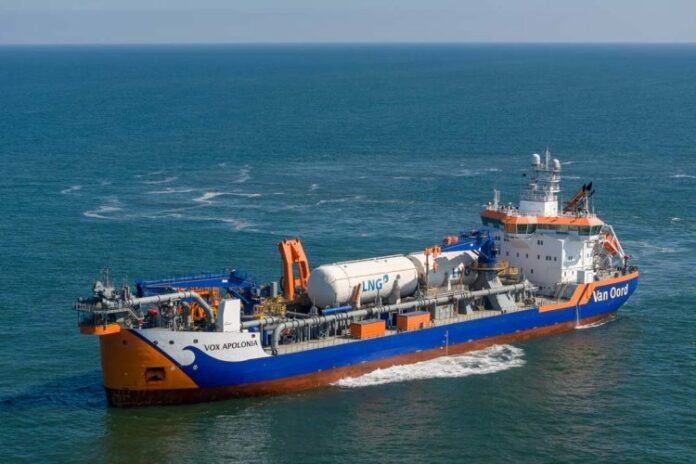
Van Oord has been contracted by FSRU Wilhelmshaven (a joint venture between ENGIE and TES, Tree Energy Solution) to construct a Floating Storage and Regasification Unit (FSRU) jetty at Wilhelmshaven in Germany. 

Responsibility for the operation of the second FSRU-Project in Wilhelmshaven lies with the state-owned DET (Deutsche Energy Terminal GmbH), which is implementing – together with its partners TES and Engie – one of the priority projects backed by Germany’s LNG Acceleration law, passed in May 2022. This law aims to plug the supply gap and bolster Germany’s security of supply when it comes to energy. Van Oord is offering a unique concept by combining its wide range of marine services.

In Wilhelmshaven, Van Oord is responsible for the procurement and construction of the FSRU jetty. Leveraging its experience in dredging, infrastructure and offshore energy, Van Oord is fully mobilised to ensure the successful implementation of the project within an ambitious timeline. To expedite the process, monopiles are used as the foundation for the jetty. Van Oord is installing a total of 10 monopiles, including scour protection. The foundations are equipped with platforms, catwalks and furniture. In addition, a trailing suction hopper dredger is being deployed to dredge the berth pocket and turning basin.            

August Runge, Commercial Director at Van Oord, said:

‘We are proud to be part of this project, leveraging our extensive portfolio of marine capabilities. Through the synergy of our expertise, experience and cutting-edge equipment, we were able to provide a tailor-made integrated solution to our client’s challenge.’

Yanmar PT receives ClassNK Approval for maritime hydrogen fuel cell system

0

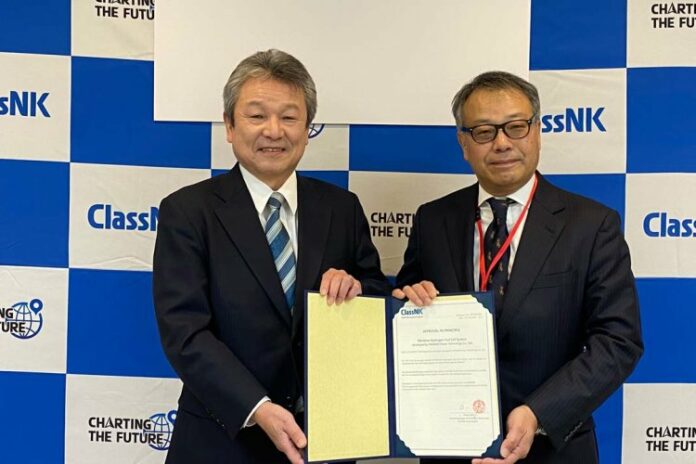
ClassNK has issued an Approval in Principle (AiP) for a maritime hydrogen fuel cell system developed by YANMAR Power Technology Co., Ltd. (YANMAR PT). This is the first AiP certification for a maritime hydrogen fuel cell system developed by a Japanese manufacturer.

Hydrogen fuel cells are gaining attention as a potential means to help reduce GHG emissions from shipping. Meanwhile, due to the unique characteristics of hydrogen, distinct from conventional gas fuels, safety discussions are actively underway at the IMO. Based on IMO’s interim guidelines and relevant IEC standards, ClassNK has issued the “Guidelines for Fuel Cell Power Systems On Board Ships (Second Edition)”, specifying safety requirements for the design of ships using fuel cell power installations and the systems themselves to promote and expand the utilization of fuel cells in ships,

The maritime hydrogen fuel cell system (300kW) developed by YANMAR PT is designed with key auxiliary components such as gas valve units integrated within the system enclosure, aimed to facilitate easy installation on ships. On top of that, the system allows for parallel connection of multiple units and adjustments to the number of hydrogen fuel cell modules, making it adaptable to various ship power output requirements.

ClassNK carried out a review of the system in line with its guidelines, and examined the result of required tests and risk assessment. Upon confirming it complies with the prescribed requirements, ClassNK issued the AiP.