-6.1 C
New York
Home Blog Page 225

Stena Oil commences operations in Frederikshavn

0

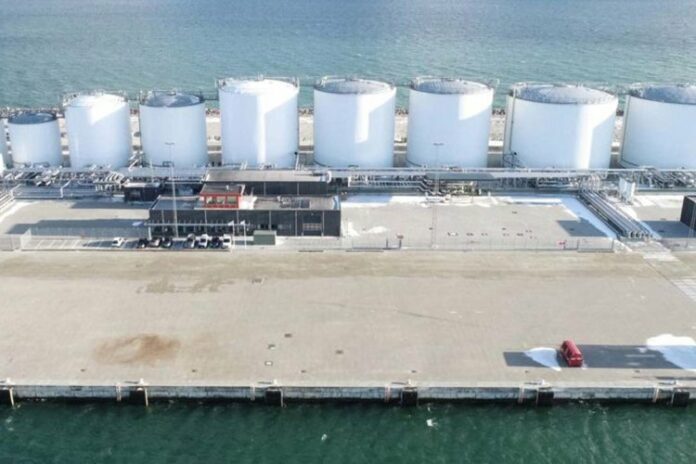
Stena Oil has initiated operations at the new fuel terminal in Frederikshavn.

“We have a good collaboration with the Port of Frederikshavn, and we have maintained an ongoing dialogue throughout the entire process. Our focus has consistently been to kickstart our operations in Frederikshavn, and we are pleased that we have now achieved that goal,” says Jonas Persson, MD of Stena Oil.

The new terminal enables a more efficient infrastructure and complements the existing operations in Gothenburg. In connection with the establishment in Frederikshavn, a newly built bunkering vessel will be deployed in the first quarter of this year that handle various types of fuels, including biofuels and methanol. One of the customers to be served from Frederikshavn is Stena Line with its ferry routes in Denmark and the Kattegat.

The terminal has a capacity of 75,000 cubic meters. 

“The geographical location brings us closer to our customers, allowing us to offer an even more efficient delivery with environmental benefits and solutions for future fuels,” says Jonas Persson.

”The startup of Stena Oils activities is a major milestone for Port of Frederikshavn, and it is with the greatest pleasure, that we can now finally welcome Stena Oil to Frederikshavn”, says Mikkel Seedorff Sørensen, CEO Port of Frederikshavn.

The terminal is situated at the new areas at the port with 14 meter water depth, that were established in connection with an expansion of the port from 2016-2020.

”It is a result of a close collaboration with Stena Oil, that we are now able to hand over the bunker terminal after a construction period marked by challenges, and we look forward to the increasing level of activity, the bunker operations will bring to Port of Frederikshavn”, says Mikkel Seedorff Sørensen.
Verbrugge streamlines operations with advanced TOS from Konecranes

0

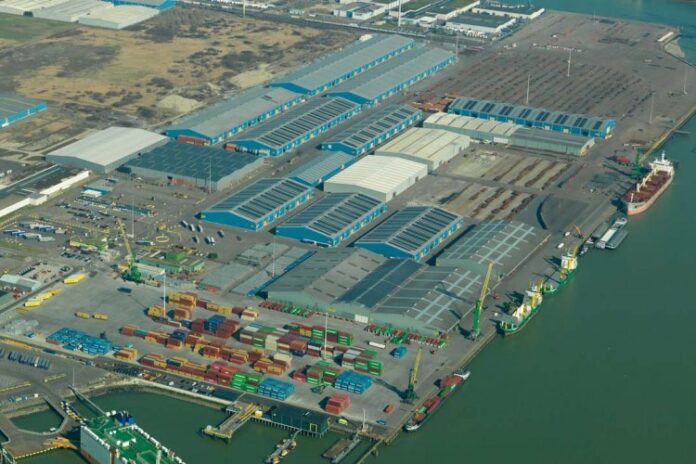
Dutch Logistics Service Provider Verbrugge International BV has chosen software solutions from Konecranes to streamline operations across three of its locations in The Netherlands. 

The agreement includes Terminal Operating Systems (TOS) for non-containerized and containerized cargo operations, and was booked in November 2023. Implementation is planned for 2024 and 2025.

Verbrugge chose Konecranes to simplify its port and inland terminal operations covering dry bulk, general cargo, RoRo, project cargo and container handling. TOSs streamline complex procedures and operations, regulate the movement and storage of diverse cargo types within a terminal, and optimize asset utilization with real-time management. This results in better productivity and improved overall operational efficiency.

The United Nations Conference on Trade and Development’s (UNCTAD) most current review of maritime transport shows that despite the rise of containerization, roughly 80% of maritime trade remains non-containerized, underscoring the complexity of operations at multipurpose terminals.

“We are facing the challenges of automating our terminals, which have different and complex systems running to manage all operations. We’re a logistics service provider and not a software company, although we always tried to deliver the best service to our clients, but time progresses. So instead of relying on building an in-house system we investigated the market for a best-in-class software solution and chose the software solution from Konecranes,” said Verbrugge International BV CFO Carlo Broeren.

“Konecranes’ [CommTrac and Autostore] TOS will give Verbrugge International true multi-cargo handling capabilities for seamless management of diverse cargo types accessible from anywhere at any time. We’re pleased to have Verbrugge as our first CommTrac customer in mainland Europe following our recent successes in the US, Canada and Australia,” said David Trueman, Managing Director for Konecranes’ TBA Doncaster software unit in Port Solutions.

The companies have also agreed to integrate Konecranes’ software solutions with Verbrugge’s finance systems and real-time data sources like weighbridges, which help to accurately measure the flows of bulk cargo in and out of the terminal. This first-of-its-kind integration is expected to introduce operational efficiencies across Verbrugge’s entire cargo portfolio and marks a further step in advancing port industry digitalization.

ABB to acquire weather routing business to expand marine software portfolio

0

DTN shipping capabilities will complement ABB’s existing portfolio of digital solutions, resulting in over 5,000 connected vessels

Weather routing is key to optimizing fuel consumption, helping reduce vessel emissions and supporting maritime decarbonization

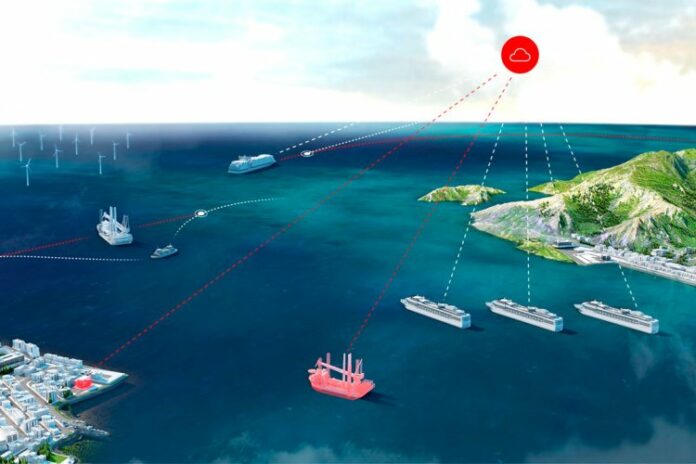
ABB announced today it has entered into an agreement to acquire the shipping business of DTN Europe BV and DTN Philippines Inc. (hereinafter DTN Shipping), expanding the company’s offering in maritime software. This will establish ABB as one of the market leaders in ship route optimization. The acquisition of the DTN Shipping portfolio covers vessel routing software, including analytics, reporting, and modelling applications. Financial details of the transaction were not disclosed. The transaction is subject to customary closing conditions as well as completion of applicable works councils’ consultation procedures. It is expected to close during Q2 2024.

The acquisition comes at a time when real-time weather routing analytics play an increasingly important role in helping vessels optimize voyage efficiency and safety. Complementing ABB’s existing digital offering, the DTN Shipping business brings market-leading application programming interfaces (API) to ABB and expands the number of vessels connected to ABB networks to over 5,000. ABB and DTN Shipping will work together to ensure continuous customer service and the seamless integration of approximately 85 employees, most of whom are located in the Netherlands and Philippines, into ABB.

Current customers of DTN Shipping will benefit from ABB’s expertise in electric, automated and digital marine solutions, securing more opportunities to gain efficiencies, save fuel and cut emissions.

“We look forward to welcoming our new colleagues to the ABB family. With DTN Shipping’s unique weather routing solutions, combined with our existing digital portfolio, we can bring significant benefits for ship owners and operators worldwide,” said Juha Koskela, Division President, ABB Marine & Ports. “This is integral to our commitment to deploy digital solutions for the purpose of driving better operational decisions, resulting in increasingly sustainable performance of vessels. With this acquisition, we can now offer all levels of digitalization, across all fleet types and sizes, creating a unique offering in vessel and voyage performance.”

“Innovation is by nature collaborative,” said Marc Chesover, President and CEO of DTN. “This is an important moment in the advancement of digital solutions for the maritime industry. We are proud of what the Shipping team has accomplished at DTN and are confident that the industry will see great value from the expanded ABB offerings that are possible when combined with the DTN Shipping portfolio. DTN looks forward to continuing to provide core forecasting elements to ABB post completion.”

Fincantieri to build two additional hybrid ships for the offshore wind market

0

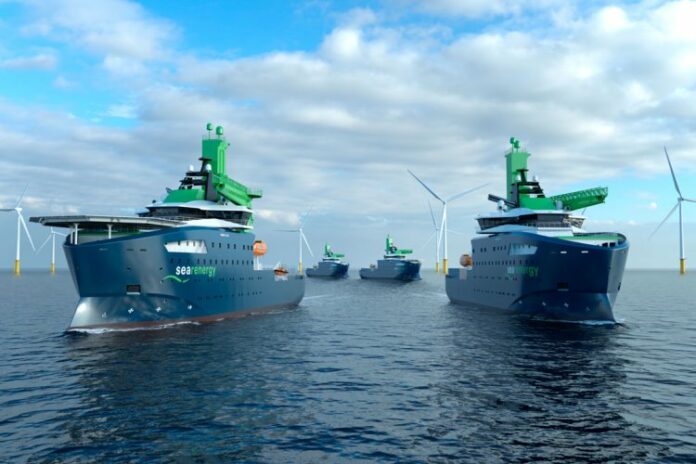
The Windward Offshore consortium has exercised options, which were contained in the contract signed with Vard in October 2023, for the design and construction of two hybrid Commissioning Service Operation Vessels (CSOVs). 

As part of the order, the number of units ordered from the Fincantieri group’s Norwegian subsidiary rises to four. The first two hybrid CSOVs will be delivered in Q3 2025 and Q1 2026, the other two vessels for Windward Offshore are scheduled for delivery in Q2 and Q3 2026.

They will support energy majors globally in constructing, commissioning, and maintaining offshore wind parks.

The 87.5-meter-long vessels will have a beam of 19.5 meters and will be equipped with a height-adjustable motion-compensated gangway with an elevator system, and a height-adjustable boat landing system. The CSOVs will have accommodations for 120 persons on board. They will be equipped with a hybrid battery system and they will also be prepared for future operation on green methanol.

Windward Offshore is a company led by SeaRenergy Group, the Offshore Wind Services Arm of the Asian Spirit Steamship Company. With a shared vision, the partners of Windward Offshore aim to create a robust portfolio of offshore wind service vessels, initially focusing on Commissioning Service Operation Vessels (CSOVs). The founding partners driving Windward Offshore’s innovative venture are SeaRenergy Offshore, Blue Star Group, Diana Shipping Inc. and SeraVerse.

TECO 2030 with partners starts second EU Horizon project

0

TECO 2030 commends it’s second EU Horizon Project, Zero Emission Adriatic Ship – ZEAS, together with 13 partners from various European Countries. The overall project grant from EU Horizon is over EUR 13.5 million, where over EUR 2.3 million is reserved to TECO 2030’s deliverable of 1.2 megawatts (MW) of fuel cells for full vessel propulsion.

Project Zero Emission Adriatic Ship – ZEAS logo and TECO 2030’s Fuel Cell Module 400kW, FCM400.

The project focuses on pioneering a shift towards the safe and sustainable use of climate-neutral fuels in maritime transport, specifically through a full-scale demonstration of a hydrogen fuel cell-powered system suitable for maritime applications. This ship, tailored for operation in the Adriatic Sea’s delicate marine ecosystem, is a testament to the project’s commitment to environmental preservation and zero emission waterborne transport.

“This project further enables our efforts to showcase how fuel cells and hydrogen can be a large contributor to decarbonize and eliminate harmful emissions of waterborne transport around the world,” said Tore Enger, Group CEO, TECO 2030.

Key activities in the project include the design and construction of the ship, the development of comprehensive hydrogen distribution, storage, and bunkering solutions, and rigorous testing through sea trials to ensure compliance with certification standards. The project also places a strong emphasis on environmental impact, with thorough emissions assessment, environmental performance studies, and risk and safety evaluations.

Advanced digital technologies will play a crucial role, with the development of digital twins for monitoring, control, simulation, and predictive maintenance solutions augmented by augmented reality systems. These technologies will be rigorously tested and optimized for use by shipowners, operators, shipyards, and engineering firms.

“I’m excited to share that we’ve successfully secured our second Horizon Europe project! Achieving a perfect record in our EU project proposals is truly remarkable. I extend my heartfelt gratitude to our dedicated partners and our in-house team for their exceptional proposal writing efforts,” said Fredrik Aarskog, Director of Business Development, TECO 2030.

This initiative involves an international consortium of leading entities across the innovation spectrum, dedicated to developing, validating, and showcasing a zero-emission passenger ship fueled by hydrogen. The involved consortium partners are Lurssen Design Center Kvarner, TECO 2030 and affiliates, Gitone Kvarner, Maritime Center of Excellence, Jadrolinija, University of Rijeka – Maritime Faculty, DNV Greece, Hycenta research, TECNO Ambiente, Scan Projekt, Technische Universitaet Chemnitz, Zenlab and the Croatian Hydrogen Association.

NYK-Line’s simulator contributes to offshore wind training in Japan

0

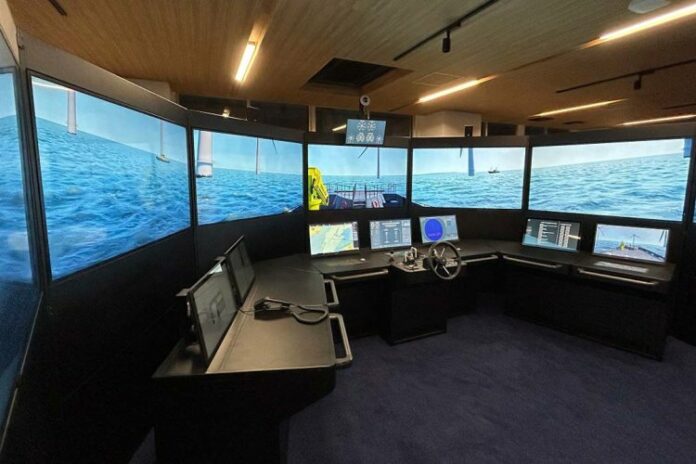
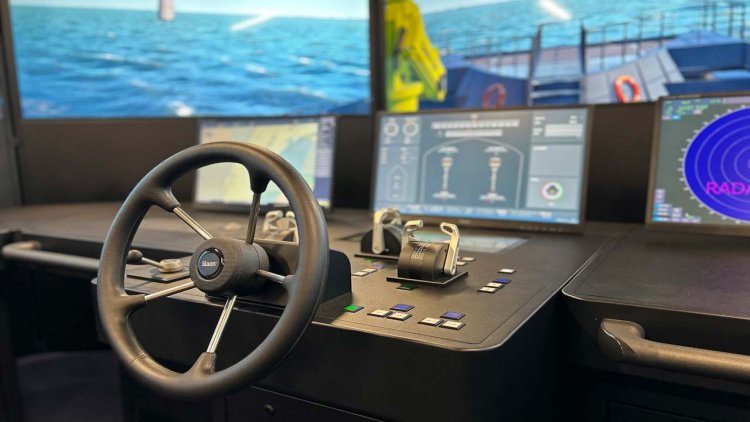
In a landmark agreement signed in December 2022, Nippon Yusen Kaisha (NYK-Line) partnered with Damen Services to introduce an advanced full mission bridge simulator tailored for offshore wind operations. The simulator, built in cooperation with maritime simulation leader VSTEP Simulation, achieved a critical milestone with the successful completion of Factory Acceptance Testing (FAT) in October. 

To be officially inaugurated on the 1st of April, the simulator, housed at a newly established training centre in Akita, Japan, is set to become a focal point for specialised training in offshore wind installations. Targeting technical personnel and workboat crews, the training programmes impart essential skills for manoeuvring, crew supply, and maintenance in offshore wind parks. 

Mr Tsutomu Yokoyama, Executive Officer & Senior General Manager at NYK Energy Division said:

“This simulator is designed to replicate real-world scenarios, its advanced capabilities offer a comprehensive training experience. Also, its integration into the training centre underscores NYK-Line’s commitment to excellence in the offshore wind sector and aligns with Damen Services’ dedication to delivering top-notch maritime solutions.”

The consortium formed by NYK-Line and Damen Services (part of Damen Shipyards Group) goes beyond providing cutting-edge training facilities. Actively contributing to offshore human resource development, both companies engage in collaborative initiatives with local governmental bodies and educational institutions. 

Thomas Röwekamp, Regional Sales Director Asia Pacific at Damen said:

“The strategic focus of this project is on expanding the offshore wind industry, an aim that fits seamlessly with Damen’s sustainability ambitions. It also looks to ensure a skilled workforce. 

Bastin Kubbe, Damen Regional Service Manager Asia-Pacific adds:

“This simulator provides the means for fleet owners in the Asia-Pacific region with the opportunity to safely test and train their crews in various ship designs, including the Damen Fast Crew Supplier (FCS) 2710.

The official opening of the Full Mission Bridge Simulator in Akita marks a significant leap forward in elevating standards for training and human resource development within the offshore wind sector in the Asia Pacific region. 

Chemfleet adds three ships to Berg energy efficiency upgrade

0

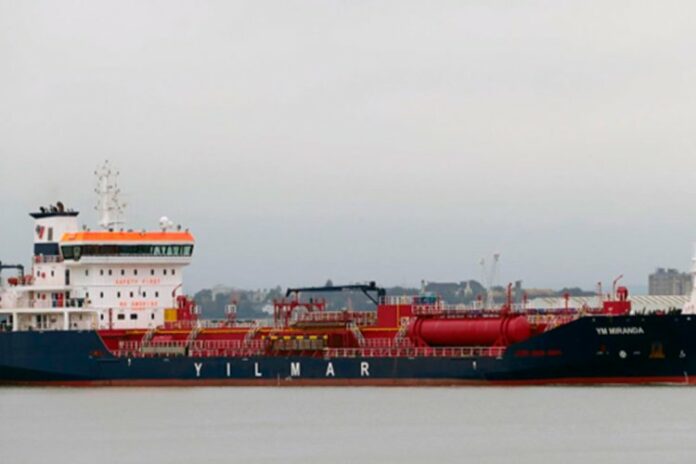
Trials following the installation of Berg MPC800M control system onboard the 12,933 dwt IMO II chemical tanker have persuaded Chemfleet to upgrade three additional 6,970 dwt sisterships, in a solution integrating Berg’s Dynamic Drive Software. Istanbul-headquartered Chemfleet is also reviewing control system needs for six more tankers under management.

When upgraded to include Dynamic Drive, the Berg Propulsion’s MPC800M system is enabled to set upper limits for vessel speed or fuel consumption by optimizing the pitch and rpm of the control pitch propeller. If the speed limit is exceeded, Dynamic Drive automatically reduces thrust until the limit is met. If fuel is the priority, the algorithm selects the rpm/pitch to optimize engine performance.

“Data from the initial trials showed MPC 800 control system achieving around 10% fuel reductions, and our expectation is that there is more to come as the system beds into operations,” said Ersen Uçakhan, Technical Manager, Chemfleet. “We will upgrade YM Neptune, YM Pluto and YM Uranus later this year, continuing our successful collaboration with Berg Propulsion on this exciting project.” 

The opportunity to replace the existing controls system from another supplier with Berg’s MPC800 system on YM Miranda was accomplished in three days. Özgür Bartınlı, Service Manager, Berg Propulsion, explained that the system offers the open architecture for software upgrades as required.   

“Chemfleet is a high-quality chemical tanker manager which takes a proactive approach to enhancing ship performance – looking beyond the requirements of CII and EEXI, for example,” he said. “Adding Dynamic Drive delivers not only a significant competitive edge, but also the performance to anticipate emissions requirements well ahead of regulation.”

Emre Özkul, Product Support Manager, Berg Propulsion, added:

“After the initial retrofit of the MPC800M control system on board YM Miranda, we have been delighted to verify that the upgrade helps Chemfleet crews to reduce the ship’s fuel consumption based on everyday operations. In the upcoming months, we are excited to bring more gains to three more ships by incorporating additional Dynamic Drive software into our planned retrofit solution.”

Dynamic Drive software is one of several class-approved options devised by Berg Propulsion to help ships rise to their efficiency challenges. In cooperation with owners and operators, Berg uses 3D scanning and modelling tools to develop retrofit options that offer cost-based gains, factoring in drydocking work. Its solutions minimize mechanical and hydrodynamical losses, combining the best equipment for specific applications to boost energy efficiency without compromising vessel reliability.

“Our analysis involves a thorough evaluation of product efficiency, encompassing the propeller, gearbox, shaft alternator, generators, and engines,” Özkul explained. “There is no one-size-fits-all solution, so we dig deep in analyzing the current system’s efficiency, configuration and performance to establish the crucial areas for improvement and formulate next steps. Berg Propulsion works closely with ship owners to deliver on with their energy efficiency needs, whether they are working through the EEXI and CII transition, focusing on fuel efficiency or leading the way on decarbonization.”

First two of five bespoke 30-metre CTVs delivered to offshore wind operator in US

0

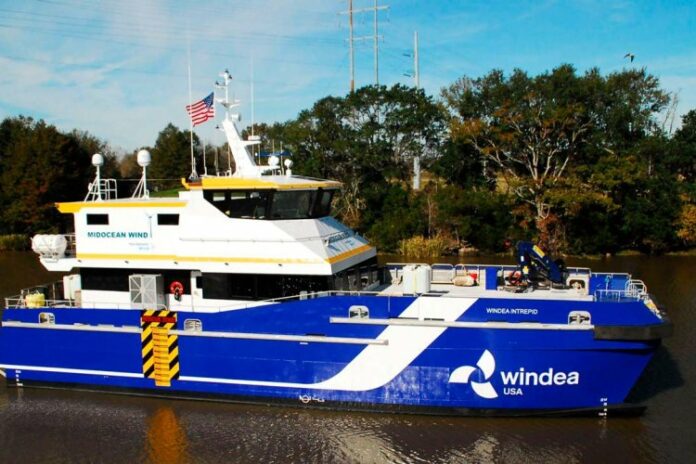
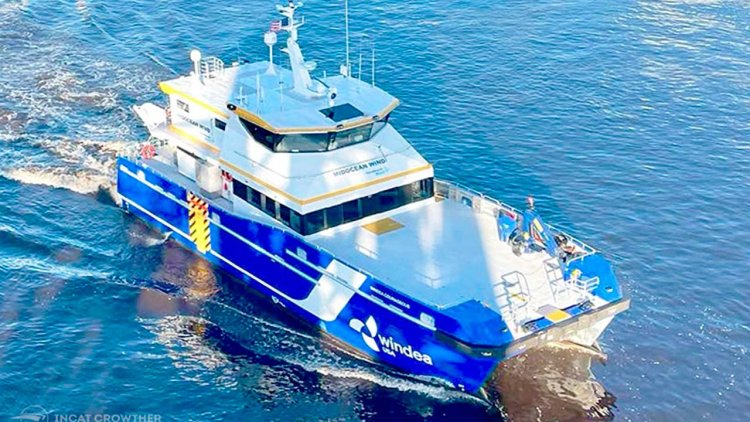
The number of Incat Crowther-designed crew transfer vessels (CTVs) servicing the global offshore wind industry continues to grow with the delivery of two new 30-metre, bespoke CTVs to WINDEA CTV – a US based joint venture owned by MidOcean Wind LLC and Hornblower Wind LLC. 

WINDEA Intrepid, built by Louisiana-based shipyard Gulf Craft LLC, and WINDEA Courageous, built by St Johns Ship Building in Florida, are the first of five identical CTVs Incat Crowther is designing for WINDEA CTV. The third and fourth vessels in the series are under construction at St Johns Ship Building, and construction of the fifth vessel is well underway at Breaux Brothers in Louisiana.

The USCG Subchapter L-certified CTVs are capable of transporting 24 technicians in the safety and comfort of a resiliently mounted superstructure. In addition to spacious seating, the main deck level of the superstructure features a large galley and mess area, two bathrooms and dedicated internal storage space.

The upper deck level of the vessels feature an elevated, large wheelhouse, as well as two single cabins, two double cabins and three bathrooms for up to six crew. A large, 100m2 forward deck and a 35m2 aft deck provide ample space for carriage of cargo to offshore wind installations. Each vessel has the capability of transporting a deadweight of 50 tonnes.

Powered by four Volvo D13 marine diesel engines with a quad Volvo IPS system, each vessel is also future-proofed and ready for the retrofit of the Volvo parallel hybrid system. Transfer capability is enhanced by the Incat Crowther resilient-bow technology which reduces impact forces applied to wind turbine boat landings.

Commenting on the delivery of the two new CTVs, Incat Crowther’s US Managing Director Grant Pecoraro said the global digital shipbuilder was perfectly placed to service the rapidly developing offshore wind sector in the US.

“The delivery of these two new CTVs builds on Incat Crowther’s proven track record of designing state-of-the-art, operationally efficient and flexible CTVs for operators servicing the expanding global offshore wind industry,” said Mr Pecoraro.

“The design and construction of these 30-metre CTVs has been a collaborative effort with MidOcean Wind and the respective builders ensuring the design is tailored specifically to meet the unique set of domestic regulations in the US. We are incredibly grateful that MidOcean Wind entrusted Incat Crowther to design this new fleet of vessels, and we are pleased that vessel performance has exceeded the contractual requirements,” said Mr Pecoraro.

Scientists study how underwater soundscapes and young fish could help the Reef

0

The cacophony of sounds made by marine wildlife at coral reefs are being investigated at Lizard Island in the northern Great Barrier Reef this summer in the hopes of boosting reef recovery and resilience.  

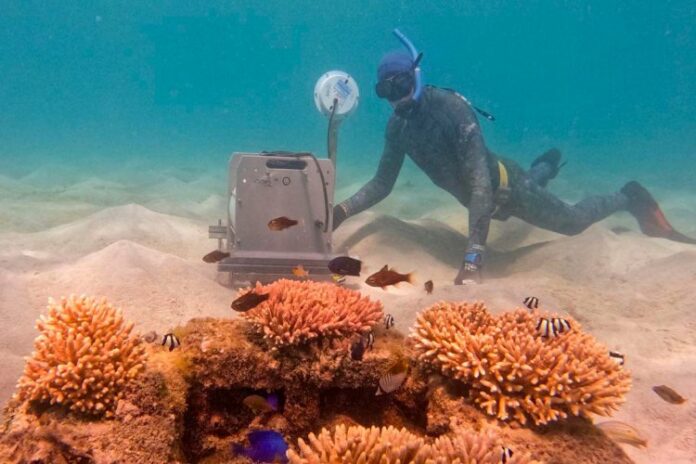
Known as Reef Song, the project led by the Australian Institute of Marine Science (AIMS) is investigating whether playing the grunts, hoots, clicks and pops of fish and invertebrates at degraded reefs will attract baby fish and help turn them into thriving coral reefs again. 

The scientists have conducted several experiments at Ningaloo Reef in Western Australia and are now applying their work to the Great Barrier Reef.

AIMS project lead Dr Rohan Brooker said that because coral reefs are threatened by climate change-driven marine heatwaves, developing innovative solutions that could boost the health and growth of corals following disturbances was essential. 

“We have found evidence that fish can help speed the growth of corals in recovery periods between disturbances, so we are investigating that relationship and figuring out ways we can enhance it,” said Dr Brooker. 

“One way is by directly stocking reefs with the larval and juvenile fishes we collect. We know that fish and corals have a mutually beneficial relationship. Corals provide fishes with food and habitat, while fish provide corals with cleaning services clearing the way for baby corals to settle, and their poo could fertilise corals, boosting their growth.” 

AIMS acoustic scientist Dr Miles Parsons said the team is also investigating whether playing the sounds of a healthy reef at a degraded one will lure more fish larvae. 

“Fish larvae are in the ocean listening out for the sounds of healthy reefs because they want to find a good coral reef with lots of food and shelter to settle on,” he said.  

“Our work is investigating different reef soundscapes and their success at attracting fish larvae, and then measuring how the corals grow.” 

Last summer, the Reef Song team and their collaborators set up 60 ‘patch reefs’ around Lizard Island to act as experimental sites for a number of different studies. The scientists returned again this summer to measure coral growth on the patch reefs, take fish surveys and re-stock some of the patch reefs with baby fish.  

The scientists will also be recording the sounds being made on the patch reefs and identifying the sources of those sounds.  

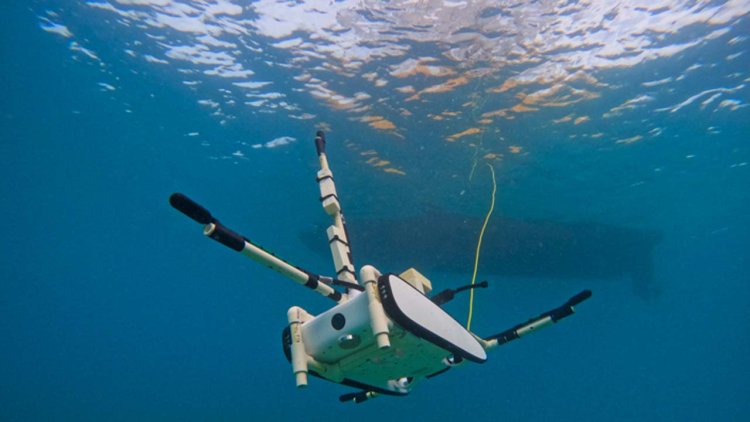
In addition, the researchers will operate a small Remote Operated Vehicle (ROV) around the natural reefs of Lizard Island to search for unusual fish sounds to investigate further. 

AIMS researchers were joined on Lizard Island this season by collaborators from Exeter and Bristol Universities in the United Kingdom, Curtin University and The University of Western Australia. Scientists from the National Oceanic and Atmospheric Administration (NOAA) from the United States also joined the team to explore the unusual types of sounds produced by different fishes and the importance of invertebrate behavioural patterns to the local soundscapes.  

Reef Song is one of two projects under the Australian Coral Reef Resilience Initiative (ACRRI), which is jointly funded by AIMS and BHP.

ACRRI takes a unique, whole of ecosystem approach to developing methods to improve the resilience of coral reefs affected by climate change.

The other ACRRI project – the Woppaburra Coral Project – is investigating the latest coral seeding techniques at the Keppel Islands in the Southern Great Barrier Reef.

Aker BP awarded 27 licenses in APA 2023

0

For 17 of the licenses Aker BP is also granted operatorship. 

“We are very pleased with the award that was announced today. It reflects our comprehensive application and gives us a foundation for maintaining our ambitious exploration strategy”, says Per Øyvind Seljebotn, SVP Exploration and Reservoir Development in Aker BP.

Aker BP is offered exploration acreage in all areas of the Norwegian continental shelf, the North Sea, the Norwegian Sea and the Barents Sea.

“Our strategy is to have a portfolio of acreage that provides a good balance between exploration wells close to existing infrastructure, and wells that can lay the foundation for independent developments if we make discoveries. For some of the exploration prospects, we are particularly targeting gas. It is more important than ever that Norway produce gas to secure the energy supply to Europe”, says Seljebotn.

APA – Awards in Predefined Areas, is the annual licensing round that includes mature areas of the Norwegian continental shelf. These are areas with known geology and a relatively well-developed infrastructure with production facilities and pipelines.