-6.1 C
New York
Home Blog Page 224

ESL Shipping commits to set science-based targets for GHG emissions reductions

0

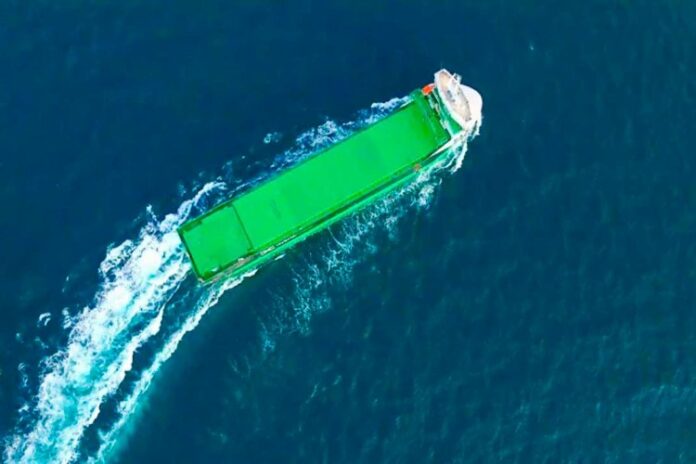
ESL Shipping has joined the Science Based Targets initiative (SBTi) and committed to setting both near-term and long-term company-wide science-based emission reduction targets in line with the pathway to limit warming to 1.5oC above pre-industrial levels. The company will now work to develop and validate targets with SBTi.

ESL Shipping has a successful track record of developing new vessel concepts that enable significant emission reductions and has worked actively with industrial partners to develop renewable fuel supply, a crucial element in the journey towards fossil-free shipping.

“For years we have worked hard to find solutions to reduce our carbon footprint and by committing to the Science Based Targets initiative, our clients and stakeholders can be convinced that we have a robust plan to achieve net zero by 2040”, says Managing Director Mikki Koskinen.

In 2021, ESL Shipping published ambitious climate targets to reduce its emission intensity per ton-mile by 50% by 2030 and achieve net zero operations by 2050. In conjunction with the commitment to science-based targets, the net zero target has been brought forward to 2040.

The Science Based Targets initiative (SBTi) is a global body enabling businesses to set ambitious emissions reductions targets in line with the latest climate science. It is focused on accelerating companies across the world to halve emissions before 2030 and achieve net-zero emissions before 2050. The initiative is a collaboration between CDP, the United Nations Global Compact, World Resources Institute (WRI) and the World Wide Fund for Nature (WWF) and one of the We Mean Business Coalition commitments.

Equinor awards Lufttransport RW AS a helicopter contract on the Norwegian continental shelf

0

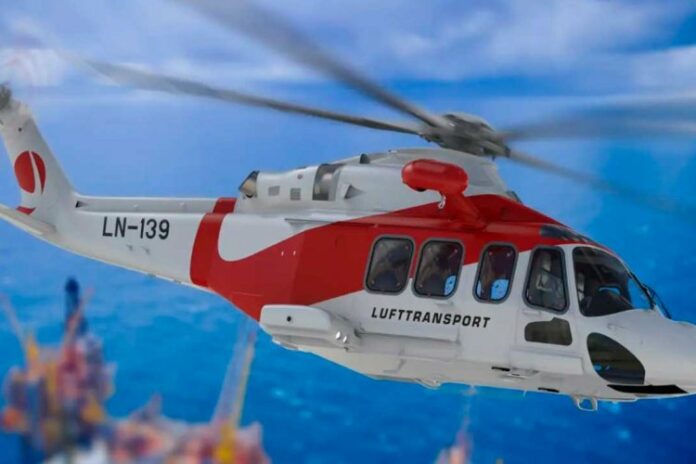
Equinor has awarded Lufttransport RW AS a contract to operate two new search and rescue helicopters (SAR) for the Troll and Oseberg area. Lufttransport will be the third helicopter operator qualifying for assignments on the NCS.

“This contract strengthens our resilience and ensures increased helicopter capacity. Lufttransport RW AS is a Norwegian-owned company based in Tromsø, with extensive experience from operating both search and rescue helicopters and transport helicopters. We look forward to working with them,” says Ørjan Kvelvane, Equinor’s senior vice president for joint operations support.

The two helicopters will be taken over by Lufttransport RW AS in the second quarter of 2025 and will be ready for operation from 2026. The helicopters to be used are Leonardo AW 139 machines, qualified for flying on the NCS. AW 139 is widely used in the offshore industry globally, including on the UK continental shelf, for search and rescue services in Sweden, and by the Norwegian Air Ambulance here at home.

“We have long aimed to qualify a new helicopter model that meets the strict requirements on the NCS. The AW139 is a newer helicopter type with well-proven technology that meets high safety standards. With this contract, we get well-equipped machines capable of operating well under the conditions on the NCS, and in accordance with our safety requirements, both for search and rescue- and transportation purposes, adds Kvelvane.

The new helicopters will be part of the SAR emergency response system and carry out assignments in the Troll and Oseberg area in the northern North Sea.

One helicopter will be stationed at the Oseberg field centre. The other helicopter is a back-up SAR machine that will be stationed at the heliport at Flesland.This helicopter will be used for passenger traffic to and from Equinor installations. The new helicopters will supplement the two Sikorsky S-92 machines that currently perform these tasks.

SAR helicopters are key to maintaining emergency preparedness and transportation services on the NCS. They are also important for emergency preparedness purposes along the entire coast, also beyond assignments related to the petroleum activities.

Taking effect in the early 2026 the term of the contract awarded to Lufttransport is five years, with an option for five one-year extensions.

Contracts signed for construction of ammonia-fueled ammonia gas carrier

0

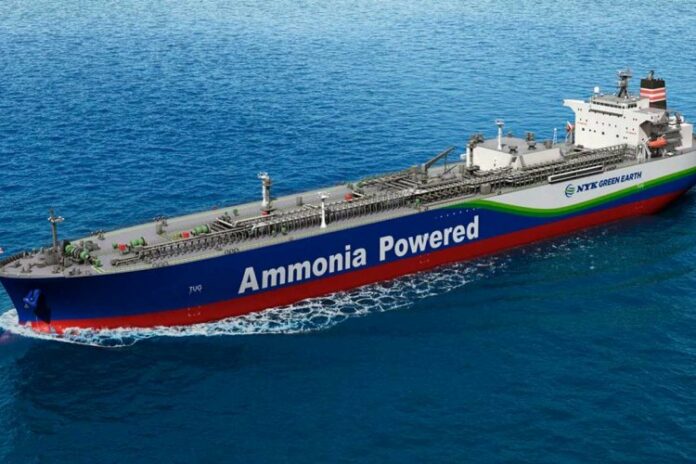
Nippon Yusen Kabushiki, in collaboration with Japan Engine Corporation, IHI Power Systems, and Nihon Shipyard, has finalized a series of contracts to construct the world’s first ammonia-fuelled medium gas carrier. This groundbreaking vessel will feature engines made in Japan and is scheduled for delivery in November 2026, heralding a crucial advancement in the maritime sector’s journey towards decarbonization.

The contracts, inked in December 2023, specify that the 40,000 cubic meters (cbm) type ammonia fuel ammonia carrier will be constructed at the Japan Marine United Corporation (JMU) Ariake Shipyard. The collaboration between these entities represents a significant stride in addressing the imperative need for sustainable solutions within the maritime industry.

Looking ahead to the vessel’s completion in November 2026, the consortium will engage in the manufacturing of main and auxiliary engines, undertake detailed studies for construction, and develop an operation manual for practical use. Post-completion, the vessel will undergo operational demonstrations to evaluate performance, environmental impact, and the efficacy of the operation manual. Valuable user feedback gathered during this phase will aid shipbuilders and marine equipment manufacturers in refining and enhancing their products.

Japan Engine Corporation will play a pivotal role in the project by overseeing the development of the ship’s main engine, producing an ammonia fuel dual-fuel two-stroke engine. Simultaneously, IHI Power System will contribute by providing the auxiliary engine. Under the banner of ‘Changing the future of the sea and the future with Japanese technology,’ Japan’s maritime industry is fervently working towards leading the world with the AFMGC, reflecting the nation’s commitment to innovation and sustainability.

The significance of transitioning to next-generation fuels is underscored by the pursuit of net-zero emissions in international shipping. Ammonia, a fuel choice for the AFMGC, holds promise due to its combustion process, which does not emit carbon dioxide (CO2). This attribute positions ammonia as a next-generation fuel capable of contributing significantly to global warming prevention efforts.

While international rules for ships using ammonia as fuel are yet to be established, the International Maritime Organization (IMO) is actively deliberating on the matter. The consortium’s project stands as one of the pioneering efforts to develop ammonia-fuelled ships, and the knowledge gained from constructing and operating AFMGCs will be pivotal in shaping discussions at the IMO. The consortium is committed to collaborating with ClassNK and Japan’s Ministry of Land, Infrastructure, Transport and Tourism (MLIT) to actively contribute to the formulation of international regulations in this domain. 

Fugro expands its uncrewed surface vessel fleet

0

The latest Blue Essence® has earned Category 0 approval from the UK Maritime Coastguard Agency (MCA), the highest level of approval for autonomous vessels. It is now the largest USV to operate fully remotely, with unrestricted access, to support marine projects further offshore while enhancing safety and environmental performance. 

The expansion of the Blue Essence® fleet demonstrates Fugro’s commitment to leveraging technology for a safe and liveable world. Both USV and electrical remotely operated vehicle (eROV) will be remotely controlled from Fugro’s global network of remote operations centres (ROCs). 

This remote operation capability not only removes personnel from potentially high-risk offshore environments but also significantly reduces the carbon footprint of operations, with the USV’s emissions up to 95% lower than conventional support vessels. Operators can also monitor and control the vessels from anywhere in the world, enabling faster decision-making and access to near real-time data. This information is crucial for optimising project schedules, ensuring safety, and maximising asset performance. 

Nick Simmons, Fugro’s Director of USV and Remote Working in Europe and Africa said:

“This is a ground-breaking milestone for the maritime sector as we strengthen our capabilities to service assets further offshore. We are thrilled with the development of our Blue Essence® fleet as we commit to more remote operations and progress towards our goal of net zero emissions by 2035.”

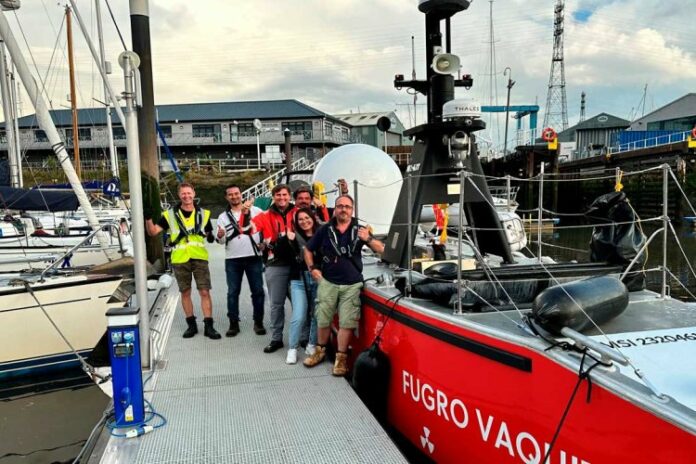
The Fugro Vaquita, developed in partnership with SEA-KIT, is the second of the company’s Blue Essence® USV fleet to operate in European waters. In 2023, Fugro Orca completed multiple projects including several asset integrity and seabed surveys for key clients.

VWMS delivers Damen Multi Cat 3713 Waddenstroom in ceremony

0

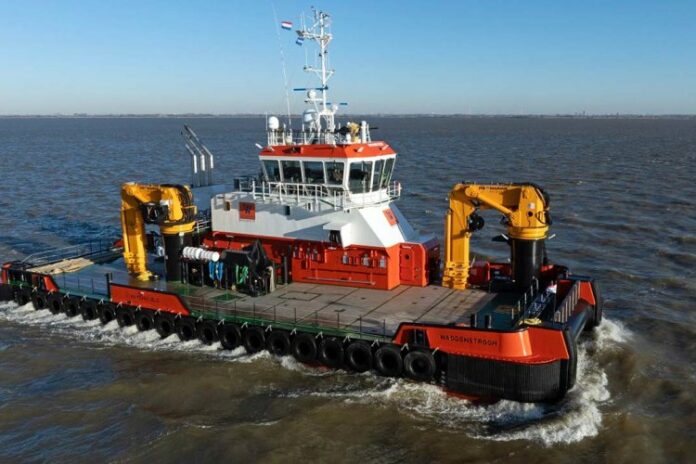
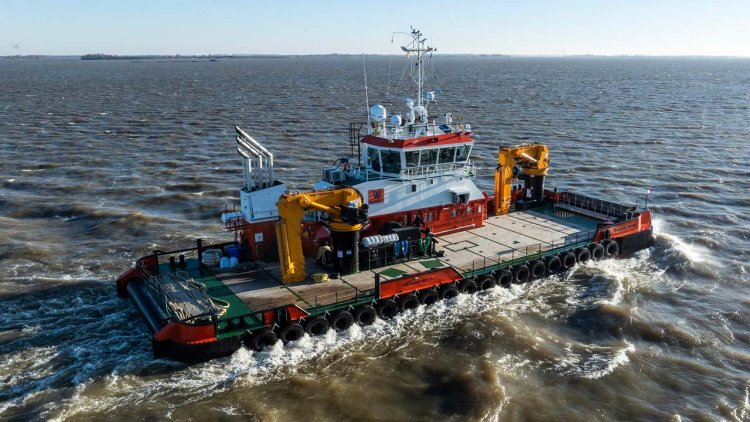
On 16 November, Van Wijngaarden Marine Services (VWMS) held a naming ceremony for the latest vessel in its fleet, a Damen Multi Cat (MuC) 3713 named Waddenstroom. The 37-metre, DP2 vessel, delivered by Damen Shipyards Hardinxveld, is the largest MuC in the Damen range. 

The naming ceremony for the vessel took place at VWMS’ premises in Hardinxveld-Giessendam, the Netherlands. Serving as Lady Sponsor was Mrs Cory van Wijngaarden-Dekker, who undertook the naming of the vessel together with her great-granddaughter, Leandra Biesheuvel. Waddenstroom joins five Damen Shoalbusters and a DP1 MuC 3013 in VWMS’ workboat fleet.

VWMS and Damen signed the contract for the vessel in May this year. The rapid delivery is the result of Damen’s practice of building vessels in series and keeping them in stock. At the time of the order, Damen already had the MuC 3713 in build. 

Though based on a standard platform, Damen was able to tailor the vessel in order to meet VWMS’ requirements. This involved adaptation of the steel work and deck to facilitate the range of equipment the company requires to fulfil its diverse work scope. 

Damen also installed ten of the vessel’s sixteen crew cabins above deck in order to meet VWMS’ exacting standards for crew comfort. 

Damen’s client was also keen to ensure the vessel performed as sustainability as possible. To achieve this, Damen installed Waddenstroom with its in-house developed Marine NOX Reduction System, a selective catalytic reduction system to cut maritime emissions in line with IMO Tier III requirements. 

In a further move towards sustainability, the vessel is outfitted with the DP2 capabilities it requires to serve the offshore renewable energy industry. Waddenstroom additionally features a diesel-electric propulsion system, ensuring optimal efficiency and a reduction of both fuel consumption and emissions. 

In addition to the range of innovations featured on board, Waddenstroom also draws heavily on her Damen workboat heritage. She has a crane fore and aft, anchor handling, towing and tugger winches, as well as stern rollers and towing pins. 

Damen Shipyards Hardinxveld Commercial Manager Jeroen van Woerkum said,

“We are very proud of what we have achieved with the Waddenstroom. This is an innovative vessel that meets all the current requirement for sustainable performance. We also very proud that VWMS continues to place its trust in Damen. Our two companies have enjoyed an excellent relationship for a considerable time now and it’s a pleasure to see this continue into the next generation with Peter van Wijngaarden at the helm.”

Peter van Wijngaarden, Managing Director of VWMS agreed, saying, “As Dutch maritime family companies, Damen and VWMS have long shared the same values. What we see, as we move forwards, is that we continue to align with one another. With this, we can work together on developing vessels that meet the technical and sustainable requirements of the maritime industry of today and tomorrow.”

Incat Crowther to design new passenger ferry for Florida National Park service

0

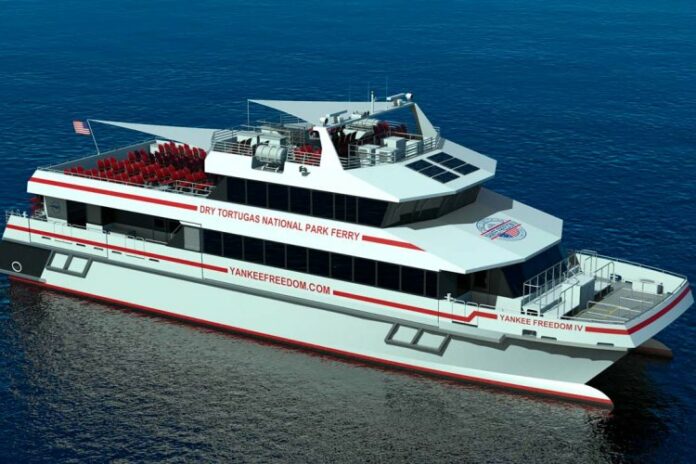
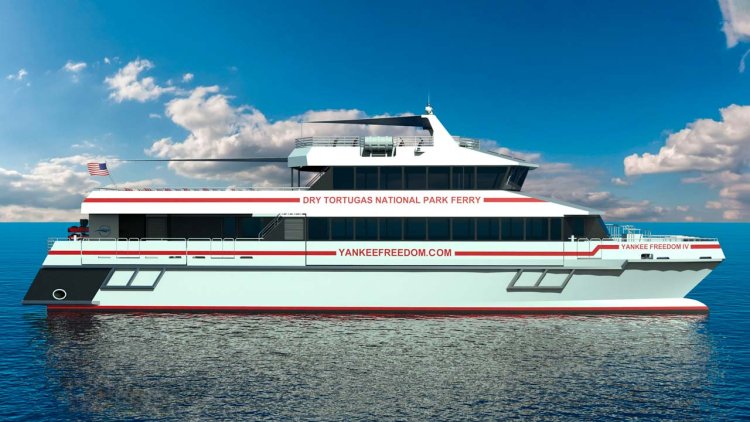
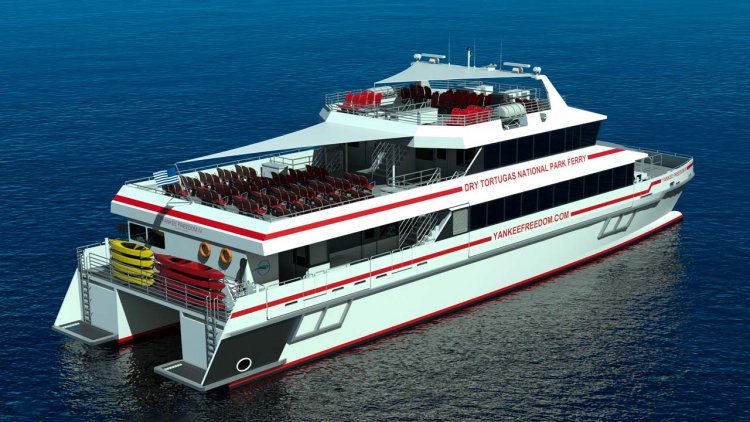
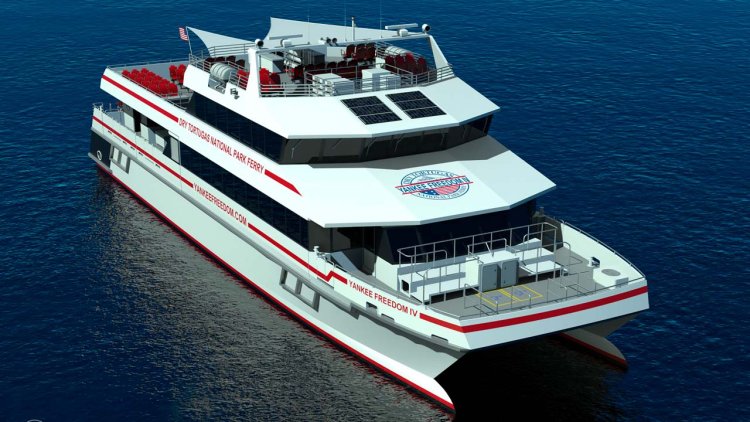
The new vessel, Yankee Freedom IV,will replace the 250-passenger Yankee Freedom III, which was also designed by Incat Crowther. Like its predecessor, Yankee Freedom IV will provide service on the 70-mile route between Key West in Florida and the Dry Tortugas National Park.

The commissioning of Yankee Freedom IV reinforces Incat Crowther’s position as one of the most trusted passenger ferry designers in North America. When construction is complete,Yankee Freedom IVwill join the more than 130 Incat Crowther designed and US-built passenger ferries now in operation in the region.

The vessel’s main deck will transport up to 130 passengers and will feature tables as well as a snack bar with an attached storage room, and an audio-visual passenger information centre. The aft main deck will feature an open, covered area for passengers as well as a shower area and stowage for kayaks and camping gear. Passengers will be able to enjoy sweeping views while on board via a passenger viewing area on the open bow deck.

Yankee Freedom IV’s second deck will feature enclosed seating and tables for 60 passengers, as well as exterior seating for 72 passengers. Seating for an additional 40 passengers will be located on the open-air upper deck.

In a bid to further reduce the vessel’s environmental footprint beyond EPA standards, Yankee Freedom IV will be fitted with exhaust gas treatment for its generating sets, solar panels, energy efficient LED lighting and a zero-discharge black and grey water system. In addition, heavy-metal-free bottom paint and zero-VOC vinyl marine film will be used on the exterior instead of paint.

Yankee Freedom IV will be capable of reaching top speeds of 28 knots and will be powered by a pair of MTU 12V4000M65R EPA Tier 4-compliant diesel engines.

Commenting on the project, Grant Pecoraro, Incat Crowther’s US Managing Director said, “We are thrilled to have this opportunity to work with Gladding Hearn and Yankee Freedom on this exciting project. They are both wonderful organizations and it is our pleasure to collaborate with them to bring this new vessel into service. We are grateful for the confidence they have in Incat Crowther to be their design partner once again.”

Delivery of Yankee Freedom IV is expected to take place in 2026.

Ørsted to acquire Eversource’s 50 percent share of Sunrise Wind

0

The acquisition is subject to the successful award of Sunrise Wind in the ongoing New York 4 solicitation for offshore wind capacity, signing of an OREC (Offshore Wind Renewable Energy Certificates) contract with New York’s energy agency, NYSERDA, finalization of acquisition agreements, receipt of construction and operations plan (COP), and relevant regulatory approvals.

If Sunrise Wind is not successful in the solicitation, the existing OREC contract for Sunrise Wind will be cancelled per the state’s requirements, and Ørsted and Eversource’s 50/50 joint venture for Sunrise Wind will remain in place. In that scenario, the joint venture will evaluate its next steps. If the project is provisionally awarded, a new contract will be negotiated with NYSERDA under the updated terms of the current solicitation.

As the most mature offshore wind project in New York’s pipeline, Sunrise Wind is, if awarded in the New York 4 solicitation, expected to be completed in 2026, helping New York achieve its goal of reaching 70 percent renewable energy by 2030.

The Sunrise Wind design has been reviewed and accepted by all relevant state agencies, and the project has secured all major supplier and project labor agreements to commence construction shortly after award. Final federal permits are expected this summer.

David Hardy, Group Executive Vice President and CEO of Region Americas at Ørsted, says:

“Following a thorough risk review of our US portfolio, we’re comfortable with taking full ownership of Sunrise Wind if the project is awarded in New York 4. This transaction is a value-accretive opportunity for Ørsted and the best path forward for the project.

“Sunrise Wind will be our third offshore wind farm off the Northeast coast, following South Fork and Revolution Wind, which are already under construction. The Northeast is an increasing priority for Ørsted, including these projects, port assets, a trained workforce, and supply chain partners. We’re building a future offshore wind hub that is strategic for Sunrise Wind, if awarded, as well as for upcoming solicitations in the region, helping us to differentiate and de-risk potential future bids and projects.”

Joe Nolan, Chief Executive Officer and President of Eversource Energy, says:

“We’re proud of the work we have already accomplished for Sunrise Wind and look forward to continuing our leadership position building onshore interconnection systems for offshore wind projects in the Northeast.”

This destructive fishing style doesn’t just harm marine life

0

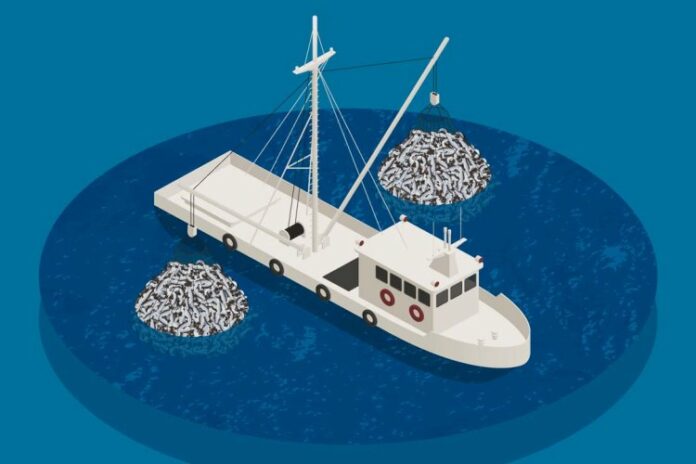
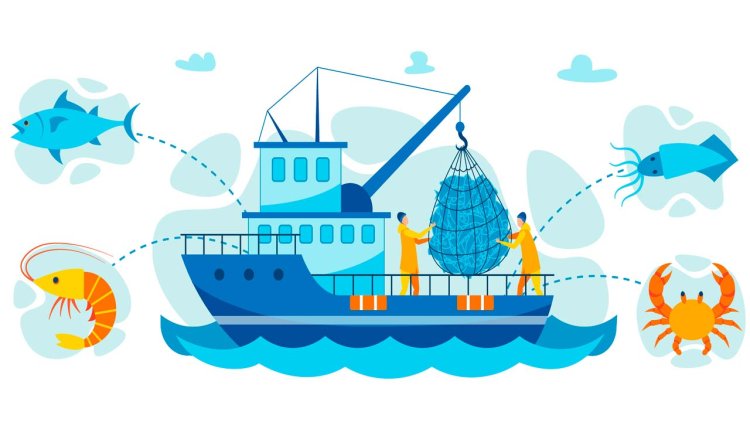
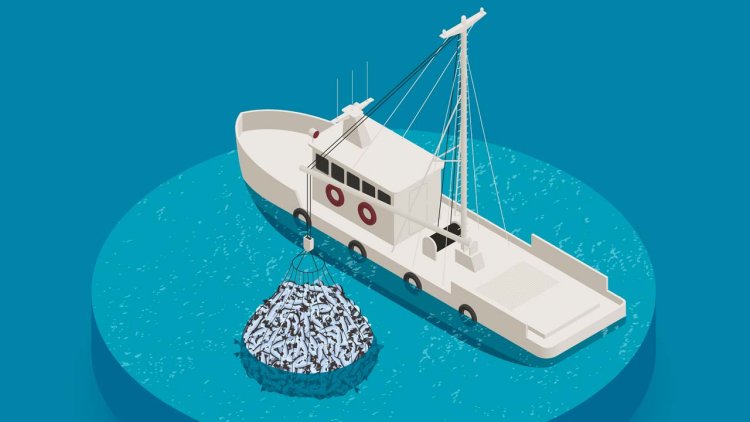
Bottom trawling, or the use of heavy nets to scrape the ocean floor for fish, has a detrimental effect on sea life and marine ecosystems. Despite that, the practice still provides over a quarter of fishery catches worldwide. 

Now, a landmark new study published in the journal Frontiers in Marine Science has found that bottom trawling is responsible for feeding up to 370 million metric tons of carbon dioxide into the atmosphere every year, making the practice destructive for both ocean life and the climate.

Bottom trawling occurring between 1996 and 2020 contributed 0.97 parts per million to atmospheric CO2, according to the paper. If it continues as is, the authors predict it will add an additional 0.2-0.5ppm of CO2 by 2030. For context, the growth rate of carbon dioxide in the atmosphere currently increases on average by about 2.4ppm per year, according to the 2023 Global Carbon Budget report.

That may be just a modest portion of overall emissions, but experts say even small reductions can help fight climate change. 
“Global warming is like death by a thousand cuts. It’s lots of different sources producing CO2 emissions,” said Enric Sala, a marine ecologist, National Geographic Explorer-in-Residence and one of the authors of the new study. “Bottom trawling emissions are small compared to the emissions produced by burning fossil fuels on the land, but everything, everything counts.” 

To curtail this destructive practice, consumers might be tempted to go out of their way to avoid fish caught with bottom trawling gear at the grocery store, but Sala adds that, with the exception of a few concerted cases, this may not end up making a difference. Rather, he argues, the focus should be on getting protected areas to fully restrict the fishing technique. 

“What makes the most sense would be to ban bottom trawling in marine protected areas,” said Sala. “Let’s start with that.” 

Between 55 and 60 percent of emissions produced from bottom trawling underwater is released into the atmosphere within an average of nine years, while the remaining CO2 can create more acidic conditions where it’s released, per their results. At roughly 370 million metric tons of CO2, the estimated yearly fraction of carbon dioxide emitted to the atmosphere by trawling is nearly double the annual emissions from fuel combustion for the entire global fishing fleet. 

“This helps countries understand that this industry can, and is, emitting CO2,” said Trisha Atwood, an associate professor at Utah State University and lead author. “That they have the potential to mitigate that, by better managing how fishing is done and where fishing is done.” 

Trawling the seafloor for fish typically involves the use of metal “doors” that can each weigh over 11,000 pounds, used to navigate and hold weighted nets at the intended location—which can span over 600 feet. This practice can rip up sediment and destroy natural habitats by causing physical disturbances on the seabed that have been compared to forest clearcutting. 

This widespread fishing practice emits the most emissions in the East China Sea, the Baltic Sea, the North Sea, and the Greenland Sea, according to the new paper. It also identifies the South China Sea, the Norwegian Sea, and the Pacific coast of Japan as areas where the authors see more trawling-induced CO2 released to the atmosphere than expected, based on local trawling activity.

Using past research on carbon storage potential, fishing data tracking where bottom trawling occurred, and ocean circulation models, the researchers estimated how much CO2 trawling pumped into the atmosphere between 1996 and 2020. They then modeled two possible future scenarios, one where all bottom trawling stops in 2030 and another where all trawling stops in 2070.

“The CO2 that is produced by trawling elsewhere does move in the ocean. It doesn’t come up right where you trawl, necessarily,” explained Atwood, describing the “shocking” phenomena, where trawling in one place is actually causing CO2 to be emitted in another, as a “neighbor” effect. 

A 2021 paper she co-authored with Sala was the first to quantify the possible release of carbon into the ocean from bottom trawling, which they say prompted this research. 
Some argue that the call for action issued by these new findings should be more assertive. 

Consumers in the European Union should be able to identify whether or not the fish they’re considering buying at the supermarket has been procured through trawling, as the EU mandates sources of unprocessed fish be labeled with the type of fishing gear used for the catch. However, compliance with those regulations varies among products and countries. 

In the U.S., no such regulations exist, although bottom trawling is prohibited in over half of U.S. federal waters and the gear used to trawl is prohibited in more than a third, per a 2023 U.S. Fishery Management Council report.

But Sala views “putting the onus on consumers” as a “typical tactic used by industry to deflect responsibility.” He says that despite consumer choice being “hailed” as a solution to reducing  overfishing, not enough people change their eating behavior  to make much of an impact. Instead, he’d rather see trawling banned in marine protected areas, where the fishing practice is still largely permitted. 

Source: National Geographic

Austal to build Incat Crowther designed catamaran for Rottnest Fast Ferries

0

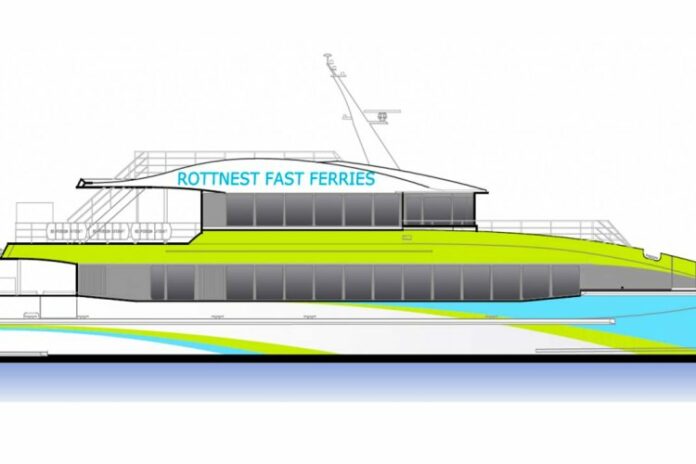
Collaborating with vessel designer Incat Crowther, Austal will commence construction of the aluminium catamaran at the company’s Philippines shipyard in the first quarter of CY2024.

Austal Limited Chief Executive Officer Paddy Gregg said the new contract continues a long and successful association between Austal and Australian-based designer Incat Crowther that has delivered multiple vessels over several decades.

“Austal and Incat Crowther have been successfully working together to deliver commercial vessels for over 20 years, including multiple ferries and crew transfer vessels for customers throughout Southeast Asia and the Middle East,” Mr Gregg said.

“We’re delighted to be working with Incat Crowther again, on this exciting new catamaran for Rottnest Fast Ferries; locally owned and operated from Hillarys Boat Harbour in Perth, Western Australia.

“The Austal team look forward to delivering an outstanding new vessel for Rottnest Fast Ferries that will offer an exceptional experience for passengers and a reliable and efficient vessel for the operators.”

The 32 metre aluminium catamaran will have a capacity for up to 400 passengers and 5 crew seated over 3 decks, and extensive cargo space available for passenger’s bicycles and baggage securely stored on 2 decks. With 2 x 1029kW MAN D2862 diesel engines driving fixed pitch propellers, the vessel will have an operating speed of up to 25 knots on the 45 minute journey from Hillarys Boat Harbour to Rottnest Island.

Wartsila extends an agreement with Carnival Corporation

0

The agreement, which was due to expire in March 2029, will now be valid until March 2030. It covers the maintenance, technical support, optimisation and fuel saving solutions for 57 cruise ships within the global Carnival Corporation fleet. The contract was signed in October 2023.

By optimising the performance and efficiency of the ships’ Wärtsilä engines, fuel consumption is reduced, which in turn lowers greenhouse gas emission levels. The programme is considered a key element within Carnival Corporation’s strategy to reduce greenhouse gas emissions along its fleet operations.

“In extending our agreement with Wärtsilä, we are emphasising our commitment to reducing our environmental impact as we pursue net zero emissions by 2050,” says Riccardo Cordara, AVP Fleet Asset Management at Carnival Corporation. “The partnership and collaboration with Wärtsilä are extremely important to us, and we appreciate the ongoing support they are able to provide.”

“We are pleased to continue and strengthen our long-term partnership with Carnival Corporation via this agreement extension. Wärtsilä can leverage on its vast experience, its in-house expertise, and its innovative approach to maintenance support to optimise performance and efficiency. The result benefits not only cruise operations, but the environment as a whole,” says Andy Dickinson, Director PBL at Wärtsilä.

In addition to scheduled and unscheduled spare parts, the Wärtsilä agreement includes technical advisory for major overhauls, technical audits, crew training, equipment monitoring, technical support, and an industry-first tailored fuel savings programme.