-6.1 C
New York
Home Blog Page 223

Funding poured into seven Thames environmental projects

0

This year’s Thames Environment Fund, in its third year of funding, has been doubled to £50,000, with each maximum grant tripled to £15,000.

The PLA welcomed a wide variety of applications from community groups, charities, NGOs, academic institutions and other not-for-profit organisations, which applied for grants for environmental projects representing different parts of the river as well as an array of environmental goals, including energy transition to electric, litter clearance, and microplastic filtration.

Following a comprehensive review and assessment of all the applicants, the successful Thames Environmental Fund projects are:

  1. Greenwich Yacht Club for the purchase, installation and testing of three electric outboard boat motors, as well as an outreach initiative to educate members and the community about the benefits of electric outboards. Award total: £14,355.45
  2. Fulham Reach Boat Club for their plan to engage participants in regular litter-picking sessions and use weekly water quality testing to educate people on river pollution and collect a reliable dataset. Award total: £2,000.00
  3. South Dock Marina Berth Holders Association for their project that aims to extend the flora introduction in the Greenland Dock Lock Area. With the addition of eight, two-metre square floating planter sections to adjoin the existing line of five, they will create a reed bed of sufficient density to be self-sustaining. An ‘H’ layout will incorporate sheltered areas for bird life. Award total: £2,500.00
  4. University College of London (UCL) for their project to research filtration techniques; collecting microplastics from the river Thames and developing a series of three prototypes to quantify their effectiveness. Award total: £12,500.00
  5. London Wildlife Trust for the purchase of essential Personal Protective Equipment (PPE), tools, equipment, and materials for the Isleworth Ait volunteering sessions. The funding will also facilitate contract work required on trees on the reserve and improvements to the landing pontoon on the island to improve access. Award total: £12,130.00
  6. Medway Swale Estuary Partnership for their project that aims to undertake 12, monthly litter clean-ups on six sites across the Thames and Medway Swale Estuaries. Award total: £2,250.00
  7. Tidey for their project informing groups of students about river pollution and promoting litter-picking, caring for river wildlife, and protecting the river. The project will also involve litter picking events with these students on the foreshore, with data feeding into Thames21’s water pollution database and the PLA’s Cleaning the Thames. Award total: £2,500.00

The PLA’s Director of Sustainability, Grace Rawnsley, said,

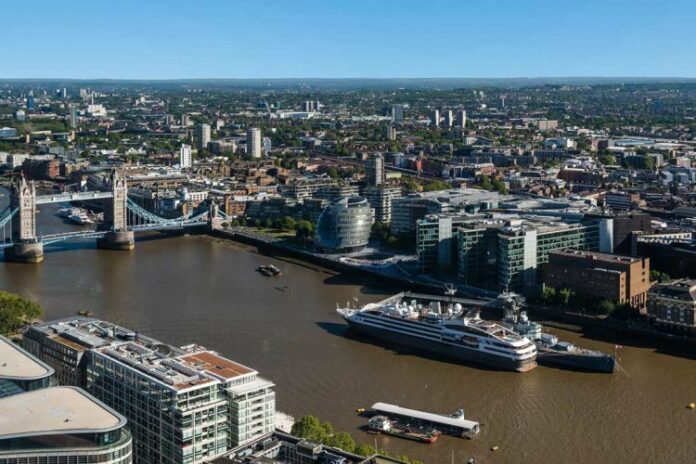
“As part of our Thames Vision 2050 strategy, we’re working towards the river between Teddington Lock and the North Sea becoming the cleanest it has been since the Industrial Revolution.

“Our Thames Environment Fund is one of the ways in which we can support different groups along the tidal Thames who share our ambitions to improve the environment and wildlife within it.”
Innovative green hydrogen shore power trial launched at the Port of Leith

0

A consortium of four Scottish renewable and maritime companies have been awarded a UK Government Department for Transport grant of over £535,000 to develop an innovative UK-first approach that will use clean, green hydrogen energy to reduce carbon emissions from vessels when berthed in port.

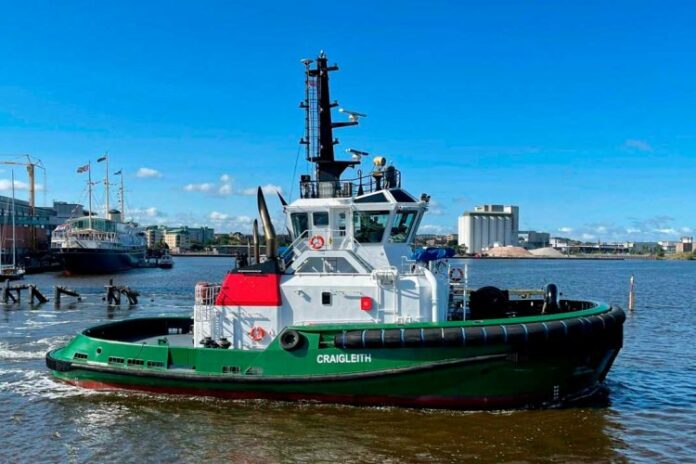
Supported by Forth Ports, the highly innovative trial will see the large tugs operating out of The Port of Leith powered by green hydrogen when tied up. The green hydrogen will be produced from wastewater from a nearby water treatment works.

The year-long trial, run by partners Forth Ports, Waterwhelm, Logan Energy and PlusZero, will deliver a state-of-the-art demonstrator system for green hydrogen shore power which marine vessels can use when they are berthed, removing the need for the diesel-powered systems which are currently in use on some quaysides.

The project draws together leading Scottish innovation and technology with sustainability expertise from the water, energy and transport sectors, and will be the first of its kind to be demonstrated at a UK port – leading the way for a circular economy approach to port decarbonisation across the country, particularly in remote locations or areas where a connection to the main electricity grid is not available.

Alasdair Smith, Commercial Director of Targe Towing, part of the Forth Ports group, said:

“Our tug fleet currently uses diesel-powered generators to provide electricity when tied up in port. This new green hydrogen system shows how tugs or other vessels can be completely emission-free whilst berthed.”

Using specialist water treatment technology provided by Waterwhelm, fresh re-use water will be made from wastewater from the treatment works site in Seafield, Edinburgh, which will then be used to produce hydrogen at Leith Port.

Dr Richard Wood, Research and Developer Manager and Engineer from Waterwhelm said:

“Following a successful feasibility study, we are delighted to be partnering with Forth Ports, Logan Energy and PlusZero to deliver a combined state-of-the-art demonstrator system at the Port of Leith for the production, storage and utilisation of green hydrogen to supply green shore power.

“Waterwhelm’s system will utilise waste heat and waste water to produce re-use water for the process – a new, innovative approach which is much needed to support the drive for decarbonisation whilst reducing the upcoming demand on local water networks.”

Green hydrogen specialist partners Logan Energy and PlusZero will apply their expertise to bring the clean power solution to the port – a significant collaboration that highlights major strides in Scottish hydrogen innovation.

Using a process known as electrolysis, East Lothian-based Logan Energy’s electrolyser technology will split the re-use water into oxygen and hydrogen.

The hydrogen will then be used as a clean fuel for PlusZero’s combustion engine which will generate green electricity to provide shore power for the tug boats when they are in port, replacing the need for polluting diesel generators.

Bill Ireland, Chief Executive Officer of Logan Energy said:

“Hydrogen-based solutions can play a pivotal role in decarbonisation and achieving net-zero targets both in the UK and globally.  We’re honoured to be part of this consortium that can develop one such application where our innovative solutions can benefit UK industry.

“Logan Energy’s fully integrated system approach will take green energy and Waterwhelm’s clean water supply and produce, compress, and store hydrogen for the purpose of powering PlusZero’s equipment, without producing any emissions.  This will be a key demonstration within the marine sector that can be easily replicated elsewhere.”

David Amos, Managing Director at PlusZero said:

“There is a huge amount of momentum behind hydrogen as an accelerator to the global energy transition. PlusZero’s ready-to-go clean power solution replaces the need for polluting diesel generators across multiple sectors of the economy – construction, events and production, and the industrial sectors.”

The project is part of the Clean Maritime Demonstration Competition Round 4 (CMDC4), funded by the UK Department for Transport (DfT) and delivered by Innovate UK. CMDC4 is part of the Department’s UK Shipping Office for Reducing Emissions (UK SHORE) programme, a £206m initiative focused on developing the technology necessary to decarbonise the UK domestic maritime sector.

Yemen’s Houthi rebels escalate Red Sea attacks, hit Trafigura fuel tanker

0

Yemen’s Houthi rebels on Friday stepped up attacks on vessels transiting the Red Sea, including a hit that sparked a fire on a fuel tanker operated on behalf of trading firm Trafigura.

Trafigura said a missile struck the fuel tanker Marlin Luanda as it transited the Red Sea. The tanker was carrying Russian naphtha purchased below the price cap in line with G7 sanctions, a Trafigura spokesperson said.

Firefighting equipment on board was being deployed to suppress and control a fire in one cargo tank on the starboard side, the company said in an emailed statement.

“We remain in contact with the vessel and are monitoring the situation carefully,” it said, adding military ships were underway to provide assistance.

Attacks by Houthi rebels have primarily targeted container vessels moving through the Red Sea. Many oil tankers have kept using the route.

On Friday, vessel Free Spirit, chartered by Vitol to carry crude oil, did a U-turn before reaching the Gulf of Aden, shortly after the attack on the Marlin Luanda, according to data from LSEG.

A representative for Vitol did not immediately respond to a request for comment.

Earlier, the United Kingdom Maritime Trade Operations (UKMTO) agency and British maritime security firm Ambrey said they had received reports of vessels being struck in the Red Sea near Yemen’s Aden and a fire breaking out aboard.

The Houthi military spokesperson said naval forces carried out an operation targeting the “British” tanker Marlin Luanda in the Gulf of Aden, causing a fire to break out.

UKMTO received a report of an incident approximately 60 nautical miles south east of Aden where “a vessel has been struck by a missile and remains on fire.” Crew members were reportedly safe.
“Coalition Warships are in attendance and supporting the vessel,” UKMTO added.

Ambrey also said it was aware of an incident 55 miles (88.5 kilometres) southeast of Aden where a fire broke out after a merchant vessel was hit by a “missile”.

Earlier, UKMTO reported an incident in which two missiles exploded in waters near a ship off the port of Aden and another one 60 nautical miles off Yemen’s Hodeidah port.

It was unclear if one of those vessels was the Marlin Luanda.
The U.S. military said in a statement it shot down an anti-ship ballistic missile from a Houthi-controlled area of Yemen, adding there were no injuries or damage.

Yemen’s Iran-aligned Houthi militants have launched waves of exploding drones and missiles at vessels since Nov. 19, in response to Israel’s military operations in Gaza. Some shipping companies have suspended transits through the Red Sea and taken much longer, costlier journeys around Africa.

U.S. and British warplanes, ships and submarines have launched dozens of retaliatory air strikes across Yemen against Houthi forces.

Source: Reuters 
Reporting by Enas Alashray and Ahmed Tolba in Cairo, Arathy Somasekhar and Georgina McCartney in Houston and Mohammed Ghobari in Aden; Editing by Alex Richardson, Liz Hampton, Bill Berkrot and David Gregorio

Government gives green light for three Ports of Stockholm EU grant applications

0

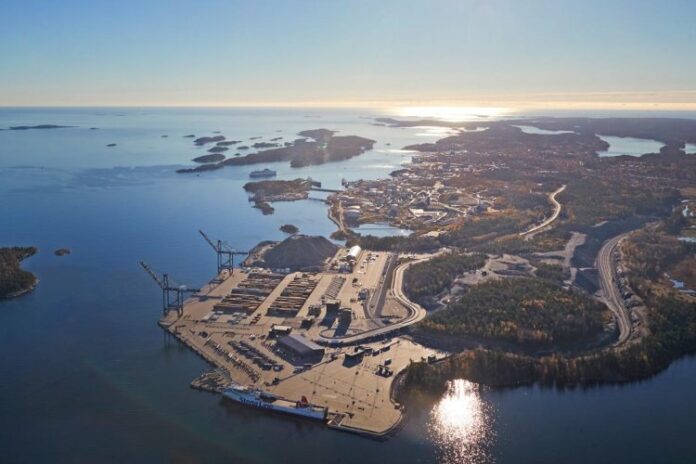
Government approval has been given for all three applications from Ports of Stockholm, in collaboration with other ports, to be submitted to the EU Connecting Europe Facility (CEF) to apply for grant funding.

The goals include augmenting the electricity infrastructure by increasing onshore power connections at Ports of Stockholm and other ports. This is intended to ensure transition to more sustainable shipping with minimal quayside air particle emissions.

“Together with other ports and stakeholders, we want to enable the rapid and safe expansion of onshore power connections for vessels at the quayside throughout the entire Baltic Sea region. This positive decision from the Swedish Government shows the increased electrification of the transport sector, with a focus on shipping, is a prioritised area. This expansion will result in a greater ability to meet our own and the EU environmental goals,” says Jens Holm, Chair of the Board of Ports of Stockholm.

The development of onshore power connections for container and passenger ships in core ports is one of the 2030 targets of the EU climate goals and “Fit for 55” conversion to greener shipping policy.

“National and international collaborations with other ports and stakeholders in these types of projects are important factors for future success in achieving environmentally beneficial results for port operations and shipping in general. We see an obvious added value in using external funding in the form of EU grants to be able to accelerate our environmental initiatives, in this case our proposals for onshore power connections at the quayside,” explains Lotta Andersson, Public Affairs and EU Coordinator.

If the projects are awarded EU funding, they will run between 2024 and 2025, or until 2026 at the latest.

Jan De Nul signs Ørsted’s Hornsea 3 export cable contract

0

Jan De Nul Group and Ørsted have signed the export cable contract for the Hornsea 3 offshore wind farm in the UK. Jan De Nul Group will be responsible for the seabed preparation, transport, installation and protection of 350 km of DC export cables connecting the wind farm to the UK electricity grid.

The Hornsea 3 offshore wind farm is located 160 km off the Yorkshire coast in the UK. With its 2.9 GW capacity, this wind farm will become the largest individual offshore wind farm to date and will bring the total capacity of the Hornsea offshore wind zone to 5.4 GW, the world’s largest.

The two DC export cables will have a combined length of 350 km and connect the wind farm to the national electricity grid. Hornsea 3 will generate enough renewable electricity to power the homes of 3.3 million British households.

Wouter Vermeersch, manager offshore cables at Jan De Nul Group: “We are proud to support Ørsted in building the world’s largest individual offshore wind farm by connecting 2.9 GW of renewable energy capacity to the UK’s national grid. Thanks to our collaboration with Ørsted, which includes recent projects such as the monopile installations for Gode Wind 3 and Borkum Riffgrund 3 in Germany, we keep on constructing the energy transition together.”

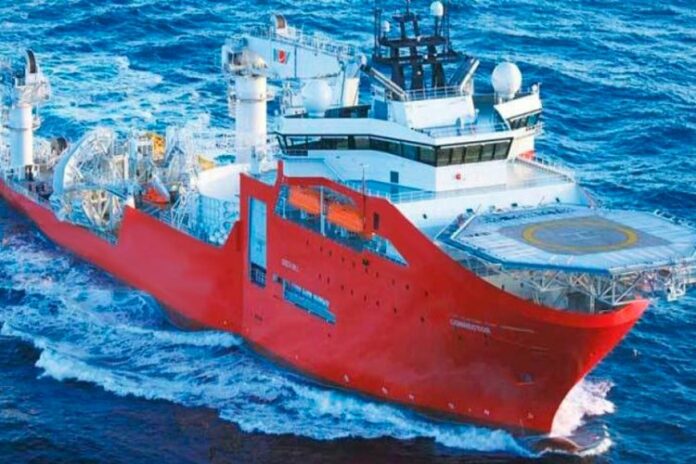
Thanks to its extensive and diverse offshore fleet, Jan De Nul Group provides the optimal services to help its customers in their transition to renewable energy. For the installation and protection of the DC export cables, the company is going to deploy several vessels. Cable-laying vessels Isaac Newton and Connector will transport and install the cables, and to protect the cables a variety of burial solutions will be used including the rock-installation vessel Simon Stevin which will install up to 150,000 tonnes of rock to protect the cables. The works will start in 2025 and are expected to be completed early 2027.

First charging station for electric trucks opened in the port of Rotterdam

0

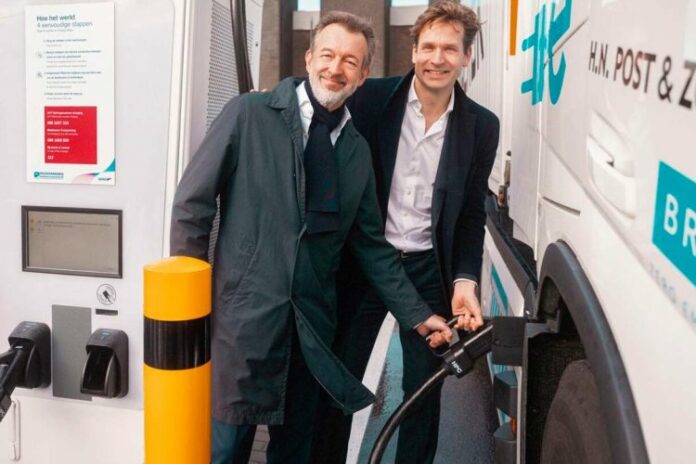
Together with Truckparkings Rotterdam Exploitatie (TRE), the Port of Rotterdam Authority today opened the first charging station for electric trucks in the port. 

Making road transport more sustainable is an important step towards CO2 neutral freight transport and contributes to a cleaner living environment. Research shows that around 70% of container trips by road remain within the region. Electric trucks are ideally suited to make trips over these relatively short distances more sustainable.

TRE has therefore worked with the Port of Rotterdam Authority to install the first five charging points in the truck park, which can accommodate a total of eight electric trucks. The truck parks are designed to be safe and comfortable and there is 24/7 surveillance of parking and charging bays. Reservations are not yet necessary for charging, so e-trucks can report directly via the intercom at the entry point. E-trucks do not pay a parking fee but may use all the facilities of the secure truck park.

The project in the Waalhaven was realised in cooperation with ABB E-mobility, Batenburg Techniek, KWS Infra, Stedin and VARO Energy, which manages the charging infrastructure for TRE. Additionally, the initiative is part of the Rijkswaterstaat Living Labs Heavy Duty Charging Stations programme.

Vincent Karremans, Alderman for Enforcement, Outdoor Space and Mobility of the Municipality of Rotterdam:

“The more quiet, clean and sustainable trucks driving around the city and port, the better. With this charging station, we are taking another great step forward in making the truck fleet more sustainable and making Rotterdam more liveable.”

Boudewijn Siemons, interim CEO and COO of the Port of Rotterdam Authority:

“Sustainable logistics is a key pillar of our strategy for a future-proof port with net zero CO2 emissions. Providing charging infrastructure for trucks can make the transport sector more sustainable. Electric cargo transport also contributes directly to better air quality in the port.”

Ton Barten, Director of TRE:

“Carriers can schedule smart combinations by, for example, charging their trucks while drivers stay in the truck park for mandatory rest. A comfortable, safe and easy switch to sustainable transport without any loss of time. This paves the way for carriers to become more sustainable and invest in an electric fleet.”

A January 2022 TNO study commissioned by the Port of Rotterdam Authority shows that around 2,000 electric trucks can be expected in the port area by 2030. This will require about 50 charging points.

Companies like Innocent Drinks and Den Hartogh already put the first 50-tonne electric trucks into service in Rotterdam in 2021. In 2022, DFDS placed an order for more than 125 e-trucks in Europe, some of which will also be deployed in Rotterdam. Besides electrification, hydrogen will also play a role in sustainable transport.

BOEM and NOAA announce final North Atlantic Right Whale and Offshore Wind Strategy

0

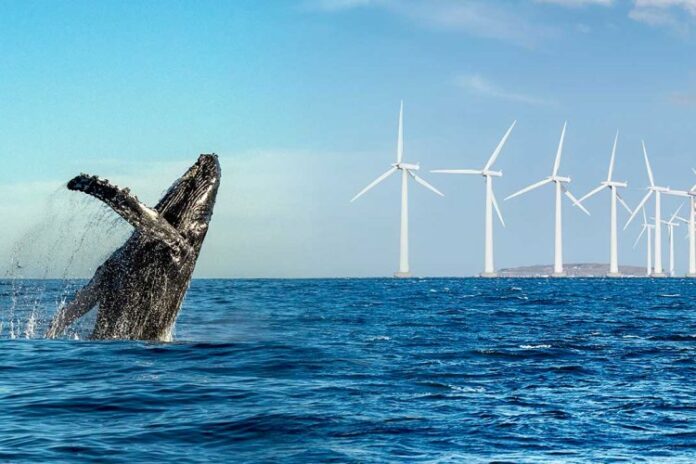
The Bureau of Ocean Energy Management (BOEM) and the National Oceanic and Atmospheric Administration (NOAA) Fisheries have released a final joint strategy to protect and promote the recovery of endangered North Atlantic right whales while responsibly developing offshore wind energy.

The strategy identifies the agencies’ goals and key actions for continuing to evaluate and mitigate the potential effects of offshore wind energy development on North Atlantic right whales and their habitat. It also builds on existing mitigation measures to protect North Atlantic right whales from the potential impacts of offshore wind development. 

BOEM and NOAA Fisheries incorporated the best available scientific information and Tribal and public feedback in the strategy. The draft strategy was developed to support the Biden-Harris administration’s goal of deploying 30 gigawatts of offshore wind by 2030. 

“Right whales are endangered and climate change is impacting every aspect of their survival – from changing ocean habitat, prey availability and affecting migratory patterns – making the transition to cleaner, renewable energy critically important,” said NOAA Fisheries Assistant Administrator Janet Coit. “Working together on this strategy leverages the best available scientific information to inform offshore wind management decisions while conserving and recovering the species.” 

The North Atlantic Right Whale and Offshore Wind Strategy provides guidance for a coordinated effort across the federal government and with agency partners to protect and promote the recovery of North Atlantic right whales and other marine life while responsibly developing offshore wind energy to address the climate crisis.  

The final strategy identifies several actions under three main goals:

  1. mitigation and decision-support tools,
  2. research and monitoring, and
  3. collaboration, communication, and outreach. 

These goals and actions will allow continued, coordinated, and efficient collaborations between BOEM, NOAA Fisheries and our partners; collection and application of the best available scientific information and data insights to inform future decisions, including monitoring and mitigation programs; and implementation of effective measures to reduce risk and avoid and minimize impacts to North Atlantic right whales. 

Immediate impact mitigation efforts include avoiding leasing in areas that may impact potential North Atlantic right whale habitat and high use areas and providing guidance to developers on conducting robust sound field verification to ensure that noise levels expected from offshore wind activities do not exceed thresholds set for certain activities. The agencies invite industry and other partners to join in the implementation of this strategy, which will be evaluated and updated as new information becomes available.  

Maersk names first vessel of its large methanol-enabled fleet Ane Maersk

0

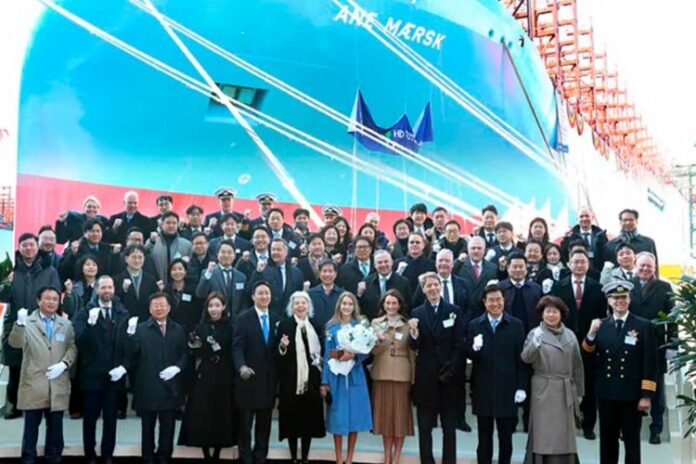
The world’s first large methanol-enabled container vessel has been named “Ane Mærsk” at a ceremony in the shipyard of HD Hyundai Heavy Industries (HD HHI) in Ulsan, South Korea. The vessel is named after Ane Mærsk Mc-Kinney Uggla, the Chair of the A.P. Moller Foundation and A.P. Moller Holding. Ane’s eldest granddaughter served as godmother and christened the vessel by breaking a champagne bottle over the bow.

“Ane Mærsk” is the first of Maersk’s 18 large methanol-enabled vessels, that will be delivered between 2024 and 2025. It is the world’s second methanol-enabled container vessel. In the beginning of February, it will enter service on the AE7 string connecting Asia and Europe, marking a significant milestone in the company’s commitment to pioneering low-emissions shipping solutions. The vessels in the new series have an industry-first innovative design with the bridge and accommodation placed at the very front of the vessel, which ensures fuel efficient operations.

Vincent Clerc, Chief Executive Officer of A.P. Moller-Maersk, said:

“This series of vessels will have a transformative impact on our ambition to progress on our industry-leading climate ambitions. It is a visual and operational proof of our commitment to a more sustainable industry. With “Ane Mærsk” and her sister vessels we are expanding our offer to the growing number of businesses aiming to reduce emissions from their supply chains.”

“Ane Mærsk” will begin her maiden voyage on green1 methanol and Maersk continues to work diligently on 2024-2025 sourcing and bunkering solutions for its methanol-enabled vessel fleet.

Hafnia and Mercuria join forces in the Panamax tanker segment

0

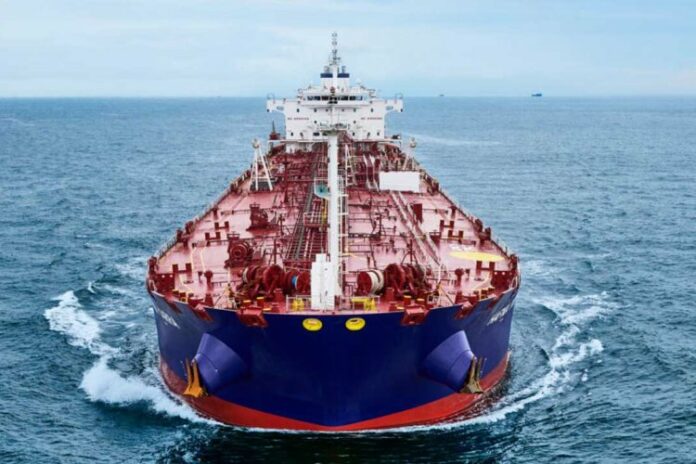
Tanker company Hafnia (Hafnia Pools Pte. Ltd.) and energy and commodity trading group Mercuria (Mercuria Shipping Sarl) have introduced a new “Hafnia Panamax Pool” to commercially operate Panamax Tankers together from their respective US, Europe, and Far East offices.

In a joint effort, Hafnia and Mercuria are setting out to service the industry by initially committing ten vessels with an average age of 13 years to bridge the gap across a rapidly aging segment. Both Hafnia and Mercuria are dedicated to the success and continued growth of this new collaboration. 

This partnership will launch in March 2024 and aims to capitalize on the extensive expertise and resources of Hafnia and Mercuria, striving to deliver operational and commercial excellence, efficiency, and customer service within the Panamax tanker segment. The companies will draw on their well-established combined strengths through this strategic alliance and seize the opportunities in a dynamic global shipping industry.

“With this venture, we look forward to leveraging our combined expertise, and are confident that customers and partners will see immediate and obvious advantages,” said Søren Skibdal Winther, Vice President, Commercial – at Hafnia.

Larry Johnson, Global Head of Freight and Shipping at Mercuria adds, “As Charterers ourselves, we have noticed a deficit of modern tonnage in this segment, and we are delighted to team up with industry-leading tanker owner and pool operator Hafnia in our efforts to service this need.”

McDermott and Baker Hughes safely complete subsea infrastructure in Northern Australia

0

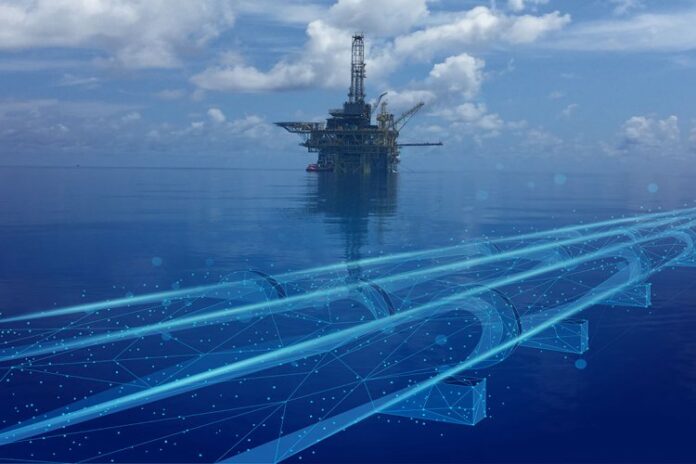
Awarded to the McDermott and Baker Hughes consortium in 2019 by INPEX Operations Australia P/L (INPEX), the subsea infrastructure development project included engineering, procurement, construction and installation (EPCI) of umbilicals, risers and flowlines (URF), a subsea production system comprised of a new 7-inch (approximately 18 centimeters) vertical Christmas tree (VXT) system, all forming a subsea well gathering system (GS4) tied back to the existing Ichthys Explorer central processing facility. 

The consortium’s scope of work also included an in-fill URF EPCI involving the development of new subsea wells tied in to the existing gathering systems.

“The McDermott and Baker Hughes partnership has been marked by resilience and adaptability, guided by our firm commitment to deliver for the INPEX-operated Ichthys LNG and Australia,” said Mahesh Swaminathan, McDermott’s Senior Vice President, Subsea and Floating Facilities. “Together, leveraging McDermott’s unique end-to-end EPCI capabilities and Baker Hughes’ subsea development solutions, we navigated project complexities and overcame the unique challenges posed by the pandemic. Our hard work paid off, and I would like to thank our teams in Perth, Batam, and beyond, whose collective efforts enabled the safe completion of this important work scope.”

“This milestone has been achieved through the successful partnership between Baker Hughes and McDermott to execute for INPEX,” said Romain Chambault, Baker Hughes Senior Vice President, Subsea Projects and Services. “The amount of collaboration shown between the consortium has been truly unique and serves as an industry benchmark for the successful execution of large, complex EPCI subsea projects. Manufacturing the highly complex 7-inch VXT from our dedicated SP&S facility in Batam has expanded the global capability for Baker Hughes in the Asia Pacific region where we are well-positioned to support customers with a strong regional capability, complemented by a strong McDermott presence in Batam and the region as a whole.”