-4.8 C
New York
Home Blog Page 222

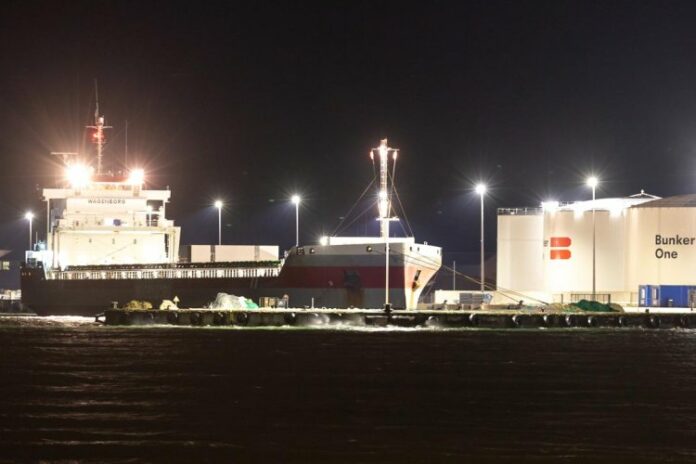
Baseblue and Bunker One collaborate on GHG-reduction initiative with Wagenborg Shipping

0

This innovative co-processed fuel, with a GHG reduction of 68.9%, is a small but meaningful step towards reducing greenhouse gas emissions in shipping.

The achievement is particularly noteworthy as it was accomplished using conventional MGO molecules by their supplier, underscoring the potential for positive change within the sector. Wagenborg Shipping, a reputable Netherlands-based maritime company, has exhibited praiseworthy environmental stewardship by choosing to collaborate with Baseblue BV. This move aligns with eco-friendly practices, with a focus on ISCC/EU accreditation, emphasizing a commitment to sustainable operations.

Patrick Benink, Sales Manager at Baseblue’s Groningen office, expressed,

“This collaboration underlines our commitment to environmental sustainability in the maritime sector. We’re taking steps to lead the way towards a greener future for shipping.”

“Reducing CO2 is one of our key priorities. In close cooperation with our customers, we are exploring the potential of CO-processed fuels. We believe, on the short term it is one of the easiest ways to reduce our environmental impact and overachieve our CO2 reduction targets” according to Sebastiaan Verstappen, Bunker Procurement Manager from Wagenborg Shipping B.V.

The success of this collaborative endeavor reflects the collective dedication of all stakeholders involved in curbing GHG emissions and transitioning towards cleaner, more sustainable fuel alternatives. However, the groundbreaking nature of this co-processed MGO, necessitates careful consideration and coordination among Wagenborg, Baseblue, Bunker One and the supplier.

The delivery occurred on the 18th of October 2023, signifying the united commitment of all parties to fostering an environmentally responsible shipping industry. Together, Baseblue, Bunker One, and Wagenborg aspire to set a new standard for sustainable fuel delivery, contributing to the reduction of greenhouse gas emissions, one vessel at a time.

Crew fears over escalating piracy and war risk threats contribute to fall in seafarer happiness

0

The results of the latest Seafarers Happiness Index, published by The Mission to Seafarers, show a further drop in seafarer happiness for the fourth quarter of 2023, raising serious concerns over conditions for all those working at sea.  

The Seafarers Happiness Index is a quarterly survey commissioned by The Mission to Seafarers and made possible through the sponsorship of NorthStandard and Idwal, as well as the support of Inmarsat. The survey measures the wellbeing of seafarers through ten key questions about their work and life, designed to gauge sentiment about their experiences on board. 

This is fourth successive quarter to show a decline in seafarer happiness. The Q4 2023 survey results show a wide range of reasons for this worrying trend, but common causes for concern expressed by seafarers taking part in the survey include feeling overburdened, underappreciated and disconnected, as well as concerns over a lack of shore leave and an inability to contact family.  

The Q4 report shows an overall fall in seafarer happiness to 6.36 out of 10. This compares to 6.6 in Q3, 6.77 in Q2 and 7.1 in Q1 2023, and represents a considerable decline over the course of the year.

This fall in happiness is driven by a decrease in sentiment across most areas of life on board covered by the survey, with onboard connectivity being the only notable aspect that showed improvement. However, frustration was expressed by some respondents over what seems to be unfair inconsistency in vessel connectivity, with some vessels in the same fleet having better internet access than others. 

Respondents to the Q4 2023 Seafarers Happiness Index also expressed concern over a lack of social interaction and a growing sense of isolation. Whilst seafarers recognise the benefits of spending quality time with their colleagues, much more needs to be done to create focal points that provide time and space together, which in turn helps to build a sense of togetherness and a team ethos onboard. Seafarers also reiterated their concerns about stagnating wages, which are failing to keep up with inflation, and a lack of training opportunities.

The growing security threats to the lives of seafarers are also reflected in the results of the Q4 survey.  It is clear that the escalating risks to seafarer safety from piracy, terrorism and war risks are having an impact on crew welfare. It is also adding to the workload burden on seafarers, due to the ramping up of security duties in higher risk waters. The survey also highlighted the importance of warlike operations area payments. However, there is likely to be a lag between the responses and the official designation of these areas. As such, the Q1 2024 survey should reveal the true impact of these changes.

Looking back at 2023, it is clear that the emergence from COVID was not accompanied by a return to pre-pandemic conditions for seafarers, despite an initial recovery in seafarer happiness in 2022. Extended contracts, diminished employment terms, downward pressure on wages and growing workload demands have undermined welfare and working conditions. In turn, seafarers continue to call for action on shore leave, connectivity, training, diversity, recreation, and mental health support, in order to see their working lives transformed into more sustainable, equitable, and fulfilling careers.

Yves Vandenborn, Head of Loss Prevention Asia-Pacific at NorthStandard said:

“At 6.36/10, Quarter 4 of 2023 reflects a sustained drop for the fourth consecutive quarter in the overall happiness levels of seafarers. The increase in international conflicts and heightened tensions inevitably manifested a degree of anxiety and uncertainty for those at sea. With a global workforce, the maritime industry must be conscious of how easily changes in international relationships have a bearing on the wellbeing on seafarers. A conducive working environment for seafarers can only be created with a sensitivity to the needs of seafarers in times of need. The report once again highlights the importance of having adequate connectivity available to seafarers on board, combined with a good work-life balance and feeling appreciated by the shore management. NorthStandard will continue to collaborate with industry leaders in charting a course towards an improved working environment for seafarers worldwide.”

Thom Herbert, Senior Marine Surveyor and Crew Welfare Advocate at Idwal, added:

“The latest Seafarers Happiness Index report shows disappointing results. We see a continuing negative trend throughout 2023, following some apparent improvements in 2022 as the world emerged from the pandemic. Comments in Q4 and throughout the year seem to present a troubling theme – that many seafarers feel disrespected and undervalued by shoreside colleagues.

“Seafarers shoulder immense responsibilities under challenging conditions yet it seems there is a feeling from crew that some colleagues may not fully appreciate the realities and demands aboard modern vessels. This can foster poor communication and tension. From our experience, we know seafarers often feel overburdened by excessive paperwork and over scrutiny making them feel distrusted and demoralised, and we must try harder to bridge this gap through better dialogue, training, and transparency.”

New Zealand backs away from deep-sea trawling restrictions

0

Under the direction of the new Minister of Oceans and Fisheries Shane Jones, New Zealand is set to push for bottom trawling to continue in the South Pacific and argue against increased ocean protection for vulnerable habitats at the annual meeting of the South Pacific Regional Fisheries Management Organisation (SPRFMO) that begins today in Ecuador.

“Once again New Zealand is standing on the international stage and pushing for destructive bottom trawling to continue unchecked in the South Pacific, lobbying against more protection for fragile deep sea corals and habitats and siding with the fishing industry instead of putting ocean health first”, says Pacific Seamounts Campaign Lead with the Deep Sea Conservation Coalition (DSCC), Karli Thomas, in Ecuador for the meeting.

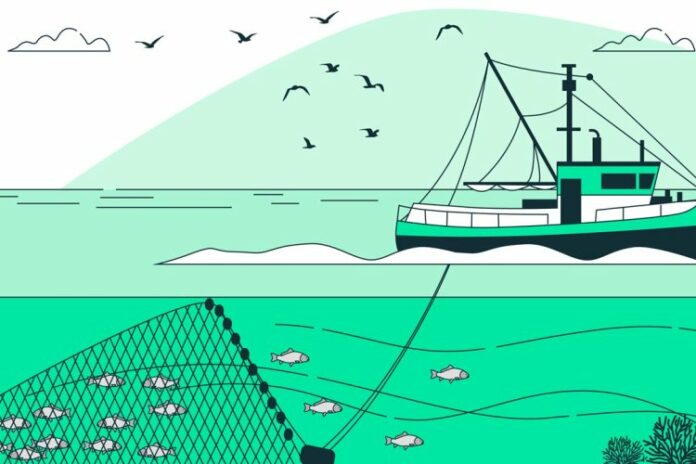
Bottom trawling is a destructive and indiscriminate fishing technique. Huge, heavy nets  bulldoze ancient and slow-growing corals, putting the deep sea habitats they support at risk of permanent loss. The South Pacific is home to many significant coral hotspots and once destroyed, these areas take decades or even centuries to recover, and there’s no guarantee they ever will. 

The New Zealand government may now be the main obstacle to a proposed conservation measure that its own scientists spent the past year developing, one that would protect 70% of high biodiversity areas (like seamounts) within bottom trawling areas, leaving 30% open to the industry.  

Members of SPRFMO agreed by consensus at last year’s meeting that this should be the minimum level of protection from 2024 onwards, and New Zealand – the only nation still bottom trawling in the SPRFMO region – was expected to develop new boundaries to achieve that. But after the change of government, New Zealand has not only abandoned this proposal, leaving Australia to submit it instead, but is now actively working to prevent its adoption.

New Zealand’s own scientists have provided evidence that the 30% of the areas that would be left unprotected contain seamounts – documentation shows one  bottom trawler brought up five tonnes of corals in a single trawl from a seamount in one of the bottom trawl areas. 

“The New Zealand government’s backslide on ocean protection is frankly shameful. They are doing all they can to protect their mates in commercial fishing, while ensuring important habitats in the South Pacific remain unprotected from the ravages of bottom trawling. That’s despite the vast majority of New Zealanders from across the political spectrum supporting increased ocean protection, and less bottom trawling.”, says Greenpeace Ocean campaigner Ellie Hooper: 

“It looks like our government is abandoning multilateralism in the Pacific, and the protection of ocean life, and is instead doing the bidding of the bottom trawl fishing industry. If one country does this, it could be seen as a green light for others to do the same – endangering our oceans and also the fishing industry itself” said Karli Thomas.

“We call on Australia and other countries at this key meeting to move forward with this proposal as an interim step only and commit to strengthening it at the 2025 meeting, to bring it into line with UN commitments.

New Zealand is also pushing a proposal that goes against all sensible fisheries management thinking: to allow carry-over of uncaught catch allowance for two years. This could see up to three years’ worth of orange roughy taken in a single year in the Louisville Seamount Chain east of New Zealand, at a time when scientists have admitted the stock is extremely vulnerable and in  an area of extremely high biodiversity and an ‘Ecologically or Biologically Significant Marine Area’ under the Convention on Biological Diversity. 

“No other international fisheries allow this level of carry-over, and it would be illegal in New Zealand waters – where only 10% carry-over is allowed. By the government’s own admission, this proposal may increase the impact on vulnerable deep sea life,”  said Dr Kayla Kingdon-Bebb, CEO of WWF-New Zealand.

“It would also take us yet further away from delivering on our international commitments – including, potentially, those reflected in Free Trade Agreements with the United Kingdom and European Union,” she said. 

“We call on the meeting to reject New Zealand’s reckless proposal to carry over up to 200% of fishing allowances. It looks like this government is wanting the bottom trawl industry to gear up and go in for a smash-and-grab on the precious Louisville and other Seamounts,” said Barry Weeber, of Environment and Conservation Organisations (ECO), also at the meeting in Manta. 

North of Tyne technology companies to receive turbo boost into offshore renewables

0

Five innovative companies in the North East of England have been selected to turbo boost their technology and fast track their route to market through the Technology, Innovation and Green Growth for Offshore Renewables (TIGGOR) programme from the Offshore Renewable Energy (ORE) Catapult.

Kinewell Energy, Pulcea Ltd, Soil Machine Dynamics (SMD), Walker Subsea and Acuity Robotics have attended the TIGGOR launch event at ORE Catapult’s National Renewable Energy Centre in Blyth after being chosen to each receive a share of £1.2 million through the one-year programme, funded by the North of Tyne Combined Authority (NTCA).

Magnus Willett, Programme Manager for the TIGGOR programme at ORE Catapult, said:

“The TIGGOR programme will support companies within the North of Tyne area to de-risk and accelerate their technology, and boost the local offshore renewable energy supply chain. Crucially it provides an opportunity for these businesses to demonstrate their technology to our commercial partners, Equinor and EDF Renewables, receive business support designed specifically for the offshore renewables market, and encourage academic engagement – increasing their chances of success in this multi-billion pound industry.”

Speaking at the TIGGOR launch event, North of Tyne Mayor, Jamie Driscoll, said:

“How can we give people energy security, push bills down and keep homes warm? As Bob Dylan once said, the answer is blowin’ in the wind.

“With our engineering heritage and north sea coastline, we are leading the revolution in offshore renewable energy. Our investment will support some of the world’s leading innovators in subsea robots and green technology. This will help create well-paid jobs and boost the supply chain. Cheaper bills, thriving industries and more jobs – this is the Green New Deal in action.”

Councillor Richard Wearmouth, North of Tyne Combined Authority portfolio holder for Clean Energy and Connectivity, added:

“We’re delighted to see this part of Northumberland cementing its reputation at the cutting edge of renewable technology.

“The TIGGOR programme has already created scores of new jobs and traineeships and supported nearly 50 businesses. We wish the latest companies to benefit every success and look forward to watching their progress.”

This will be round two of the TIGGOR programme (TIGGOR 2) following the first phase in 2021 that created 22 new jobs, 11 new traineeships and introduced 10 unique products onto the market, including digital twin software for wind farm projects and turbine monitoring sensors. It directly supported nine North East England companies and supported a further 44 businesses through a variety of support programmes. To date, TIGGOR has generated an estimated £4.4 million for the UK economy and is forecast to create a total of 118 jobs over the next five years.

The five TIGGOR 2 companies will develop unique offshore renewable energy solutions over the next year that will further benefit the UK offshore renewable market and wider global industry.

Ian Armstrong, Managing Director of Blyth-based Pulcea, said:

“TIGGOR 2 funding is already proving to be a game changer for Pulcea. Amongst other benefits it is facilitating timely access to the Catapult’s superb test facilities, where we can refine our technology whilst also having it independently verified as to its effectiveness in reducing the impact of the underwater noise produced during the construction phase of offshore wind farms.

“Innovative technology is of no benefit to the environment or to the UK, and global economy unless it can be developed and delivered at commercial scale. TIGGOR is providing the resources to enable Pulcea to do just that.”

Vahid Walker, Technical Director at Newcastle-based Walker Subsea Engineering, added:

“Our region has a rich maritime tradition, and an exceptionally strong automotive engineering cluster. In combination, we have the opportunity to deliver cross-sector innovation to shape the future of the offshore construction industry.

“For Walker Subsea Engineering, the TIGGOR 2 project allows us to build on the success of the Subsea A-Flux, with a 1000m rated 400V battery pack. The project has enabled us to hire talented graduates and puts us in a strong position for growth in 2024.”

As part of TIGGOR 2, the companies will demonstrate their technologies to offshore wind giants Equinor, operator of the world’s largest offshore wind farm Dogger Bank Wind Farm, and EDF Renewables, operator of the Blyth Offshore Demonstrator wind farm.

Andrew Saunders, Dogger Bank Prepare for Operations Manager at Equinor, said:

“Innovation is key to succeed in achieving the UK’s Net Zero and Energy Security targets. Equinor, as the Operator of Dogger Bank is delighted to continue to support the TIGGOR programme as a technical advisor, working with innovative businesses in the local region to further develop their products to the renewables market and ensuring the creation and supporting of local jobs. Congratulations to the successful companies coming into the programme, and we hope to add to the success stories we had with TIGGOR phase 1!”

Over the course of the programme, Equinor and EDF Renewables will also provide technology assessment and advice on how technologies can be applied to offshore wind. ORE Catapult will also offer business support and access to test and demonstration facilities at its National Renewable Energy Centre in Blyth.

QatarEnergy, Excelerate Energy sign agreement to supply LNG to Bangladesh

0

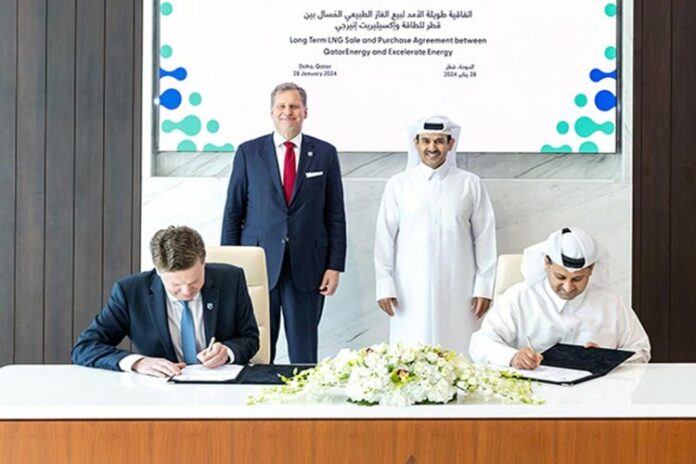
QatarEnergy and Excelerate Energy (Excelerate) signed a long-term LNG sale and purchase agreement (SPA) for the supply of LNG from Qatar to Bangladesh.

Pursuant to the SPA, Excelerate will purchase up to one million tons per annum (MTPA) of LNG from QatarEnergy to be delivered to floating storage and regasification units in Bangladesh for 15 years starting in January 2026.

Excelerate will purchase 0.85 MTPA of LNG in 2026 and 2027, and one MTPA from 2028 to 2040.

Commenting on this occasion, His Excellency Mr. Saad Sherida Al-Kaabi, the Minister of State for Energy Affairs, the President and CEO of QatarEnergy, said: “We are pleased to sign this agreement with Excelerate for the supply of up to one million tons per annum of LNG to Bangladesh. This new agreement will further strengthen our relationship with Excelerate while also supporting the energy requirements of the People’s Republic of Bangladesh and its stride towards greater economic development.”

Qatar is the largest LNG supplier to Bangladesh and aspires to continue being the LNG supplier of choice for partners in the South Asia LNG markets.

ONE advances net-zero commitment with AiP for ammonia dual-fueled vessel

0

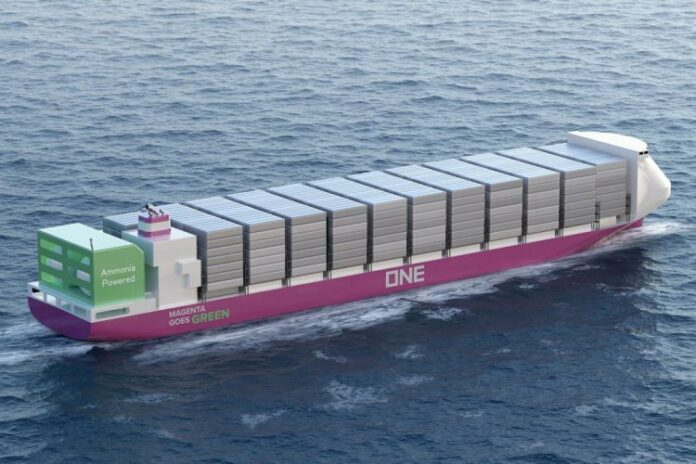
Ocean Network Express (ONE) has announced the award of Approval in Principle (AiP) for an Ammonia Dual-fueled vessel. Along with the investment in 12 methanol dual-fueled vessels, this marks another milestone for ONE on its journey towards net-zero by 2050.

The newly AiP-awarded 3,500 TEU vessel was jointly developed by ONE, Nihon Shipyard Co., Ltd. (NSY) and classification society DNV  , as part of a joint development project established in late 2022 among the three parties.

ONE has been studying the feasibility of ammonia as an alternative fuel for zero emission according to the roadmap for alternative fuels which was developed by ONE in 2022. In conjunction with the roadmap, ONE participated in a GCMD-led ammonia bunkering pilot safety study.

“Ammonia is definitely one of the primary focuses of our research as ammonia fuel has a great potential of generating lower GHG emissions than conventional marine fuels. We are pleased to have made such a progress, and we will continue our study on ammonia.” said Koshiro Wake, Senior Vice President of Corporate Strategy & Sustainability Department at ONE. 

“Ammonia is one of the promising future marine fuels with great potential to decarbonize shipping. We are confident that DNV’s rules for ammonia will help our customers to safely adopt this new fuel type once the infrastructure is in place. We are grateful to our JDP partners for entrusting us with this pioneering project that will help the entire maritime industry to adopt ammonia as a marine fuel”, said Cristina Saenz de Santa Maria, Regional Manager South East Asia, Pacific & India, Maritime at DNV.

ABB and Norwegian Cruise Line Holdings expand long-term partnership

0

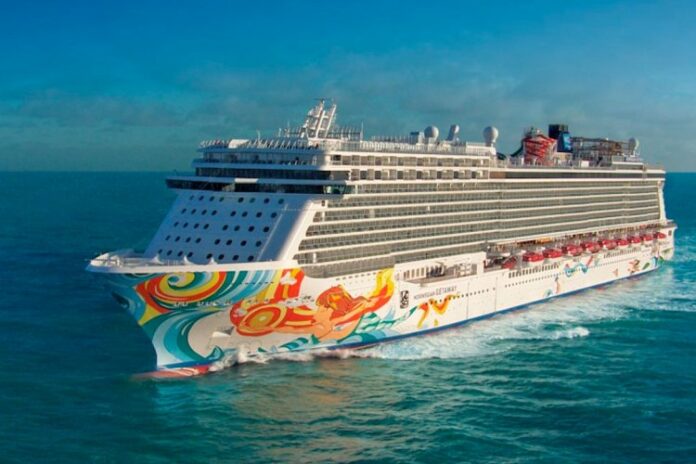
ABB and Norwegian Cruise Line Holdings (NCLH) have signed a long-term partnership agreement to accelerate the decarbonization and digitalization of the Norwegian Cruise Line (NCL) fleet. Targeting increased safety and efficiency, the agreement covers 14 existing ships and a further four vessels due for delivery from 2025 to 2028.

The first phase of the partnership includes a 10-year Azipod® propulsion service agreement for the fleet, providing efficient preventive maintenance to support safety and maximize vessel availability as well as fast turnaround for planned Azipod® propulsion maintenance. In addition, ABB will supply modernization of the propulsion control system for 11 vessels, and shore connection installations on board four ships. With these planned installations the entire NCL fleet can connect to shoreside power supply for emissions-free operations while in port.

“We are pleased to solidify our long-term collaboration with ABB in a strategic partnership that aligns with our climate action strategy, centered as it is on the pillars of efficiency, innovation and collaboration,” said Patrik Dahlgren, Executive Vice President, Vessel Operations, Norwegian Cruise Line Holdings. “With ABB’s support, we will accelerate the decarbonization and digitalization of our fleet, taking our operations another step forward towards a sustainable future.”

“Norwegian Cruise Line Holdings is a highly valued partner of ABB, and this agreement reaffirms the strong collaboration between our companies. We are pleased to continue our collaboration and see our solutions and services playing an integral role in the modernization of their growing cruise fleet,” said Juha Koskela, Division President, ABB Marine & Ports. “Through this collaboration, we will help NCLH to achieve safer and more efficient vessel operations while, more broadly, contributing to maritime decarbonization.”

“Wind yield” in the Dutch and German North Sea generates more than 30 terawatt hours

0

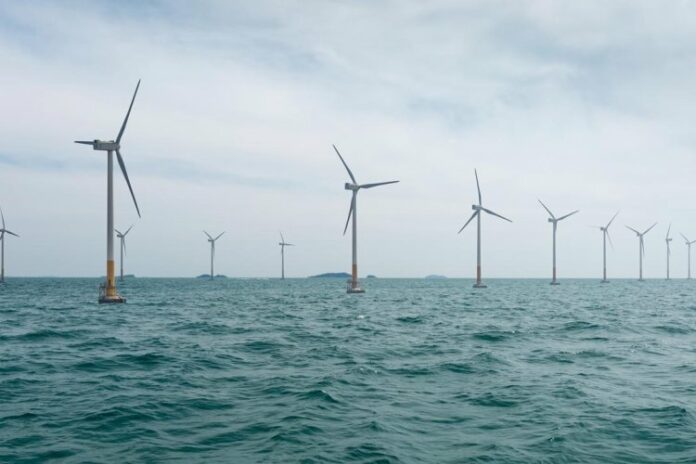
The transmission system operator TenneT transmitted around 19.24 terawatt hours (TWh) of wind energy from the German North Sea to land in 2023. In the Netherlands, the figure was 4.17 TWh. In purely mathematical terms, this means that the annual requirements of more than nine million households can be covered by renewable energy (at 3,250 kWh annual consumption per household).

In the Netherlands, 11.54 TWh of wind energy was transferred from sea to land in 2023 (previous year: 7.91 TWh). The increase compared to the previous year is primarily due to the commissioning of the new Hollandse Kust (noord) offshore grid connection system by TenneT and the corresponding expansion of offshore wind farms in 2023. TenneT’s transmission capacity in the Dutch North Sea increases to 4,666 megawatts (MW). Onshore wind energy capacity in the Netherlands in 2023 was 6,854 MW, which generated 7.96 TWh of wind energy (previous year: 5.14 TWh).

In Germany, the annual result for 2023 was around nine per cent below the previous year’s figure: 21.13 TWh in 2022. Due to the simultaneous strong increase in onshore wind power generation, the total result in Germany in 2023 was 148.97 TWh (previous year 122.79 TWh). At around 13 per cent, the share of North Sea electricity in 2023 was around four percentage points lower than in the previous year (17.2 per cent). Since the completion of the 13th offshore grid connection (DolWin6) in September 2023, TenneT’s offshore transmission capacity in the German North Sea has increased to 8,032 MW (previous year: 7,132 MW).

TenneT COO Tim Meyerjürgens said:

“We can see that the expansion of our offshore grid connection systems in the Netherlands and Germany is progressing well. And onshore grid expansion in Germany is also finally making progress thanks to numerous acceleration measures over the past two years. Nevertheless, the many lost years are now having an increasing impact on the ‘wind yield’ in the German North Sea. Due to the still numerous congestions in the onshore electricity grid, the large wind farms in the North Sea have to be shut down more and more frequently because there are hardly any large conventional power plants in the north that could be throttled instead. As a result, the associated redispatch slows down the generation of offshore wind power.

This not only affects the amount of electricity fed into the grid, but also impacts its price development. This shows that Germany must continue to accelerate the expansion of the grid and the major electricity highways so that the potential of the North Sea as a wind power plant for Germany and Europe can be utilised efficiently as soon as possible.” 

In the German North Sea, the maximum feed-in capacity of offshore wind farms in 2023 was measured at 6,491 megawatts (MW) on 1 April. In the Dutch North Sea, the maximum value was 3,356 MW on 28 November 2023.

The installed capacity of offshore wind farms in the German North Sea was 7,106 MW as at 31 December 2023 (previous year: 7,036 MW). In the Dutch North Sea, the figure as at 31 December 2023 was 5,622 MW (previous year: 3,220 MW).

The installed capacity of wind turbines in the German Baltic Sea totalled 1,352 MW (50Hertz grid area). They generated 4.17 terawatt hours in 2023 (previous year 3.62 TWh), meaning that Germany’s total offshore yield in 2023 was 23.41 terawatt hours (including 19.24 TWh in the North Sea). In addition to 125.56 terawatt hours of onshore wind energy generated, the total yield in Germany was 148.97 terawatt hours (previous year 122.79 TWh).

Lhyfe reviews the results of its offshore hydrogen production pilot

0

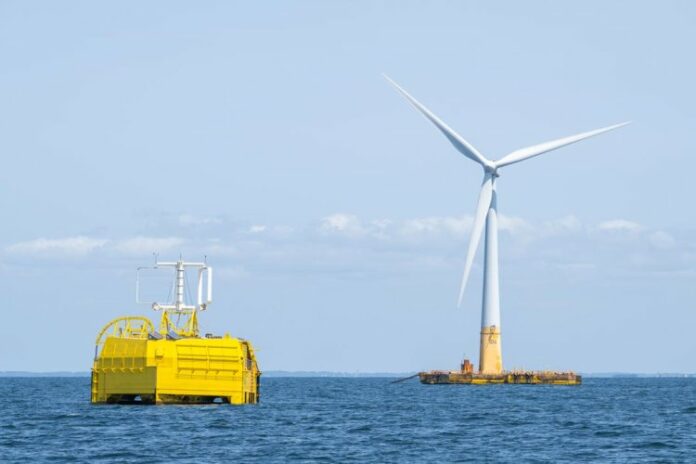
Lhyfe has announced that the operating results of its offshore hydrogen production pilot platform, Sealhyfe, which returned to dock in November 2023, confirm that the initial objectives have been met and enable another step forward for the company.

The Sealhyfe project, equipped with a 1 MW electrolyser supplied by Plug, aimed to demonstrate that producing hydrogen offshore from renewable energy sources is already a reality. 

A range of measurement and data collection instruments were installed on board Sealhyfe to ensure precise management and control of all the production unit’s parameters from September 2022 to November 2023, first at the quayside and then at sea.

Review of test results and analysis of equipment after 14 months of trials

  • System responsiveness and versatility: As offshore hydrogen production is particularly relevant for providing services to the electricity grid, Lhyfe repeatedly tested the system’s versatility and responsiveness in a wide range of configurations. The experiment also confirmed the system’s ability to manage the variability of wind power in specific offshore conditions. The electrolysis system was operated as part of the planned research tests, including at maximum production capacity. The performance achieved was as high as on land, confirming the reliability of the installation.
  • Robustness: Throughout the trial, the production system equipment designed by Lhyfe was tested in extreme conditions for platform movement management, environmental stress, etc. In particular, Sealhyfe was confronted with five significant storms, including Ciaran, which swept along the Atlantic coast in October 2023, with waves over 10 metres high and winds of over 150 kph. A complete analysis of the production system once it was back on land confirmed that all equipment had returned unharmed with its production capacity intact.
  • Equipment and system optimisation: Throughout the experiment, on-board and remotely-controlled measuring instruments were used to identify ways of optimising the efficiency and reliability of Lhyfe’s production units – including safety systems, electrical architecture, automation, fluid and stock management, etc. – for its other projects.
  • Remote control: The quayside benchmark testing phase helped to de-risk the project. The vast majority of impacts specific to offshore hydrogen production were identified and reduced. The site was then operated exclusively remotely from Lhyfe’s control centre, using supervision and control tools specifically developed by the company. The experiment made it possible to validate the software and algorithms for producing green and renewable hydrogen, and to reduce the number of operations required in the marine environment. In total, Lhyfe carried out fewer than ten maintenance operations and the system was operated for 70% of the operating time.
  • Regulatory developments: As part of this world first, Lhyfe also worked with the French authorities to define the operating rules for a green hydrogen production unit operating within an urban, industrial and port environment, and also capable of operating in the open sea.
    Overall, the Sealhyfe project enabled Lhyfe to develop its expertise in handling the constraints associated with offshore industrial deployment, thanks in particular to its experience integrating an isolated, offshore plant on a floating barge at sea.

The results of this experiment are already being incorporated into the HOPE project, which represents the second stage in Lhyfe’s offshore ambitions. This project, which Lhyfe presented with a consortium of nine partners, was selected by the European Commission for a €20 million grant as part of the Clean Hydrogen Partnership, along with an additional €13 million grant from the Belgian government. With HOPE, Lhyfe and its partners are changing scale and aiming to commercialise green hydrogen produced offshore. From 2026, this unprecedentedly large-scale project (10 MW) will be able to produce up to 4 tonnes per day of green hydrogen at sea, which will be exported ashore by pipeline, and then compressed and delivered to customers.

The Sealhyfe project will also ensure that the production processes at Lhyfe’s land-based sites are reliable and optimised from the outset, so that they can be ramped up quickly and progressively. Lhyfe’s ambition is to have a production capacity of up to 22 tonnes of green hydrogen per day by the end of 2024 and up to 80 tonnes per day by 2026.

Matthieu Guesné, Founder and CEO of Lhyfe said:

“The positive results of the Sealhyfe trial and the lessons we have learned from it represent a major new step for Lhyfe. We can now draw on our experience of three onshore sites and one offshore site to design our next green hydrogen production sites. This bolsters our expertise and the confidence of our partners, and supports the entire industry, because Sealhyfe has made offshore hydrogen production a reality”.

PIL complets full integration with the Singapore Trade Data Exchange platform

0

Pacific International Lines (PIL) has successfully completed full integration with the Singapore Trade Data Exchange (SGTraDex) platform, making PIL the first shipping line to do so. 

The integration, initiated in early 2023 and concluded in December the same year, has enabled PIL to leverage SGTraDex to improve the way transactions are conducted with its stakeholders, including suppliers and financial institutions. This is another key step forward in improving efficiency and transparency in maritime operations. 

As part of the integration, PIL successfully executed an overseas bunkering transaction with KPI OceanConnect with this innovative transaction demonstrating the feasibility of using SGTraDex for transactions beyond Singapore. 

Since the successful overseas bunkering transaction, PIL has completed more than 40 transactions through SGTraDex. The adaptability of SGTraDex is evident in its ability to handle a diverse range of transactions, showcasing its relevance across the maritime sector.

Prior to this integration, PIL had to export and email documents to suppliers, who then manually uploaded key information onto the e-invoicing portal.

With the integration, suppliers who are API integrated with SGTraDex can seamlessly push or upload documents to PIL directly from their own ERP systems. This eliminates the need to navigate through multiple systems, addressing a major pain point for bunker procurement. PIL estimates that this integration could potentially result in an overall 30% time savings once other suppliers adopt SGTraDex, significantly improving efficiency for all stakeholders involved.

“What we have achieved at PIL with our partners demonstrates that collective efforts and commitment are indeed useful and effective in improving efficiency through digitalisation in the maritime industry. We are sharing our positive experience on this successful integration with SGTraDex on bunkering operations to encourage further support for this initiative by members of the maritime industry,” says Goh Chung Hun, Head, Fleet Division, PIL.

SGTraDex’s robust platform not only facilitates seamless transactions but also transforms the way the maritime industry operates. This integration signifies a shift towards a more interconnected and efficient maritime ecosystem, ultimately benefiting all stakeholders involved.

“We are thrilled to witness the successful integration of SGTraDex with PIL, and the subsequent transactions affirm the platform’s effectiveness. This achievement is a testament to the collaborative spirit within the maritime industry and paves the way for a future where digital solutions seamlessly enhance operations,” says Kelvin Ling, Head of Operations & Business Development, SGTraDex.