-5.4 C
New York
Home Blog Page 221

Ukraine’s surface drones sink Russian Black Sea Fleet’s Ivanovets missile boat

0

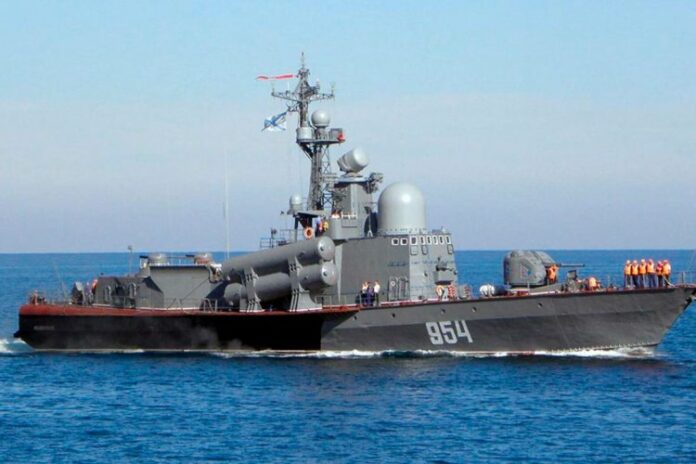
Ukraine reports the successful sinking of the Ivanovets, a Russian missile corvette, in the Black Sea. It’s at least 17th Russian ship destroyed/damaged during the all-out war.

Ukrainian forces sank another vessel of Russia’s Black Sea Fleet using surface drones, according to the Main Directorate of Intelligence (HUR) of Ukraine’s Defense Ministry.

Since the outset of Russia’s full-scale invasion in February 2022, Ukraine managed to destroy or severely damage at least 16 Russian Navy ships prior to the sinking of the Ivanovets – today’s addition to the collection. The Russian Navy’s previous losses included the Moskva cruiser, which was the flagship of Russia’s Black Sea Fleet, the Novecherkassk large landing ship, the Rostov-on-Don submarine, and multiple other vessels.

“Overnight from 31 January to 1 February 2024, soldiers of the HUR’s Group 13 special unit destroyed the Ivanovets missile boat of the Russian Black Sea Fleet,” HUR reported.

Ivanovets had spotted the incoming naval drones and was trying to pull ahead and opened machine gun fire to no avail. The first two drones hit the stern and render the warship incapable of moving, and several more finish it off with hits to the side. The total number of drones involved is at least six units.

Worth noting, the Defense Intelligence of Ukraine is known to operate only one type of unmanned combat surface vehicle, the Magura V5. The declared payload of this UCSV is 300 kg of explosives, and the operational range is up to 800 km. 

The Ivanovets missile boat, a russian designation for a missile-carrying corvette, belongs to Project 1241 Molniya warship class, it was launched into the sea in 1989. Its value is estimated at nearly $60–70 million. The standard armament is four P-270 Moskit anti-ship missiles with an attack range of 90 to 120 km in older versions or 240–250 km in newer ones, according to russian declarations. The crew consists of 41 people, the water displacement is 493 tons, length is 56 meters. That is, despite being classified as a “boat,” it is a rather large combat unit.  

According to the Directorate, the Russian naval vessel was patrolling the Black Sea near Lake Donuzlav off the western coast of the Russian-occupied Crimean peninsula.

“Due to a series of direct hits to the hull, the Russian ship sustained damage incompatible with further movement, the Ivanovets heeled to the stern and sank. The cost of the ship lost by the aggressor state is approximately $60-70 million,” HUR noted.

In its report, the intelligence agency did not mention the weapon used in the attack, but the footage it shared shows the first-person view of a surface uncrewed vessel attack on the Russian ship.

HUR says its preliminary reports showed that the search and rescue operation of the Russian forces at Donuzlav was unsuccessful.

“The operation was made possible with the support of the Ministry of Digital Transformation of Ukraine and the United24 platform,” HUR wrote.

In December 2023, the UK Defense Secretary stated that 20% of Russia’s Black Sea fleet had been destroyed by Ukraine over four previous months.

Sources: EuromaidanPress, Defence Express
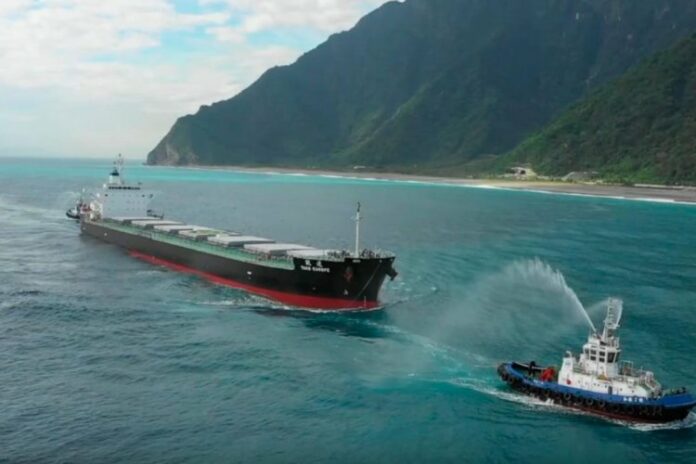
Ta-Ho invests in digitalization to reduce emissions and improve fleet management

0

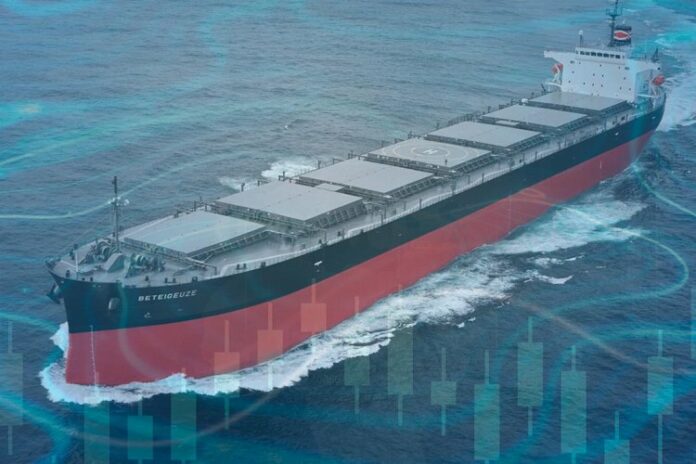
Ta-Ho Maritime Corporation, one of the leading bulk shipping companies in Taiwan, strengthens its commitment to digitalizing operations by installing NAPA’s performance monitoring, voyage optimization and navigational risk monitoring on eight vessels. With enhanced fleet monitoring and management, NAPA is supporting Ta-Ho in minimizing fuel consumption and emissions. 

Under the deal, NAPA, a global provider of maritime software and data services, is delivering its next-generation NAPA Fleet Intelligence software, providing Ta-Ho with a full-picture understanding of its operations, including fleet-wide intel on vessels’ locations, past voyages, performance, speed, voyage duration, and fuel consumption. The software has been certified by ClassNK’s Innovation Endorsement framework for its function of accurately assessing and optimizing performance.

An initial pilot using NAPA Voyage Optimization over two months has already demonstrated a total fuel saving potential of 4.0%. In addition to this, trials showed that a further 2.9% fuel saving was possible by improving vessels’ operational profile using recommendations from the platform. At the same time, using navigational risk monitoring allows teams to gain an overview of high-risk areas and map out voyages in line with this to minimize risk and maximize safety. 

Furthermore, enhanced data collection and integration allows Ta-Ho’s teams to take a proactive approach to fleet management where, for example, insights on a vessel can help optimize maintenance schedules and manage aging. This operational optimization contributes to enhanced energy efficiency and safety.

Greater intelligence on fleet performance will support decision-making in line with tightening environmental regulations, like the IMO’s Carbon Intensity Indicator (CII) and the European Union’s Emissions Trading System (EU ETS), allowing teams to make better-informed and strategic decisions to minimize their carbon footprint. 

Ni Bo, Director of Sales at NAPA, said:

“Digital solutions are empowering the industry to proactively comply with environmental regulations while also meeting operational and commercial goals. With NAPA Fleet Intelligence, teams benefit from seamless data integration across systems to act on multiple fronts, from emissions reductions to stability and emergency response, with greater speed and accuracy.” 

Alan Shieh, President at Ta-Ho, commented: “By adopting NAPA Fleet Intelligence endorsed by ClassNK, we are investing in a trusted digital solutions partner to navigate shipping’s growing complexities. This partnership with NAPA marks the next frontier on our digitalization and decarbonization journey. By building a fleet-wide operations database, we can reap the rewards of data-driven optimization and stay ahead of the curve in terms of compliance with environmental regulations.”
 
Junichi Kawakami, Regional Manager at ClassNK Taiwan, added:

“ClassNK extends congratulations for the successful deployment and demonstration of NAPA’s solution aboard the Ta-Ho Maritime fleet. This accomplishment is anticipated to contribute not only to Ta-Ho’s operational optimization but also to the broader goal of decarbonization. As a third-party organization, we will continue to provide transparent and reliable certification to encourage the adoption of innovative technologies in the shipping industry.”

Japanese firms unveil promising findings in carbon capture study

0

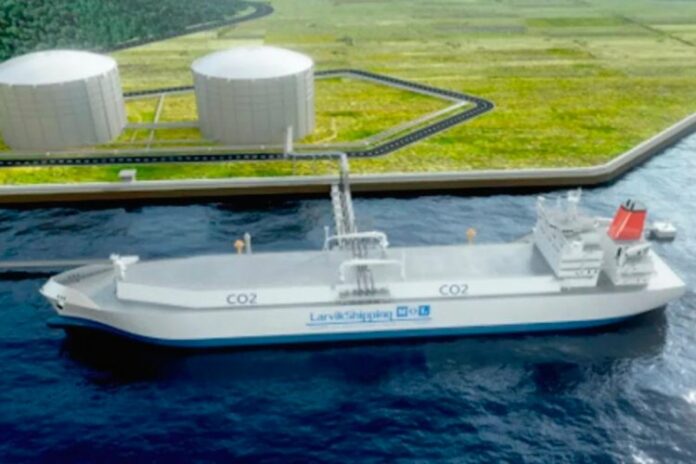
Chiyoda Corporation, Nippon Yusen Kabushiki Kaisha (NYK), and its affiliate Knutsen NYK Carbon Carriers AS (KNCC) have conducted a joint study to quantitatively evaluate and verify the feasibility of the CCUS (carbon capture, utilization, and storage) value chain — including liquefaction, temporary storage, and marine transportation of carbon dioxide. 

The study covered the three methods of EP (elevated pressure), MP (medium pressure), and LP (low pressure), which are assumed to be the technologies for CCUS. Going forward, the three companies will combine their engineering and shipping expertise to promote technical and economic studies of the three methods further and contribute to the social implementation of CCUS.

Many CCUS projects are currently being planned worldwide, and several CCUS projects are expected to be launched in Japan in the late 2020s and beyond. In those projects, the prolonged construction period for installing large tanks on land will likely become a significant issue. The MP and LP methods assume the installation of Type-C tanks on liquefied CO2 carriers and large tanks at onshore storage facilities as the primary method.

On the other hand, the EP method assumes the utilization of cylinder tanks, which are based on the manufacturing principle of existing pipelines, not only for liquefied CO2 carriers but also for onshore storage facilities. In this joint study, the three companies confirmed that using these cylinder tanks for onshore storage facilities will lead to a significant reduction in the construction period, effective use of land, reduction of investment and operating costs, and improvement of energy efficiency required for operation.

ZeroNorth acquires Euronav’s FAST platform

0

Technology company ZeroNorth and shipping company Euronav have today announced that ZeroNorth will acquire and manage Euronav’s Fleet Automatic Statistics and Tracking (FAST) platform.  

FAST collects advanced high-frequency data in real time from sensors across Euronav’s fleet. Euronav has successfully implemented the FAST platform across its fleet, using ship reporting, voyage optimisation and ship optimisation through the use of high-frequency data. FAST has significantly improved collaboration between ships and all shore departments, optimised vessel and fleet utilisation, reduced fuel consumption, and lowered OPEX. 

The data can power up voyage and vessel optimisation decisions, allowing crew and shoreside teams to collaborate in making the most detailed live adjustments to improve sustainability and profitability for Euronav’s diverse fleet of globally operating vessels. 

Over time, the plan is for ZeroNorth and Euronav to integrate FAST’s data and full functionality with the ZeroNorth platform. This high-frequency data and FAST’s existing functionality will drive ZeroNorth’s data flywheel, accelerate the industry’s green transition and massively increase the company’s positive impact on the market. 

Pelle Sommansson, Chief Growth Officer & EVP, ZeroNorth, said:

“We are extremely excited by this new partnership with Euronav, which is already recognised as one of the most sustainable and progressive companies in the shipping industry. By acquiring FAST and incorporating it into our existing platform, we believe we will accelerate the transformation and sustainability strategies of a large part of the global fleet.

“High-frequency data is the solution to many industry challenges. Optimised journeys play a major role in achieving zero emissions in our industry. That’s why we are proud to work with like-minded leaders at Euronav, because together we can change the way that our customers, and shipping as a whole, operate for the better.”

Vår Energi completes the acquisition of Neptune Energy’s Norwegian oil and gas assets

0

Vår Energi ASA has today completed the acquisition of Neptune Energy Norge AS with 100% of the shares in Neptune Norway transferred to Vår Energi.

CEO of Vår Energi, Nick Walker says:

“Vår Energi is one of the fastest growing E&P companies in the world and is on track to nearly double production by end-2025. The acquisition of Neptune Norway is an important step to this end. Neptune Norway’s complementary assets and highly skilled organisation are a perfect fit to Vår Energi. We will work as one strong team, a company committed to delivering high value barrels from one of the most attractive oil and gas regions in the world with low cost and low emissions. The transaction is cash generative from day one supporting attractive and predictable dividends going forward.”

The combined company is the second largest independent E&P company on the Norwegian Continental Shelf (NCS) and the second largest supplier of gas from Norway to Europe. The Transaction adds scale, diversification, and further longevity to Vår Energi’s portfolio which is targeting production of around 400 kboepd by end-2025. The completion of the Transaction, which was announced on 23 June 2023, follows fulfilment of all closing conditions including relevant regulatory approvals. 

Vår Energi’s growth strategy is centred around four hub areas with ownership in a total of 203 NCS licences, including 47 producing fields, of which 7 are operated, following the Transaction. Total combined Proved plus Probable (2P) reserves are approximately 1.3 billion barrels of oil equivalent, with an attractive early phase project portfolio and exploration opportunities supporting sustained value creation long term. The transaction is expected to result in significant synergies in excess of USD 300 million (post-tax) over time, from a robust development and exploration portfolio, improved asset utilisation and commercial optimisation of gas sales.  

The effective date of the Transaction is 1 January 2023. The Transaction was financed through available liquidity and credit facilities, and the net cash consideration paid upon completion less cash available in Neptune Norway was approximately USD 1.2 billion.  

Integration of Neptune Norway

The acquisition will be implemented in the following stages: 

  • As from closing 31 January 2024, Neptune Norway will operate as a fully owned subsidiary of Vår Energi and change the name to Vår Energi Norge AS  
  • From 1 May 2024, all employees of Vår Energi Norge AS will be fully integrated into the Vår Energi ASA organisation 
  • The companies will as per normal practice on the NCS consolidate their businesses, a process that is contemplated as a statutory merger planned to complete in the second half of 2024  

TSSM holds steel-cutting ceremony for new CSOV

0

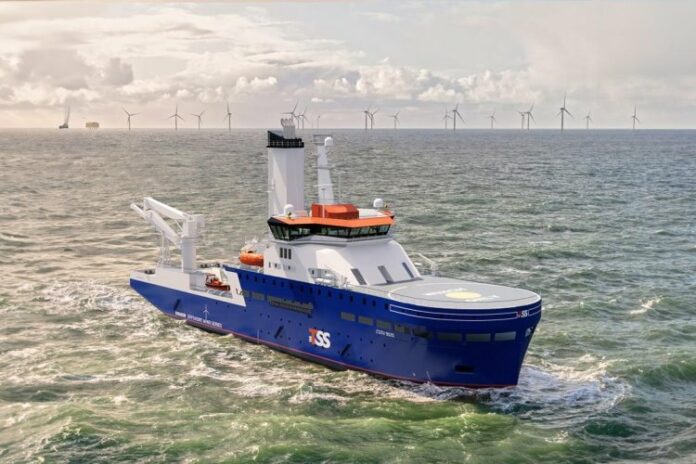
On the 19th of January, the steel cutting ceremony for the new Construction Service Operation Vessel (CSOV) 9020 for Ta San Shang Marine Co. Ltd (TSSM), a joint venture between Mitsui O.S.K. Lines, Ltd. of Japan, and Ta Tong Marine Co., Ltd. of Taiwan, took place in Ha Long, Vietnam. This was just two months after the initial contract was signed. 

TSSM’s new CSOV will be named TSS Cruiser and will be delivered by Damen Shipyards Group by late 2025. 

TSS Cruiser will be chartered to contractors supporting the offshore wind farms near the coast of Taiwan, during both the construction and operation phases. The vessel will be equipped with a motion-compensated gangway that ensures safe and rapid transfers to and from the turbines and substations and it will be highly sustainable with diesel-battery hybrid power generation systems from the outset and prepared for future use of green methanol fuel. The CSOV 9020 has accommodation for up to 120 personnel and ample space for equipment and supplies.

“We appreciate that quick delivery times are important to many of our customers and our worldwide network of Damen-owned and partner shipyards enables us to meet their needs,” said Thomas Rowekamp, Damen Regional Sales Director Asia-Pacific. “We are confident that TSSM’s new CSOV 9020 will be a valuable and productive addition to their fleet.”

Deltamarin signs a design contract for the 13th E-Flexer RoPax vessel

0

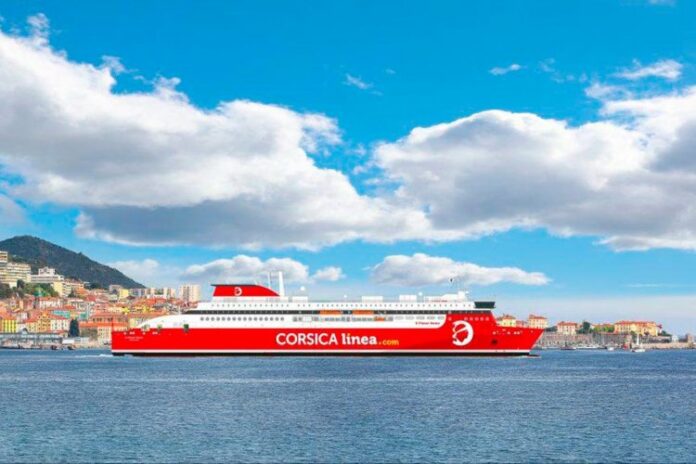
The new RoPax is the 13th vessel in the Stena RoRo’s E-Flexer series and is the first to be delivered to the Mediterranean region. Corsica Linea will charter the vessel for operation on Marseille – Corsica route from Stena RoRo, with a purchase option. Delivery of the vessel is scheduled for the first quarter of 2026.

The design is based on Stena-RoRo’s proven E-Flexer concept, where each of the vessels are technically and commercially adapted to customer needs. The Corsica Linea vessel will have capacity of 1000 passengers and 2500 lane meters of ro-ro cargo.

Sustainability is one of the fundamental design principles, hence the vessels can meet the environmental requirements by a wide margin. Cornerstones of the vessel’s performance are its optimized design of the hull, propellers and rudders. It will be equipped with LNG dual fuel engines, which allows future transition to both liquid and gaseous bio/e-fuels. Designed with the “Battery power” classification society notation, the vessel is also primed to utilize batteries for propulsion in the future.

Engineering of the Corsica Linea RoPax vessel starts immediately at Deltamarin Finland and most of the work will be carried out during 2024.

First of two 24 metre catamaran dive support vessels delivered to ADNOC

0

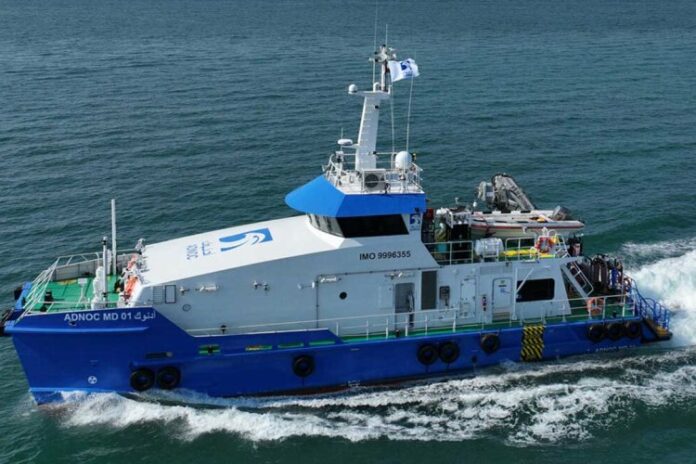
Robert Allan Ltd. has announced that ADNOC MD 01, the first of two sister ships, was successfully delivered to the owner Abu Dhabi National Oil Company (ADNOC) in the United Arab Emirates. 

The newly completed catamaran Dive Support Vessels were built by Grandweld Shipyards and are designed by Robert Allan Ltd. to operate supporting local diving operations in the UAE.

Key particulars of the vessel are:

  • Length, overall (excluding fenders): 24.90 m
  • Beam, moulded: 8.00 m
  • Depth, least moulded: 3.15 m
  • Maximum draft (navigational): 2.0 m
  • Gross Tonnage: 192

Main tank capacities are:

  • Fuel oil: 8100 L
  • Potable water: 4800 L
  • Sewage: 600 L

These aluminum catamarans were designed and constructed to the following notation:

BUREAU VERITAS 1 ✠ HULL • MACH, SPECIAL SERVICE, FAST DIVING SUPPORT, SEA AREA A2

Propulsion machinery consists of two Baudouin 12M26.3 main engines, 1030 kW at 2100 rpm and Reintjes WVS 430/1 gearboxes driving 4-blade conventional propellers.

The vessels are provided with comprehensive equipment for shallow water dive support including a decompression chamber, dive air compressors, compressed air and other gas cylinders, hose reels for underwater tools and diver air supply. The wide beam of the vessel allows for a spacious, full deckhouse width dive compartment with a diver rest area, separated supervisor area and integrated decompression chamber with direct access to the open deck. Diving operations can take place on either side of the vessel or on the integrated swim platforms at the stern.

A large 6.5 m workboat and crane with 10 m working radius is situated on top of the deckhouse to avoid interference with dive operations.

The accommodations are for a crew of five and up to seven divers, including three double crew cabins with mess and galley provided in the deckhouse. All below decks compartments are dedicated to propulsion machinery and dive equipment.

The wheelhouse is designed to provide maximum all-round visibility with an exceptional view to the bow and sides as well as dive operations on the aft deck via CCTV.

The tunnel clearance was designed to be particularly generous to avoid slamming of the wing deck structure.

The vessel exceeded the design contract speed with a sea trial speed of 19.4 knots. A comprehensive CFD program was used to predict resistance during early design work.

SEACOR Marine upgrades four PSVs

0

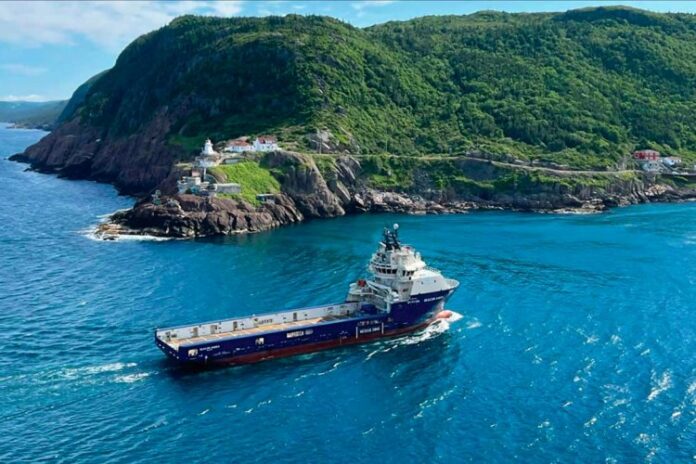
The hybrid power solution, designed with cutting-edge technology, will be installed on four of SEACOR Marine’s Platform Supply Vessels (PSV) to enhance the way the Company manages energy consumption and emissions onboard these vessels.

The four vessels included in the contract are the SEACOR Ohio, SEACOR Alps, SEACOR Andes and SEACOR Atlas. Installation is expected to begin in December 2024 and be completed by the second quarter of 2025. Once installed, more than 50% of SEACOR Marine’s PSV fleet will be hybrid powered.

James Poulton, Senior Vice President, Aftermarket Sales, Kongsberg Maritime, said:

“We see that by installing battery power, fuel consumption in DP operation mode on these vessels can be reduced by as much as 20%. In addition to batteries, the conversion will also feature a shore connection, enabling connection to power grids when in port.”

The four PSVs, all of Kongsberg Maritime UT771 CDL Design, will be equipped for battery hybrid operation with the installation of a containerised Deckhouse Energy Storage System and associated switchboards and thruster control systems. The upgrade will also include a new Kongsberg Maritime K-Pos Dynamic Positioning (DP) system installed to replace the current DP system on all four vessels.

Beginning in February 2024 in Ulsteinvik, Norway, Kongsberg Maritime will also upgrade the UT771 CDL SEACOR Yangtze with the Deckhouse Energy Storage System.

John Gellert, Chief Executive Officer, SEACOR Marine, said:

“SEACOR Marine was one of the first offshore operators to install battery hybrid systems, and this announcement marks a significant step in our ongoing efforts to enhance operational efficiency and reduce the environmental impact of our fleet.”

John Gellert, SEACOR Marine’s Chief Executive Officer, commented:

“Our decision to expand our hybrid fleet aligns with SEACOR Marine’s core values of innovation and environmental stewardship and builds upon our record of leadership in adopting green technologies in the maritime sector. SEACOR Marine was one of the first offshore operators to install battery hybrid systems, and this announcement marks a significant step in our ongoing efforts to enhance operational efficiency and reduce the environmental impact of our fleet.

“These energy storage systems are an investment in the sustainable future of our fleet and our ability to meet the offshore transportation requirements of our clients worldwide. We are excited to offer our clients additional hybrid PSVs that operate efficiently through reduced fuel consumption and related operating costs, while also reducing greenhouse gas emissions.”

James Poulton, Kongsberg Maritime, Senior Vice President, Aftermarket Sales, said:

“SEACOR Marine is one of the most experienced operators of hybrid battery power systems in the offshore market, and we are delighted they have again chosen to expand their fleet of hybrid PSVs with Kongsberg Maritime technology.

“We see that by installing battery power, fuel consumption in DP operation mode on these vessels can be reduced by as much as 20%. In addition to batteries, the conversion will also feature a shore connection, enabling connection to power grids when in port, which greatly reduces the amount of engine running hours and emissions from diesel fuels. The key benefit of having battery power instantly available is to maintain the redundancy of the vessels’ power system, with less engines running. This is particularly useful when operating in DP mode, but also has its value in other operational modes.”

Tototheo Maritime provides Starlink to Orion Reederei

0

Orion Reederei has joined forces with Tototheo Maritime to harness the cutting-edge capabilities of Starlink, aiming to advance connectivity and crew satisfaction.

Captain Sosnowski, Master of M/V ‘Pax’ noted,

“The crew can now effortlessly communicate with their families and friends, share important moments, and access valuable information, regardless of our location. Starlink’s dependable, high-speed internet access offered has significantly enhanced their overall well-being and morale onboard.”

“We are thrilled to partner with Tototheo and offer our crew members the benefits of Starlink’s advanced satellite connectivity,” said Mirko Labenda, IT Generalist at Orion Reederei. “Our crew’s well-being is of utmost importance to us, and by providing reliable and high-speed internet access, we are ensuring they can stay connected with their families and friends while delivering their duties effectively. Tototheo’s expertise and support throughout the installation process have been exceptional.”

“We take pride in collaborating with Orion Reederei as they strive to provide top-notch connectivity and crew welfare on their vessels,” said Despina Panayiotou Theodosiou, co-CEO at Tototheo Maritime. “This partnership underscores our shared vision of embracing cutting-edge technology to meet the evolving needs of the maritime industry. The positive feedback received from Orion Reederei’s crew members reinforces the importance of reliable and high-speed connectivity at sea. We are excited to continue supporting Orion Reederei in extending Starlink across their fleet, ensuring their crew remain connected.”