-5.4 C
New York
Home Blog Page 220

Brexit-induced spatial restrictions reveal alarming increase of fishing fleet’s carbon footprint

0

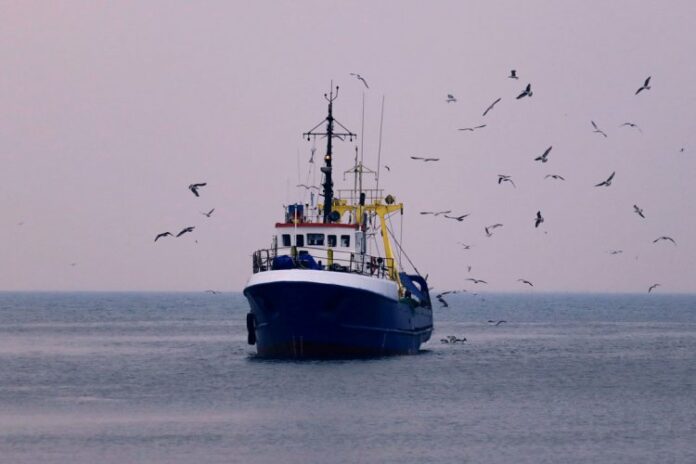
In a study published in Marine Policy, researchers have unveiled striking evidence that fisheries management decisions such as spatial fisheries restrictions can increase greenhouse gas emissions.

The study, conducted by a team of scientists led by postdoctoral researcher Kim Scherrer at the University of Bergen, sheds light on the unforeseen consequences of policy changes on fishing fleets and their carbon footprint.

In the North Atlantic, international agreements often allow fleets to follow the fish across national borders. This allows fishers to catch the fish where it is most efficient. But when the U.K. left the EU (Brexit), Norway’s mackerel fishing fleet was suddenly excluded from fishing grounds in the U.K.

Using Brexit as a natural experiment, the researchers used open fisheries data to unravel the consequences for the Norwegian mackerel fishery. The findings reveal an alarming shift in the fishery’s performance and carbon emissions due to the changes in fishing practices.

As the Norwegian fleet was excluded from U.K. fishing grounds, the vessels were forced to areas where fishing was less efficient. The catch per fishing trip nearly halved, prompting a doubling in the number of trips per vessel. Consequently, the fuel used per kilo of mackerel more than doubled.

Because of this change, an extra 23 million liters of fuel were needed each year, costing about €18 million more. This also released an extra 72,000 metric tons of CO2 into the air annually. The area restriction thus undid about 15 years of progress in fuel efficiency in Norway’s pelagic fisheries.

“This small change in fisheries’ regulations unintentionally caused as much annual CO2 emissions as half a million within-EU return flights,” said Scherrer, emphasizing the necessity of considering emissions in fisheries management. “It is important that governments that have signed the Paris agreement avoid squandering emissions like this.”

The study underscores that policymakers and managers need to consider fuel efficiency trade-offs in marine spatial management, ensuring a balance between conservation efforts, other offshore industries, and reduced carbon footprints.

PLA awards pilot vessel contract to family-owned British boat builder

0

With 95 miles of the tidal Thames under its jurisdiction, the PLA, the UK’s largest port, is investing significantly in its people, infrastructure and equipment to meet increasing demand for its pilotage services as its customers and terminals continue to grow.

This winning tender follows Goodchild Marine’s success during London International Shipping Week, where it was honoured twice at the 2023 National Maritime SME Awards, collecting the awards for “Best Family Business” and overall winner of the “National Maritime SME Business of the Year”.

PLA’s Director of Marine Operations, Steven Clapperton, said:

“Goodchild has proven over many years that they are at the leading edge of vessel design and build. This new vessel is designed specifically for our current and future operational needs, and will incorporate the latest in technology, reducing fuel consumption, minimising environmental impacts, whilst maximising operability.

“Having previously built pilot vessels for both the PLA and its subsidiary company, Estuary Services Limited, utilising a proven, modern, energy-efficient hull form, Goodchild Marine will customise the new PLA vessel to include additional accommodation and extra seating, maximising passenger capacity to support the PLA’s extensive pilot training programme, to sustain the continued and forecast growth in the port.”

Goodchild’s General Manager, Stephen Pierce, said:

“As a family run company, it is a privilege to continue our working relationship with the Port of London Authority. This contract affords us the opportunity to continue to develop our range of pilot boats to meet the operational requirements of UK ports both small and large.”

This vessel acquisition represents a small part of the largest capital investment plan for the PLA in over 20 years. Supporting our customers’ future growth plans, this investment plan is key to delivering the PLA’s Thames Vision; to be the UK’s leading Net Zero port by 2040.

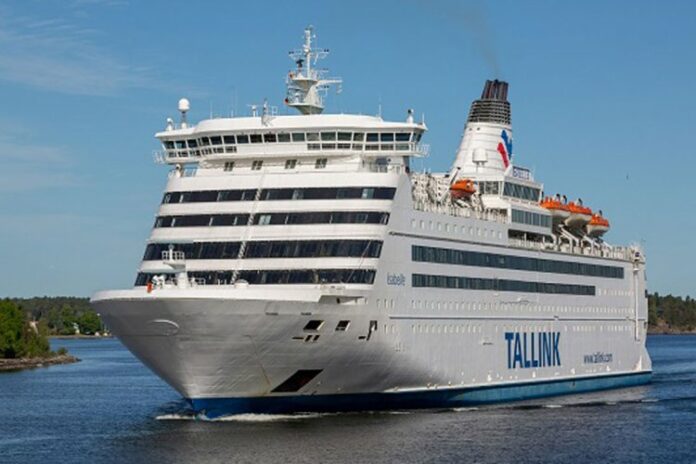
Tallink Grupp completes sale of company vessel Isabelle

0

In early April 2023 Tallink Grupp’s subsidiaries AS Tallink Latvija and Hansalink Ltd signed a contract with Canadian enterprise Bridgemans Floatel Limited Partnership for a multi-year charter of the company’s vessel Isabelle with a purchase option. 

This transaction has been completed whereby Bridgemans has exercised this purchase option, and, as a result, the group’s Cyprus-based subsidiary, Notamare Shipping Company Limited, has acquired the vessel from Tallink Grupp.

The Latvian-flagged Isabelle, formerly operating on the company’s Riga-Stockholm route before the Covid pandemic has been chartered to Bridgemans Floatel Limited Partnership since 1 July 2023 and left Tallinn for Canada in December 2023 after an extensive retrofit of the vessel. The vessel arrived in Canada in early January 2024 and joins a long list of floatels (floating hotels) that Bridgemans has retrofitted, deployed and operated around the world to serve major industrial and resource projects. These floatels are largely self-contained and fully equipped for safe, secure, and comfortable long-term accommodation.

Commenting on the sale of the vessel, Tallink Grupp’s CEO Paavo Nõgene said:

“We are pleased that after nearly 11 years as part of the Tallink Grupp fleet and at the respectable age of 35, Isabelle will now continue to offer a valuable and much-needed service, like the one she was able to offer here in Tallinn to the Ukrainian war refugees – safe accommodation – albeit this time to workers of major global industrial and resource projects.

“Tallink Grupp has a long-standing history and cooperation with Bridgemans, dating back over a decade, so we are pleased Isabelle is in trustworthy hands and know that she will be looked after well by the new vessel owners.”

The sale will have a positive impact on Tallink Grupp’s 2024 financial results.

U.S. Department of Commerce allocates over $20.6M in fishery disaster funding

0

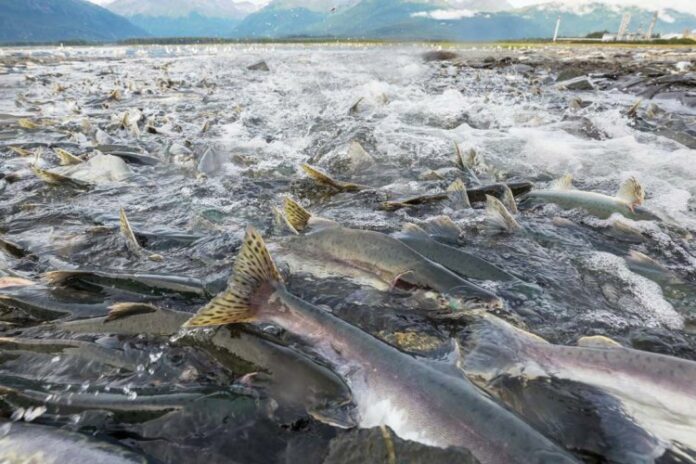
U.S. Secretary of Commerce Gina M. Raimondo has announced the allocation of $20.6 million to address a fishery resource disaster that occurred in the 2023 Sacramento River Fall Chinook and Klamath River Fall Chinook ocean and inland salmon fisheries. 

NOAA Fisheries used revenue loss information from the commercial, processor and charter sectors to allocate funding for the disaster. 

“Fishery disasters have wide-ranging impacts and can affect commercial and recreational fishermen, subsistence users, charter businesses, shore-side infrastructure and the marine environment,” said Secretary Raimondo. “These funds will help affected California communities recover and improve sustainability.”

Congress provided fishery resource disaster assistance funding in the 2022 and 2023 Disaster Relief Supplemental Appropriations Acts. A positive determination makes these fisheries eligible to receive a funding allocation from those appropriations. These funds will improve the long-term economic and environmental sustainability of the impacted fisheries. Funds can be used to assist the impacted fishing communities including commercial fishermen, recreational fishermen, charter businesses and subsistence users. 

“At NOAA Fisheries we can appreciate how this fishery disaster is of great concern for the fishing industry and the people that depend on these fisheries to support their communities,” said Janet Coit, assistant administrator for NOAA Fisheries. “We hope this allocation can aid in recovery efforts as quickly as possible.”

Activities that can be considered for funding include fishery-related infrastructure projects, habitat restoration, state-run vessel and fishing permit buybacks, job retraining and more. Some fishery-related businesses affected by the fishery disaster may also be eligible for assistance from the Small Business Administration. 

On December 29, 2022, Congress passed the Fishery Resource Disasters Improvement Act, which amended the Magnuson-Stevens Fishery Conservation and Management Act. Since the disaster request for these fisheries was received after this date, it was evaluated under the amended statute.

In the coming months, NOAA Fisheries will work with the state of California to administer the disaster relief funds. Fishing communities and individuals affected by the disaster should work with their state or other agencies as identified by the state, as appropriate.

Van Oord starts land reclamation for new quay in Paldiski South Harbour in Estonia

0

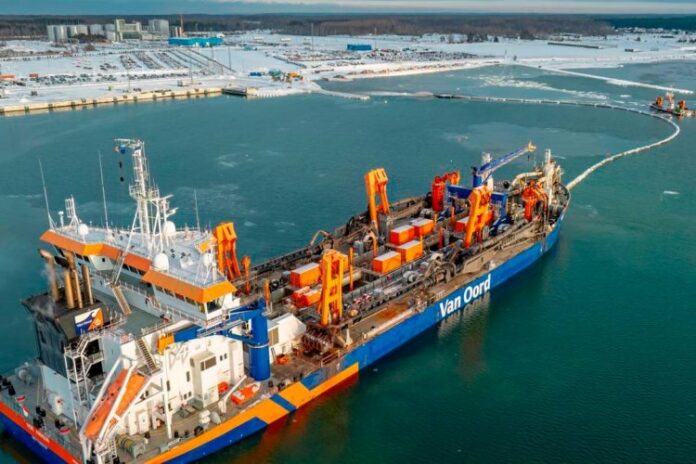
Van Oord’s trailing suction hopper dredger Vox Amalia has arrived in Estonia to supply approximately 830,000 cubic metres of sand to create 10 hectares of land for the new quay. The sand is dredged from a borrow area on the northern coast of Hiiumaa, about 125 kilometres from the port.

The new quay is scheduled to be completed in 2025.

Due to its favourable location, the construction of the new quay will create the conditions for the Port Authority, Port of Tallinn, to become an important partner in the construction and maintenance of offshore wind farms in the Baltic Sea region.

The new quay will increase the port’s capacity to receive large special-purpose vessels for the construction of offshore wind farms and the transport of offshore wind components. The large rear area behind the new quay allows the establishment of industrial and production companies related to offshore wind industry.

Georgia Ports Authority will invest $29 million in overpass project

0

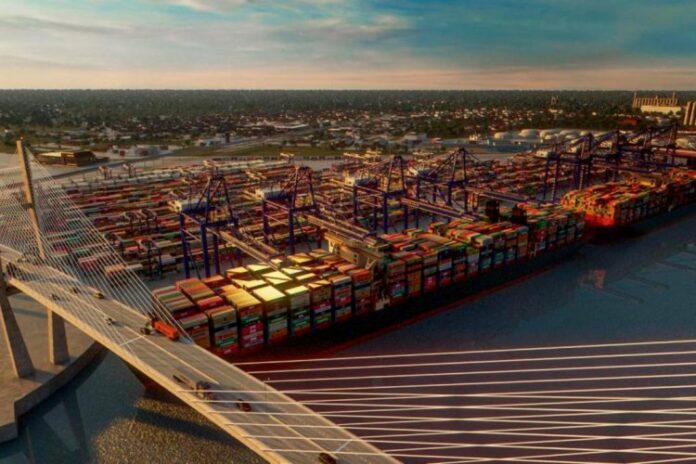
Georgia Ports Authority has announced plans to invest $29 million in an overpass linking Ocean Terminal to Route 17 designed to keep terminal truck traffic from impacting local neighborhoods.

The project is the outcome of joint collaboration among Georgia Ports Authority, the city of Savannah and Georgia Department of Transportation (GDOT). Led by GPA, the initiative started with talking to communities near Ocean Terminal and hearing their concerns on the impact of increased truck traffic on neighborhood streets.

The planned overpass will enable trucks to directly access Route 17, as opposed to using Louisville Road and local streets to enter the highway.  The Georgia Ports Authority will construct the overpass and roadway entrance to U.S. 17 according to GDOT specs and be completed in 2026. The roadway will then be turned over to GDOT for their maintenance and repair.

“This is a port project in the best interest of the community,” said President and CEO Griff Lynch. Mr. Lynch and Georgia Ports executives have been in contact with residents in the Brickyard area of the city near the port so they hear firsthand any concerns. 

“We want to keep trucks off local neighborhood roads for safety and sustainability reasons,” he added.

In addition to the overpass and entrance ramp construction to Route 17, GPA will also build a dedicated exit ramp from Route 17 and a new truck-only entrance roadway into Ocean Terminal designed for enhanced safety and traffic operations for the traveling public.

TECO 2030 and Umoe Mandal submits fuel cell high-speed vessel design for AiP

0

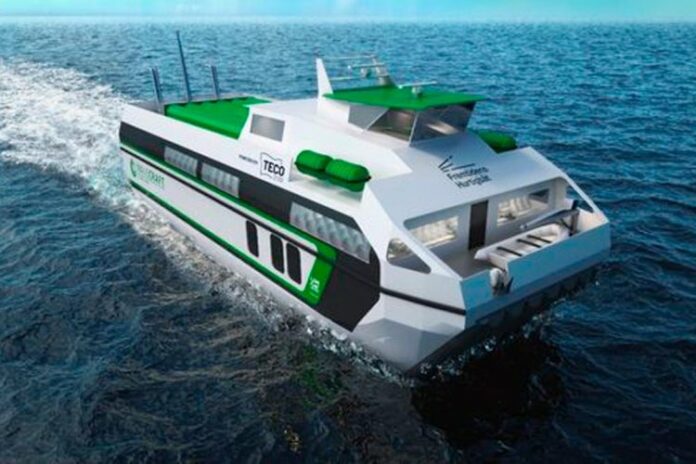
TECO 2030 and Umoe Mandal has just delivered the documentation package to the Norwegian Maritime Authority for an approval in principle application of the World’s first fuel cell high-speed vessel design. The designed vessel is designed to be installed with a multimegawatt fuel cell system for full propulsion.

The ship will be constructed based on Umoe Mandal’s proven Crew Transfer Vessel (CTV) Surface Effect Ship (SES) technology and with the air-cushion catamaran design it will offer low imprint on surrounding environment, even in challenging and vulnerable ocean conditions. CTVs are often used during the construction, maintenance, and operation of offshore wind farms. This specific vessel will be a passenger vessel and have a service speed of 35 knots, a range of minimum 160 nautical miles and carry 275 passengers.

Once the vessel design and hydrogen propulsion plant has received the approval in principle, TECO 2030 and Umoe Mandal together with suppliers will continue the process of reaching Final Approval.

“It is a major accomplishment for us to announce our developed partnership with Umoe Mandal and submit all documentation to Norwegian Maritime Authority for an approval in principle on a ship designed for the future of zero emission maritime transportation. I am excited to continue to build on this design platform as we move forward together with our strong partner Umoe Mandal,” says Tore Enger, Group CEO TECO 2030. “This achievement demonstrates the industry’s readiness to embrace commercial and public tenders for passenger vessels powered by hydrogen, thereby contributing to efforts to reduce and eliminate pollution in the maritime industry,” Enger concludes.

Klaveness Digital partners with prominent players in the Philippines

0

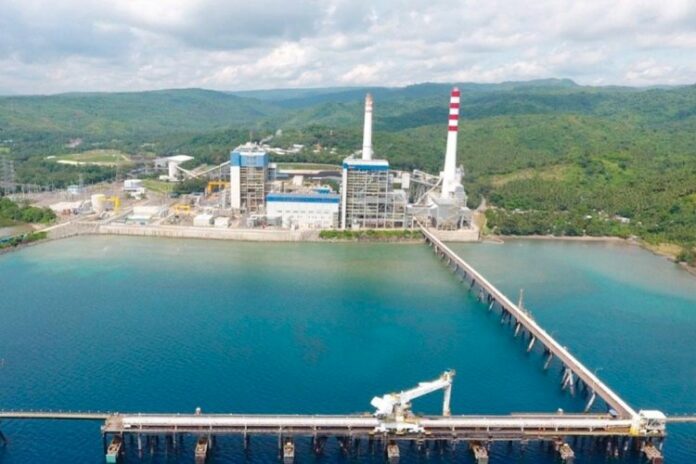
Klaveness Digital announces new partnership with Quezon Power (Philippines), Limited Co. (QPL) and San Buenaventura Power Ltd. Co. (SBPL), prominent players in the energy sector, to integrate CargoValue’ logistics and supply chain management capabilities. 

This collaboration is a step towards simplifying their maritime logistics operations and enhancing overall operational efficiency.  

QPL and SBPL are undertaking significant enhancement of their logistics model to optimize cost-efficiency and operational autonomy in their maritime transactions. This approach is expected to introduce a new phase of logistics operations, highlighting their commitment to innovation and improved supply chain management. 

CargoValue is set to change their approach to maritime logistics by digitalizing their supply chain, creating a single source of truth. This transformation aims to reduce manual work and reallocate time to value-added tasks, improve communication between remote teams, and expedite decision-making processes, especially in urgent scenarios that require swift response or action. 

“CargoValue will play a critical role in identifying opportunities quickly, mitigating risks proactively, especially in cases of delays and the resulting domino effect it has on current plans. The visibility and intelligence CargoValue provide, allows them to manage inventory and their lineup more efficiently”, said Aladdy Choo, Customer Success Consultant at Klaveness Digital.  

“We are excited to see how this partnership evolves,” added Frank Thiel, General Manager at QPL and Managing Director at SBPL. “Working with Klaveness Digital aligns with our long-term strategy to enhance our maritime logistics, and we’re optimistic about the positive changes CargoValue will bring to our planning and logistics processes”. 

This partnership represents a strategic move by QPL and SBPL as part of their broader goal to simplify their maritime logistics operations and enhance overall operational efficiency. 

McDermott secures two contracts for NOC’s Ruya Development Project

0

McDermott has been awarded two contracts from North Oil Company (NOC) to deliver engineering, procurement, construction, installation and commissioning (EPCIC) for packages 11 and 13 of the Ruya Development Project, as part of the expansion of the Al-Shaheen field, Qatar’s largest oil field.

The Package 11 mega contract scope, awarded to a consortium of McDermott and Qingdao McDermott Wuchuan (QMW), includes installation of nine satellite wellhead platforms and jackets in two offshore campaigns. The Package 13 substantial contract, awarded to a consortium of McDermott and Hyundai Heavy Industry (HHI), is for EPCIC of one 25,000 metric ton central processing platform, flare platform and bridges.

“These awards build on our successful execution of the front-end engineering design (FEED) project—one of the largest FEEDs in McDermott’s 100-year history—completed in just over 12 months,” said Mike Sutherland, McDermott’s Senior Vice President, Offshore Middle East. “We will continue to earn the confidence of QatarEnergy and TotalEnergies by delivering strategically significant energy infrastructure projects in the Middle East.”

“We have been on this journey with NOC since our Doha operating center started the pre-FEED in 2021,” said Neil Gunnion, Qatar Country Manager and Vice President, Operations. “This team of experts will now lead the execution of EPCIC work, leveraging their robust experience and in-depth knowledge of Qatar’s offshore sector for the successful expansion of the Al-Shaheen field.”

McDermott defines a mega contract as being over USD 1.5 billion, and a substantial contract as being between USD $500 and $750 million.

Deep Wind Offshore enters collaboration with Hydepoint

0

Deep Wind Offshore is developing offshore wind parks worldwide, so far with projects in Norway, Sweden, and South Korea. HydePoint is a leading product and technology company specializing in offshore hydrogen production and provides solutions that can integrate hydrogen production with offshore wind parks. 

“Hydrogen will be an essential part of the energy mix towards net zero. By producing hydrogen offshore close to the wind farms, the wind farms can be built further out to sea, to avoid conflicted areas, and at the same time increase utilization and profitability. This is relevant in several of our current and coming markets, including Sweden. Hydepoint has an exciting technology, and we look forward to exploring opportunities together”, said Knut Vassbotn, CEO of Deep Wind Offshore. 

The European Commission has launched an action plan which will ensure growth in wind power to reach its climate goals. According to the plan, there must be installed a total of 500 GW of offshore and onshore wind power by 2030.

Electricity production from offshore wind will become a significant source of renewable energy, but current grids are not prepared to receive neither the large amounts of power nor the peaks expected from renewable energy.  Offshore hydrogen production from offshore wind will reduce the need for investments in grids, as well as providing a renewable product that can be delivered to demand centres further afield. 

Plans are currently explored for hydrogen export pipelines from Norway, Sweden, and Finland to Germany, and could facilitate offshore hydrogen production close to the windfarms and delivering hydrogen directly into these pipelines.   

“Exploring the best possible integration of offshore wind and -hydrogen in an early project development phase can further optimize the value of the combined asset and reduce dependency on upgrades to existing infrastructure. In addition, the time it takes to start production of green hydrogen offshore can be significantly reduced by planning the wind farm and the hydrogen processing plant in parallel”, Elin Steinsland, CEO of HydePoint said.

EU has set a target of 20 million tons of hydrogen produced from renewable energy by 2030. Hydrogen will largely be used as a feedstock in the process industry producing components such as clean fertilizers, green steel, and green fuels for especially the maritime sector. 

Offshore hydrogen production can help optimize the value of offshore wind farms through best possible utilization of all available power and provide hydrogen to a growing European market.