-8.2 C
New York
Home Blog Page 219

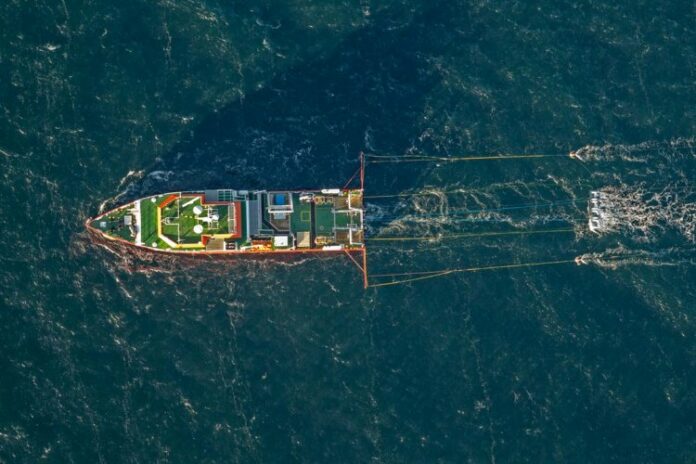
Fugro’s innovative approach selected for RVO’s Doordewind project

0

Key to selecting Fugro is its innovative 2D ultra-ultra-high resolution (UUHR) surveys that provide unprecedented data quality. The Doordewind project, led by the Netherlands Enterprise Agency (RVO), is part of the Dutch Government’s Offshore Wind Energy Roadmap 2030, which aims to accelerate the development of offshore wind in the Netherlands.

Fieldwork is scheduled to start in April 2024 and will be conducted with Fugro’s geophysical vessel Fugro Pioneer. Onboard are customised digital streamers and processing technology that enable 2D UUHR surveys. Using proprietary software and decimetre accuracy positioning systems, this advanced data acquisition method enables detailed ground modelling and interpretation of near surface geology to inform future geotechnical investigations and the design of offshore wind farms. The data will also be used for planning geotechnical investigations and design of the offshore wind farm and installations.

Giljaam van der Meulen, RVO’s Project Manager for this project, commented:

“RVO is challenging the offshore market to come up with innovations to speed up the energy transition in the Netherlands”. In site studies, RVO is constantly looking for innovations and improvements in the process. Fugro is a company that understands this perfectly, so we are happy to work with them in this project. 

Sven Plasman, Fugro’s Project Director and Government Relationship Manager stated:

“One of Fugro’s key aims is to help governments worldwide with the energy transition. So, we’re extremely proud to be part of this prestigious offshore wind project and supporting the Dutch government in realising its ambitions. The development of our geophysical vessels and innovation aimed at providing better quality data is proving its value. We are happy to apply it in this important project and look forward to working with RVO.”

The Doordewind wind farm zone is located approximately 77 km off the north coast of The Netherlands and will be the first wind farm to connect to the Eemshaven. The total wind farm area is approximately 580 km2 and is planned to contain a total capacity of 4 GW divided over two sites of 2 GW each. 

Wärtsilä signs a five-year agreement with the Irish Naval Service

0

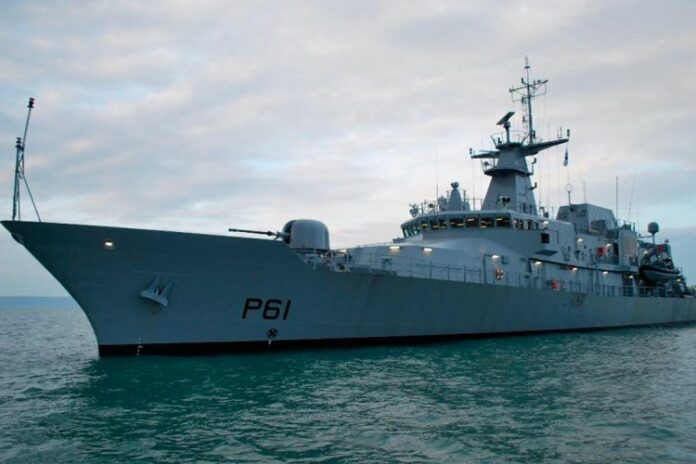
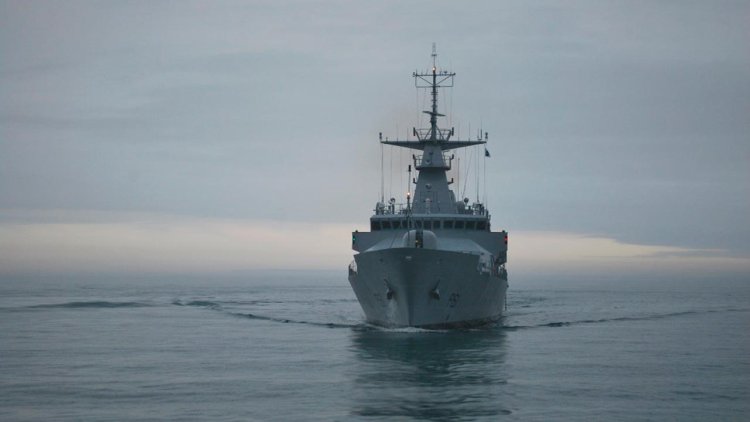
Technology group Wärtsilä has signed a five-year Optimised Maintenance Agreement with the Irish Naval Service. The agreement, which covers four offshore patrol vessels (OPV), is designed to ensure operational reliability along with long-term cost predictability. The order was booked by Wärtsilä in January 2024.

“We have had good experience with Wärtsilä over the years, and we have great trust in their capabilities. This agreement will help us to achieve the level of efficiency and reliability that we aim for, which in turn will improve the environmental performance of these ships,” says Lieutenant Commander Cian O’Mearain.

The scope of the agreement includes Maintenance Planning and 24/7 remote operational support, including Wärtsilä’s Expert Insight, a digital predictive maintenance solution which uses artificial intelligence (AI) and advanced diagnostics to monitor onboard equipment and systems in real-time. Specialists at Wärtsilä Expertise Centres are assigned to follow the situation and support customers with proactive advice should it be deemed necessary or appropriate.

The agreement provides close coverage of the ships’ engines, propulsion machinery and shaft seals. It also includes crew training services, a technical advisor, maintenance planning, full operational support, and all scheduled maintenance spare parts.

As a result of this operational support, unplanned downtime is reduced significantly, and nearly all issues can be resolved remotely.

“Optimised Maintenance Agreements are an integral part of Wärtsilä’s lifecycle support strategy. They are tailored to the customer’s unique needs by combining the right services and solutions into a comprehensive agreement package. In other words, we provide a ‘one-stop-shop’ support and we minimise the environmental impact by optimising the maintenance services,” commented Lee Martindale, General Manager – Sales, Wärtsilä.

Oldendorff post-Panamax bulker to be equipped with Norsepower rotor sails

0

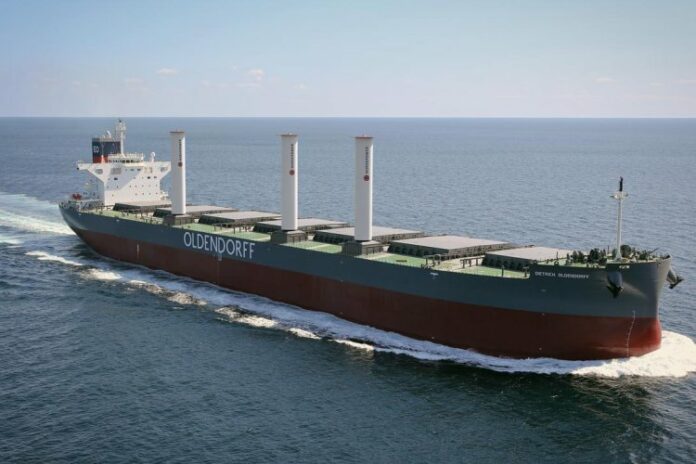
The vessel Dietrich Oldendorff (IMO 9860350) is to be outfitted with three 24m x 4m Norsepower Rotor Sails™ by mid-2024. It is contracted to be employed on a North Pacific trade route to Asia.

The Norsepower Rotor Sail is a radically modernized, digital-era version of the Flettner rotor. It uses a minimal amount of the ship’s electric power to actively rotate the cylinder-shaped rotors on the ship’s deck. Rotation, together with wind, packs the air behind the sail and creates powerful thrust – saving fuel and reducing emissions. The huge, spinning rotors are partly manufactured from approximately 342,000 plastic bottles.

The product has already been used by customers for about 10 years and has 310,000+ operating hours on ships operated by some of the world’s best-known shipping companies and charterers, delivering 21,000+ tons of CO2 emissions reduction so far. The installation on the Dietrich Oldendorff will take place in Q2/2024. 

Oldendorff’s cooperation with Norsepower is what green shipping stands for. Renowned companies work with new, innovative products to make sure that future generations are left with a planet that is in good condition. Neither company can make this kind of quan-tum leap alone; both huge fleets with lots of experience and the latest technological breakthroughs are needed.

Torsten Barenthin, Director of Research & Development, Oldendorff, comments:

“We are extremely excited about reducing fuel consumption and emissions by harnessing the power of the wind with Norsepower Rotor Sails™, a proven energy-saving product.”

Tuomas Riski, CEO of Norsepower, adds:

“Oldendorff is a dream customer for Norsepower in more than one way: a family-owned, legendary, company with over 100 years operating in the industry and around 700 vessels on the water today. Oldendorff is making green shipping a reality today and is the best partner we could have on our journey towards the zero-carbon industry. I wholeheartedly welcome Oldendorff’s commitment to Norsepower’s mission of decarbonizing shipping and look forward to the next possibilities for cooperation!”

Huisman awarded contract from Cadeler for Monopile Gripper

0

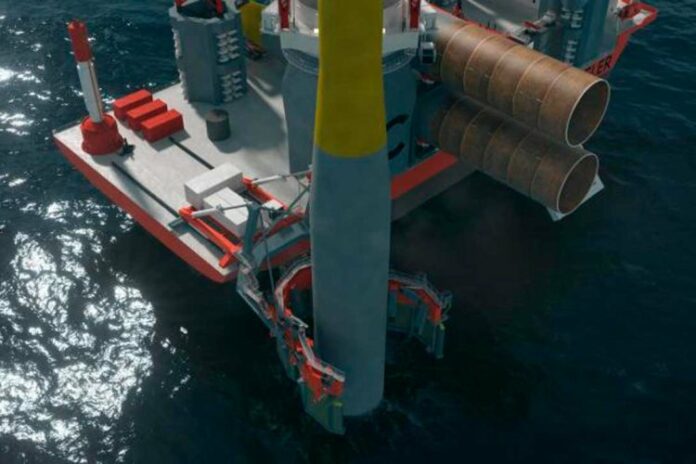
Huisman announces the signing of a contract with Cadeler for the design and production of a Monopile Gripper.

The Monopile Gripper, having a substantial 13-meter diameter, is engineered for the efficient and controlled installation of monopiles ranging from 80 to 120 meters in length, with a weight of up to 3,000mt. 

Notably, this gripper can be entirely stored on deck, facilitating future maintenance procedures and thus operational longevity.

The contract also includes an option for the integration of a noise mitigation system, designed to minimise the impact of noises on sea life, showcasing Cadeler and Huisman’s commitment to environmentally responsible practices.

Production of the Monopile Gripper will take place at Huisman’s production facility in China.

Mikkel Gleerup, CEO of Cadeler:

“This new contract with Huisman solidifies our strategic commitment and collaboration in pushing the boundaries of what’s possible as we prepare for the future of offshore wind farm construction. If we are to reach our global goals for renewable offshore wind energy, we will need cutting-edge technologies and scale, which our strengthened partnership embodies.”

David Roodenburg, CEO of Huisman:

“We are very thankful that Cadeler has ordered this gripper, next to the thirteen main cranes and auxiliary cranes already on order, which again affirms the strong relationship and trust between the two companies. A long-term partnership like this one enables us to remain at the forefront of delivering step-changing solutions that contribute to the advancement of sustainable energy projects worldwide.”

This latest order from Cadeler represents the fourth static gripper order for Huisman. The gripper, a first for Cadeler, will come to play a key role in delivering on the Hornsea Three Foundation project. Huisman also successfully delivered two Motion Compensated Monopile Grippers for DEME’s Orion and Boskalis’ Bokalift 2. Currently, Huisman is in the process of building one for Heerema’s Thialf.

The world’s first boat hull with climate-neutral raw materials

0

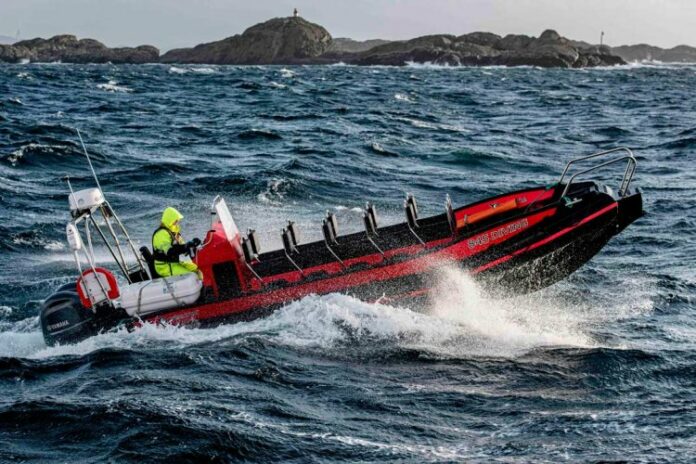
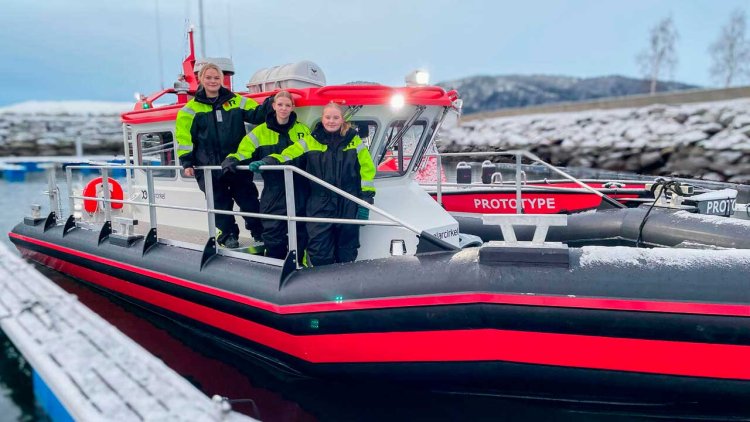
AKVA group has received certification through ISCC PLUS to use raw materials based on bio-based and recycled raw materials such as forest waste and used cooking oil in the production of both workboats and fish pens. 

The Polarcirkel boat remains identical, constructed with the same material, with a significant change: the virgin materials no longer come from fossil oil but are sourced from plants. This transition to sustainable sources makes the boat hull climate-neutral. The boat’s main task remains to ensure the safety of employees at sea. The raw material will be purchased from the same suppliers as before, to ensure that the quality remains identical.

“Safety at sea is our main goal, and this is achieved just as effectively by using new raw materials. We want to offer aquaculture operators a more sustainable choice. By embracing greener alternatives, we contribute to giving them the opportunity to make environmentally conscious decisions and thus contribute to a more sustainable future – whether you opt for motor-driven or electric motor,” says General Manager of AKVA group Helgeland Plast Freddy Bakken Braseth.

Through the integration of climate-neutral boat hulls in plastic, AKVA group has not only a technological advancement but has also created a product with a significantly reduced carbon footprint.

Polarcirkel is handcrafted in Mo i Rana and has made its mark on the global market. The boats are known for their practical design, high quality, flexibility, and low maintenance requirements. With over 2000 boats in operation worldwide, they have become an icon in aquaculture and are preferred among various professions that require reliable and seaworthy vessels.

“It’s not only fish farmers who use Polarcirkel. They are also used in service by sea-based industries, the oil and gas sector, rescue services, defense, Arctic tour operators, and even among recreational boaters. Polarcirkel is designed to withstand the toughest conditions, from icy -40°C to hot +55°C, offering unparalleled safety and reliability, whether operating in the Arctic or the tropics,” says Braseth.

For approximately 50 years, Polarcirkel has been developed and improved in close dialogue with fish farmers. Helgeland Betongvarefabrikk (later renamed Helgeland Plast) was established in 1969 and developed the world’s first plastic fish pen, Polarcirkel, in 1973. Later, Helgeland Plast became a part of AKVA group. In addition to boat and fish pen deliveries, they operate a pipe factory that produces pipes for everything from infrastructure to land-based facilities. Over the years, they have increased production capacity and invested significantly to improve their products.

Suppliers of raw materials to AKVA group Helgeland Plast have analyzed the carbon footprint of the material that can now be used in production following the ISCC PLUS certification. 90% of the raw material is bio-circular, which reduces CO2 emissions. The raw material is sourced from waste and residual streams. Rail logistics play a role in achieving nearly zero CO2 emissions for delivery to Mo i Rana.

LCA analyses indicate significant environmental benefits of using climate-neutral material, with a minimal carbon footprint of 0.004 kgCO2E/kg. This stands in contrast to the 1.9kg CO2E/kg generated by fossil materials. The reduction represents a saving in terms of carbon footprint.

“By including climate-neutral material into our Polarcirkel boats and pipe productions, we are creating an environmentally friendly practice, and giving new life to overlooked raw materials. This supports our commitment to sustainable technology development,” says Braseth.

AKVA Polarcirkel, in collaboration with suppliers meeting the ISCC PLUS certification requirements, will provide polyolefin products made with renewable raw materials that perform just as well as virgin polyolefins. These sustainable products are versatile, suitable for food contact and health applications, certified by ISCC PLUS, and support sustainability goals without compromising on quality or safety standards. They are based on renewable raw materials from waste and residual streams, contributing to the reduction of the carbon footprint and promoting the transition to a circular economy.

PDE Offshore upgrade their Sonardyne system

0

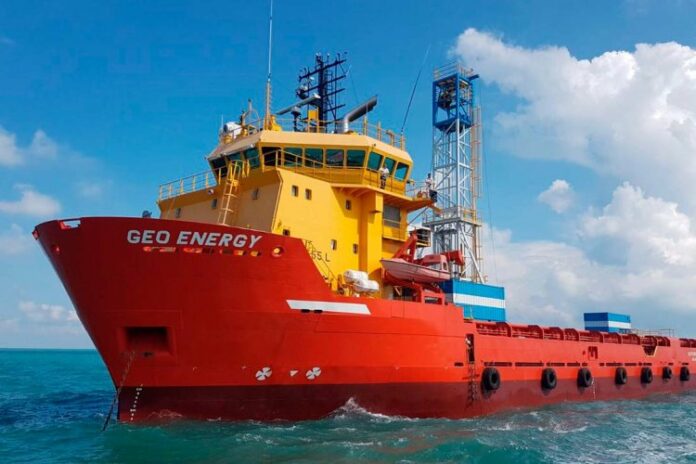
This will further enhance their capability in the exploration of offshore renewable energy (ORE) in Taiwan. Their new geotechnical vessel Geo Power, also equipped with Ranger 2 USBL system is now under conversion work and will join the fleet in mid-2024 which will provide both seabed and downhole cone penetration testing services.

PDE Offshore have been conducting geotechnical and soil investigation in the shallow waters of the Taiwanese Strait since 2017 as the country looks to replace its coal-based energy with cleaner, sustainable alternatives such as offshore wind farms.

Working with most of the world’s leading ORE developers, PDE Offshore wanted to increase their capability. This required a trusted and proven USBL positioning system for their Geo Technical vessel to work in greater water depths and challenging water conditions as their operations expanded.

Having already successfully used Sonardyne’s Mini Ranger 2 for several years, investing in the full Ranger 2 system was a logical choice to provide the reliable dynamic positioning references essential for their operations, whilst also giving the capability for operating in greater depths and more challenging conditions.

Incorporating over 30 years of USBL knowledge, Sonardyne’s Ranger 2 system is anything but standard. It can be used to track anything, in any depth, from any vessel. Track a subsea asset, position or communicate with an underwater vehicle, dynamically position your vessel – or do all of this simultaneously. It can be used for both survey and construction phases of ORE and supports complex tracking scenarios such as structures and vehicles with multiple transponders and multiple remote offsets.

Huang Hsin-chih, President of PDE Offshore, says,

“We have been working with Sonardyne since 2017 using their Mini Ranger 2 system. The system is proven, reliable and our engineers are familiar with its operation. It was a simple and logical choice to go ahead and upgrade to the Ranger 2 system to improve our capability to take on greater projects in the region.”

Dan Tan, Regional Sales Manager for Sonardyne in Singapore, says,

“Taiwan’s ambitions of becoming a green island means it is fast becoming a leading player offshore wind in Asia Pacific. We’re pleased to be a part this energy transition through PDE Offshore’s continued confidence and investment in our products. We look forward to supporting them in their future operations.”

Naval Group to produce an autonomous underwater drone demonstrator for DGA

0

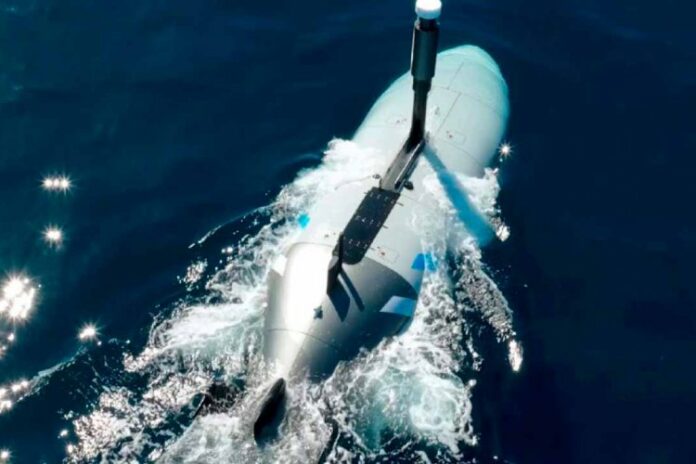
DGA has awarded Naval Group a framework agreement for the design, production and testing of an Unmanned Combat Underwater Vehicle (UCUV) demonstrator. A first follow-on contract was also signed for the design and development of Naval Group’s Autonomous Decision-Making Process (ADMP) and secure autonomous navigation.

This framework agreement follows on the contract awarded to Naval Group on May 4, 2023 for the study of the main use cases and system architecture of an UCUV. The objective is to conduct studies and evaluate the technologies identified to meet the French Navy’s main use cases, and thus design and develop the UCUV demonstrator.

Aurore Neuschwander, Naval Group’s Director of Drones, Autonomous Systems and Underwater Weapons, stated:

“Naval Group is very proud to support the French Ministry of Armed Forces in the study of this innovative and disruptive naval capability. We will leverage the know-how we acquired in naval unmanned systems over the last ten years, and in particular our XL-UUV demonstrator, which will serve as a platform for technology integration and testing. This ambitious project will contribute to the creation of a French industry of excellence in naval unmanned systems, of which Naval Group will be one of the federators”.

The first subsequent contract to this framework agreement will run for 24 months. It will enable the development of a version of the Autonomous Decision-Making Process (ADMP or ADC© in French, for Autonomie Décisionnelle contrôlée) designed to strengthen mission planning and monitoring, and secure surface and underwater navigation which are essential functions for an autonomous, enduring, multi-mission system.

Other follow-on contracts are planned in order to develop the technologies needed to meet the challenges of long endurance, underwater detection and sub-order implementation.

Unmanned systems play an increasingly important role in naval combat, providing navies with the technological and tactical superiority they need. With the UCUV project, France joins a very select group of countries engaged in the definition, development and evaluation of a first XL-UUV (ExtraLarge Unmanned Underwater Vehicle). Through this project, the French Ministry of Armed Forces will benefit from technological breakthroughs and innovations in the fields of robotics, drones and artificial intelligence, in order to evaluate a new naval capability that could provide a mediumterm operational response to new areas of conflict and asymmetric combat.

The XL UUV Demonstrator, whose sea qualification was completed at the end of summer 2023, will be a key component of the UCUV project. It will enable short-cycle evaluation of the technologies, such as ADMP and energy, needed to confirm the technical choices linked to the design of the future UCUV demonstrator. This innovative method will provide agile guidance for the project, enabling the UCUV demonstrator to be built within the defined budget and schedule.

In an environment where communications are limited and sometimes impossible or unwanted, it is essential to be able to guarantee a mission’s success with complete confidence. With this logic in mind, Naval Group has developed ADMP, which aims providing a capability extension to unmanned systems operation in the context of a long-term mission, by enabling them to carry out their missions without remote control, thus making them autonomous systems.

Thanks to continuous replanning based on tactical situation analysis, ADMP enables autonomous systems to adapt to tactical hazards, to the environment where they operate and to potential damage. This system enables autonomous systems to accomplish their mission alone or in collaboration, while respecting the doctrine of use.

ADMP guarantees compliance with the human operator’s orders in terms of mission objectives, rules of behavior and degrees of freedom left to the autonomous system.

Energy transition: Charting a fair course for fishing fleets

0

Global fishing fleets, powered mainly by fossil fuels such as marine diesel, emit between 0.1% to 0.5% of global carbon emissions, or up to 159 million tons annually, according to the latest available data.

The fisheries sector, crucial for the livelihoods of more than 40 million people worldwide, faces escalating threats from climate change. These include rising sea levels and warming waters that jeopardize fishing ports and deplete fish stocks. The risks are particularly high for developing countries, where small-scale and artisanal fishing prevails. 

Yet the fishing industry lacks comprehensive global targets and guidelines for transitioning to cleaner energy, a new UNCTAD report highlights.

The report covers a range of motorized fishing operations, from pre-harvesting to landing, and the infrastructure involved. It assesses the opportunities and challenges of adopting alternative fuels, emphasizing the need to ensure a “just” energy transition that doesn’t disproportionately affect vulnerable countries or fishing communities.

“The energy transition of fishing fleets presents a critical and urgent global issue as nations, and particularly developing countries, commit to net-zero targets and climate action,” says David Vivas Eugui, chief of UNCTAD’s ocean and circular economy section.
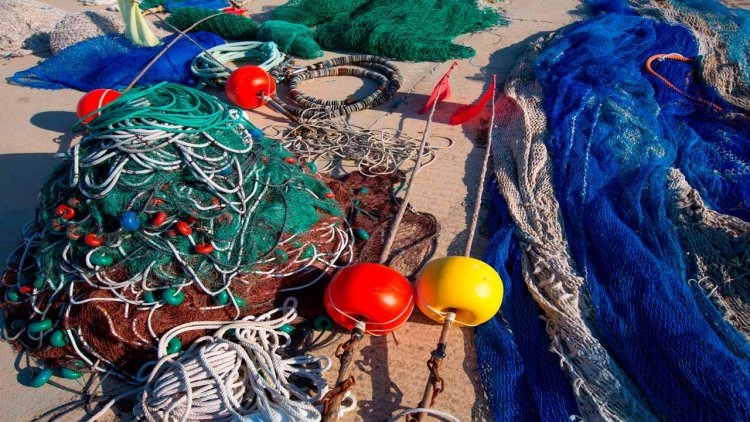
Regina Asariotis, chief of UNCTAD’s transport policy and legislation section, highlights the urgent need for more targeted and robust regulations for fishing fleets.

“Existing energy efficiency measures and regulations adopted by the International Maritime Organization for global shipping are of only limited application to fishing vessels, primarily due to their size and operational patterns,” Ms. Asariotis says.

For example, vessels that fall below certain tonnage thresholds or operate exclusively within a flag State’s jurisdiction are exempt. Fishing vessels are also currently excluded from reporting obligations and market-based measures for GHG reduction adopted at the European Union level, except for the taxation of energy products used to propel all vessels.

The UNCTAD report also finds that in the context of Nationally Determined Contributions (NDCs) under the Paris Agreement – where countries outline their pledges to cut emissions and adapt to climate change – most of the top ten major aquatic food exporters show limited commitments to climate mitigation or adaptation in fisheries-related sectors.

The report assesses several alternative fuels for fishing vessels at different maturity stages, underscoring the need for further research and development (R&D) for their successful integration.

Among the options, green biofuels, made from non-food feedstocks or fish waste, stand out as the most readily available and mature option.

The report acknowledges the promise of green hydrogen and green ammonia but says both require further R&D to address issues related to safety, scalability, cost-effectiveness, the storage capacity of vessels and ports, and delivery infrastructure.

For green methanol and liquefied natural gas, it says both pose challenges in terms of retrofitting and safety, with limited potential to fully decarbonize fleets.

UNCTAD also outlines other ways to reduce fishing vessels’ GHG emissions, such as electric and hybrid engines, wind propulsion technologies and digital technologies to improve energy efficiency.
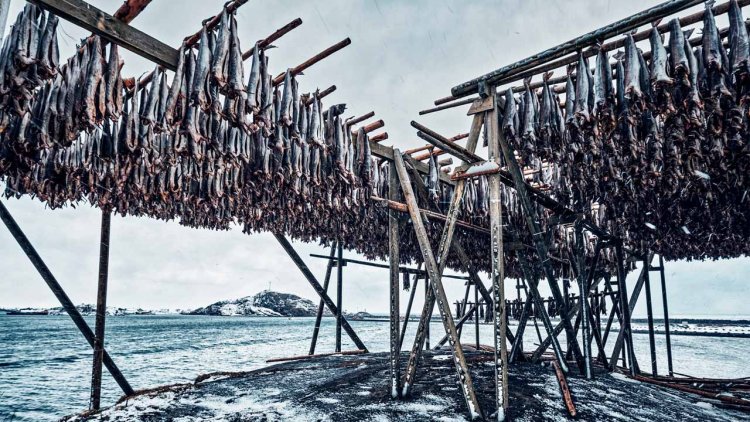
The report underscores the need for a balanced and gradual approach, calling for the incremental adoption of a sustainable energy mix to mitigate impacts on small-scale fisheries and marginalized fishing communities.

On the economic and technological fronts, UNCTAD calls for a globally harmonized system for data collection, adapted to small-scale and artisanal fisheries, to monitor and report fishing fleet GHG emissions.

It also encourages exploring sustainable fuel options from circular economy practices, such as converting fish waste and seaweed into biofuel or biogas for fishing vessels and expanding their delivery infrastructure.

From a trade, value chain and infrastructure point of view, the report urges the incremental phase-out and, ultimately, prohibition of fossil fuel-based subsidies to the fisheries sector.

Also crucial are effective measures on climate change adaptation, resilience-building and disaster risk reduction for seaport infrastructure, as well as improving access to affordable financing for developing countries.

On environmental considerations, the report calls on countries to introduce fishing fleet decarbonization commitments into NDCs to align mitigation and adaptation efforts, saying decarbonization cannot be decoupled from fish stocks sustainability.

Finally, addressing social factors, it calls for prioritizing the well-being, livelihoods and rights of fishers in the energy transition and enhancing safety standards.

Yang Ming to launch JKX service and revamp JTS service

0

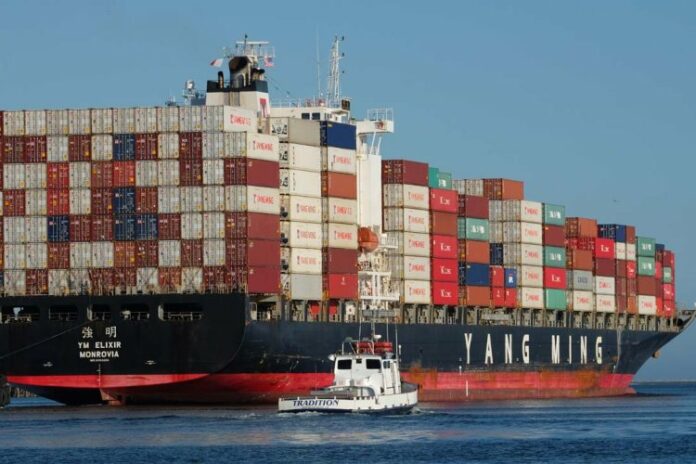
In early March, Yang Ming Marine Transport Corp. will kick off the newly-adjusted JTS service (Japan-Taiwan-South China Express Service) in order to boost competition.

At the same time, the Company will also join hands with its joint venture partner to launch a new route, namely JKX service (JAPAN KANSAI Service).

Yang Ming will maintain JTS service’s independent operation and offer a fixed weekly service with a 28-day rotation. JKX service will be run with the joint venture partner, with each deploying one vessel respectively and providing a fixed weekly service with a 14-day rotation.

The port rotation of JTS service is Nagoya, Tokyo, Yokohama, Keelung, Kaohsiung, Shekou, Port Klang, Singapore, Kaohsiung, Shekou, Xiamen, and Nagoya.

The port rotation of JKX service is Osaka, Kobe, Pusan, Keelung, Kaohsiung, Hong Kong, Shekou, Xiamen, and Osaka.

Hafnia Bunker Alliance moves Ahead with Sustainable Biofuel Bunkering

0

Throughout 2023, Hafnia’s Bunker Alliance facilitated seven deliveries of biofuels for the Unigas fleet. These deliveries spanned several types of biofuels and blends, ranging from B30 to B100, highlighting the versatility and potential of bio-based alternatives in the maritime sector.

Unigas, a prominent member of the Hafnia Bunker Alliance, has stemmed various products and quantities to trial biofuel consumption across its fleet.

Gerben Dekker, Chief Technical Officer at Unigas comments on the green transition in relation to bunkering operations:

“Through our own Wake initiative, Unigas has committed itself to go beyond minimal environmental requirements and reduce the emissions of our onwards operations. Navigating a course to a sustainable shipping model, sustainable biofuels will be one of the enablers to drive the reduction of our emissions and thereby the emissions of our customers. Before being able to consider biofuels suitable for a fleetwide roll-out, different GoodFuels products have been successfully trialed as we have run tests across different vessels in the Unigas fleet. Onboard and ashore experiences throughout the trials have been positive and point towards a larger share of biofuels being suitable for replacing conventional fuels going forward.

Gerben Dekker continues:

“Our collaboration with the Hafnia Bunker Alliance has been instrumental in driving our sustainability transformation with their transparency on pricing, close advisory and partnership in dealings with the GoodFuels team.”

Hafnia Bunker’s partnership with FincoEnergies has also been pivotal in ensuring a smooth and efficient bunkering process. The operation’s efficiency, coupled with the high quality of the GoodFuels biofuels, has set a benchmark in sustainable bunkering practices.

“At a time of transformation in the maritime industry, the Hafnia Bunker Alliance remains committed in its mission to promote sustainable initiatives,” said Peter Grunwaldt, Head of Bunkers at Hafnia Bunkers representing the Hafnia Bunker Alliance. “We are not only prepared to service our existing members but also extend our expertise and resources to potential new members, fostering a collaborative ecosystem for a sustainable future.

FincoEnergies, the company behind GoodFuels and trusted supplier for these groundbreaking initiatives, expressed optimism and enthusiasm for the future of sustainable fuels.

“In our collaboration with Hafnia’s Bunker Alliance and Unigas, we have found an ambitious decarbonization partnership. We are happy to see that our fuel quality, service level and flexibility have lived up to expectations. Especially given the boundaries that Hafnia and Unigas are pushing. The results of these trials further prove the effectiveness of sustainable marine biofuels as a key transition fuel for the coming years.” said Johannes Schürmann, Commercial Director.

Hafnia Bunkers is actively engaged in multiple Green Fuel working groups, demonstrating its commitment to the green transition. Hafnia Bunkers is currently in discussions with various suppliers to explore and secure future sources of biofuel and other alternative fuels. This proactive approach positions Hafnia to be well-prepared for the evolving landscape of sustainable energy sources.