-8.2 C
New York
Home Blog Page 218

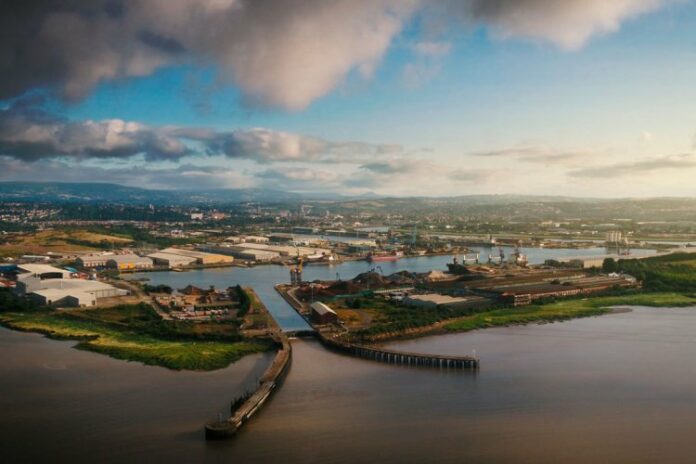
ABP unveils ambitious Masterplan for decarbonised growth at the Port of Newport

0

These facilities, along with carbon capture and heat networks, will underpin next-generation manufacturing and logistics, attracting a new cluster of businesses looking to future-proof their operations. The development will also be connected to low-carbon rail and marine logistics and will expect to see hundreds of highly productive jobs created at the resulting Newport clean growth hub. This will create benefits that spill right across the city and beyond.

While the plan includes innovations that aim to support business to future-proof and meet net zero targets, the classic port role will remain. This means that Associated British Ports (ABP) will also be investing in reconfigured access, new cargo-handling equipment, high-efficiency warehousing and ready-to-go development sites, and all with cutting-edge IT.

Ashley Curnow, Divisional Port Manager, ABP, commented:

“This Masterplan is a bold step towards a sustainable future. Newport has a history of reinvention, and we are now embarking on a journey that will position both the port, and the city of Newport as a key player in the evolution towards a decarbonised economy.

“The Masterplan foresees a decade-long investment boom, and ABP’s investments will help provide superb service to customers, as well as delivering ABP’s commitment, as set out in our sustainability strategy – Ready for Tomorrow ­­­­– to get our own operations to net zero by 2040.”

The Masterplan outlines three main objectives, which are to create:

  • A thriving, decarbonised industrial logistics port
  • A clean growth hub
  • Well-being for current and future generations.

Jane Mudd MP expressed enthusiasm for ABP’s Masterplan, stating: “ABP’s commitment to sustainability and collaboration is commendable, and we’re excited about the potential this vision for Newport has to shape a brighter and greener future for our city.

“We look forward to working with ABP to implement the aspirations of the Masterplan and bring benefits to the City of Newport and maximise the opportunities to zero carbon economy.”

Newport is the latest of ABP’s five ports in South Wales to have undergone an extensive Masterplanning process – previously Barry and Port Talbot – and as part of ABP’s wider Wales Vision.

Ashley Curnow added:

“We are at the start of a transformative journey for Newport and ABP is optimistic about Newport’s potential for a new era of innovative and productive growth.

“We see the Masterplan as an invitation to stakeholders, customers and the broader community to join ABP on this journey towards a more sustainable and prosperous future for Newport.”
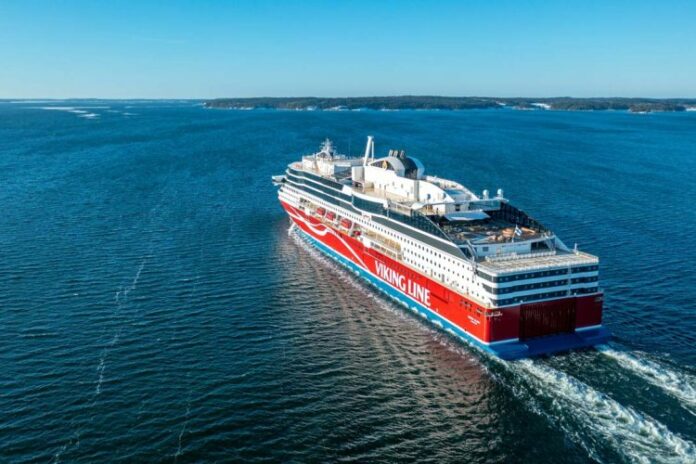
Viking Line to create green corridor together with Ports of Stockholm and the Port of Turku

0

Viking Line, Ports of Stockholm and the Port of Turku signed a Memorandum of Understanding, February 6, 2024, to create a green maritime corridor between Turku and Stockholm.

The partnership will serve as an innovative platform for developing scalable solutions for the phase-out of fossil fuels and enable green maritime travel between Turku and Stockholm.

“Viking Line is a shipping company with its roots in this sensitive archipelago. For us, the work to protect and preserve the Baltic Sea is in our DNA. We are ambitious pioneers in this industry and are proud to take this step together with Ports of Stockholm and the Port of Turku in order to get closer to providing zero-carbon cruises and transport on this important shipping route between Finland, Åland and Sweden,” says Jan Hanses, President and CEO of Viking Line.

The project and partnership between Viking Line, Ports of Stockholm and the Port of Turku – formalized with the signing of a Memorandum of Understanding – qualifies as a green maritime corridor under the Clydebank Declaration, as has been confirmed by both Sweden and Finland. This undertaking is well ahead of the schedule set out in the EU’s Fit for 55 climate legislation package.

“Climate change is happening here and now, so it is more important than ever to take concrete steps for the green transition. We know that more transport needs to be carried out by rail or ship instead of by car and airplane, and green maritime shipping plays a major role in the transport sector’s climate transition,” says Clara Lindblom, Chair of the Board of Ports of Stockholm.

“There has always been a focus on environmental work in all of our operations. The Port of Turku is embedded in a very sensitive archipelago, which gives us the responsibility to always respect our surroundings in our daily work. In 2023, we signed Turku’s Climate City Contract, with the goal being for the city to be carbon-neutral by 2029. That is a goal we are working systematically to achieve, so this memorandum to develop a green transport corridor between Turku and Stockholm is a natural step for us,” says Erik Söderholm, Managing Director of the Port of Turku.

The partnership will also take into consideration progress and solutions from the ongoing Decatrip project, a collaboration between Viking Line, Rauma Marine Constructions, the Turku-based Åbo Akademi University and Kempower. Over the course of the project, the parties will gradually reduce their carbon dioxide emissions and work for a 100% carbon-neutral corridor. In the long term, the partnership may be expanded to involve key stakeholders in maritime shipping, including goods owners and freight forwarders. The agreement was signed on February 6, 2024, at the Stockholm City Hall.

Bureau Veritas and Ponant advance polar safety research

0

The exercise followed a similar SAREX carried out in 2021, reputed to be the world’s first international SAREX scenario in a remote polar zone. 

Participants explored the challenges, limitations and opportunities of an arctic massive rescue operation (AMRO) over the three phases of the SAREX: 

  • Phase 1: onboard the ship
  • Phase 2: onboard survival crafts
  • Phase 3: survival on-shore

Equipment evaluated during the SAREX included the “Ice Cube,” an innovative group survival kit (GSK). Participants used a reverse osmosis system within the GSK to produce the minimum required 2 L of drinking water per person per day. Not only was the system successful, but researchers were able to estimate its performance over the course of a longer simulation. 

After previous trials in 2021, the Ice Cube design had been revised to be compliant with ISO 24452. The Ice Cube performed well in the 2023 SAREX, and teams identified further opportunities to strengthen safety measures.

Procedures were also carried out for an inflatable polar shelter, whose purpose is to shield evacuated passengers from the cold for 24 hours. In the span of one hour, the internal temperature rose from 12°C to 22°C, without the need for heaters nor evidence of prohibitively high CO2 concentrations. 

The resulting SAREX report will be submitted to the IMO Sub-Committee on Ship Systems and Equipment to advise their interim guidelines on life-saving appliances and arrangements for ships operating in polar waters.

Frederic Thomas, Director of Equipment and Materials Certification Bureau Veritas Marine & Offshore, said: 

“The findings of our recent SAREX have positive implications for raising safety standards in the maritime industry. The successful outcomes of this opportunity underscore the importance of collective effort and demonstrate BV and PONANT’s shared and unwavering commitment to enhancing safety. Together, we continue to set benchmarks for best practices across sectors.”

EST-Floattech supplies Octopus Series Energy Storage Solution for ferries

0

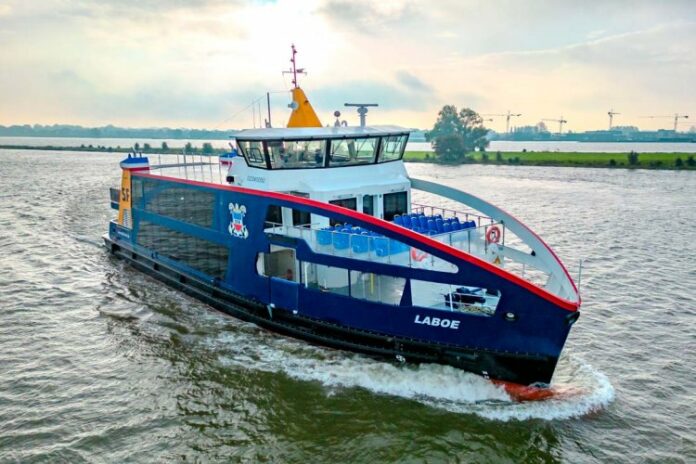
The ferry was recently successfully delivered to Schlepp- und Fährgesellschaft Kiel (SFK) by Holland Shipyards Group. It is the 6th ferry in a series of 7 ferries with which SFK has the ambition to lower its CO2 emissions.

The Laboe is equipped with 560 kWh of the Octopus High Energy system. This battery system ensures the energy consumption remains low during the sailing, as the vessel can easily switch between generators and the battery system. The vessel can even sail fully emission-free around the city of Kiel, where it transports commuting pedestrians and cyclists from A to B. The system was integrated by Holland Ship Electric, who decided to collaborate with EST-Floattech on the ferries for SFK. EST-Floattech and Holland Ship Electric have a longstanding partnership with many successful collaborations, of which the Laboe is the latest project.

The city of Kiel in Germany is working hard to create an emission-free future. This collaboration reflects a shared vision for a cleaner, more efficient maritime industry, aligning with global efforts to reduce carbon emissions thanks to the Octopus Series battery system. The integrated energy management system optimizes the use of stored energy, enabling the ferry to operate more efficiently and reduce fuel consumption, leading to lower emissions and operational costs. This system has batteries with high energy density, ensuring optimal performance and long operational life for the SFK ferry Laboe.

Malte Klein from Schlepp- und Fährgesellschaft Kiel:

“When the new Octopus High Energy System was presented to us for the first time, we were impressed by the overhauled design and HMI features of the system. Simple integration into the ships networks and better connectivity to the PMS, moreover the new system comes with a higher safety standard. The performance of the system is more than satisfactory. The SFK is also informed that the system is capable to handle different kind of batteries types so it future proof.”

Rens Gerritsen, Project Manager from Holland Shipyards Group:

“The new Octopus High Energy EST battery system has been successfully integrated into both the hybrid ferry Laboe and the fully battery-powered ferry Dietrichsdorf. The inclusion of state-of-the-art battery racks and covers enhances the overall professional aesthetics of the system. Throughout the construction process, EST-Floattech maintained an open dialogue for feedback and suggestions from the shipyard and installer, resulting in a seamless integration of the battery pack into both vessels.”

John van der Sluis, director at Holland Ship Electric:

“We have done many projects with EST-Floattech, and this was the first with their new Octopus Series energy storage solution, which has improved in many ways and was easily integrated into our power system. We look forward to many more successful collaborations in the future.”

Walter van der Pennen, Commercial Director at EST-Floattech :

“We are proud to be part of this transformative project that supports the goals of different parties involved in this project to create a more sustainable maritime industry and help lower the emissions in and around Kiel thanks to the Octopus Series battery system.”

NYK signs long-term charter with JERA for new LNG carrier

0

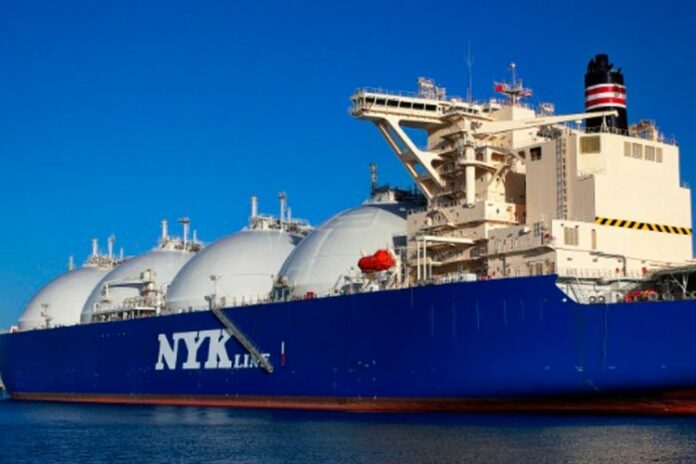
On January 31, NYK and JERA Co., Inc. signed a long-term charter contract for a new liquefied natural gas (LNG) carrier  to be built in South Korea by Hyundai Samho Heavy Industries. 

The vessel will be delivered in 2027 and will be used to transport LNG for JERA. This contract will contribute to the stable supply of LNG in partnership with JERA and strengthen and promote NYK’s LNG business as a core business of the company.

The vessel will be equipped with a next-generation X-DF2.2 iCER* dual-fuel, low-speed diesel engine that uses fuel oil and boil-off gas (LNG vaporized in the cargo tanks during navigation) for the main engine and a re-liquefaction system that can use surplus boil-off gas effectively. The vessel will have a 174,000 cubic meter capacity membrane-type tank that uses advanced insulating materials to realize superior efficiency and economical LNG transportation.

The vessel is the 11th LNG carrier NYK has chartered under a time charter contract with JERA. In its medium-term management plan announced in March 2023, NYK positioned its bulk shipping business as a core business and will invest 300 billion yen in LNG carrier construction by fiscal 2026.

Outline of Vessel

  • Cargo tank capacity: about 174,000 cubic meters
  • Length overall: about 289.9 meters
  • Breadth: about 46.1 meters
  • Main engine: X-DF2.2 iCER
  • Shipbuilder: Hyundai Samho Heavy Industries Co., Ltd.
  • Delivery year: 2027

Babcock awarded five-year Royal Navy equipment information configuration contract

0

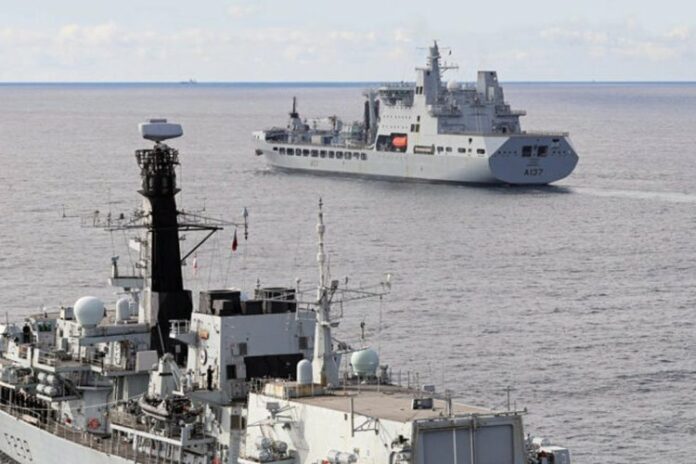
The five-year contract, awarded by QinetiQ, on behalf of the Ministry of Defence (MOD), under the Aurora Engineering Delivery Partnership, will see us continue with the responsibility for the Surface Ship Definition Database (SSDD) – a tool for the management of platform related data.

Operation of the Master Record Data Centre (MRDC), the core facility for ship information configuration services, will deliver major activities including:

  • Equipment ship fit
  • Ship datum document
  • Defect report management via the Surface Ship Equipment Data Record

The work of the MRDC will contribute to ensure that the necessary systems and equipment, including maintenance and spares, are available when and where they are required to meet Royal Navy and Royal Fleet Auxiliary demand. Project delivery will be supported by Allan Webb Ltd, which will provide specialist data interrogation skills.

The SSDD interfaces with numerous MOD systems and aligns with the customers’ future Information Knowledge Management (IKM) strategy, enabling us to efficiently deliver a holistic, surface ship management solution. Over the course of the contract, tangible benefits will be evident on existing and future programmes, including the Queen Elizabeth Aircraft Carriers, Type 31 General Purpose Frigates, and the Type 26 Frigates, with Babcock embedding and, where necessary, upgrading existing data management systems to aid through-life support programmes.

MRDC will be driven from the core configuration team in Portsmouth. Benefitting from strong supply chain relationships, Allan Webb Ltd will deliver key data interrogation aspects for this contract including the use of their Diamond tool. The MRDC team have developed a training programme that has grown its own talent and enhanced the depth and knowledge of the team.

Neil Young, Babcock’s Engineering and Technology Director, said:

“We are pleased to have been awarded the contract for the delivery of configuration management throughout the surface fleet.

“Our customers, and the mission we share, inspire us each and every day to strive for excellence. We’re by their side, enabling them to fulfil their duty, working closely with them to support their critical assets for decades and we look forward to continuing this strong relationship.”

Cdr Matt Shirvill RN, DE&S lead for Platform Configuration Management, added:

“I am really pleased to be placing this contract to provide essential Configuration Status Accounting services to the surface fleet and the wider maritime support community.

“Working together as one team, DE&S Ships’ and Aurora have secured world-class engineering excellence to support and empower frontline naval operations across the globe.

“I am looking forward to working closely with my Babcock, Allan Webb and QinetiQ colleagues to maximise the service over the next five years, leveraging the EDP continuous improvement approach to match the dynamic demands and aspirations of the Naval Service.”

ABB and MAN Energy Solutions revolutionize LNG carriers with DFE+ solution

0

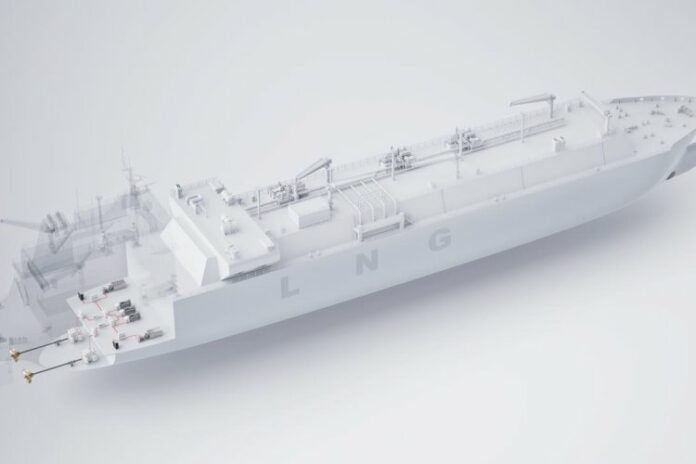
DNV has quantified the gains that owners of liquefied natural gas (LNG) carriers could expect to achieve using the new Dual Fuel, Electric+ (DFE+) solution developed by ABB and MAN Energy Solutions. Comprising MAN’s four-stroke 49/60DF dual fuel engine and ABB’s Dynamic AC power distribution and control system, the solution has been developed to overcome efficiency challenges that are specific to the vessel type.

DNV’s Maritime Advisory assessment concludes that the DFE+ concept is “a competitive and more energy efficient alternative to even the most efficient conventional dual-fuel LNG carrier propulsion designs.” Smaller machinery space requirements could deliver “a conservative estimate” of 5 percent greater cargo capacity. Combined with other steps to optimize performance, the DFE+ concept could contribute to overall energy savings of 6 – 7.5 percent considering the ship’s increased transport work, DNV says.

From January 1, 2023 the International Maritime Organization (IMO) has required shipowners to report vessels into an Energy Efficiency Design Index (EEDI), an Energy Efficiency Existing Ships Index (EEXI) and an operational Carbon Intensity Index (CII). These tools benchmark ships so that owners know what they must do to meet IMO targets for reducing greenhouse gas emissions.

As the newest addition to MAN’s four-stroke portfolio, the MAN 49/60DF engine is optimized for LNG. It is also highly compatible with ABB’s Dynamic AC system, which combines the merits of conventional AC with those of variable frequency to allow the engines to operate on optimal speeds – significantly improving total fuel consumption.

“Owners of LNG carriers face specific challenges in complying with the regulations, given their reliance on propulsion solutions with limited potential for efficiency gains,” said Prof. George Dimopoulos, Scientific Advisor, DNV. “The ABB – MAN propulsion concept aims to offer a highly effective way for LNG carriers to meet progressively tightening emissions regulations while also reducing fuel costs.”

“With the current global orderbook for LNG carriers including more than 200 vessels, and emission regulations continuing to tighten, owners need new technologies to meet the requirements that apply to this specific class of ships,” said Rune Lysebo, Strategic Market Development, ABB Marine & Ports. “DNV’s testimony on the gains available to LNG Carriers with the new solution developed by ABB and MAN Energy Solutions proves the time is right to explore the next-generation technologies for this vessel type.”

DFE+ could be installed with an energy storage solution to operate as a spinning reserve or come coupled with ABB’s Azipod® electric propulsion. ABB and MAN will also explore integrating fuel cells as the technology matures.

New investments in marine energy in the U.S.

0

In support of the President’s Investing in America agenda, the Department of Energy (DOE) has announced two innovative marine energy projects will receive a combined $6 million to develop a tidal energy research, development, and demonstration pilot site in the United States. 

In addition, a community-led river current energy research and development project was selected to receive $9.5 million. Tides and currents are incredibly predictable, meaning these resources could help balance other sources of renewable energy and be important contributors to a 100% clean energy grid. This funding, supported by the Bipartisan Infrastructure Law, encourages U.S. leadership in tidal and current energy development, supporting the Biden-Harris Administration’s goals to help communities meet their energy priorities and develop the marine energy sector’s supply chain and workforce.

“With marine energy we can sustainably harnesses the power of the ocean and rivers, providing rural and remote communities with clean reliable power,” said U.S. Secretary of Energy Jennifer M. Granholm. “The projects announced today are part of the largest investment by the federal government to advance the technology to capture energy from ocean tides and river currents, while helping decarbonize hard-to-reach coastal communities across the country and increasing their energy independence and resilience by increasing use of locally generated energy.”

Tidal Energy Research, Development, and Demonstration Pilot Site

Over the past decade, the U.S. Department of Energy’s Water Power Technologies Office has supported several tidal energy deployment projects. This investment reflects that the industry is now at a phase in development that requires moving from single device testing to array testing with several devices grouped together. 

Today’s announcement marks the first of five phases in a $35 million total investment from the Bipartisan Infrastructure Law to support the development and installation of one or more tidal energy devices that can be transitioned to a commercial project. 

The selected projects are:

  • A team led by Orcas Power and Light Cooperative (OPALCO), based in Eastsound, Washington, proposes to deploy a tidal energy turbine in Rosario Strait in the San Juan Islands in Washington State. The device is expected to be capable of producing about 2 megawatts of power. OPALCO aims to develop a pilot tidal power program to provide a reliable and resilient local power supply for San Juan Islanders.
  • A team led by ORPC, based in Portland, Maine, aims to deploy two tidal energy devices at a location in the Cook Inlet in Alaska off the coast of the remote area of East Foreland on the Kenai Peninsula. The devices are expected to be able to produce between 1 and 5 megawatts of power. The team aims to demonstrate the feasibility of tidal energy projects in Cook Inlet, which is the United States’ largest tidal energy resource.

During the competitive first phase, expected to last one year, these two projects will evaluate proposed sites and create plans for licensing, environmental monitoring, site health and safety, site commercialization, stakeholder engagement, community benefits, supply chain procurement, and technology selection and qualification. This phase will culminate in the projects submitting the necessary license and/or permit applications to regulators. At the conclusion of the first phase, DOE will select one project to proceed through the remaining four phases and receive up to an additional $29 million, concluding with testing and operation of the tidal energy device(s). 

Community-Led River Current Energy Research and Development Project

The community-led river current energy project aims to balance community energy priorities and technology innovation. This investment of $9.5 million will help accelerate the development of current energy technologies and promote resilience and economic development in Yukon River and Alaska Native communities. Many communities on the Yukon and Kuskokwim rivers are powered by local microgrids where the river current potential resource is an order of magnitude greater than average electrical loads. 

The selected project is led by the University of Alaska Fairbanks’ Alaska Center for Energy and Power, which plans to develop a replicable, community-led current energy research and development project in the Yukon River at Galena, Alaska. The primary goal is to identify and develop a technology appropriate for the community. This project will help remove barriers to the development of river-based hydrokinetic energy projects (or those that capture power from the natural flow of water) in Alaska’s more than 90 communities with microgrids on or near rivers. 

These projects were selected as part of the Water Power Technologies Office’s U.S. Tidal Energy Advancement funding opportunity.

ClassNK awards AiP for ammonia fuel tank for container ships developed by GSC

0

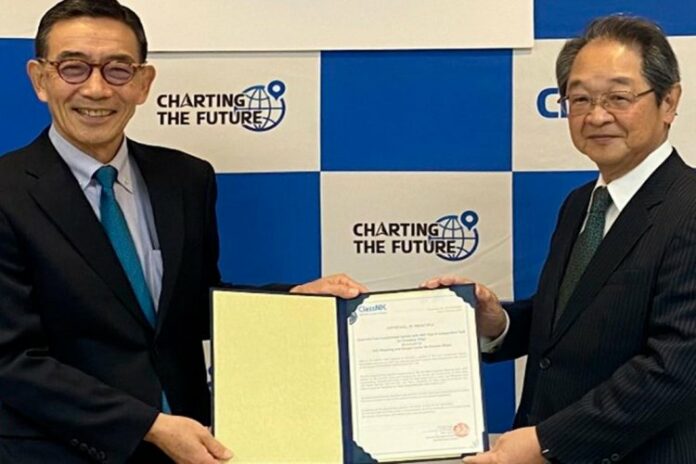
ClassNK has awarded an approval in principle (AiP) for the design of a prismatic ammonia fuel tank (IMO Type B independent tank) for container Ships developed by Planning and Design Center for Greener Ships (GSC).

Ammonia is expected to be used as a marine fuel for shipping decarbonization since it does not emit CO2 when combusted. However, its utilization presents challenges, such as the risk of leakage and relatively low volumetric efficiency.

While Type B tanks require a refined fatigue analysis, it is possible to use ordinary steel as the material for the structure of fuel storage hold space, except for the bottom part which is intended to be a partial secondary barrier, resulting in a reduction in the amount of steel for low temperature service. Additionally, prismatic tanks offer superior volume efficiency compared to cylindrical tanks as they can be designed to fit the ship’s hold.

The Type B tank developed by GSC has been designed to ensure safe storage of ammonia and to minimize the reduction in the number of cargo containers due to the placement of fuel tanks in consideration of operational needs. Furthermore, the shape of the storage space for the tank has been simplified from the typical bench corners for container carriers, improving constructability and increasing the fuel volume.

ClassNK carried out the design review of the tank based on Part GF of its “Rules and Guidance for the Survey and Construction of Steel Ships” incorporating theIGF Code and “Guidelines for Ships Using Alternative Fuels (Edition 2.1)”. Upon confirming it complies with the prescribed requirements, ClassNK awarded the AiP.

Babcock’s LGE business wins LPG and ammonia contracts in China

0

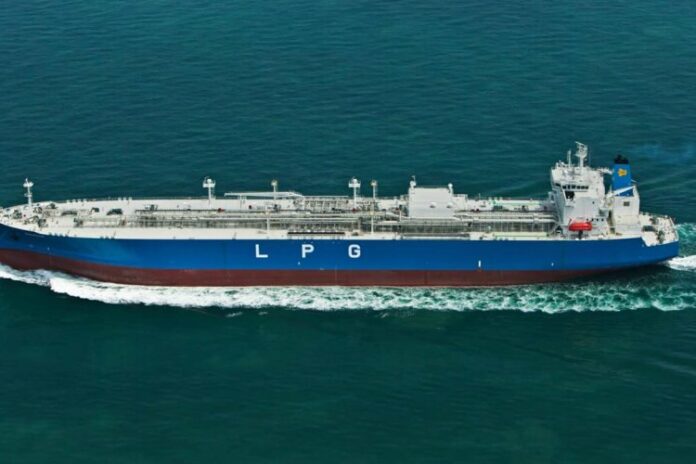
Babcock’s LGE business has won contracts to provide its LPG and ammonia cargo handling and fuel gas supply systems.

The new vessels will be delivered during 2026 and 2027 and will service the increasing requirement for international long-haul LPG and ammonia transportation with our ecoVGC® and ecoVLAC®. technology, delivering commercial and operational benefits throughout the lifetime of the ships.

The latest awards follow a successful 2023 for Babcock’s LGE business after winning more than 40 and delivering more than 50 projects. The business secured this record number of new contracts for the design and supply of cargo handling and fuel gas supply systems for marine transportation of Liquefied Natural Gas (LNG), Liquefied Petroleum Gas (LPG), ethane, ammonia and CO2, all using in-house developed and patented or patent-pending technology.

Neale Campbell, Managing Director of Babcock’s LGE business, said:

“We’re committed to providing environmental and economic solutions for our customers’ assets and investing in pioneering technology for the future.

“These latest contract wins further build on the existing developments, especially in ammonia shipping, for Babcock’s LGE business and mark an important milestone in our technological approach to fully support the industry’s transition to net zero.”

Babcock’s LGE business provides cargo handling and fuel gas supply systems for the liquefied gas markets. Its environmentally-focused technologies improve vessel efficiency and enhance performance, delivering value to customers throughout the entire life of the vessel.