-11.7 C
New York
Home Blog Page 217

LDA and Norsepower join forces in shipping large Airbus aircraft components

0

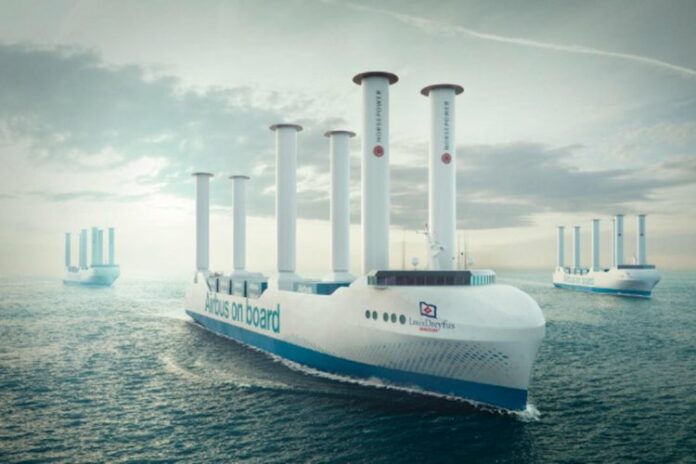
Louis Dreyfus Armateurs SAS (LDA) and the Finnish mechanical sail company, Norsepower Oy Ltd, have announced that the Norsepower Rotor Sail™ technology will be installed on the new low-emission RoRo fleet to be chartered to Airbus.

The Norsepower Rotor Sail is a modernised version of the old Flettner rotor concept that uses electric power to actively rotate the cylinder-shaped rotors on the deck. These rotating sails use the wind to produce powerful thrust, reducing fuel consumption, lowering emissions and costs.

The new low-emission vessels, which will be used to ship aircraft components for Airbus, will each be powered by a combination of six 35-meter tall Norsepower Rotor Sails and two dual-fuel engines running on maritime diesel oil and e-methanol. Additionally, routing software will optimise the vessels’ journey across the Atlantic, maximising wind propulsion and avoiding drag caused by adverse ocean conditions.

By 2030, for the Transatlantic route, the new fleet will generate approximately 50% fewer CO2 emissions compared to 2023. The rotor sails will feature the brand new patented Norsepower Sentient Control™ (NPSC™), a real-time force measurement, control and savings reporting system. This world-first tool enables each rotor to be controlled individually. This optimises efficiency by managing the complex aerodynamic interactions between the sails and the hydrodynamic behaviour of the vessel. Extensive Computational Fluid Dynamics (CFD) and wind tunnel tests have been carried out during the design phase to optimise the sail arrangement and design.

Mathieu Muzeau, Transport and Logistic General Manager at Louis Dreyfus Armateurs, said:

«While the IMO has set challenging targets to bring shipping to net-zero, wind propulsion is considered as a viable element of the sustainable energy mix for seagoing ships. We are proud to be part on the energy transition through our partnership with Norsepower to offer innovative solutions and sustainably driving change»


Tuomas Riski, CEO of Norsepower, commented : 

« This fleet-wide deal is a game changer for the whole auxiliary wind propulsion industry. Firstly, it is the biggest deal ever made in the mechanical sails market – and, in a world first, it includes our brand new Norsepower Sentient Control™ tool. We are honoured that the first charterer to utilise this advanced control system is Airbus, the foremost expert in aerodynamics in the world. We thank LDA and Airbus for being forerunners of this industry – and look forward to our continued cooperation ! ».
New Babcock contract for Royal Navy protective systems

0

The contract consists of degaussing, cathodic protection, and active shaft grounding to ships and submarines, restricting the rate of hull corrosion and reducing their magnetic signature to make them less susceptible to magnetic mines.

Our continued involvement in providing in-service support to the SPS will help ensure the Royal Navy’s critical assets are available and long-lasting.

In a world of significant geopolitical instability, national security has never been more important as defence requirements become increasingly complex to deliver. 

Provision of system spares is an important aspect of the contract, working with Allan Webb Ltd to manage obsolescence risk for the affected systems.

Repair of defective system parts is an additional requirement which will benefit from our experience in overcoming problems caused by obsolescence of systems. 

Neil Young, Babcock’s Engineering and Technology Director, said:

“This five-year contract is testament to the existing SPS team and the confidence the MOD customer has in their delivery of in-service support to the Royal Navy’s surface and submarine fleets.

“We have been working closely with the Royal Navy and MOD to support its critical assets for decades and we look forward to continuing this strong relationship. Their mission is our mission.”

NYK takes delivery of Japan’s first LNG-fueled Capesize bulk carrier

0

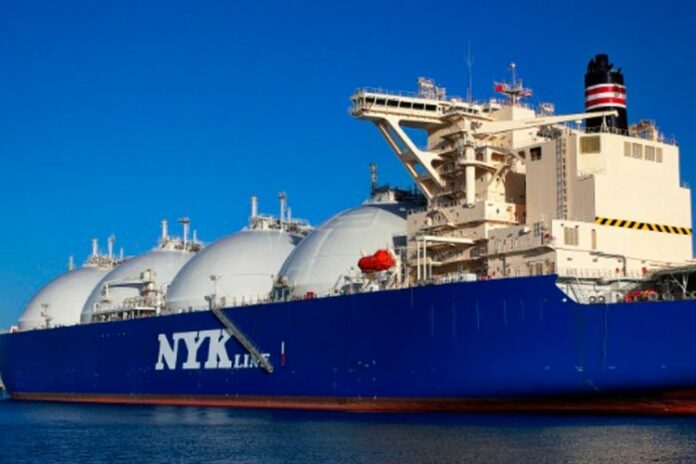
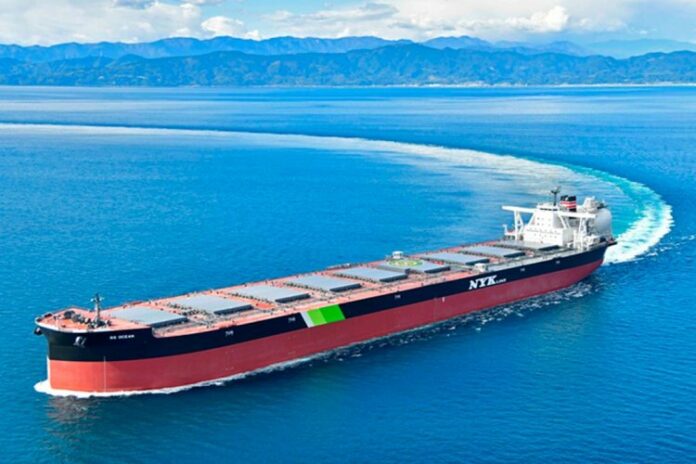
A naming ceremony was held on January 30 for an LNG-fueled capesize bulk carrier that was ordered by NYK and will be deployed to transport iron ore and coal from Australia to Japan under a long-term consecutive voyage charter contract with JFE Steel Corporation (JFE). 

The ceremony was held at Japan Marine United Corporation’s Tsu Shipyard in Mie Prefecture. The vessel is the first capesize LNG-fueled bulk carrier to be built at a shipyard in Japan (according to an NYK research). NYK is expanding its fleet of LNG-fueled vessels to meet the NYK Group’s goal of reducing GHG emissions by 45% from fiscal 2021 levels by fiscal 2030 while taking on the challenge of decarbonizing an entire supply chain.

The vessel was named “SG Ocean” to reflect the “SG” of NYK’s “Sail GREEN” brand, which emphasizes reducing GHG emissions through the transport of goods and contributing to the eco-friendly supply chains of customers, and the image of a vessel sailing majestically in the open ocean while protecting the environment. The naming ceremony was attended by Koji Kakigi, president and CEO of JFE Holdings, Inc., and Takaya Soga, president of NYK, among others.

By utilizing LNG-fuel, the vessel will emit approximately no sulfur oxides (SOx), 75% less nitrogen oxide (NOx), and 25% less carbon dioxide (CO2) compared to existing conventional heavy-oil-fueled vessels. Additionally, the vessel will be compliant with the IMO’s NOx emission regulations (Tier III). The vessel uses the latest 7X62DF-2.1 iCER dual-fuel slow-speed diesel engine by WinGD, a world-class marine engine design company. This engine halves methane emissions when using LNG fuel. In addition, due to careful consideration of the equipment and arrangement of the LNG fuel tank and LNG fuel supply system, this ship will maintain the loadable quantity and cargo hold capacity of conventional bulk carriers of the same size despite the increased weight of additional equipment.

Outline of vessel

  • Length overall: 299.9 meters
  • Breadth (moulded): 50.00 meters
  • Draft (scantling): 25.00 meters
  • Deadweight tonnage: 210,000 tons
  • Contractor: Japan Marine United Corporation

Wärtsilä to deliver ammonia fuel system for two EXMAR Medium size Gas Carriers

0

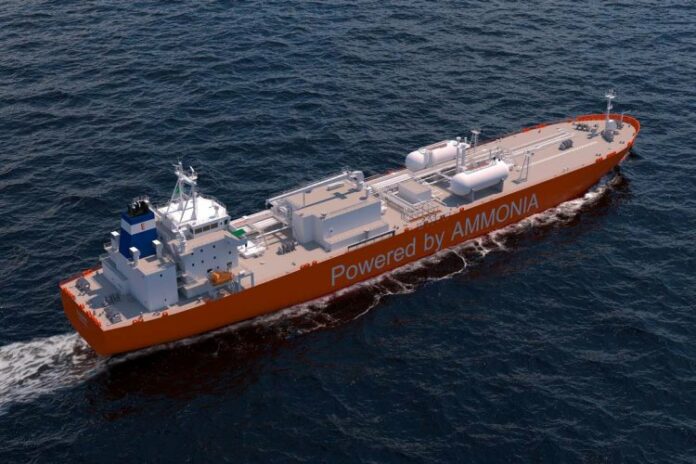
Wärtsilä Gas Solutions will deliver the fuel supply system for two new gas carriers that will operate with ammonia fuel. 

The ships are being built at the Hyundai Mipo Dockyards (HMD) in Korea for ship owner EXMAR LPG, a joint venture between Exmar, a multi-disciplinary maritime and offshore solutions provider, and Seapeak, one of the largest independent owner-operators of liquefied natural gas vessels. 

The vessels are part of a four ship series for which Wärtsilä has already been contracted to supply the cargo handling and fuel supply systems. All four vessels were originally ordered to operate on liquefied petroleum gas (LPG) as fuel. However, in October EXMAR declared an option to change the fuel system and placed an order with Wärtsilä to convert the fuel systems on two vessels to be able to operate with ammonia. This order was booked by Wärtsilä in Q1, 2024.

“There is of course a challenge to be considered when making a first-ever operational decision such as this, requiring the latest technology. Wärtsilä has the experience and technical competence to minimise this risk, which is why they were selected as a key partner in this groundbreaking project,” said Carl-Antoine Saverys Chief Executive Officer, EXMAR.

The full scope of Wärtsilä’s supply includes the Liquid Ammonia Fuel Supply System along with process engineering and dynamic simulation. The system is skid mounted with low- and high-pressure fuel pumps, controls for fuel pressure and temperature, and heat exchangers. Delivery to the yard is scheduled for 2025.

“We have had long and close cooperation with both HMD and EXMAR, and are proud to be part of this exciting project. When operating with ammonia fuel the CO2 emissions will be reduced with about 90%. This is fully in line with Wärtsilä’s strategy for enabling decarbonised shipping operations, and is an endorsement of our capabilities to deliver future-proof systems capable of handling a new generation of marine fuels,” commented Stein Thoresen, Head of Sales Marine, Wärtsilä Gas Solutions.

ABP unveils ambitious Masterplan for decarbonised growth at the Port of Newport

0

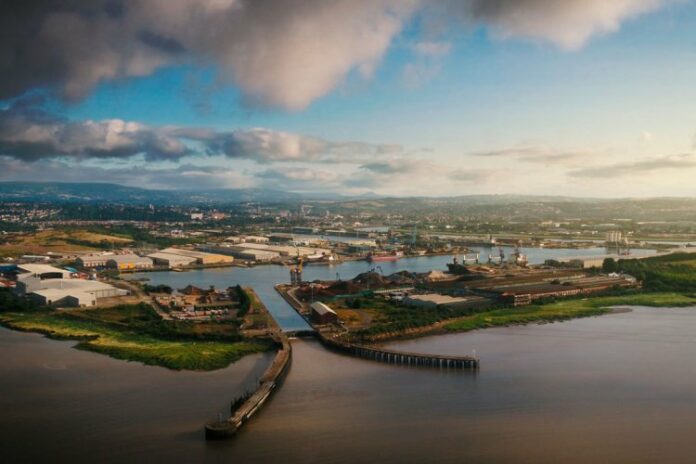
These facilities, along with carbon capture and heat networks, will underpin next-generation manufacturing and logistics, attracting a new cluster of businesses looking to future-proof their operations. The development will also be connected to low-carbon rail and marine logistics and will expect to see hundreds of highly productive jobs created at the resulting Newport clean growth hub. This will create benefits that spill right across the city and beyond.

While the plan includes innovations that aim to support business to future-proof and meet net zero targets, the classic port role will remain. This means that Associated British Ports (ABP) will also be investing in reconfigured access, new cargo-handling equipment, high-efficiency warehousing and ready-to-go development sites, and all with cutting-edge IT.

Ashley Curnow, Divisional Port Manager, ABP, commented:

“This Masterplan is a bold step towards a sustainable future. Newport has a history of reinvention, and we are now embarking on a journey that will position both the port, and the city of Newport as a key player in the evolution towards a decarbonised economy.

“The Masterplan foresees a decade-long investment boom, and ABP’s investments will help provide superb service to customers, as well as delivering ABP’s commitment, as set out in our sustainability strategy – Ready for Tomorrow ­­­­– to get our own operations to net zero by 2040.”

The Masterplan outlines three main objectives, which are to create:

  • A thriving, decarbonised industrial logistics port
  • A clean growth hub
  • Well-being for current and future generations.

Jane Mudd MP expressed enthusiasm for ABP’s Masterplan, stating: “ABP’s commitment to sustainability and collaboration is commendable, and we’re excited about the potential this vision for Newport has to shape a brighter and greener future for our city.

“We look forward to working with ABP to implement the aspirations of the Masterplan and bring benefits to the City of Newport and maximise the opportunities to zero carbon economy.”

Newport is the latest of ABP’s five ports in South Wales to have undergone an extensive Masterplanning process – previously Barry and Port Talbot – and as part of ABP’s wider Wales Vision.

Ashley Curnow added:

“We are at the start of a transformative journey for Newport and ABP is optimistic about Newport’s potential for a new era of innovative and productive growth.

“We see the Masterplan as an invitation to stakeholders, customers and the broader community to join ABP on this journey towards a more sustainable and prosperous future for Newport.”

Viking Line to create green corridor together with Ports of Stockholm and the Port of Turku

0

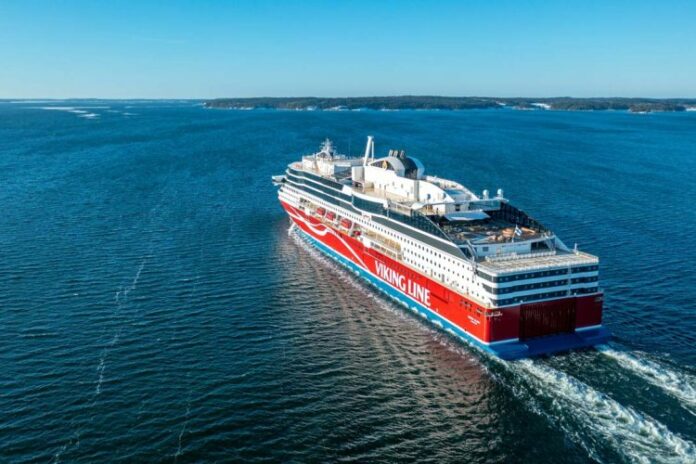
Viking Line, Ports of Stockholm and the Port of Turku signed a Memorandum of Understanding, February 6, 2024, to create a green maritime corridor between Turku and Stockholm.

The partnership will serve as an innovative platform for developing scalable solutions for the phase-out of fossil fuels and enable green maritime travel between Turku and Stockholm.

“Viking Line is a shipping company with its roots in this sensitive archipelago. For us, the work to protect and preserve the Baltic Sea is in our DNA. We are ambitious pioneers in this industry and are proud to take this step together with Ports of Stockholm and the Port of Turku in order to get closer to providing zero-carbon cruises and transport on this important shipping route between Finland, Åland and Sweden,” says Jan Hanses, President and CEO of Viking Line.

The project and partnership between Viking Line, Ports of Stockholm and the Port of Turku – formalized with the signing of a Memorandum of Understanding – qualifies as a green maritime corridor under the Clydebank Declaration, as has been confirmed by both Sweden and Finland. This undertaking is well ahead of the schedule set out in the EU’s Fit for 55 climate legislation package.

“Climate change is happening here and now, so it is more important than ever to take concrete steps for the green transition. We know that more transport needs to be carried out by rail or ship instead of by car and airplane, and green maritime shipping plays a major role in the transport sector’s climate transition,” says Clara Lindblom, Chair of the Board of Ports of Stockholm.

“There has always been a focus on environmental work in all of our operations. The Port of Turku is embedded in a very sensitive archipelago, which gives us the responsibility to always respect our surroundings in our daily work. In 2023, we signed Turku’s Climate City Contract, with the goal being for the city to be carbon-neutral by 2029. That is a goal we are working systematically to achieve, so this memorandum to develop a green transport corridor between Turku and Stockholm is a natural step for us,” says Erik Söderholm, Managing Director of the Port of Turku.

The partnership will also take into consideration progress and solutions from the ongoing Decatrip project, a collaboration between Viking Line, Rauma Marine Constructions, the Turku-based Åbo Akademi University and Kempower. Over the course of the project, the parties will gradually reduce their carbon dioxide emissions and work for a 100% carbon-neutral corridor. In the long term, the partnership may be expanded to involve key stakeholders in maritime shipping, including goods owners and freight forwarders. The agreement was signed on February 6, 2024, at the Stockholm City Hall.

Bureau Veritas and Ponant advance polar safety research

0

The exercise followed a similar SAREX carried out in 2021, reputed to be the world’s first international SAREX scenario in a remote polar zone. 

Participants explored the challenges, limitations and opportunities of an arctic massive rescue operation (AMRO) over the three phases of the SAREX: 

  • Phase 1: onboard the ship
  • Phase 2: onboard survival crafts
  • Phase 3: survival on-shore

Equipment evaluated during the SAREX included the “Ice Cube,” an innovative group survival kit (GSK). Participants used a reverse osmosis system within the GSK to produce the minimum required 2 L of drinking water per person per day. Not only was the system successful, but researchers were able to estimate its performance over the course of a longer simulation. 

After previous trials in 2021, the Ice Cube design had been revised to be compliant with ISO 24452. The Ice Cube performed well in the 2023 SAREX, and teams identified further opportunities to strengthen safety measures.

Procedures were also carried out for an inflatable polar shelter, whose purpose is to shield evacuated passengers from the cold for 24 hours. In the span of one hour, the internal temperature rose from 12°C to 22°C, without the need for heaters nor evidence of prohibitively high CO2 concentrations. 

The resulting SAREX report will be submitted to the IMO Sub-Committee on Ship Systems and Equipment to advise their interim guidelines on life-saving appliances and arrangements for ships operating in polar waters.

Frederic Thomas, Director of Equipment and Materials Certification Bureau Veritas Marine & Offshore, said: 

“The findings of our recent SAREX have positive implications for raising safety standards in the maritime industry. The successful outcomes of this opportunity underscore the importance of collective effort and demonstrate BV and PONANT’s shared and unwavering commitment to enhancing safety. Together, we continue to set benchmarks for best practices across sectors.”

EST-Floattech supplies Octopus Series Energy Storage Solution for ferries

0

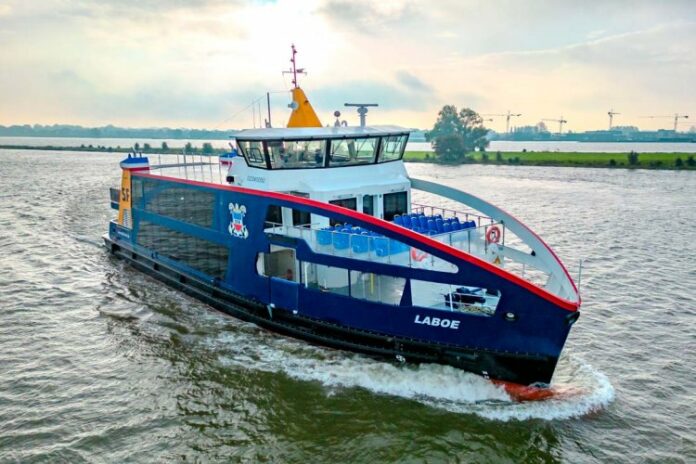
The ferry was recently successfully delivered to Schlepp- und Fährgesellschaft Kiel (SFK) by Holland Shipyards Group. It is the 6th ferry in a series of 7 ferries with which SFK has the ambition to lower its CO2 emissions.

The Laboe is equipped with 560 kWh of the Octopus High Energy system. This battery system ensures the energy consumption remains low during the sailing, as the vessel can easily switch between generators and the battery system. The vessel can even sail fully emission-free around the city of Kiel, where it transports commuting pedestrians and cyclists from A to B. The system was integrated by Holland Ship Electric, who decided to collaborate with EST-Floattech on the ferries for SFK. EST-Floattech and Holland Ship Electric have a longstanding partnership with many successful collaborations, of which the Laboe is the latest project.

The city of Kiel in Germany is working hard to create an emission-free future. This collaboration reflects a shared vision for a cleaner, more efficient maritime industry, aligning with global efforts to reduce carbon emissions thanks to the Octopus Series battery system. The integrated energy management system optimizes the use of stored energy, enabling the ferry to operate more efficiently and reduce fuel consumption, leading to lower emissions and operational costs. This system has batteries with high energy density, ensuring optimal performance and long operational life for the SFK ferry Laboe.

Malte Klein from Schlepp- und Fährgesellschaft Kiel:

“When the new Octopus High Energy System was presented to us for the first time, we were impressed by the overhauled design and HMI features of the system. Simple integration into the ships networks and better connectivity to the PMS, moreover the new system comes with a higher safety standard. The performance of the system is more than satisfactory. The SFK is also informed that the system is capable to handle different kind of batteries types so it future proof.”

Rens Gerritsen, Project Manager from Holland Shipyards Group:

“The new Octopus High Energy EST battery system has been successfully integrated into both the hybrid ferry Laboe and the fully battery-powered ferry Dietrichsdorf. The inclusion of state-of-the-art battery racks and covers enhances the overall professional aesthetics of the system. Throughout the construction process, EST-Floattech maintained an open dialogue for feedback and suggestions from the shipyard and installer, resulting in a seamless integration of the battery pack into both vessels.”

John van der Sluis, director at Holland Ship Electric:

“We have done many projects with EST-Floattech, and this was the first with their new Octopus Series energy storage solution, which has improved in many ways and was easily integrated into our power system. We look forward to many more successful collaborations in the future.”

Walter van der Pennen, Commercial Director at EST-Floattech :

“We are proud to be part of this transformative project that supports the goals of different parties involved in this project to create a more sustainable maritime industry and help lower the emissions in and around Kiel thanks to the Octopus Series battery system.”

NYK signs long-term charter with JERA for new LNG carrier

0

On January 31, NYK and JERA Co., Inc. signed a long-term charter contract for a new liquefied natural gas (LNG) carrier  to be built in South Korea by Hyundai Samho Heavy Industries. 

The vessel will be delivered in 2027 and will be used to transport LNG for JERA. This contract will contribute to the stable supply of LNG in partnership with JERA and strengthen and promote NYK’s LNG business as a core business of the company.

The vessel will be equipped with a next-generation X-DF2.2 iCER* dual-fuel, low-speed diesel engine that uses fuel oil and boil-off gas (LNG vaporized in the cargo tanks during navigation) for the main engine and a re-liquefaction system that can use surplus boil-off gas effectively. The vessel will have a 174,000 cubic meter capacity membrane-type tank that uses advanced insulating materials to realize superior efficiency and economical LNG transportation.

The vessel is the 11th LNG carrier NYK has chartered under a time charter contract with JERA. In its medium-term management plan announced in March 2023, NYK positioned its bulk shipping business as a core business and will invest 300 billion yen in LNG carrier construction by fiscal 2026.

Outline of Vessel

  • Cargo tank capacity: about 174,000 cubic meters
  • Length overall: about 289.9 meters
  • Breadth: about 46.1 meters
  • Main engine: X-DF2.2 iCER
  • Shipbuilder: Hyundai Samho Heavy Industries Co., Ltd.
  • Delivery year: 2027

Babcock awarded five-year Royal Navy equipment information configuration contract

0

The five-year contract, awarded by QinetiQ, on behalf of the Ministry of Defence (MOD), under the Aurora Engineering Delivery Partnership, will see us continue with the responsibility for the Surface Ship Definition Database (SSDD) – a tool for the management of platform related data.

Operation of the Master Record Data Centre (MRDC), the core facility for ship information configuration services, will deliver major activities including:

  • Equipment ship fit
  • Ship datum document
  • Defect report management via the Surface Ship Equipment Data Record

The work of the MRDC will contribute to ensure that the necessary systems and equipment, including maintenance and spares, are available when and where they are required to meet Royal Navy and Royal Fleet Auxiliary demand. Project delivery will be supported by Allan Webb Ltd, which will provide specialist data interrogation skills.

The SSDD interfaces with numerous MOD systems and aligns with the customers’ future Information Knowledge Management (IKM) strategy, enabling us to efficiently deliver a holistic, surface ship management solution. Over the course of the contract, tangible benefits will be evident on existing and future programmes, including the Queen Elizabeth Aircraft Carriers, Type 31 General Purpose Frigates, and the Type 26 Frigates, with Babcock embedding and, where necessary, upgrading existing data management systems to aid through-life support programmes.

MRDC will be driven from the core configuration team in Portsmouth. Benefitting from strong supply chain relationships, Allan Webb Ltd will deliver key data interrogation aspects for this contract including the use of their Diamond tool. The MRDC team have developed a training programme that has grown its own talent and enhanced the depth and knowledge of the team.

Neil Young, Babcock’s Engineering and Technology Director, said:

“We are pleased to have been awarded the contract for the delivery of configuration management throughout the surface fleet.

“Our customers, and the mission we share, inspire us each and every day to strive for excellence. We’re by their side, enabling them to fulfil their duty, working closely with them to support their critical assets for decades and we look forward to continuing this strong relationship.”

Cdr Matt Shirvill RN, DE&S lead for Platform Configuration Management, added:

“I am really pleased to be placing this contract to provide essential Configuration Status Accounting services to the surface fleet and the wider maritime support community.

“Working together as one team, DE&S Ships’ and Aurora have secured world-class engineering excellence to support and empower frontline naval operations across the globe.

“I am looking forward to working closely with my Babcock, Allan Webb and QinetiQ colleagues to maximise the service over the next five years, leveraging the EDP continuous improvement approach to match the dynamic demands and aspirations of the Naval Service.”