-11.7 C
New York
Home Blog Page 216

Royal Marines get revamped raiding craft for new era of operations

0

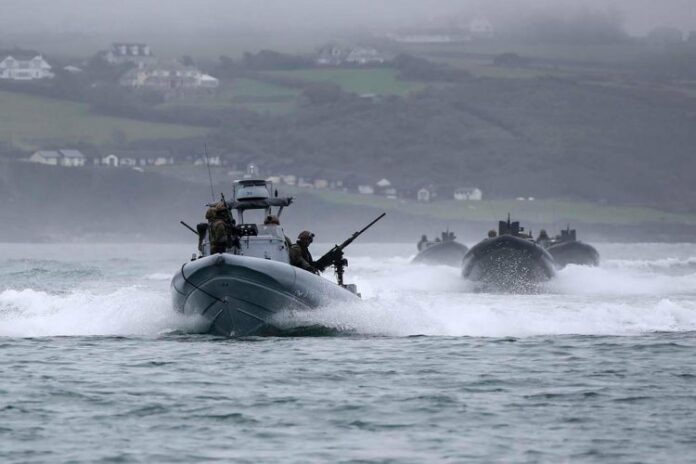
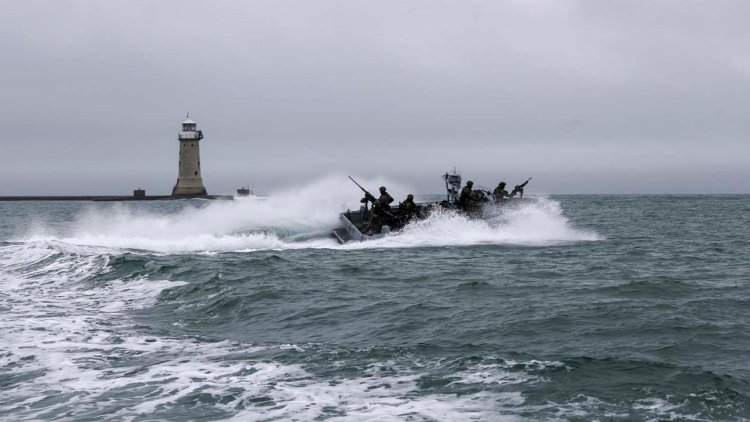
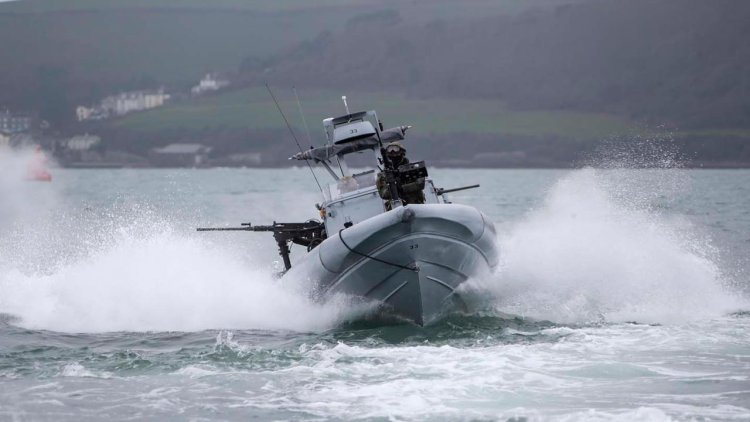
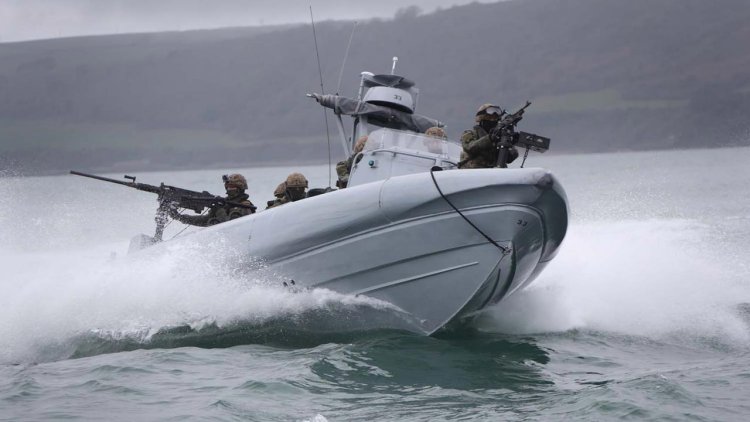
Being rolled out for use on front-line operations around the world, the Commando Raiding Craft (CRC) is a redesigned version of the tried-and-tested Offshore Raiding Craft – commonly known in the Corps as the ORC.

After two decades’ service with the Royal Marines around the globe, it’s been given an overhaul to meet the demands of the commandos in the mid-21st century as they return to their WW2 raiding roots: coastal landings behind enemy lines with small teams wreaking havoc on enemy infrastructure and systems.

Repainted in grey to help concealment, the CRC also has new engines providing increased range – more than 200 nautical miles – and speed – up to 40 knots – and a new configuration with driving position moved from the back to front for better manoeuvrability.

It also has new cooling systems, mast, trim for better protection from sea conditions and a sophisticated electronic suite for communications and navigation.

The CRC has three crew who rotate on long journeys but also space to launch drones, carry payloads and to store a smaller Inshore Raiding Craft to deploy on some landings if required.
Crucially, this is a life extension and upgrade to the ORC and, although it is more than just a stop-gap, in the long run Commando Forces are developing a boat that will replace the ORC, CRC and larger Landing Craft Vehicle Personnel.

“The current fleet of craft were ageing and had limited range and capacity,” explains Major Joe Brown, from the Commando Force Acquisition team.

“An opportunity was taken to revamp this fleet to deliver a considerable upgrade to the current craft through the development of in-service hulls.

“It is an example of developing for the future through maximising the potential within existing capabilities.”

Plymouth-based 47 Commando – the amphibious warfare experts of the Commando Force – will be at the controls of the CRC wherever it deploys around the globe.
The unit’s Commanding Officer, Colonel William Norcott, said: “The CRC is multi-purpose and more supportive of the Commando Force model, working in small disaggregated teams that are structured to deliver a lethal punch. You can configure the craft to the way these teams are operating.

“This is exciting for us, because it’s a much more powerful craft, the coxswains will tell you, it’s much more enjoyable to operate, it’s more tactical and we don’t need the different variants like we currently have.

“We are really excited to have something that does what it says on the tin.”
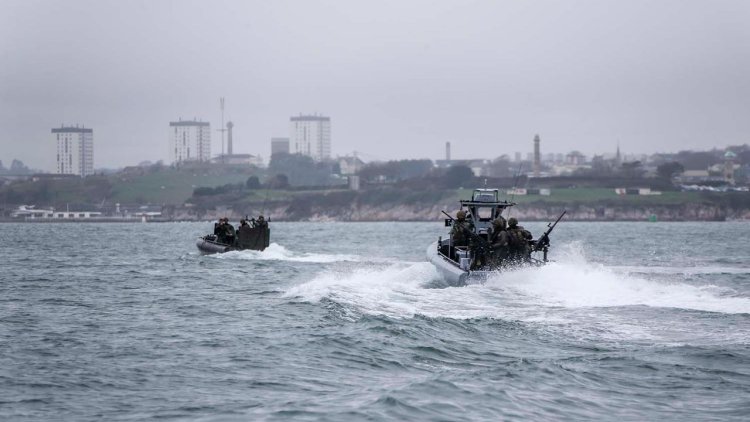
In the meantime, CRC is already deployed on operations – namely with 47 Commando’s 539 Raiding Squadron and the Littoral Response Group (South) task force in the Mediterranean.

“We have achieved a significant amount of tactical development with the CRC whilst deployed on LRG(S),” said Major Dan Wake, Officer Commanding of 539 Raiding Squadron.

“We are now flying uncrewed aerial systems from the craft among other developments.

“The CRC in this role, with the new communications architecture fitted to enable rapid information flow, is ably demonstrating a broader utility than simply moving people from ship to shore.”

The LRG(S) task group – centred on 40 Commando and support ships RFA Lyme Bay and RFA Argus – is deployed to the Mediterranean ready to react to emerging crises or world events. The task group delivered more than 80 tonnes of humanitarian aid for Gaza on behalf of the UK in January.
Fincantieri launches the “Masters of the Sea” project

0

Fincantieri has unveiled the “Masters of the Sea” project in Rome, initiating a paid training program, that will lead to the hiring of 90 individuals within the summer of 2024. This learning pathway is designed to search, educate and employ workers in the shipbuilding sector.

The “Masters of the Sea” initiative has been developed as part of Distretto Italia, an orientation, training, and job placement project launched in 2023 by the ELIS consortium, of which Fincantieri is a member. It represents an investment in technical knowledge, offering a paid training program aimed at direct employment at Fincantieri’s shipyards across Northern, Central, and Southern Italy.

The initial two training courses, for Dimensional Control Operators and Naval Plant Operators, will involve 30 participants. Over the coming months, four additional courses are scheduled, aimed at training Naval Operators, Crane Operators and Slingers.

Fincantieri has based its Business Plan on the cultivation of skills and the “Made in Italy” spirit of innovation, moving beyond mere “craftmanship” to an evolved concept of “intellectual craftsmanship,” capable of reconnecting Italians with manufacturing, skilled manual work, new technologies and the high standards of excellence that distinguish our products.

Pierroberto Folgiero, CEO and Managing Director of Fincantieri, said:

“The course of Italy’s industrial future passes through the training of a skilled workforce, the “intellectual craftmanship” of tomorrow. From this idea comes the ‘Masters of the Sea’ project, a paid training program aimed at recruiting young talents. The goal is to make attractive and cutting-edge jobs that young Italians tend to neglect”.

Pietro Cum, CEO of ELIS, said:

“Masters of the Sea stems from the need for professional profiles within a major Italian company and creates opportunities for the youth. We frequently hear about companies seeking staff without success and about disillusioned young people. When the realms of education and employment converge, we discover that a solution to the issue does exist”.

Furetank reaches milestone with new vessel orders: entire fleet renewed

0

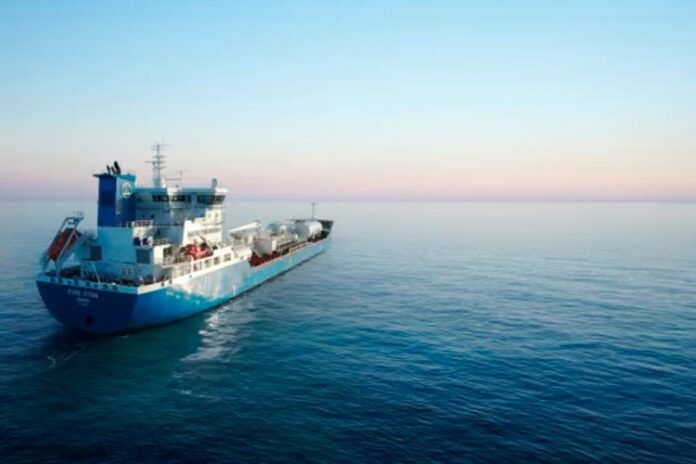
Furetank adds another two Vinga vessels to the order line, marking a milestone for the shipping company.

”We did our homework. This development towards sustainability has been an amazing journey”, says CEO Lars Höglund.

The vessels are number 20 and 21 in the Vinga series of intermediate size product tankers and will be fully owned by Furetank Rederi AB. They will replace older tonnage, meaning that all vessels in the Furetank fleet will be of the best-in-class emission-saving Vinga design.

The Vinga series has been rapidly expanded in the last few years, since the ships have been very well received in the market. The technology has proven to be robust and efficient, meeting all expectations.

“We are very happy to reach this point on our journey, operating only ships with the latest emission-saving technology. We have done our homework. When these vessels arrive, the average age of our fleet will be less than two years. Since the introduction of the Vinga series in 2018, Furetank has developed into a substantially larger shipping company with our focus set on environmental progress. It has been an amazing journey”, says Lars Höglund, CEO of Furetank.

The green technology on board is developed and refined with the construction of each new vessel. The latest addition is two methane slip reducing technologies, a Greenhouse Gas (GHG) reduction package and Low Load Optimization package, co-developed by Wärtsilä and Furetank.

They will be implemented in all upcoming vessels and retrofitted into existing Vinga ships. Tests performed both in the factory and on board show a methane slip reduction of an impressive 45-50 per cent.

The Vinga series is designed for the intense and demanding trade in the North Sea and Scandinavia, well suited to meet the growing European demand for biofuels and renewable feedstocks.

“Our customers are becoming more environmentally conscious and placing greater importance on reducing the climate footprint of their entire supply chain. With a large fleet of energy efficient vessels, we can offer better service to customers and optimize the fleet trading pattern, reducing our climate impact even further”, says Lars Höglund.

The two ships will be constructed at the China Merchants Jinling Shipyard in Yangzhou, China, with delivery expected in the end of 2026 and beginning of 2027. They will be entered into the Gothia Tanker Alliance and operated by Furetank out of Gothenburg, flying the Swedish flag. This brings the Vinga vessel series to a total of 21 ships, out of which 19 will be commercially managed and 14 fully operated by Furetank.

Varma to co-invest alongside OP Finland Infrastructure in Aspo’s subsidiary ESL Shipping

0

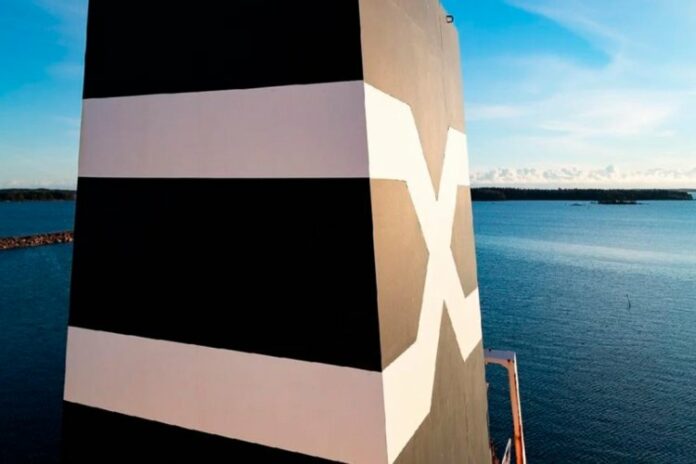
Varma Mutual Pension Insurance Company has agreed to co-invest EUR 15 million alongside OP Finland Infrastructure LP in ESL Shipping, a subsidiary of Aspo Plc. As a result, the combined investment into ESL Shipping managed by OP Finland Infrastructure LP rises to a total of EUR 45 million at the closing of the transaction.

The co-investment by Varma is made with the same valuation and terms as agreed between Aspo and OP Finland Infrastructure in their 8 November 2023 announced EUR 30 million investment in ESL Shipping. Competition authority approvals and change of control approvals from financial institutions have been received and the closing of OP Finland Infrastructure LP’s investment together with Varma’s co-investment is estimated to take place on February 29, 2024.

The combined EUR 45 million investment managed by OP Finland Infrastructure LP will be made against the issuance of new shares in ESL Shipping with an agreed pre-money equity valuation of EUR 165 million, corresponding to a 21.43% ownership stake in ESL Shipping. This implies an enterprise value of approx. EUR 300 million for ESL Shipping.

“We are delighted that Varma alongside OP Finland Infrastructure has decided to invest in the ongoing green transformation of ESL Shipping. This additional equity further accelerates the implementation of ESL Shipping’s low-carbon growth strategy to provide fossil-free sea transportation in the future”, says Rolf Jansson, CEO of Aspo Group.

“ESL Shipping plays a pivotal role in Finnish maritime transportation and our investment with OP Finland Infrastructure supports the growth and de-carbonization of ESL’s fleet going forwards. Investments in accelerating green transition are in the core for us”, says Johanna Haikala, Investment Manager of Varma Mutual Pension Insurance Company.

The program to accelerate ESL Shipping’s green transformation will continue through further investments in fleet and technologies enabling fossil-free shipments for the company’s customer base. The already ongoing investment in twelve green coasters is progressing as planned. A total of seven vessels are already under construction and the first vessel in the series, Electramar, was successfully delivered in December. The second vessel, Stellamar, was launched in October.

First electricity to grid with tidal powerplant Dragon 12

0

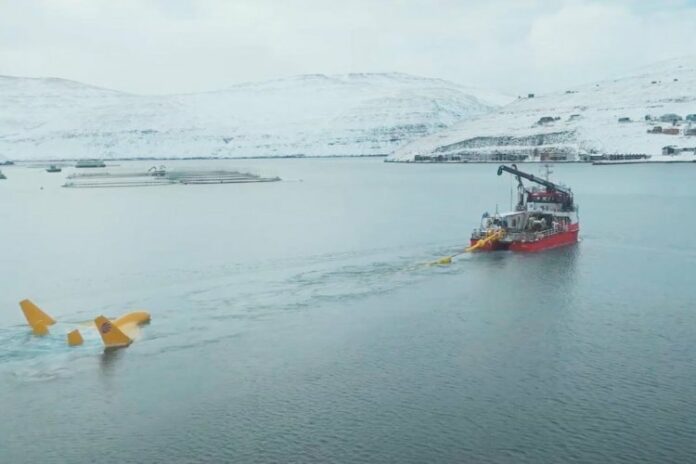
The Dragon 12 is Minesto’s first tidal energy kite in megawatt-scale. It has now been successfully commissioned and has generated electricity at satisfactory levels in its first phase of operation. 

The 12-meter wide and 28-ton heavy subsea kite, anchored with a tether to the seabed, is steered in an 8-shaped flight trajectory powered by the tidal flow. Dragon 12 is a 10-times scale-up (from the existing 100 kW Dragon 4) that delivers competitive performance and cost-levels for build-out of large-scale commercial subsea parks of tidal powerplants.

“This is a big day for Minesto. We have reached the most significant milestone in the history of the company by producing electricity to the grid with our mega-watt scale powerplant. We are both proud and happy and more than ever look forward to the journey ahead.”, said Dr Martin Edlund, CEO of Minesto.

“What the Minesto team has achieved today is extraordinary and set a new agenda for renewable energy build-out in many areas of the world. The competitiveness of the Dragon 12 is straight to the point; it’s powerful, cost-effective and feeds predictable electricity to the grid.” said Dr Martin Edlund.

K LINE enters into charter contracts with Northern Lights for third liquefied CO2 vessels

0

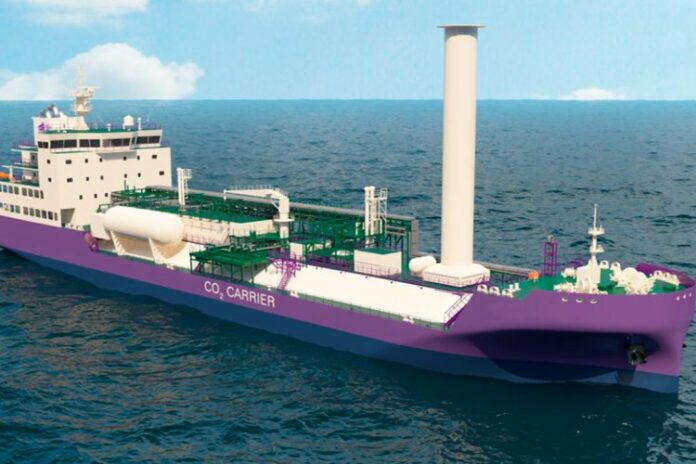
This follows the formerly signed contracts for managing the first two 7,500 m3 liquefied CO2 ships, in Northern Lights’ four ship fleet, that will be delivered in 2024.

The London-based subsidiary “K” LINE LNG Shipping (UK) Ltd., will manage the three ships, facilitating the transportation of liquefied CO2 from Northern Lights customers based in Norway, Denmark, and Netherlands, to Northern Lights’ CO2 receiving terminal in Øygarden, Norway, from where the CO2 will be injected into the offshore reservoir for safe and permanent storage.

“We are pleased to expand our partnership with “K” LINE, a ship operator with extensive experience in liquefied gas transport and a strong safety and environmental track record. These ships will be shuttling between our customers in Northwest Europe and the Northern Lights’ onshore facilities, each transporting over 400,000 tonnes CO2 annually”, said Børre Jacobsen, Managing Director of Northern Lights.

In December 2022, “K” LINE was awarded the ship management contracts of the two first Northern Lights ships, which are currently 75% completed and will be delivered later this year. 

“K” LINE LNG Shipping (UK) Ltd. is working on an operation manual and commissioning protocol and cooperating with relevant parties such as terminal operators and port authorities.

In parallel, a crew training program is being implemented to ensure safe and reliable operation.

“We are delighted to successively undertake ship management for the third Northern Lights vessel. We have already set up a dedicated team for CO2 ship management in “K” LINE LNG Shipping (UK) Ltd. in London for the first and second vessels and believe that the preparation for prior vessels will be further accumulated with the additional vessel in the fleet. Having the experience of building up the team and operational procedure, we are determined to contribute to the world’s first CCS project by Northern Lights.”, said Yukikazu Myochin, President and CEO of “K” LINE.

Northern Lights is developing a ship-based CO2 transport solution that enables flexible access to industrial emitters and carbon capture points across Europe. In December 2023, Northern Lights placed the order of a fourth CO2 ship, sister to the ones currently under construction at Dalian Shipbuilding Offshore Co., Ltd (DSOC). With these four ships, Northern Lights will have the world’s largest dedicated CO2 shipping fleet.

“Our investment in these custom-built ships reflects our commitment to deliver safe, reliable, and sustainable CO2 transport services. The recent contracts to build and operate the third and fourth ships signify an increase in Northern Lights’ shipping capacity and reinforce our pioneering role in CO2 transport”, said Børre Jacobsen.

SCHOTTEL RudderPropellers for five new WSA vessels

0

The Bolle shipyard in Derben, Germany, has been commissioned with the construction of the modern multipurpose vessels following tenders submitted throughout Europe.

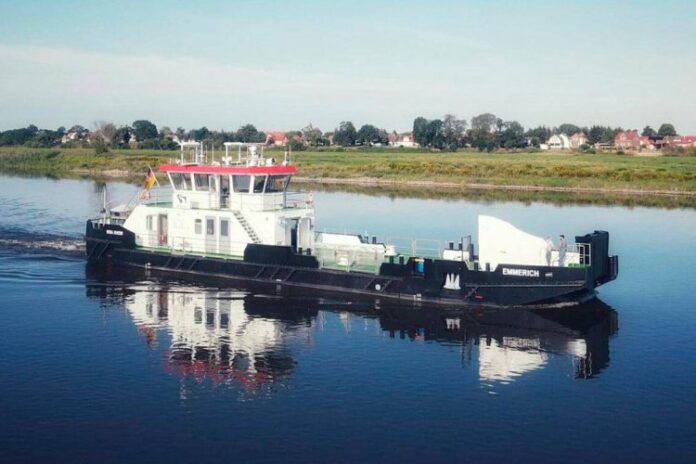
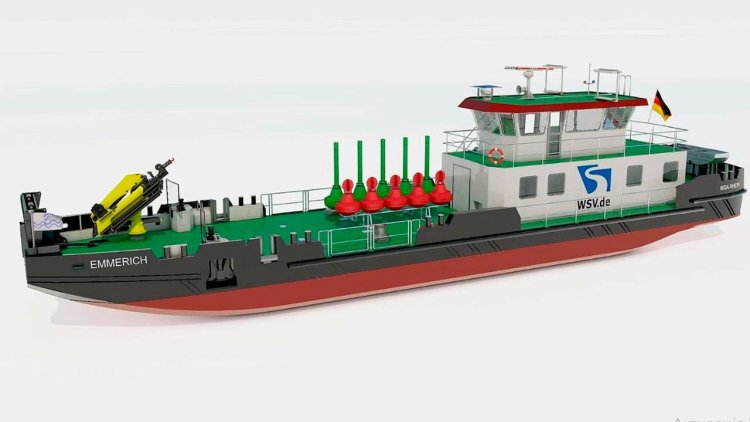
The modern traffic safety vessels will each be fitted with two SCHOTTEL RudderPropellers type SRP 100 which are being produced for use with vertically mounted electric drive motors (L-Drive variant) for the very first time. The motors are powered by lithium-ion batteries and diesel generators which in combination create a serial hybrid system.

The batteries enable short trips to be made without the diesel generators and can quickly and efficiently compensate for peak demands during use. The 360-degree steerable SRP combines maximum vessel manoeuvrability with outstanding course stability during free sailing while providing powerful thrust in any chosen direction at all times. The compact and robust design of the SRP 100 allows vessels to be operated in both low and shallow waters and makes them resistant to any collisions with flotsam.

The lead vessel in the new series, MS Emmerich, has been in operation for the WSA Rhine since July 2020. As the first innovative, future-orientated multipurpose vessel for the Waterways and Shipping Administration, it is the prototype for the series currently under construction. The new traffic safety vessels are all 33.3 metres long and 7.4 metres wide, each having a crane system and landing ramp.

They will replace the current vessels MS Neuss, MS Rees, MS Köln, MS Homberg and MS Bonn and will be operated on the German part of the Rhine between Duisburg and Bonn on a distance of approx. 130 kilometres. Besides checking and servicing navigation signs, their tasks also include clearing shipping disruptions, transporting vehicles and work equipment and salvaging flotsam.

DOE establishing national center of excellence to accelerate domestic offshore wind industry

0

The U.S. Department of Energy (DOE) today announced it is investing $4.75 million to establish a new national center of excellence to accelerate reliable and equitable offshore wind energy deployment across the nation. 

The Academic Center for Reliability and Resilience of Offshore Wind (ARROW), led by the University of Massachusetts Amherst with approximately 40 partners, will focus on workforce development, targeted research, and partnerships and strategies to embed equity in offshore wind development. This academic and training hub, which includes partners across the United States, will help drive progress toward the Biden-Harris Administration’s goals of deploying 30 gigawatts of offshore wind by 2030, 100% clean electricity grid by 2035, and net zero emissions economy-wide by 2050.

“Offshore wind can play a major role in decarbonizing the U.S. electric grid, and meeting its potential will require skilled workers to propel us forward,” said Jeff Marootian, Principal Deputy Assistant Secretary for Energy Efficiency and Renewable Energy. “This consortium will provide timely and relevant training and education to help foster the domestic offshore wind workforce of tomorrow and secure a clean energy future for all Americans.”

As offshore wind energy development grows there will be an increasing demand for workers across a broad range of disciplines. The selected ARROW consortium, funded by DOE’s Wind Energy Technologies Office, will provide inter-disciplinary educational opportunities to help advance the next generation of offshore wind workers.

ARROW comprises of eight universities, three national laboratories, two state-level energy offices, and many industry and stakeholder groups. It is designed to foster and support a diverse, enduring offshore workforce that is domestically educated while ensuring reliable, resilient, equitable, low-cost, and rapid deployment of offshore wind energy. 

To accomplish these goals, ARROW will support three programs. 

  1. ARROW-Empower will focus on an enduring and comprehensive educational scale-up for offshore wind, advancing the education of 1,000 students over the initial 5-year life of the center. 
  2. ARROW-Innovate will conduct research on infrastructure, atmospheric and ocean conditions, and marine and human ecology to advance the resiliency of offshore wind.
  3. Arrow-Engage will connect with communities across the country and help ensure benefits from offshore wind are spread equitably, while also helping to grow a diverse domestic workforce. 

This consortium includes Clemson University, Morgan State University, Johns Hopkins University, Northeastern University, University of Massachusetts Dartmouth, University of Massachusetts Lowell, University of Puerto Rico at Mayagüez, Argonne National Laboratory, National Renewable Energy Laboratory, the Pacific Northwest National Laboratory, the Massachusetts Clean Energy Center, and the Maryland Energy Administration. Over 20 other organizations, including developers, conservation organizations, offshore wind manufacturers, a grid operator, community representatives, trade associations, standards organizations, and others, are also anticipated to serve as partners. 

Humber ports appoint first female ship to shore crane operator

0

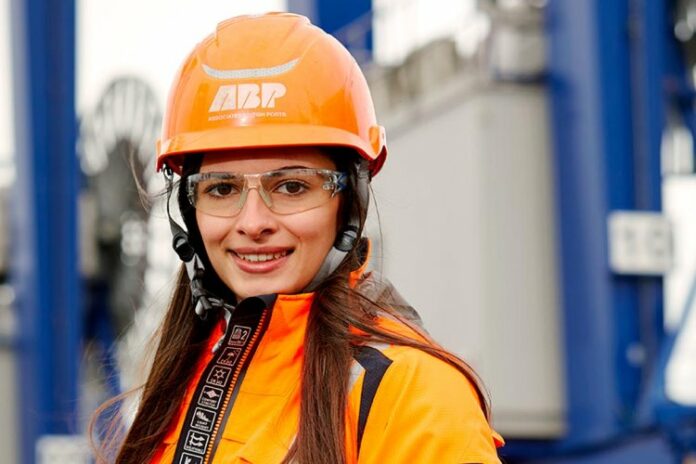
Sitting 110 feet above the Port of Immingham, Mia Allen is the Humber ports first female ship to shore (STS) crane operator.

She recently qualified in the role and already drives the tugs and rubber tyred gantry cranes (RTG) and is also looking to train in toplifts, also known as reachstackers at Immingham Container Terminal (ICT).

The job of the STS operator is to load and unload the cargo ships that are bringing in containers that could be full of household items, electronics, clothes, and other goods from around the world.

Simon Bird, Regional Director said:

“This is great news for ABP on the Humber. All credit to Mia who is very ambitious and wants to progress in her career with us. We’re proud that she has achieved this milestone and look forward to more to come.

“We want to increase the number of women in the ports industry and are committed to promoting diversity and fostering inclusivity. We have initiatives aimed at improving recruitment to demystify what has been traditionally seen as a male operated world and have been the first port operator to introduce women’s PPE. Our message is clear – there are roles at the ports for women.”

Mia Allen, Port Operative, who has worked for ABP for over a year after leaving a job in a fish and chip shop, said:

“I wanted to train on the ship to shore as there’s so much to learn about the crane and ship. The biggest challenge was the swing on the crane and going over the water, but it doesn’t scare me.”

“You must focus and look out for the ship’s crew and the deck tally, and it involves clear communication. It’s a heavy bit of kit and you must be prepared for the ship moving. I’ve thrown myself into this as I want to progress. I enjoy the fact I can do a few hours on the crane and a stint on the tugs.”

She credits her father, Mark, who has worked at the port for 20 years and trained Mia on how to use the crane, though another tester was brought in for the examination. Mia added:

“It was my dad’s dream that one day he’d train me, and I’d be working here alongside him. I always told him no it would be too boring, but it’s not. I love it as I’ve got a great gang around me, and we all get on well. Dad was really delighted when I passed the test. I just want to keep growing and accomplish more things.”

The ship to shore cranes arrived in 2020 as part of a huge financial investment in the expansion of the container terminal to maximise efficiencies and improve customer service. It also included six electric rubber tyred gantry cranes in a £33 million upgrade. The Humber ports are an important gateway for the short sea container routes from Europe.

LDA and Norsepower join forces in shipping large Airbus aircraft components

0

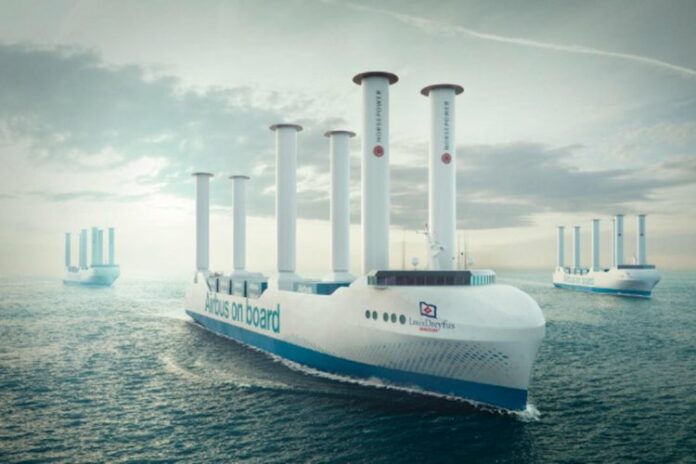
Louis Dreyfus Armateurs SAS (LDA) and the Finnish mechanical sail company, Norsepower Oy Ltd, have announced that the Norsepower Rotor Sail™ technology will be installed on the new low-emission RoRo fleet to be chartered to Airbus.

The Norsepower Rotor Sail is a modernised version of the old Flettner rotor concept that uses electric power to actively rotate the cylinder-shaped rotors on the deck. These rotating sails use the wind to produce powerful thrust, reducing fuel consumption, lowering emissions and costs.

The new low-emission vessels, which will be used to ship aircraft components for Airbus, will each be powered by a combination of six 35-meter tall Norsepower Rotor Sails and two dual-fuel engines running on maritime diesel oil and e-methanol. Additionally, routing software will optimise the vessels’ journey across the Atlantic, maximising wind propulsion and avoiding drag caused by adverse ocean conditions.

By 2030, for the Transatlantic route, the new fleet will generate approximately 50% fewer CO2 emissions compared to 2023. The rotor sails will feature the brand new patented Norsepower Sentient Control™ (NPSC™), a real-time force measurement, control and savings reporting system. This world-first tool enables each rotor to be controlled individually. This optimises efficiency by managing the complex aerodynamic interactions between the sails and the hydrodynamic behaviour of the vessel. Extensive Computational Fluid Dynamics (CFD) and wind tunnel tests have been carried out during the design phase to optimise the sail arrangement and design.

Mathieu Muzeau, Transport and Logistic General Manager at Louis Dreyfus Armateurs, said:

«While the IMO has set challenging targets to bring shipping to net-zero, wind propulsion is considered as a viable element of the sustainable energy mix for seagoing ships. We are proud to be part on the energy transition through our partnership with Norsepower to offer innovative solutions and sustainably driving change»


Tuomas Riski, CEO of Norsepower, commented : 

« This fleet-wide deal is a game changer for the whole auxiliary wind propulsion industry. Firstly, it is the biggest deal ever made in the mechanical sails market – and, in a world first, it includes our brand new Norsepower Sentient Control™ tool. We are honoured that the first charterer to utilise this advanced control system is Airbus, the foremost expert in aerodynamics in the world. We thank LDA and Airbus for being forerunners of this industry – and look forward to our continued cooperation ! ».