-10.3 C
New York
Home Blog Page 214

Study provides guidance on detecting North Atlantic right whales in wind energy areas

0

A new study by Northeast Fisheries Science Center researchers provides data-driven guidance for using passive acoustic monitoring. This will allow us to more effectively detect North Atlantic right whales when they are present and calling in wind lease areas off southern New England.

“North Atlantic right whales’ calling rates vary widely depending on location, season, behavior, and other factors,” explained research acoustician and lead author Genevieve Davis.

“Having this information, which is specific to the Southern New England Wind Energy Area, is important for management with wind energy development underway.”

The study shows that when North Atlantic right whales are present and vocalizing, 1 hour of monitoring detected them 4 percent of the time. An 18-hour monitoring period detected them 75 percent of the time. Therefore, a minimum 24 hours of pre-construction passive acoustic monitoring would increase the likelihood of detecting a right whale if it is in the area and calling. The data also showed that once detected, whales remained in the area for 10 consecutive days on average, and recurred within 11 days.

Data on whale presence used in this study were collected by bottom-mounted acoustic recorders. They were deployed at six sites within or near nine lease areas for more than 2 years prior to construction in these lease areas. There are now 19 recorders deployed off southern New England.

This new information will help inform NOAA’s future decisions about incidental take authorizations off southern New England. Improving the effectiveness of real-time monitoring for protected animals in and around wind energy operations is significant. This tool will reduce the harmful effects of some activities on these animals.

This research supports NOAA Fisheries’ overarching North Atlantic Right Whale Road to Recovery. This strategy describes our efforts to address threats to the species and halt the current population decline.

The paper, “Upcalling behaviour and patterns in North Atlantic right whales, implications for monitoring protocols during wind energy development,” was published as part of a special theme issue of the ICES Journal of Marine Science. The issue focused on assessing the impacts of expanding offshore wind energy.

Chesapeake, Delfin, and Guvnor enter long-term LNG offtake agreement

0

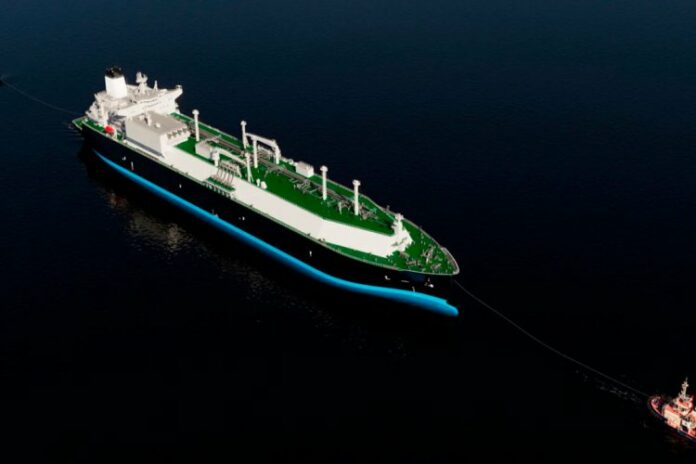
Chesapeake Energy together with certain of its subsidiaries entered into an LNG export deal with Delfin LNG and Gunvor Group that includes executed sales and purchase agreements (SPA) for long-term liquefaction offtake.

Under the SPA, Chesapeake will purchase approximately 0.5 mtpa of LNG from Delfin at a Henry Hub price and contract targeted start date in 2028, then deliver to Gunvor on a free-on-board (FOB) basis with the sales price linked to the Japan Korea Marker for a period of 20 years. These volumes will represent 0.5 mtpa of the previously announced up to 2 mtpa heads of agreement with Gunvor.

“Today’s announcement cements an important step on our path to ‘Be LNG Ready’ and is further recognition of the depth of our portfolio and strength of our financial position,” said Nick Dell’Osso, Chesapeake president and CEO. “We are pleased to formalize our agreement which provides diversification and access to global LNG pricing while enabling the delivery of affordable, reliable, lower-carbon energy to markets in need.”

Last November, Delfin Midstream and Gunvor Group entered long-term LNG SPA with Delfin LNG whereby Delfin LNG would supply between 0.5 to 1.0 mtpa to Gunvor on a FOB basis at the Delfin Deepwater Port, located 40 nautical miles off the coast of Louisiana for a minimum duration of 15 years.

Regarding the Chesapeake agreement, Kalpesh Patel, member of the executive committee of Gunvor, said, “This deal represents an important step in finalizing the 0.5 mtpa out of our total of 2.0 mtpa arrangement with Chesapeake, while expanding our existing cooperation with Delfin. We continue to provide reliable and competitive logistics services to our partners by utilizing our fleet consisting of vessels procured via term charters and equity ownership. Gunvor looks forward to establishing additional agreements with the companies in the near future.”

The Delfin LNG Deepwater Port project is designed to support four floating LNG (FLNG) vessels with a combined export capacity of up to 13.3 mtpa. The company continues to secure commercial agreements for LNG sales and liquefaction services and is in the final phase towards final investment decision on its first three FLNG vessels.

ABB to supply hybrid power system for Nexans’ new cable-laying vessel

0

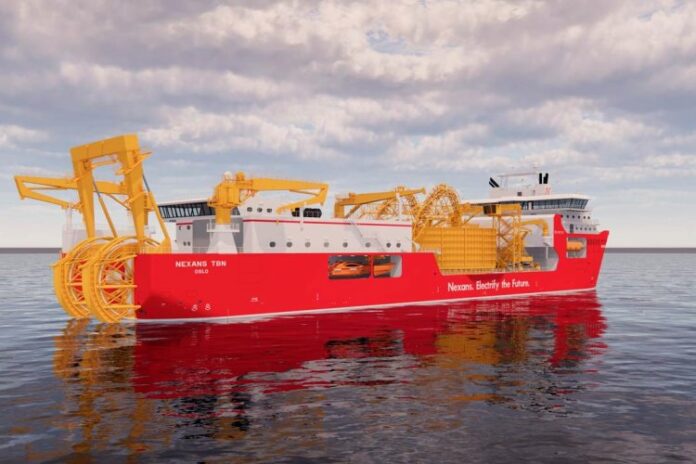
ABB has secured an order with Norwegian shipyard Ulstein Verft to supply an advanced power and propulsion system for a forthcoming cable-laying vessel (CLV) of Nexans, a global player in energy transition headquartered in Paris, France. 

An integrated system comprising main power generation and distribution, energy storage, and electric propulsion will allow the new CLV to execute its cable-laying, -recovery, and -repair tasks in a safe and efficient manner. With a closed-ring configuration providing high fault tolerance and optimal engine use in dynamic-positioning (DP) operations, the system will minimize the risk of power loss for enhanced safety and reliability while maximizing operational flexibility and fuel efficiency.

The onboard energy storage system (ESS) will also reduce engine running hours to keep engine wear and tear to a minimum. In addition, the ESS will provide spinning reserve and peak-shaving capabilities, acting as a back-up power source in case of engine failure and supporting the vessel’s more energy-intensive operations.

“Following the success of Nexans Aurora, ABB is proud to be involved in this project to deliver the new sister ship,” said Rune Braastad, Global Business Line Manager, Marine Systems, ABB Marine & Ports. “Nexans appreciates the benefits that our closed-ring system, ESS, and RDS provide to support safe, efficient, and reliable cable-laying operations. We look forward to strengthening our relationship with both Nexans and Ulstein Verft.”

Alongside main system components – generator, switchboards, transformers, frequency converters, motors, DC switchboard for batteries, and ESS – ABB’s scope of supply includes the Remote Diagnostic System (RDS) for propulsion, thruster inverters, and rectifiers as well as cyber security configuration for the RDS. By providing precise and timely fault detection and continuously monitoring equipment health status, the RDS improves system performance and minimizes the need for on-site service. This results in significant savings in downtime and maintenance costs.

Finnlines names the second of two hybrid freight-passenger Superstar vessels

0

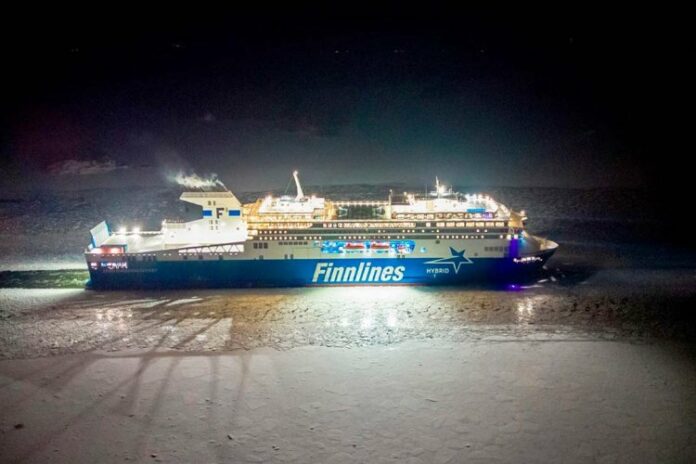
Finncanopus, the second of Finnlines’ two hybrid freight-passenger Superstar vessels, was named in Naantali.

Katariina Nurmi, representing DB Schenker, acted as the vessel’s godmother, symbolizing Finnlines commitment to upholding a reliable and efficient logistics network which provides a solid basis for growth for its freight customers and allows Finnlines and its partners to grow stronger together.

The last two years have formed a new chapter in Finnlines’ more than 75-year long history. With its EUR 500-million Green Investment Programme, Finnlines has entered the hybrid era. The naming of the ferry operators second hybrid freight and passenger vessel Finncanopus, today on 14 February 2024, marked the completion of the investment programme. As tradition has it, a bottle of champagne was broken against the vessel’s bow by its godmother Katariina Nurmi, the spouse of Petteri Nurmi, CEO of DB Schenker Cluster Nordics.

While the mythical bottle of champagne symbolizes a wish for good fortune and fair winds for the vessel, its crew and passengers, the choice of Katariina Nurmi as Finncanopus’ godmother is also highly symbolic. It showcases Finnlines commitment to being the stable base of an efficient logistics network, supporting Finland’s and Europe’s trade performance and industrial development, as well as the economic growth of Finnlines’ customers, and allowing Finnlines and its network of partners within the logistics sector to grow stronger together.

Within its Green Investment Programme, Finnlines has welcomed five newbuilds, all equipped with state-of-the-art eco-friendly technology. Three hybrid ro-ro vessels started operating during the summer of 2022. The first Superstar hybrid ro-pax vessel, Finnsirius, entered Finnlines’ Finland–Sweden traffic in September 2023. Its sister vessel, Finncanopus, is scheduled to enter service on 16 February 2024. Vessels are the largest ro-paxes in Finnlines’ fleet, each having 5,200 lane metres for cargo and certified to carry 1,100 passengers.

“Finnlines has made massive investments in sustainable and eco-friendly technologies, positioning itself competitively. Our investment programmes align with the Grimaldi Group’s strategy aimed at enhancing operational efficiency and at reducing CO2 emissions. The new vessels support customers in their transition towards sustainability and environmental responsibility.” says Tom Pippingsköld, President and CEO of Finnlines.

“Finncanopus and her sister vessel Finnsirius show our commitment to providing top-tier sustainable transport services to our freight customers as well as passengers. Our second hybrid ro-pax vessel will enable Finnlines to grow even stronger together with our network partners. Furthermore, Finnlines’ schedules are tailored to serve freight and passengers in all three destinations,” says Antonio Raimo, Line Manager at Finnlines.

Finncanopus will now join Finnsirius on the Finland–Åland­–Sweden route (Naantali–Långnäs–Kapellskär) departing from Naantali in the evenings and from Kapellskär in the mornings. She will set off on her maiden voyage from Kapellskär on 16 February 2024.

Stena Bulk enhances its eco MR fleet with four additional newbuild charter agreements

0

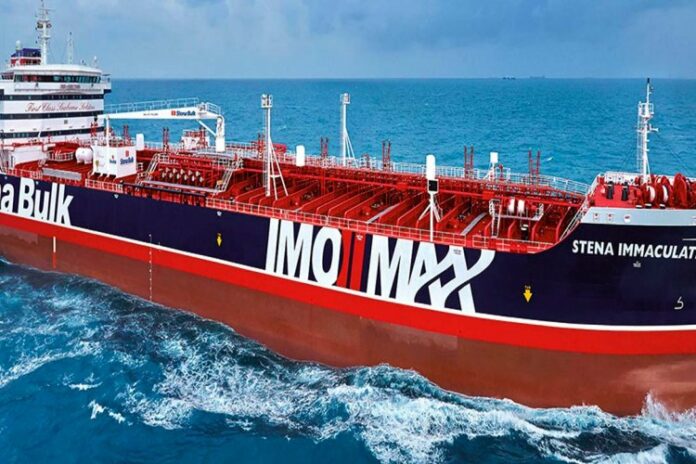
Leading tanker shipping company Stena Bulk has announced the latest expansion of its fleet with new long-term charter agreements for four state-of-the-art newbuild eco Medium Range (MR) tankers.

Two of the vessels, Stena Continent and Stena Conquest, will be delivered from Hyundai Mipo by the end of 2025. Two further eco MR tankers, Stena Contender and Stena Concept, will follow in 2026. All vessels are set to use the South Korean yard’s latest 8th generation MR tanker design, which has been recognised for its excellent efficiency performance.

Because of Hyundai Mipo’s market-leading design, the tankers will boast top-of-the-line fuel consumption, consuming just 15 metric tons of fuel per day when laden at 13 knots. This remarkable efficiency will help to underpin Stena Bulk’s commitment to environmental sustainability while maintaining optimal performance. The vessels are also scrubber fitted to ensure Global Sulphur Cap compliance.

This news follows in the footsteps of Stena Bulk’s success with Stena Convoy and Stena Conductor, which were delivered in 2022 to a South Korean yard and chartered from a Japanese owner, like these new additions to the Stena Bulk fleet. When they were delivered, Stena Convoy and Stena Conductor became the most fuel-efficient MR tankers at sea.

The announcement also strengthens Stena Bulk’s ties to the Asia Pacific region, as all vessels are owned by one of the largest private shipowners in Japan.

Erik Hånell, President & CEO of Stena Bulk, commented:

“Our long-term fleet expansion strategy always requires us to act flexibly and intelligently with the best interests of our customers at the forefront. The current landscape of costly short-term time charters means we need to think differently, which is why we are proud to sign these four long-term newbuild charter deals. The market-leading sustainability performance of these vessels will help to underpin our sustainability strategy, but the stability that these long-term deals afford will create assurance for our customers globally.

“We look forward to continuing to work pragmatically in the coming months and years, leaving no stone unturned in our pursuit to create a truly market leading tanker fleet.”

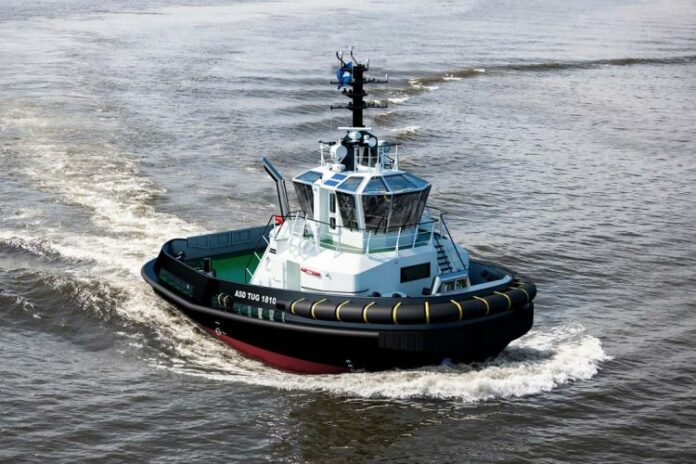
Damen unveils new compact ASD Tug 1810

0

Damen has placed great emphasis on safety in the development of the ASD Tug 1810. The vessel is able to draw on technology already proven on board the other vessels in the Compact Tugs range. 

Siebe Cieraad, Damen’s Product Portfolio Manager Tugs explains, “With it being a priority for us, you see safety return time and again throughout the entire design of the tug. For example, the vessel boasts a high freeboard, keeping water on deck to a minimum. It also has the tumblehome so characteristic of the Compact Tugs range, enabling it to get safely up close when assisting a vessel.” 

The operation is further aided by the application of ergonomically designed consoles and a 360-degree view from the wheelhouse, enabling operators to see what’s happening both fore and aft. The operators further benefit from the use of Damen Safety Glass; in the event of a towing line snapping, this shatterproof glazing ensures that observers on the bridge are protected. 

Like the other vessels in the range, the ASD Tug 1810 features clutter free decks. As Siebe points out, during an operation, crew need to be focused on what is going on around them and not be distracted by potential tripping hazards on deck.  

“To help the crew maintain their focus during their work, and to help the captain gain a clear view on what’s taking place, we’ve tried to keep the decks as clear as possible, and keep the potential of tripping to an absolute minimum.”

Most of the items conventionally found on deck have been incorporated into the deck house and bulwark. This includes the Damen Marine Components winch, which has an important role to play in the vessel’s efficient performance. The winch is installed in the deck house so that towing operations both fore and aft can be undertaken with a single winch. 

“In addition to protecting the crew, this also helps protect the equipment,” says Siebe. “With the winch placed in this location it is afforded shelter from the elements, minimising the needs for maintenance.”

The same applies to the tug’s closed loop cooling system. In this, fresh water runs in a series of channels on the underside, radiating heat away from the vessel.

 “As such, no sea water enters the vessel and the internal system is protected from the abrasiveness of salt water. As a result, it becomes possible to reduce docking intervals, sometime by as much up to seven years.”

The ASD Tug 1810 also features the patented Damen Twin Fin skeg. Originally installed on the RSD Tug 2513, the skeg has now become a feature on all Damen’s Compact Tugs. It has demonstrated its ability to boost course keeping, manoeuvrability and predictable sailing behaviour during operations, improving both efficiency and safety. 

Sangomar FPSO arrives in Senegal

0

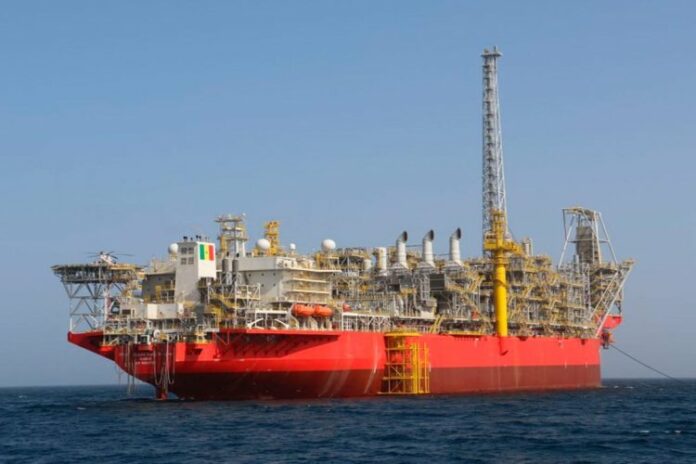
Woodside Energy has announced that the Léopold Sédar Senghor Floating Production Storage and Offloading (FPSO) facility has safely arrived offshore Senegal. This is a significant step toward achieving First Production from the Sangomar field which is targeted for mid-2024.

The arrival of the FPSO from Singapore at its final destination approximately 100 kilometres offshore Dakar, Senegal, marks the commencement of the next phase of the project: commissioning the FPSO and hooking up the 23 production, gas and water injection wells that make up the Sangomar Field Development Phase 1.

Woodside CEO Meg O’Neill said the milestone marked an important step on the road to first production.

“The FPSO arrival brings us closer to first production which is targeted for mid-2024. We are proud to be Senegal’s first offshore oil project and firmly believe that this project will prove to be important to Senegal’s future development and prosperity.

“In addition to developing Senegal’s energy resources, we have already begun working with the Government of Senegal, local businesses and communities to develop programs that create business opportunities, build local capabilities, foster employment opportunities, and bring broad economic benefits as a result of our operations.

“The completion of this phase of the project is only possible through strong partnerships with the Senegalese Government, joint venture participant PETROSEN, and our contracting partners, all of whom have worked professionally and co-operatively since the final investment decision in January 2020.”

The Sangomar Field Development Phase 1 includes a stand-alone FPSO with subsea infrastructure and an expected production capacity of approximately 100,000 barrels/day.

Innovative camera system provides a closer look at elusive ocean predators

0

Marine predators such as tunas, sharks, seabirds, and marine mammals play a pivotal role in structuring ocean ecosystems. Despite their importance, these animals remain challenging to study. They spend much of their time far from shore and dispersed across remote stretches of the global ocean. Many are highly mobile and associate with dynamic ocean habitats that change hourly and can be wary of boats and submersibles.

Now, a new camera system developed by MBARI’s engineers gives us a glimpse into the secret lives of these ocean predators. MBARI’s innovative Piscivore system can observe active ocean predators and document their dynamic surroundings.

“Marine predators are difficult to study because they’re rare, highly mobile, and the ocean is vast. The challenge is being in the right place at the right time, but now robots equipped with MBARI’s Piscivore system can give us a glimpse into the lives of tunas, sharks, and other predators, providing valuable information to better understand these important animals,” said Ocean Observatory Engineer Jared Figurski, the principal investigator for MBARI’s Piscivore project.

Tunas, sharks, seabirds, and marine mammals face an uncertain future due to threats like overfishing and climate change. We urgently need to understand these key animals so we can better protect them. Piscivore seeks to gather vital information about marine predators and their prey.

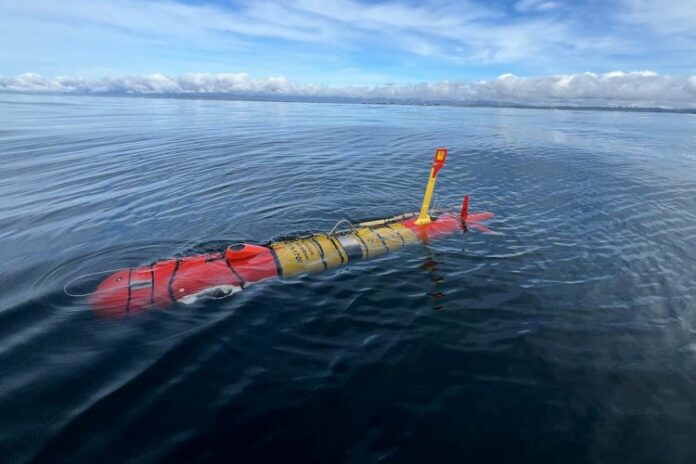
Piscivore (pronounced “pie-si-voar”) uses autonomous robots to survey marine predators far beyond coastal waters. The camera system is mounted on the long-range autonomous underwater vehicle (LRAUV), an advanced underwater robot developed by MBARI engineers. About two meters (6.6 feet) long, 30 centimeters (12 inches) in diameter, and weighing 110 kilograms (242.5 pounds), the LRAUV is a versatile platform for science. It can carry a variety of instrumentation payloads to study the ocean and its inhabitants.

MBARI engineers developed the Piscivore system to observe marine life from the perspective of this nimble underwater robot as it travels across the fertile waters of Monterey Bay.

Piscivore has two cameras—one faces ahead of the vehicle and the other watches what approaches from behind. Many predators move out of the way of animals and objects that approach them. Piscivore compensates for the skittishness of pelagic predators by dragging a piece of textured metal in its wake. As the metal attractor swirls in the currents, it catches sunlight and flashes like a silvery fish, piquing the curiosity of predators. The cameras record continuously to see who approaches.

MBARI researchers pilot the LRAUV remotely from our facilities on shore using cellular and satellite data connections on the vehicle. They can target hotspots of ocean productivity where food is plentiful and predators will be most abundant, then send Piscivore in for a closer look.

Researchers deploy Piscivore for roughly two weeks at a time. After its mission is complete, MBARI’s marine operations crew retrieves the vehicle and downloads the camera data on shore. Each deployment logs approximately 200 hours of high-definition video, 100 hours from each of Piscivore’s two cameras. Machine-learning algorithms developed by MBARI’s software engineers leverage the power of artificial intelligence to help researchers quickly review and catalog Piscivore’s observations.

“Our team is interested in understanding the relationships among ocean animals. We use sound to map life in Monterey Bay using robots to tell us how many of what types of animals are where. Using sonar alone, however, it is difficult to identify specific species. Piscivore fills that gap, giving us a new window to understanding predator-prey relationships,” said Senior Scientist Kelly Benoit-Bird, who leads MBARI’s Acoustical Ocean Ecology Team.

Piscivore also gathers visual data about the “neighbors” that live alongside ocean predators. It films the gelatinous animals that live in the open ocean and have historically been challenging to study.

“One thing Piscivore shows us is that the best way to gain insight on what is happening in the open ocean is to spend more time out there and cover more area. Ships and deep-diving robots gather detailed data from specific, targeted locations, but Piscivore can collect data for weeks at a time across the open sea,” said Senior Scientist Steve Haddock, who leads MBARI’s Biodiversity and Biooptics Team. 

Haddock and his team are interested in studying how populations of gelatinous animals ebb and flow. They use a variety of approaches to get a grasp on the dynamics of jelly blooms, including robot-mounted cameras, above-water drones for photographing the sea surface, and community science observations through JellyWatch. 

“Piscivore is an important new tool in our belt. It’s exciting to be operating in a time when there are so many options besides dragging a net behind a large ship,” said Haddock.

But Piscivore is much more than a camera—it is an innovative sensor system for studying the open ocean.

MBARI’s LRAUV carries a suite of environmental sensors inside its housing. During Piscivore deployments, the host vehicle collects information about the physical surroundings. The LRAUV logs data about ocean salinity, temperature, chlorophyll, oxygen, and chemistry. These data provide valuable context about the environments that ocean predators frequent.

“Offshore, or pelagic, marine habitats are constantly changing, shifting and traveling with the currents, as are the species that associate with those habitats,” explained Figurski. “To fully understand just how dynamic ocean habitats are, imagine going to bed looking at a forest of trees in your backyard, then waking up to find those trees and all of the other plants and animals are now 10 miles away. This is the challenge we face when trying to study mobile marine predators in the open ocean. The solution requires technology that allows us to efficiently survey vast expanses of the ocean.”

MBARI engineers are currently developing new capabilities for the sensor suite. Ongoing research and development aims to add on-board AI for real-time video analysis, new attractors, stereo imaging cameras capable of estimating the sizes of animals captured on video, and complementary environmental DNA (eDNA) sampling.

VARD appointed to design and build first SOV for Cyan Renewables

0

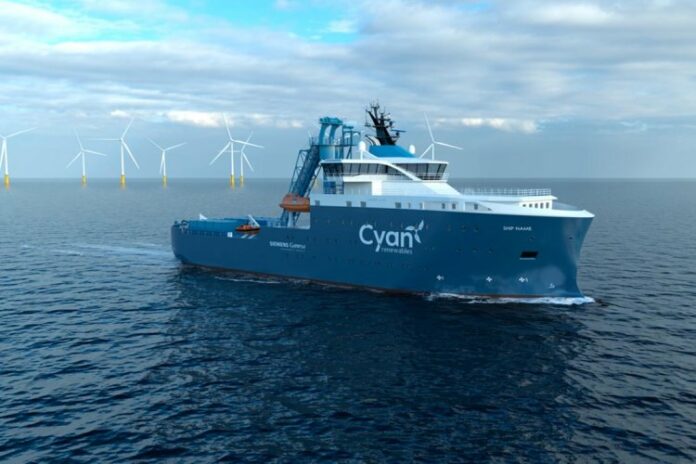
Cyan Renewables is Asia’s first dedicated offshore wind vessel owner. Headquartered in Singapore, Cyan’s mission is to facilitate the world’s transition towards a greener future by being the partner of choice to both wind farm developers and vessel operators. 

The vessel will enter a long-term contract with Siemens Gamesa on Hai Long No. 2, a part of the Hai Long Offshore Wind Project, consisting of Hai Long No. 2 and No. 3 Offshore wind farms in Taiwan. VARD was awarded the design and building of the SOV after a tender in competition with other providers.

Founding CEO of Cyan Renewables Lee Keng Lin, said:

“We are happy to engage VARD to construct our SOV for the Hai Long offshore wind project. Tailored specifically for Siemens Gamesa’s service operations at Hai Long, this vessel’s emphasis on energy efficiency exemplifies our commitment to innovation and sustainability in the offshore wind sector. This addition also brings us another step closer to doubling our fleet in the coming years. We look forward to working closely with VARD to oversee the completion of this SOV.”

This version of the VARD 4 19 design, is a highly versatile platform, tailored for service operations for Siemens Gamesa at the Hai Long Offshore wind farm. The vessel offers class leading station keeping performance, together with highly fuel-efficient solutions and logistics. Further preparations are done to enable the path towards zero emission operations.

This hybrid diesel electric vessel is designed using modern DC technology and it is the first time it is combined with 2 retractable Azimuth thrusters. These solutions enable the vessel to operate using only one variable speed generator set, in addition to batteries, in an extended window of the operation profile during work in the wind park. This, together with permanent magnetic electric motors for propellers, gives an extremely energy efficient vessel and the best possible DP capability performance and noise reduction.

The vessel is developed by Vard Design in Ålesund, Norway in close collaboration with Cyan Renewables and have the latest propulsion solutions developed by Vard design. The solution is particularly favorable for the area in which the vessel will operate, and the vessel is tailormade for operations in just this area.

CEO in Vard Group Alberto Maestrini welcomes Cyan Renewables to VARD:

“We are delighted to get this opportunity to participate in the development of the fast-growing markets of offshore wind in Asia together with Cyan Renewables. With our world leading design and engineering teams VARD is drawing on our long experience as integrated shipbuilders to make maritime opportunities possible in close partnership with our customer.”

Runar Vågnes is Senior Vice President Sales & Marketing in VARD and has been responsible for the commercial part of the contract:

“Cyan Renewables is a new customer for VARD, and a fast-expanding company in the renewables market. We are looking forward to collaborating with them. Winning another tender in worldwide competition on both design and production is gratifying. All three companies involved came to the project with previous experience from wind farm service tonnage, including familiarity with operations in Taiwan.”

The vessel will be built, outfitted, commissioned, and delivered from Vard Vung Tau in Vietnam. The delivery is scheduled for Q2 2026.

Technical information:

  • Length of 85.5 meters and a beam of 19.5 meters
  • Seaonics’ ECMC all electric and motion compensated gangway with crane functionality
  • 2 retractable Azimuth thrusters
  • Prepared for alternative low emission solutions
  • Transit speed of 13 knots
  • Accommodation for 84 persons on board

Partners kick off initiative to improve forecasting of U.S. offshore wind farms

0

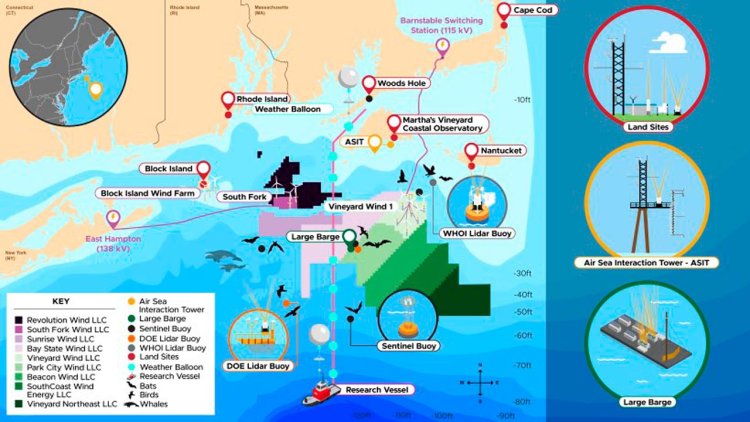
The U.S. Department of Energy (DOE) and the National Oceanic and Atmospheric Administration (NOAA) have launched an 18-month initiative to gather extensive weather, ocean, and wildlife data near the sites of active offshore wind farms and lease areas off the coast of the Northeast United States. 

This effort, which is part of the third phase of the Wind Forecast Improvement Project (WFIP3), seeks to gather high-quality data to improve the design and operation of offshore wind turbines and wind farms. The collected data will be publicly available and used to inform responsible offshore wind siting, weather forecasting, and grid integration, as well as support advancements in weather and wind plant modeling.

“Our oceans are the next frontier for clean energy deployment,” said Alejandro Moreno, Associate Principal Deputy Assistant Secretary for Energy Efficiency and Renewable Energy. “Understanding the offshore environment better is a ‘grand challenge’ that DOE and its partners are addressing to ensure that offshore wind can not only operate efficiently and sustainably, but also contribute to grid reliability in the energy system of the future.”

Understanding wind and weather patterns is crucial for the efficient operation of wind farms and ensuring reliable operation of the electricity grid. Offshore environments add an additional layer of complexity due to interactions between the atmosphere and the ocean. Accurate forecasts are essential for maximizing wind plant output and efficiently managing wind farms. 

“The major goal of WFIP3 is to characterize the wind energy environment and what processes impact the wind speeds at hub-height,” said Dave Turner, manager of NOAA’s Atmospheric Science for Renewable Energy Program. “We want to use these insights to improve NOAA’s operational weather prediction models, which often serve as the foundational forecasts for the energy community in their daily management of their wind plants.” 

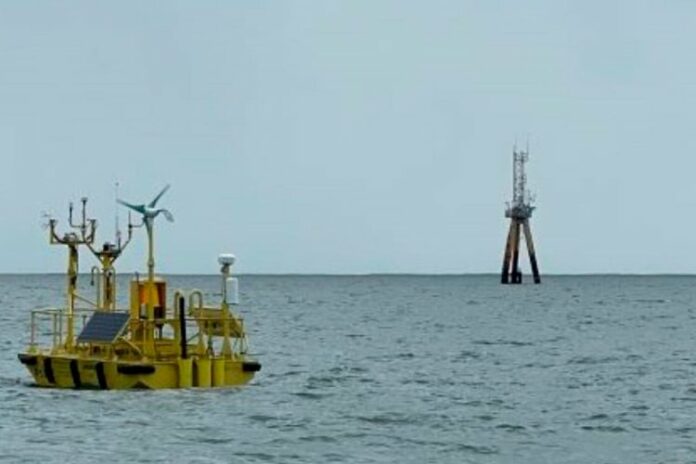
Over the last three months, researchers have deployed state-of-the-art remote sensing instruments, offshore buoys, and towers at various locations off the coasts of Massachusetts, Rhode Island, and Long Island—home to Vineyard Wind, Block Island Wind Farm, South Fork Wind Farm, and seven other lease areas. Starting today, instruments will collect real-time data on a wide range of weather-related variables over the next 18 months.

To ensure the coexistence of offshore wind deployment with ecosystems and other ocean users, WFIP3 platforms are also being used to monitor wildlife, including whales, birds, and bats. Wildlife data, collected alongside weather and ocean data, will improve our understanding of movement patterns and provide insight into the potential effects of offshore wind construction on wildlife in the region. 

WFIP3 is funded by DOE and NOAA and led by the Pacific Northwest National Laboratory and Woods Hole Oceanographic Institution, with over 15 partners including national laboratories, universities, industry, and cooperation from local governments. The wildlife monitoring is a project of Duke University with funding from DOE and the Bureau of Ocean Energy Management.

“The diversity of partners collaborating on WFIP3 speaks to the importance of this work to virtually every sector of society,” said Anthony Kirincich, senior scientist at the Woods Hole Oceanographic Institution and lead principal investigator of WFIP3. “We are excited to be working with our federal partners, as well as the Massachusetts Clean Energy Center, in pursuit of the Department of Energy’s goals to advance science, lower the cost of energy, and protect wildlife in offshore wind energy areas.”

This third phase of the Wind Forecast Improvement Project builds on the success of the first and second phases, which collected data to improve the accuracy of short-term land-based wind forecasts. NOAA has been a partner in all three phases of WFIP, and has used data from the first two phases to update and improve widely-used operational weather models, saving utilities and customers millions of dollars.

Upon completion of the data collection campaign, the monitoring platforms and instruments will be removed from the ocean, and the study’s data and results will be published and used to improve the accuracy of weather forecasts for the region.