-10.3 C
New York
Home Blog Page 213

ZeroNorth and Alpha Ori Technologies close deal to join forces to improve efficiency

0

The milestone is enabling the company to boost its value to the more than 4,500 vessels and 200+ customers that the companies serve.

Fuelled by AI and human expertise, and by fully integrating Alpha Ori Technologies’ high frequency data and expertise in IoT sensors, ZeroNorth will streamline resource management, predict maintenance, monitor hull performance, optimise voyages, digitalise bunker operations, track and report emissions and enable stronger vessel selection decisions for its customers.

It means that customers will be able to tap into a single source of data that improves their profit and reduces their impact on the planet, in line with their operational goals and strategies.

More broadly, the milestone further powers up shipping’s digital transformation, and creates a leading maritime optimisation company. It powers up ZeroNorth’s ambition to bring about a greener global trade ecosystem by speeding up the company’s data flywheel, meaning that stronger solutions and optimisation recommendations are made over time. The deal will create a beacon of empowerment for the industry, improving decision-making on a wide scale across the value chain.

The company’s management team will continue to be led by Søren Meyer in his role as Chief Executive Officer.

The joint business will remain an independent company with robust financial backing and heritage from top industry leaders, leveraging their deep shipping knowledge to deliver transformative solutions that positively impact the sector.

The company will be headquartered in Copenhagen with 12 global offices.
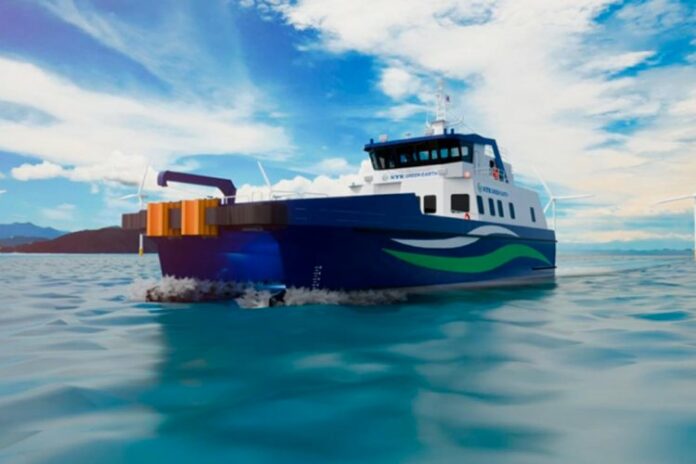
NYK orders new offshore wind industry crew transfer vessel

0

In January, NYK placed an order with Kosaba Shipbuilding Corporation for a crew transfer vessel, the first CTV for NYK to order from a Japanese shipyard. After delivery in late 2025 or 2026, the vessel will be used to transport technicians to construct and maintain offshore wind power generation facilities off Japan.

By expanding its fleet of CTVs, NYK aims to play an active role in promoting sustainable energy. NYK also aims to contribute to revitalizing the Japanese shipbuilding industry and marine industries, as well as have a positive impact on regional industry development and job creation.

The vessel will be the third CTV owned by NYK. In Japan, the vessel will be the second NYK-owned CTV, following Rera As, which was delivered in April 2023 and is engaged in the Ishikari Bay New Port offshore wind farm off Hokkaido, Japan.

A CTV engaged in maintaining offshore wind power facilities in Japan for an extended period requires a high transfer capacity. In constructing the vessel, NYK will domestically produce the hull form based on a design from Northern Offshore Service (Sweden), aiming to make it the core hull form of NYK. Northern Offshore Service (Sweden) is one of the largest CTV operators in Europe and a subsidiary of Northern Offshore Group AB, which operates in the European region and with which NYK formed a partnership in 2020.

In Japan, the construction of offshore wind power facilities is expected to begin in earnest around 2026, and demand for CTVs is expected to grow. As stated in the NYK medium-term management plan announced in March 2023, the company plans to invest 43 billion yen in the offshore wind power value chain by fiscal 2026, and the construction of this vessel is part of that plan. NYK will continue to seek to place CTV orders with shipyards in Japan.

ABB to power first hybrid-electric polar expedition cruise ship built in South America

0

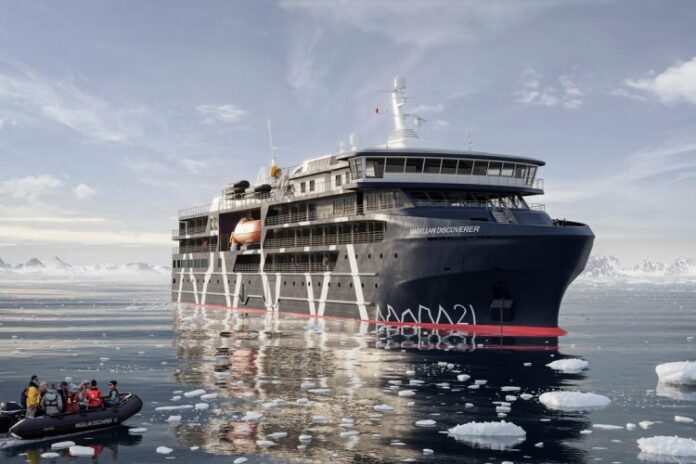
Due for delivery in 2026, the vessel is the first hybrid-electric polar cruise ship featuring Azipod® propulsion to be built in the Americas. Accommodating up to 96 passengers and 67 crew members, the vessel will be operating in the Antarctic Peninsula, South Georgia and the Falkland Islands (Islas Malvinas).

ASENAV is the biggest private shipyard in Chile and Antarctica21 is a global leader in touristic operations focused on ‘fly & cruise’ expeditions to Antarctica. Both companies are important players in an expedition segment which recognizes technical innovation as key to balancing cost efficiency with environmental responsibility.

Heinz Pearce, General Manager of ASENAV, said:

“Alongside fostering new engineering solutions, we are constructing a vessel that meets the quality, comfort and sustainability needs currently demanded by the global tourism industry. With the support of our suppliers, such as ABB, we are now raising the standard in shipbuilding, leading the progress of an industry heading towards more sustainable development.”

ABB’s scope of supply comprises the Azipod® propulsion system and a hybrid power plant featuring the Onboard DC Grid™ power distribution system, with battery bank from Corvus Energy. The ship’s energy storage system allows the engines to be switched off for silent operations in environmentally sensitive areas. Moreover, the flexibility of ABB’s Onboard DC Grid™ allows integrating a wide range of energy sources, such as fuel cells, ensuring the vessel is ready to comply with stricter emission regulations in the future.    

Seatrium partners with TenneT on third offshore wind project in the Netherlands

0

Seatrium Limited has received notification from TenneT that it plans to commence work on the third 2-gigawatt (GW) High Voltage Direct Current (HVDC) electrical transmission system on 1 June 2024.

This is in line with an earlier announcement made on 30 March 2023 in relation to the Group’s success in securing a five-year Framework Cooperation Agreement, together with its consortium partner GE Vernova with TenneT, to supply three HVDC electrical transmission systems for offshore wind farm projects in the Netherlands, each valued at approximately EUR 2 billion, with a total combined capacity of 6GW as part of TenneT’s offshore grid acceleration programme.

Seatrium’s scope of work will include the engineering, procurement, construction, transportation, installation, and commissioning of the 2GW HVDC Offshore Converter Platform for TenneT, which is the biggest and most powerful of its kind in the industry.

The offshore converter platform will contribute to TenneT’s sustainability ambition of installing 40GW of offshore wind energy in the German and Dutch North Seas, and will serve the NWBE (formerly named as Nederwiek 2) offshore wind farm, located approximately 95 kilometres off the coast of Netherlands.

Like the first two HVDC projects awarded to Seatrium last March, the Group will be working with its consortium partner, GE Vernova’s Grid Solutions. The contract award of NWBE is expected to be on 1 June 2024, after the completion of certain deliverables by both Seatrium and GE Vernova in the coming months.

Mr Samuel Wong, Executive Vice President, Fixed Platforms, said:

“This project underscores our commitment to helping our customers achieve their renewable energy goals by providing innovative and cost-effective solutions that help accelerate the energy transition. With this latest project, Seatrium is currently working on five HDVC offshore Converter Platforms, creating a franchise for series-built opportunities in HVDCs to achieve greater synergies from project repeatability.”

Amongst renewable energy sources, offshore wind continues to play a significant role in meeting global climate goals. It is estimated that Europe will require a massive increase in wind installed capacity with an expected growth from 204GW in 2022 to more than 500GW in 2030 alone. 

METIS and ESVAGT join forces to bring the power of analytics offshore

0

The move follows a collaborative project covering fleet performance optimization with leading offshore service provider for wind/oil & gas industries, ESVAGT.

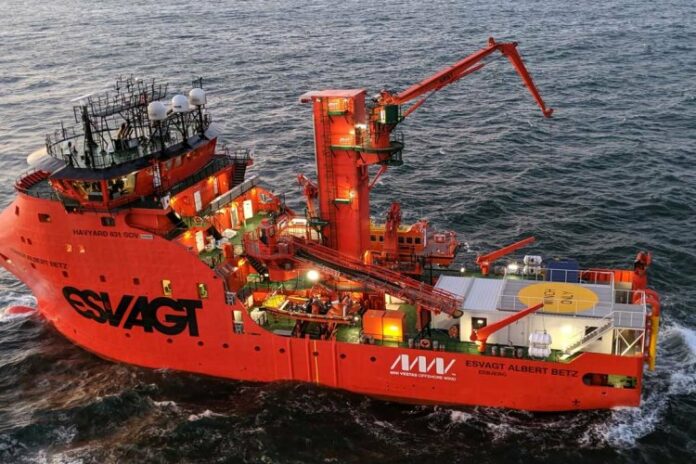
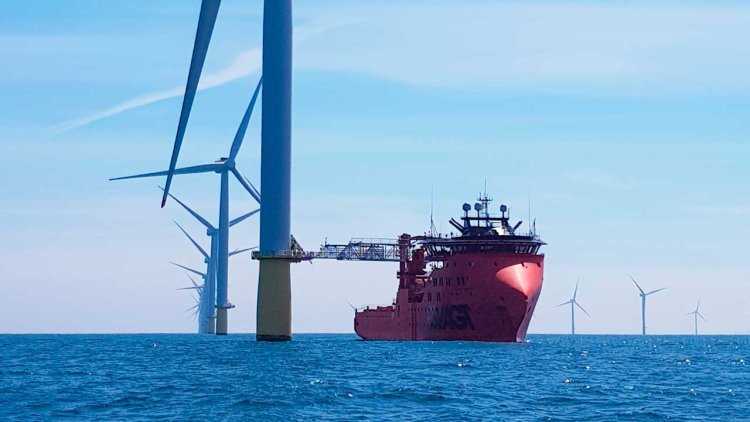
The SOV fulfils multiple roles – as transport ship, accommodation vessel, warehouse and workshop – presenting a challenge when it comes to assessing overall efficiency. Following an ESVAGT initiative, METIS has developed a portfolio of applications to enhance SOV operations. Leveraging ESVAGT’s operational expertise and data, METIS utilized its High-Frequency Data Acquisition and Advanced Performance Evaluation Analytics to provide transparency in the performance of SOVs.

“The result is an exciting example of how advanced analytics deliver a competitive edge, in this case creating the opportunity for SOVs to offer added value services to end clients,” says Panos Theodossopoulos, Chief Executive Officer, METIS Cyberspace Technology. “I would like to thank ESVAGT for its cooperation in taking our product and service development in a new direction.”

METIS has developed a way of visualizing SOV operations which correlates the full range of vessel activities to fuel efficiency and emissions in the context of a five-day forecast for weather conditions, adds Theodossopoulos.

Features include a new depiction of total fuel oil consumption by activity across multiple scenarios, including transit, personnel transfer, time-in-port, etc., which takes account of different weather conditions. The enhanced software functionality also introduces a heightened level of transparency to dynamic positioning (DP) operations taking into consideration that DP systems play a critical role in maintaining positions and ensuring the safe transfer of technicians to offshore installations using ‘walk-to-work’ gangways.

DP systems use a vessel’s propellers and thrusters to maintain a position and heading, taking account of external conditions. The new METIS DP Motion Analysis App analyses the performance of the vessel’s power system during DP to deliver a visualization of aggregated SOV performance based on fuel and energy efficiency, environmental conditions and motion dynamics.

Also new is METIS functionality harvesting weather forecast and vessel performance data with the transparency to help site managers and vessel operators work together to schedule maintenance most effectively. The ‘Smart Scheduler’ refines existing METIS voyage routing optimization to take account of planning for wind farm operations, including safety requirements.

“The new functionality supports better voyage planning and performance at sea during the key tasks which define SOV utilization,” said Kristian Ole Jakobsen, DCEO, ESVAGT. “In doing so AI-based analytics is helping vessel operators to contribute to a more efficient and sustainable offshore wind industry.”

Cadeler signs contract with Ørsted and PGE Polska Grupa Energetyczna for Baltica 2

0

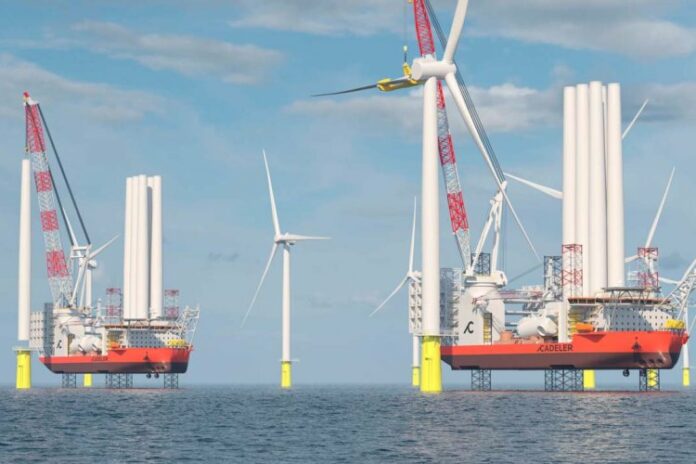
Cadeler has signed a contract with Ørsted and PGE Polska Grupa Energetyczna for the transport and installation of 14MW Wind Turbines supplied by Siemens Gamesa Renewable Energy. 

Baltica 2 is one of two stages of the Baltica Offshore Wind Farm. PGE and Ørsted plan to deliver Baltica 2 of 1.5 GW capacity by the end of 2027. 

Mikkel Gleerup, CEO of Cadeler said: We’re very pleased to continue to strengthen our close partnership with Ørsted and initiate a new partnership with PGE Polska Grupa Energetyczna. The project marks a very important milestone for Poland as well as for Cadeler, as this underlines Cadeler’s strong entry into the Polish market”.

The wind farm will be situated in the Polish part of the Baltic Sea between Łeba and Ustka. The distance from the closest wind turbines to the shore will be at least 25 km. The land infrastructure necessary for the functioning of the Baltica Offshore Wind Farm will be located in Choczewo commune. Baltica 2 will have an approximate capacity of 1.5 GW.

NYK and Stolt Tankers to build six parcel chemical tankers

0

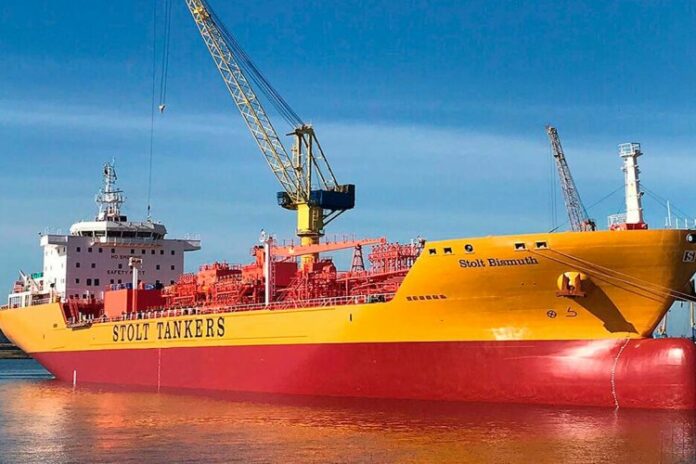
NYK Stolt Tankers, S.A., a joint venture between NYK and Stolt Tankers B.V. (“Stolt Tankers”), signed a contract on February 5 with Nantong Xiangyu Shipyard in China to build six parcel chemical tankers. The contract will strengthen NYK’s chemical tanker business, for which demand is expected to grow steadily, and deepen the partnership with Stolt Tankers, a leading player in the industry.

The six vessels ordered are large chemical tankers, each having a deadweight capacity of 38,000 tons and equipped with stainless steel cargo holds capable of transporting various chemical products. The vessels are scheduled for delivery between 2026 and 2029 and will be deployed in the chemical tanker pool operated by Stolt Tankers.

Hironobu Watanabe, NYK Line Managing Executive Officer, said:

“I am pleased to have reached this new building order with Stolt Tankers, our longtime partner for over 30 years. By replacing the vessels with more fuel-efficient ones, we can provide stable transportation services to our customers while promoting low-carbon transportation. The cooperation of concerned parties for the completion of vessels is needed, and I am confident that the teams of Stolt Tankers, NYK, and Nantong Xiangyu Shipyard will be able to accomplish this task.”

Udo Lange, Chief Executive Officer, Stolt-Nielsen, said:

“I’m pleased to announce this order for six 38,000 deadweight tonne chemical tankers with our long-standing joint venture partner NYK Line. This new building order further strengthens Stolt and NYK’s partnership, now over three decades old, while positioning it for the future. The transaction also reflects our mutual commitment to supporting our customers and making their supply chains more sustainable by adding fuel-efficient replacement tonnage to our network. I would like to thank and congratulate the Stolt Tankers and NYK Line teams and our partners at Nantong Xiangyu Shipyard for completing this important transaction.” 

Pelican performance prediction software receives RINA AiP

0

Pelican, the product of over ten years of PhD research, is able to simulate the performance of a ship equipped with wind propulsion technologies using specific wind conditions and sea states. Uniquely, Pelican features a built-in force module for both aero- and hydrodynamics. With this, reliable performance predictions can be rapidly obtained without recourse to costly CFD or model testing.

The software draws on a large database of wind propulsion systems comprising Flettner rotors, wingsails, turbosails and kitesails. Combining this with a dataset of over 1,500 simulation results of 60 hull variants, representing a broad range of commercial vessel types, Pelican informs investment and design-related decision making with regards to installation of wind assisted propulsion. It can also be used to generate dedicated vessel models for weather routing and voyage optimisation applications.

The software was developed by Blue Wasp Marine, a team of marine engineers with a shared passion for both sailing and green technology. Founded in 2021, Blue Wasp Marine is on a mission to help decarbonise the shipping industry.

Blue Wasp Marine Co-Founder Giovanni Bordogna said:

“We are delighted to have received this AiP. This is an important milestone for us. We have been working on the development of Pelican for many years, including during our PhD research and it’s very satisfying to see those efforts paying off in this way. The recognition that Pelican has received from RINA will enable us to better serve our clients and paves the way for increased maritime sustainability.”

Patrizio Di Francesco of RINA said:

“We are happy to recognise the Pelican performance prediction software, confident in its ability to accurately represent the reductions in vessel fuel consumption and emissions in each of the operational profiles considered. Innovations such as Pelican are of great importance to the maritime sector, assisting our industry as it navigates the complex challenges of the energy transition.”

Equinor signs a 15-year LNG agreement with Deepak Fertilisers

0

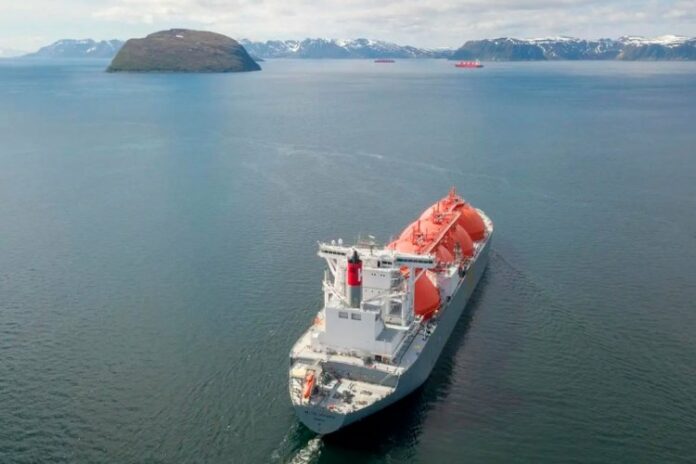
Equinor’s growing global LNG portfolio is based on LNG from the Equinor operated LNG Plant in Hammerfest, Norway and LNG supply sourced mainly from the US.

This portfolio will be the base of supply to Deepak, which will use the gas mainly as feedstock for production of ammonia in its newly commissioned plant for manufacturing fertilisers and petrochemicals. The agreement covers an annual supply of around 0.65 million tons (ca 9 TWh) of LNG for 15 years starting from 2026.

Ammonia is a key building block for the society, being crucial for agriculture and food security. The ammonia which Deepak will produce from the natural gas will be for domestic use.

“Deepak’s new ammonia plant has created new gas demand in the growing Indian market. I am very happy that we have landed this agreement with Deepak Fertilisers. The agreement is another proof of how we use our position in the Atlantic basin to strengthen our relationship with key players in the growing Indian market. We look forward to developing our relationship with Deepak and to exploring avenues for further collaboration on petrochemicals feedstocks such as propane and ethane and on low carbon ammonia in the future”, says Equinor’s Senior vice president for Gas & Power, Helge Haugane.

“We are very happy to enter into this long-term agreement with Equinor for supply of LNG. The agreement will provide reliable supplies of feedstock which will further strengthen Deepak Fertilisers’ value-chain from gas to ammonia, the key ingredient in fertilisers. The agreement will help us absorb global volatility as well as enhance overall margins. We also look forward to exploring with Equinor further collaboration on feedstock and carbon footprint reduction initiatives,” said Sailesh C. Mehta, Chairman & Managing Director, DFPCL.

3d Animated Video: How Ukrainian sea drones destroyed a russian ship Caesar Kunikov

0

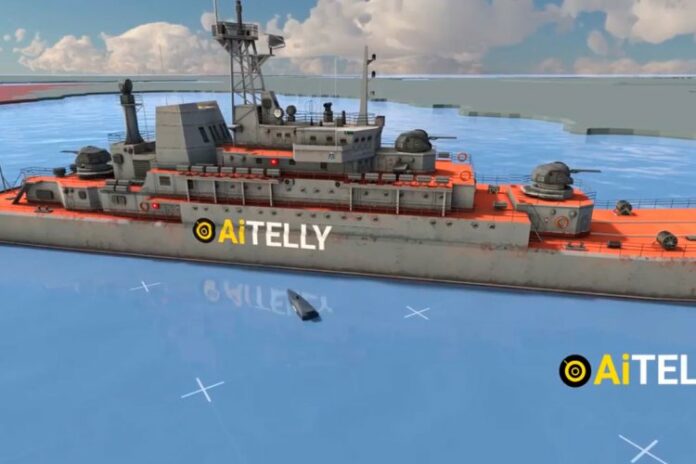
On February 14th, less than two weeks after destroying the missile ship Ivanovets, the Ukrainians claimed to have sunk another valuable Russian warship, the Caesar Kunikov, a Ropucha-class landing ship, in the small hours of the morning. 

The claim was supported by video footage of the ship, which was at sea off Alupka in Crimea, being struck numerous times by Magura V5 sea drones that are operated by the country’s military intelligence services.

The landing warship, named Caesar Kunikov, was struck by the Ukrainian Naval Drone MAGURA V5 also called sea drones off the annexed Crimean Peninsula near Yalta

This Russian landing ship, known as Caesar Kunikov belongs to the Ropucha-I-class segment of amphibious ships.

These vessels are crucial for swiftly transporting assault troops to land during military operations.

Originally designed for beach landings, they boast the capacity to carry up to 450 tons of cargo.

Featuring both bow and stern doors, they facilitate the seamless loading and unloading of vehicles.

The vehicle deck spans an impressive 630 square meters which translates to around (6,800 square Feet stretching the entire length of the hull. This extensive space enables the embarkation of up to 25 armored personnel carriers.