-5.4 C
New York
Home Blog Page 209

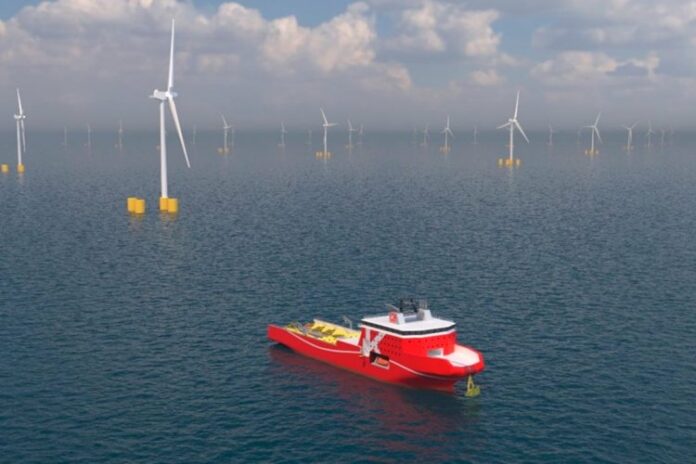
AiP from Class NK for multi-functional floating offshore windfarm support vessel

0

“K” Line Wind Service together with Japan Marine United and Nihon Shipyard have been jointly granted Approval in Principle (AiP) from Nippon Kaiji Kyokai (ClassNK) for the design concept of the multi-functional floating offshore windfarm support vessel (MFSV).

The development of floating offshore wind is expected to take an important and key role in the achievement of the carbon neutrality by 2050, especially in Japan where shallow water area to develop the bottom-fixed offshore wind turbines is limited.

The installation of floating offshore wind turbines always required mooring works by vessels, with the whole mooring system composed of an anchor, a mooring chain, and a fiber rope. “K” Line Wind Service has been pursuing the study on the most effective mooring method and the most suitable vessel design for such mooring work together with Japan Marine United and Nihon Shipyard. Finally, they have completed the design concept of MFSV and obtained AiP from ClassNK.

This MSFV is designed to perform whole mooring works efficiently for floating offshore wind turbine installation, like “transportation of mooring system”, “deploying mooring system on the seabed”, “anchor tensioning”. On top of such primal functions, the uniqueness is multifunctional concept. This MFSV is designed to provide various vessel solutions in each phase of an offshore wind projects such as “Survey”, “Transportation”, “Construction”, and “Operation & Maintenance”. 

The development of this design concept is subsidized by the New Energy and Industrial Technology Development Organization (NEDO) as a part of Green Innovation Fund Project “Technology development project for basic manufacturing and installation cost reduction for floating wind turbines”.

New foresighting report calls for skills focus to meet UK floating wind targets

0

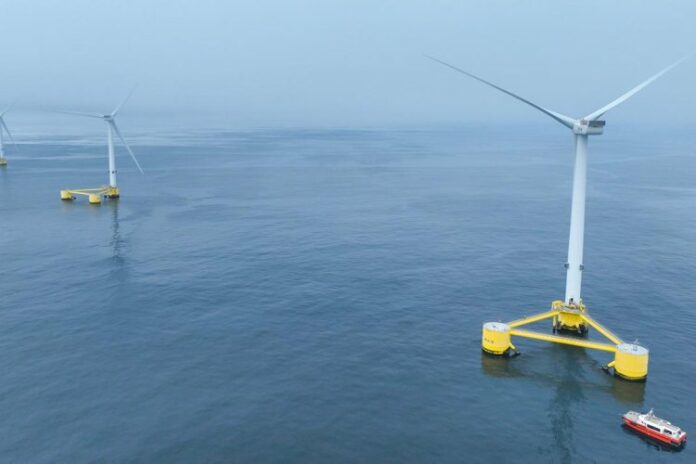
A new report, published by the Offshore Renewable Energy (ORE) Catapult reveals the key skills needed for the successful future development of floating offshore wind farms around the UK, in line with net zero targets.

The ‘Supply Chain Capability Requirements for UK Floating Offshore Wind Farms’ report focuses on inter-array dynamic cable systems within floating wind farms, and the need for the UK to invest in skills to ensure it remains a world leader in the sector.

The UK Government has a target to generate 50GW in offshore wind by 2030, which includes 5GW of floating offshore wind. With 32,000 people currently in the offshore wind workforce, this is forecast to increase to over 100,000 people by 2030.

Andrew Esson, Skills Lead at ORE Catapult, said:

“The UK is a global leader in offshore wind expertise and installed capacity, and maintaining a strong pipeline of skills and talent is essential to maintaining this position.

“We need to see prompt action on developing course content, recruiting students, re-skilling and providing on-the-job experience now – in order to meet our net zero targets.”

The report highlights the need to consider the unique challenges of floating wind and the capabilities required across the dynamic cable system lifecycle, from design to manufacturing, installation, commissioning, and operation. It was delivered in partnership with Innovate UK’s Workforce Foresighting Hub, that works with the Catapult Network and Centres of Innovation to convene industry employers, educators, and domain specialists to assess capability needs and identify the skills needed to drive future growth.

Debbie Johnson, Head of Innovation Talent & Skills at Innovate UK said:

“The output reports from each workforce foresighting cycle, detail future supply chain capabilities, prototype future occupational profiles and deliver recommendations to drive action, to ensure that the UK continues to harness the potential of innovative technologies.”

Across education, the report concludes that modifying existing courses and degrees would be sufficient to meet future skills needs, but that more specialist, technical areas should be addressed through PhD sponsorships and industry engagement.

It also urges employers to ensure that development of experienced staff is linked to industry need, with an emphasis on up-skilling and re-skilling across different parts of the UK supply chain.

Recommendations from the report going forward include:

  • Engage with key industry stakeholders to determine robust Workforce Demand Forecasts for High Voltage Dynamic Cables
  • Work with Further Education, Higher Education, apprenticeship and training providers to initiate development of new training programmes to address the High Voltage Dynamic Cables technology challenge
  • Develop a suite of education and training modules that support transferable skills across a range of HV electrical activities
  • Pursue a rolling programme of Workforce Foresighting cycles to respond to industry challenges

RenewableUK is the industry sponsor of the ORE Catapult report.

RenewableUK’s Head of Skills Scott Young said:

“We’re pleased to sponsor this critical initiative aimed at addressing skills gaps in the offshore wind sector. As the industry moves towards building more floating offshore wind projects at scale, it’s essential to equip the workforce with the necessary skills and expertise. We’re looking forward to collaborating with industry stakeholders, ORE Catapult, and other partners to implement the proposed next steps outlined in the report and create a workforce capable of maximising the deployment of innovative floating wind technology as fast as possible.”

Doosan Enerbility expands reach of its 3D printing business into the shipbuilding sector

0

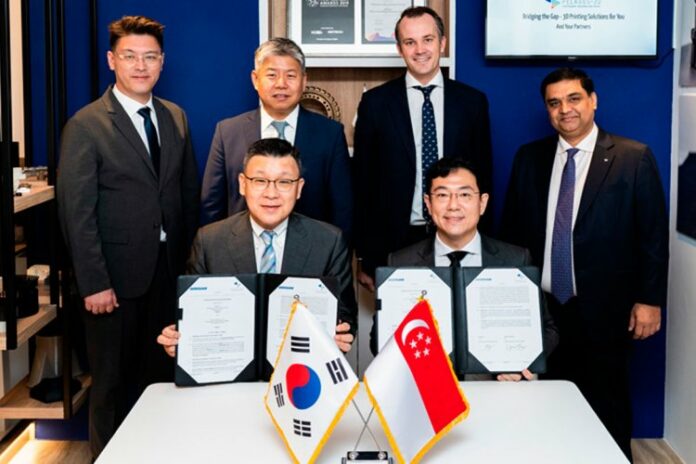
On February 26th, Doosan Enerbility announced that it had signed a memorandum of understanding with Pelagus 3D, an on-demand digital manufacturing platform operator for maritime and offshore spart parts based in Singapore, agreeing to cooperate on metal AM technology exchanges and joint marketing efforts.  

The MOU signing ceremony which was held at the Pelagus 3D headquarters was attended by the related parties, including Yongjin Song, Chief Strategy Officer of Doosan Enerbility, and Kenlip Ong, Chief Executive Officer of Pelagus 3D.

With the signing of this agreement, the two companies agreed to cooperate on the following areas – participation in the on-demand digital platform work for maritime & offshore metal parts, planning of joint marketing and business development efforts targeted at Korea’s shipbuilding companies, and engaging in joint marketing efforts aimed at Singapore’s aviation, shipbuilding and maritime sectors in order to develop new business opportunities.  Doosan Enerbility will be responsible for the design, manufacturing and quality management of maritime and offshore spare parts made using the additive manufacturing method, while Pelagus 3D will be in charge of the online platform operation and identification of parts to be considered for the additive manufacturing, as well as the design and certification work.

“Doosan Enerbility has demonstrated to its customers across a wide range of industries, including the defense and aerospace sectors, the excellence of its AM technology and the economic feasibility,” said Yongjin Song, Doosan Enerbility’s CSO.  “Under this partnership, we plan to do our utmost to further expand the AM business and develop new markets.”

According to a study released by the global maritime research consultancy Drewry, it is forecast that the domestic market for maritime and offshore spart parts will grow from the size of approximately KRW 300 billion in 2024 to KRW 600 billion by 2028, thereby recording an annual growth rate of more than 15% on average.

*Pelagus 3D: a joint venture company founded by the German shipbuilding and steel manufacturing company Thyssenkrupp and Norwegian maritime company Wilhelmsen. Currently engaged in partnerships with close to 80 additive manufacturing companies for the maritime and offshore industry.

Nuvera Fuel Cells joins EU-funded maritime decarbonization initiative

0

Nuvera Fuel Cells, LLC announces its participation in the APOLO project. This initiative, funded by the European Union, is dedicated to leveraging fuel cells and other power conversion technologies to decarbonize maritime transportation. 

Nuvera will provide an EN-125 engine to operate on hydrogen derived from ammonia, which is emerging as a key zero-carbon fuel in the maritime sector that can be produced renewably.

Launched at the beginning of 2024, the twelve-member APOLO consortium aims to tackle the challenges of power conversion from ammonia and develop an efficient and flexible ammonia cracking technology. This innovative technology will be coupled with  fuel cells  to enable the decarbonization of maritime applications. The technologies developed for the project will be capable of serving the estimated 30,000 ships with 1 to 10 MW propulsion in operation.

“Nuvera’s involvement in the APOLO Project underscores our dedication to contributing to maritime decarbonization efforts and reflects industry confidence in the potential of fuel cells to provide zero-emissions propulsion or auxiliary power,” said Giampaolo Sibilia, Director of Nuvera EU operations. “The APOLO consortium is backed by the European Union and combines the expertise of a dozen partners from around the world to develop innovative power conversion solutions. We are proud that Nuvera’s 125 kW fuel cell engines are considered among the most promising technologies.”

Shipping is responsible for three percent of the world’s greenhouse gas emissions each year. Nuvera® E-Series Fuel Cell Engines empower vessel and maritime equipment to meet increasingly stringent emissions mandates and can help them maintain economic competitiveness with high-performance power solutions. Learn more about Nuvera’s zero-emission energy solutions for maritime applications.

Fugro maps seagrass around Italy in a groundbreaking ecosystem restoration project

0

Fugro has been selected to map the coastal habitats of the entire Italian coast as part of the Italian government’s Marine Ecosystem Restoration (MER) Project, a groundbreaking initiative under the National Recovery and Resilience Plan.

The Italian Institute for Environmental Protection and Research (ISPRA) has selected Fugro, in partnership with Compagnia Generale Ripreseaeree (CGR), to leverage their technology and experience in coastal resilience solutions to deliver the crucial mapping component of the MER Project, which is set to revolutionise marine conservation and environmental restoration efforts in Italy.

The MER Project aims to restore the marine habitats, fortify the national system for observing marine and coastal ecosystems, and comprehensively map coastal and marine habitats across Italian waters (specifically Posidonia oceanica and Cymodocea nodosa seagrass meadows).  

The project, which is due to start in March 2024 and be completed by June 2026, includes acquisition of hydrographic data utilising state-of-the-art sensors, including airborne lidar and imagery, airborne gravimetry and satellite sensors covering 10 200 km²; vessel-based multibeam technology spanning 4000 km2; and deployment of an autonomous underwater vehicle, one of Fugro’s state-of-the-art underwater drones, to cover 4000 km of coastline for direct observation and ground-truthing of other datasets. The collected data will be managed through VirGeo®, Fugro’s cloud-based Geo-data engagement platform, to provide seabed and habitat mapping insights, enhancing the local Government’s decision-making process for the protection of coastal marine habitats.

Giordano Giorgi and Sante Francesco Rende, respectively Project Director and Technical Director at ISPRA said:

“We are delighted to announce the award of this project to a consortium led by Fugro and its partner, CGR. This contract signifies a significant milestone in our environmental efforts within the PNRR Marine Ecosystem Restoration project and specifically aligns with Mission 2: Green Revolution and Ecological Transition and the objectives to protect the territory and water resources and restore and protect the seabed and marine environments. The project is administered by the Ministry of Environment and Energy Security, with funding from the European Union’s Next Generation EU programme”.

Mark Heine, Fugro’s CEO, said:

“The MER Project represents a milestone in marine ecosystem restoration. We’re delighted with this opportunity from ISPRA to demonstrate our commitment to environmental stewardship and climate resilience. Our Geo-data for this transformative project will support the conservation and restoration of Italy’s coastal and marine ecosystems for generations to come spearheading the drive towards a sustainable future for Italy’s marine heritage, for a safer and more liveable world.”

NYK receives certification for offshore wind crew transfer vessel training program

0

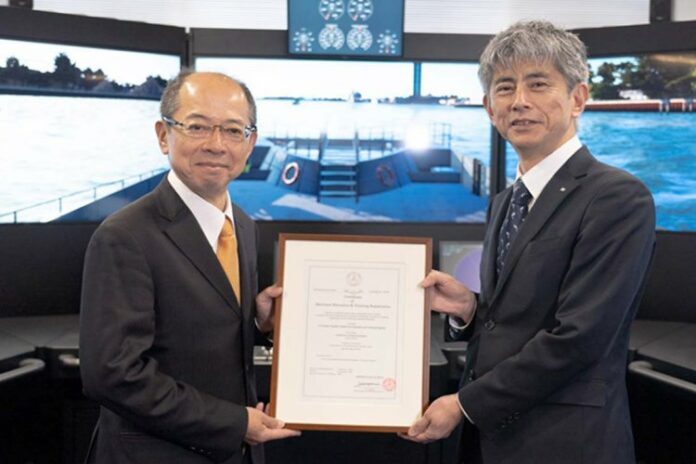
On February 7, NYK received certification from Class NK for Japan’s first training program for crew members of crew transfer vessels (CTVs), scheduled to be conducted at the Akita School of Wind and Sea training center in Oga City, Akita Prefecture. 

In April, NYK will open the training center, and it will offer offshore wind industry training programs among others.

NYK plans to offer three training programs and received certification from Class NK for simulator-based training for operating CTVs. The certification confirms that the training program meets quality and international standards after a review of the training framework, evaluation criteria, instructor competence, students’ satisfaction, and improvement process. The training uses the latest ship-handling simulators to reproduce the movement of a vessel pushing against an offshore wind turbine in severe weather and sea conditions, aiming to improve the advanced navigational safety skills required for CTV ship handling.

The training center opened its website and began accepting applications on February 16 for its first training program: basic safety training for workers (Course I). Applications for the training center’s two other programs — i.e., basic safety training for seafarers (Course II) and simulator-based training for operating CTVs (Course III) — will open on the training center’s website shortly.

ABB to supply shore connection solution to Portsmouth International Port

0

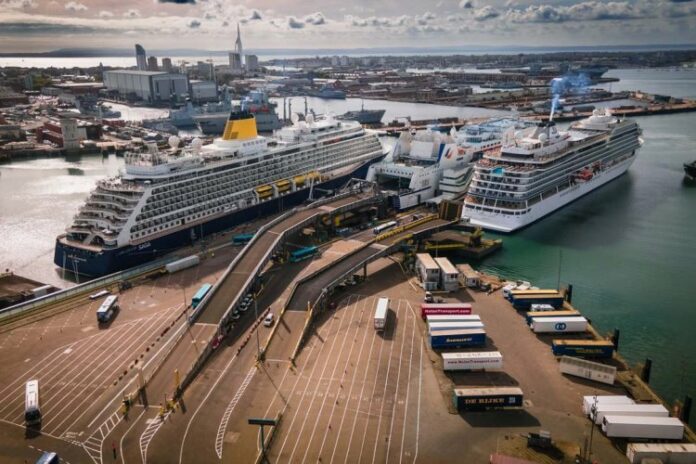
ABB has won an order with Portsmouth International Port to supply a shore connection solution for visiting ferries and cruise ships. 

Part of the UK port’s Sea Change project to design, build and operate a shore power system across its three busiest berths, the installation will serve two ferry berths – each with five connection points – and an additional berth shared by ferries and cruise ships. 

The order was signed in January 2024, with the system due for installation in the fourth quarter of 2024 and expected to be operational by the second quarter of 2025.

ABB’s shore connection allows vessels to turn off their engines while at berth, avoiding annual carbon dioxide emissions for the vessels calling at the Portsmouth International Port by an estimated 20,000 metric tons from 2027. This will significantly improve air quality in the harbor area while helping the port to realize its long-term environmental ambitions.

“As the UK’s largest and best-connected municipal port, we are committed to meeting the highest environmental standards and have set ourselves the target of reaching net-zero by 2030 and becoming the country’s first zero-emissions port by 2050,” said Stephen Watkyns, Technical Director at Portsmouth International Port. “ABB’s shore connection solution will help support these ambitions. Crucially, for the people of Portsmouth, it will have a hugely positive impact on air quality in the port and surrounding areas.”

ABB’s full scope of supply for the shore connection system comprises a 16-MVA ACS6080 drive with shunt filter, MV switchgear, power-factor compensation, transformers, e-houses, cable management systems, and automation. In addition, ABB will provide installation, cabling and commissioning services, while Portsmouth International Port will also benefit from a three-year maintenance agreement.

“Through its Sea Change project and ambitious emissions-reduction targets, Portsmouth International Port is taking a proactive approach to environmental sustainability,” said Marcus Martelin, Head of Decarbonization Services, ABB Marine & Ports. “To be selected as technology provider for this UK Government-funded project is a privilege and reflects our reputation as a trusted provider of shore connection capabilities for cleaner port operations.”

As part of the project, the port’s biggest customer, Brittany Ferries, will be introducing two new LNG-electric hybrid ferries from 2025 which will be the largest vessels of this type in the world. Alongside Portsmouth International Port and Brittany Ferries, ABB will join a consortium of academics, marine specialists and some of the UK’s most exciting technology SMEs have been brought together to deliver the project. The University of Portsmouth, MSE International, B4T, IOTICS and Swanbarton will all contribute technologies and expertise that will support Sea Change, making this an attractive and scalable solution which can be used by ports in the UK and abroad.

Sea Change is part of the Zero Emissions Vessels and Infrastructure (ZEVI) competition, which was announced in February 2023, funded by UK Government, and delivered in partnership with Innovate UK. As part of ZEVI, the Department for Transport allocated over £80 million to 10 flagship projects supported by 52 organizations from across the UK to deliver real-world demonstration R&D projects in clean maritime solutions. Projects will take place in multiple locations from the Orkney Isles to the southwest of England.

ZEVI is part of the UK Shipping Office for Reducing Emissions (UK SHORE), which focuses on clean maritime technologies that can be scaled rapidly to decarbonize the UK’s domestic maritime sector. In March 2022, the Department announced the biggest government investment ever in the UK commercial maritime sector, allocating £206 million to UK SHORE, a new division within the Department for Transport focused on decarbonizing the maritime sector. UK SHORE is delivering a suite of interventions throughout 2022–2025 aimed at accelerating the design, manufacture, and operation of UK-made clean maritime technologies and unlocking an industry-led transition to Net Zero.

NAPA introduces an initiative to resolve the critical uncertainties of shipping’s energy transition

0

NAPA, a global provider of maritime software and data services, has introduced NAPA Studios, an initiative that will foster cross-industry partnerships to deliver new data-driven solutions and insights on some of the most imminent ship design, safety and operational challenges faced by the maritime industry. 

The initiative will leverage NAPA’s extensive digital technology and maritime expertise to resolve some of the critical uncertainties of shipping’s energy transition, among other challenges. It will bring together data and industry expertise from shipowners, charterers, shipyards, classification societies, but also financiers and insurers, in joint projects that will provide more clarity on the practical implications of deploying new technologies or contracts, and help develop the new technologies and operational frameworks needed for the transition to net-zero.

Moreover, NAPA Studios will work directly with individual shipyards, shipowners, charterers, and other supply chain stakeholders in tailored projects that will leverage NAPA’s advanced software, performance models, and experience with digital twins and simulation tools. This offering will, for example, enable shipyards to make a greater use of ships’ operational data to improve future designs, while other projects will support shipowners and charterers in assessing their fleet’s environmental performance and potential emissions reductions and cost savings. Modeling will provide a data-driven picture of the future impact of deploying new technologies, such as weather routing, wind propulsion, or batteries, on the vessel’s safety, operations and cargo capacity. It will also be used to validate the performance of new systems once installed on board.

“For the past 35 years, NAPA has supported the maritime industry from shipyard to sea, with technology spanning ship design and operational safety and efficiency,” said Naoki Mizutani, Executive Vice President for NAPA Studios at NAPA. “Today, we are proud to take this to the next level by leveraging NAPA’s unique digital technology and maritime expertise to foster new partnerships and develop new solutions. In practice, this means using solid digital tools to solve practical problems such as helping shipyards and owners assess the future impact of new technologies on their specific ships. But it doesn’t stop there – our aim is also to reach across all key maritime stakeholders, including financial, insurance, governments and cargo owners, to enable the industry to confidently embrace new partnerships and business models, which are essential to solve current uncertainties and make the energy transition a reality.”

“We want to respond to shipping’s growing demand for data-based evidence and proven solutions for every aspect of the huge transformation ahead, and by doing so, contribute to the whole industry’s success,” Mikko Kuosa, CEO of NAPA, added. “We are eager to work with companies from across the industry to share knowledge and experience and create innovative solutions together. Our vision is that by enhancing collaboration, we can help bring the clarity that the sector demands to be able to face some of its most pressing challenges safely and in a way that makes business sense for everyone.” 

“The maritime sector has entered a period of fast-paced change that brings significant uncertainty,” said Taku Nakamoto, General Manager at Marubeni. “As the industry considers the best avenues to comply with new environmental regulation and respond to pressure from customers and investors, what it needs is certainty on what the energy transition should look like for their fleets and businesses. Having worked with NAPA on a project to assess the impact of voyage optimization on CII compliance, we welcome the launch of NAPA Studios, which will bring our partnership to the next level, and deliver much-needed insight for the industry more broadly.”

Woodside and KOGAS sign agreement for Long-Term LNG supply

0

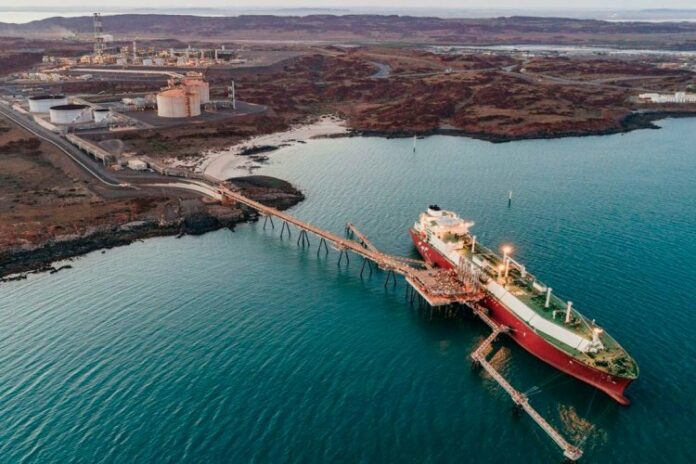
The SPA provides for the supply of approximately 0.5 million tonnes per annum of LNG for a period of 10.5 years on a delivered basis, commencing in 2026 subject to customary conditions precedent.

LNG delivered to KOGAS under the SPA will be sourced from uncommitted volumes across Woodside’s global portfolio, including the Scarborough Energy Project which is targeting first LNG cargo in 2026.

Woodside CEO Meg O’Neill said the SPA was significant as Woodside’s first long-term supply agreement into Korea, the world’s third largest LNG market.

She said the agreement reinforced the ongoing contribution of Woodside’s LNG towards the energy security needs of major customers in the region.

“Woodside is pleased to be a long-term supplier of LNG to KOGAS, a leading global energy company and one of the world’s largest LNG importers.
“This agreement is further demonstration of ongoing robust demand for Woodside’s products from major energy customers in our region.
“Our LNG can help customers such as KOGAS meet their energy security needs, while also supporting regional decarbonisation goals.”

KOGAS President and CEO Choi Yeon-hye said:

“This SPA has enabled KOGAS to enlarge the customer base in the domestic power market, reinforcing our role as a leading natural gas supplier in Korea.
“By leveraging this SPA, we look forward to further expanding our business opportunities with Woodside in the LNG industry.”

ZIM celebrates naming ceremonies of three new LNG vessels

0

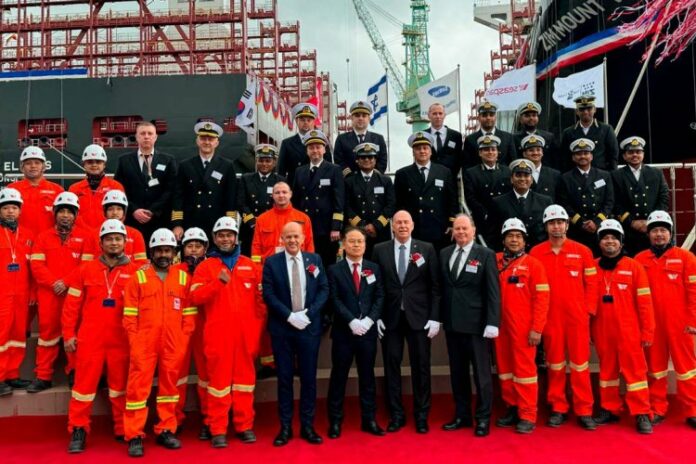
ZIM Integrated Shipping Services Ltd. has announced that this week, the naming ceremonies of three new vessels joining ZIM’s fleet were held in Korea and China, marking another step in the company’s sustainability efforts and the completion of a major part of ZIM’s widescale fleet renovation.

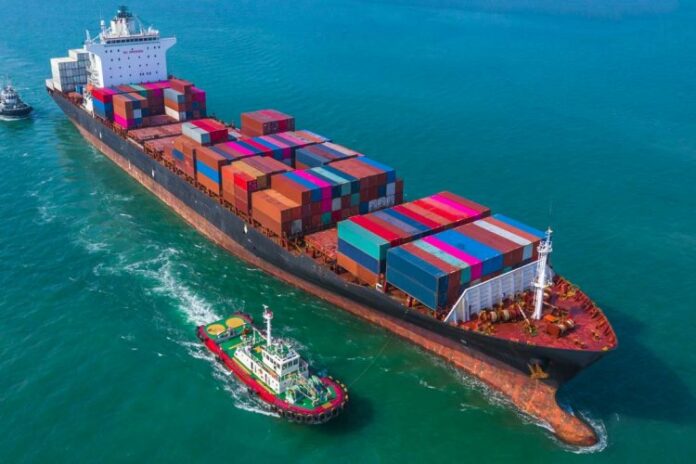
The naming ceremony of ZIM MOUNT ELBRUS and ZIM MOUNT VINSON, the final additions to the series of ten 15,000 TEUs advanced LNG vessels, took place at the SHI Geoje shipyard in Korea. These vessels, showcasing state-of-the-art LNG technology, were named in a traditional manner by their respective godmothers, Mrs. Hani Kalinsky, ZIM’s EVP Pacific Business Unit, and Mrs. Joey Chow, Senior Strategic Accounts Manager in ZIM. These new vessels are planned to be deployed on ZIM Container Service Pacific (ZCP), ZIM’s flagship service connecting Asia and the East Coast of the USA. With the addition of these two vessels, the ZCP service will deploy exclusively LNG vessels. ZIM vessels are the first LNG vessels to call ports on the East Coast of the USA.

ZIM PEARL, the fifth vessel in the series of fifteen advanced 7,700 TEUs LNG vessels, was named at the Jiangsu Yangzijiang shipyard in China by godmother Ms. Winnie Wing Han NG, spouse of Seaspan’s President and CEO, Mr. Bing Chen.

ZIM President and CEO Eli Glickman said:

“The completion of the series of ten 15,000 TEUs LNG vessels represents a significant milestone in our journey towards zero emissions, with the cleanest technology available on a large scale today. ZIM’s investment in LNG-powered vessels underscores its dedication to reducing carbon emissions and embracing a cleaner, more sustainable future for global shipping. Approximately one-third of our operational capacity will be powered by LNG once all 28 LNG green vessels join our fleet. ZIM is poised to solidify its position as an industry leader in sustainable shipping practices.”

Mr. Glickman added:

“Moreover, the introduction of these modern, efficient vessels underscores their essential contribution to ZIM’s operational performance. As the company navigates through a dynamic and fast-changing business landscape, the renovated fleet of cutting-edge vessels plays a pivotal role in ensuring resilience and adaptability, steering towards a brighter and more sustainable future.”