-5.4 C
New York
Home Blog Page 208

Rotterdam World Gateway container terminal invests in shore-based power

0

The RWG terminal is already fully automated and CO2 neutral. Construction of shore-based power facilities means that the ships will also no longer emit particulates, nitrogen and CO2 when at berth. Moreover, these facilities will also reduce noise pollution.

The first berths are expected to be equipped with shore-based power from 2026 onwards. And that puts RWG ahead of European regulation, which stipulates that all container, passenger and cruise ships larger than 5,000 gross tonnes in European ports must use shore-based power by 2030.

RWG is opting to design, finance and build the shore-based power systems itself. This represents a further fulfilment of RWG’s ambition to operate fully CO2 neutral. The Port of Rotterdam Authority and RWG have signed a letter of intent that includes agreements to share knowledge and data concerning the construction and use of shore-based power and the necessary civil-engineering works to quay walls and fenders that this requires.

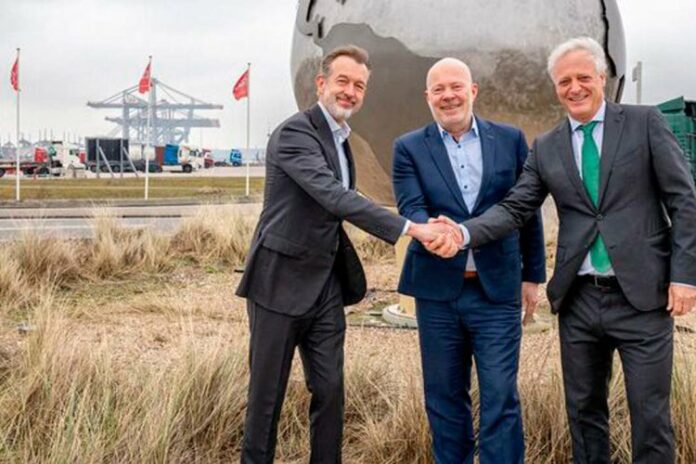
Boudewijn Siemons, CEO & Interim COO of the Port of Rotterdam Authority:

‘We are very pleased with RWG’s decision to invest as the first European deep-sea terminal operator in shore-based power. Shore-based power is an important and necessary aspect of the energy transition. Ships ‘plugged in’ when berthed ensure better air quality and a reduction in noise pollution. This represents a further contribution to greater sustainability of the supply chain that runs through Rotterdam for the clients we share in common.’

Ronald Lugthart, CEO of RWG:

‘The investment in shore-based power is a crucial part of RWG’s investment programme, the aim of zero-emission storage and handling of containers. Together with our clients and other stakeholders, we are creating possibilities to achieve this strategic goal in the near term using shore-based power and other facilities to support the energy transition.’

Robert Simons, Alderman for Port, Economy, Hospitality and Governance at the municipality of Rotterdam:

‘At the municipality of Rotterdam we are truly delighted with RWG’s investment in shore-based power. Shore-based power not only contributes to better air quality, but also reduces noise pollution. This development represents yet another a major step forward for Rotterdam in realising a more sustainable and future-proof port.’

The municipality of Rotterdam and the Port of Rotterdam Authority are working together to accelerate and scale up shore-based power for sea-going vessels. The aim is that by 2030 a large percentage of seagoing vessels will be ‘plugged in’ when at berth. Diesel generators can then be switched off, which is favourable for air quality and CO2 emissions. Together with enterprises in the port, as well as the shipping companies, a series of projects will be initiated over the coming years to accelerate and expand shore-based power.

Germany’s first centre for remote-controlled inland navigation opened

0

SEAFAR, the Belgian tech and service provider specializing in remote-controlled and crew-reduced inland navigation, has established Germany’s inaugural Remote Operations Centre in collaboration with project partners HGK Shipping and Reederei Deymann. 

The center in Duisburg was officially inaugurated on February 28th, with key figures from politics, authorities, and industry in attendance. This center will facilitate the remote control of vessels on inland waterways, addressing the shortage of skilled personnel. Efforts are underway to leverage existing permits for the Lower Rhine trial and to designate additional waterways for this innovative solution. For example, they are currently in the application phase for sections of the canal in north-west Germany, as well as the Mittellandkanal and other sections of the Rhine.

In Belgium and the Netherlands, similar crew-reduced concepts are already in successful operation for various types of inland waterway vessels, some of which will now be managed from the new SEAFAR site in Duisburg-Ruhrort.

Janis Bargsten, Chief Commercial Officer at SEAFAR, says:

“Expanding into the inland waterways of Europe’s largest economy marks a significant milestone for our company. In collaboration with our partners HGK Shipping and Reederei Deymann, who have collectively equipped five vessels for this project so far, we aim to contribute substantially to modernizing transportation and the profession.”

Steffen Bauer, CEO of HGK Shipping, emphasizes:

“As a leading inland shipping company in Europe, we consider ourselves catalysts for industry development, whether in constructing new, eco-friendly vessels or adopting innovative solutions that align with the digitalization trend. Meeting ambitious climate targets in the coming years and decades necessitates a significant shift towards inland shipping and waterway freight transport. Under the banner of ‘More climate protection despite a shortage of skilled workers,’ this technological advancement, enabling partial ship control from shore-based operations centers, is poised to secure long-term transport solutions via this vital mode of transit.”

Martin Deymann, Managing Director of Reederei Deymann, weighs in on the industry’s challenge of attracting new talent to ensure the smooth transport of goods: 

“Remote control from shore can greatly enhance the appeal of the profession. The improved work-life balance afforded by working closer to home serves as a compelling incentive to either remain or enter the field of inland navigation. The Remote Operations Centre, coupled with increased digitalization, will inject much-needed vitality into this longstanding profession.”

The Remote Operations Centre in Duisburg currently hosts three workstations for remote control operators, acting as skippers, and one workstation for the Traffic Controller, overseeing vessel movements in the background and serving as a primary point of contact. Equipped with cutting-edge IT infrastructure meeting the highest security standards, captains will be able to remotely navigate inland waterway vessels using control systems modeled on a driver’s cab, alongside an extensive camera network. Project partners are collaborating closely with relevant authorities and agencies to gradually expand necessary licenses for operation across Germany’s inland waterway network.

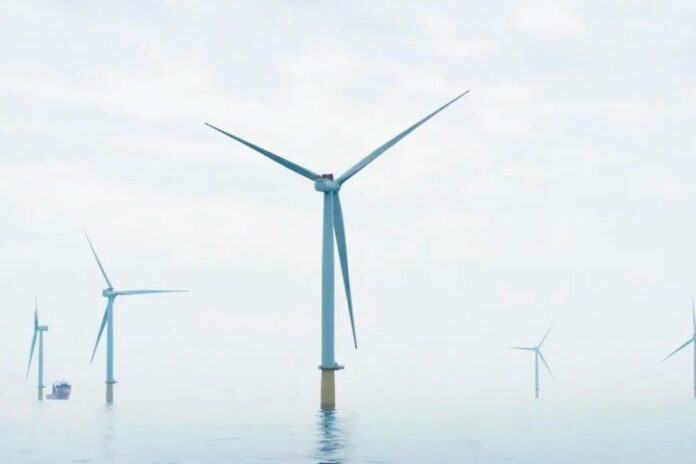
Empire Wind 1 awarded offtake contract in New York’s fourth offshore wind solicitation round

0

New York State Energy Research and Development Authority (NYSERDA) has announced Equinor’s Empire Wind 1 project one of the conditional winners in its fourth offshore wind solicitation round.

Equinor and NYSERDA will now negotiate an Offshore Wind Renewable Energy Certificate (OREC) Purchase and Sale Agreement, with contract execution expected within Q2 2024.

“This award is an important milestone in our continued efforts to maximize value creation from Empire Wind 1, currently one of the biggest and most mature renewables projects in the US. The award represents an important contribution to New York’s climate ambitions from a large-scale project in a growth market that has demonstrated a strong commitment to offshore wind. We are working diligently to bring the project to an investment decision during the third quarter of this year. With the use of project financing, we currently expect our US East Coast offshore wind investments to deliver full-cycle nominal equity returns within the range of 12-16%. We intend to farm down to a new partner at the right time to further enhance value and reduce our exposure,” said Pål Eitrheim, executive vice president of Equinor Renewables.

Subject to signing of the OREC contract with NYSERDA, the project is expected to deliver forward looking real base project returns within the guided range for renewable projects of 4-8%. Following a final investment decision expected mid-2024, Equinor plans to use project financing, with financial close anticipated by end of 2024. Full-cycle nominal equity returns for the US East Coast offshore wind investments is currently expected within the range of 12-16%. Equinor also intends to bring in a partner to enhance value and reduce ownership share and exposure.

Empire Wind 1 has already achieved several key permitting milestones, including approval of its Construction and Operations Plan (COP) from the Federal Bureau of Ocean Energy Management, and its Article VII Certificate of Environmental Capability and Public Need from the New York Public Service Commission.

On 25 January 2024, Equinor announced a swap transaction with bp, under which Equinor will take full ownership of the Empire Wind lease and projects and bp will take full ownership of the Beacon Wind lease and projects. This transaction is subject to regulatory approval and closing of the transaction is expected in Q2 or Q3 2024.

Icebreaker Ermak catches fire in Russia’s St. Petersburg port

0

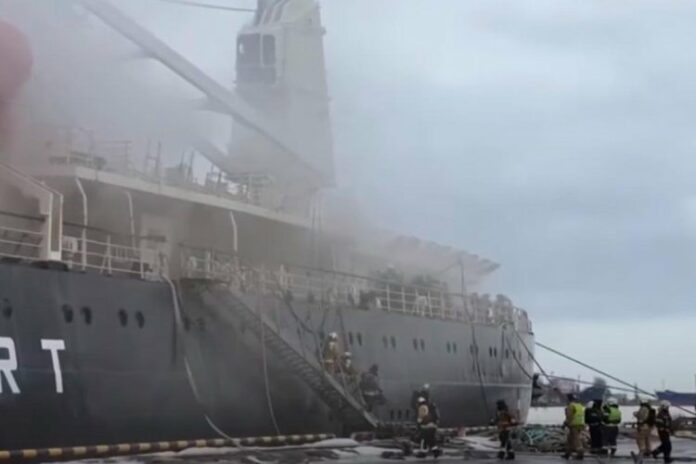
The icebreaker where the fire started is moored at the Big Port of Saint Petersburg.

The Emergencies Ministry clarified that the vessel is no longer operating and is slated for disposal.

The fire started on the first and second decks. There are reportedly no casualties. However, online sources specify that the fire occurred against the backdrop of welding works.

According to the video released by the Emergencies Ministry, firefighters have arrived at the scene. They are trying to prevent the spread of fire.

Recall that Ukrainian defenders have already destroyed many Russian ships in the Black Sea using attack drones.

The latest successful operation was on February 14th. That time, the large landing ship of the enemy Tsezar Kunikov went to the bottom.

Source: RBC

Aker BP’s Hanz subsea tie-back project in North Sea receives production start-up approval

0

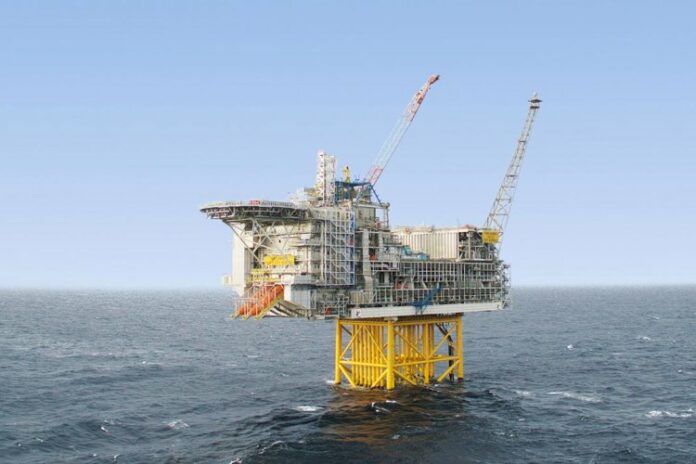
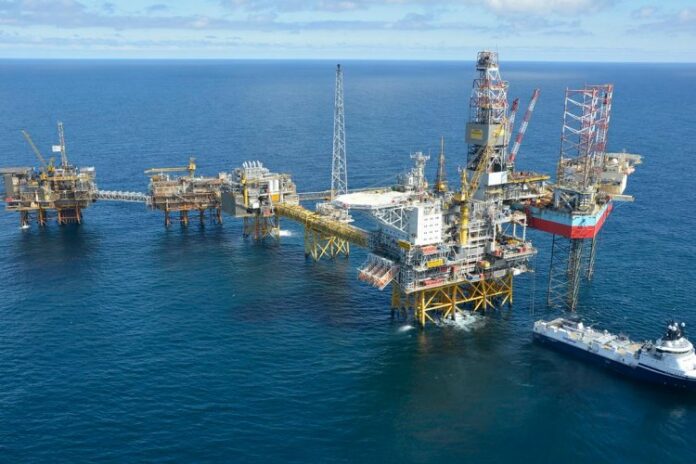
The Norwegian authorities have consented to start-up of production on the Hanz accumulation at the Ivar Aasen field in the North Sea.

Hanz was proven in 1997, and is included in the 2013 plan for development and operation (PDO) for the Ivar Aasen field, which is located about 200 kilometres from Stavanger.

Aker BP is the operator of production licence 028 B with a 35-per cent ownership interest, while the other licensees are Equinor (50 per cent) and Sval Energi (15 per cent).

According to the operator, investment costs for developing Hanz are estimated at about NOK 4.2 billion.

The operator’s estimate of recoverable resources, mainly oil, is 3.1 million standard cubic metres of oil equivalent (19.65 million bbl o.e).

Aker BP expects to start up during the first quarter of 2024.

“A development of Hanz utilising existing infrastructure and an alternative method for pressure support contributes to good utilisation of resources,” says Tomas Mørch, Assistant Director of Licence Management in the Norwegian Offshore Directorate.

WAN HAI achieves improved fuel efficiency with Nippon Paint Marine

0

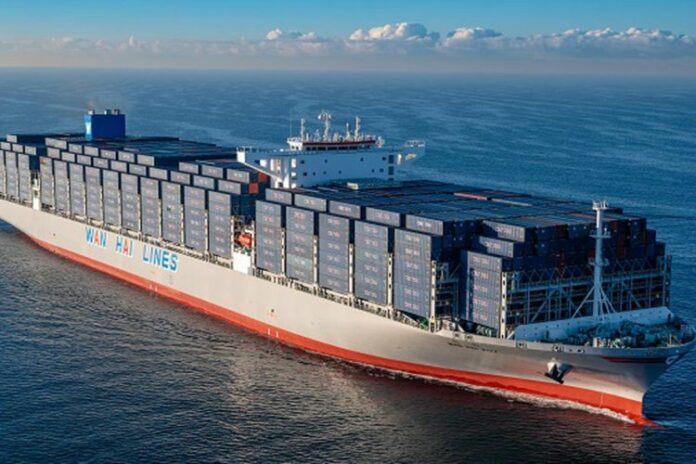
WAN HAI has worked with Nippon Paint Marine for seven years, beginning with the application of the antifouling coating A-LF-Sea to 20 vessels within its fleet. Performance analysis conducted in 2019 showed that the product delivered up to 8% fuel and emissions reduction compared to conventional coatings. 

A-LF-Sea is a super low-friction coating system that uses Nippon Paint Marine’s patented Hydrogel water-trapping technology, resulting in a smoother hull which reduces a vessel’s hydrodynamic drag. This results in lower fuel consumption – as less power is needed to maintain the same speed – reducing the cost of operating the vessel, as well as emissions.

In 2021, WAN HAI began applying Nippon Paint Marine’s next-generation antifouling coating, FASTAR, to generate further fuel efficiencies and help contribute towards CII ratings for its fleet. FASTAR has now been applied to 10 vessels across WAN HAI’s global fleet. The vessels are currently undergoing performance analysis to determine options for generating additional fuel and emissions saving benefits going forward.

FASTAR is Nippon Paint Marine’s 4th generation antifouling system, with self-polishing and self-smoothing capabilities. FASTAR builds upon the company’s patented Hydrogel water-trapping technology, using nano-binder technology to deliver precise, predictable antifouling performance, reducing fuel consumption and emissions, as well as improving drydock efficiency. WAN HAI is now also considering extending this partnership to explore the use of Nippon Paint Marine’s AQUATERRAS solution, the world’s first completely biocide-free and proven self-polishing underwater foul-resistant paint, which can reduce fuel consumption by up to 10%.

“We have been very impressed with the performance of both A-LF-Sea and FASTAR. Both coatings have enabled us to achieve significant fuel and emissions savings, which aligns with WAN HAI’s corporate and sustainability goals to comply with environmental regulations as well as supporting the industry in meeting global decarbonisation targets,” said, WAN HAI Lines Ltd. 

“Improving efficiency across our entire fleet is critical to driving more sustainable, commercial and competitive operations and Nippon Paint Marine’s coating technology has played an integral role in enabling us to achieve this.”  

“Helping our customers meet the challenge of accelerating the path to decarbonisation and wider sustainability is a key focus for us. We are proud to have enabled WAN HAI to achieve fuel savings of up to 8% that have a significant and positive impact on their environmental footprint and bottom line,” said Adrian Hwang, Deputy General Manager at Nippon Paint Marine. “Nippon Paint Marine is dedicated to continue to develop advanced, innovative, high performance marine coatings that enable our customers to maximise operational efficiencies, reduce fuel consumption and associated costs, while also achieving their sustainability goals.” 

TECO 2030 and Umoe Mandal receives preliminary approval for high-speed vessel design

0

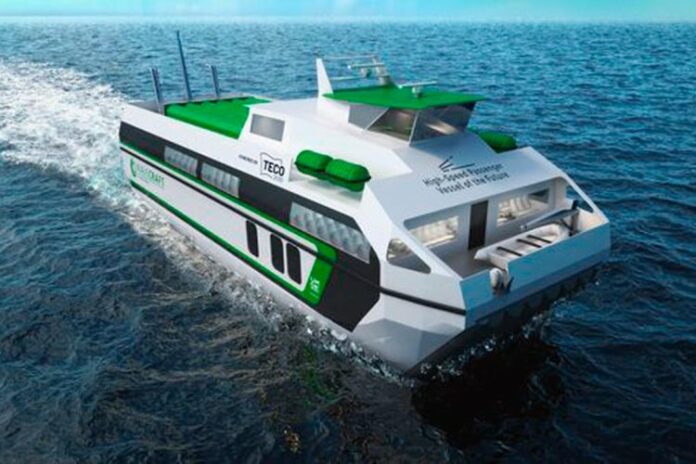
TECO 2030 and Umoe Mandal successfully receives “approval of preliminary design” from the Norwegian Maritime Authority for a multimegawatt hydrogen fuel cell powered high-speed vessel design.

The preliminary approval is a result of the application submitted earlier this month and is the first stage of the design and approval process for constructing a fuel cell powered vessel.

The vessel design is utilizing Umoe Mandal’s proven Crew Transfer Vessel (CTV) Surface Effect Ship (SES) technology, featuring an air-cushion catamaran design. This configuration ensures very high fuel efficiency, sufficient range to sail a complete route without charging stops unlike battery-driven vessels. Additionally,  it also offers high passenger comfort in rough sea conditions. CTVs are commonly used in construction, maintenance, and operations of offshore wind farms. The imminent vessel, designed for passenger transportation, will boast a service speed of 35 knots, a minimum range of 160 nautical miles, and will accommodate up to 275 passengers.

Compared to the fuel consumption of existing equivalent fossil-fueled high speed passenger vessels, the consumption is reduced by more than 55%. The emission of climate gasses is zero.

The “Approval of preliminary design” marks the completion of the first stage of the complete design and approval process for this hydrogen fueled vessel, following the procedures required by the International Maritime Organization IGF-code and “Alternative Design Process” design process.

Passenger transport by high-speed ferries is common in Norway and many other locations, but it has traditionally been linked to very high greenhouse gas emissions per passenger kilometer. The Norwegian government now processing the implementation of a zero-emission requirement for high-speed ferries starting in 2025 after a public hearing was conducted in 2023. The vessel designed by Umoe Mandal and TECO 2030 fulfills these expected zero-emission requirements.

This project has been financed by the Norwegian County Municipalities Finnmark, Nordland, Trøndelag and Vestland, who are now working to secure financing to construct and demonstrate a hydrogen powered high-speed ferry in line with the Norwegian 2025 zero-emission requirements.

“It is a great pleasure to announce the preliminary approval from the Norwegian Maritime Authority. This vessel can become an accelerator for emission-free marine passenger transport; as a result, we are ready to engage with interested parties,” says an enthusiastic Tore Enger, Group CEO, TECO 2030.

“I am excited to keep the great momentum going with Umoe Mandal and hope the Norwegian public authorities work to secure financing to continue this project as soon as possible. Also, keep in mind that this vessel design can easily be adopted to similar sized vessels who wants a viable alternative to traditional combustion engines and fossil fuels. There are no doubts that fuel cells and hydrogen will play a vital role in achieving net-zero climate goals.”

Exmar and Eni celebrate Congo’s first LNG cargo

0

The first shipment of LNG from the Republic of the Congo is milestone that completes the implementation of the first phase of Eni-operated Congo LNG project.

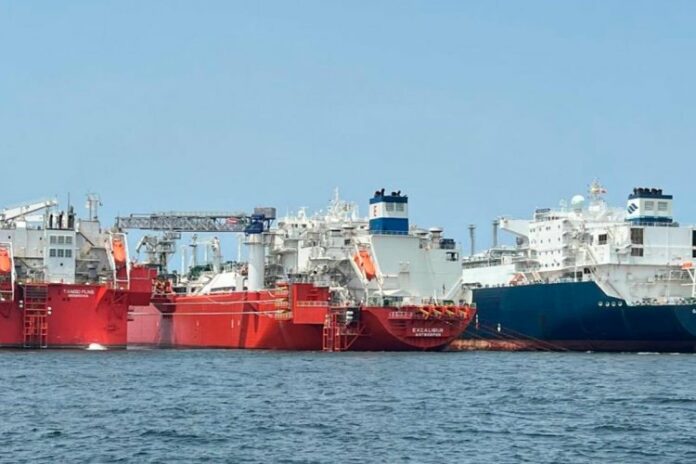
The Congo LNG project features a liquefaction facility, the Tango FLNG, with a capacity of about 1 billion cubic meters per year (BCMA), moored alongside EXMAR’s Excalibur Floating Storage Unit (FSU), using an innovative configuration called “split mooring”, implemented here for the first time in a floating LNG terminal.

EXMAR built and formerly owned Tango FLNG and provides the  Excalibur FSU on a long-term charter and will be in charge of all terminal operations on the Congo LNG Project.

The Congo LNG project, sanctioned by Eni in December 2022, comes on stream after just 1 year in line with the initial timeline. This achievement was made possible in close corporation with Eni as partner and building upon EXMAR’s experience within the floating infrastructure space.

Trelleborg finalizes a licensing agreement with the Port of Auckland Limited

0

As part of POAL’s strategy to shift its focus towards the port’s core business, the transfer of stewardship to Trelleborg is set to bolster the growth and further advance the eMPX application.

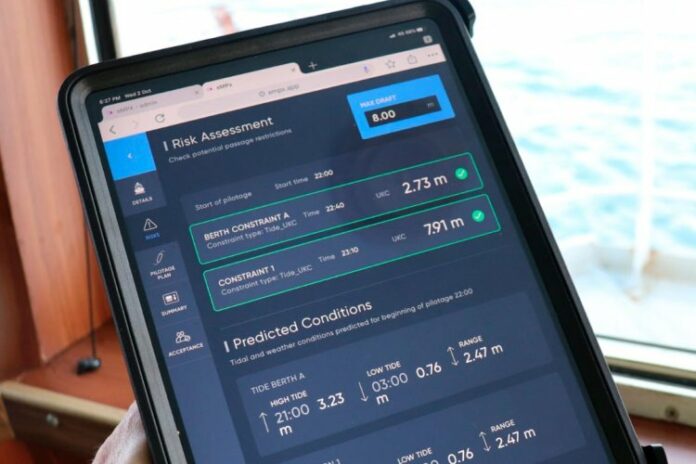
eMPX is a Software-as-a-Service (SaaS) platform designed by POAL to enhance the capabilities of pilots and masters in the maritime industry. The platform is designed to enhance the maritime pilotage planning and execution process, offering a seamless toolkit for planning, sharing, reviewing, updating, and managing master pilot exchanges (MPX). Developed with input from active pilots, port services, and industry stakeholders, eMPX features operational tools tailored specifically to the needs of users. 

Tommy Mikkelsen, Managing Director for Navigation and Piloting at Trelleborg Marine and Infrastructure said:

“Developed ‘by the industry for the industry’, eMPX is an essential tool that enables marine pilots to work safely and efficiently. We’re pleased to be strengthening our Piloting and Navigation offering by adding this application, which can reduce accidents in ports, improve the efficiency of MPX processes, and contribute to the creation and development of robust MPX standards. The software complements our portfolio of digital piloting solutions, such as SafePilot, ultimately providing new and existing customers with seamless options to facilitate safer and more efficient operations on a global scale.”

Roger Gray, CEO POAL commented:

“This agreement is a part of our ongoing strategy to focus on our core business and is part of the port’s ‘Regaining our Mana’ deliverables.” This initiative reflects our vision for the port to achieve sustainable profitability while maintaining its status as the preferred port for our customers and employees.”

Gary Elmes, General Manager Digital, POAL added:

“I am delighted that a company with the unparalleled scale and resources of Trelleborg has gained exclusive licensing for eMPX. Trelleborg has committed to supporting all existing customers while progressing its plans to expand the application globally.”

With a mutual commitment to continuity, Trelleborg’s Product Group Director, James Curl, will take over the management of eMPX, with dedicated support from the POAL during a transition period. The partnership between Trelleborg and Port of Auckland stands to benefit existing and prospective customers alike. As part of this transition, existing customers of the eMPX application will be presented with new agreements under comparable terms to ensure uninterrupted delivery of services. With Trelleborg’s expanded team at their disposal, customers can anticipate an elevated level of support, emphasizing the company’s commitment to upholding customer satisfaction.

Commenting on the process, Jason Ranston, eMPX Business Manager at POAL said:

“We are focused on supporting this transition to ensure our eMPX customers have no interruptions during the process, and they can look forward to gaining increased levels of support and future development options from Trelleborg’s larger and more specialized team.”

Norway gives ConocoPhillips consent to start up Eldfisk nord in the North Sea

0

This is an installation consisting of two seabed templates for production and one for water injection – a total of nine production wells and five injection wells. Start-up is expected during the first quarter.

According to the operator, the resource potential is projected to be 50-90 million barrels of oil. The investment amounts to nearly NOK 13 billion (USD 1.24 billion).

The Eldfisk field is located in block 2/7 and is part of the Greater Ekofisk Area. Eldfisk nord will help increase the recovery rate from the two formations, Ekofisk and Tor.

ConocoPhillips’ partners in production licence 018 are Total Energies, Vår Energi, Sval Energi and Petoro.

Eldfisk was discovered in 1970, and the plan for development and operation (PDO) was approved in 1975. An amended PDO for Eldfisk, including the development of resources in Eldfisk nord, was approved in December 2022.