-4.7 C
New York
Home Blog Page 207

Fugro enhances ocean habitat mapping technology by joining forces with PlanBlue

0

The aim is to enhance and broaden Fugro’s hydrographic solutions by incorporating cutting-edge technology such as advanced imaging and AI-based processing and deploying it across different platforms like remote and autonomous underwater vehicles. 

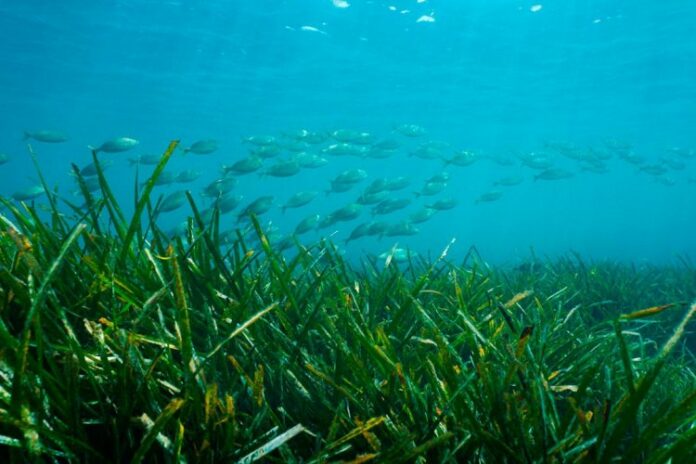
This collaboration targets the improvement of habitat mapping solutions, systematically studying and documenting the characteristics and distribution of critical marine ecosystems such as seagrass and corals. Habitat mapping helps in understanding their ecological importance, assessing their condition, monitoring changes over time, and informing conservation and management efforts.

Roughly 75% of the ocean floor remains unexplored. Even the parts we have explored lack detailed information, especially regarding the ocean’s impact on climate and food security. The development of this new capability aims to improve the speed, accuracy, and scope of underwater mapping, leading to better decisions for ocean conservation and use.

PlanBlue’s expertise in advanced imaging and AI-based data processing is set to gather crucial information about the ocean floor and its ecosystem. This partnership, leveraging Fugro’s industry knowledge, aims to develop solutions that meet industry needs while championing environmental conservation.

“We are excited about the opportunities this partnership brings,” said Dr Marco Filippone, Fugro’s Solution Director for Ocean Science and Hydrography. “By integrating PlanBlue’s advanced technology and analytics, we aim to lead the industry in providing innovative solutions that positively impact the environment and various sectors.”

“This partnership is a great opportunity to scale our business operations and data products and have a growing impact on coastal resilience,” commented Dr Hannah Brocke, Co-founder and CSO at PlanBlue. “Accelerating the collection of insights about marine habitats is essential for meaningful policy decisions in the blue economy. Through this partnership we strengthen our contributions to the UN Sustainable Development Goals, and global initiatives like the UN Decade of Ocean Science and Seabed 2030.”

The partnership between Fugro and PlanBlue signifies a shared commitment to driving positive change through technological innovation. This collaboration is particularly vital considering initiatives like the recently awarded Italian government’s Marine Ecosystem Restoration (MER) Project, which aims to restore the marine habitats, fortify the national system for observing marine and coastal ecosystems, and comprehensively map coastal and marine habitats across Italian waters (specifically seagrass meadows). As the collaboration progresses, both companies look forward to exploring new frontiers, pushing boundaries, and creating solutions that make a lasting difference for a safe and liveable world.
Samskip and Cochin Shipyard begin construction of shortsea container vessel

0

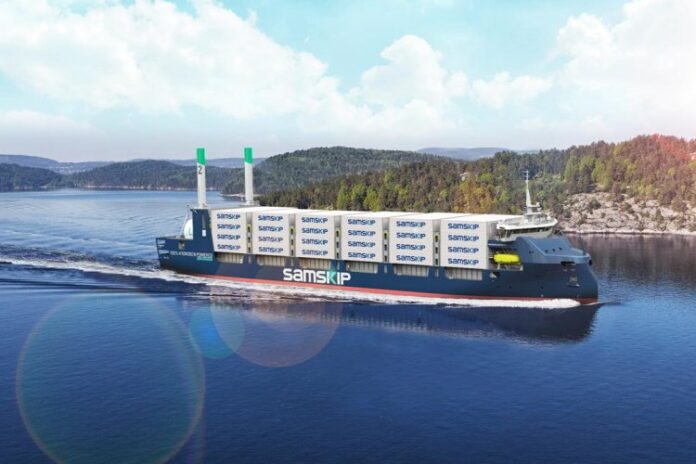
Global logistics solutions provider SAMSKIP and market leading shipyard Cochin Shipyard Ltd. India, have begun the construction phase of their Next Generation zero-emission shortsea container vessel – “The Samskip SeaShuttle”.

The hydrogen fuel powered Samskip SeaShuttle is destined to create green corridors between the European continent and the Scandinavian region. In zero emission mode, two Sea Shuttles are expected to achieve around 25,000 tons of CO2 reduction per year. They will achieve zero emission operations in ports as well by using green shore power at the port of call.

Acknowledging the milestone’s significance, Samskip also hosted “The Samskip Sustainability Day” on February 29th, a collaborative forum including maritime experts, municipality representatives, customers, politicians and suppliers. The thinktank event brought together 150 guests to Rotterdam and 60 to Oslo in a forum whose presentations and discussions focused on the collaboration and boundary breaking necessary in the new age of sustainable logistics.

Sustainability Manager, Samskip – Laurens Dourleijn, commented:

“When it comes to sustainability, we believe in transparency, setting goals and taking responsibility. Yesterday, at our event, we introduced our Sustainability Compass to accelerate our ESG goals and called everyone out to work together towards these goals.”

CEO Samskip Group – Kari-Pekka Laaksonen, said:

“Our Sustainability Day event went smoothly and I am so proud to see the many stakeholders from different disciplines discussing and brainstorming together. That is why we brought all these honored guests together. They did not disappoint. We walked away inspired, as we pushed for accountability and teamwork. The time of just talking about sustainability is over, and I am hopeful, having experienced our guest working for a better tomorrow. It all starts with us coming together, then great things happen.”

Head of Fleet Management, Erik Hofmeester, added:

“It was great to see important stakeholders in the room, all positively energized in a joint effort to realize zero-emission transport. With 2030 around the corner, there is no time to waste.”

Regional Director – Norway & Sweden Multimodal, Are Grathen added:

“It has been a long journey, but I always had faith in this project from the start. I have had the pleasure of being involved from the beginning and helped get both our Norway and Rotterdam teams aligned. The SeaShuttle will provide a great green corridor and it’s really inspiring to see the leadership and commitment of our customers who have already booked space on this service. Now we go from planning to building!”

New fireboat stations dedicated at Port of Long Beach

0

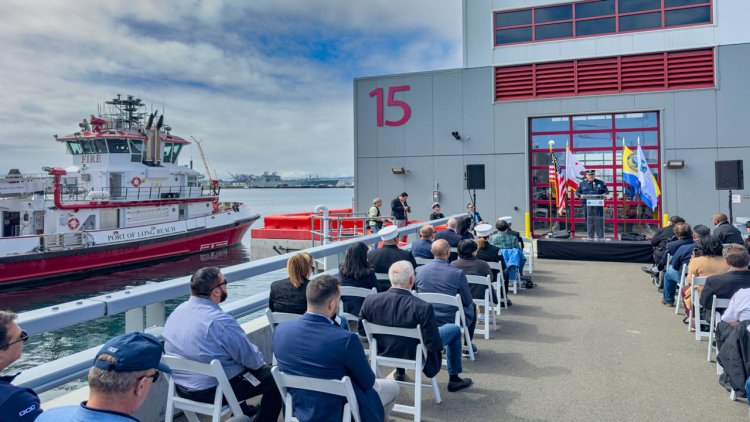
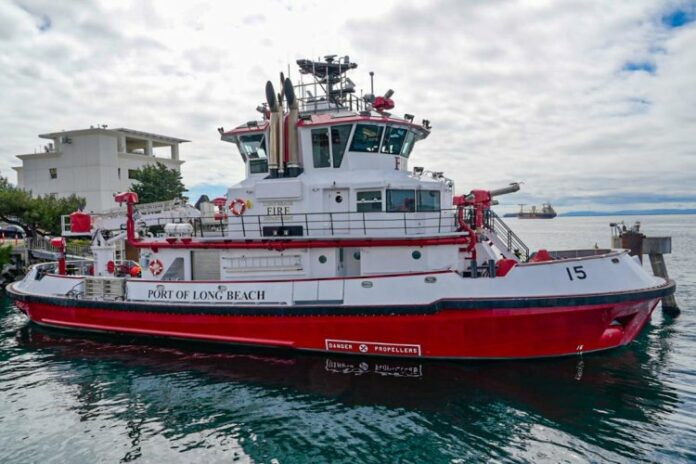
Officials have dedicated two new Port of Long Beach fireboat stations that are greatly enhancing the Long Beach Fire Department’s waterside and landside emergency response capabilities, better safeguarding visiting ships, cargo and waterfront workers.

The facilities – Fireboat Station 15 and Fireboat Station 20 – are the products of a $109 million Port of Long Beach program to preserve business continuity, security and economic interests.

“These fireboat stations will provide an important and invaluable safety service to our Port,” said Long Beach Mayor Rex Richardson. “Our firefighters are now equipped with the most sophisticated facilities and emergency response capabilities to protect our Port, its valuable assets and our waterfront workforce.”

“This is a great day for the Port of Long Beach, as we celebrate completion of a long-needed major revamping of fire safety facilities and equipment in the harbor,” said Port of Long Beach CEO Mario Cordero. “Fireboat Stations 15 and 20 and our fireboats vastly improve our preparedness and resilience in the face of emergencies.”

“These new stations will have a lasting and positive impact on our ability to quickly respond to emergencies,” said Long Beach Harbor Commission President Bobby Olvera Jr. “We look forward to our continuing partnership with the Long Beach Fire Department to make the Port a safe place to work and do business.”

“Our new fire stations are state-of-the-art public safety structures that will serve as bases of operations for any incident within the Port and throughout the region,” said Long Beach Fire Chief Dennis Buchanan. “Additionally, these stations have been designed with today’s workforce in mind, which means the assurance of workforce accommodations, such as separate sleeping quarters and restrooms.” 

Fireboat Station 15 is a single-level, 7,750-square-foot building in the Port’s outer harbor with living quarters, a garage for two firefighting apparatus trucks and a full wharf with a 16,311-square-foot boat bay enclosure that houses fireboat Vigilance. Construction started in April 2019 and the project was completed in September 2021.

Fireboat Station 20, located in the Port’s inner harbor, is a two-level, 9,783-square-foot structure equipped with living quarters, a garage for two firefighting apparatus trucks and a 16,280-square-foot boat bay enclosure that houses fireboat Protector. Construction started in March 2021 and the project was completed in December 2023.

Fireboat Protector entered service in 2016, followed a year later by its companion, Vigilance, heralding major advancements in harbor firefighting and emergency response capabilities at the Port of Long Beach. The fireboats are each equipped with 10 water cannons capable of sending up to 41,000 gallons per minute to a distance of up to 600 feet, or the length of two football fields.

With an anticipated lifespan of 50 years, both stations were approved for construction in 2017 by the Long Beach Board of Harbor Commissioners and funded by Port revenues.

Orcas demonstrate they no longer need to hunt in packs to take down the great white shark

0

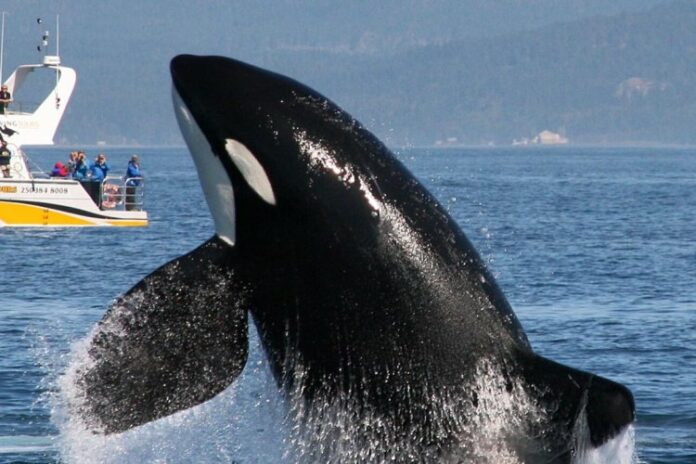
“The astonishing predation, off the coast of Mossel Bay, South Africa, represents unprecedented behavior underscoring the exceptional proficiency of the killer whale,” remarks Dr. Alison Towner from Rhodes University, who led an international research team into the discovery.

Their findings are published in African Journal of Marine Science.

The groundbreaking insight is the latest from Dr. Towner and the team, who, in 2022 in the same journal, revealed that a pair of orca were hunting and killing great white sharks off the coast of South Africa since 2017—managing to drive large numbers of the sharks from their natural aggregation sites.

Orcas are generally known to work together to catch large prey like sea lions, seals, and even other whales—and of course, sharks too. By hunting together, they can surround prey and use their combined intelligence and strength to attack.

They can hunt large animals individually. However, this is the first such occurrence on what is one of the world’s largest predators—the great white.

“Again, as previously in South Africa, the orcas are exhibiting a strong preference for extracting and consuming the lipid-rich livers of white sharks—a specialized feeding behavior,” explains Dr. Towner, who has studied great white sharks for the last 17 years, learning about their movement patterns through tagging data.

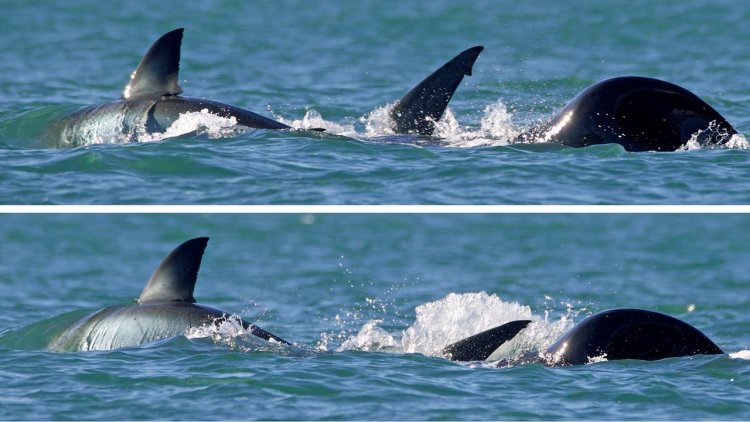
“But what we witnessed was an orca, nicknamed Starboard—due to his collapsed dorsal fin—performing alone to incapacitate and consume a white shark within an astounding two-minute timeframe.

“Starboard was observed preying on a 2.5-meter (8.2 feet) juvenile white shark, later carrying the shark’s liver in its mouth past a boat.

“This sighting revealed evidence of solitary hunting by at least one killer whale, challenging conventional cooperative hunting behaviors known in the region.

“These are groundbreaking insights into the predatory behavior of this species, and our findings significantly contribute to the global understanding of Killer Whale predation dynamics, enhancing knowledge of marine ecosystems and predator-prey relationships.”

During the observed interactions of this event, at least two white sharks were killed, as evidenced by the discovery of a second carcass measuring 3.55 meters (11.6 feet) nearby.

“The study raises critical questions about the impact of killer whale predation on shark populations in South Africa,” Dr. Towner says. “The displacement of various shark species due to killer whale presence may have implications for mesopredator release and potential trophic changes in the marine ecosystem.”

Understanding the ecological dynamics of killer whale predation is paramount for marine conservation efforts. The authors state that this event “underscores the urgent need for adaptable conservation strategies and vigilant ecological monitoring amidst changing environmental conditions.”

Founding Director and Principal Scientist at Sea Search Research & Conservation, and at the Department of BotZoo, University of Stellenbosch, Dr. Simon Elwen, is an expert in the ecology, behavior, and conservation status of whales.

Commenting on the importance of Dr. Towner’s team’s findings, he says, “The observations reported here add more layers to the fascinating story of these two killer whales and their capabilities. As smart, top predators, killer whales can rapidly learn new hunting techniques on their own or from others, so monitoring and understanding the behaviors used here and by other killer whales in South Africa is an important part of helping us understand more about these animals.”

The involvement of land-based observers, tourists on vessels, and collaborating institutions played a “pivotal role” in capturing this crucial data and footage of the predation events.

This particular event “underscores the benefits of citizen science as a collaborative effort between researchers, tourists, and organizations,” the authors state.

Esther Jacobs, from the marine conservation initiative, Keep Fin Alive, recounts her experience witnessing the predation: “Upon reaching Mossel Bay’s Seal Island, the scent of shark liver oil and a noticeable slick indicated a recent kill. Tracking Port and Starboard near the island, they remained separated.

“Witnessing a white shark’s fin break the surface initially sparked excitement, but that turned to a somber realization as Starboard swiftly approached. The moment Starboard rapidly preyed on my favorite shark species was both devastating and intensely powerful.”

Co-author Dr. Primo Micarelli, from the Shark Studies Center and Siena University, was on board the vessel White Shark Africa and said, “Over two decades of annual visits to South Africa, I’ve observed the profound impact these killer whales have on the local white shark population. Seeing Starboard carry a white shark’s liver past our vessel is unforgettable.

“Despite my awe for these predators, I’m increasingly concerned about the coastal marine ecology balance.”

Concluding, Dr. Towner highlights that the new findings on killer whales provide important further insights into how adaptable mammalian predators specialize and diverge ecologically.

“The presence of these shark-hunting killer whales possibly ties into broader ecosystem dynamics. Rapid developments in this phenomenon, make it challenging for science to keep pace, prompting us to publish these timely short communications.”

All-light communication network bridges space, air and sea for seamless connectivity

0

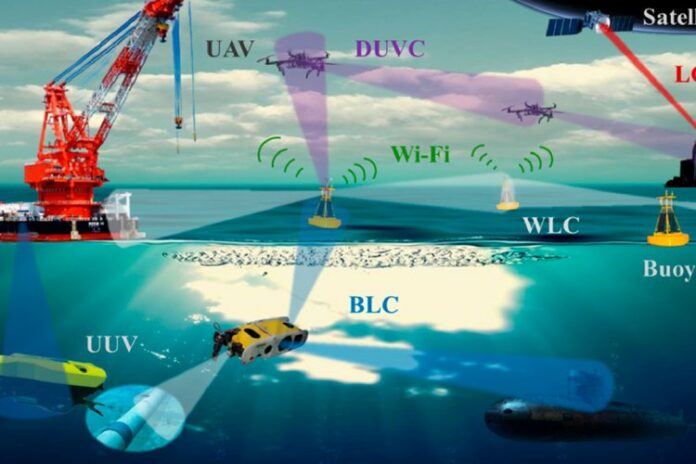
The new network design combines different types of light sources to ensure connectivity no matter the environment.

“In today’s world, data transmission is critical for communication, navigation, emergency response, research, and commercial activities,” said research team leader Yongjin Wang from Nanjing University of Posts and Telecommunications and Suzhou Lighting Chip Monolithic Optoelectronics Technology Co. Ltd., both in China.

“This new wireless network enables uninterrupted connectivity across environments, facilitating two-way real-time data transmission between the network nodes that carry out communication and data exchange within and between networks.”

In Optics Express, the researchers describe the completely light-based communication network and demonstrate real-time video communication between network nodes. They also show that it can support both wired and wireless device access simultaneously and can carry out bidirectional data transmission between network nodes. Both capabilities are key for providing various services to different users at once.

“The all-light communication could be used in oceans and lakes, for example, where sensors gather ecological data and communicate with surface buoys,” said Wang. “The data could then be sent wirelessly over the water surface or across long-distance transmission links between cities. The network can also connect to the internet via a modem, granting people who might be in a remote ocean location, for example, access to the backbone network for information sharing.”

Wireless light communication networks are often designed for specific scenarios and lack interoperability with other communication systems. Creating space-air-sea interconnections requires the daunting task of bringing together multiple technologies in a way that creates a seamless communication network. To accomplish this, the researchers used four spectra of light to establish wireless light communication links for four different environments or applications.

They used blue light for underwater communication because seawater has a reduced absorption window for blue-green light, allowing it to travel farther underwater compared to other wavelengths. This can allow the system to be used to control unmanned underwater vehicles or establish communication between underwater devices and buoys. White LEDs are used to transmit information between objects, such as buoys or ships that are above water.

For connections with airborne devices such as drones, deep ultraviolet light is used. This provides solar-blind communication, which prevents interference from sunlight.

Finally, for point-to-point communication in free space, near-infrared laser diodes were applied because they emit directional light with high optical power. The researchers also designed the network in a way that allows wireless or wired access to the Internet based on the TCP/IP scheme, which makes it useful for Internet of Things applications.

Contract awarded to refit UK nuclear submarine

0

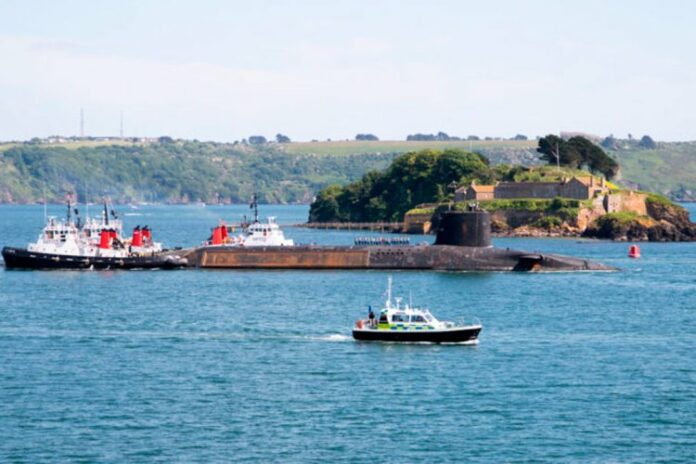
Babcock and the UK’s Submarine Delivery Agency (SDA) have agreed a full cost recovery contract worth an estimated £560 million to undertake the planned deep maintenance and life extension programme for HMS Victorious, one of the UK’s Vanguard Class nuclear submarines.

The multi-year life extension programme will deliver HMS Victorious back to the Royal Navy modernised and improved, enabling it to continue operational patrols well into the 2030s. Work on the submarine is already underway, following a commitment by the Department to authorise early-works from July 2023.

Through the HMS Victorious programme, more than 1,000 jobs will be sustained in the south west.  Alongside this, Babcock is continuing to build its workforce through its Plymouth-based Babcock Skills Academy, which includes a focus on submarine support and the critical nuclear skills required to perform deep submarine maintenance.

HMS Victorious is the second Vanguard Class submarine to undergo a life extension package at Babcock’s Devonport facility. It performs a vital role as part of the UK’s critical continuous at sea deterrent and represents one of the most complex pieces of engineering there is.

Babcock CEO David Lockwood said: “Delivering the programme for this vital and complex defence asset is our top priority. We are proud to have been awarded this complex defence programme which will use our deep engineering expertise to help keep the UK safe.”

Babcock’s supports all of the UK’s submarine fleet. The capability and experience gained through delivery of similar complex projects, combined with new ways of working, is being applied to deliver this important overhaul programme at pace.

Defence Secretary, Grant Shapps said:

“In an increasingly dangerous world, it is crucial that we continue to invest in one of our most important assets, our nuclear deterrent.  

“This is another UK partnership with Babcock, that will help keep the UK safe, while boosting the local economy and supporting 1,000 jobs. 

“On my recent visit to HMNB Devonport it was a privilege to speak with sailors and staff whose work directly contributes to our national security.” 

Second Sea Lord Vice Admiral Martin Connell said:

“The Royal Navy performs no more important mission than Operation Relentless, the continuous at sea strategic deterrent patrols which have been performed by our submariners uninterrupted since 1969.

“The mission requires an unprecedented national effort in support, maintaining our Vanguard-class submarines to the very highest engineering standards.

“The overhaul of HMS Victorious will allow the boat to carry out deterrent patrols until the next generation of submarines, the Dreadnought-class, enter service.”

The programme is being delivered at Babcock’s facility in Devonport where a major infrastructure programme is underway to ensure the future capability requirements of the Royal Navy and the submarine enterprise are met for decades to come from state-of-the-art facilities.

Van Oord executes maintenance dredging works in the Port of Krishnapatnam

0

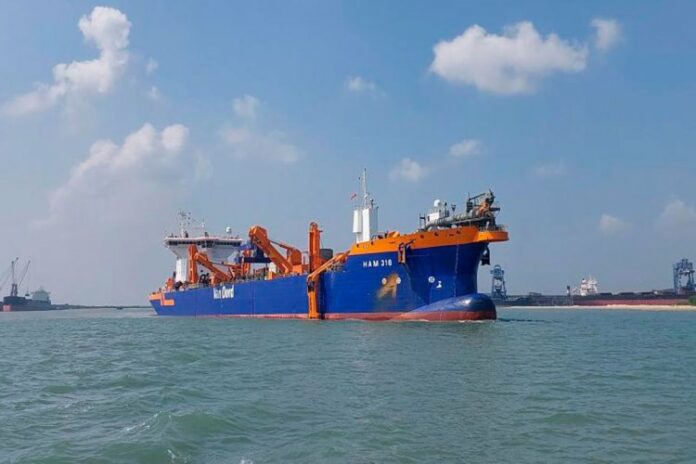
Van Oord is carrying out dredging works in the Port of Krishnapatnam, India. The depth of the port channels has to be restored after a severe cyclone. By executing this project, Van Oord safeguards the accessibility of the port area for large vessels.

Cyclone Michaung caused siltation in the port area. As a result, the channels of the port were silted up and depths reduced considerably. To dredge the navigation channel of the port to the required depth again, Van Oord is deploying trailing suction hopper dredger HAM 318. In total, approximately 5 million cubic metres of material will be dredged. The works are expected to be completed by the beginning of March.

The Port of Krishnapatnam is India’s deepest port and one of South Asia’s largest ports, which Adani Ports and Special Economic Zone Limited now owns. They selected Van Oord for this project because of their excellent past experiences. Van Oord and Adani have successfully worked together on previous projects, including the Ports of Hazira, Dahei and Dhamra. 

Agreement for a grid-scale offshore hybrid wind-solar project in Italy

0

The project will install SolarDuck’s unique elevated platform technology that allows PV panels to be deployed in significant wave heights whilst maintaining a safe working environment for access and maintenance and minimizing environmental impact. In addition, the collaboration will also allow the harnessing of the complementarity of wind and solar energy resources.

“With the current momentum, we believe this is a unique opportunity for the offshore renewable energy industry to help shape a favorable regulatory framework and facilitate the scaling of OFPV. This is not just important for Italy, but also for other countries in the Mediterranean. Our collaboration with New Developments and Green Arrow Capital can also serve as a catalyst for OFPV in Italy”, says SolarDuck CEO, Koen Burgers.

The project is part of Green Arrow Infrastructure of the Future Fund (“GAIF”), which invests in renewable energy and digital infrastructure in high-potential markets in Europe.

Founder & CIO of Green Arrow Capital Group, Daniele Camponeschi, says: “As pioneers of renewables in Italy, we continually strive to lead the way, exemplified by our innovative offshore projects. These cutting-edge infrastructures not only generate green energy contributing to sustainable energy transition and independence but also demonstrate their complementarity to onshore installations, preserving precious land resources.”

“The project is currently under permitting with an estimated COD in 2028. We are positive that this is a project that will materialise and have impact on the regional economy in Italy”, CEO Giovanni Guzzo, says. 

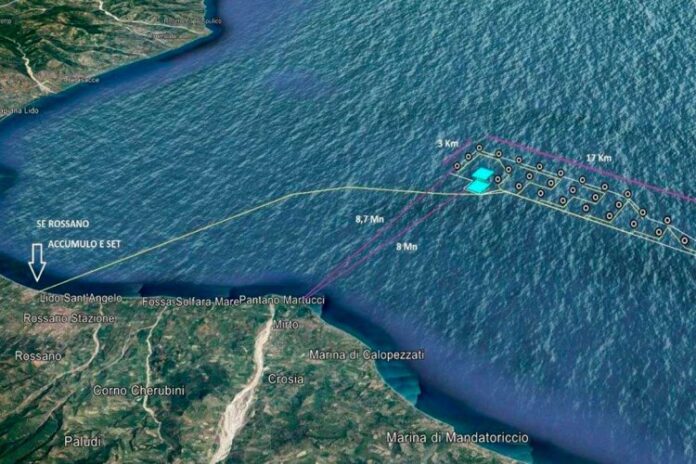
The Corigliano offshore hybrid wind-solar farm will be located in the gulf of Taranto off the coast of Corigliano-Rossano in Calabria. The farm is planned to feature 28 floating wind turbines for a wind capacity of 420 MWp in addition to a 120 MWp OFPV farm for a combined 540MW of capacity. The OFPV farm alone will generate more than 160GWh of solar energy per year.

Italy has been actively laying the foundation for offshore renewables with measures announced towards simplification of requirements for offshore wind projects, but further steps are expected soon. Under the umbrella of the national recovery and resilience plan, commitments have been made to further simplify authorization procedures for renewable offshore plants. The Decree FER2 is soon expected to introduce mechanisms to promote renewable energy projects including OFPV. This will enable the country to tap into its vast maritime potential and play a key role in the EU’s aggressive ambitions for decarbonisation.

SC Ports expanding rail capacity to support port-dependent businesses

0

Alongside rail partners and support from state leaders, SC Ports is investing in rail capacity throughout the state to efficiently handle goods for South Carolina’s booming economy.

Construction of the future Navy Base Intermodal Facility is well underway in North Charleston. Opening in July 2025, the rail-served cargo facility will be equipped with six rail-mounted gantry cranes that will efficiently move containers on and off CSX and Norfolk Southern trains.

“Growing rail capacity in the Port of Charleston will further enhance South Carolina’s competitiveness, ensuring our customers can swiftly move goods to market,” SC Ports President and CEO Barbara Melvin said.

In Upstate South Carolina, the expansion of Inland Port Greer has already yielded more than 8,000 feet of additional rail track, and the container yard expansion is nearing completion. These terminal enhancements will double Inland Port Greer’s cargo capacity.

“We move nearly a quarter of our containers by rail today. We look forward to growing this percentage by building critical rail infrastructure and terminal capacity in South Carolina,” Melvin said. “These projects will further support the billions of dollars being invested in South Carolina by port-dependent businesses.”

While total U.S. container volume declined in 2023, SC Ports’ intermodal volume increased nearly 12% last year, demonstrating a compelling rail product for ocean carriers and cargo owners.

SC Ports’ RapidRail program expedites containers between ship and train, with imports moving to rail less than 24 hours from actual vessel discharge.

SC Ports’ Inland Port Greer and Inland Port Dillon achieved the highest January on record, moving a combined 17,656 containers last month. The inland ports provide direct rail service to and from the Port of Charleston.

Within SC Ports’ container terminals at the Port of Charleston, SC Ports handled 208,538 TEUs and 115,744 pier containers in January. This is down slightly from last year and reflective of the softened volumes seen across the U.S.

January was a strong month for the vehicle segment, with 17,614 vehicles rolling across the docks, up 32% year-over-year.

Rotterdam World Gateway container terminal invests in shore-based power

0

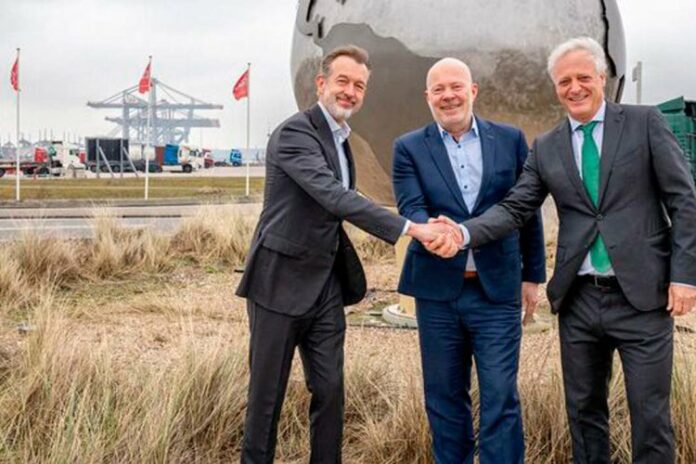
The RWG terminal is already fully automated and CO2 neutral. Construction of shore-based power facilities means that the ships will also no longer emit particulates, nitrogen and CO2 when at berth. Moreover, these facilities will also reduce noise pollution.

The first berths are expected to be equipped with shore-based power from 2026 onwards. And that puts RWG ahead of European regulation, which stipulates that all container, passenger and cruise ships larger than 5,000 gross tonnes in European ports must use shore-based power by 2030.

RWG is opting to design, finance and build the shore-based power systems itself. This represents a further fulfilment of RWG’s ambition to operate fully CO2 neutral. The Port of Rotterdam Authority and RWG have signed a letter of intent that includes agreements to share knowledge and data concerning the construction and use of shore-based power and the necessary civil-engineering works to quay walls and fenders that this requires.

Boudewijn Siemons, CEO & Interim COO of the Port of Rotterdam Authority:

‘We are very pleased with RWG’s decision to invest as the first European deep-sea terminal operator in shore-based power. Shore-based power is an important and necessary aspect of the energy transition. Ships ‘plugged in’ when berthed ensure better air quality and a reduction in noise pollution. This represents a further contribution to greater sustainability of the supply chain that runs through Rotterdam for the clients we share in common.’

Ronald Lugthart, CEO of RWG:

‘The investment in shore-based power is a crucial part of RWG’s investment programme, the aim of zero-emission storage and handling of containers. Together with our clients and other stakeholders, we are creating possibilities to achieve this strategic goal in the near term using shore-based power and other facilities to support the energy transition.’

Robert Simons, Alderman for Port, Economy, Hospitality and Governance at the municipality of Rotterdam:

‘At the municipality of Rotterdam we are truly delighted with RWG’s investment in shore-based power. Shore-based power not only contributes to better air quality, but also reduces noise pollution. This development represents yet another a major step forward for Rotterdam in realising a more sustainable and future-proof port.’

The municipality of Rotterdam and the Port of Rotterdam Authority are working together to accelerate and scale up shore-based power for sea-going vessels. The aim is that by 2030 a large percentage of seagoing vessels will be ‘plugged in’ when at berth. Diesel generators can then be switched off, which is favourable for air quality and CO2 emissions. Together with enterprises in the port, as well as the shipping companies, a series of projects will be initiated over the coming years to accelerate and expand shore-based power.