-7.1 C
New York
Home Blog Page 205

ClassNK grants innovation endorsement for “ACE Function”

0

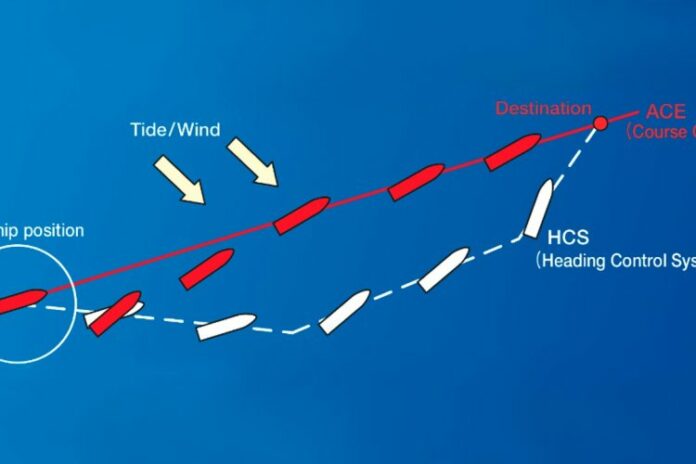
ClassNK has granted its Innovation Endorsement for Products & Solutions to a straight leg course control called “ACE Function” (ACE: Advanced Control for Ecology), which can be integrated with the autopilot systems, “PR-9000” and “PR-6000” offered by Tokyo Keiki Inc.

“ACE Function” can automatically create a straight route and implement navigation at the shortest distance, only by setting the ship’s current position and the heading of a destination. While navigating, it constantly estimates disturbances (tidal currents, wind) and calculates the cross track distance to control the rudder optimally.

ClassNK has verified the functions of “ACE Function”, such as the realization of straight leg course control considering disturbances without using ECDIS, the reduction of route deviation and wasteful steering as well as the realization of shorter sailing distances compared to conventional heading control system, and the capability to contribute to energy efficiency, navigation safety and burden reduction, and issued a certificate to the company.

NYK to recover emissions from car carriers at berth in California

0

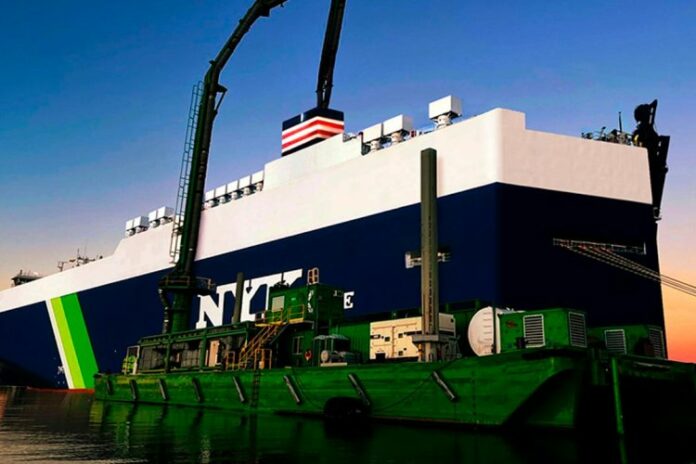
NYK concluded an agreement with STAX Engineering Pty Ltd. (STAX), a U.S. company leading in maritime emissions capture and control, to use its emissions capture and control technology to recover exhaust gases from ships. 

NYK will use this technology to recover exhaust emissions at berth from NYK-operated car carriers calling at ports in the U.S. state of California starting in January 2025. This initiative is in response to the California Air Resources Board’s (CARB) expanded exhaust emission regulations for vessels calling at ports in the state.

Emissions capture and control technology uses steel pipes and hoses to connect a barge, a small flat-bottomed ship, or a land-based exhaust-gas treatment system to a vessel’s funnel, allowing exhaust gases to be captured without venting into the air. This technology makes capturing and controlling exhaust gases possible without installing additional equipment on the vessel. 

NYK plans to use this technology to provide exhaust-gas capture services for NYK-operated car carriers at major ports throughout California. The total amount of potential payment between NYK and STAX is $16 million.

CARB established emission regulations for oceangoing vessels in 2007. In 2014, CARB mandated that oceangoing container ships, passenger ships, and other vessels calling at California ports reduce their emissions of nitrogen oxides (NOx), reactive gases (ROG), carbon dioxide, particulate matter (PM), and diesel particulate matter (DPM) while at berth. CARB plans to add car carriers and tankers to this regulation in 2025, making it an urgent issue to be addressed.

First marine ESS Supplier to enable data-driven State of Health Test

0

State of Health (SOH) tests for marine battery systems are mandatory and give an overall assessment of the condition, performance, and safety of the batteries over time. These tests help determine the battery’s capacity, efficiency, and remaining life.

Using data-driven approaches in these tests, enhances accuracy and efficiency in monitoring and maintaining marine battery systems. In addition, the test can be done with close to no disruption to the normal operation which significantly reduces costs and off-hire time for the vessel.

Lars Ole Valøen, EVP and CTO for Corvus explains:

“We recognized very early that we could reduce cost and unwanted non-operation for ship owners significantly if we could do the annual SOH test without taking the vessel out of operation. However, due to the high complexity of battery degradation processes, it has taken almost 5 years to gather sufficient degradation data from the field and develop robust data-driven SOH algorithms. The work has been carried out by our experienced team of battery experts in collaboration with world-class research institutions and class society DNV. Large amounts of data from our installations, lab test data, and a powerful digital twin approach have been used to allow simplified test procedure requirements without compromising the accuracy of the test. This method will also make more frequent SOH testing a real choice going forward, enabling improved safety and more predictable operation, especially toward the end of life of a battery installation”.

A more efficient solution to fulfill class-required task

Sondre Austreim, Discipline lead electro at Fjord 1, a leading Norwegian ferry operator with 25 ferries sailing with Corvus battery systems, says:

“Recognizing the costly and disruptive nature of traditional State of Health (SOH) testing, which meant taking the vessel out of operation for a full day, we sought a more efficient solution to fulfill this class-required task without compromising operational continuity. The process was akin to extracting an oil sample from a diesel engine, necessitating its shutdown until the analysis of the sample was completed and the report was received. Fjord 1 is pleased to recognize the introduction of a new, more efficient methodology for State of Health (SOH) testing by Corvus. This innovative approach, grounded in digital twin technology, represents a step forward for operational efficiency. We are grateful for the opportunity to give our input and are satisfied with the outcome. Fjord 1 looks forward to witnessing the positive impacts this new methodology will bring to our fleet”

Fincantieri and the Alexandria shipyard: MOU signed at the DIMDEX in DOHA

0

The MOU is aimed at setting out the principles for discussions which will mainly focus on investigating new opportunities with the Alexandria Shipyard for new vessels to be built by the Alexandria Shipyard or other facilities, to be mutually agreed. The collaboration will focus on possible new Programs for the Egyptian Navy of any type of vessel of interest.

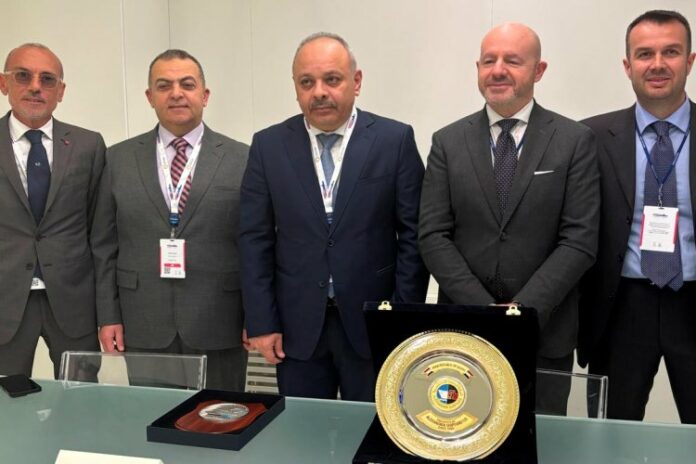
The signing between the General Manager of the Naval Vessels Division of Fincantieri, Dario Deste, and the R. Admiral Hossam El-Din Ezzat Kotb, Chairman and CEO, on behalf of Alexandria Shipyard, took place at the Doha International Maritime Defence Exhibition & Conference (DIMDEX).

The Alexandria Shipyard has a long track record in the field of military and commercial shipbuilding industries by building modern corvettes for the Egyptian Navy. It builds various types and sizes of multipurpose vessels, offshore oil rigs and oil platforms.

Both Fincantieri and the Alexandria Shipyard are looking for new joint businesses opportunities and to be awarded a contract, by a prospective customer, for the supply of any type of vessel of interest, to be agreed upon between them.

Houlder develops new tool for analysing ship performance and efficiency

0

Houlder has developed a new tool for analysing ship performance and evaluating efficiency options, including energy efficiency technologies – also known as energy-saving devices or clean technologies.

The Houlder Optimisation & Modelling Environment, HOME™, uses the latest digital twin technology to create a virtual world which can be used to analyse tweaks to the operations of existing ships, to design brand new vessels, or to outline various ways to save fuel and cut associated greenhouse gas (GHG) emissions on specific voyages or across all operations.

Using HOME™, shipowners are able to analyse the emissions performance of efficiency technologies for their specific vessel and its unique operating profile. Fundamentally, each ship has different efficiency requirements impacted by route, cargo, design and so on, and will benefit from a different technology or blend of technologies. The key is to start with the ship, not the technology being offered.

Rupert Hare, CEO of Houlder, commented:

“The vessel efficiency opportunity is well understood; if you save fuel, you save money and GHG emissions. If you save emissions, you save the planet. It’s a virtuous circle in that regard. However, uncertainty about the performance of efficiency technologies remains a barrier to final investment decisions and wider uptake. Clear data from an independent and objective source on the specific fuel and emissions savings of green solutions can help build the commercial case required. Good decisions need good data and it’s always a smart idea to get a second opinion.”

Jonathan Strachan, CTO of Houlder, said:

“This isn’t just about looking at how ships do what they do; it’s about making them do it better. Depending on what a client needs, HOME™ can dial the detail up or down. For those at the drawing-board stage, basic-fidelity simulations offer a quick peek at what’s possible. For more in-depth analysis, like weighing up different modifications or getting into the nitty-gritty of business planning, mid-fidelity and high-fidelity simulations provide richer, more detailed insights through Houlder’s computational fluid dynamics (CFD) and hydrodynamics capabilities and expertise.”

Operational modelling is an emerging field of study for the maritime industry – advances in processing power, AI, and big data are leading to the development of new and smarter tools. When real-world data from ships is available, it can be fed into HOME™ to make the modelling even more accurate. The system can also calculate carbon intensity indicator (CII) and energy efficiency existing ship index (EEXI) ratings, plus hull forms can be recreated from 2D drawings, removing the need for expensive 3D scanning.

Verified and accurate emissions performance data is in the best interest of technology providers as well as ship owners and operators. It’s a win-win, as technology companies need case studies of their solutions performing well on a suitable vessel and route to build trust with other shipowners, and clearly shipowners want the best return on investment – both in terms of cash and carbon.

Samskip boosts Baltic Sea service network with Klaipeda addition

0

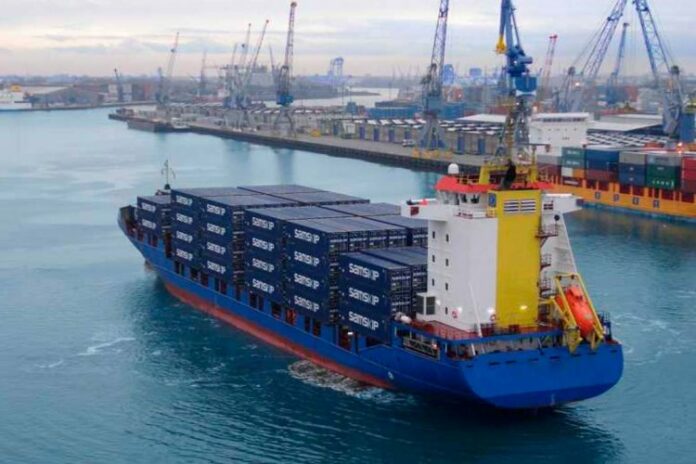
Friday March 1st marked the date when Samskip took the next step in its strategic Baltic Sea development by increasing service capacity and adding the port of Klaipeda to its network.

The extended service follows the successful establishment of Samskip’s dedicated Baltic Sea shortsea service in November 2023. 

As part of the extended Baltic Sea service, Samskip will increase capacity by deploying two 803 TEU container vessels on the trade route and add the Lithuanian port of Klaipeda to the fixed-day weekly sailing schedule which connects the UK and the Netherlands with Finland and the Baltic States.

In addition, Samskip will relocate its UK port of call from Hull to the neighboring Humber port of Immingham. This move further guarantees schedule integrity, allowing for even smoother connectivity with Samskip’s owned truck fleet based in Immingham for “last mile” deliveries. 

The newly extended service is in answer to customer demand for a reliable shortsea service in Finland and the Baltic States combined with a strong focus on Customer Centricity. These two core values are now available to Lithuanian exporters who can benefit from market-leading transit times between Lithuania and the UK. Samskip vessels will depart from Klaipeda every Saturday morning to arrive three days later in Immingham on Tuesday morning.

Samskip Regional Director – Baltic Sea, Johan van der Pijl, said:

“Service, reliability and the continuous enhancement of our customers experience have been and will remain our core values in this corridor. Fueled by the shortsea expertise in our DNA, our dedication to these values has driven Samskip to deliver market-leading reliability and customer experience since the kick-off of our Baltic Sea service last November. We are excited to roll out these customer focused values to the Lithuanian market. Adding our own truck fleet based in Immingham, we are able offer customers a care-free and seamless door-to-door transport experience.”

Inmarsat Maritime partners witn Aramco to trial world-first over water 5G mesh network

0

The 5G “mesh” technology aims to enable high-speed connectivity in challenging conditions, with trials planned to demonstrate range far beyond what was previously possible.

Inmarsat Maritime, a Viasat company, has signed a Memorandum of Understanding (MoU) with Aramco, a global integrated energy and chemicals company, to undertake a 5G “mesh” network trial that aims to provide high-bandwidth connectivity for Aramco’s offshore work in the Arabian Gulf.

The technology is designed to provide high-speed communication capabilities while meeting the demands of the region’s climate – including extreme heat, sandstorms, wind and water evaporation – thanks to 5G’s improved reliability in challenging weather conditions. 

The MoU follows successful outdoor network testing in Rutland Water, UK, in February 2024, which demonstrated reliable and high throughput millimeter Wave (mmWave) signal propagation over water.

Further testing of the 5G mobile Integrated Access and Backhaul (mIAB) network and of Inmarsat Maritime’s specific developments will be conducted under the extreme weather conditions of the Arabian Gulf later this year. The testing of Inmarsat Maritime’s 5G mesh in the Arabian Gulf with Aramco aims to showcase world-first long-range, high-throughput mIAB deployment over the sea – far beyond the maximum 1km range previously possible.

The technology has the potential to allow Aramco to optimize its offshore operations via the 5G mesh and enable capabilities such as intelligent remote maintenance and remote operations. This will include monitoring and metering with IoT sensors, assisted operations for staff equipped with augmented reality headsets, novel safety and security features and potential for cost saving and efficient energy use.

Inmarsat Maritime’s advanced ground infrastructure offers inbuilt cybersecurity and data protection. Ships operating further from the shore will be able to supplement ground-based 5G with satellite coverage, thanks to Inmarsat Maritime’s bonded network solution, which is already onboard more than 14,000 vessels worldwide.

Ben Palmer OBE, President, Inmarsat Maritime, said:

“Our technologies provide the ingredients for a truly bespoke solution, and our exciting new partnership with Aramco is the latest example of this. This new 5G mesh technology will be a significant step in helping Aramco maximize site efficiency, improve sustainability, provide a better experience for crew and protect the business from cyber-attacks. By combining many proven technologies into one integrated ecosystem, our bonded network is a single solution that can meet all customer demands – no matter how challenging the environment.” 

Nabil Al-Nuaim, Sr. VP Digital & Information Technology, Aramco said:

“By extending high speed connectivity to our remote and harsh offshore sites through 5G mesh technology, we aim to accelerate our plans to deploy advanced use cases under the corporate digital transformation vision. This is expected to help us further optimize our operations and improve the work environment for our operators. Our collaboration with Viasat to run the first maritime trial in the world for 5G mesh technology is a testament to our commitment to develop and deploy advanced technologies. Working with technology leaders and capitalizing on our operational experience in the field are key components for successful technology developments.” 

ABB partners with Seaspan Shipyards on new Canadian Coast Guard polar icebreaker

0

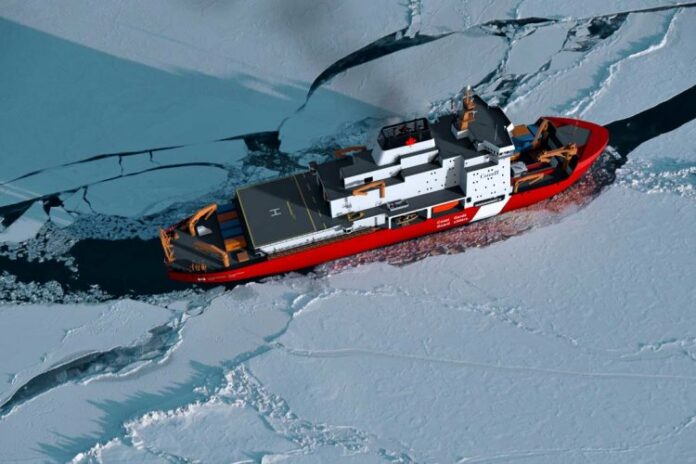
Seaspan Shipyards, Canada’s long-term shipbuilding partner for the Canadian Coast Guard (CCG) and Royal Canadian Navy, has awarded ABB a contract to deliver an integrated propulsion system for the first of the CCG’s new-generation polar class icebreakers.

The vessel is expected to be one of the world’s largest and most powerful diesel-electric icebreaker when it enters service in 2030, with ABB supplying vessel systems complying with IACS Polar Class 2 requirements for year-round operations in moderate multi-year ice conditions. The vessel will have 34MW of propulsive power provided by a single shaftline and twin Azipod® units. In addition to increasing efficiency and reliability, Azipod® propulsors offer improved maneuverability in icy waters.

This major marine systems order marks a significant milestone for ABB in Canada, with ABB assuming the role of single system integrator responsible for the engineering, delivery and commissioning of the comprehensive propulsion package.

Upon delivery, the vessel will join a reference list of 150 other icebreaking or icegoing vessels outfitted with ABB’s propulsion technology. As the first vessel of its kind to be built in Canada in over 60 years, it will set a performance benchmark for the new generation of domestically built coast guard icebreakers.

The vessel will be constructed under Canada’s National Shipbuilding Strategy (NSS), the nation’s long-term commitment to renew the Canadian federal fleet. With Canada’s current largest icebreaker, the CCGS Louis S. St-Laurent, set to retire at the end of the decade, the new vessel will be an important addition to the CCG fleet. In addition to patrolling the Canadian coastline, the vessel’s duties will include supporting Arctic science and research, environmental response, and search and rescue operations. Compared to its predecessor, the new flagship of the icebreaker fleet will be able to operate for longer periods of time in challenging weather conditions.

Leo Martin, Senior Vice President – Programs, Seaspan Shipyards, said:

“ABB’s proven technology, along with their valuable insight, made them a natural fit for this project. We have been pleased by the support and consultation Seaspan has received so far and look forward to more excellent collaboration moving forward.”

Mario Pelletier, Commissioner, Canadian Coast Guard, said:

“The Canadian Coast Guard eagerly awaits the construction of the polar icebreakers, which will extend our on-water operations and ensure the continuous delivery of critical services in the high Arctic. This includes search and rescue, environmental and humanitarian response, as well as playing a key role in supporting ocean science. Congratulations to Seaspan Shipyards and ABB on striking this new partnership.”

Markus Astor, Head of ABB Marine & Ports, Canada, said:

“The newbuild polar icebreaker is an important part of Canada’s National Shipbuilding Strategy, and it is an honor for ABB to have been selected as a strategic partner and to contribute to this project with our innovative technology and solutions, expertise and experience. We look forward to working with Seaspan’s Vancouver Shipyards during construction of the vessel, and to supporting the Canadian Coast Guard in its operations.”

Wärtsilä collaborates with EBDG to reduce port emissions across North America

0

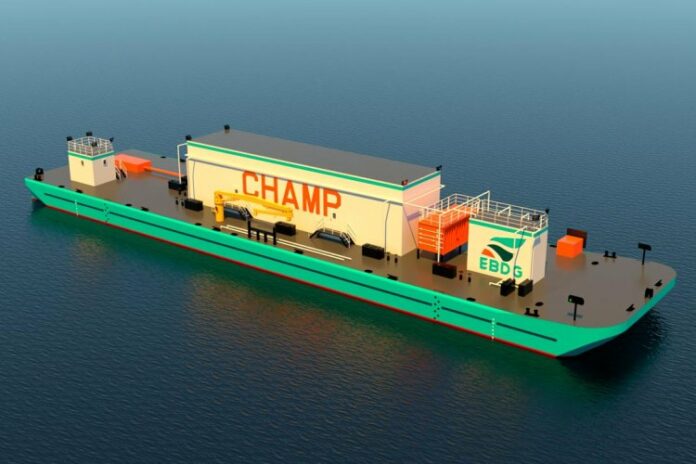
Technology group Wärtsilä has entered into a collaboration agreement with Seattle, USA based naval architecture and marine engineering firm, Elliott Bay Design Group (EBDG), to further develop EBDG’s Clean Harbor Alternative Mobile Power (CHAMP) Barge design. 

The floating mobile power platform has been designed to function in ports across the United States in accordance with the specific zero-emission plans and requirements established by local authorities and regulations.

“We are pleased to partner with Wärtsilä in bringing this innovative patent pending solution to the market. The CHAMP barge project represents a significant stride toward tackling the most daunting challenges in curbing port emissions, all while offering the adaptability of multi-megawatt power solutions,” says Mike Complita, Principal in Charge at EBDG.

When delivered, CHAMP will utilise methanol-fuelled power generated by the Wärtsilä 32 Methanol engine. This engine helps reduce emissions, thus meeting the decarbonisation requirements of most ports. The engine will be complemented by Wärtsilä’s complete methanol fuel handling system, Wärtsilä MethanolPac, as well as its emission after-treatment system, Wärtsilä NOx Reducer.

The solution will offer a way to reduce emissions, aligning with the sustainability goals of most North American ports, while also relieving pressure on their electrical infrastructure in the short and medium term.

“Wärtsilä’s experience with methanol-fuelled marine engines is unmatched, and we continue to develop future-fuel capabilities to accelerate the decarbonisation of maritime operations. This collaboration with Elliott Bay Design Group demonstrates both companies’ commitment to providing practical and sustainable solutions for the maritime industry,” comments Joel Thigpen, General Manager, New Build, Wärtsilä Marine.

CHAMP will provide a power range from 6 to 16 MW, using green methanol as its source. It will address the need to reduce port emissions by enabling cold ironing for vessels, whether they are docked or anchored, for two weeks or longer before refuelling becomes necessary. Being a US Coast Guard inspected vessel, the barge will also eliminate the need for shoreside permits or infrastructure and its compact size ensures the flexibility of easy repositioning to meet operational needs.

Wärtsilä and EBDG have earlier collaborated on projects where Wärtsilä’s power and propulsion products, as well as its expertise, are well-suited for specific vessel designs.

Jan De Nul extends contract with Castor Marine

0

After winning a 3-year contract for more than 80 vessels to VSAT, Iridium and VoIP in 2021, Castor Marine’s connectivity contract has now been renewed by Jan De Nul Group and includes a roll-out of Starlink to most Jan De Nul Group vessels. The experts in marine construction, civil engineering and environmental projects have expressed their continued satisfaction about and need for solid vessel connectivity on a global scale. 

With the addition of Starlink, the Castor Marine provided hybrid LEO GEO service is a leap forward in terms of internet speed and latency, bringing significant benefits in terms of both crew welfare and business operations for Jan De Nul Group. The installation and service contract not only comprises the VSAT, Starlink, Iridium and VoIP, but also the necessary hardware and 24/7 support services for the globally active fleet. 

Nils Crabeel, Vessel Communication Manager at Jan De Nul Group, says:

“In the past three years we’ve seen that Castor Marine delivers on its promises, which is important in building mutual trust and, of course, in daily practice where Jan De Nul regularly needs temporary project upgrades and downgrades on its vessels. We are happy with their support services. From the support desk to installation works, Castor Marine’s account management is one of short lines of communications, flexible and fast response times.”

Castor Marine delivers tailored connectivity solutions, with quality of services specified in detail, right down to Jan De Nul Group’s VLAN level requirements. In the past three years, the fleet has experienced Castor Marine’s operational and commercial flexibility in providing its global VSAT network. This makes scaling up easy – a useful feat, as each single vessel can have ad hoc, dedicated high bandwidth demands on short notice.

Mark Olthuis, Director Maritime Offshore & Energy at Castor Marine, says:

“We are thankful for Jan De Nul’s continued trust. As a VSAT Network Operator and Authorized Starlink Reseller, we are proud that our flexible, high-bandwidth airtime solutions match the expectations of the Jan De Nul Group and its fleet and “Castor Marine is committed to providing the best possible mix of LEO and GEO connectivity services to Jan de Nul by anticipating new technologies coming available”