-10 C
New York
Home Blog Page 202

Union Maritime to build new vessels with WindWings

0

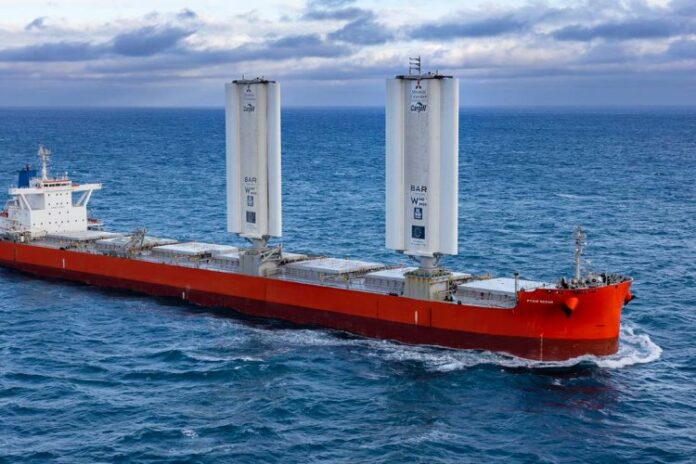
The two vessels, currently being built at the renowned Shanghai Waigaoqiao Shipbuilding (SWS) yard in China, will each feature three WindWings®, a cutting-edge wind propulsion technology developed by British design and engineering firm BAR Technologies.

The shipping industry is increasingly embracing wind propulsion technology to enhance ship efficiency and reduce the sector’s CO2 emissions. Union Maritime’s two new long-range tankers are the latest vessels to adopt BAR Technologies’ WindWings® solution, following the successful installation of the technology onto the Pyxis Ocean and Berge Olympus vessels in the second half of 2023.

WindWings® have demonstrated their effectiveness in reducing fuel consumption and CO2 emissions, with potential savings of up to 1.5 tonnes of fuel and around 5 tonnes of CO2 per wing per day on typical global routes. WindWings® operate in conjunction with a route optimisation system that adjusts the rigid sails based on wind conditions, vessel speed, and course, all without compromising the vessel’s speed.

Union Maritime’s latest vessels underscore its commitment to sustainability and innovation in the maritime industry. The company has also invested in energy-saving technology, data collection and analysis, and low- or zero-GHG sources, aiming to surpass the IMO’s GHG reduction targets.

The milestone agreement closely follows BAR Technologies’ partnership with manufacturing partner CM Energy Tech (CMET), a company listed on the Hong Kong stock market with its biggest shareholder being the China Merchants Industry Holding, which now manages the value chain of procurement and construction of WindWings® and their installation throughout shipyards Asia.

The LR2 tankers each boast a size of 114,000 DWT and are designed by SWS’s own team and classed by Lloyds Register. They will be delivered in late 2025.

Laurent Cadji, Managing Director Union Maritime Ltd, the shipowner and operator, said:

“We are excited to work with BAR Technologies and CMET on this project, which will enable us to reduce our fuel consumption and emissions significantly. WindWings® have increasingly been proven to enhance the performance and efficiency of vessels around the world. We are looking forward to the successful delivery and operation of the WindWings® on our newbuild vessels.”

John Cooper, CEO of BAR Technologies, said:

“Our latest contract with UML demonstrates the growing demand for our WindWings® technology and the benefits it can bring to the maritime industry. We are also proud to partner with CMET, who have the expertise and experience to deliver our WindWings® to the highest standards. We look forward to seeing the WindWings® in action on the newbuild vessels and helping UML achieve its sustainability goals.”

Zhan Huafeng, Executive Director and Executive President of CM Energy, said:

“Our latest collaboration with BAR Technologies and UML on this exciting project marks yet another milestone for the adoption of wind propulsion technology in the shipping sector. We are committed to providing innovative and reliable solutions to our customers and contributing to the decarbonisation of the maritime industry.”
GoliatVIND project awarded 2 billion NOK from Enova

0

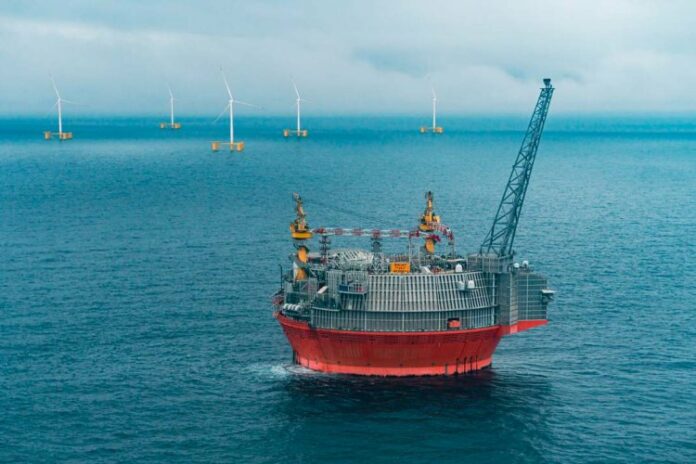
Odfjell Oceanwind, together with its partners Source Galileo Norge and Kansai Electric Power Company, has received 2 billion nok (approximately 190 million usd) in capex grant for the GoliatVIND project. 

GoliatVIND is a 75 MW demonstration project for floating offshore wind. The project has selected Odfjell Oceanwind’s Deepsea Star™ semisubmersible foundation technology and will use Odfjell Oceanwind’s supply chain.

«This grant is a breakthrough for Odfjell Oceanwind and our technologies and is an important step towards us demonstrating the Deepsea Star(TM) with 15 MW turbines. The award is a result of a great team effort from all three partners in the consortium. It also demonstrates the Government’s continued commitment to let Norwegian companies lead the way in the global floating offshore wind market», says CEO of Odfjell Oceanwind Per Lund.

Cargill shares outcome of the world’s first wind-powered ocean vessel’s maiden voyage

0

Cargill has revealed exciting results of the six-month test period of the Pyxis Ocean, underscoring the potential for the wind assisted propulsion technology in moving the shipping industry toward renewable energy use.

The MC Shipping Kamsarmax vessel retrofitted with two WindWings® -large solid wind sails developed by BAR Technologies – – has achieved performance consistent with what was predicted which is equivalent to an average of 3 tonnes of fuel per day.

“We are encouraged by the results and have learned a great deal about implementing wind assisted propulsion on dry bulk vessels,” said Jan Dieleman, president of Cargill’s Ocean Transportation business. “We could never have done this alone – BAR Technologies and MC Shipping and have been fantastic partners in making the Pyxis Ocean a reality as well as the captain and crew.”

The Pyxis Ocean hit open waters in August 2023 and during the first six months of testing it has sailed the Indian Ocean, Pacific Ocean, North and South Atlantic, and passed Cape Horn and the Cape of Good Hope. The ship was retrofitted with two WindWings®, which measure 37,5 meters in height and resemble large airplane wings. The wings are installed vertically to catch the wind and propel the ship forward, allowing the ship’s engine to be turned down so that the ship can travel at the same speed as a conventional ship using less fuel.  The wings are controlled by a touch panel on the bridge. A simple traffic light system tells the crew when to raise or lower the sails.  Once raised, the operation is fully automated: sensors onboard constantly measure the wind, and the sails self-adjust to the optimal configuration.

Wind assisted propulsion has potential to be a cost-efficient way of supporting the International Maritime Organization’s (IMO) new greenhouse gas strategy. One of the IMOs 2030 targets is to have 5 percent, striving for 10 percent, of energy coming from very low carbon sources by 2030: wind assisted propulsion could be an important way of achieving this.

The early voyages have provided insight on more than just the application of the sails on a vessel, it has also highlighted broader logistical challenges in the global maritime system. Given that every port, terminal, and berth is different, their involvement is critical towards integrating Wind Assisted Propulsion (WAP) technology into the global maritime system on a wider scale.

John Cooper, BAR Technologies CEO added,

“The results of the Pyxis Ocean’s first voyage with WindWings® installed clearly demonstrate that wind assisted propulsion can secure significant fuel savings and emissions reduction. For example, in near optimum sailing conditions, during an open sea voyage, the Pyxis Ocean achieved fuel savings of 11 tonnes per day. And while the Pyxis Ocean has two WindWings®, we anticipate the majority of Kamsarmax vessels will carry three wings, further increasing the fuel savings and emissions reductions by a factor of 1.5.   With Cargill are now able to validate our performance predictions and modelling in real-world conditions, it’s an exciting time as we begin to roll out WindWings® production globally.

 “Cargill is creating ways for all WAP vessels – not just the Pyxis Ocean – to operate on global trade routes,” said Dieleman. “So far, we’ve engaged with more than 250 ports to find ways of enabling vessel with large scale WAP to berth. This complexity is where Cargill truly excels, and how we can leverage our unique role in the maritime industry. We are not afraid to be a development partner and invest, share risks with partners, and to make a difference in transforming the industry.”

Cargill will continue the testing and experimenting of operational, technical and commercial aspects of the Pyxis Ocean to incorporate the maximum amount of learning into potential design of future installations before scaling up.


Video: Wave-amplifying generator bounces twice as high as the swells

0

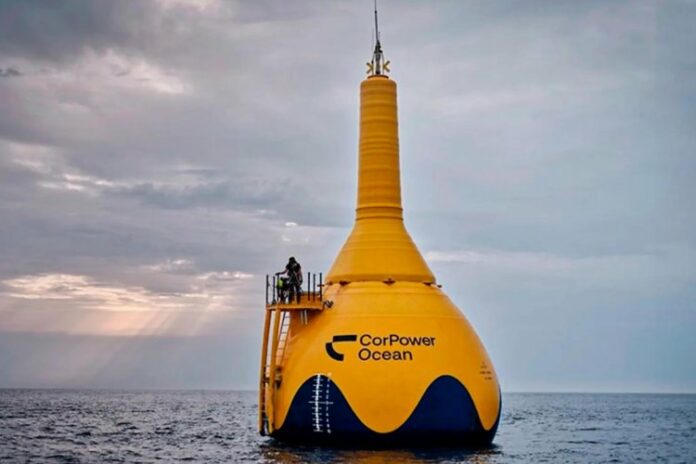
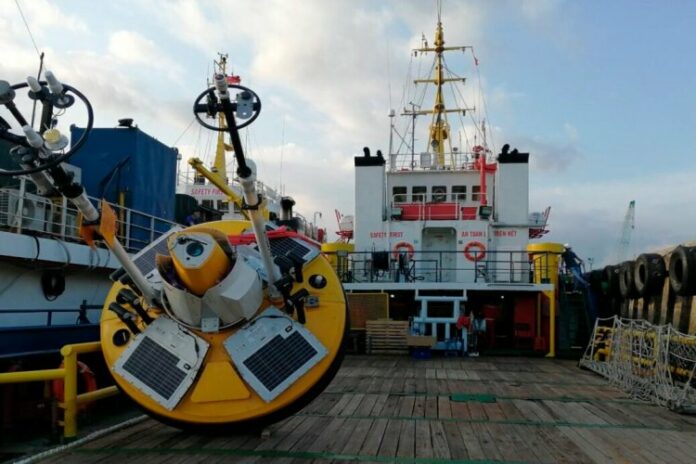
In a mechanical sense, this is a pretty standard looking anchored buoy point absorber type system; waves lift a floaty air-filled chassis up and down, and a power takeoff system within harvests energy by converting that linear up and down movement into rotation for running generators.

CorPower says it’s a novel phase control technology called WaveSpring that sets its huge C4 buoys apart. An internal pneumatic cylinder is pre-tensioned to pull the buoy downwards, such that in the absence of active control, the buoy simply sits still in “transparent” mode no matter how high the waves get. This acts as a safety mechanism under the worst conditions.

But when waves are more reasonable, things get weird and the C4 starts bobbing up and down twice as far as the amplitude of the waves, by adjusting the phase of its movements. That is, it doesn’t rise at the exact same time as the wave does, it lags behind to get a little extra energy boost, which propels it higher.

The effect makes a huge difference to power generation; CorPower claims a 300% increase in power generation compared to a similar buoy without Wavespring phase adjustments.

It’s also remarkable to watch, as you can see at around 0:45 in the video below – particularly given that these buoys are so dang big – 19 m (62 ft) tall and 9m (30 ft) in diameter.

CorPower has just hauled this C4 in after six months at an exposed test site in the Atlantic ocean off Aguçadoura, Portugal, where it’s been connected to the grid and exporting power. In November, the weather treated CorPower to the perfect survivability test, delivering monster 18.5-m (61-ft) waves – higher than any previously measured. The C4 went into “transparent” mode and rode out the storm without issue.

The team recorded a peak power export around 600 kW, but says the device was limited in both velocity and stroke during the test. It expects to see peak output around 850 kW when it’s run at full capacity.

Running test data against the C4’s digital twin, CorPower engineers discovered they’d been slightly underestimating its power generation capabilities, so things are definitely on track there.

Now, the buoy is getting a planned checkup back on dry land, where it’ll be studied to see how it’s held up at sea, and upgrades and adjustments will be made before it’s towed back to its site. That’s one clear benefit of this kind of design; you can very easily hook and unhook these machines for maintenance back at port.

Getting down to tin tacks, CorPower has projected a Levelized Cost of Energy (LCoE) in the range of US$33-44 per megawatt-hour once it’s deployed 20 gigawatts of capacity. That would be a pretty competitive price, given that wave energy is pretty much 24/7 and can fill in the gaps when wind and solar aren’t delivering.

20 GW is a whole lotta buoys though. More than 20,000 of them. So it’ll take a while to get that LCoE down to a manageable level. Next step, says the company, will be a multi-buoy site where the concept can start to be tested in something closer to a commercial rollout.

Source: New Atlas

Ørsted secures first access to lower-emission heavy plate steel through MoU with Dillinger

0

Ørsted and Dillinger re-iterate the strength of their partnership by agreeing that Ørsted will be offered the first production of lower-emission steel from Dillinger, subject to availability and commercial terms and conditions. 

The steel plates form a part of the offshore wind monopile foundations and are intended to be used for future projects. Taking the current technology outlook into account, the reduction of the process-related carbon emissions from production is expected to be around 55-60 % compared to conventional heavy plate steel production.

Under a large-scale supply-agreement entered into in 2022, Ørsted will procure significant volumes of regular heavy plate steel from 2024, giving the company access at scale to and visibility of the most crucial raw material in offshore wind while providing Dillinger with the needed support to accelerate investments in new lower-emission steel production. Ørsted expects to be able to procure lower-emission steel produced at Dillinger’s plant in Dillingen, Germany, from 2027-2028. 

The long-term offtake agreement is an example of how Ørsted’s scale in offshore wind procurement, industry-leading decarbonisation efforts, and strong partnership approach with suppliers are leveraged together to push for sustainable solutions supporting the green build-out.  Agreements like this are required, alongside regulatory support, to drive down the cost of lower-emission steel through early demand signals, and, ultimately, to future-proof the European offshore wind supply chain through stable supply chains based on greener production methods. The partnership will strengthen Ørsted’s position in offshore wind by securing supply of a key raw material and visibility of capacity.

This follows the EU’s recent passing of the Net Zero Industry Act, which makes non-price criteria in renewable energy auctions mandatory within the EU. Thus, the agreement with Dillinger not only helps accelerate the decarbonisation of the steel industry; it also provides Ørsted with the optionality to deliver on expected decarbonisation criteria in coming auctions when they materialise.

Virginie Van de Cotte, Chief Procurement Officer at Ørsted, says:

“At Ørsted, we have closer ties to the supply chain than any other offshore wind developer, and we’ll leverage these ties to support our business as well as the green transformation at large. Long-term offtake agreements like this one are key to decarbonising hard-to-abate materials such as steel because it takes clear demand signals to drive investments in the technologies needed to decarbonise production. With this MoU, we’re pleased to help support Dillinger’s development of lower-emission steel facilities in Europe. This is an agreement which will also enable Ørsted to further diversify its supply chain, secure capacity, and deliver on expected future costumer demand.”

Stefan Rauber, CEO of Dillinger, says:

“The agreement with Ørsted proves that steel made in Germany is relevant for the success of the climate and energy transition, and that it has a future. With the support of the German federal government, we’re now investing in the transformation of our production facilities to be able to produce carbon-reduced steel from 2027 onwards.”

Danny van der Hout, Chief Commercial Officer at Dillinger, adds:

“We’d like to thank Ørsted for placing confidence in our expertise and the high quality of our steel. The Dillinger team is proud to contribute to the further expansion of renewable energy with its innovative products.”

Foundations are one of the largest sources of carbon emissions in an offshore wind farm’s life cycle, accounting for 21 %. Reducing those emissions is key for Ørsted to reach its 2040 science-based net-zero target.

Bedrock selects Exail’s inertial navigation system for next-generation AUV

0

Exail has concluded its first sale of the Phins 9 Compact brand-new compact high-performance Inertial Navigation System (INS) to Bedrock, a leader in underwater data acquisition platforms. 

Bedrock’s AUV is a purpose-built, modular platform designed for swift deployment in geophysical surveys and monitoring. Equipped with Multibeam Echosounder (MBES), Side Scan Sonar (SSS), and Magnetometer (MAG), the AUV boasts a 300m depth rating and 12-hour endurance surveying at 3 knots with all systems operational. The integration of Phins 9 Compact INS will empower Bedrock to achieve high navigational accuracy, address operational efficiencies, and mitigate Total Horizontal Uncertainty (THU) and Total Vertical Uncertainty (TVU).

“The INS was central to addressing uncertainties and performance challenges for our AUV. We sought an INS solution that could overcome challenges in form factor, power, support, compactness, accuracy, and performance, and Exail’s Phins 9 Compact INS seamlessly aligns with all these requirements”, remarked Charles Chiau, CTO and co-founder at Bedrock. “We are eager to witness the field performance of this INS during sea trials and explore its potential in enhancing our AUV’s navigational capabilities.”

“We are thrilled to be partnering with Bedrock on this exciting venture. The integration of our Phins 9 Compact INS into Bedrock’s AUV exemplifies the innovation and precision that both companies strive to achieve,” said Shayan Haque, Sales Manager at Exail. “We look forward to the successful deployment of our technology and the positive impact it will have on Bedrock’s geophysical survey capabilities.”

Boasting compact dimensions of 88.9 x 130 mm, the Phins 9 Compact stands as the most compact high-performance INS available in the market. With a power consumption of less than 7 W and a DVL-aided position accuracy of 0.1% TD, it provides exceptional reliability and navigation precision for compact subsea vehicles operating in demanding applications with low power requirements.

ORE Catapult: 10 technology innovations key to 80% cost reduction of UK tidal energy

0

The Tidal Stream Technology Roadmap report, published by the Offshore Renewable Energy (ORE) Catapult, has identified 10 technology innovations that could result in an 80% cost reduction in tidal stream energy, making it lower than current nuclear energy prices – if successfully commercialised.

Simon Cheeseman, Wave and Tidal Energy Sector Lead at ORE Catapult, said:

“Our new report demonstrates how and where cost reduction can be achieved through technology innovation, creating significant growth in the UK tidal industry.

“With rising costs and the need to adapt to a varied future renewable energy mix, we have identified key drivers in how tidal energy can reduce UK energy system costs by up to £600 million a year and play a full part in the net zero revolution.”

The technology innovations highlighted in the 2024 report support 1GW of tidal stream being installed in the UK by 2035, in line with UK Marine Energy Council (MEC) recommendations.

Sue Barr, Chair of the UK MEC, said:

“The UK tidal energy sector has shown a strong pipeline of projects, through the Contracts for Difference scheme rounds 4 and 5. With over 90MW of potential tidal energy projects due to deliver projects across Scotland and Wales in coming years, there is a clear signal that tidal technology is moving towards a commercially viable future.

“Our ambitious UK target of 1GW of installed capacity by 2035 means it is imperative we can define the levers and strategies which can strengthen delivery of tidal stream technology into our energy system. The Tidal Stream Technology Roadmap is a much-needed report, setting out the value and scale of the tidal energy sector and quantifying the systems benefits tidal technology can provide. It also provides strategies for enhancing the reduction of tidal stream costs through innovation and collaboration. The UK MEC looks forward to working with the report and the sector to continue the growth of the tidal stream sector.”

The 10 technology innovations identified by the report for future tidal energy success include subsea hubs, anchors for floating devices, controllers to optimise lifetime turbine performance, cable monitoring and tidal array optimisation.

In an ‘optimistic’ cost reduction scenario outlined in the report, the innovations were projected to support a reduction in tidal stream cost from the current £259/MWh to £50/MWh by 2035.

However, the report also highlights that further research and development in technology innovation will fail to secure an accelerated project pipeline for tidal energy without appropriate policy support to boost continued deployment, and private investment to drive commercialisation. It identifies the need for an increased ringfence for tidal stream energy within the UK Government’s Contracts for Difference (CfD) scheme and reforms to the CfD process to recognise non-price benefits generated by renewable energy projects, such as system integration and supply chain development, rather than focusing on lowest price bids.

Sean Parsons, Director of External Affairs at UK tidal stream developer SAE Renewables, said:

“This report highlights that tidal stream energy can play a significant role in powering our homes and businesses while also providing further significant benefits for the community and wider UK supply chain. SAE’s MeyGen site is the world’s leading tidal energy site and has provided over 50GWh of clean, predictable power to the electricity system, generated jobs and investment, exported technology and provided a platform to innovate and demonstrate a leading global technology while driving down costs.

“But to deliver the benefits highlighted in the report we need the ongoing support of Government to provide a route to market and continue allowing sites around the UK to expand.”

Uruguayan operator orders shallow-draught pusher tug

0

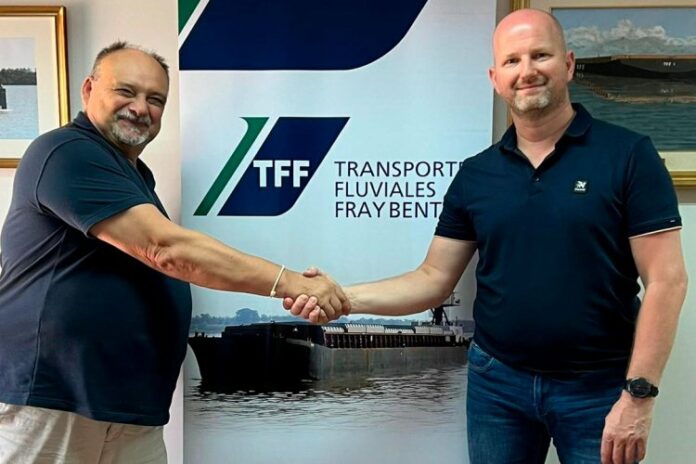
Uruguayan shipowner and operator TFF has contracted Dutch inland shipping construction yard Concordia Damen to build a CDS2410 Shallow Draft River Pusher (2.500 HP) to expand its fleet of pushboats. TFF will use the pusher for transporting cellulose pulp from Fray Bentos to the port of Nueva Palmira.

Concordia Damen has thoroughly researched the river characteristics in the region in relation to the desired operational profile of the vessel. Based on this its engineers designed the most efficient pusher considering local conditions. This resulted in a proven low draft push boat design. The 2.500 HP river pusher is a further development of these earlier pushers.

The pushboat measures 24 x 10 m. Two C32 CAT engines generate a power of 894 BkW at 1800 RPM each. 

Fernando Perera Bruno, CEO at TFF, mentions:

“We are very pleased to work with Concordia-Damen and we highly value the opportunity to grow our business with the innovative design of their low draft pusher. We are very satisfied with the engagement and current ongoing dialogue with the Concordia-Damen team.” 

Bert Duijzer, Technical Manager at Concordia Damen, says:

“We are delighted to receive the trust from a company like TFF, that delivers an exceptional level of river transportation services in Uruguay. With the design and delivery of this push boat we will meet the customer’s needs and exceed their expectations. 

After outfitting the vessel at the yard in Werkendam, TFF superintendents will come to the Netherlands for the Sea Acceptance Trials, and the hand-over, which is estimated to take place in October of this year.

Fugro extends Vietnam offshore agreement

0

Fugro has extended their Memorandum of Understanding (MOU) with PTSC Geos & Subsea Services Co., Ltd (PTSC G&S) to meet Vietnam’s strong demand for geophysical, geotechnical and metocean data services.

Under the 2-year agreement, Fugro’s full range of marine site characterisation services and PTSC G&S’s local survey capabilities will support Vietnam’s growing offshore wind industry.

This extended MOU represents a milestone in Fugro and PTSC G&S’s partnership, which was set up in 2011, and reflects both parties’ commitment to support the country’s developing offshore wind industry and ambitious offshore wind targets, as published in the 8th Power Development Plan (PDP8) in 2023. These include an initial target of approximately 6 GW of offshore wind energy by 2030, and 70 GW to 91.5 GW by 2050, which is critical for the country to achieve its goal of carbon neutral by 2050.

Jerry Paisley, Fugro’s Regional Strategic Sales and Marketing Director, said:

“Vietnam holds tremendous potential for offshore wind power and, after over a decade of working here with our local partner, PTSC G&S, we’re thrilled to be unlocking Geo-data insights to now help develop Vietnam’s offshore wind market.”

Truong Tuan Nghia, PTSC G&S Director, said:

“With over four decades of experience serving the Vietnamese and wider Southeast Asian market, we’re pleased to be extending our agreement with Fugro so we can carry on delivering comprehensive geophysical, geotechnical and metocean surveys to our valued clients across Vietnam’s energy industry.”

Exail introduces new transoceanic USV with multi-robot deployment capabilities

0

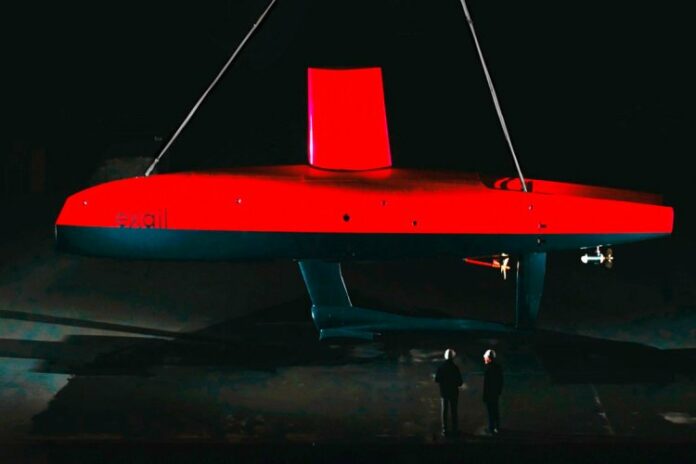
Exail has unveiled its new transoceanic Uncrewed Surface Vessel (USV), the DriX O-16. 

Benefitting from an autonomy of 2,500 Nm and a unique naval architecture that enables the USV to withstand the most severe ocean conditions, the new DriX O-16 has been designed for long-duration operations (up to 30 days) and can deploy multiple payloads and subsea assets. 

The new USV leverages the successful track record of the already existing DriX USV, launched back in 2017 and that accumulates over 150,000 hours of operations at sea in more than 19 countries. The new DriX O-16 benefits from a hybrid propulsion, redundant architecture, advanced communication systems, as well as AI powered obstacle detection and avoidance capabilities. It offers a high level of reliability and operational efficiency, and new multi-mission capabilities, for enhanced autonomous operations at sea.

A versatile platform, Exail new transoceanic USV allows to launch and recover a wide range of subsea assets such as Remotely Operated Towed Vehicles (ROTVs), inspection-class Remotely Operated Vehicles (ROVs), as well as Autonomous Underwater Vehicles (AUVs). Its gondola, located below the surface, can further host a wide range of payloads such as deep-water Multibeam Echosounders (MBES), Sub-Bottom Profilers (SBP), or acoustic subsea positioning and communication systems (USBL). This makes the new DriX O-16 especially suited for full ocean depth scientific and hydrographic surveys, geophysical and UXO surveys, as well as subsea infrastructures inspection and surveys that might require the deployment of multiple robots.

“With this next-generation transoceanic low-carbon USV, we are pushing back the limits of ocean exploration, empowering collaborative autonomy between surface and subsea drones, while minimizing human exposure at sea,” explains Olivier Cervantes, VP Maritime Autonomy Solutions at Exail. “The introduction of our new DriX O-16 truly marks a significant stride in autonomous maritime operations, as multi-robot missions are definitely where we see the maritime industry and our own developments leaning in the coming years.”